Connect with us

NewsBeat

Co Antrim pensioner died quickly after fire started by smoking in bed, inquest hears

Published

on

Belfast Live

The 82-year-old was described by a neighbour as being a “funny, outgoing gentleman”

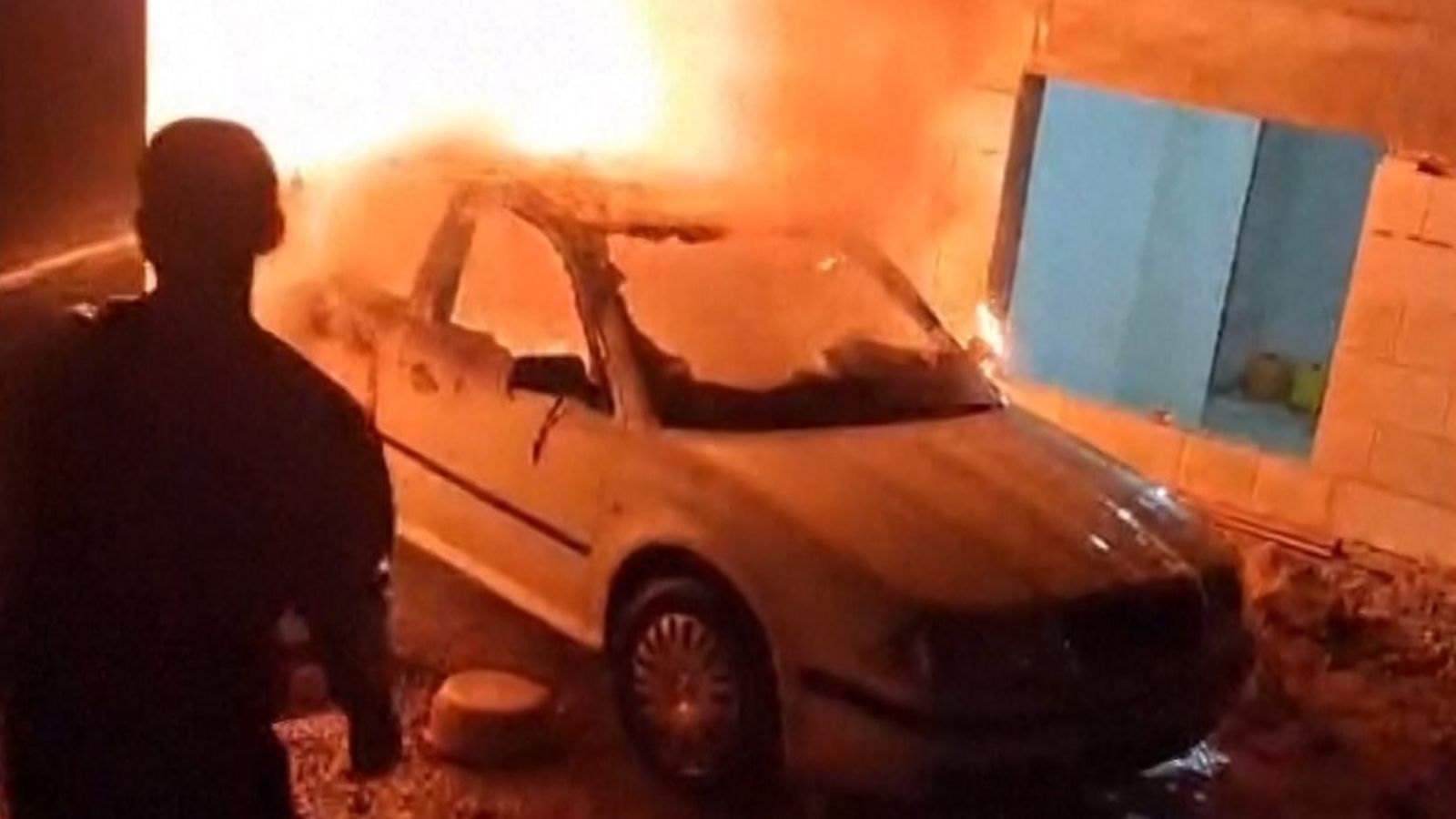
A pensioner who passed away in a house fire at his Co Antrim home last year would have “died quickly” after the accidental blaze was started by smoking in bed, an inquest has heard.

Advertisement

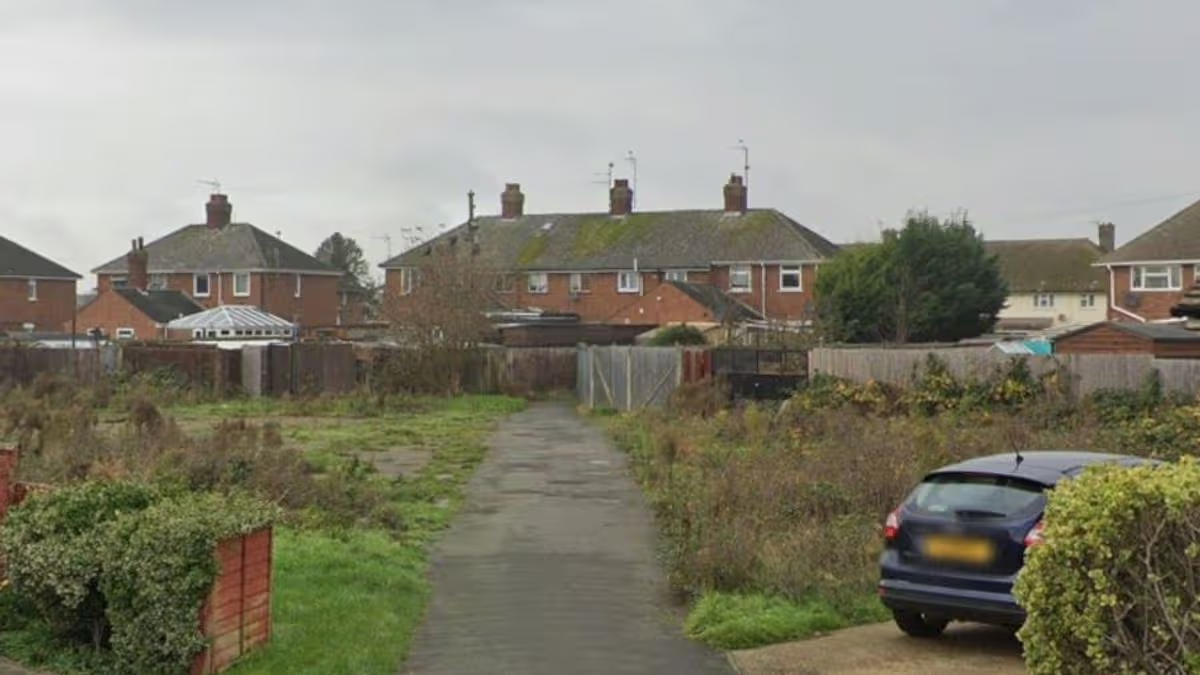
Matthew (Matt) Johnston passed away in the early hours of the morning on February 11, 2025, after a fire at his home in the Oakglen area of Antrim.

At an inquest into his death held at Belfast Laganside Court on March 2, Coroner Anne-Louise Toal said an emergency call was made from a neighbour’s house at approximately 3.50am, with the Northern Ireland Fire & Rescue Service arriving within ten minutes.

READ MORE: Andrew Murphy: Man found on Co Down beach died soon after last CCTV sighting, inquest hearsREAD MORE: Inquest date set for man who ‘died a hero’ in River Lagan incident

Despite this quick response, however, a “substantial fire” had unfolded on the first floor of the property. Mr Johnston was found in his bed in the front bedroom, and was sadly pronounced dead at the scene, with the coroner adding he was “beyond help.”

Advertisement

The 82-year-old was last seen at his home at around 7.30pm on February 10 by his neighbour, Stephen Emerson. In a statement from Mr Emerson read to the inquest, he said Mr Johnston was a “funny, outgoing gentleman” who had been “in good spirits” that evening.

Mr Emerson brought his neighbour dinner, and as he was leaving, Matthew had been “lying on his bed, listening to the radio and singing.” He added that the pensioner had been “spening more time in bed recently as he said he was sore.”

Shortly before 4am on February 11, Mr Emerson recalled being woken up by a bang on his door from another neighbour, telling him “Matt’s house is on fire.” Stephen ran next door to Mr Johnston’s house, but said he could only go so far as the stair lift due to the flames upstairs.

He tried to put the flames out but couldn’t, and when the fire service arrived, informed them Matthew was in his bedroom upstairs.

Advertisement

Forensic pathologist, Dr Huddleston, told the inquest he conducted a postmortem examination of Mr Johnson’s body two days after his death, on February 13. He said Matthew had a range of pre-existing medical conditions including osetoperosis, COPD, pre-diabetes, and had a pacemaker fitted due to a “severe” cardiac issue, and had previously sufferred a heart attack.

Just before his death, Mr Johnston had reported feeling unwell, with Dr Huddleston finding evidence of pneumonia. Noting his cause of death to be due to inhaling fire gases, including carbon monoxide, Dr Huddleston said Matthew’s pre-existing conditions exacerbated his passing.

The pathologist added it’s “reasonable” to suggest Matthew would have passed away from inhalation of toxic gases quicker than a “fit and healthy person.”

Mr Johnston’s sister, Elizabeth Shergold, told the inquest her brother was in “quite poor health” and before his death had damaged his hip due to a fall, which impacted his mobility. She said she last saw him at the end of January 2025, and spoke to him over the phone a week before his passing.

Advertisement

Ms Shergold said her brother took to his bed around five days before he passed away, nothing that he was a heavy smoker, and would regularly smoke in bed including during the night.

NIFRS Station Commander McCann told the inquest the cause of the fire was deemed to be “accidental” with a lighter found in Mr Johnston’s bed and smoking materials located in his bedroom.

On arrival at the scene, Station Commander McCann explained that fire crews saw “visible smoke coming from the front bedroom on the first floor.” They found Mr Johnston in his bed, and moved him downstairs, first into the hallway then into the living room once it was determined he was deceased.

Ms McCann said there was one smoke alarm in the property, located downstairs, but this did not appear to be working. She said cigarette fires can be smouldering fires, often not taking hold for a few hours, and its spread would depend factors such as bedsheet materials.

Advertisement

“Given Matthew’s mobility issue, smoking in bed put him at a greater risk,” she added. Commander McCann highlighted that smoking in the home is a leading cause of fire deaths in Northern Ireland.

She also noted that Matthew’s bedroom door was open, which caused the fire to spread out into the hallway. Ms McCann added: “A closed internal door can give you up to 30 minutes of extra time in a fire.”

She higlighted the NIFRS free fire safety check, alvailable for those aged 50 and over, and urged anyone eligible to take part in this life-saving initative.

Coroner Toal expressed her condolences to Matthew’s family. Delivering her findings, the coroner said smoke inhalation would have led to “rapid unconsciousness” with Mr Johnston’s pneumonia and pre-existing conditions exacerbating this.

Advertisement

She added: “Matthew was smoking in bed, which acidentally ignited a fire from which an elderly man could not escape. He was alive when the fire commenced, but died rapidly, with his cause of death noted as smoke inhalation.”

Coroner Toal said it is her role to outline ways in which such deaths can be prevented in the future, adding that “most fire deaths are preventable.”

“This case highlights the danger of smoking in bed, which has been outlined as a leading cause of fire death,” she added.

“Please check smoke alarms are working, and closing internal doors can give you mre time. I would encourage members of the public to take up the offer of a free home check to ensure these deaths are prevented.”

Advertisement

To ensure you don’t miss out on all the latest from Belfast Live, be sure to make us your preferred source on Google.


Source link

Continue Reading
Click to comment

Leave a Reply

Your email address will not be published. Required fields are marked *

NewsBeat

Spring Statement: Rachel Reeves’ life before Parliament, secret talent and career

Published

on

Daily Mirror

Rachel Reeves will resist pulling rabbits out of a hat when she delivers her second spring statement today, as the crisis in Iran brings new turbulance to world markets

Rachel Reeves will today present her second Spring Statement as Chancellor.

Advertisement

The Labour frontbencher is set to present her forecast against alarming turbulance in the Middle East following strikes on Iran. Government insiders have repeatedly stressed there will be no policy announcements, and Ms Reeves will not be tempted to pull any rabbits out of a hat.

It is expected, sources say, that she will only be at the dispatch box for around half an hour. During that time she will pick through forecasts by the Office for Budget Responsibility (OBR).

The Chancellor will also point to progress on tackling the cost of living, which Keir Starmer has put at the heart of the Government’s mission.

Ahead of the Spring Statement, the Mirror has pulled together a rundown on the life of our Chancellor Ms Reeves.

Advertisement

READ MORE: Autumn Budget predictions from income tax to benefits and cars – what it means for youREAD MORE: Pension change warning as new 40% tax comes in from this date

Political career

The Chancellor has overseen the scrapping of the two child benefit cap in a busy start to the year. In February she told The Mirror: “I am proud to have been the Labour Chancellor that removed that cap and, alongside the roll out of free breakfast clubs and free school meals for those with parents on Universal Credit, we are lifting more than half a million children out of poverty by 2030.

Advertisement

“That’s half a million children who will have a better start in life.” 2025 was a difficult year for the Chancellor, who came under fire after accepting free tickets to a Sabrina Carpenter concert, arguing security concerns mean she couldn’t sit in the crowd.

She also appeared to be in tears in the Commons during a tense PMQs in July, shortly after the PM swerved a question over whether Ms Reeves would still be Chancellor at the next election. Mr Starmer backed her immediately after PMQs, and a spokesperson for the Chancellor explained it had been over a personal matter.

There were further issues in October when she admitted an “inadvertent mistake” after failing to obtain a rental licence on her family home. She had failed to obtain a “selective” licence from Southwark council to rent out the house. The local authority requires licences on privately rented properties in certain areas.

Ms Reeves wasn’t elected as a Member of Parliament until her third attempt. In 2010 she became MP for Leeds West, where she won a majority of just over 7,000. She served the constituency until boundary changes last year, when she was re-elected as an MP for the slightly altered Leeds West and Pudsey area with a majority of 12,392.

Advertisement

Just five months after being elected in 2010 Ms Reeves was promoted to Shadow Minister for Work and Pensions under then Labour leader Ed Miliband. The following year she became Shadow Chief Secretary to the Treasury and in 2013 the Shadow Secretary for Work and Pensions.

She became a backbencher during Jeremy Corbyn’s tenure and would later distance herself from his leadership. Under Mr Starmer she became Shadow Minister for the Cabinet Office, before being appointed Shadow Chancellor in 2021. After the election, she took on the role of Chancellor.

Ms Reeves has previously spoken about Alistair Darling, the last Labour Chancellor and who steered the country through recession in 2008, being a mentor to her when she first joined Parliament. Ms Reeves described Mr Darling, who died in 2023 aged 70, as the person who she would love to be able to pick up the phone to now. “I hope that he would be proud of what I’m doing as the next Labour Chancellor after him,” she said.

Banking career

Ms Reeves studied the prestigious degree of PPE (Philosophy, Politics and Economics) at Oxford University, a course taken by the most recent Chancellor Jeremy Hunt and ex-PM Liz Truss. She also completed a masters in economics at the London School of Economics.

Despite having a photo of former PM Gordon Brown on her desk at university (apparently bought for her as a joke because he was a hero of hers), Ms Reeves wanted to get a “proper job” before considering any sort of career in politics. She pursued a career at Bank of England as an economist and later worked for the Bank of Scotland for more than three years.

Dame Sue Owen, who was her boss in Washington DC when Ms Reeves became the Bank’s first member of staff posted in the US capital, told the i newspaper last year: “I think she was quite conscious that there were people, even people like Gordon Brown, who’d only ever been in politics and that to have some credibility, she thought you needed to have done a real job first.”

At one point, she turned down a job at Goldman Sachs – a decision she says she does not regret but has joked: “I could have been a lot richer.”

Advertisement

Interests

One of Ms Reeves’ biggest and most well-known passions is chess. As a child, she had clear skills and talents in maths and was taught to play chess by her dad when she was seven. She went on to become under-14s British girls chess champion.

And she has gained skills that should come in handy this Budget, having told the BBC in a 2021 interview: “It’s about getting you to look ahead; to think strategically and not just tactically and to think about what your opponent’s next move is going to be as well as your own.”

As well as being a dedicated chess player, she is known to be a huge fan of Beyoncé. Ex Labour MP Michael Dugher, with whom Ms Reeves once shared an office in Parliament, told the i this week: “She is someone who is great company and great fun. She’s a bit more Beyoncé than Taylor Swift in her musical tastes. She also loves Ronnie Scott’s [jazz bar in London’s Soho]. She takes being a mum extremely seriously as well, so she’s just normal is what I would say.”

Advertisement

Family life

Ms Reeves was born in 1979 in southeast London to teacher parents Graham and Sally, who split up when she was seven. She went to a comprehensive school in Beckenham – Cator Park – with her sister Ellie and would spend her school holidays with their grandpa and grandma at their council maisonette in Kettering. The pair would go on to become the first sisters in history to sit around the Cabinet table – with Ellie also being a Labour MP and Cabinet minister.

Having been a Labour member since 1996, she has spoken of memories of her dad telling her to vote for the party when she was under the age of 10. She has also talked about her dad instilling a competitive spirit in her at a young age, with him never letting her win at chess. Ms Reeves is married to a senior civil servant, Nick Joicey. The pair have two children, whom they try to keep out of the spotlight.

Advertisement

Source link

Continue Reading

NewsBeat

Macron says France must be ‘feared’ as he announces increase in nuclear arsenal | World News

Published

on

French President Emmanuel Macron delivers a speech at the nuclear submarine Navy base Ile Longue on Monday. Pic: Reuters

Emmanuel Macron has announced France will increase its nuclear arsenal – claiming that France needs to be “feared” on the world stage. 

The French President will also allow temporary deployment of its nuclear-armed aircraft to allied countries for the first time ever.

The move is part of a new strategy aimed at strengthening Europe’s independence amid heightened geopolitical tension, but has been condemned by disarmament campaigners.

“To be free, one needs to be feared,” Macron said at a military base at Ile Longue on Monday.

Advertisement

The base, in northwestern France, hosts the country’s ballistic missile submarines.

Image:
France’s Rafale aircraft, which are used to carry nuclear weapons, flying overhead before Macron’s speech on Monday. Pic: Reuters

Macron said the new posture could “provide for the temporary deployment of elements of our strategic air forces to allied countries”, but insisted decision making regarding deployment would remain solely with France.

Since Brexit,the country has been the only nuclear power in the European Union.

Advertisement

It is understood his speech was planned long before the recent outbreak of war in Iran.

Britain, Germany, Poland, the Netherlands, Belgium, Greece, Sweden and Denmark are currently locked in talks about deterrence, Macron added.

France will also allow European partners to join in deterrence exercises, which has been welcomed across the continent.

Advertisement

In a joint statement, Macron and German Chancellor Friedrich Merz said the two countries would deepen integration in deterrence starting this year, “including German conventional participation in French nuclear exercises and joint visits to strategic sites”.

Macron pledged to ramp up France's nuclear arsenal in response to growing global instability. Pic: Reuters
Image:
Macron pledged to ramp up France’s nuclear arsenal in response to growing global instability. Pic: Reuters

In a letter to Dutch politicians, defence minister Dilan Yesilgoz-Zegerius and foreign minister Tom Berendsen said the Netherlands was in strategic talks with France on nuclear deterrence as “a supplement to, and not a replacement for, NATO’s collective defence and nuclear deterrence capabilities”.

Polish Prime Minister Donald Tusk wrote on X that “we are arming up together with our friends so that our enemies will never dare to attack us”.

Read more from Sky News:
Could Iran attack the UK?
Brits caught up in the Middle East conflict

France is increasing its number of warheads for the first time in 34 years.

Advertisement

They currently sit at below 300, however Mr Macron did not say how many more his country would maintain.

“I have decided to increase the numbers of warheads of our arsenal,” Macron said.

“My responsibility is to ensure that our deterrence maintains – and will maintain in the future – its assured destructive power.

“If we had to use our arsenal, no state, however powerful, could shield itself from it, and no state, however vast, would recover from it,” Macron said.

Advertisement

He did, however, rule out the possibility of German Air Force planes being used to carry French nuclear bombs – an idea floated by Merz last month.

European leaders have voiced growing doubts about American commitments to help defend Europe since President Donald Trump took office last year.

Macron's speech took place in front of France's Le Temeraire nuclear submarine. Pic: Reuters
Image:
Macron’s speech took place in front of France’s Le Temeraire nuclear submarine. Pic: Reuters

France and Britain have since adopted a joint declaration in July that allows both nations’ nuclear forces, while independent, to be “coordinated”.

The move has prompted fury from The International Campaign to Abolish Nuclear Weapons, which won the Nobel Peace Prize in 2017.

The group’s executive director, Melissa Parke, said: “This announcement from French President Macron is a direct threat to the peace and security of the region, and the world.

Advertisement

“France already spent $6bn on its nuclear weapons in 2024 and it is unclear how much this unexpected increase will add to that exorbitant sum.

“This is not progress, it’s a nuclear arms race that no one can afford.”

Source link

Advertisement
Continue Reading

NewsBeat

Cleveland PCC Matt Storey wins NHS funding for survivors

Published

on

Cleveland PCC Matt Storey wins NHS funding for survivors

The £91,167.34 grant from NHS England will go to Teesside-based charity ARCH, which provides specialist support to people affected by sexual violence and abuse.

The funding, secured by the Office of the Police and Crime Commissioner (OPCC) for Cleveland, will be used to help deliver additional counselling sessions over the next 15 months.

The aim is to help reduce waiting times for survivors and ensure they receive timely support.

Advertisement

Mr Storey said: “Increasing the capacity of sexual abuse and violence counselling supports two of the priorities in my Police and Crime Plan 2024-29.

“Those priorities are Improving safety for women and girls and ensuring the right support is available for victims and vulnerable people.

“I want to see an end to violence against women and girls in our society – but while it does exist, it’s doubly important to focus on the victims and make sure they get the right support at the right time to recover as successfully as possible.”

ARCH Teesside has seen demand for its services rise year-on-year, reflecting a wider trend affecting specialist support organisations.

Advertisement

Timely access to counselling and support is critical to helping survivors recover, putting even more pressure on services to deliver.

Lisa Russell, clinical lead at ARCH Teesside, said: “This past year has tested our services in ways we could never have imagined.

“That is why receiving funding from NHSE for our counselling work at ARCH Teesside means so much.

“This support doesn’t just keep our doors open, it gives us the stability to reach even more survivors across Teesside, offering them the safety, compassion and understanding they desperately need and truly deserve.”

Advertisement

She added: “Sexual violence continues to destroy lives and our communities; it also impacts our children and young people.

“This is something as a society we cannot accept. This funding will strengthen our ability to stand alongside survivors, helping them to feel safe, supported and begin their healing journey.”

Last year, Mr Storey awarded ARCH a one-off grant of £15,000 to fund a support navigator.

The navigator helps bridge the critical gap between being referred to Arch and getting specialist support.

Advertisement

Since 2025, the OPCC has been able to apply for non-recurrent funding from NHS England. NHSE funding supports specialist services to deliver support, which aligns with its Sexual Assault and Abuse Strategy.

Source link

Advertisement
Continue Reading

NewsBeat

Satellite images show how Antarctica’s vanishing sea ice is changing the food chain

Published

on

Satellite images show how Antarctica’s vanishing sea ice is changing the food chain

Melting ice is an emblem of climate change. For sea ice, the Arctic has been grabbing most of the headlines for its truly alarming rate of decline. But recently Antarctica has followed suit.

Around ten years ago everything changed. After decades of stability and within just a few years, an ocean area nearly the size of Greenland suddenly became sea-ice free. At first, scientists thought this could be a blip, but now it is described as a step change, with large ocean areas remaining ice free ever since.

This has dramatic consequences for the marine life of Antarctica. The ice decline was so sudden it challenged most existing computer models of the Southern Ocean and its ecosystems. Models tend not to predict step changes very well. Likewise, due to the sheer seismic suddenness of ice loss, the boots-on-the-ground fieldworkers could not scramble fast enough to document how the loss of sea ice was affecting the plants and animals living here.

Our 2025 study looked at ice loss from a different perspective. We used satellite imagery to pinpoint the exact wavelengths of light that are reflected from the upper ocean back into space.

Advertisement

Just like landscapes can be classified, we divided the ocean into distinct “seascapes”, based on the wavelengths of light that they reflect. This tells us about the phytoplankton – the tiny drifting planktonic algae that support the rest of the food web. Changes in light reflections indicate how much phytoplankton is present and also which types of species are present.

Surprisingly, we found that large and remote expanses of the Southern Ocean actually increased from very low concentrations of phytoplankton to more moderate levels. Nearly 70% of the Southern Ocean now has, on average, more phytoplankton since the ice declined around ten years ago.

This increase in food supply might sound good. But sea ice supports unique marine ecosystems, and in many ways. For example, it provides nooks and crannies for shelter and nursery. Sea ice also nurtures hotspots of food, supporting large algae called diatoms that are easily eaten and passed up Antarctic food chains.

Diatoms are a key food source for Antarctic krill, shrimp-like crustaceans which also need sea ice as a nursery habitat. Krill in turn are the food source for penguins, whales and other marine species, as well as being the target species for an important fishery valued in hundreds of millions of dollars.

Advertisement

Winners and losers

Krill do not seem to be benefiting from the increases in phytoplankton after the dramatic loss of sea ice. Instead, gelatinous filter feeders known as “salps” associate with the ice-free seascapes that have increased in size.

Salps are a colonial, barrel-shaped group of species that pump water through their transparent bodies, filtering out even the smallest phytoplankton. They are more nutritious than most jellyfish, but much less carbon rich than crustaceans such as krill, who help in the storage of carbon at depth.

Salps are found throughout the worlds oceans and can form spectacular ‘blooms’.
Aaron Sanders

A study by another team sheds more light on what was happening. They showed that the step-change in sea ice marked a sudden shift in phytoplankton composition. Suddenly, a group of tiny phytoplankton called cryptophytes started increasing.

Advertisement

Salps act like marine vacuum cleaners that can rapidly and efficiently remove even these small cryptophytes from the water. It looks like the recent low ice era has changed large expanses of ocean from having too little food even for salps into that sweet spot – not super-rich but just good enough for these vacuum cleaners to thrive.

These studies are just starting to map how the “new-normal” low-ice era is reshaping Antarctic ecosystems. Salps are not fished commercially, do not appear so important in storing carbon, and support different types of food chain. Any long-term shift in the relative dominance of krill and salps will have far-reaching ramifications for Southern Ocean ecosystems and their role in nutrient cycling.


Imagine weekly climate newsletter

Don’t have time to read about climate change as much as you’d like?

Get a weekly roundup in your inbox instead. Every Wednesday, The Conversation’s environment editor writes Imagine, a short email that goes a little deeper into just one climate issue. Join the 47,000+ readers who’ve subscribed so far.


Source link

Advertisement
Continue Reading

NewsBeat

Pixar’s new movie earns their best Rotten Tomatoes score in almost a decade

Published

on

Pixar’s new movie earns their best Rotten Tomatoes score in almost a decade

The latest Pixar film, Hoppers, is earning rave reviews from critics.

The animated original, which arrives in theaters March 6, follows 19-year-old environmentalist Mabel who “hops” into the mind of a beaver before attempting to help a colony save their habitat in a plot that has drawn comparisons to Avatar.

The film, which features a cast of voice actors including Piper Curda, Bobby Moynihan, Dave Franco, Jon Hamm and Meryl Streep, has earned a near-perfect score on review aggregator site Rotten Tomatoes, currently sitting at 97 percent.

Although that score may fluctuate as more reviews come in, it currently represents the best rating for a Pixar film in almost a decade since 2017’s Coco.

Advertisement

The first two Toy Story films both have a 100 percent rating on the site, while Toy Story 3, Finding Nemo, Inside Out and Up all scored 98 percent.

Pixar's 'Hoppers' has a near-perfect Rotten Tomatoes score
Pixar’s ‘Hoppers’ has a near-perfect Rotten Tomatoes score (Pixar)

It is the first of two Pixar films slated to be released this year, with Toy Story 5 set to follow in June. In recent years, the animation studio has balanced original stories such as Luca, Elemental and Elio with sequels and spin-offs, including Lightyear and Inside Out 2.

They have already announced another original film, Gatto, for a 2027 release, and are reportedly working on two further sequels: Incredibles 3 and Coco 2.

Pixar first started in 1979 as the computer animation division of Lucasfilm. It was originally known as Graphics Group before it changed its name to Pixar in 1986, the same year it became an independent company backed by Apple founder Steve Jobs. In 1995, the studio released the groundbreaking Toy Story, the first fully computer-animated feature film. It was distributed by Disney, which later bought Pixar outright in 2006.

The Independent critic Clarisse Loughrey was among those who praised Hoppers. In her four-star review, she wrote: “Yes, it’s basically James Cameron’s Avatar, and director Daniel Chong and screenwriter Jesse Andrews are honest enough to admit that within the first 15 minutes of their film.

Advertisement

“That said, it’d be uncharitable to call Hoppers derivative, when it’s otherwise odd and spiky enough to carve out its own niche. Pixar, certainly, have only benefited from the energetic, expressive influence of anime on Western animation. All their creatures leap around the screen like they’ve just been electrocuted. It’s worth noting, too, that the degree of life-like fluffiness Pixar achieves with beaverfied Mabel makes Monsters Inc look positively primitive.”

Source link

Continue Reading

NewsBeat

‘Disappointing’ NI First Minister not at UK briefings on Iran says deputy Little-Pengelly

Published

on

Belfast Live

The Iranian Red Crescent Society said the US-Israeli air strike campaign that began at the weekend had killed 555 people in Iran so far.

The deputy First Minister of Northern Ireland has said it is “genuinely disappointing” that First Minister Michelle O’Neill did not attend a second UK Government briefing on the situation in Iran.

Advertisement

Emma Little-Pengelly said the intention of the briefings, the first of which she attended on Saturday and then on Monday, were to “inform us about the impact of this conflict”.

Ms O’Neill said she was in “ongoing contact with the Irish and British governments” but that she “will not be part of any briefing by the British Government on their military operations”.

DUP leader Gavin Robinson said he would not “argue the toss about whether the intervention of the weekend was legal or not”, adding that the UK “should have been involved earlier”.

Ms Little-Pengelly told MLAs later that she was “absolutely baffled” that “some appear to support” the Iranian regime, and claimed that Sinn Fein “have had a long-running relationship with Iran”.

Advertisement

Iran and Iranian-backed militias have fired missiles at Israel and Arab states, while Israel and the US pounded targets in Iran as the war in the Middle East expanded.

Cyprus said a drone attack targeted a British base, RAF Akrotiri, hours after Prime Minister Sir Keir Starmer announced that American forces would be allowed to use British bases to strike Iranian missile sites.

About 300,000 Britons are believed to be in countries targeted by Iran, and 102,000 are registered with the Foreign Office for updates, as officials examine all options, including a potential mass evacuation.

Advertisement

Asked about her decision not to attend the briefing at the weekend with her Executive counterpart, Ms O’Neill said she had engaged with the UK and Irish governments and her first priority remained seeing those travelling or working in the region “extracted from what is potentially a very dangerous and catastrophic situation”.

She told reporters at Stormont: “We all know, actually, many people that are there and we all know that people are really, really worried, families are really, really anxious.

“Our job is to try to remain engaged and to get those people safely extracted. But I fundamentally disagree with the fact that the war has begun, and I fundamentally disagree with the British Government’s approach.”

Speaking earlier, she said: “I think this is a reckless war. This is a war that should never have begun.

Advertisement

“Where is this all going to end? Because over the course of the last 48 hours, things are really spiralling out of control.

“We see more and more countries are now engaged in this war. This is death, this is destruction. This is not going to bring about a peaceful outcome.

“What we need to see is dialogue, what we need to see is adherence to international law, what we need to see is conversation that actually brings this to an end and allows people to safely get on with their lives.

“With what has happened over the course of the last 48 hours, I’m just fearful for where this is all going to go and I think it is absolutely the wrong call of the British Government to join in this war, to join and all that’s happening in the Middle East, because I again, I just don’t see where’s the cut-off point? Where are they going to stop?”

Advertisement

Ms O’Neill described the Iranian regime as “brutal”, “repressive” and one that “failed to live up to human rights standards”, but “it’s not for the international community to come in, breach international law, throw out the rules of diplomacy, and actually have us in a situation where today lives are being lost hour after hour”.

DUP leader Gavin Robinson said the Iranian regime “has had very strong connections with terrorists who tried to destroy Northern Ireland”, and that the Iranian people now had the opportunity “to pursue democracy for their own benefit and nobody else’s”.

“I shed no tears for the ayatollah, and I won’t concern myself about whether individuals want to argue the toss about whether the intervention of the weekend was legal or not,” he said.

Advertisement

“This happened. This regime was trying to assassinate the president of the United States, supports terror all around the world, and he’s gone.”

Asked if he supported the UK Government’s involvement, he said: “I think it is a matter of fact that we are involved. I think we should have been involved earlier. At least we shouldn’t have denied the use of our RAF bases.”

Speaking during Executive Office questions later on Monday, Ms Little-Pengelly described a “murderous, appalling regime” in Iran.

“I absolutely stand with the Iranians who have suffered from this oppressive, evil regime for many, many decades. I am absolutely baffled as to why some in this chamber support, or appear to support that regime,” she told MLAs.

Advertisement

She went on to claim: “When I looked up why that possibly could be, it was very clear that, for example, Sinn Fein have had a long-running relationship with the Iranian regime going back many, many decades.

“I do not understand that. They oppress women’s rights, they have murdered women for the audacity for not wearing a head shawl. They have killed people because they are LGBT. They have been a source of supporting terror right across not just that region, but across the globe, they have been a regime that has been oppressive and evil and murderous, and it does not deserve any support from any single person in this chamber.”

After her briefing at PSNI headquarters in Belfast on Monday, Ms Little-Pengelly said she was not given a number for people from Northern Ireland currently in countries being targeted by Iran but that “registration across the United Kingdom is in excess of 120/130,000”, marking “a significant increase from yesterday”.

She told reporters: “The scale of the numbers of people from across the UK in the region, well in excess of 100,000, that does make emergency evacuation very challenging. I would suspect that would be unprecedented in terms of numbers for evacuation.

“But I think it’s really important that we continue to keep a very close eye on what is happening day in and day out over the next number of days.”

Ms Little-Pengelly said it was “genuinely disappointing” that Ms O’Neill had chosen not to attend the briefing.

“The reality is this, we are not being asked our view on military manoeuvres or tactics, that is not the role of these briefings.

Advertisement

“These briefings will give us an overview about what is happening in a military sense, in the region, to inform us about the impact of this conflict on the UK, on us here in Northern Ireland, but in particular, all those many thousands of people that are in the region at the moment that are very apprehensive.”

The Iranian Red Crescent Society said the US-Israeli air strike campaign that began at the weekend had killed 555 people in Iran so far.

Want to see more of the stories you love from Belfast Live? Making us your preferred source on Google means you’ll get more of our exclusives, top stories and must-read content straight away. To add Belfast Live as a preferred source, simply click here.

Source link

Advertisement
Continue Reading

NewsBeat

Goathland Tea Room & Gifts rave reviews on Tripadvisor

Published

on

Goathland Tea Room & Gifts rave reviews on Tripadvisor

Goathland Tea Room & Gifts, located on West Mount in the centre of the North York Moors village, has built a reputation as a must-visit in its own right.

Currently ranked number one of three quick bites in Goathland on Tripadvisor, it holds a 4.5-star rating from more than 660 reviews, with many travellers describing it as “highly recommended”, “exceptional” and “a must when visiting”.

Goathland Tea Room & Gifts (Image: TRIPADVISOR)

Set just a short stroll from Goathland Railway Station, famous as Hogsmeade in the first Harry Potter film, and as a key location in ITV’s long-running drama Heartbeat, the tea room is ideally placed for day-trippers, walkers and heritage railway passengers looking to pause for refreshments.

Housed in a former doctor’s surgery, the tea room is praised for its cosy atmosphere, traditional décor and welcoming feel.

Advertisement

Reviewers frequently highlight the homemade quality of the food, with Yorkshire cream teas, scones, cakes and all-day breakfasts among the most popular choices.

Food at the tea room (Image: TRIPADVISOR)

One recent visitor wrote: “Great value for money, would highly recommend, it’s a must when visiting.”

The menu caters for a wide range of dietary requirements, including vegetarian, vegan and gluten-free options, something that several guests say sets it apart.


Vegan cakes and breakfasts are regularly mentioned in reviews, alongside generous portions of soup, jacket potatoes, quiches and sandwiches.

Advertisement

The tea room is also dog-friendly, with visitors noting that well-behaved dogs are welcome inside and in the garden area.

Families praise the relaxed setting, and during warmer months, customers can sit out in the tea garden after exploring the surrounding moorland or walking to nearby Mallyan Spout waterfall.

Source link

Advertisement
Continue Reading

NewsBeat

Trump’s approach to Iran is a departure from containment policy of his predecessors

Published

on

Trump’s approach to Iran is a departure from containment policy of his predecessors

The joint US-Israeli combat operation against Iran, and the killing of its supreme leader, Ayatollah Ali Khamenei, is a watershed moment in the US-Iran relationship. Bilateral interactions have been tense since 1979 when a revolution ousted Iran’s pro-American Shah, Muhammad Reza Pahlavi, and replaced him with an Islamic theocracy opposed to the US.

However, these tensions have now bubbled over into direct conflict. The US and Israel have bombed Iranian cities, which Tehran has responded to by launching strikes across the region. Hostilities have now spread to Lebanon, with the Iran-backed Hezbollah group launching missiles and drones towards Israel in retaliation for Khamenei’s killing.

In a video statement posted on social media shortly after the US-Israeli intervention began, Trump appeared to justify his approach by saying the Iranian government’s activities “directly endanger the US, our troops, our bases overseas and our allies”. His actions signal a departure from a stated American foreign policy approach to Iran that has stood since the 1990s.

Consecutive US presidential administrations had developed a strategy of containing Iran, focused on trying to prevent its government from expanding its reach and influence across the Middle East. This has taken two forms. Presidents have either sought to isolate the country on the world stage or negotiate with its leadership to temper Iran’s expansionist tendencies.

Advertisement
People walk past the Gandhi hospital in Tehran, which was hit by an Israeli airstrike on March 1.
Abedin Taherkenareh / EPA

Bill Clinton coined the approach and applied its two facets. His White House appropriated the idea from the stated US stance towards the Soviet Union and its allies during the cold war. Officials in his administration initially referred to Iran as a “rogue state” that was opposed to American interests and global stability.

In 1995, Clinton signed two orders strengthening the economic sanctions on Iran that had been in place since the 1979 revolution. The first forbade American companies from investing in the Iranian oil industry. And the second banned all US firms from conducting business in Iran. Clinton also pledged to impose sanctions on any firm or organisation outside the US that traded with the country.

But after the 1997 election of a reformist Iranian president in Mohammad Khatami, Clinton offered to negotiate with Tehran. To pave the way for diplomatic dialogue, his secretary of state, Madeline Albright, even publicly admitted to the CIA’s involvement in steering a coup in 1953 that resulted in the removal of the Iranian prime minister, Mohammad Mosaddegh.

Clinton’s apparent u-turn, which also saw US economic sanctions relaxed to pre-1995 levels, yielded next-to-no tangible results. As supreme leader, Khamenei overruled Khatami’s attempts to engage with the US diplomatically.

Advertisement

George W. Bush emulated his predecessor’s initial approach to Iran. Whereas Clinton regarded Iran as a rogue state, Bush took this framework one step further in his 2002 State of the Union address. Due to the Iranian government’s supposed links to and support for terrorist groups, he referred to Iran as a member of the “axis of evil” – a nation that needed to be challenged and contained.

However, despite Bush’s tough rhetoric, his other foreign policy actions while in office benefited Iranian regional interests. In removing the Taliban from power in Afghanistan and Saddam Hussein from Iraq, the Bush administration eliminated two of Iran’s key rivals. The next decade saw Iranian-backed proxy groups grow in prominence across Iraq, Syria and Lebanon.

Barack Obama adopted Clinton’s latter approach towards the country. His administration negotiated with the Iranian government over its nuclear programme, which resulted in the 2015 Joint Comprehensive Plan of Action. Iran pledged to limit its uranium enrichment and agreed to intensive monitoring.

The Obama administration sought to use the prospect of global inclusion and the lifting of economic sanctions to persuade Iran to check its regional expansionist aspirations. Joe Biden, who was US president between 2021 and 2024, sought to resurrect the Joint Comprehensive Plan of Action after Trump’s abandoning of the treaty in his first term.

Advertisement

Containment to confrontation

In targeting Iran’s leadership and military infrastructure, the Trump administration has departed from this well-established strategy. Trump has shifted American policy towards Iran from one of containment to confrontation. This is an approach the White House has worked towards for the past year, despite also engaging Iranian officials in talks.

Trump’s backing of Israel in its victories over Iranian-backed paramilitary groups like Hamas and Hezbollah tempered Tehran’s regional reach. His support for Israeli strikes on Iran during the 12-day war in 2025 culminated in the shattering of Iran’s air defences and intelligence infrastructure. Subsequent US air strikes on Iranian nuclear facilities also halted the country’s enrichment programme.

Donald Trump wearing a red baseball cap.
Trump’s approach towards Iran marks a sharp break from that of his predecessors.
Will Oliver / EPA

Whether the killing of Iran’s political and religious leadership will result in a less belligerent Iran remains to be seen. While the Islamic Republic’s figurehead has been removed, the power structures that maintained Khamenei’s power remain intact. All indicators are that the Islamic Republic will implement a succession plan and double down against US-led incursions and encroachment.

Trump is pushing for regime change. In his statement announcing the strikes, the president urged Iranians opposed to the Islamic Republic to take to the streets. Yet he did not go as far as endorsing the installation of the exiled crown prince, Reza Pahlavi, who enjoys considerable support among the Iranian diaspora.

The Trump administration is clearly on a path that has pushed the US towards direct confrontation with Iran. Whether or not this approach ultimately leads to an Iran that is more amenable to Israel and less antagonistic towards the US’s Gulf allies, it has brought decades of containment to an abrupt end.

Advertisement

Source link

Continue Reading

NewsBeat

Six games in 19 days to make or break Man City dreams this season

Published

on

Manchester Evening News

Manchester City have six games across four competitions in a spell of 19 days this month that will be critical for their season

Advertisement

Pep Guardiola is not a man for counting chickens. Ask him what he expects to happen in any given game or season and he will refuse to take anything for granted or accept the most likely outcome.

It is how the Manchester City manager has won as much as he has a coach, and how in his tenth year in English football he is still fighting at the very top of the game. It also means that when he does speak about what is to come it is worth listening and taking notes.

Such a moment came after the 1-0 win over Leeds, a hard-fought battle that showed his team have the potential to push Arsenal all the way in the Premier League title race. It was no different to their other recent wins really, except that it moved them two points off top spot with just 10 games to go and into March.

FOLLOW OUR MAN CITY FB PAGE! Latest news and analysis via the MEN’s Manchester City Facebook page

Advertisement

Even for the ultra cautious like Guardiola, moving into spring with real hopes of winning a league title is a big thing. Being in with a chance of winning four trophies is monumental, and arguably makes the season a success whatever happens to be able to show such consistency over the first two-thirds of the campaign; for all the amazing teams Guardiola has previously had at the Etihad, they have only managed to get to this position in two of the last nine seasons.

And yet, coming so far only increases the pressure and expectation on City – and indeed Arsenal, who are also in contention to win four trophies and can say they are better placed to win in each of the four. They lead in the Premier League, have a much easier draw in the Champions League (after finishing top of the first stage) and have a much gentler schedule before facing City in the Carabao Cup final.

That Wembley match comes on March 22, and is at the end of a two-and-a-half week stretch for the Blues that could have them dreaming of glory this season or see their hopes shattered. For all the optimism of City and Guardiola heading into spring, six games across four competitions in the next 19 days will be critical.

It starts this Wednesday with the home visit of Nottingham Forest in the Premier League, which along with West Ham away a week on Saturday makes up the two matches with the lowest profile. They are both games that City should win though which means any slips will leave a painful taste – particularly because after the West Ham game the table will stay untouched until the second week of April.

Advertisement

Newcastle away was a tough draw to get in the FA Cup, particularly because it comes before the first leg of the Champions League last-16 tie away from home that also happened to be the toughest option in Real Madrid. Two good results in these two games plus the home return against Real will result in two quarter-finals and soaring confidence, but lose and it will knock the momentum out of City’s season.

Five days after the home leg against Real, it is Arsenal at Wembley in the Carabao Cup final in a game that will not only influence the title race but also be a major topic of conversation for the next fortnight while club football is parked. The winner will be boosted while the loser will have to try and use it as motivation.

It is a brutal schedule if City want to arrive in April with their hopes of multiple trophies still alive, with the possibility that they could be cut out of three this month. Whichever exits can be avoided will only make them stronger for what is left for the final two months.

Find the best flights and hotels for Champions League games

Advertisement
This article contains affiliate links, we will receive a commission on any sales we generate from it. Learn more
Content Image

Various Prices

Booking.com

See the deals here

Booking.com provides countless deals on flights and accommodation across Europe so Man City fans can follow the team on their Champions League campaign.

Ensure our latest sport headlines always appear at the top of your Google Search by making us a Preferred Source. Click here to activate or add us as Preferred Source in your Google search settings

Source link

Advertisement
Continue Reading

NewsBeat

Northern Ireland in for hot spell this week as Met Office says temperatures to hit 18C

Published

on

Ipso logo

We are set to see the best of the sunshine on one particular day this week

Northern Ireland is set for some warmer weather this week following a washout winter.

Temperatures are set to reach 18C this week as meteorological spring begins. High pressure will build on Tuesday, with maximum temperatures of 14C, rising to 16C on Wednesday and peaking at 18C on Thursday, which could be the hottest day of the year so far, the Met Office said.

Met Office meteorologist Kathryn Chalk said: “Tuesday will be fine and settled for most, with the best of the sunshine across Northern Ireland, north England and Scotland, but more mixed to the south with sunny spells and drizzly showers.

Advertisement

“Temperatures peaking at 14C in the south.”

Wednesday will be a fine day for most, with the best of the sunshine across Wales and England, cloud and rain across Northern Ireland and south-west Scotland, and temperatures reaching 16C.

Temperatures will peak on Thursday, with a high of 18C across the south east, Ms Chalk said.

The sunshine will be focused across the south east of England, while the west of the UK could see outbreaks of rain in parts.

Advertisement

Last week, temperatures reached 18.7C in Kew Gardens, which was the hottest day of the year so far, and there is a possibility Thursday could beat it, the forecaster said.

Friday will be mostly dry with maximum temperatures of 14C, Ms Chalk added.

Meanwhile, it was revealed this winter was the wettest on record for the counties of Cornwall, Leicestershire and the West Midlands, according to provisional figures from the Met Office.

Dorset and Warwickshire had their second wettest winter since comparable records began in 1836, while southern England experienced its fourth wettest.

Advertisement

In the past three months a string of low-pressure weather systems moved across the UK from the Atlantic, with repeated outbreaks of wet and windy conditions.

Three named storms in January – Goretti, Ingrid and Chandra – all brought downpours to many areas, leading to flooding and widespread travel disruption.

The rain persisted for much of February, although drier and sunnier conditions arrived towards the end of the month.

Want to see more of the stories you love from Belfast Live? Making us your preferred source on Google means you’ll get more of our exclusives, top stories and must-read content straight away. To add Belfast Live as a preferred source, simply click here.

Advertisement

Source link

Continue Reading

Trending

Copyright © 2025