

Entertainment
Miranda Hope Drawn Into Taylor Frankie Paul Video Leak Rumors


The drama surrounding Taylor Frankie Paul has taken another sharp turn, but this time, the focus isn’t just on the viral video.
As speculation spread about who leaked the explosive footage, “The Secret Lives of Mormon Wives” star Miranda Hope found herself pulled into the chaos.
Instead of staying quiet, she responded head-on, shutting down rumors and defending her circle while the controversy continues to ripple through friendships, filming, and legal fallout tied to the situation.
Taylor Frankie Paul Video Sparks Leak Accusations Within MomTok
As the fallout from the resurfaced footage intensified, attention quickly turned toward the people closest to Taylor Frankie Paul, particularly her fellow MomTok creators.
Online speculation suggested that someone within the group may have provided the video to TMZ, with Miranda Hope becoming a central target due to her past tensions with Paul.
She wasted no time addressing the claims directly. “Haha, the first time I saw that video was the same day you all did,” she wrote in the comments section of a video from digital creator Dana Bowling, who accused her of leaking the clip.
Hope added, “None of us girls have ever been in possession of it or any other evidence.”
Her response made it clear that, despite ongoing drama within the group, she was drawing a line when it came to accusations about betrayal or involvement in the leak.
Paul’s History With Miranda Hope Fuels Ongoing Speculation
The accusations gained traction partly because of the complicated history between Taylor Frankie Paul and Miranda Hope.
Past drama involving relationships and mutual connections had already created friction between them.
Still, Hope made it clear she was not trying to escalate anything further. “My intent with my statement was not to shade Taylor, but to simply address that I do not support nor condone that behavior from either party,” she explained.
She also revealed that things between them had improved in recent times. “Taylor and I have been in a good place, and she has apologized for both the Shinia and Chase stuff!”
Even while acknowledging she has her own suspicions about the situation, she firmly defended the group.
“I have my theories on who leaked the video, but I can promise you it wasn’t any of the women,” she said.
Taylor Frankie Paul Video Fallout Leads To Emotional Cast Reactions

The resurfaced footage has not only sparked speculation but also emotional responses from those within Taylor Frankie Paul’s circle.
Hope admitted she struggled to process what she saw, saying she had been “at a loss for words.”
She later added per E! News, “Everything has been really tough to see,” emphasizing how seriously she views situations involving harm. “Domestic violence and abuse of any kind is something I take very seriously. As a human, and especially as a mother, I cannot support that kind of behavior.”
Another cast member, Layla Taylor, also spoke out on her Instagram Story, sharing, “My personal history as a survivor makes it impossible for me to stay silent. I stand firmly against domestic violence in any form. I keep her children in my thoughts, hoping for their safety above all else.”
Paul Controversy Halts Filming And Raises New Legal Questions

The fallout has now moved beyond social media and into real consequences for the show itself.
Production on “ A Secret Lives of Mormon Wives” has been paused as new allegations and ongoing investigations continue to develop around Taylor Frankie Paul.
Reports indicate that a separate alleged incident earlier this year has added to concerns.
According to cast member Mikayla Matthews, the decision to stop filming came directly from the cast.
“It was a decision that all us girls came up with and agreed on. We didn’t feel comfortable filming with everything that was happening,” she told fans in a Q&A on Instagram per the Daily Mail.
At the same time, legal complications appear to be growing. Prosecutors are now reviewing whether the latest allegations could impact Paul’s probation tied to her earlier case.
Officials confirmed they are assessing how new developments may affect the existing charges.
The resurfaced video itself has also intensified scrutiny. In the footage, Paul’s ex-husband, Dakota Mortensen, can be heard saying, “This is called physical abuse,” followed by, “Your daughter just got hit in the head by a metal chair.”
Taylor Frankie Paul Breaks Silence As Conflicting Claims Emerge

As the viral video resurfaced, Paul responded through her representative, offering a very different account of events.
In a statement to PEOPLE, her rep stated she was “grateful” for the support she had been receiving while she “prioritizes her family’s safety and security.”
The statement also claimed she had been “silently suffering extensive mental and physical abuse as well as threats of retaliation” and was now “gaining the strength to face her accuser.”
The representative further alleged that Paul had remained quiet “out of fear of further abuse, retaliation, and pubic shaming” but was now “seeking support” and “preparing to own and share her story.”
Meanwhile, Mortensen strongly denied those claims in a statement to the Daily Mail, stating, “As anyone who has seen the video will understand, this is a deeply upsetting situation.”
“I am, unfortunately, used to these baseless claims about me and our relationship, which I categorically deny. I am focusing on our son and his safety, and hope that Taylor will do the same,” he added.

Continue Reading
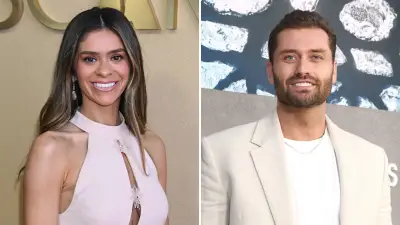
The Secret Lives of Mormon Wives star Taylor Frankie Paul is sending a pointed message on Mother’s Day.
“It’s Mother’s Day so I’ll say whatever I want,” Paul, 31, began in a lengthy Instagram post on Sunday, May 10. “As if it’s not already the worst time. I have [sic] STILL have ‘friends’ kicking me while I’m already down and calling it ‘setting a boundary’ and then BLAMES ME for being upset and responding. That’s called shaming and attack while I had a moment to breathe and she knew that.”
Alongside the message, Taylor shared a series of photos with her kids through the years. (Taylor shares daughter Indy, 8, and son Ocean, 5, with ex-husband Tate Paul and is also mom to son Ever, 2, with ex Dakota Mortensen. Taylor temporarily lost custody of Ever after an alleged domestic violence incident between the pair, but was awarded a 12-hour Mother’s Day visit. Local police declined to press charges.)
“Not once have [I] called myself a ‘victim’ but I’m HUMAN and have breaking points,” Taylor wrote on Sunday. “What a snake friend just did to me in the public eye after everything she just witnessed … the lack of empathy and silence was loud enough.”

Taylor Frankie Paul is speaking out for the first time since her alleged altercation with Dakota Mortensen made headlines. Taylor, 31, addressed the alleged domestic violence dispute with Dakota, 33, that caused a production shutdown on their reality show, The Secret Lives of Mormon Wives. “There’s more to the context to everything and it’s unfortunate,” […]
The statement comes one day after Mormon Wives costar Mikayla Matthews shared that she “tried to stay as removed as possible” from Taylor amid legal drama. Taylor, for her part, responded in the comments section of a fan’s recap of Matthew’s message and claimed her friend was “waiting for my downfall.” Matthews denied this in a separate comment.
Taylor did not name Matthews in the statement on Sunday, where she referenced her 2023 arrest when she was charged with aggravated assault, two counts of domestic violence in the presence of a child, child abuse with injury and criminal mischief after the incident. (Taylor ultimately pleaded guilty to aggravated assault, while the other four charges were dismissed with prejudice. She later reached a plea deal.)
“Did you see the hearing? Did you see the bruises?” Taylor continued on Sunday. “Yet she’s bringing up ‘picking sides?’ Yes usually you do for friends you know go through that. Have you been hurt while pregnant? Have you been beaten right after giving birth? Have you lost two babies due to who knows what? Have you gone to jail for finally breaking and taking the only blame for years? Have you been in trouble for getting ready to feel pretty two months postpartum that you cry off your make up and return to an ugly tee shirt? Can you even understand what I’m saying just from just a psychological point?”

The Secret Lives of Mormon Wives star Taylor Frankie Paul is getting real about the last month of her life amid new domestic violence allegations and a custody dispute. “The last 40 days felt like hell on earth,” the reality TV star, 31, wrote via Instagram on Sunday, April 5, alongside a video montage featuring […]
She continued, “No clearly not .. if it’s being used as an analogy to rash cream.. You heard one side and never called me after, in fact ignored me twice. That is what an enemy is. Your trauma doesn’t give you a pass to kick me while [I’m] down and cover it with ‘a boundary’ months later after the fact… she is right to state her ‘boundary’ sure … but go ahead tell them the truth.”
Without naming Matthews, Taylor then questioned who her “last convo” was with “regarding the situation” and noted that it was “not me.” Taylor also seemingly referenced “concerns” arising with her filming Mormon Wives season 5, which halted production amid her alleged altercation with Mortensen. Us Weekly confirmed last month that filming resumed, but Taylor has yet to appear on camera.
“What other questions did you have in the concerns while filming with me… ’Does she get paid more than us? Save the ‘concern for children act,’” Taylor wrote. “They all know I’m good to my children. I’ve missed more events, girls nights and opportunities to stay home with my kids more than some could ever say.”
She concluded, “Happy mother to all the moms out there💕 Of course I’m spiraling… people calling me out yet I can’t respond? Exactly what I will NOT be tolerating ever again. Thank you GOD for the people you sent to help me through this with my enemies so close.”


In the comments section, Mormon Wives costar Jessi Draper shared a message of support.
“You know how much I love you,” she wrote. “Not many have seen the behind the scenes but I have and I understand it first hand. I’m so sorry and you’ll be back stronger and happier than ever ❤️.”
In a separate statement on Sunday, Taylor wrote via her Instagram Story, “I will not be sitting down, staying silent or logging off … I did that for years on this. Trust me I can take a beating whether it’s physical, emotional, or public scrutiny. Anyone else want to speak up? Please do …”

Peacock’s newest crime drama M.I.A pulls off a shocking finale twist — but what does that reveal mean for the show’s future?
After Etta Tiger Jonze (Shannon Gisela) spent the whole season plotting — and succeeding — to avenge her family’s murder, she met boyfriend Matt’s (Tyler Tomás Perez) mother, Caroline (Marta Milans). Only the audience, however, knew that Caroline’s brothers were the ones who murdered Etta’s loved ones.
“I can’t even speculate — because all of this is from the wonderful writing team — about what comes next. I have no idea how this is going to go but I do know that the hope is that we get a second season to continue telling the story,” Gisela exclusively told Us Weekly. “They do such a wonderful job of making things complex and difficult to navigate. So I have no doubt that — should we get to keep telling the story — that we’ll just get deeper into the well.”
Gisela was excited to see a showdown between Etta and Caroline.
“It’ll be just as action packed — especially because Marta is such a force. It feels like two female Gladiators who are meeting and not knowing how the other is gonna react. So it’s just all of this juicy stuff,” she teased. “She brought it to life so beautifully. She has such a precision about her too. Like every scene that she’s in, she’s accurate and laser focused. So I’m excited to see what explosion comes from that meeting of these two gravitational characters.”
Gisela continued: “I wonder is Caroline going to want to get out of the business and she’s going to join Etta and be like, ‘Wait, this is crazy.’ Or is Matt gonna get thrown in the middle? Or does Matt end up knowing? Then does he have to pick? I have no idea but it’s such a juicy ending.”
Created by Ozark‘s Bill Dubuque, M.I.A is a crime drama focused on Etta, who seeks to avenge her family’s murder and rise to power in the Miami underworld.
“It’s a situation where it is so beautifully written in that Etta doesn’t have a one-track mind. There’s a real heart to her and an eagerness to connect with the people around her still. It takes her time, obviously.” She told Us. “The fact that she even lets Matt in is a sign that she wants to also just be a young woman and experience life.”
Gisela loved how the show found a balance, adding, “That eagerness to connect is the thing that keeps her coming back. It might be something where they are just going to keep learning more about each other.”
While the audience was shocked by the ending — so was the cast.
“We didn’t really know much about what was happening in the next episode until a little bit before we had to shoot it. It was one of these things that kind of kept me on my toes in a really great way,” Gisela gushed. “It kept it surprising. I had no idea where this was going to go. I knew what happened in the first episode and I knew that that was going to be the inciting thing that then we go on this journey. It was making discoveries along the way, which was really fun.”
M.I.A is currently streaming on Peacock.
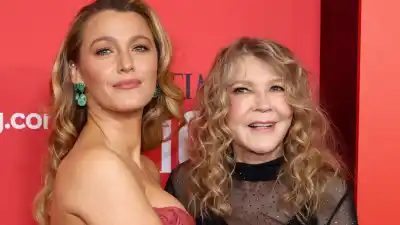
Blake Lively is paying tribute to her own mother, Elaine Lively, after she reached a surprise settlement in her legal battle against her It Ends With Us costar and director, Justin Baldoni.
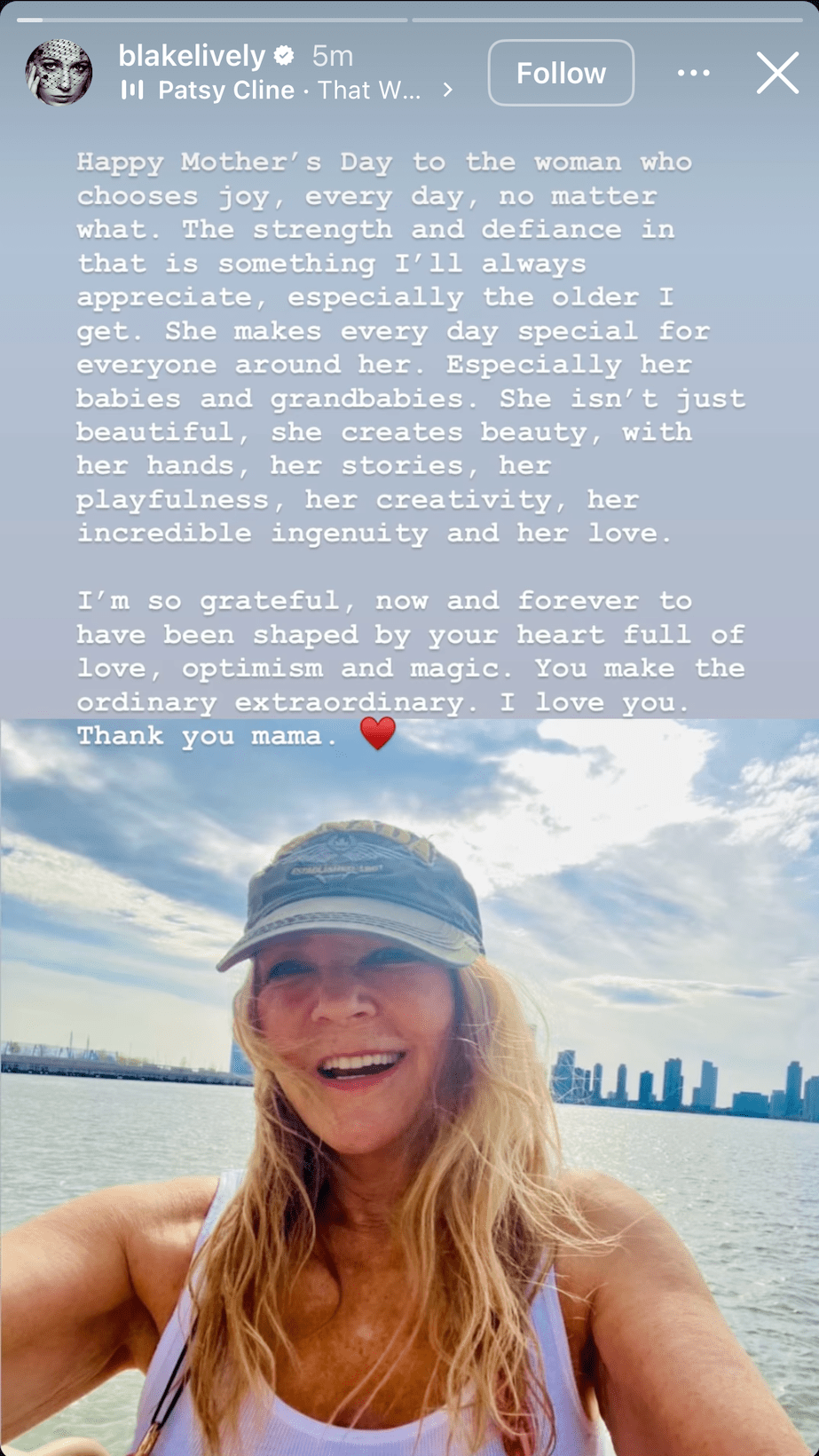
“Happy Mother’s Day to the woman who chooses joy, every day, no matter what,” Lively, 38, wrote via her Instagram Stories on Sunday, May 10, over a photo of her mother. “The strength and defiance in that is something I’ll always appreciate, especially the older I get. She makes every day special for everyone around her. Especially her babies and grandbabies”
The Gossip Girl star continued, “She isn’t just beautiful, she creates beauty, with her hands, her stories, her playfulness, her creativity, her incredible ingenuity and her love. I’m so grateful, now and forever to have been shaped by your heart full of love, optimism and magic. You make the ordinary extraordinary. I love you. Thank you mama.”
Lively’s heartfelt post comes nearly one week after Lively reached a surprise settlement with Baldoni, 42, before trial was set to begin.

As her legal battle against Justin Baldoni continues, Blake Lively is stopping to smell the roses. The actress shared a tribute to her mother, Elaine Lively, via her Instagram Story on Thursday, June 5, as she revealed she had been trying her hand at flower arranging. Blake, 37, shared a photo of herself holding a […]
Lively had alleged that her It Ends With Us costar sexually harassed her, fostered a hostile work environment and orchestrated a smear campaign against her. Baldoni denied her claims, but his countersuit was dismissed in June 2025.
On Monday, May 4, the pair reached an out-of-court settlement in the case, avoiding trial altogether.
Instagram/@blakelively Instagram/@blakelively
“The end product — the movie It Ends With Us — is a source of pride to all of us who worked to bring it to life. Raising awareness, and making a meaningful impact in the lives of domestic violence survivors — and all survivors — is a goal that we stand behind,” Lively and Baldoni said in a joint statement to Us via their attorneys at the time. “We acknowledge the process presented challenges and recognize concerns raised by Ms. Lively deserved to be heard.”
The statement continued, “We remain firmly committed to workplaces free of improprieties and unproductive environments. It is our sincere hope that this brings closure and allows all involved to move forward constructively and in peace, including a respectful environment online.”
Rachael Bennett, a certified family law specialist and senior attorney at Sullivan Law & Associates, exclusively told Us Weekly that similar cases tend to settle so close to trial because “the risk of putting the outcome in a jury’s hands becomes too dangerous for at least one, and here, probably both sides.”
“I think the timing here matters,” she continued. “The settlement came right after the judge dismissed the majority of Blake Lively’s claims, including that headline-grabbing sexual harassment allegation. By the end, the case had been narrowed primarily to just her retaliation claims and those contract related claims.”
She adds, “That changes the leverage dramatically once those bigger emotional claims are gone. I think both sides may have decided that continuing into a highly public trial with massive legal fees and some potential reputational risk simply just wasn’t worth a gamble anymore.”
Entertainment
HBO Max’s 90% Rotten Tomatoes Classic Is the Most Realistic War Movie You’ve Never Seen
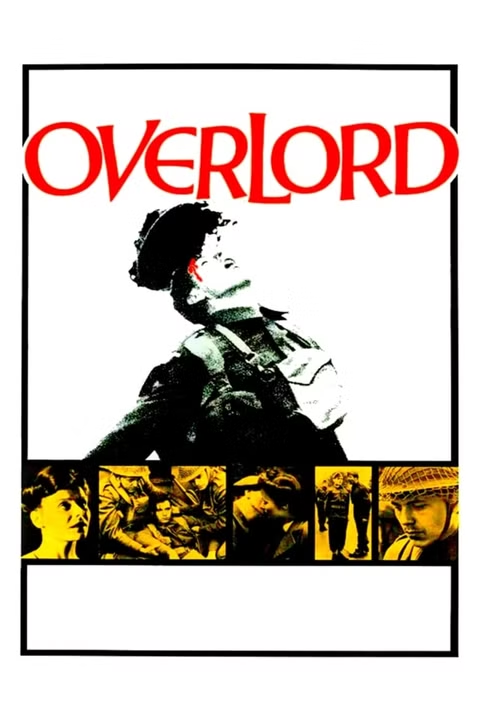
On June 6th, 1944, 160,000 Allied soldiers landed on occupied France via parachute, glider, and watercraft, in order to liberate Western Europe from the Nazis. It is an event that is almost legendary in its scale and consequences, so it is little wonder that filmmakers have visited the subject time and again. From The Longest Day in 1962 to Steven Spielberg’s brilliant opening scene in Saving Private Ryan, directors have used the beach landings to show heroism and bravery against harrowing odds.
While there certainly were heroes on that terrible day, those stories were not what interested British director Stuart Cooper when he set out to make his own D-Day film, 1975’s Overlord. Instead, Cooper delivers a more intimate, grittier, and tragically accurate historical fiction, one that will stay with audiences long after the credits roll. The name Overlord actually comes from the Allied codename for the invasion of Normandy during World War II. The film sets this expectation for the big day from the start, with the name blatantly informing the audience about what the movie is leading up to.
‘Overlord’ Examines World War II Through an Intimate Lens
In stark contrast to the gravity and size of Operation Overlord, audiences are introduced to an “everyman” recruit named Thomas Beddows (Bryan Stirner). Beddows is an Englishman who joins up with the British Army, undergoes basic training, and anxiously awaits his assignment in the war. The length and breadth of the film is spent, not with Beddows taking cover from German guns, but rather, taking scoldings from drill sergeants. Beddows does all the things viewers expect during the first quarter of a typical war film; he trains, he talks about life after the war with his mates, and he even dances with a woman and plans to take her out on a date. Only in Overlord, this period of pre-combat makes up the bulk of the film.
Instead of intricately shot combat scenes with hundreds of extras, Cooper relies heavily on archival footage of actual soldiers and implements of war. Intercut with the “live action” shots are real scenes of bombings, Nazi rallies, and troops and tanks on the march — adding to the realistic nature of the movie. In order to avoid visual whiplash, Cooper actually tracked down period-correct camera lenses from the 1930s and 1940s, so the look of his new footage would match the stock films. All of these scenes are woven seamlessly throughout the narrative, with Beddow’s troubled dreams being particularly wrought with grizzly visions of war. This gives Overlord an authentic look that also feels quite dreamy and nostalgic, making the events portrayed all the more sad to watch.
‘Overlord’ Subverts Expectations for a Devastatingly Impactful Conclusion
It is impossible to talk about Overlord without discussing its infamous ending, so anyone who would like to watch the film first should be aware of spoilers coming up. As mentioned above, most movies about D-Day give audiences a sort of hero to follow up the beach. Hundreds of soldiers die around our hero, but he always makes it, giving viewers a sort of proxy through the battle. But in Overlord, after spending more than an hour and a half with Private Beddows, the young man is shot in the head before he even steps off the landing craft. This scene is an absolute gut punch, leaving the viewer feeling completely devastated, if not a bit numb. Much in the same way that The Deer Hunter shows the deep friendship of the four leads before throwing them into The Vietnam War, Cooper gives us a portrait of a decent young man with a whole life ahead of him before unceremoniously cutting him down in the final minutes of the movie. As deeply depressing as it is, this is just what Overlord is trying to accomplish. Thomas Beddows is just one of the literal millions of young men across the world who lost their lives similarly during that terrible war.
Stuart Cooper’s Overlord is an epic of a very different sort than other war films. It does not dazzle with its effects, and it does not show the hell of battle through the eyes of a hero. Instead, Overlord chooses to represent the ordinary, almost forgotten soldier that falls without a word. Every extra in a war movie that dies in the background represents another Thomas Beddows, and Overlord was made for those lost lives. Everybody ought to see this film at least once, and remember that war is not fought by mythological heroes, but by ordinary people.

Overlord
- Release Date
-
July 1, 1975
- Runtime
-
83 minutes
- Director
-
Julius Avery
- Writers
-
Christopher Hudson
Supriya Ganesh is getting candid about leaving The Pitt — and the online reaction that followed.
“I tried to take a step away, because it’s just been so surreal,” Ganesh, 28, told Variety in an interview published on Sunday, May 10, of the reaction. “The day that news broke, I saw my name was trending on Twitter, and I was like, ‘Gotta put the phone down and go outside.’ So, I haven’t really been keeping track of it, to be honest, but I’ve been getting such sweet, lovely messages from people, and I’ve honestly just been surprised at how much people love the character and saw so much of themselves in her, and that’s what I’m going to miss.”
Ganesh, who couldn’t confirm any future projects yet, shared that there are a “couple of things in the pipeline.”
News broke in April that Ganesh’s character, Dr. Samira Mohan, would be written off after the emotional season 2 finale. At the time, it was reported that Ganesh’s exit was a “story-driven” choice, since the show is set in a teaching hospital.
While speaking with JoySauce later that month, Ganesh was asked where Mohan might end up in the future.
“I hope [Samira] goes somewhere where she has an attending that thinks she’s fit to be in the ER,” Ganesh said at the time, suggesting that Mohan be paired up with Sepideh Moafi’s character. “Maybe if Dr. Al-Hashimi takes over. It’s been really interesting thinking about how different her experience of the ER might have been if she had a different attending.”
That same month, Ganesh spoke out about experiencing “discrimination” as an actor and opened up about gender dysphoria in an essay with Vulture. Now, Ganesh shared that the piece led to people reaching out and has resulted in a “validating” experience.
“It’s definitely a scary thing to put out there, because it’s such a complex experience and something that’s so personal that I remember when I was writing it, I like, ‘I don’t know if anyone’s going to get this. But that’s OK, because even if one person gets it, like, I’m writing for that person,’” Ganesh told Variety on Sunday. “I get DMs from people being like, ‘I’m taking your essay to my queer theory class and discussing it in class tomorrow.’ That’s just so surreal to me, because I remember being in women’s and gender studies classes, and discussing and debating ideas. It’s just great that it’s part of the conversation.”
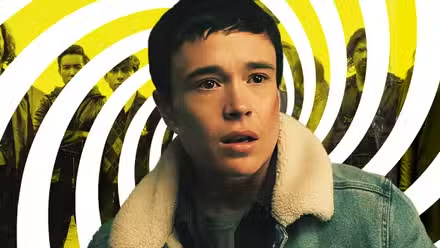
Netflix offers many options, but one that’s hard to turn off is The Umbrella Academy, adapted from the comic book series of the same name by Gerard Way and Gabriel Bá. With superhero titles becoming increasingly popular on streaming, there’s no shortage of shows to choose from, but there aren’t any like The Umbrella Academy, which combines zany humor, complex family dynamics, and exaggerated action. In addition to focusing on a group of superpowered siblings, the series explores sci-fi topics such as time travel and alternate timelines, building a complex and fascinating story.
What Is ‘The Umbrella Academy’ About?
There’s never a dull moment on The Umbrella Academy. From the very first sequence that explores the mysterious and simultaneous birth of 43 children to mothers who weren’t pregnant, the story takes some unexpected turns. After the event, seven of those children are adopted by the eccentric billionaire, Reginald Hargreeves (Colm Feore), who trains them to become superheroes. Luther (Tom Hopper), Diego (David Castañeda), Allison (Emmy Raver-Lampman), Ben (Justin H. Min), Five (Aidan Gallagher), and Klaus (Robert Sheehan) all have unique abilities thanks to their nontraditional origins; however, the seventh child, Viktor (Elliot Page), is isolated from the rest. Though flashbacks are common, The Umbrella Academy follows these estranged siblings as adults when Hargreeves’ death forces them all back together, dredging up their resentments and lingering trauma.
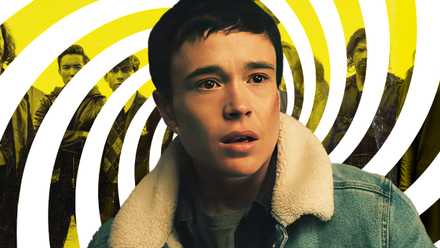
The surviving Hargreeves children’s lives are complicated by Five returning after being missing for 17 years, despite being no older than the day he left. Claiming to have time-traveled to the future and insisting that an apocalypse is looming, Five asks for his siblings’ help in saving the world. With brutal time-traveling assassins from the secret organization known as the Commission after him, no knowledge of what happens to end the world, and a firm deadline, Five’s mission is near impossible. However, it also forces the siblings to uncover the truth about their past and come together despite their differences. Each season brings the characters a new challenge as they travel through time and even alternate timelines to try to stop the apocalypse before it happens.
Wild Sci-Fi Adventure and Humor Set ‘The Umbrella Academy’ Apart
In a world full of superhero shows, The Umbrella Academy stands out for its unapologetically wild humor. Between a 13-year-old boy who has the memories of an old man, a man whose body is part gorilla, and a lovestruck time-traveling assassin, nothing is too out there for this show. Though the series has incredibly violent moments, it never loses sight of the comedy. With its high stakes, The Umbrella Academy isn’t light-hearted by any means, but it is hilarious.
The Umbrella Academy also never slows down. Between the looming apocalypse, the Hargreeves family’s never-ending drama, and their powerful enemies at the Commission, the series is full of intriguing storylines. However, the siblings’ unexpected reunion provides an emotional center that’s equally significant to the story, especially as each member of the Umbrella Academy evolves and develops their powers over time. All of these events are enhanced by highly amusing needle-drops thrown into the mix, with songs ranging from “I Think We’re Alone Now” to “Istanbul (Not Constantinople)” to catch the audience’s attention. Thanks to its excellent combination of superhero tropes and sci-fi elements, The Umbrella Academy is a show that was practically made to be binged over its four seasons.

- Release Date
-
2019 – 2024-00-00
- Directors
-
Jeremy Webb
- Franchise(s)
-
The Umbrella Academy
Cinema in the 20th century was defined by a litany of genres, from the screwball comedies of the ’30s and early ’40s to the Westerns of the ’50s and ’60s, the intense realism of the ’70s, and the action bombast of the ’80s. However, few genres, styles, or stories experienced the evergreen audience approval, ceaseless critical acclaim, and ferocious cultural staying power of crime drama across the century.
Through groundbreaking direction, daring storytelling, thematic intensity, and a confronting appetite for grit and violence, crime has established itself as one of cinema’s most absorbing and challenging genres through a plethora of perfect pictures that showcase the allure and awe of such stories. From pioneering noir masterpieces of the ’30s and ’40s to cerebral psychological thrillers of the ’90s, these crime movies are completely without fault, and their iconic status and universal adoration are a testament to their quality.
‘Heat’ (1995)

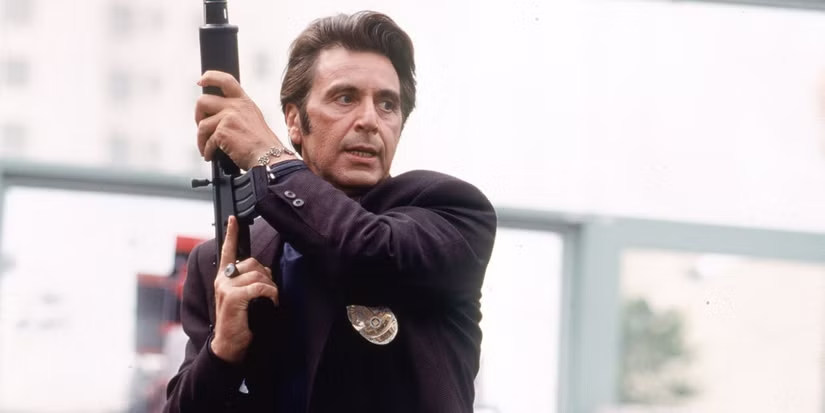
At 170 minutes, Heat is a monumental epic that sees Michael Mann marry the innate character drama and complex moral focus of crime cinema with some of the most arresting action sequences the medium has ever seen. A picture with little interest in the ethical line of the law, it treats both cops and criminals as deeply flawed people driven by an obsessive professionalism, creating a richly compelling dichotomy of principles, philosophies, and sacrifices as it follows bank robber Neil McCauley (Robert De Niro) and the cop who hunts him, Lt. Vincent Hanna (Al Pacino).
Simply casting De Niro and Pacino in the same movie made Heat an instant icon. Even beyond that bit of star power, the film’s qualities of grandiose spectacle, scintillating realism, and absorbing drama have remained enrapturing. Mann’s command of the story is immaculate, with the high-octane tension of the famous shootout scene and the quiet, dialogue-driven intensity of McCauley and Hanna’s diner meet-up both standing as two of the most masterful and mesmerizing sequences in crime cinema. It is a perfect crime-action film as well as one of the most ageless triumphs of ’90s cinema.
‘The Maltese Falcon’ (1941)

The Maltese Falcon is the spark that ignited the flurry of film noir classics that took Hollywood by storm through the ’40s, and while it has had many imitators, it remains unsurpassed in terms of both spectacle and style. Its aesthetic is of shadow and cynicism, with its finely-dressed figures all hiding dirty secrets as they try to outwit each other, or exploit one another for self-gain.
Based on Dashiell Hammett’s novel of the same name, it follows San Franciscan private eye Sam Spade (Humphrey Bogart) as the murder of his partner embroils him in a web of deceit and duplicity surrounding the criminal underworld’s search for the invaluable statuette, the Maltese Falcon. A tale of greed and desperation propped up by enthralling performances, compelling visuals, and wonderfully confounding plotting, The Maltese Falcon is one of Hollywood’s most iconic classics and is a pioneer of crime cinema mystique. It is quite astonishing to think it was John Huston’s directorial debut.
‘Pulp Fiction’ (1994)

The quintessential Quentin Tarantino movie, Pulp Fiction is an infectious combination of iconic dialogue that is as rhythmic as it is hysterical and outbursts of ultra-violence that define the irreverence and dare of the ’90s’ indie counterculture movement. Absurdly entertaining, the sprawling non-linear narrative follows several criminals in L.A. as their chaotic lives overlap through a series of wild and often deadly chance encounters.
Its impact on pop culture and cinematic trends is apparent, making it one of the most important and defining movies of its decade. Today, Pulp Fiction is still considered one of the most entertaining movies ever made, a magnetic procession of great lines, unforgettable scenes, perfect characters, and outstanding music. It fills every second of its 149-minute runtime with compelling drama, intensity, and comedy. Pulp Fiction is the epitome of style and excess in crime cinema, Tarantino’s magnum opus, and a triumphant touchstone of ’90s film.
‘Se7en’ (1995)

It is so often the case that palpable atmospheric intensity proves to be the greatest asset to crime mystery thrillers; Se7en is a stunning, albeit harrowing, example. Directed by David Fincher, the film is a masterclass in technical excellence, using every tool at its disposal—the rain-soaked setting, the muted color palette of greens and shadows, even the towering urban environment that feels as though it pushes down on the main characters—to conjure a sense of moral decay and visceral griminess.
The story itself is no lean feat either: Andrew Kevin Walker’s tightly constructed screenplay follows two detectives as they investigate a serial killer using the seven deadly sins as inspiration for his murders. Using traditional neo-noir elements while also incorporating ideas from horror, Se7en simmers throughout its runtime, tension burning in a pressure-cooker that engulfs viewers right up until its unforgettable finale. Disturbing and dark, it represents crime cinema at its unflinching and scarring best, and it stands as one of the genre’s most notorious and iconic titles because of it.
‘M’ (1931)

A German film that was decades ahead of its time, M is one of the earliest classics in crime cinema, a foundational masterpiece that pioneered new ways of using sound as a storytelling device that are still used to this day. It conjures a haunting atmosphere with its use of expressionistic visuals and the implementation of Edvard Grieg’s “In the Hall of the Mountain King” as an eerie leitmotif that heralds the central villain, the child-murdering serial killer Hans Beckert (Peter Lorre).
The movie uses the villain’s reign of terror as a catalyst to examine morality and necessity on both sides of the law. With the public in panic over the at-large killer, police begin to flood the streets, hoping to break the case open. As the police presence thwarts the operations of organized crime, mobsters set out to apprehend the murderer themselves so they can resume their illegal activities. It is a timelessly fascinating examination of responsibility and self-interest, and at the heart of it all is Lorre’s captivating and oddly sympathetic antagonist.
‘Double Indemnity’ (1944)

Double Indemnity was crucial to highlighting the timeless allure of ’40s noir cinema and establishing the moody subgenre as a major influence on crime cinema going forward. Co-written and directed by Billy Wilder, it follows an insurance clerk seduced into a devilish scheme by a married woman who wants to kill her husband and cash the life insurance. Despite their extensive plotting, the duo finds themselves under pressure when an insurance investigator becomes interested in the case.
Reveling in noir cinema’s rich complexity with its story of greed, lust, and murder, Double Indemnity remains utterly transfixing to this day. Its macabre suspense and the way it places viewers on the side of the scheming killers make for wonderfully wicked entertainment. It’s all supported by three stellar performances and a screenplay full of twists, tension, and the brand of acidic wit that the best Old Hollywood movies tended to master.
‘High and Low’ (1963)

Throughout his illustrious career, there is hardly a genre Akira Kurosawa didn’t master. While many know him best for his epic samurai films, the Japanese filmmaker also had a distinct penchant for crime cinema, with 1963’s High and Low being his finest accomplishment in the genre. A pressing tale of morality and social inequality, it transpires as a business executive with designs on buying a shoe company finds himself at the center of a hostage negotiation when his driver’s son is kidnapped and the criminals responsible demand a huge ransom in exchange for his life.
This ceaselessly compelling story of responsibility and reason receives tremendous weight from Kurosawa’s technical prowess. Theatrical shot compositions divide people based on class, the rigid structure and meticulous design of the framing reflecting the inescapable order of the society that Toshiro Mifune’s businessman lives above and routinely ignores. When chaos erupts, Kurosawa switches to handheld to capture the frenzied intensity of the situation. Like so many of the best movies the genre has seen, High and Low uses its crime story to illuminate cultural issues, becoming both timelessly perfect and perfectly timeless.
‘Chinatown’ (1974)

Considered by many to be the greatest screenplay ever written, Chinatown is a masterclass in elaborate mystery suspense that truly takes flight with its stunning performances, atmospheric intensity, and ability to blend traditional noir elements with a renewed social cynicism that was commonplace in the ’70s. Jack Nicholson stars as Jake Gittes, a private investigator in 1930s L.A. who is entangled in a web of political corruption and murder conspiracy after being hired by an impostor to tail the chief engineer of the Department of Water and Power.
With not a second of screentime being wasted or misused, Chinatown is a masterclass in smart and efficient storytelling. It uses visual cues and an air of imposing, sinister dread to not only bolster the intensity of the narrative but also enrich its central themes of power, corruption, and greed. It remains the definitive example of neo-noir cinema, combining its absorbing and complex mystery with a sense of realistic tragedy to strike a brutally mature tone regarding real-world evil and the immunity of the wealthy.
‘Goodfellas’ (1990)

“As far as I can remember, I always wanted to be a gangster.” The opening line of Goodfellas is both a relatable yearning for prestige and power and a cold caution of the tale of violence that follows. The biographical masterpiece sees Martin Scorsese operating at his absolute best as it explores the life story of Henry Hill (Ray Liotta), an impressionable youth who starts working for the mob and, along with his two friends, does anything required to rise up the ranks of the organized crime syndicate.
A masterclass in fast-paced storytelling courtesy of Scorsese’s direction and Thelma Schoonmaker’s editing, Goodfellas is both relentless and utterly transfixing from its opening moments. Its sense of style, buoyed by its sublime soundtrack and technical brilliance, feels inviting, almost dangerously so, as if the audience is being seduced by the allure of a life of crime as Hill is. However, Scorsese never seeks to glamorize such a lifestyle, with the movie soon descending into a ferocious frenzy of self-saving paranoia that turns Hill’s luxurious life into a waking nightmare. Goodfellas is a masterpiece of crime cinema, a propulsive thriller that grounds the viewer in Hill’s rise and harrowing fall.
‘The Godfather’ (1972) & ‘The Godfather Part II’ (1974)

Not only the pinnacle of crime cinema, but arguably the two greatest movies ever made, The Godfather and The Godfather Part II, are the height of filmmaking perfection. Everything from their cinematography and direction to the performances and sense of Shakespearean tragedy defines the movies’ splendor. The first film follows a tumultuous transition of power in the Corleone crime family as the aging Vito (Marlon Brando) hopes to hand over power to his reluctant son, Michael (Al Pacino). The second film, split across two separate stories, documents Michael’s efforts to expand his criminal empire and a young Vito’s rise to power in 1920s New York.
It is impossible to revere one film without acknowledging the greatness of the other, with both movies standing as medium-defining epics tackling issues of power, corruption, and the violent greed of the American dream with profound depth and artistry. The brilliance of both films is enduring. Over 50 years have passed since they were released, and yet they remain two of the most discussed and analyzed movies of the modern day. Additionally, they helped pioneer a new dawn of confronting realism and thematic depth in Hollywood cinema, making them essential cultural touchstones of filmmaking excellence as well as ageless masterpieces of crime drama.
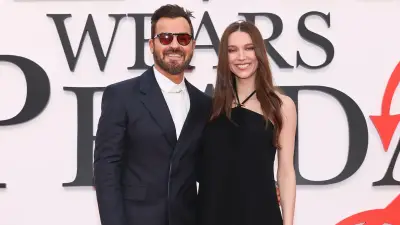
Justin Theroux is paying tribute to his wife, Nicole Brydon Bloom, on her first Mother’s Day after the birth of their baby boy.
“‘The loveliest masterpiece of the heart of God is the heart of a mother,’” Theroux, 54, wrote via Instagram on Sunday, May 10, quoting Thérèse of Lisieux. “Happy first Mother’s Day Nicole … you are such a gift to both of us. ❤️.”
Alongside the upload, Theroux shared an image of him cradling Bloom’s stomach before sharing several snaps with their newborn.
Theroux and Bloom, 32, were first linked in February 2023. The couple got engaged the following year when he proposed while they were in Italy for the 2024 Venice Film Festival. In March 2025, Theroux and Bloom tied the knot in Mexico.

Justin Theroux can’t help but marvel over his 3-week-old baby. “It’s so hard to sum [fatherhood] up,” Theroux, 54, said on the Thursday, April 23, broadcast of Today. “I just love looking into his eyeballs. It’s just a wonderful thing. We’re in that period now where it’s a lot of quiet tip-toeing around the house […]
News broke in December 2025 that the couple were expecting their first baby several months after their wedding. Bloom confirmed her pregnancy that same month while debuting her baby bump at the season 2 premiere of Fallout in Los Angeles.
Later that month, Theroux and Bloom shared a glimpse of their babymoon getaway in Mexico.
“So much fun to revisit our favorite place with a little one on the way 🕊️👶🏼,” she captioned an Instagram post at the time.
In February, Bloom gushed that she’s “always wanted to be a mom.”
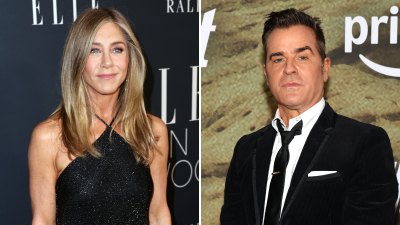
Jennifer Aniston subtly offered her congratulations to ex-husband Justin Theroux and his wife, Nicole Brydon Bloom, after they welcomed their first baby. “He’s here 🕊️We are so in love,” Theroux, 54, and Bloom, 32, captioned a joint Instagram post on Saturday, April 18, alongside a snap of the actor holding his newborn son. Aniston, 57, […]
“I love kids. I’ve always been looking forward to this chapter in my life, and certainly Justin has been, too,” Bloom told The Hollywood Reporter at the time, noting that she was excited about the pair’s new chapter. “It’ll have its challenges with going back to work and everything, but I’m just thrilled, very happy.”
Theroux and Bloom shared in April that they had welcomed their first baby, a boy. “He’s here 🕊️ we are so in love,” the pair wrote in a joint Instagram post at the time.
The couple received several supportive messages from celebs and a subtle reaction from Theroux’s ex-wife, Jennifer Aniston, who “liked” the announcement. (Aniston and Theroux tied the knot in 2015 and divorced three years later. She is now dating hypnotist Jim Curtis.)
Days later, Theroux and Bloom walked the red carpet while attending the world premiere of The Devil Wears Prada 2 in New York City. Theroux, for his part, portrays Emily Blunt’s on-screen boyfriend in the sequel film.
At the event, Theroux told People that the best part of fatherhood so far has been “being able to pour all the love that I have into my son.”
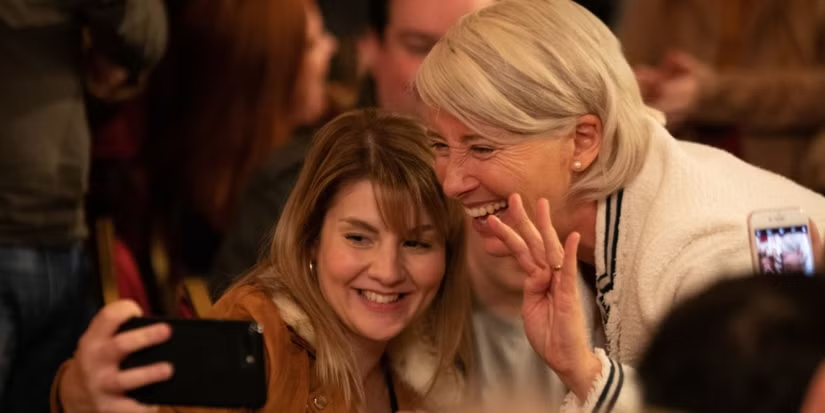
Some shows deserve far more attention than they get. HBO has long built its reputation on a stacked lineup of award-winning hits, from the epic fantasy that is Game of Thrones to the gold standard of crime dramas, The Sopranos. But HBO has got a lot more right up its sleeves. Over the years, the network has quietly released several hidden gems that often slip through the cracks.
They may not have the same level of hype or marketing power to dominate the charts, but these shows more than make up for it with substance, storytelling, and staying power. With that in mind, here are the forgotten HBO shows that have aged like fine wine.
‘Years and Years’ (2019)

Some apocalypses don’t happen overnight — they can also take years. Set between 2019 and 2034, Years and Years follows the Lyons family, a group of ordinary Britons who live life under the creeping political and economic collapse, as well as the rapid advancement of technology. As each crisis stacks on top of the others, it seems hapless to do anything about it.
The Lyons are neither heroes nor revolutionaries. They’re just working-class individuals trying to get by whatever comes their way. As society frays, technology becomes both escape and crutch. Meanwhile, those who actually possess power and influence take advantage of it to weaponize fear. The scariest part of the show is that these phenomena feel very true to real life.
‘The Night Of’ (2016)

Wild, spontaneous nights take a murderous turn in The Night Of. Pakistani-American college student Nasir “Naz” Khan (Riz Ahmed) is about to attend a Manhattan party after taking his father’s cab without permission. However, things become a little blurry when he encounters a mysterious woman named Andrea. After a night of sex and bad decisions, Nasir wakes up to find Andrea brutally murdered.
The next few episodes are a bit of a doozy. Nasir has absolutely no idea what happened. However, when his intoxicated self becomes involved with the police, he quickly becomes the prime suspect in the case. It’s a sticky situation where, despite the debauchery of the night before, Nasir isn’t necessarily responsible for the murder — yet the system continues to wrong him due to a lack of clear evidence. The Night Of proves that the legal system doesn’t guarantee anyone justice despite the truth being out in the open, and no matter how “objective” it claims to be, perception takes greater precedence.
‘Vice Principals’ (2016)

It’s the battle of VPs in this dark comedy — not Vice Presidents, but Vice Principals. At North Jackson High School, Neal Gamby (Danny McBride), the no-nonsense vice principal in charge of discipline, is sure that he’ll succeed as principal. However, his arrogance is taken down a notch when Lee Russell (Walton Goggins), the manipulative vice principal of curriculum, also has his sights set on the post. To the two’s surprise, the principal trusts neither of them.
What the two vice principals don’t realize is that the school hires an outsider to take over instead. Gamby and Russell aren’t having any of it, and the two team up to veto the decision, which seems nearly impossible since the incoming principal has been making a good impression. But Vice Principals‘ charm is simple: the insane chemistry between McBride and Goggins as two nitpicking, insult-trading, overgrown adults is comedy gold. Think of it as Abbott Elementary, but without the wholeheartedness and packed with inappropriate vulgarity in the hallways.
‘I May Destroy You’ (2020)

Recognized as one of television’s greatest masterpieces, I May Destroy You is an essential watch during a time when sexual consent has become a bigger, more open discourse. Arabella (Michaela Coel) is a London-based writer with a huge social media following, currently under pressure to finish the follow-up to her successful second book. To let off some steam, Arabella spends the night with her friends at a local bar, only to wake up disoriented and sexually assaulted.
I May Destroy You doesn’t center solely on the assault itself, but rather on Arabella’s attempt to process the trauma. As is often the case with such experiences, her memories are fragmented, and she struggles to piece together what really happened that night. At the same time, the world keeps moving, forcing her to expedite her recovery in an environment that doesn’t pause for her pain. Arabella’s healing is anything but linear. She becomes a walking contradiction, trying to make sense of something she sometimes doubts was even real. At the same time, she channels her trauma into various outlets, some more successful than others.
‘Perry Mason’ (2020–2023)

Decades before the likes of Mickey Haller from The Lincoln Lawyer, there was defense attorney Perry Mason (Matthew Rhys). Set in 1932 Los Angeles, Perry Mason follows the flawed attorney-slash-private investigator as he works in the aftermath of the Great Depression and the rise of Hollywood. The combination of the two makes the perfect setting for corruption to slip through, whether it’s by criminals or the political system.
However, Mason isn’t perfect either. Still grappling with the trauma of World War I, he lacks any sense of stability in his personal life. A struggling alcoholic, his marriage is on the rocks, and he’s barely getting by with what little he has. Though he becomes the face of the courtroom, Mason isn’t above taking shady deals or bending the rules to crack a case. Don’t expect clear-cut victories. He’s often choosing the lesser evil, all while trying to keep himself from falling apart.
‘Animals.’ (2016–2018)

New York City is home to 8.48 million people, but they’re not the only inhabitants of the Big Apple. As the title suggests, Animals. features a special group of characters: living, breathing, talking animals. It’s not just house cats in apartments or puppies playing in dog parks — the series also follows moths intoxicated by midnight neon lights and the horses often used in tourist carriages. Through separate episodes, these animals question life’s conundrums, but from an anthropomorphic point of view.
These animals go through distinctly human experiences, ranging from the ordinary — like dating — to the experimental, such as drug use, and even the philosophical, like existential dread. However, don’t expect any major revelations. Much of the show’s commentary leans toward observation, with Animals. focusing more on capturing the senseless absurdity of everyday life — an absurdity that mirrors the city itself. The use of animals is simply an added quirk, allowing viewers to see human behavior from a non-human perspective.
‘The Leftovers’ (2014–2017)
The Leftovers imagines an apocalypse where people give up on finding the truth. The series begins in the aftermath of the “Sudden Departure,” when 2% of the world’s population vanishes without warning or explanation. Instead of searching for answers, many of those left behind remain confused, fractured, and in denial. The cast includes Justin Theroux, Carrie Coon, Margaret Qualley, and Liv Tyler.
It isn’t the easiest show to watch, but it lingers with you. In a world stripped of meaning, the survivors struggle to create new purpose for themselves. The show follows ordinary people as they confront the impossible yet undeniable truth that their loved ones can vanish instantly without explanation. On top of that, they try to figure out what’s left to hold on to when everything else feels gone.

The Leftovers
- Release Date
-
2014 – 2017-00-00
- Showrunner
-
Damon Lindelof
- Writers
-
Damon Lindelof, Tom Perrotta
The worst remakes of beloved ’70s movies usually commit the same fatal sin: they inherit a premise that already had pressure built into it, then flatten that pressure into product. The ’70s were messy, nervous, suspicious, and often spiritually bruised. Even the populist hits from that decade had grit in the joints. The violence felt uglier. Institutions felt less trustworthy. Men looked weaker, angrier, more confused, or more morally compromised. Women in genre films were often trapped inside systems that looked normal from the outside and rotten from within. The atmosphere mattered because the culture’s nerves were already exposed.
That is exactly why so many remakes of ’70s movies feel weirdly bloodless even when they are louder, slicker, and more expensive. They remember the thing you can put on a poster. They forget the social panic, the grime, the moral trap, the class resentment, the suburban dread, the humiliating vulnerability. A good remake has to understand what hurt in the original. These movies mostly just remember what sold.
10
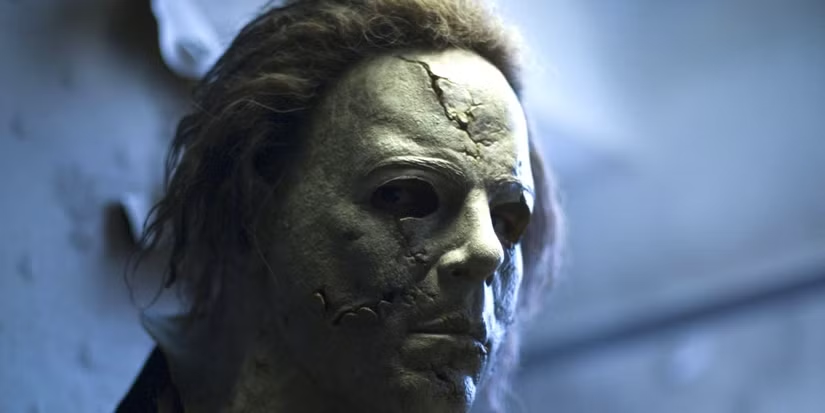
‘Halloween’ (2007)

Rob Zombie’s Halloween is not empty in the way some of the others are. It has intention. It has grime. It has a filmmaker’s fingerprint all over it. That is part of what makes the failure so interesting. This is not a cynical Xerox. It is a sincere misunderstanding. John Carpenter’s original is terrifying because Michael Myers (Nick Castle) is less a person than an intrusion. He is blankness with a knife. He drifts through suburbia and makes ordinary space feel spiritually unsafe. Hedges, sidewalks, afternoon light, babysitting, all of it starts to feel cursed because Michael is barely legible in human terms.
Zombie hates that kind of abstraction. He wants filth, abuse, broken homes, humiliations, ugly social roots. So he stuffs Michael’s childhood with explanation. The trouble is, explanation is not depth here. It is reduction. Michael becomes less mythic, less impossible, less like evil moving through space and more like a case file screaming for attention. That would already be a problem, but Zombie’s other weakness piles on top of it: everybody in the movie lives at the same shrill, vulgar register. Laurie Strode (Scout Taylor-Compton) and Dr. Loomis (Malcolm McDowell) are trapped inside a world that is degraded from frame one. And horror like Halloween needs contrast. It needs clean air before the poison. This version starts poisoned, which sounds “darker” until you realize fear has nowhere left to spread.
9
‘The Longest Yard’ (2005)

The original The Longest Yard is one of those deceptively loose ’70s movies that actually knows exactly what it is doing. On the surface, it’s just convicts playing football. But when you peel a layer, it is actually anti-authoritarian sports comedy built on humiliation, macho ruin, institutional sadism, and the weird dignity that can emerge in a rigged system when losers decide they would still rather hit back than behave. Paul Crewe (Burt Reynolds) in the original is already disgraced, already morally compromised, already spiritually beaten down in that perfect ’70s antihero way.
The remake turns a lot of that into broader, more crowd-pleasing underdog entertainment. That is not a crime in itself. A remake can shift the register. But the writing keeps softening the bitterness that made the original bite. Paul Crewe (Adam Sandler) is more digestible, less corroded, more built for eventual likability. The prison becomes a comedy venue more than a pressure system. Even when the movie has fun, and it sometimes does, it feels safer than it should. A prison-football movie should still have some meanness in its bloodstream. This one is too eager to entertain cleanly.
8
‘Death Wish’ (2018)

The ugly beauty of the original Death Wish is that it never really lets Paul Kersey (Charles Bronson) off the hook. The movie knows the revenge fantasy is seductive, but it also understands that seduction as moral damage. Bronson’s Kersey does not become some triumphant action icon in any spiritually healthy sense. He hardens. He narrows. The city’s violence enters him and rearranges what he is willing to be. That discomfort is the point. Vigilantism is not just empowerment there. It is infection.
The remake keeps the bones and throws away too much of the infection. Paul Kersey (Bruce Willis) should feel like a man crossing into a state he cannot come back from, but the writing keeps smoothing that descent into more familiar action-revenge mechanics. Once that happens, you lose the queasiness that made the original worth arguing about. Revenge movies are easy. Morally ugly revenge movies that implicate the audience in the pleasure are harder. The remake wants the gunfire and the outrage while avoiding too much of the rot. And that is exactly what this story should never avoid.
7
‘Straw Dogs’ (2011)

This is one of the most difficult remakes on the list because Sam Peckinpah’s original Straw Dogs is simply about humiliation, sexual tension, masculine weakness, social performance, class resentment, intellectual fragility, and the horrifying way violence can awaken things a man would rather believe are not in him. David Sumner (Dustin Hoffman) in the original is not a sturdy hero pushed too far either but a man who does not know what force lives inside him until the siege demands an answer, and the answer is not cleansing. It is sickening.
The remake translates too much of that unease into more standard Southern-hostility thriller energy. David Sumner (James Marsden) is less spiritually baffling than the role needs to be, and the whole conflict becomes more legible in ways that weaken it. The locals are hostile, the marriage is tense, the old boyfriend energy is bad, the house becomes a battleground, all the plot machinery is there. But Straw Dogs should feel morally dangerous. You should be watching a man become competent at violence and feel no comfort in it at all. The remake does not fully trust that discomfort. It starts behaving more like a siege thriller and less like a nightmare about civilization cracking open to reveal how thin it was.
6
‘The Taking of Pelham 123’ (2009)

The original The Taking of Pelham 123 is a great urban pressure-cooker thriller because it understands that systems are dramatic. A hijacked subway train, city bureaucracy, labor tensions, criminal intelligence, civic personality, procedural improvisation, all of it clicks because every human being feels positioned inside a larger machine that is overheating. The threat is not just the gunmen. The threat is that New York itself has to respond as a living, burdened organism.
The remake keeps the basic skeleton and inflates the personalities. That sounds fun in theory. Walter Garber (Denzel Washington) and Ryder (John Travolta) should be electric on paper. But the film keeps pushing everything outward, toward bigger acting, bigger score cues, bigger emotional emphasis, and in doing so it loses the elegant procedural tension of the original. Ryder becomes more performative and less unnerving. Garber gets bulked up into a more explicitly guilty, redemptive protagonist. The result is not terrible scene to scene, but the story loses the civic tightness that made the original feel so alive. The machine has been replaced by star wattage.
5
‘Rollerball’ (2002)

The original Rollerball is one of the coolest examples of science fiction and action working together without either side getting dumbed down for the other. The sport matters because the politics matter. Corporate power wants spectacle without individual transcendence. The public gets addicted to violence. The player becomes a problem the second he starts looking too singular, too legendary, too human inside the machine. Jonathan E. (James Caan) is compelling because his very persistence begins threatening the logic of the system. That is a real idea. That is not just a setup.
The remake seems to have looked at the title and concluded that rollerblading violence, MTV editing, metallic chaos, and nihilist sports energy would be enough. But without the social idea, it is just noise. Jonathan Cross (Chris Klein) never becomes symbolically dangerous to the world around him. He is merely present inside it. And that is devastating for a story like this. Rollerball should make mass entertainment feel politically sinister. The remake behaves like mass entertainment already won and nobody writing it was smart enough to notice.
4
‘Get Carter’ (2000)

The original Get Carter is one of the meanest, most clear-eyed revenge films ever made. Jack Carter (Michael Caine) returns home as a dangerous man already shaped by vice, crime, and emotional hardening (not as a romantic Avenger). The film works because the investigation into his brother’s death becomes a guided tour through a city’s rot, and Carter is not morally above any of it. He belongs to the same darkness he is moving through. That is what gives the revenge its foul taste.
The remake keeps trying to make Jack Carter more sympathetic in a way that weakens the whole enterprise. Jack Carter (Sylvester Stallone) becomes more mournful, more recognizably bruised, more conventionally redeemable. But Get Carter is not supposed to redeem its avenger. It is supposed to let him cut through filth like somebody who already carries the same stain. The more accessible the hero becomes, the less poisonous the story is. And once the poison is gone, you are left with a revenge movie that has style residue and very little soul.
3
‘The Stepford Wives’ (2004)

This one is especially infuriating because the original is such a razor-sharp genre concept. It is not “men turn wives into robots” in some goofy high-concept vacuum. It is suburban misogyny rendered as science-fiction horror. It is the male fantasy of frictionless domesticity turned into annihilation. Women do not merely become obedient. They are emptied out, polished, displayed, and stripped of real personhood so their husbands never again have to cope with female will, mess, thought, contradiction, or independence. The chill in the original comes from how recognizable the desire underneath the horror is.
The remake turns that into upscale camp. Not clever poison. Not destabilizing satire. Camp. That decision kills almost everything. Joanna Eberhart (Nicole Kidman) should feel like a woman watching the language of perfect home life turn mechanically predatory around her. Instead the film keeps tipping toward broadness, reassurance, and audience-safe joke rhythms. It is too charmed by its own decorative world. The Stepford premise only bites when the film is willing to say something ugly and specific about how patriarchy dreams of femininity. This version mostly wants to be glossy and cute in a story that absolutely should not be cute.
2
‘The Omen’ (2006)

This is the most frustratingly faithful failure on the list. You can feel the movie trying to assure horror fans that it remembers all the right stations: Damien’s eerie presence, the nanny, the priest warnings, the church panic, the family dread, the accidental revelation that your child may be a vessel for apocalypse. All the pieces are there. And that is exactly why the weakness becomes so obvious. It proves, scene by scene, that remembering the beats is not the same as carrying the dread.
The original The Omen was so loved because it treats its premise with terrifying seriousness. Robert Thorn (Gregory Peck) slowly realizes that modern privilege, diplomacy, fatherhood, and rationality may all be useless against a biblical evil already growing inside his own house. The remake copies the map and misses the conviction. Robert Thorn (Liev Schreiber) and Katherine Thorn (Julia Stiles) move through the same broad ordeal, but the movie never makes you feel the full spiritual indecency of what is happening. The Antichrist should not feel like a franchise concept but reality itself curdling.
1
‘The Wicker Man’ (2006)

This had to be number one because it is the clearest example here of a remake not merely failing, but failing to comprehend its original on the level of worldview. The Wicker Man is not about a weird island and pagans. It is about ideological collision. It is about a devout, sexually repressed, morally rigid Christian policeman walking into a culture whose rituals, eroticism, and social harmony are all structured around a completely different understanding of life, sacrifice, fertility, and order. The horror comes from the fact that he thinks he is investigating them when really they have already read him perfectly. The ending, therefore, becomes not just shocking but cosmological. His belief system is not enough to save him from theirs.
The remake throws almost all of that away. It swaps in paternal guilt, louder conspiracy-thriller mechanics, and a more generalized “creepy isolated community” approach that completely misses the original’s spiritual trap. Edward Malus (Nicolas Cage) is not undone by the limitations of his own moral certainty in the same way Sergeant Howie (Edward Woodward) was. He is just dragged through increasingly bizarre set pieces until the movie bursts into camp notoriety. The memes do not even annoy me as much as the misunderstanding does. The original burns because every ritual, every smile, every song, every sensual provocation has been tightening the same noose. The remake just flails. And that is why it sits at the bottom. It does not know what kind of story it is desecrating.

Business2 minutes ago
Urban Company shares tank 9% after Q4 net loss swells to Rs 161 crore despite a sharp revenue uptick

Sports6 minutes ago
Takeaways: Ducks impress with bounce-back performance vs. Golden Knights

Business9 minutes ago
FMR shares rise following acquisition update

NewsBeat2 months ago
Manchester United reach agreement with Casemiro over contract clause amid transfer speculation

Politics1 month ago
US brings back mandatory military draft registration

NewsBeat1 month ago
Steven Gerrard disagrees with Gary Neville over ‘shock’ Chelsea and Arsenal claim | Football


-
 Crypto World3 days ago
HarrisX Poll Found 52% of Registered Voters Support the CLARITY Act
-

 Crypto World4 days ago
Upbit adds B3 Korean won pair as Base token gains Korea access
-

 Fashion2 days ago
Weekend Open Thread: Marianne Dress
-

 Tech6 days ago
Image AI models now drive app growth, beating chatbot upgrades
-
 NewsBeat4 days ago
NCP car park operator enters administration putting 340 UK sites at risk of closure
-
 Business2 days ago
Ignore market noise, India’s long-term story intact, say D-Street bulls Ramesh Damani and Sunil Singhania
-

 Politics2 days ago
Politics Home Article | Starmer Enters The Danger Zone
-
 Sports7 days ago
2026 NHL playoff picks: Second-round predictions, series odds, Stanley Cup bracket
-

 Crypto World6 days ago
UAE Free Zone Deploys Blockchain IDs to Verify Registered Firms
-

 Crypto World5 days ago
BlackRock CEO Larry Fink Discusses a New Asset Class
-

 Crypto World4 days ago
Robinhood says Wall Street is building onchain
-

 Tech5 days ago
Apple and Samsung are dominating smartphone sales so thoroughly that only one other company makes the top 10
-
Entertainment6 days ago
Serena Williams hits Met Gala in metallic dress after GLP-1 reveal
-

 Fashion4 days ago
The Best Work Pants for Women in 2026
-
 Sports7 days ago
Hearts v Rangers LIVE: Prediction, team news and line-ups as Scottish Premiership title rivals meet at Tynecastle
-
 Politics6 days ago
Met Gala 2026: Madonna’s Dramatic Red Carpet Look Steals The Show
-

 Tech5 days ago
I tested the Xiaomi 17 Ultra’s camera and I don’t think I’ll ever go back to an iPhone
-
 Entertainment7 days ago
Skai Jackson Responds To AI Baklash After Viral Snapchat Photos
-
Crypto World4 days ago
The FOMO Is Back: Why Bitcoin’s Latest Rally Has Analysts Flashing Warning Signs
-
 Tech4 days ago
AI agents are missing all the discussions your team is having. SageOX has an answer: agentic context infrastructure
You must be logged in to post a comment Login