BANGKOK (AP) — The escalating war with Iran is pushing parts of the world into energy triage, forcing governments to choose where to cut demand or absorb costs, while prioritizing dwindling supplies.
Governments in the region are scrambling to adjust — tallying oil reserves, conserving energy, competing for supplies and trying to blunt prices. That brings difficult trade-offs: saving power may slow business activity. Prioritizing cooking gas for households can hurt restaurants and other businesses.
Advertisement
Cooks at a restaurant prepare meals over a charcoal stove following a shortage of liquefied petroleum gas in Mumbai, India, Wednesday, March 11, 2026. (AP Photo/Rafiq Maqbool)
Advertisement
Cooks at a restaurant prepare meals over a charcoal stove following a shortage of liquefied petroleum gas in Mumbai, India, Wednesday, March 11, 2026. (AP Photo/Rafiq Maqbool)
Advertisement
Advertisement
Advertisement
Advertisement
Motorists wait behind a rope for their turn to get fuel at a pump, fearing a possible fuel shortage due to the Iran war, in Dhaka, Bangladesh, Sunday, March 8, 2026. (AP Photo/Mahmud Hossain Opu, File)
Advertisement
Motorists wait behind a rope for their turn to get fuel at a pump, fearing a possible fuel shortage due to the Iran war, in Dhaka, Bangladesh, Sunday, March 8, 2026. (AP Photo/Mahmud Hossain Opu, File)
Advertisement
Advertisement
Advertisement
Tricycle drivers prepare their documents to receive their cash assistance from the government to help in their livelihood as oil prices continue to rise on Tuesday, March 17, 2026, in Manila, Philippines. (AP Photo/Aaron Favila)
Tricycle drivers prepare their documents to receive their cash assistance from the government to help in their livelihood as oil prices continue to rise on Tuesday, March 17, 2026, in Manila, Philippines. (AP Photo/Aaron Favila)
Advertisement
Advertisement
Advertisement
“Even relatively modest constraints on energy use can create a drag on industrial activity,” said Linh Nguyen, with the consultancy Control Risks. She pointed to Vietnam’s energy-intensive export industries and warned that higher fuel costs or conservation measures could quickly raise production costs or slow factory output.
Analysts warn the same hard choices could soon spread beyond Asia to fuel-importing economies in Africa and elsewhere as countries compete for scarce supplies.
“The situation is common across the board,” said Putra Adhiguna of the Jakarta-based Energy Shift Institute. “There is no easy decision for the short term.”
Advertisement
Southeast Asia is rationing scarce energy
With oil prices surging despite releases of some reserves, Southeast Asia is stretching dwindling energy reserves by urging households, businesses and government agencies to slash power use.
In the Philippines, officials have switched to a four-day workweek to cut back on fuel consumption and reduce the government’s energy use by a fifth. Office have been told to switch off computers during lunch breaks and keep air conditioning no lower than 24°C (75°F). Vietnam has urged people to work from home. While in Thailand, the prime minister has even asked officials to take the stairs instead of elevators.
A security guard walks along offices at the Metropolitan Manila Development Authority closed due to the implementation of four-day work week on March 13, 2026 in Pasig, Philippines. (AP Photo/Aaron Favilal)
Advertisement
A security guard walks along offices at the Metropolitan Manila Development Authority closed due to the implementation of four-day work week on March 13, 2026 in Pasig, Philippines. (AP Photo/Aaron Favilal)
Advertisement
Advertisement
Advertisement
Desks remain at an empty office at the Metropolitan Manila Development Authority closed due to the implementation of four-day work week on Friday, March 13, 2026 in Pasig, Philippines. (AP Photo/Aaron Favilal)
Advertisement
Desks remain at an empty office at the Metropolitan Manila Development Authority closed due to the implementation of four-day work week on Friday, March 13, 2026 in Pasig, Philippines. (AP Photo/Aaron Favilal)
Advertisement
Advertisement
Advertisement
Advertisement
But this comes at a cost.
Dieu Linh, a vegetable seller in Hanoi, said even a 10% rise in fuel costs will eat into her thin margins. “If my costs go up by even a little, the profit is almost gone,” she said.
At the same time, countries in the region are competing for limited supplies at higher costs.
Vietnam has asked refineries and fuel distributors to keep fuel supplies high, while Thailand is stretching its roughly two-month oil reserve and seeking other domestic energy sources. Both are using price supports to shield households from rising costs.
Advertisement
Thailand halted exports to protect its limited reserves, contributing to shortages that have closed nearly a third of Cambodia’s roughly 6,000 gas stations.
East Asia searches for new energy suppliers and sources
More than 80% of the liquefied natural gas, or LNG, that passed the Strait of Hormuz in 2024 went to Asia, according to the U.S. Energy Information Administration, and much of it to Japan, South Korea and Taiwan.
Japan’s first line of defense is its vast strategic oil stockpile, amounting to around 254 days’ worth of supplies. This system was set up after the shocks from the 1970s Arab oil crisis.
Advertisement
Part of Eneos group’s Kashima oil refinery is seen as local residents try to catch fish at a wharf in Kamisu, east of Tokyo, Sunday, March 15, 2026.(AP Photo/Hiro Komae)
Advertisement
Part of Eneos group’s Kashima oil refinery is seen as local residents try to catch fish at a wharf in Kamisu, east of Tokyo, Sunday, March 15, 2026.(AP Photo/Hiro Komae)
Advertisement
Advertisement
Japan began releasing about 45 days’ worth of oil reserves this week to prevent fuel prices from surging as crude oil imports slow. It last released reserves after Russia’s invasion of Ukraine in 2022.
This will help keep Japan’s energy-intensive industries running, from automobiles to steel manufacturing and heavy machinery. Companies like Toyota, Mitsubishi and Nippon Steel depend on steady fuel supplies.
But analysts said that tapping reserves isn’t a longterm solution.
Advertisement
A protester holds a sign against Donald Trump’s demands to multiple countries to send warships to keep the Strait of Hormuz open, near the U.S. Embassy in Seoul, South Korea, Monday, March 16, 2026. (AP Photo/Lee Jin-man)
A protester holds a sign against Donald Trump’s demands to multiple countries to send warships to keep the Strait of Hormuz open, near the U.S. Embassy in Seoul, South Korea, Monday, March 16, 2026. (AP Photo/Lee Jin-man)
Advertisement
Advertisement
Advertisement
It will give refineries “some buffer” against disruptions. But this does not increase a country’s overall supply unless it can buy oil released by other nations, said Muyu Xu of the energy consultancy Kpler.
If the crisis drags on, crude oil shortages could return. The releases may keep refineries running for another few weeks, but companies may need to slow production if disruptions continue, she added.
“The fundamental difficulties will not be solved by this action,” said Mika Ohbayashi of the Renewable Energy Institute in Japan, adding that renewable energy was a long-term solution but the Japanese government was uninterested.
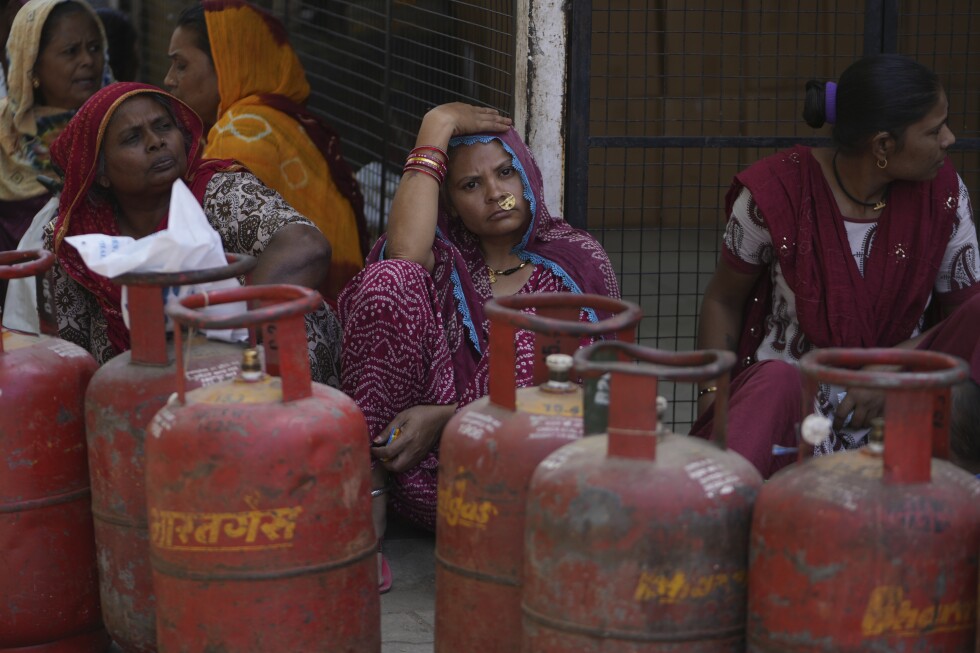
India is prioritizing household needs for its limited supply of liquefied petroleum gas or LPG, which is used for cooking and to power cars.
It has absorbed more than half of the increase driven by global market disruptions under a federal scheme to keep prices low for poor households, said Indian Petroleum Minister Hardeep Singh Puri.
But shortages are already seeping into restaurants and hotels in the world’s second-largest LPG importer, as eateries shorten hours, close temporarily or trim long-simmered curries and deep-fried snacks from their menus.
Advertisement
1 of 7 |
Advertisement
An empty liquefied petroleum gas cylinder is seen beside a temple while a customer waits at a depot for the cylinder to be refilled in Hyderabad, India, Wednesday, March 11, 2026. (AP Photo/Mahesh Kumar A.)
2 of 7 |
A woman talks on mobile as she waits to collect household cylinder of liquefied natural gas from an authorized dealer in Ahmedabad, India, Monday, March 16, 2026. (AP Photo/Ajit Solanki)
Advertisement
3 of 7 |
A worker distributes household liquefied petroleum gas cylinders to customers in Srinagar, Indian controlled Kashmir, Saturday, March 14, 2026. (AP Photo/Dar Yasin)
Advertisement
4 of 7 |
A worker inspects liquefied petroleum gas cylinders, arranged for customer delivery at a distribution centre on the outskirts of Amritsar, India, Friday, March 13, 2026. (AP Photo/Prabhjot Gill)
5 of 7 |
Advertisement
A staff writes on a ledger as workers unload cylinders of liquified natural gas for households at a distribution point, in Kolkata, India, Wednesday, March 11, 2026. (AP Photo/Bikas Das)
6 of 7 |
Women wait to collect household cylinders of liquefied natural gas from an authorized dealer in Ahmedabad, India, Monday, March 16, 2026. (AP Photo/Ajit Solanki)
Advertisement
7 of 7 |
People queue to collect household cylinders of liquefied natural gas from an authorized dealer on a roadside in Srinagar, Indian controlled Kashmir, Saturday, March 14, 2026. (AP Photo/Dar Yasin)
Advertisement
1 of 7 |
Advertisement
An empty liquefied petroleum gas cylinder is seen beside a temple while a customer waits at a depot for the cylinder to be refilled in Hyderabad, India, Wednesday, March 11, 2026. (AP Photo/Mahesh Kumar A.)
1 of 7
An empty liquefied petroleum gas cylinder is seen beside a temple while a customer waits at a depot for the cylinder to be refilled in Hyderabad, India, Wednesday, March 11, 2026. (AP Photo/Mahesh Kumar A.)
Advertisement
Advertisement
2 of 7 |
A woman talks on mobile as she waits to collect household cylinder of liquefied natural gas from an authorized dealer in Ahmedabad, India, Monday, March 16, 2026. (AP Photo/Ajit Solanki)
Advertisement
2 of 7
A woman talks on mobile as she waits to collect household cylinder of liquefied natural gas from an authorized dealer in Ahmedabad, India, Monday, March 16, 2026. (AP Photo/Ajit Solanki)
Advertisement
Advertisement
3 of 7 |
Advertisement
A worker distributes household liquefied petroleum gas cylinders to customers in Srinagar, Indian controlled Kashmir, Saturday, March 14, 2026. (AP Photo/Dar Yasin)
3 of 7
A worker distributes household liquefied petroleum gas cylinders to customers in Srinagar, Indian controlled Kashmir, Saturday, March 14, 2026. (AP Photo/Dar Yasin)
Advertisement
Advertisement
4 of 7 |
A worker inspects liquefied petroleum gas cylinders, arranged for customer delivery at a distribution centre on the outskirts of Amritsar, India, Friday, March 13, 2026. (AP Photo/Prabhjot Gill)
Advertisement
4 of 7
A worker inspects liquefied petroleum gas cylinders, arranged for customer delivery at a distribution centre on the outskirts of Amritsar, India, Friday, March 13, 2026. (AP Photo/Prabhjot Gill)
Advertisement
Advertisement
5 of 7 |
Advertisement
A staff writes on a ledger as workers unload cylinders of liquified natural gas for households at a distribution point, in Kolkata, India, Wednesday, March 11, 2026. (AP Photo/Bikas Das)
5 of 7
A staff writes on a ledger as workers unload cylinders of liquified natural gas for households at a distribution point, in Kolkata, India, Wednesday, March 11, 2026. (AP Photo/Bikas Das)
Advertisement
Advertisement
6 of 7 |
Women wait to collect household cylinders of liquefied natural gas from an authorized dealer in Ahmedabad, India, Monday, March 16, 2026. (AP Photo/Ajit Solanki)
Advertisement
6 of 7
Women wait to collect household cylinders of liquefied natural gas from an authorized dealer in Ahmedabad, India, Monday, March 16, 2026. (AP Photo/Ajit Solanki)
Advertisement
Advertisement
7 of 7 |
Advertisement
People queue to collect household cylinders of liquefied natural gas from an authorized dealer on a roadside in Srinagar, Indian controlled Kashmir, Saturday, March 14, 2026. (AP Photo/Dar Yasin)
7 of 7
People queue to collect household cylinders of liquefied natural gas from an authorized dealer on a roadside in Srinagar, Indian controlled Kashmir, Saturday, March 14, 2026. (AP Photo/Dar Yasin)
Advertisement
Advertisement
The scale of demand in India, the world’s most populous nation, limits how long it can cap prices to shield consumers. The situation could worsen within a week if government subsidies lapse, said Duttatreya Das of the think tank Ember, noting gas supplies were the most immediate concern.
Advertisement
“You can’t store a lot of gas,” Das said, adding that fertilizer factories and small industries will feel the pinch first.
Liberia-flagged tanker Shenlong Suezmax, carrying crude oil from Saudi Arabia, that arrived clearing the Strait of Hormuz, is seen at the Mumbai Port in Mumbai, India, Thursday, March 12, 2026. (AP Photo/Rafiq Maqbool, File)
Advertisement
Liberia-flagged tanker Shenlong Suezmax, carrying crude oil from Saudi Arabia, that arrived clearing the Strait of Hormuz, is seen at the Mumbai Port in Mumbai, India, Thursday, March 12, 2026. (AP Photo/Rafiq Maqbool, File)
Advertisement
Advertisement
Advertisement
Advertisement
Indonesia, a country of 287 million people and Southeast Asia’s most populous nation, also faces hard choices.
While the government has promised to maintain fuel prices throughout Eid al-Fitr, the Muslim holiday marking the end of the fasting month of Ramadan, Adhiguna of the Energy Shift Institute said there is “no clarity about what will happen after that,” adding that this implies fuel prices could increase.
People carry their belongings as they arrive for a free bus trip to their hometowns to celebrate Eid-al Fitr, organized by the Jakarta provincial government in Jakarta, Indonesia, Tuesday, March 17, 2026. (AP Photo/Achmad Ibrahim)
Advertisement
People carry their belongings as they arrive for a free bus trip to their hometowns to celebrate Eid-al Fitr, organized by the Jakarta provincial government in Jakarta, Indonesia, Tuesday, March 17, 2026. (AP Photo/Achmad Ibrahim)
Advertisement
Advertisement
Advertisement
Bus crew wait for passengers as the mass exodus out of Jakarta and other major cities is underway ahead of Eid al-Fitr in Jakarta, Indonesia, Tuesday, March 17, 2026. (AP Photo/Dita Alangkara)
Advertisement
Bus crew wait for passengers as the mass exodus out of Jakarta and other major cities is underway ahead of Eid al-Fitr in Jakarta, Indonesia, Tuesday, March 17, 2026. (AP Photo/Dita Alangkara)
Advertisement
Advertisement
Advertisement
Advertisement
Thailand is also caught in a dilemma. If it ends subsidies that keep prices low, living costs will jump and that could spark a panic if reserves fall further, said Areeporn Asawinpongphan of the Thailand Development Research Institute.
If the conflict continues, Indonesia will have to choose between keeping the subsides that protect customers or cutting funding to keep to budgetary limits. However, this could fuel inflation. Given Indonesia’s limited 20-day reserve, Adhiguna warned that price fluctuations in Indonesia’s fuel market will be swift.
“It will eventually reach a breaking point,” Adhiguna said.
Europe feels the squeeze, too
The European Union is doubling down on its long-term clean energy strategy to cut consumption and rein in prices across the 27-nation bloc that have risen sharply since the war’s start. Officials met in Brussel this week, where they considered ways to improve the region’s energy security.
Advertisement
“We are looking at how we can reduce people’s energy bills,” said European Commissioner for Energy Dan Jørgensen. “We are working on immediate measures to help businesses and our most vulnerable citizens.”
___
Ghosal reported from Hanoi, Vietnam. Associated Press writers Elaine Kurtenbach in Bangkok, Thailand, Sam McNeil in Brussels and Piyush Nagpal in New Delhi, India contributed to this report.
___
Advertisement
The Associated Press’ climate and environmental coverage receives financial support from multiple private foundations. The AP is solely responsible for all content. Find AP’s standards for working with philanthropies, a list of supporters and funded coverage areas at AP.org.
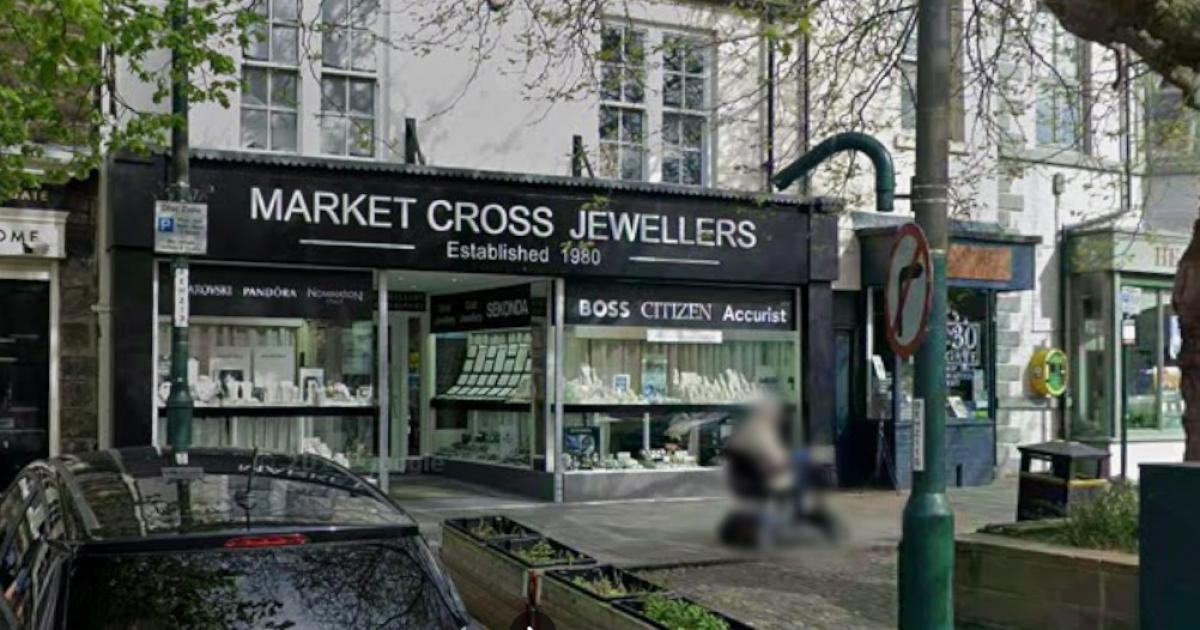
Jason Barstow, 29, is accused of robbery and possession of a firearm with intent to cause fear of violence following an incident at Market Cross Jewellers on Westgate in Guisborough on Saturday afternoon, March 14.
It has been called the ‘easiest way’ to make lawns look better.
Now that it is spring, many of us are turning our attention to lawns in preparation for sunny days. Lawns can seem difficult to deal with, especially if they aren’t level.
Advertisement
However, a garden expert has explained how to achieve a lush lawn this summer without any bumps. The key is all in the preparation, which can be done now.
Expert Michael, who shares hacks on social media @themichaelgriffiths, revealed his fix that uses a mix of sand, soil and compost. He said: “It’s one of the easiest ways to make a lawn look instantly better without re-turfing.”
To make a lawn level, Michael started by preparing the area. He mowed the grass “really short” to two to three centimetres.
Michael explained: “This makes it easier to apply top dressing and you get better visibility of any low spots.” He then made sure to have his top soil, sand and compost to hand.
Advertisement
Content cannot be displayed without consent
The expert said you need to combine the materials to a two to one part mix. This means two parts top soil, two parts sand and one part compost.
Michael said: “This combination provides bulk drainage and nutrients to help the grass flourish.” Once combined together, spread it over the bumpy area you mowed.
He then levelled the mix, which can be done with the back of a rake or a lawn-levelling rake. Ensure the mix has been spread across the lawn evenly.
Michael walked on top of the mix to tread it into the ground. He said you can repeat the steps if necessary, to ensure all bumps are covered and a level area has been created.
Advertisement
The social media expert said: “Finally, water in gently to help the mix settle. And if it’s needed, you’re now ready to reseed your lawn.”
Michael told his followers: “If your lawn feels more bumpy than flat, don’t rip it out, you can level it.
“A simple top-dressing mix of sand + soil + compost brushed into the low spots helps smooth the surface while keeping the grass growing through.”
Advertisement
One person asked Michael if it is too early in the year to follow his advice. He replied: “Perfect time to do this now – still probably a little too cold for grass seed but in about 2 weeks it’ll be fine. So you can do this now to get ready.”
Another commented: “Perfect, I got a quote for this that was over £2k which I couldn’t justify. This is brilliant I’m going to attempt myself. Thank you so much for posting.”
Jason Bailey, 48, carried out an ‘opportunistic’ sex attack upon his victim
13:40, 17 Mar 2026
Advertisement
A woman was brutally raped by a man while she was working despite her telling him she was not interested in a sexual relationship. The victim said she “blamed herself” for the rape and has “struggled to come to terms with her reaction” having previously believed she could have fought back, a court heard.
Jason Bailey, 48, of Porthcawl, had previously asked his victim if she “fancied some no strings fun” but she had not responded and thought to herself: “Who the hell does he think he is?”. He later approached her and asked her what he thought about his proposition, which she turned down.
He manhandled her and pinned her down before pulling down her leggings and underwear.
Advertisement
The defendant sexually assaulted the victim by forcibly performing oral sex upon her before raping her with his penis.
He only finished raping her when he ejaculated and walked off and told her: “Between us yeah?”.
The victim later confided in friends who contacted the police.
Bailey, of New Road, was later convicted of rape and assault by penetration following a trial. The court heard he has no previous convictions but has a caution for burglary.
Advertisement
In a victim personal statement read to the court by prosecutor Nigel Fryer the victim said: “When it first happened it had such a huge impact on me for so many months of my life – the big stuff and everyday stuff…
“The thought that he could be there and feelings of intimidation made me feel sick… There were regular occasions I could not get out of bed for days on end. I did not wash or brush my teeth. I have always had feelings of anxiety and depression. I felt so angry at myself and blamed myself. I was in shock for some days afterwards.
“I would describe myself as a feisty person and thought I could fight back but I have struggled to come to terms with my reaction and didn’t fight as I thought I would. I started having flashbacks and started drinking in the house, which I never did.”
The victim said she cries and shakes at the thought of seeing the defendant and panics when she sees someone who looks like him. She said she is now unable to socialise other than at her local pub.
Advertisement
In mitigation Andrew Davies said his client has suffered financially and with his mental health while waiting for the trial and described the defendant as a “broken man”.
The barrister said Bailey’s family had suffered tragedy after his younger brother took his own life and he serves as a carer for his mother who has spinal problems and is immobile. He also has a son who he provides for.
Sentencing, Recorder Andrew Hammond said: “This was an opportunistic sexual attack. You took the opportunity to force yourself upon her and did not take no for an answer.”
Bailey was sentenced to six years imprisonment.
Advertisement
The defendant was also made subject to a restraining order indefinitely and was made subject to sex offender notification requirements for life.
Get daily breaking news updates on your phone by joining our WhatsApp community here. We occasionally treat members to special offers, promotions and ads from us and our partners. See our Privacy Notice.
Chelsea were handed a nine-month academy transfer ban and a £750,000 fine over the registration of academy players between 2019 and 2022.
But compare this case with Everton and Nottingham Forest in 2024, when both clubs received points deductions for PSR breaches that appear much less serious.
So what relevance, if any, does all this have on the Premier League’s other major disciplinary case?
Fifteen months after the end of an independent commission hearing into more than 100 alleged breaches of financial rules by Manchester City, the club is still waiting to discover its fate.
Advertisement
Unlike Chelsea, City deny wrongdoing and are contesting the case. And unlike at Stamford Bridge, there has been no change of ownership at the Etihad to provide mitigation.
But City fans will surely be encouraged that the Premier League board did not appear to even consider a points deduction in the case of Chelsea, despite the “deception and concealment”. Indeed, it referred to a two-window transfer ban as an “appropriate” punishment, had the club not self-reported and co-operated.
In July 2023, Uefa fined the club £8m over the same case. And the FA is expected to take similar action when it announces the conclusion of its disciplinary process into the affair in the coming weeks.
But there are clear signs that Chelsea feared it could have been worse. In 2024, it was revealed that owners Todd Boehly and Behdad Eghbali held back £150m of their purchase price for the club to cover potential fines relating to the Abramovich era. So far this episode has cost the club about £18m.
Advertisement
Some of their rivals may feel the cost may have been greater in the form of trophies and prize money they could potentially have won. And also to the integrity and credibility of a competition that relies on everyone following the rules.
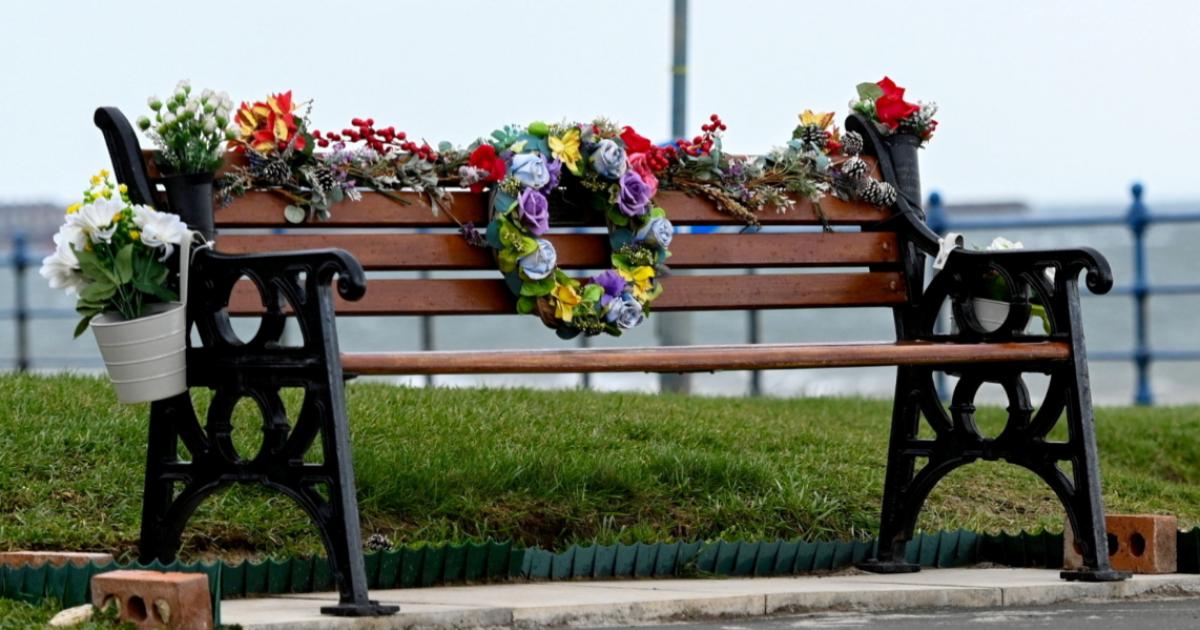
The council announced the decision amid concerns that the 275 existing benches across the town are beginning to overwhelm public areas.
The Labour-run authority said the benches, placed in memory of loved ones, can block access for wheelchair users and people with pushchairs.
There are 275 existing benches across the town. (Image: SWNS)
However, locals disagree with the plans.
Daniel Matthews, 40, said: “My mum and dad had a bench put up in memory of my nan who loved to look out to sea when she was alive.
Advertisement
“It was a nice place to sit and pay tribute to her but the bench started falling apart and eventually had to be removed.
“I don’t think it’s fair for the council to say Hartlepool has too many of these benches.”
“It’s a nice way to keep your memories of relatives alive.”
The authority has now paused all future applications and is suggesting tree planting as an alternative.
Advertisement
The authority say the benches can block access for wheelchair and pushchair users. (Image: SWNS)
Not everyone is opposed to the ban.
One mother, who did not wish to be named, said: “It’s a pain to be honest having to almost slalom the pushchair around all these benches when I’m taking my toddler out.
“Lots of these benches don’t just have a plaque either, there are sometimes photos and flowers and teddies.
“They’re becoming like graves rather than somewhere for people to sit on.”
Advertisement
Karl Barowsky, owner of Teak Garden Furniture, which supplies memorial benches, said: “When thoughtfully planned and positioned, memorial benches can sit comfortably within public spaces.
“They support reflection, wellbeing and everyday community use, and they can enhance parks and town centres rather than detract from them.”
Read more:
Karen Oliver, Chair of the council’s Housing, Growth and Communities Committee, said a recent audit identified 115 benches on the Headland, 112 on Seaton Promenade, and 48 in Ward Jackson Park.
Advertisement
She said: “We understand that our communities want to commemorate and remember loved ones, so we acknowledge that this is a very sensitive issue.
“We aim to engage with the owners of benches – where we have ownership information – to agree a sympathetic approach that minimises the need for the removal of benches.”
Armed police were called to reports of disorder at St Enoch Square on Monday night.
Two teenagers have been charged after a knife was found and a police officer was injured in a rammy in Glasgow city centre.
Advertisement
Emergency crews, including specialist firearms officers rushed to St Enoch Square at around 8.40pm on Monday after receiving a report of disorder outside a shopping centre.
An 18-year-old man was charged in connection with police assault, resisting arrest and breach of the peace. He was also charged in connection with being in possession of a knife and drugs.
A 16-year-old girl was also charged in connection with police assault and resisting arrest. The force confirmed that a report will be submitted to the Scottish Children’s Report Administration.
Advertisement
Images from the scene showed police at either side of the Argyle Street entrance to the St Enoch subway station. Numerous cop cars were also spotted.
There were no injuries involved in the disturbance. A weapon was also recovered.
A spokesperson for Police Scotland said: “Around 8.40pm on Monday, 16 March, 2026, we received a report of disorder at St Enoch Square, Glasgow.
“Police, including specialist firearms officers, attended and an 18-year-old man was arrested and charged in connection with possession of a weapon, police assault, resisting arrest, breach of the peace and drug possession. He is expected to appear at Glasgow Sheriff Court on Tuesday, 17 March, 2026.
“A 16-year-old female was charged in connection with police assault and resisting arrest. A report will be submitted to the Scottish Children’s Report Administration.
Advertisement
“There were no reports of any injuries and a weapon was also recovered.”
Get more Daily Record exclusives by signing up for free to Google’s preferred sources. Click HERE
LONDON (AP) — Ukrainian President Volodymyr Zelenskyy arrived in London on Tuesday for talks with U.K. Prime Minister Keir Starmer, the British government said, as European countries look to keep international attention on Russia’s invasion of Ukraine while the unfolding Iran war engages world leaders.
Starmer’s office said that NATO Secretary-General Mark Rutte will also join the meeting at 10 Downing St. to discuss peacemaking efforts in Ukraine and “the need to maintain sanctions pressure on Russia.”
The meeting comes days after the U.S. temporarily waived some Russian oil sanctions in a bid to ease pressure on global supplies triggered by the war in the Middle East, which was sparked by the joint U.S.-Israeli strikes on Iran starting on Feb. 28.
Zelenskyy criticized Washington’s move to ease sanctions, saying it would provide a windfall for Moscow to keep up its attacks on Ukraine.
Advertisement
U.S. President Donald Trump says he wants to secure a peace deal that ends Europe’s biggest conflict since World War II and has rattled the continent’s leaders, who reckon that Russia could pose a credible security threat to the European Union by the end of the decade.
But U.S.-brokered talks between delegations from Moscow and Kyiv, which so far have yielded no significant progress on key issues, have lost momentum amid the Middle East conflict.
At the same time, Trump has spurned Zelenskyy’s offer of help for the United States and its Persian Gulf partners in fighting Iranian drones. Ukraine has become one of the world’s leading producers of high-tech, battle-tested drone interceptors.
British officials say that Russia and Iran are collaborating on drone technology and tactics in the Middle East. Drone combat experts from the U.K. and Ukraine have been sent to the region to help Iran’s neighbors repel its drone attacks.
Advertisement
Starmer’s office said the U.K. and Ukraine will sign a deal combining “Ukraine’s expertise and the U.K.’s industrial base to manufacture and supply drones and innovative capabilities.” Britain is also funding an “AI Center of Excellence” in conjunction with the Ukrainian Ministry of Defense.
Zelenskyy, announcing his arrival in London on X, said his priorities are “more security and opportunities for Ukraine.”
Starmer said in a statement that “drones, electronic warfare and rapid battlefield innovation are now central to national and economic security, and that has only been further magnified by the conflict in the Middle East.”
“By deepening our defense partnerships, we are strengthening Ukraine’s ability to defend itself from Russia’s brutal, ongoing attacks, while ensuring the U.K. and our allies are better prepared to meet the threats of the future.”
Advertisement
Russia’s Defense Ministry said Tuesday that its air defenses intercepted and destroyed 206 Ukrainian drones overnight over Russian regions, the annexed Crimean Peninsula and the Azov Sea. A total of 40 intercepted drones were flying toward Moscow, the ministry said.
Asked about an increase in Ukrainian drone attacks on Moscow over the past few days, Kremlin spokesman Dmitry Peskov said that authorities in Kyiv were “continuing absolutely futile resistance” against Russia’s invasion.
Zelenskyy said late Monday that counterattacks by Ukrainian forces at eastern and southern points along the front line have wrecked Moscow’s plans for a March offensive.
His comments couldn’t be independently verified, but the Institute for the Study of War, a Washington-based think tank, said Monday that Ukrainian counterattacks “are likely constraining” some Russian offensive operations.
Advertisement
Ukraine’s air force said that Russia launched 178 long-range drones of various types across the country overnight starting late Monday, with 154 of them either intercepted or jammed while 22 more struck their targets.
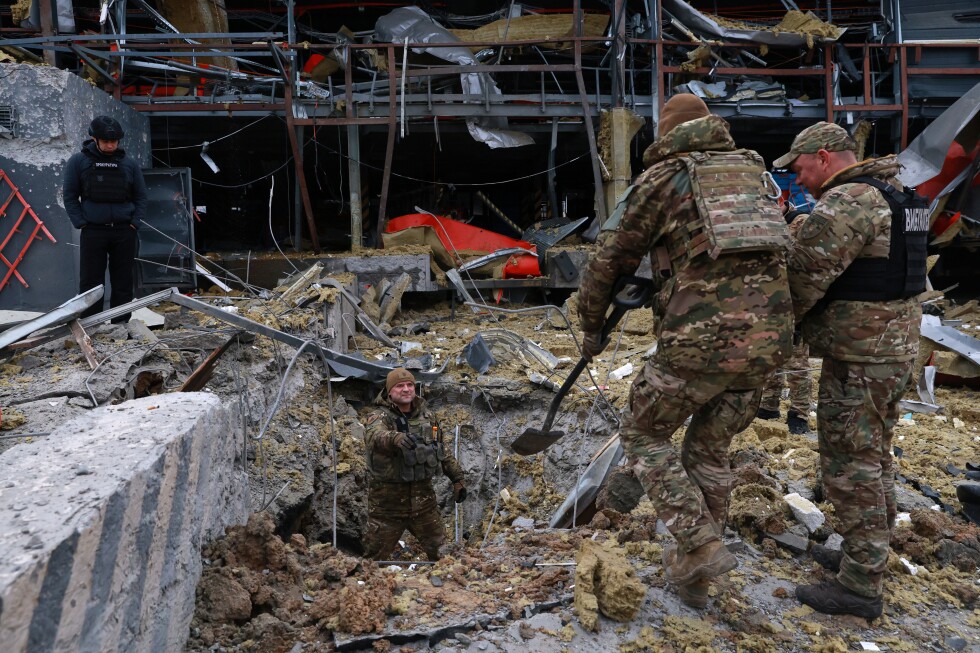
In the southern Ukraine city of Zaporizhzhia, a Russian strike damaged a terminal of Ukraine’s biggest private delivery company, Nova Poshta, the company said on Telegram. Eight people were wounded, according to Ivan Fedorov, the head of the regional military administration.
___
Illia Novikov contributed to this report from Kyiv, Ukraine.
Band members RM, Jin, Suga, J-hope, Jimin, V and Jung Kook are to reunite for a new album, titled Arirang, which will be released on March 20 – while they will make their return to the stage on March 21 for a show at the historic Gwanghwamun, the main gate of the Gyeongbokgung palace in Seoul.
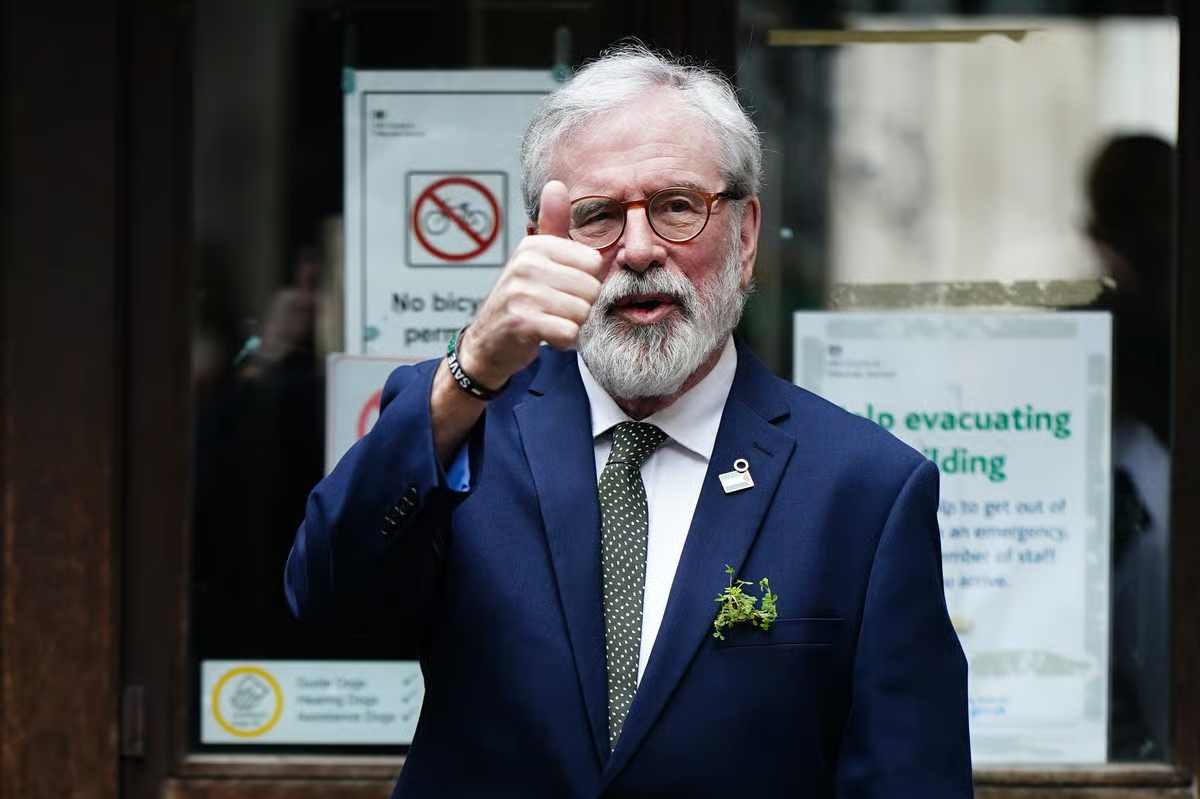
John Clark, a victim of the 1973 Old Bailey bombing in London; Jonathan Ganesh, a 1996 London Docklands bombing victim; and Barry Laycock, a victim of the 1996 Arndale shopping centre bombing in Manchester, all allege that Mr Adams was a leading member of the Provisional IRA on those dates, including of its Army Council, and are seeking £1 in damages.
















































You must be logged in to post a comment Login