Connect with us

NewsBeat

Dame Maureen Lipman reveals she had sleepless nights when actors quit play over her pro-Israel views but director persuaded her to stay

Published

on

Veteran actress Dame Maureen Lipman, 80, has revealed she had sleepness nights after actors quit the West End production of Right Before I Go over her pro-Israel views

Dame Maureen Lipman has revealed that she had sleepless nights when actors quit a play over her pro-Israel views. 

Two of her co-stars walked away from the West End production of Right Before I Go after refusing to promote the show because of her involvement. 

Dame Maureen, 80, had thought about stepping down to avoid the drama becoming a distraction for the production.

However the Olivier award-winning actress was persuaded to stay on by the play’s director after she considered quitting herself after suffering sleepless nights. 

Advertisement

Gerard McCarthy, who has appeared in BBC dramas including Call the Midwife and The Fall, had been due to reprise his role in Right Before I Go when it transfers to London‘s Soho Theatre.

But the non-binary actor decided to withdraw after the casting of Dame Maureen, 80, was announced, saying her publicly expressed views on Israel and Palestine were incompatible with his own political beliefs.

Mr McCarthy, who performed in the play at the Edinburgh Fringe, said he had privately raised his concerns before ultimately deciding to leave the London production.

Transgender actress Iz Hesketh then followed Mr McCarthy by stepping down from the show over Dame Maureen’s involvement, saying: ‘Having recently become aware of public comments made by her, I no longer feel the next stage of the production aligns with my own personal values and beliefs.’

Advertisement

Veteran actress Dame Maureen Lipman, 80, has revealed she had sleepness nights after actors quit the West End production of Right Before I Go over her pro-Israel views

In May, pro-Palestinian campaigners targeted performances of her comedy Allegra in Aberdeen with a poster depicting the actress with devil horns and a pitchfork

In May, pro-Palestinian campaigners targeted performances of her comedy Allegra in Aberdeen with a poster depicting the actress with devil horns and a pitchfork

Gerard McCarthy, who has appeared in BBC dramas including Call the Midwife and The Fall, had been due to reprise his role in Right Before I Go when it transfers to London's Soho Theatre

Gerard McCarthy, who has appeared in BBC dramas including Call the Midwife and The Fall, had been due to reprise his role in Right Before I Go when it transfers to London’s Soho Theatre

Advertisement

However Dame Maureen has now revealed that the ordeal has left her struggling to sleep after she considered quitting the production, but was encouraged by the director to stay on. 

The 80-year-old told The Times: ‘The truth is all this has been keeping me awake at night. It is scary, horrible and unnecessary.

‘It had crossed my mind that it might be easier for everyone if I go and they all stay, but I had an email from Abigail Morris, who is the director, which was very sympathetic and understanding.

‘So I have decided to put the worry to one side and carry on. I might get a few boos, but it will be fine.’ 

Advertisement

Right Before I Go deals with the sensitive subject of suicide, drawing on real suicide notes written by a range of people including celebrities, military veterans, bullied teenagers and members of the LGBTQ+ community, as well as people who survived suicide attempts.

Each performance is followed by a discussion involving members of the cast, the audience and a local mental health professional.

Writer Stan Zimmerman devised the not-for-profit play while grieving his friend Kevin Gill’s suicide. 

Dame Maureen is set to appear in a performance on September 10, coinciding with World Suicide Prevention Day. 

Advertisement
Mr McCarthy had been due to appear with Dame Maureen (pictured in June), in Right Before I Go at London’s Soho Theatre

Mr McCarthy had been due to appear with Dame Maureen (pictured in June), in Right Before I Go at London’s Soho Theatre

Despite the backlash she has faced due to her involvement, the 80-year-old said she was ‘pleased’ to play a part because ‘young people and suicide is such an important issue’, adding that it’s a ‘vital’ topic to discuss. 

A spokesman for the production told The Times: ‘We understand that our cast and collaborators hold a wide range of perspectives, including on deeply personal and difficult subjects, and we respect the sincerity behind their decisions.’

They added that the political views of cast members are kept separate from artistic collaboration. 

Advertisement

The production team has been approached for further comment. 

According to Mr Zimmerman, the show has a revolving cast and Dame Maureen was never set to appear alongside Mr McCarthy in the same viewing. 

Mr McCarthy addressed the drama in an Instagram post on Friday, saying: ‘I was slightly surprised to wake up on Wednesday morning and discover that Dame Maureen had written about me in The Telegraph. 

‘I was even more surprised to learn that I had apparently attempted to bully her. 

Advertisement

‘For the avoidance of doubt: I have never met Maureen Lipman. I have never spoken to her. I have never contacted her. I have never asked for her to be removed from a production, nor have I ever refused to work with her. We were never scheduled to perform together. 

‘So if I have managed to bully her, I have done so with remarkably little effort. 

‘What I actually did was make a decision about my own participation in one performance of Right Before I Go.’ 

In the article, titled ‘I’m an alleged National Treasure. I won’t be bullied by actors over my views on Israel, Dame Maureen wrote: ‘I will not be bullied, nor will I allow anybody to tell me what to think. 

Advertisement

‘If that affects their ability to work with me, as opposed to convert me to their point of view, then they are lily livered.’

Dame Maureen man has been one of the more prominent British Jewish voices in support of Israel since the October 7 attacks and has faced fierce criticism from pro-Palestinian activists.

She has previously spoken about receiving anti-Semitic abuse and threats of protests and cancellation, and has at times been forced to use private security while touring theatres.

In May, pro-Palestinian campaigners targeted performances of her comedy Allegra in Aberdeen.

Advertisement
Gerard McCarthy (pictured in July), known for his roles in BBC dramas The Fall and Call The Midwife, quit a London theatre show following the casting of Dame Maureen

Gerard McCarthy (pictured in July), known for his roles in BBC dramas The Fall and Call The Midwife, quit a London theatre show following the casting of Dame Maureen

The Aberdeen branch of the Scottish Palestine Solidarity Campaign circulated an image depicting her with devil horns and holding a pitchfork while urging supporters to sign a petition against her appearance. 

Police Scotland examined the post but concluded that it did not amount to a crime, recording it instead as a non-crime hate incident.

Dame Maureen has previously described protests against Israel by Left-wing actors as ‘very, very close to fascism’ and branded performers who signed open letters condemning Israeli military action ‘bigoted signaturists’ and ‘bleeding heartless liberals’.

Advertisement

Earlier this week, the Daily Mail revealed that Mr McCarthy subsequently liked a string of abusive comments posted beneath his announcement on Instagram after he quit the show

Among them was one which read: ‘Lipman the zio hag can get in the bin.’

Another praised him as ‘a man of absolute principle’ before warning: ‘Zionists will soon have nowhere to hide.’

McCarthy, who was a regular on Channel 4’s Hollyoaks, also liked a message which said: ‘That woman is an odious ghoul. You saved yourself a tiring battle with your conscience every time you would’ve stepped in to the room with her.’

Advertisement

Another liked by McCarthy said: ‘I would cross the street if I saw her. Vile bigot,’ and described Dame Maureen as ‘a horrid f****** witch’, adding: ‘It speaks volumes about the morally bankrupt scumbags behind this decision that they’re willing to work with her.’

‘Zio’, an abbreviation of Zionist, is widely recognised by Jewish organisations as an anti-Semitic slur.

When approached by the Daily Mail, McCarthy issued a statement saying: ‘I do not endorse anti-Semitic language or personal abuse directed at Dame Maureen Lipman, and regret having inadvertently appeared to do so by liking a number of comments among the hundreds posted beneath my statement.

‘My likes were intended as acknowledgements of support for my decision to withdraw, rather than endorsements of every word used in those comments. 

Advertisement

‘Having had the specific language brought to my attention, I have removed those likes.

‘My position remains the one set out in my original statement: my decision concerned views publicly expressed by one individual regarding Israel and Palestine. It was not about her Jewish identity, and I am against anti-Semitism.’

  • Do YOU have a story? Email William.G.Hallowell@dailymail.co.uk

Source link

Continue Reading
Click to comment

You must be logged in to post a comment Login

Leave a Reply

NewsBeat

Nottingham Forest vs Tottenham LIVE: Premier League latest score, match stream, goal updates and fan reaction

Published

on

Nottingham Forest vs Tottenham LIVE: Premier League latest score, match stream, goal updates and fan reaction

The only way is up, then, as Spurs head north to Nottingham to meet Oliver Glasner’s Forest. Their season has not got off to a much better start, though last week’s draw with Liverpool has at least got them off the mark. He is yet to hand a full debut to his headline addition, club-record signing Liam Delap, while Daniel Munoz is also in line to start for the first time.

Source link

Continue Reading

NewsBeat

What different world maps get right – and what they get wrong

Published

on

Side-by-side maps of Africa comparing two map projections. The Mercator projection on the left makes Africa appear smaller in comparison with Europe to its north. The Equal Earth projection on the right shows a longer, more proportionally accurate shape of the continent.

The now widely used Mercator map was created in 1569 by Flemish cartographer Gerardus Mercator.

Its main purpose was to help European sailors navigate the oceans, as cartography Professor James Cheshire at University London College explained.

“He wanted a straight line to be drawn on a map to look like a straight line in reality if you followed a compass bearing,” he told the BBC. “That was what it was intended to do, and that’s what it does brilliantly well.”

To keep those angles correct on a flat map, Mercator had to stretch the grid lines wider as they moved away from the equator toward the poles.

Advertisement

His map accommodates for the curvature of the Earth by making countries near the equator seem much smaller than they are, with countries nearer the poles appearing stretched.

The distortion is a result of it being impossible to accurately represent the surface of a globe on a two-dimensional chart.

More than 450 years on, Mercator’s creation is still the basis for many of the maps we see in classrooms, on TV and online, including Google Maps.

But critics of the Mercator map say there is a psychological effect to viewing some places as smaller than they actually are and others as larger, as we instinctively view bigger things as more important.

Advertisement

For Kenyan geographer Kioko Muendo, this has implicitly downplayed Africa’s vast resources, population and investment opportunities.

“Maps are more than just guides for travellers – they shape how regions are perceived politically and economically,” he told the BBC.

Source link

Advertisement
Continue Reading

NewsBeat

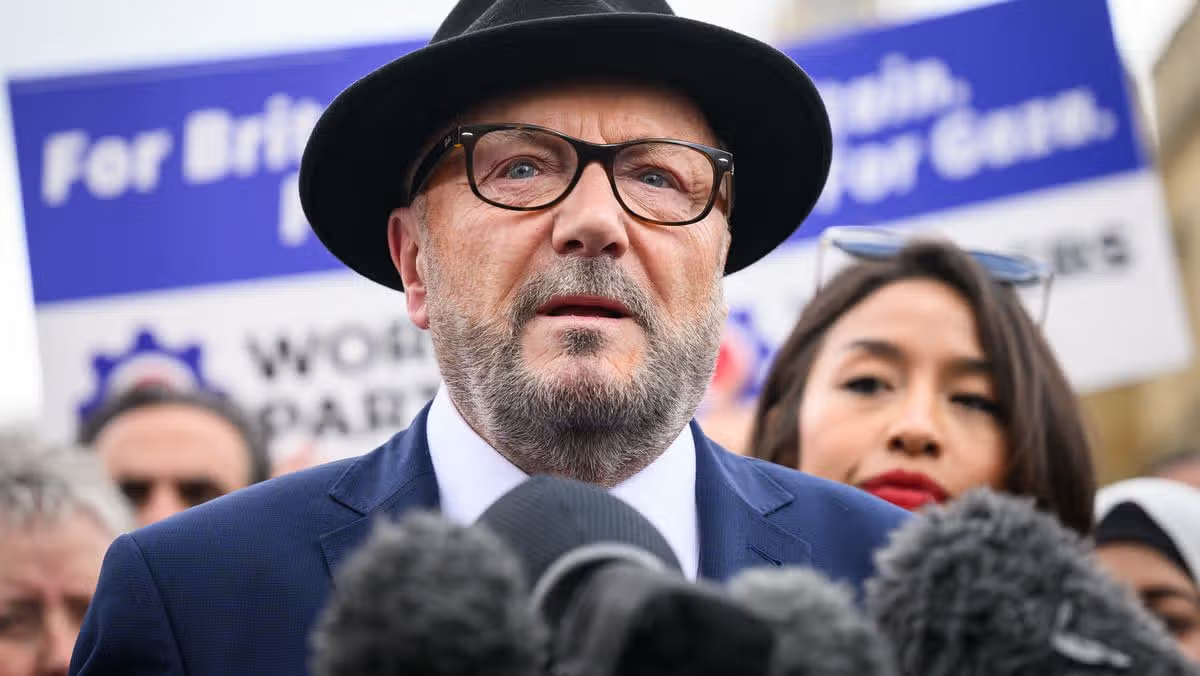
George Galloway suing Bank of Scotland ‘after closing his account of 40 years’

Published

on

Daily Record

The firebrand left-wing politician alleged the bank had shut down his accounts without notice or explanation.

Goerge Galloway is suing Bank of Scotland after claiming they shut down his bank account which he held for 40 years. The veteran left-wing politician, 72, said his account which he held in the bank’s Byres Road branch in Glasgow was closed “without explanation or notice”.

Advertisement

Dundee-born Galloway alleges the action was unlawful. Lawyers representing the former MP confirmed they’ve launched legal proceedings against Lloyds Banking Group, which owns Bank of Scotland.

Writing on social media, Galloway said: “Thirty-nine years ago, I opened a personal bank account with Bank of Scotland in Byres Road, Glasgow. Yesterday without explanation or notice they closed my accounts.

“My parliamentary and old age pensions are paid into these accounts. The mortgage on our family home is paid out of them. They haven’t heard the last of this.”

In a flurry of furious follow-up posts, he warned the bank: “I will not stand by while you use your usurious power to wreck my family life… you have broken the law and you must already know that.”

Galloway, who has recently been living outside of the UK including stays in Russia and China, alleged he’d been given no notice of the closure. The socialist firebrand and broadcaster, who leads the Workers Party of Britain, added he’d been sent a cheque with his funds but had “no other bank with which I can lodge it”.

Yesterday Galloway wrote: “Who gave the order to Lloyds Bank to close my 39 year account with Bank of Scotland? We don’t know.

“But in the light of my legal team’s injunction upon them this afternoon on the preservation of evidence, we will find out. Count on it.”

Advertisement

KRW Law said in a statement: “We confirm that we have issued pre-action correspondence to Lloyds Bank in respect of the actions of Bank of Scotland. Without explanation or notice they closed the bank accounts of our client George Galloway.”

Galloway, who served as Labour MP for Glasgow Hillhead and Kelvin from 1987-2005, has long courted controversy for his strident views on foreign policy, the Middle East and Russia. He was expelled from Labour under Tony Blair over his opposition to the Iraq War.

He is also a fierce critic of Israel’s occupation of Palestine – and defeated Labour in the 2024 Rochdale by-election by hammering the party on Gaza, although lost his seat months later in the general election.

We previously told how pro-Gaza activist groups have seen their bank accounts frozen without explanation amid fears of a widening crackdown on free speech and protest. The Scottish Palestine Solidarity Campaign has been blocked since last June from accessing more than £20,000 of funds it holds with Unity Bank.

Advertisement

Last year, Galloway and his wife were stopped by counter-terrorism police at Gatwick Airport but then released without charge. He said the incident was an attempt to silence him and revealed he’d since been living in Russia in “self-imposed exile” until it’s safe to return.

In 2023, Reform UK leader Nigel Farage claimed his bank account with Coutts had been closed due to his political views.

A Bank of Scotland spokesman said: “Our policy is not to close a customer’s account based on political or personal beliefs and we make customers aware if we make the decision to close an account. We’re unable to comment on individual cases.”

Get more Daily Record exclusives by signing up for free to Google’s preferred sources. Click HERE

Advertisement

Source link

Continue Reading

NewsBeat

Research shows it’s become even more difficult for prisoners serving indefinite sentences to be released

Published

on

Research shows it’s become even more difficult for prisoners serving indefinite sentences to be released

As part of plans to deal with nearly-full prisons in England and Wales, Andy Burnham has pledged to bring an end to indeterminate imprisonment for public protection (IPP) sentences.

For those serving these sentences, this is a long-awaited development. IPP sentences were abolished in 2012, but not retrospectively. Currently, 2,271 IPP prisoners remain in custody in England and Wales.

They were introduced in 2005 to protect the public from “dangerous” offenders, but the definition of dangerous was broad and resulted in the sentence being imposed on many lower-risk offenders.

IPPs function like life sentences: prisoners serve a minimum term (say, 10 years), after which point they are eligible to apply for release. Unlike other sentences, IPP prisoners can only be released from prison by the independent Parole Board – there is no automatic release date set.

Advertisement

The IPP sentence has garnered much media interest over the years because of the shocking plight of prisoners serving this sentence. Being incarcerated is bad enough, but the indefinite nature of the sentence has led to widespread feelings of despair and isolation among this population and their families.

The late Lord Brown, a former supreme court justice, described the IPP sentence as the “greatest single stain on our criminal justice system”. Even David Blunkett, who introduced the sentence as home secretary, has expressed regret.

A justice select committee inquiry into the IPP sentence took place in 2022. The government of the time disregarded many recommendations, including the proposal that all IPP prisoners should have sentences reviewed and then be re-sentenced under current rules. Since then, Keir Starmer’s government introduced the IPP Action Plan to improve the support provided to IPP-sentenced prisoners. The plight of IPP-sentenced prisoners was again highlighted in 2024, when Starmer’s government brought in early release to deal with prison overcrowding. However, none were given automatic release.

Appealing for release

Prior to 2016, a condition of the IPP sentence was that these prisoners could only be released by the Parole Board through an oral hearing. Since then, some people can be released without an oral hearing, with the Parole Board making the decision via a paper-based assessment. However, the vast majority of prisoners still have to undergo an oral hearing. These are conducted in a question-and-answer format, where parole board members ask questions and the prisoner and other witnesses answer.

Advertisement

Prisoners and professionals give evidence of the prisoner’s conduct while in custody, the factors that might lead them to reoffend, and reports of their engagement with rehabilitation programmes.

Ultimately, the members of the Parole Board must determine whether it is still necessary to confine a prisoner for the protection of the public. If the answer is no, then they direct the prisoner to be released under supervision of the probation service.

IPP prisoners have found it harder than other prisoners to be released through parole hearings and – once released – face high rates of recall. In September 2022 the number of IPP prisoners who had been recalled exceeded the number of unreleased IPP prisoners. When IPP sentences were replaced in 2012, the same types of offenders did not have as high a recall rate, and the new sentences had a fixed, rather than indefinite, recall period. This suggests that the IPP sentence itself is partly responsible for the overall increase in the prison population.

During the pandemic, the Parole Board was forced to conduct all hearings remotely, either by telephone or video link. Since the removal of pandemic restrictions, the board has continued to use remote technology as the default way to conduct hearings, deeming this to be a “fair and effective” way of holding most hearings. Around 93% of hearings are held remotely. Regardless of mode, oral hearings should be “inquisitorial” and not “adversarial”, according to the Parole Board’s guidance.

Advertisement
Campaigners protest against the continued imprisonment of IPP prisoners.
See Li/Alamy

Communication breakdowns

Our research, conducted in 2023, reveals some of the additional barriers that IPP prisoners face when working towards release.

Combining our linguistics and criminal justice expertise, we analysed oral hearings involving IPP prisoners to see whether remotely-held hearings were more or less adversarial than in-person hearings. To do this, we focused on “why” questions asked by panel members to prisoners, for example: “Why did you commit the offence?” Questions like this prompt prisoners to answer with an account, for example: “Because I needed to get money”.

“Why” questions can be interpreted as confrontational and “face-threatening”, especially when the recipient is judged to be responsible for engaging in problematic or criminal behaviour. We focused our analysis on particularly adversarial “why” questions, which also displayed the questioner’s viewpoint. For example: “Why did you behave so badly in the beginning?”

We found that in remote hearings, these adversarial “why” questions were used more frequently when compared with in-person hearings, to a degree that was above the level of chance. This could mean it is more difficult for IPP prisoners to represent themselves in this mode of hearing, with implications for fairness and justice.

Advertisement

Why is this the case? It is possible that Parole Board panel members are compensating for some of the broader communication problems with remote technology by asking tougher questions.

Elsewhere, we have found that breakdowns in communication are more common in remote hearings than in-person hearings. This may lead people to interact in more direct ways. Further research has found that participants in oral hearings often view the remote mode as a barrier to productive interaction. Our findings suggest that IPP prisoners are acutely affected by this. Others have similarly found that the remote mode is associated with problems in other justice settings.

The oral hearings analysed for this research occurred before and during the pandemic, it is now the norm to deliver remote hearings in a number of judicial and quasi-judicial settings. In a positive move, the Parole Board has since introduced mandatory training around questioning vulnerable prisoners, which should improve the way remote hearings are delivered.

Few would disagree with Burnham’s pledge to end the IPP sentence, but the exact process is unclear: who will be released and will the process be fair? Despite improvements in technology and a willingness to improve practice in remote settings, the particular vulnerabilities of IPP prisoners needs to be borne in mind. Our research suggests that if IPP prisoners will still need to undergo a hearing, careful consideration needs to be given to how they are carried out.

Advertisement

Source link

Continue Reading

NewsBeat

Gallagher brothers bring rock star energy to Venice Film Festival and skip the news conference

Published

on

Gallagher brothers bring rock star energy to Venice Film Festival and skip the news conference

VENICE, Italy (AP) — The Gallagher brothers brought some rock star energy to a sleepy, and sweaty, Venice Film Festival Saturday, where the documentary about their reunion tour is making its world premiere. And like true rock stars, after giving a few waves for photographers on the Lido docks, they skipped the whole “news conference” bit.

“Oasis: Don’t Look Back in Anger,” is part concert film and part exploration of the contentious relationship between Noel and Liam Gallagher, whose long-held feud led to Oasis disbanding in 2009 in spectacularly theatrical fashion after a backstage altercation moments before they were due on stage in Paris.

Noel infamously said his brother is “the angriest man you’ll ever meet. He’s like a man with a fork in a world of soup.”

Liam told the Guardian in 2018 that his brother “did me out, mate, he threw me under the (expletive) bus, and I won’t forget that. He split the band up and it meant the world to me. Just to further his career.”

Advertisement

The band was founded in working-class Manchester, England, in 1991, and became one of the most popular British acts of the 1990s, hitting No. 1 with their debut album “Definitely Maybe” in 1994. Their 1995 follow up, “(What’s the Story) Morning Glory?” became one of the U.K.’s bestselling albums of all time.

The film looks at the phenomenon of Oasis and the prickly personalities behind the hit songs, most of which were written by the elder Gallagher brother, Noel, from “Wonderwall” to “Live Forever.” It includes never-before-seen rehearsals (where everyone tenses as Liam walks in) and what was, then at least, their first joint interview in 25 years.

In 2025, the brothers ended a 16-year hiatus with a reunion tour that kicked off in Cardiff, Wales to an ecstatic, all-ages crowd of more than 60,000. Many worried that like in Paris in 2009, it might not actually happen. But the show went on, with former Oasis members Paul “Bonehead” Arthurs and Gem Archer on guitar, bassist Andy Bell and drummer Joey Waronker.

The Associated Press wrote at the time that songs like “Supersonic” and “Roll With It,” “sounded as thunderous as ever and sparked mass sing-alongs.”

Advertisement

Steven Knight, who is credited as the writer of the documentary, said he and Noel wanted to explore the question of why the music endured, not just with fans who experienced it in the 90s but with the next generation as well that culminated in such intense demand for reunion tour tickets.

Filmmakers Dylan Southern and Will Lovelace spoke to the brothers separately before the rehearsals had started, and then together while the tour was in full swing, to reflect the true progression of the relationship.

“We set out to make a film about the reconciliation of two brothers, infamous for their volatile relationship, but we also wanted to make a film about the power of music and the way Oasis’ songs have continued to have a life of their own, as the band lay dormant for 15 years,” the filmmakers said in their directors’ statement. “The documentary, like the reunion and the tour, took on a life of its own.”

The filmmakers said their goal was to make their cameras and presence invisible to the band during rehearsals. At the concerts, they wanted to make the audience feel like they were there as well. The film also focuses on various fans from around the world.

Advertisement

“Sometimes you might just bump into someone with a dog called Bonehead and that becomes part of the story,” Southern said.

“Oasis: Don’t Look Back in Anger” will be in theaters shortly after the festival. Disney is giving “Oasis: Don’t Look Back in Anger” an IMAX release on Sept. 11, and it’s expected to arrive on the Disney+ streaming service later this year.

___

For coverage of the 2026 Venice Film Festival, visit: https://apnews.com/hub/venice-film-festival

Advertisement

Source link

Advertisement
Continue Reading

NewsBeat

Heathrow runway is closed by grass fire as flights are disrupted

Published

on

Video footage shows plumes of smoke drifting across Heathrow's southern runway near a Qantas passenger jet

Advertisement

A Heathrow runway was closed by a grass fire today as several flights were disrupted. 

Britain’s biggest airport’s southern runway was forced to close as the fire took hold – sparking chaos.

Firefighters and emergency services rushed to the scene to tackle the fire. 

One flight from San Francisco was diverted away from Heathrow towards Manchester and another from San Diego was made to land in Birmingham

Advertisement

Video footage shows plumes of smoke drifting across Heathrow’s southern runway near a Qantas passenger jet. 

Flyers vented their frustration on social media. 

One said: ‘The one time I fly from Heathrow, it’s down to one runway and the trains down are disrupted by swans on the tracks. Can’t make it up.’

Another added: ‘Fun morning at London Heathrow Airport with a grass fire being dealt with beside runway 27L.

Advertisement

 Video footage shows plumes of smoke drifting across Heathrow’s southern runway near a Qantas passenger jet

A Heathrow runway was closed by a grass fire today as several flights were disrupted

A Heathrow runway was closed by a grass fire today as several flights were disrupted

‘Despite the recent rain, the grass is still like a tinderbox.’ 

Advertisement

Heathrow confirmed in a statement that the runway has now reopened.

It said: ‘Earlier today our teams acted quickly to safely resolve a grass fire adjacent to the southern runway. Thanks to their swift response, the fire was extinguished quickly and both runways are fully operational. 

‘A huge thank you to everyone involved. We apologise for any disruption and thank passengers for their patience and understanding. We wish everyone a safe onward journey.’ 

In early August flights were disrupted after a grass fire ignited near Heathrow’s southern runway. 

Advertisement

One hectare of grassland was destroyed by the fire as 18 inbound flights were diverted to other airports.  

Advertisement

Source link

Advertisement
Continue Reading

NewsBeat

Motorbike stolen from quiet street in village near York

Published

on

Motorbike stolen from quiet street in village near York

As a subscriber, you are shown 80% less display advertising when reading our
articles.

Those ads you do see are predominantly from local businesses promoting local
services
.

These adverts enable local businesses to get in front of their target audience – the local
community
.

It is important that we continue to promote these adverts as our local businesses need
as much support as possible during these challenging times.

Advertisement

Source link

Advertisement
Continue Reading

NewsBeat

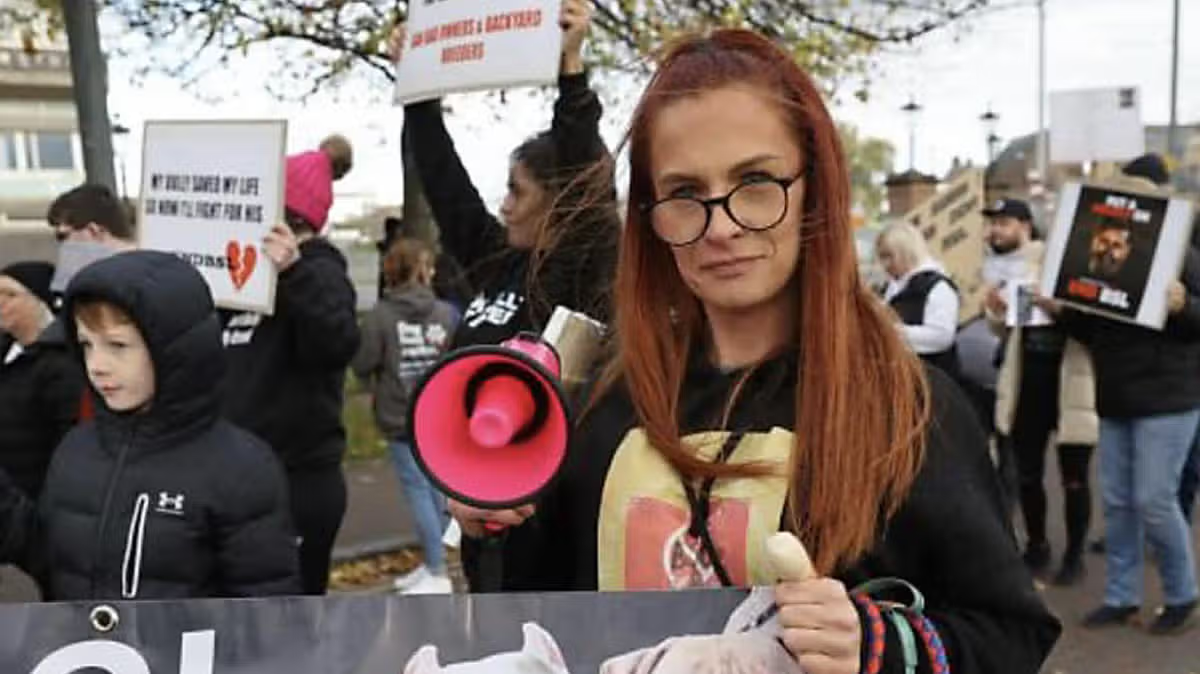
Owner of first Scots XL Bully sanctuary welcomes animal welfare licence approval

Published

on

Daily Record

Kerryanne Shaw admits she “hadn’t anticipated how much work it would require” after a two-year fight to have the centre properly licenced.

Owners of a sanctuary for XL Bully dogs have welcomed being granted an animal welfare licence after a two-year legal fight. All Bullie Charity Rescue (ABCR) was twice denied a licence by Angus Council but has now been granted permission to operate.

Advertisement

Based at the Happas Canine Centre near Forfar, the charity is currently looking after 27 dogs in total including four XL Bullies. The licence, which has been approved for 12 months, means the centre will be able to operate as normal for the next year.

Two years ago, XL bullies were banned in Scotland and existing owners had to apply for an exemption certificate. As a result of being a banned breed, hey can’t be bred, sold or re-homed and they must be kept on a lead and muzzled when out in public.

STV News reports a number of changes have been made since the charity first applied for a licence to meet animal welfare standards. Manager Kerryanne Shaw admitted it was more work than initially thought.

She told the news outlet: “We hadn’t anticipated how much work it would require. Thankfully we have managed to get to that standard and are making further improvements.

Advertisement

“Things don’t just stop because we’ve got the licence. All the hard work, determination and care for the dogs has been recognised and we’ve finally managed our goal.

“It has been a difficult, long process, so we’re super chuffed that we’ve got it. It doesn’t really change anything other than we can operate legally from the kennels.”

In a report ahead of the approval, Angus Council noted a “marked improvement” in areas condemned in previous inspections including record-keeping, hygiene and security at the kennels. ABCR will be able to continue to care for the XL Bullies they already have but will not be able to take on more.

A strict limit of 27 dogs total has also been placed on the premises. Inspectors will also visit every three months.

Advertisement

Mark Wilding is a volunteer at the centre and said they are always on the lookout for more help. He said: “I’ve always loved working with larger breed dogs. I wanted to help.

Advertisement

“Some of the situations that some of the animals come from is absolutely awful. I mean horrific.

“So to think that you’re helping any animal out of any of these situations, I think that’s what anybody does it for.

“It’s important for dogs to have this home. They get plenty of love.”

Get more Daily Record exclusives by signing up for free to Google’s preferred sources. Click HERE.

Advertisement

Source link

Continue Reading

NewsBeat

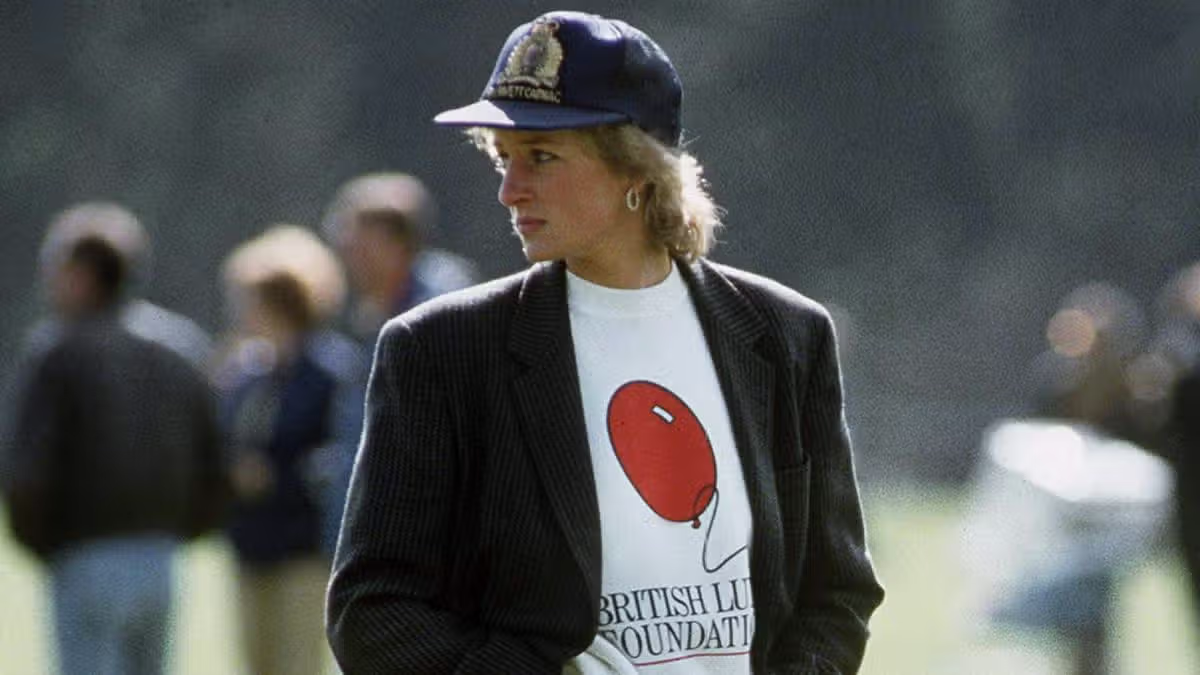
Princess Diana named greatest female style icon of all time

Published

on

Cambridgeshire Live

She beat Marilyn, Beyoncé and the current Princess of Wales

Princess Diana has been named the greatest female style icon of all time, beating Marilyn Monroe, Kate Middleton and Beyoncé. Almost a third believe Diana remains the ultimate benchmark for timeless fashion.

Marilyn Monroe came second in the style icon rankings followed by Audrey Hepburn and Catherine, Princess of Wales. Beyoncé was fifth, ahead of Rihanna, Madonna, Grace Kelly, Jennifer Aniston and Jennifer Lopez.

The research for British heritage clothing brand Cotton Traders found Diana’s influence spans every age group. David Beckham was crowned the greatest male style icon, with one in five choosing the former England captain.

Advertisement

Elvis Presley followed, ahead of David Bowie, Sean Connery, Freddie Mercury and Brad Pitt. Marilyn Monroe’s white halter neck dress from The Seven-Year Itch was voted the most iconic dress in history, narrowly beating Diana’s famous “revenge dress”.

And the little black dress was named the most iconic fashion item ever by almost a third of Brits. Jeans were second, followed by the miniskirt, denim jacket, Doc Martens and simple white T-shirt.

Jools Dickson, Cotton Traders stylist, said: “Many women dream of being a princess for the day, and what Diana did so effortlessly was make that possible for every woman. She didn’t have a stylist or the luxury of the relaxed protocol that royals enjoy today, but she managed to steal the show wherever she went and her ongoing impact on fashion is as relevant now as it was then.

“From jaw-dropping ballgowns to slick suiting, and from sweats and joggers to country tweeds, she could make any look her own. Her simple styling trick was to add the unexpected. Her trademark frill collars were seen under dungarees or with jeans, while she would throw her favourite tailored blazer over a sweatshirt and cycling shorts.

Advertisement

“These sorts of styling tricks are commonplace now, but fashion in the 1980s was not as individual and free as it is today. She was a style pioneer long before Instagram and online shopping, and her distinct way of dressing was literally all her own work.

“The fact people still look to their favourite stars for inspiration shows just how powerful a genuine style icon can be. The best looks do not simply belong to one moment in time. They continue to influence what people wear for decades, which is why we are seeing women from Gen Alpha to the Baby Boomers loving these looks today.”

Jools has created a guide showing how to put together three of Diana’s iconic, down-to-earth looks for Cotton Traders.

Source link

Advertisement
Continue Reading

NewsBeat

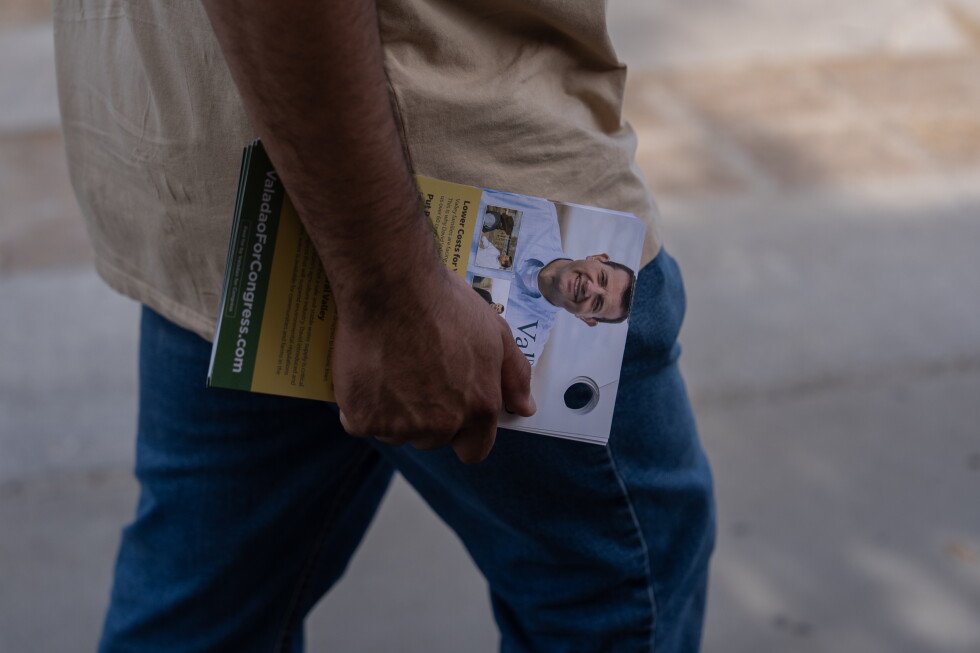
David Valadao fights for reelection after years of defying the odds

Published

on

David Valadao fights for reelection after years of defying the odds

HANFORD, Calif. (AP) — For years, Rep. David Valadao benefited from voting patterns that shifted toward Republicans in his rural, heavily Latino district in Central California, deep in the state’s farm belt where highways crisscross boundless stretches of almond groves, cornfields and dairy feed lots.

This time, that could change.

Across the country, there are signs that Latinos have grown disenchanted with President Donald Trump, especially as the price of gas, fertilizer and groceries keep climbing while funding for healthcare services is declining.

It’s Republican lawmakers like Valadao that could pay the price. He’s no Trump acolyte — if reelected, Valado will be the last member of his caucus who voted for Trump’s impeachment after the Jan. 6 attack on the U.S. Capitol — but his fortunes are inevitably tied to the leader of his party.

Advertisement

Two out of three voters in Valadao’s district are Hispanic, and AP-NORC polling shows that Trump’s national approval rating among Hispanic adults fell by 18 percentage points between March 2025 and July 2026. By comparison, approval among U.S. adults overall dropped 9 points.

Valadao said he isn’t panicking.

“I’ve won in these types of races. I can win again,” he said in an interview with The Associated Press. “I think we should be fine.”

Valadao is trying to maintain a strategic distance from Trump to defy political gravity. His campaign literature says he will “put people before political parties.” At the same time, volunteers at a phone bank in his hometown of Hanford asked wavering voters if it was important to complete Trump’s agenda in Washington, a pitch clearly aimed at partisans.

Advertisement

Few Republicans have frustrated Democrats in election after election like Valadao, a dairyman whose family emigrated from Portugal’s Azores Islands. He’s routinely overcome steep voter registration deficits by honing an independent streak and focusing on local issues like water for farmers. Valadao won a congressional seat in 2012, lost it in 2018, then won it back in 2020.

Last year’s redistricting made his swing district even more blue, and national organizations are pouring in money, making it one of the five most expensive races in the country in terms of advertising. Republicans have spent or booked more than $13 million of airtime and digital messaging through Election Day, while Democrats are slightly behind at $12.6 million, according to data compiled by AdImpact.

To win, Valadao is trying to portray his Democratic challenger — Randy Villegas, a progressive endorsed by Sen. Bernie Sanders — as too extreme to represent California’s 22nd Congressional District. He said many of his constituents are immigrants that fled countries with socialist-leaning governments “and you are seeing him run on these same kind of policies.”

At a town hall in Bakersfield, where U.S. and Mexico flags adorned the walls, hands shot up in the audience when Villegas asked how many people used Medicaid or crossed the border to get less expensive medical care and drugs.

“This should not be happening in the richest country in the history of the world,” said Villegas, who is campaigning on Medicare for All, a universal healthcare concept popularized by Sanders. “Nobody should have to choose between groceries and seeing a doctor.”

Voters have warnings for incumbents

In a year when control of the House could come down to a single district, Valadao can’t afford to lose voters like Scott Alcoser.

Advertisement

A parts manager at a farm equipment retailer in Hanford, where children ride a 1930s-era carousel under towering palms and trendy coffee shops dot downtown streets, Alcoser is a Republican who has backed the Valadao in previous elections.

But this year he’s undecided. Alcoser said he wants to hear more from Valadao about how he will “care for the community” at a time when working-class families are struggling. According to census data, nearly one in four people in the district live below the poverty line.

“He can understand the times people are going through right now,” Alcoser said. “Any politician should just be really honest with you.”

Valadao has already lost Elena Van Overbeek.

Advertisement

Although the Republican law enforcement retiree has voted for him before, she’s disappointed that prices haven’t come down and she’s worried that health care cuts supported by Valadao “would hurt too many people.”

She plans to cross the aisle to back Villegas.

Valadao still remains popular with some longtime voters in his hometown. Seated in a downtown salon getting her hair styled, retired nurse Margie Lopez called him “a decent man.”

“I don’t trust Democrats,” said Lopez, a Trump supporter.

Advertisement

The salon’s owner, Celestina Rodriguez, is a registered Democrat who describes herself as conservative and plans to vote for Valadao.

“He’s from the area and I know some of his family,” she said.

The Democratic state of play

Villegas prevailed in a caustic primary over state lawmaker Jasmeet Bains, a moderate who was backed by the Democratic Congressional Campaign Committee.

The son of Mexican immigrants who grew up on Medicaid, Villegas accuses Valadao of betraying the district by voting last year for Trump’s “big beautiful bill,” which delivered $4.5 trillion in tax breaks but also cuts more than $1 trillion over a decade from federal health care and food assistance, largely by imposing work requirements on those receiving aid and by shifting certain federal costs onto the states.

Advertisement

Valadao’s district has one of the highest Medicaid enrollment rates in the nation, and Democrats in Congress have estimated that as many as 57,000 of his constituents could lose coverage once new requirements go into effect. Valadao calls such projections “overstated.”

Democratic Rep. Ro Khanna, an outspoken progressive who is considering a 2028 presidential run, said a Villegas victory in a swing district would be a potent national statement that could ripple across the country.

“Everyone understands that the Latino vote is the swing vote,” Khanna said before a rally for the candidate in Bakersfield. “We win the swing vote of the Latino vote, we win Arizona, we win Nevada, we win Georgia.”

Mike Madrid, a Republican strategist who is an expert on Latino voting trends, said the political climate might be impossible for Valadao to survive.

Advertisement

“That district has pretty much everything you could imagine working against the Republican,” Madrid said. “The fundamentals of the race point toward an anti-incumbent mood based off of souring economics.”

A Democratic district with Republican instincts

On paper, Valadao’s district should be a Democratic cakewalk — there is a 16-point registration edge for the party after voters in 2025 approved Gov. Gavin Newsom’s blueprint for redrawing the state’s congressional map.

But the region is far from the coastal metropolises that have made California synonymous with liberal governance.

The Central Valley is known as America’s salad bowl, for its vast production fruits, vegetables and nuts that stock refrigerators and kitchen tables across America. Virtually all the pistachios grown in the country come from California.

Advertisement

“Analysts often underestimate what the people who live and work in the Central Valley of California are about,” said Republican consultant Cathy Abernathy of Bakersfield, who thinks Valadao will prevail. “They think differently than the metropolitan Southern California and San Francisco Bay Area Democrat voters.”

While many receive government assistance, “most think about keeping the job they have, keeping their family lifestyle going and not rocking the boat just to throw their fist in the air,” she wrote in an email.

Valadao didn’t support Trump in 2016, backed him 2020 and declined to say how he voted in 2024.

He demurred when asked about his impeachment vote in 2021.

Advertisement

“I’ll let history decide on how to interpret anything I’ve done,” he said. “I’ve got nothing more to add to that.”

Jeffrey Cummins, who teaches political science at California State University, Fresno, said Democrats will need to closely tie Valadao to Trump to defeat him in a toss-up race.

If they don’t succeed this year, Cummins said, they “may lose hope of ever knocking off Valadao.”

Advertisement

Source link

Continue Reading

Trending

Copyright © 2025