Connect with us
DAPA Banner

NewsBeat

DarlingtonOS set for Joseph and the Amazing Technicolor Dreamcoat

Published

on

DarlingtonOS set for Joseph and the Amazing Technicolor Dreamcoat

The show, directed and choreographed by Joanne Hand, will run at Darlington Hippodrome from Wednesday, April 22, to Saturday, May 2.

Eddie Taylor-Jones, chairman of DarlingtonOS, said: “We have long awaited the opportunity to bring Joseph to life at Darlington Hippodrome.

“This production is a celebration of creativity, community, and the enduring magic of live theatre.

Advertisement

“Joseph’s story is one of hope, resilience, and joy, and we are proud to share it with audiences in a way that feels both fresh and deeply rooted in its timeless appeal.

“We can’t wait to welcome everyone to experience what promises to be a truly unforgettable show.”

The musical, written by Tim Rice and Andrew Lloyd Webber, is one of the world’s most beloved family shows and is told entirely through song.

It follows the journey of Jacob’s favourite son Joseph and his 11 brothers, tracing his path from betrayal and imprisonment to redemption, reunion, and forgiveness.

Advertisement

The DarlingtonOS cast features a broad array of local talent.

Ben Connor will take the title role of Joseph, while the role of the Narrator will be shared by Samantha Morrison and Katie Spencer.

Other cast members include Julian Cound as Jacob and Potiphar, Eddie Taylor-Jones as Reuben, Luke Oldfield as Simeon, Barry I’Anson as Levi, and Baily Gascoigne as Judah.

Supporting roles are filled by Nick Robinson (Dan), Phil Bargewell (Naphtali), Joseph Arnott (Gad/Butler), Joshua Kay (Asher), Jonathan Wilson-Downs and George Rock (Issacher), Jack Machin (Zebulum/Baker), Kailum James (Benjamin), Steven Dunn (Pharoah), and Lucy Ivison (Mrs Potiphar).

Advertisement

The wider company includes Zoe Kent, Lucy Adams, Ali Baily, Lisa Marie Watson, Grace Mansfield, Safah Alazzawi, Eva Furguson, Joanne Johns, Stacey Dobson, Sasha Bramley, Sally Ivison, Olivia Brady, Sophie Simmons, Freya Moir, Emily Wright, Ruth Richardson, Fran Hague, Zoe Bellamy, Adele McNally, Kyra Batty, Nikitta Trainer, Faith Small, and Darrien Wright.

Young performers will also play a key part in the production, with two teams of children from the local area performing on alternate nights.

Team Pharoah includes Ellen Dickson, Grace McGuiness, Juliet Grey, Fallon Gibson, Harrison Brown, Clara Harper, Eliza Currie, and Evie Proctor.

Team Potiphar features Arabella Lowrie, Chloe Gowling, Lucie Bell, Penny Metcalfe, Thomas Loftus, Holly Neale, Rosie Tolston, and Cassie Hide.

Advertisement

Ms Hand brings extensive experience to the production, having previously directed DarlingtonOS shows such as Come From Away, Everybody’s Talking About Jamie, Kinky Boots, Priscilla Queen Of The Desert, and Chitty Chitty Bang Bang.

Musical direction will be provided by Paul Walker, who will lead a live 15-piece band.

Joseph and the Amazing Technicolor Dreamcoat began life as a school concert before being released as a concept album in 1969 and evolving into an international stage phenomenon.

The show has been staged in more than 80 countries, with productions in the West End, on Broadway, and beyond.

Advertisement

It features well-known songs including Any Dream Will Do, Close Every Door To Me, Jacob and Sons, There’s One More Angel In Heaven, Go Go Go Joseph, and the high-energy Megamix finale.

Tickets are available exclusively through DarlingtonOS and can be booked by calling the ticket hotline on 01325 405405 or by visiting www.darlingtonos.org.uk.

Source link

Advertisement
Continue Reading
Click to comment

You must be logged in to post a comment Login

Leave a Reply

NewsBeat

Man arrested after North East hospitalisations linked to Zopiclone

Published

on

Man arrested after North East hospitalisations linked to Zopiclone

Cleveland Police has said the man was arrested on suspicion of being concerned in the supply of class C drugs and was questioned by officers.

A force spokesperson added: “He has been bailed with conditions whilst our enquiries continue.”

Cleveland Police said yesterday the reports circulated from Middlesbrough, Stockton and Hartlepool on Friday (March 20) evening and involved people being treated for ‘significant adverse effects’ of the drug.

Advertisement

In a statement, Cleveland Police said: “On the evening of Friday, March 20, police received reports of several adults from Middlesbrough, Stockton and Hartlepool having been taken to hospital for treatment from what is believed to be significant adverse effects following the consumption of a drug called Zopiclone.

“This drug should only be taken by those who have been prescribed it by a medical professional, and officers are warning members of the public not to take this if offered it and report any information which could be connected to this incident to the police.”

Anyone with information is urged to contact Cleveland Police on 101, quoting reference number 052547.

Information can be passed to Crimestoppers anonymously online or by calling 0800 555 111.

Advertisement

Source link

Continue Reading

NewsBeat

Update on Wisbech river crash as search for teenage boy enters fifth day

Published

on

Cambridgeshire Live

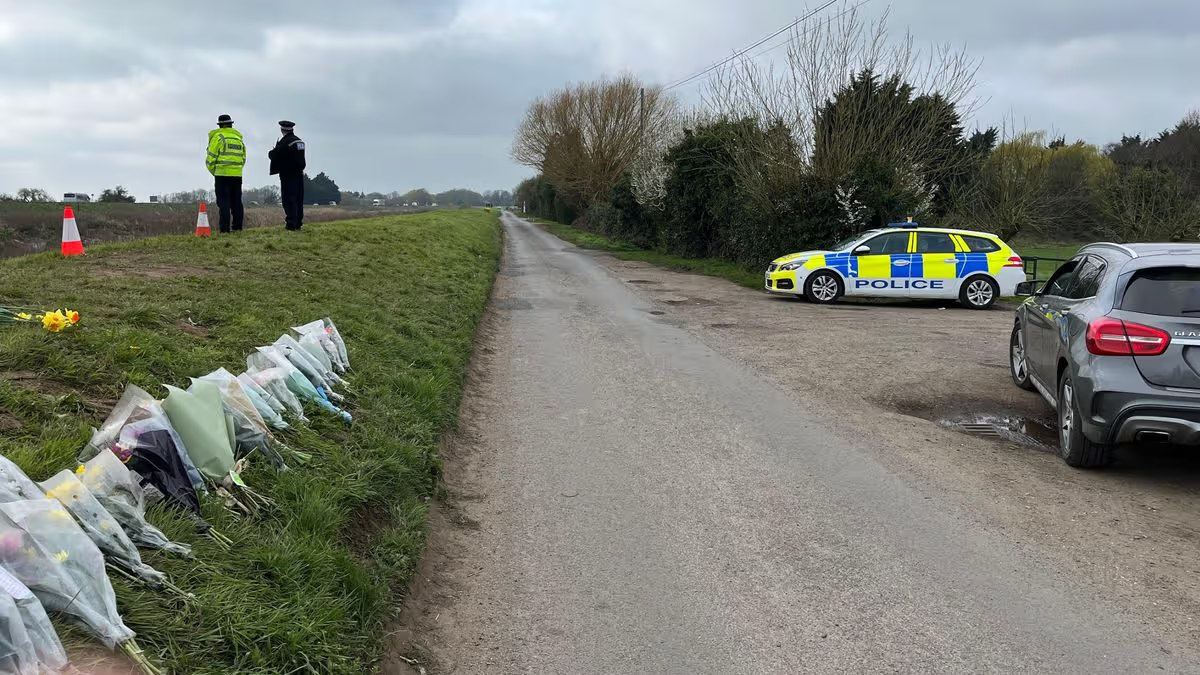
Cambridgeshire Police remains at the scene today (Sunday, March 22) as they continue to search for Declan Berry

Police have provided an update after five teenagers crashed into a Cambridgeshire river earlier this week. Cambridgeshire Police remain at the scene of North Brink in Wisbech this afternoon (Sunday, March 22), as the search for 18-year-old Declan Berry enters its fifth day.

Advertisement

Declan and four other teenagers, including another 18-year-old boy and three 16-year-old girls, crashed into the River Nene along the road at around 8.20pm on Tuesday (March 17). Sadly, Eden Bunn’s body was recovered from the river on Wednesday (March 18).

DI Craig Wheeler of Cambridgeshire Police is at the scene today, and has provided an update on the search and investigation. DI Wheeler said: “At the moment, we are on the scene with a plan to try and recover the vehicle.” The police officer added that there are specialist dive teams that hope to recover the vehicle this afternoon.

DI Wheeler added that it “isn’t a quick process”, and could take anywhere between one-and-a-half hours to four-and-a-half hours. Tributes were laid at the scene of the crash earlier this week, paying respects to Eden and Declan.

After Eden’s body was found, her family also paid tribute to her. Eden, from Sutton Bridge in Lincolnshire, was described as the “kindest” and “most loving girl”.

Advertisement

Do you want more of the latest Cambridgeshire news as it comes in from across the county? Sign up to our dedicated newsletter to make sure you never miss a big story from Cambridge or anywhere else in the county. You can also sign up to our dedicated Traffic and Crime newsletters for the latest updates on the topics you are most interested in.

Source link

Continue Reading

NewsBeat

Cuba left in darkness after third power cuts in a month | World News

Published

on

People walk and drive on a street in Havana as Cuba's national electric grid collapsed. Pic: Reuters

Cuba’s power grid has collapsed for the third time this month, leaving the country in darkness with no electricity.

The cut came as the communist government continued to battle with a US imposed oil blockade and decaying infrastructure.

The Cuban Electric Union, which reports to the Ministry of Energy and Mines, announced on Saturday a total blackout across the island without initially giving a cause for the outage.

It later said that the blackout was caused by an unexpected failure of a generating unit at the Nuevitas thermoelectric plant in Camaguey province.

Advertisement

Grid operator and state utility Union Electrica said that the power failed at 6.32pm (10.32pm in the UK).

At 7am on Sunday (11am UK time), it said on social media that microsystems – smaller, closed circuits for vital services – were operational in all territories.

Work is underway to restore the rest of the grid. It’s the second such blackout in a week on the island, and the third this month.

Image:
Pic: Reuters

Sky’s US partner network NBC News reports that both regional and national power outages have been common in Cuba over the past two years, due to breakdowns in ageing infrastructure.

Advertisement

However, the government has also blamed the strict oil and fuel embargo brought in by the Trump administration in February.

Advertisement

Trump sets his sights on Cuba

Cuba produces barely 40% of the fuel it needs to power its economy. The country’s president, Miguel Diaz-Canel, said last week that the island had not received oil from foreign suppliers for three months.

Venezuelan President Nicolas Maduro and his wife were captured by the US military in early January, which led to the halt of Cuba’s critical petroleum shipments from South America.

Advertisement
Pics: Reuters
Image:
Pics: Reuters

The US has also maintained a strict trade embargo on Cuba since 1962, the year after a failed, CIA-sponsored invasion of the island at the Bay of Pigs.

Donald Trump extended that blockade by signing an executive order imposing trade tariffs on countries exporting oil to Havana last month.

Read more from Sky News:
‘Selfless’ police officer dies in line of duty
Saturday Night Live UK reviews are in


From February: How Cubans cope during US-imposed fuel blockade

The UN Office of the High Commissioner for Human Rights said experts condemned the move, and accused the US of a “serious violation of international law and a grave threat to a democratic and equitable international order”.

Advertisement

On 15 March, Mr Trump claimed the US could “do whatever we have to do” in Cuba after his Iran war. His warning came a day after a rare riot against the Cuban government.

Videos on social media showed people throwing rocks through the windows of a building as they shouted “liberty” in the background.

Advertisement

Source link

Continue Reading

NewsBeat

Two skiers killed after avalanche sweeps through busy slope in northern Italy | World News

Published

on

Rescuers search the site of the avalanche in Val Ridanna, in Alto Adige, northern Italy. Pic: Italian Alpine, National Alpine & CNSAS/AP

Two people have been killed after being caught in a large avalanche in northern Italy, the country’s mountain rescue service has said.

Three others were seriously injured and two people suffered minor injuries after the it swept through a busy high alpine slope.

The incident happened at an altitude of around 2,400 meters (7,874 feet) on the slopes of the 2,669-meter (8,757 feet) Hohe Ferse mountain (also known as Monte Tallone Grande) near the town of Ratschings, close to the border with Austria.

Advertisement

A total of 25 skiers were caught in the avalanche in the South Tyrol region on Saturday morning.

The CNSAS rescue service has not specified if the remaining 18 people were trapped or rescued and what, if any, injuries they suffered. But, according to Italian news agency ANSA, most of them “were only grazed and not swallowed up by the mass of snow”.

The agency’s report said the avalanche had a “150m front and a length of several hundred metres”.

A major rescue operation was launched as six helicopters and around 80 rescue staff from CNSAS, the Alpine Association, police and firefighters, along with sniffer dogs, were sent to the scene.

Advertisement

It was the latest in what European Avalanche Warning Services (EAWS) describes as an unusually high number of avalanches on the continent’s slopes this season.

Read more on Sky News:
Police officer dies in line of duty
SNL UK reviews are in

A total of 127 people had died by 16 March, including 33 in Italy, 31 in France and 29 in Austria, compared to an annual average of 100, EAWS said.

In early February, a record 13 people died on Italian slopes in one week.

Advertisement

Last month, two British skiers died in an avalanche in France.

The high number of deaths is down to an exceptionally unstable snowpack and the rush of skiers taking on off-piste slopes after recent heavy snowstorms, experts have said.

Advertisement

Rising temperatures and stronger winds, seen as contributory factors, are the result of climate change, climate experts have argued.

The avalanche danger in the Ridanna Valley, where the latest avalanche occurred, is currently moderate.

Source link

Advertisement
Continue Reading

NewsBeat

Democrats sharpen criticism of Vance before the 2028 White House campaign

Published

on

Democrats sharpen criticism of Vance before the 2028 White House campaign

FAIRFIELD, Ohio (AP) — Although President Donald Trump is the top Democratic nemesis, some of the party’s most ambitious leaders are increasingly looking past him and at Vice President JD Vance.

In the latest example, Kentucky Gov. Andy Beshear traveled to Vance’s home county in Ohio, where on Saturday night he said the vice president had abandoned the communities that he wrote about in the memoir that made him famous.

Beshear said “Hillbilly Elegy,” which detailed Vance’s hardscrabble upbringing, had “trafficked in tired stereotypes.”

“His book ‘Hillbilly Elegy’ was really hillbilly hate,” the governor said at a Democratic fundraiser in Butler County. “It is poverty tourism, because he ain’t from Appalachia.”

Advertisement

The broadside was not only a sign of Beshear’s own potential presidential aspirations, but a reflection of Vance’s status as the Republican heir apparent to the coalition that twice elected Trump to the White House.

“With every day that passes, we get closer to a day when Donald Trump is no longer president. And we need to prepare for that day,” said Lis Smith, a Democratic strategist. “Right now, JD Vance is a clear front-runner for the 2028 nomination. And so we should begin defining him — not in 2027, not in 2028 — but today.”

Vance spokesperson Taylor Van Kirk brushed off Beshear’s criticism.

“Every time Andy Beshear attacks the vice president to try to get himself publicity, he ends up humiliating himself in the process, but maybe that’s something he’s into?” she said.

Advertisement

An early foil for Democratic contenders

U.S. Rep. Ro Khanna of California was among the first Democrats to begin focusing on Vance last year. Khanna stopped at the City Club of Cleveland and Yale University, where he and Vance studied law, and gave speeches that attempted to cast Vance as more extreme than Trump.

Pennsylvania Gov. Josh Shapiro, another potential presidential contender in 2028, singled out Vance in November while making the argument that the Trump administration did not care about working people.

“At least with Donald Trump, he’s transparent about that,” Shapiro said. “JD Vance is a total phony.”

Some Democrats have coalesced around California Gov. Gavin Newsom as a strong candidate because of his aggressive strategy in going after Republicans.

Advertisement

He coined the nickname “JD ‘Just Dance’ Vance” on social media, and he has mocked the vice president’s appearance, saying Vance “grew a beard and lost his spine.”

Smith, the strategist who led Pete Buttigieg’s 2020 presidential campaign and still works with the former Biden administration transportation secretary, said every line of criticism of Vance is an audition.

“There’s definitely value in taking on Vance to show Democrats, hey, this could be me on the debate stage against him,” said Smith.

Vance often invokes his working-class roots

The vice president was born and raised in Butler County’s Middletown, and he rose to prominence with the publication of “Hillbilly Elegy” in 2016. The book earned Vance a reputation as someone who could help explain Trump’s appeal in middle America, especially among the working class, rural white voters who helped Trump win the presidency.

Advertisement

Vance carried that reputation to the U.S. Senate, winning election in 2022, and later to the vice presidency. That same background is likely to be central to any future presidential run — and it is precisely what Democrats are now working to undercut.

At Saturday’s Democratic fundraiser, the mere mention of Vance’s name drew a chorus of boos from the audience.

“I don’t think he’s got the magic that everybody looks at with Trump,” said Theresa Vacheresse, a retired physician and business owner who attended the event. “I think when Trump is gone, the Democrats might have a chance. My god, I hope so.”

The focus on Vance is not unusual for a vice president widely seen as a potential future nominee, particularly one as young as 41. Republicans went after Kamala Harris early in her tenure under President Joe Biden to undermine her political future.

Advertisement

Jamal Simmons, Harris’ communications director in 2022 and 2023, said vice presidents can be vulnerable.

“The party is built to defend the president more than it is the vice president,” he said. “The vice president’s kind of out there on their own, to defend themself, and find friends where they can.”

Republicans, including Vance, frequently tied Harris to some of the Democratic administration’s most politically difficult issues, such as immigration and border security.

“Being vice president is a very mixed blessing,” said David Axelrod, who was a top adviser to Democratic President Barack Obama. “You often don’t have the assets of the president, but you inherit all of the president’s record. The good, the bad, and the ugly.”

Advertisement

Beshear has had success in Trump country

Beshear is the rare Democrat to lead a red state, and he is positioning himself as someone who can reach voters who have tuned out his party.

He said Democrats can “actually go and win back those voters that JD Vance is so condescending to” if they stay focused on Americans’ basic needs such as affordable health care and public safety.

“We’ve gotta start talking to people and not at them,” he said. “That’s how I won counties in eastern Kentucky that normally vote for Republicans by large margins — including Breathitt County. That’s the county JD Vance pretends to be from. Donald Trump won it by 59 points. I won it by 22 points the year earlier.”

The audience appeared delighted with Beshear’s message.

Advertisement

“I think he’s first-rate,” said Mark Kaplan, who lives in Butler County. “What he’s got is compassion, empathy, charisma and intellect, but he’s also down-to-earth.”

___

Cappelletti reported from Washington.

Advertisement

Source link

Continue Reading

NewsBeat

Carabao Cup: Who needs final victory more? Mikel Arteta or Pep Guardiola?

Published

on

Arsenal manager Mikel Arteta embracing Manchester City boss Pep Guardiola

Arteta’s Arsenal will be desperate to shed their tag as the side that has come up short in recent years.

The Gunners and their manager are seeking a first piece of silverware since they beat Chelsea in the 2020 FA Cup final, only nine months after he left Guardiola’s side as his assistant at City to take over at Emirates Stadium.

In that same period, Arteta’s managerial mentor Guardiola has a trophy haul of the Champions League, four Premier League titles, the FA Cup and the EFL Cup, as well as the Uefa Super Cup and Fifa Club World Cup.

Arsenal, since Arteta last tasted success, have lost in the Europa League semi-final to Villarreal in 2021, EFL Cup semi-finals in 2022 and 2025 to Liverpool and Newcastle United respectively, as well as last season’s Champions League semi-final against eventual winners Paris St-Germain.

Advertisement

The Gunners have finally broken that pattern to reach a final, but Arteta must also release Guardiola’s stranglehold, having only won four of their past 16 meetings against him – including the Community Shield in 2023 – while losing nine.

This suggests it is Arteta who is in urgent need of breaking the cycle of finishing empty-handed.

Former Arsenal and England defender Matt Upson told BBC Sport: “I think overall, Arteta needs it most because he has not won enough trophies in his time at Arsenal for how well they have done.

“It has been a case of ‘nearly but not quite’ for Arteta after the seasons in which they have finished second in the Premier League. They have not quite got there, so this is a big one for Arteta.

Advertisement

“I think Arteta and Guardiola need it for very different reasons, but I feel Arteta needs it more because he needs to put some silverware in the trophy cabinet.

“The overall pressure is on Arteta, but it is also fair to say the short-term pressure is on Guardiola. It is very important City get that win to try and at least dent Arsenal’s confidence. That would be really helpful for them in the last eight games of the season.”

Former Manchester City defender Nedum Onuoha says victory could still be of huge significance to his former club.

“City have just had the pain of defeat in the Champions League, but they can use that in the Carabao Cup final to express how much going out to Real has hurt them, and potentially take that and use it at Wembley,” he said.

Advertisement

“This is 100% a great occasion for them to bounce back, and to be able to potentially sign off with the last game before the international break lifting a trophy can change your perspective on the whole season significantly.”

Source link

Continue Reading

NewsBeat

Can British drones help secure the strait of Hormuz for international shipping?

Published

on

Can British drones help secure the strait of Hormuz for international shipping?

After pressing allies for support – and being rebuffed – US president Donald Trump now insists that the United States can reopen the Strait of Hormuz alone. However, this would focus the risk on US forces and stretch limited naval resources.

Some 20% of global oil flows ordinarily passing through Hormuz; closure of the strait has caused oil prices to soar. British prime minister Keir Starmer has refused to let the UK be drawn into a wider war in the Middle East. However, he has said he is “looking through the options” on helping secure the strait for shipping.

The UK military has already stated that it is considering sending two drone types to the strait of Hormuz: interceptors, to counter Iranian drones, and mine-hunters. These could help ensure the security of shipping in the region, but their task will not be straightforward.

Iran is believed to have around 6,000 sea mines, ranging from simple contact types like the Maham-1 – anchored in place and triggered on impact – to more advanced systems such as the Chinese-designed EM-52, which sit on the seabed and fire a rocket at ships with specific acoustic or magnetic signatures.

Advertisement

So far, only a handful of mines are understood to have been deployed, often covertly at night or using traditional sailing ships to evade detection.

Divers are also used, in the case of limpet mines, to manually attach these devices to a ship’s hull and detonate them remotely. Even limited mining efforts deter commercial shipping, as crews, insurers and operators refuse to risk transit.

The mine threat is only one layer. Iran’s Islamic Revolutionary Guard Corps has built a broader anti-access system: fast attack craft, shore-based anti-ship missiles – such as the Noor/C802 – and one-way attack drones, such as the Shahed-136, which is so effective the Americans are now copying it. These can be launched from concealed positions along the coastline, allowing Tehran to threaten vessels across the strait.

The result is a multi-domain problem. A ship attempting to transit must contend simultaneously with threats from below the water, across the surface and from the air.

Advertisement
The Royal Navy’s Sweep system uses an uncrewed surface vessel towing three sensor boats.
Royal Navy / MOD

This technology enables selective disruption. Iran is targeting the vessels of specific countries while allowing others to pass, preserving its own oil exports while exerting pressure on the US and its allies.

In theory, reopening the strait is straightforward: clear the mines, escort shipping and deter further attacks. In practice, western navies are poorly configured for this. Mine warfare has been deprioritised for decades. The US has historically devoted less than 1% of its naval budget to it, despite mines accounting for 80% of US warships sunk or damaged since 1945.

Its Avenger-class minesweepers are being retired, replaced by platforms reliant on unmanned systems. European fleets face similar constraints. The Royal Navy’s last minehunter in the Gulf, HMS Middleton, left for maintenance shortly before the current crisis. Of the seven vessels in the fleet, four are unavailable, with the remaining three earmarked to protect home waters and UK submarines.

Vulnerable to attack

Even where mine countermeasure vessels exist, they are ill-suited to Hormuz. They operate slowly and close to the threat, using sonar and remotely operated vehicles to locate and neutralise mines. In a contested environment, this places them within range of missiles and drones, requiring escort ships – which are similarly scarce.

Advertisement

Autonomous minehunters include the Royal Navy’s Sweep system. Instead of detecting and then destroying mines in separate stages and with separate tools, Sweep uses an uncrewed surface vessel towing three sensor boats that replicate the magnetic, acoustic and electrical signature of a ship. This effectively tricks mines into detonating harmlessly at a distance. It entered service in 2025 and can be controlled remotely from a ship or portable platform.

Octopus
The UK-produced Octopus system is designed to collide with drones like Iran’s Shahed-136.
Ukraine MOD, Author provided (no reuse)

These systems nevertheless remain limited in number and untested in combat. The control ships and command nodes may also have to operate within range of Iranian aerial weapons.

That includes Shahed drones. With a cost of US$35,000 (£26,000) each, these are effective at overwhelming traditional air defences, exhausting expensive interceptor stocks like the Patriot, which costs $4 million per missile.

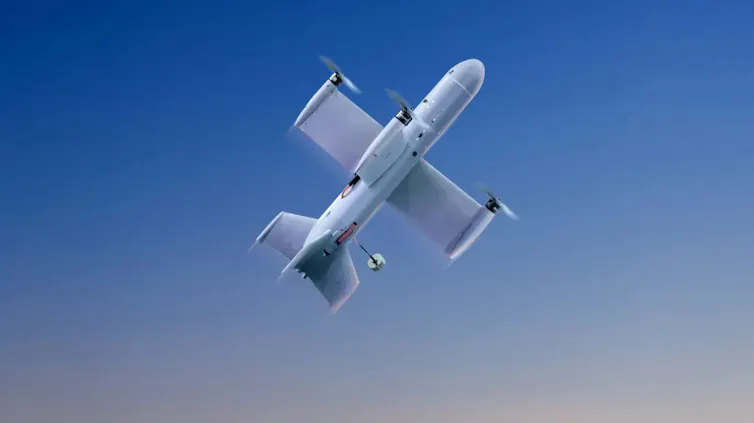
The economics are forcing the development of cheaper responses. Interceptor drones, such as the UK-produced Octopus system, use onboard sensors and AI-driven image recognition to physically collide with incoming drones like the Shahed. Costing less than a tenth of the target, they offer a far more scalable defence than high-end missiles.

The US faces challenges if it intends to go it alone on reopening the strait. Mine clearance is inherently slow. The last major western operation of this kind, after the 1991 Gulf war, took more than seven weeks. Doing this alone would concentrate risk on US forces and stretch already limited mine countermeasure capacity.

Advertisement

Other possibilities like helicopters with anti-mine capabilities would not be able to overcome the threat posed by drones or missiles.

At the same time, Washington has targeted Iranian minelaying vessels and naval facilities. A marine force is also en route, raising the possibility of operations against Iranian coastal drone and missile launch sites. But this would involve putting boots on the ground – something unpalatable to many, even within the Trump administration.

Immediate impact

Europe, despite political hesitation, is unlikely to remain absent. The economic impact of disruption in Hormuz is immediate. Deploying autonomous counter-mine and counter-drone systems already in the region could be framed not as joining a controversial war, but as restoring freedom of navigation in a vital international waterway.

There are reputational factors at play, too. The untimely withdrawal of mine-hunting vessels has strained trust with Gulf partners, particularly for countries like the UK that had committed to their security. Reinforcing capabilities to the region could help repair that relationship.

Advertisement

However, systems like Octopus are currently needed in Ukraine. Diverting them to the Middle East to defend against Iranian Shaheds would deny Kyiv a vital capability. Already, more Patriot missiles have been launched by the Gulf states to protect their airspace than Ukraine has in four years of war.

While Trump may be right that the US does not need European assistance, that is not the most important question. The real dilemma is whether any western military – acting alone or together – can quickly, safely and sustainably secure one of the world’s most critical waterways against a layered, modern threat. That is a much harder test.

Source link

Advertisement
Continue Reading

NewsBeat

Coach carrying Man City fans bursts into flames on way to Carabao Cup final

Published

on

Wales Online

Manchester City face Arsenal in Sunday afternoon’s Carabao Cup final at Wembley

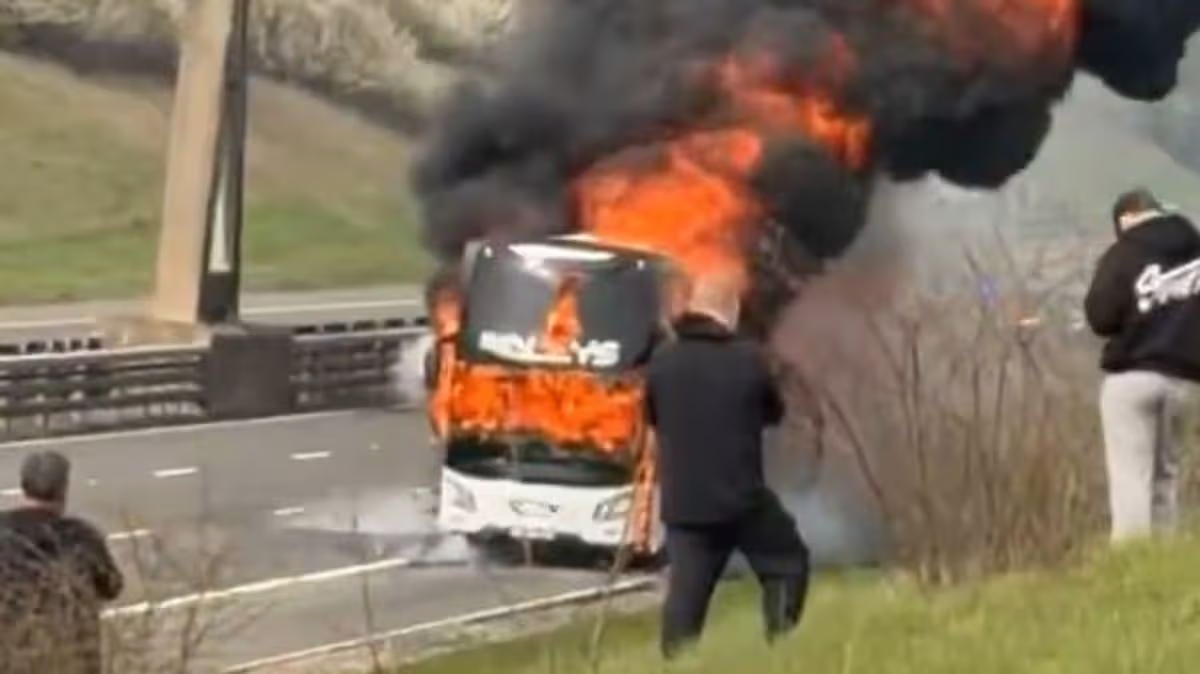
A coach carrying Manchester City fans has burst into the flames on the way to the Carabao Cup final at Wembley Stadium.

Pep Guardiola’s side face Mikel Arteta’s Arsenal in Sunday afternoon’s final, with the two Premier League giants competing for their first silverware of the season.

The match is sold out, with 90,000 fans set to descend on north-west London to watch their teams in action.

Advertisement

However, fans travelling to the game from the north of England are being held up following a huge coach fire on the M6 Toll in the West Midlands.

The coach is believed to be a Man City supporters’ coach heading to the game, with pictures shared on social media showing a fire ripping through the vehicle as fire crews tackle the blaze.

A large section of the M6 has been closed off while crews work at the scene, our sister title Manchester Evening News reports.

The incident has caused lengthy delays on the motorway, with traffic said to be at a standstill.

Advertisement

“Anyone en route to Wembley, lots of delays on M6 toll due to coach setting on fire,” one person wrote on X.

Another said: “Man City fan coach on way to Wembley on fire on M6 just after the toll, so we are at a standstill. Hope everyone is ok.”

“Bus fire on the M6 toll,” wrote a third person. “My mate is behind it and the whole road is stood still. People playing padel on the motorway.”

A witness told the MEN passengers were evacuated before being left waiting on the grass verge.

Advertisement

She said: “I wanted to report an incident currently unfolding on the M6 involving a coach carrying Manchester City fans travelling to Wembley.

“The coach has caught fire and is now severely damaged, with large plumes of smoke visible.

“Emergency services are on scene, and parts of the motorway appear to be closed, causing significant delays.

“Passengers have been evacuated and are currently waiting on the grass verge.

Advertisement

“No serious injuries have been reported so far.”

More follows

Source link

Advertisement
Continue Reading

NewsBeat

BBC in Cuba as island plunged into darkness

Published

on

BBC in Cuba as island plunged into darkness

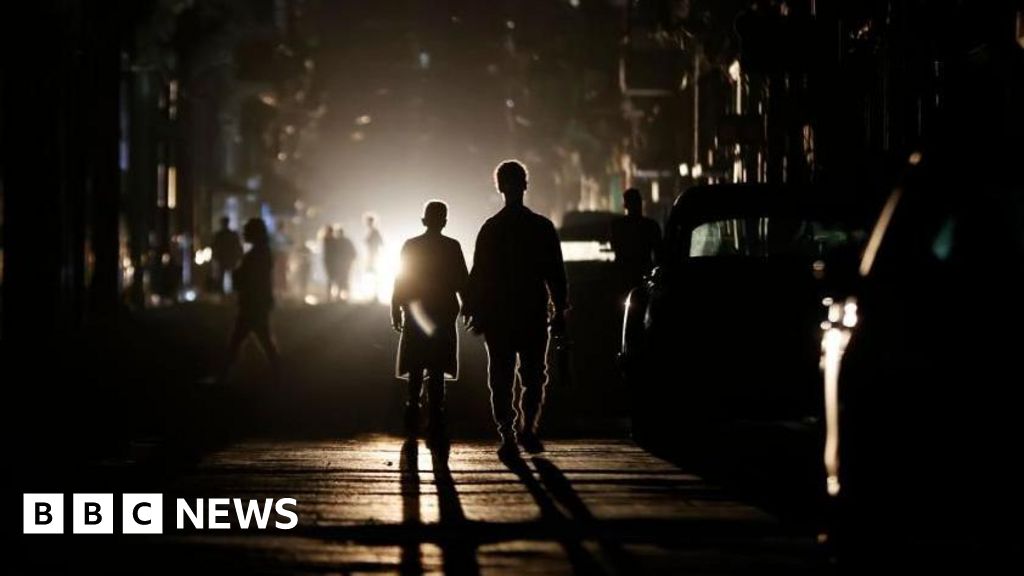
More than 10 million people in Cuba have had power cut to their homes and businesses after the country’s national electrical grid collapsed.

The Caribbean island has been hit with several blackouts this month, as a result of a US fuel blockade that cuts off the foreign oil imports needed to keep power stations running.

The Communist-run country has an ageing electricity infrastructure and chronic fuel shortages.

The BBC’s Will Grant reports from the capital Havana.

Advertisement

Source link

Continue Reading

NewsBeat

Ukraine constantly adapts its drones on the battlefield

Published

on

Ukraine constantly adapts its drones on the battlefield

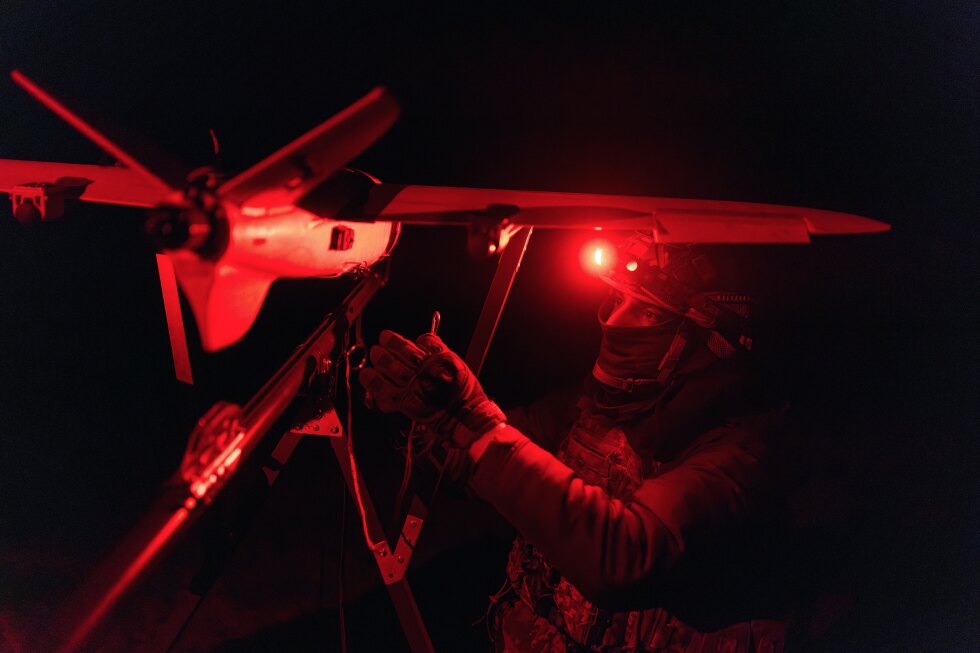
KHARKIV, Ukraine (AP) — The night air in eastern Ukraine is crisp, and a myriad of stars scatter above a small crew of soldiers watching for Iranian-designed Shahed drones that Russia launches in waves.

Such teams are deployed across the country as part of a constantly evolving effort to counter the low-cost loitering munitions that have become a deadly weapon of modern warfare, from Ukraine to the Middle East.

While waiting, the crew from the 127th Brigade tests and fine-tunes their self-made interceptor drones, searching for flaws that could undermine performance once the buzzing threat appears. When Shahed drones first appeared in autumn 2022, Ukraine had few ways to stop them. Today, drone crews intercept them in flight with continually adapting technology.

In recent years, Ukraine’s domestic drone interceptor market has burgeoned, producing some key players who tout their products at international arms shows. But it’s on the front line where small teams have become laboratories of rapid military innovation — grassroots technology born of battlefield necessity that now draw international interest.

Advertisement

President Volodymyr Zelenskyy says U.S. allies in the Middle East have approached Ukraine for help in defending against Iranian drones, the same type that Russia has fired by the tens of thousands in the 4-year-old war.

Iran has also used the same drones in retaliation for joint U.S.-Israeli strikes, at times overwhelming far more sophisticated Western-made air defenses and highlighting the need for cheaper and more flexible countermeasures.

“It’s not like we sat down one day and decided to fight with drones,” said a pilot with Ukraine’s 127th Brigade, sitting at his monitor after completing a preflight check. “We did it because we had nothing else.”

How the drone war began

Moments earlier, the pilot carefully landed his interceptor drone to avoid damaging it. He spoke on condition of anonymity because military rules did not allow him to be quoted by name.

Advertisement

Though designed to be disposable, limited resources mean Ukrainian crews try to preserve every tool they have, often reusing even single-use drones to study their weaknesses and improve them.

“Just imagine — a Patriot missile costs about $2 million, and here you have a small aircraft worth about $2,200,” the pilot said. “And if it doesn’t hit the target, I can land it, fix it a bit and send it back into the air. The difference is huge. And the effect? Not any worse.”

Ukraine’s 127th Brigade is building an air defense unit centered on interceptor drone crews — a model increasingly adopted across the military.

Leading the brigade’s effort is a 27-year-old captain, who previously served in another formation where he had already helped organize a similar system. He also spoke on condition of anonymity because military rules did not allow him to be quoted by name.

Advertisement

He clearly remembers the moment about two years ago when everything changed. He said he was assigned to lead a group of soldiers ordered to intercept Russian reconnaissance drones using shoulder-fired air-defense missiles.

The approach quickly proved ineffective. Agile drones equipped with cameras could easily maneuver away from the slower, less-flexible weapons, he said.

Determined to find a better solution, the young officer began searching for alternatives, asking fellow soldiers and volunteers supporting the front.

The answer turned out to be simple: another drone.

Advertisement

The captain still remembers the day a Russian Orlan reconnaissance drone hung above a Ukrainian position, transmitting coordinates to guide Russian artillery. A pilot from his unit downed it by using another drone, he added.

“That’s when I realized — this is a drone war. It had begun,” he said. “We had been moving toward it for some time, but that was the moment I saw it with my own eyes.”

They never found the wreckage of the Orlan, which burned as it fell to the ground.

Downing Shaheds

Another challenge soon emerged: how to intercept the hundreds of fast, durable Shahed drones flying far beyond the front line.

Advertisement

The young captain’s search for a solution led him to the 127th Brigade in Kharkiv and to cooperation with a local defense company. Their joint efforts resulted in aircraft-style interceptor drones capable of matching the speed of the Shaheds.

Kharkiv is not only where they work — it’s where their families live, a city that regularly comes under Shahed attacks.

Working with the company allows soldiers to test interceptor drones in real conditions and quickly refine the technology through direct feedback.

The company’s Skystriker drone differs from more widely known interceptor systems such as Sting or P1-Sun, which are based on modified first-person view, or FPV, drones. Instead, it resembles a small aircraft with wings, allowing it to stay aloft longer.

Advertisement

“Yes, this is a joint effort,” said the director of the company, who spoke on condition he not disclose the name of the firm or his own identity for security reasons.

“It’s not enough just to build it. It has to work — and work properly — and perform real combat tasks,” he said. “That’s why communication with the military is so important. They give us feedback and help us improve it every time.”

Nonprofits and volunteers

In Ukraine, cooperation often goes beyond the military and manufacturers. Volunteers frequently act as intermediaries between the two, sometimes even helping them find one another.

The Come Back Alive Foundation, a nonprofit think tank and charity that raises money to equip Ukraine’s forces, launched a project called “Dronopad,” loosely translated as “Dronefall,” in summer 2024.

Advertisement

The idea grew from battlefield reports that FPV drone pilots were occasionally able to track and intercept aerial targets — early cases that helped shape efforts to counter the Shaheds.

“At that moment it wasn’t clear whether this was even a scalable solution or just isolated incidents,” said Taras Tymochko, who leads the project. “Our goal was to turn it into a system — to help units that already had their first successful cases build the capability and scale what they had achieved.”

The foundation worked with drone manufacturers to better understand what systems soldiers needed. As the project developed, the capabilities of interceptor drones evolved.

“At some point they were able to reach speeds of more than 200 kilometers per hour (124 mph), which made it possible to intercept targets like Shaheds in the air,” Tymochko said.

Advertisement

The team closely monitored the rapidly growing drone market. A key factor, he said, was ensuring close cooperation between manufacturers and the military so that engineers could receive feedback quickly from battlefield tests.

“It’s always action and counteraction,” Tymochko said, noting both sides develop ways to counter enemy drones and improve their technology to neutralize each other’s responses. “That cycle is what drives the evolution of drone warfare.”

The technology itself, he said, is not especially difficult to copy. The real value lies in how it is used — and in the experience of the pilots who have learned to operate it effectively.

“People were very skeptical about the technology,” Tymochko said of the early days of interceptor drones. “Some thought it wouldn’t work, that within a month the Russians would come up with countermeasures and the drones would become useless.”

Advertisement

Nearly two years later, the results suggest otherwise.

“Many people called it air defense for the poor,” he said. “But it turns out that air defense for the poor can sometimes be more effective than air defense for the rich.”

___

Associated Press journalist Vasilisa Stepanenko contributed to this report.

Advertisement

___

Follow AP’s coverage of the Ukraine war at https://apnews.com/hub/russia-ukraine

Advertisement

Source link

Continue Reading

Trending

Copyright © 2025