
Connect with us
DAPA Banner
DAPA Coin
DAPA
COIN PAYMENT ASSET
PRIVACY · BLOCKDAG · HOMOMORPHIC ENCRYPTION · RUST
ElGamal Encrypted MINE DAPA
🚫 GENESIS SOLD OUT
DAPAPAY COMING

NewsBeat

David Skaith welcomes Andy Burnham’s devolution plans

Published

on

David Skaith welcomes Andy Burnham's devolution plans

David Skaith welcomed former Greater Manchester mayor Andy Burnham setting out his plans to transfer more power out of Whitehall should he become prime minister.

Mr Burnham, who could become prime minister on July 20 if he is the only contender to replace Sir Keir Starmer, said he will lead a decade-long plan to transform Britain by devolving power to give regions the ability to control essential utilities, transport and housing.

The prospective prime minister promised to set a “new direction” for the UK, with an outpost of 10 Downing Street based in Manchester to drive his plans to rewire the British state.

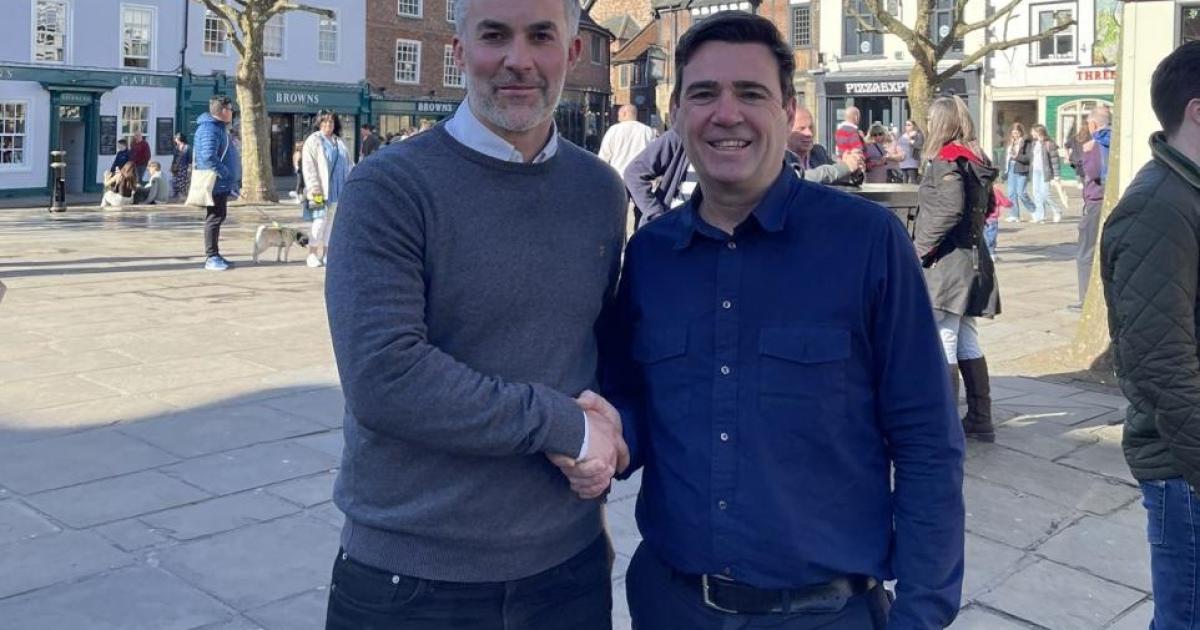
David Skaith shakes hands with Andy Burnham as he arrives to deliver a speech at the People’s History Museum, Manchester, on Monday (June 29) (Image: Peter Byrne/PA Wire)

Mr Skaith said Mr Burnham’s plan “sets out the ambition and scale of change people have been calling for”.

Advertisement

“It’s a vision built on hope. One that puts trust, backed by investment, in the people who know their communities best to tackle the huge challenges we face. That can only be a good thing.

“What Andy has achieved in Manchester, despite resistance from Whitehall, is incredible. We can do the same here in York and North Yorkshire if we’re given the trust, powers, investment and confidence that Andy set out today.”

In his first major speech since Sir Keir announced he would be leaving Downing Street, Mr Burnham promised to give people hope for the future.

Andy Burnham delivers a speech at the People’s History Museum, Manchester, on Monday (June 29) (Image: Peter Byrne/PA Wire)

The Makerfield MP, who gave up being mayor of Greater Manchester to return to Parliament in a by-election earlier this month, said the Westminster system was “broken” and “as a result, the country isn’t where it should be”.

Advertisement

He said the No 10 North operation would be the “nerve centre of a rewired Britain”, redistributing power and resources across the UK.

It would, Mr Burnham said, oversee the “biggest council house building programme since the post war period”.

He also announced plans for regions to take “greater public control of essential services” including water, energy and transport.


Recommended reading:

Advertisement

The proposals would bring about the “biggest rebalancing of power our country has seen”, Mr Burnham said as he promised to overcome Whitehall’s resistance to change.

“Let me say this very directly: the days of Whitehall fighting the devolution of power into the regions and nations are over for good.”

In an attempt to reassure the markets that he would not hike borrowing and taxes to pay for his plans, Mr Burnham promised his measures would be based on “the stability that comes from sound public finances” and “the discipline of our current fiscal rules”.

But he acknowledged that taxpayer-funded support would be needed to deal with the cost-of-living pressures facing households.

Advertisement

Promising to support reindustrialisation across the UK’s regions, he said Whitehall would be ordered to back British firms bidding for public contracts – even if this costs taxpayers more.

Source link

Advertisement
Continue Reading
Click to comment

You must be logged in to post a comment Login

Leave a Reply

NewsBeat

Doctor strikes that caused major disruption to NHS patient care ends as fresh offer accepted

Published

on

Manchester Evening News

The new deal will mean resident doctor pay will be 35.2 per cent higher on average than it was four years ago

Strikes involving resident doctors in England are to come to an end after a fresh offer to improve pay and working conditions was accepted, it has been confirmed.

Advertisement

Resident doctors have voted to accept the Government offer and end a year of strike action, the Department of Health and Social Care (DHSC) said. It comes after a total of 21 days of strike action by the British Medical Association (BMA) Resident Doctor Committee (RDC) since July 2025.

The new package includes standard 2016 resident doctor contract terms for all locally employed medics and an average 6.6 per cent pay uplift to be fully implemented by April 2027. There will also be 4,500 extra specialty training places over three years.

Click here for the latest on Greater Manchester’s politics in our newsletter

The deal will mean resident doctor pay will be 35.2 per cent higher on average than it was four years ago, the DHSC has said.

Advertisement

Health Secretary James Murray said: “This is very good news for resident doctors, patients and the NHS as a whole, allowing us to draw a line under the disruption of previous months and focus on getting on with the job of rebuilding our health service.

“Because of this deal, resident doctors will benefit from a new pay structure, better career progression opportunities and a range of other improved conditions to support them as they rotate and train. Patients will be relieved that the NHS is entering a period of greater stability.

“But this is the beginning, not the end of the journey. I know there is much more to do, and I am determined to keep working constructively with resident doctors, all NHS staff, and the unions who represent them to improve their working lives and together build a health service that is fit for the future.”

The online vote for resident doctors ran from June 18 to June 26. The BMA had also warned that if they choose to reject the deal, strikes would ‘have to escalate in intensity’. Thousands of resident doctors in England were set to stage a four-day walkout on June 15, which would have been the 16th round of strike action since 2023. But it was called off on June 13 after the offer was made.

Dr Jack Fletcher, chairman of RDC, said: “Resident doctors have spoken. They have decided that the current offer is sufficient to continue on the road to pay restoration, and sufficient to address the absurd lack of jobs in the NHS. The strikes will now end.

“These strikes did not need to happen. We spent far too long at loggerheads with the Government when a solution in everyone’s interest was waiting for us: more jobs for doctors, better pay for doctors, and a better-staffed NHS secured for patients well into the future.

“This is what constructive negotiations can achieve. Next time we hope they can be done without a single picket line having to form – all it takes is a government willing to think ahead and think creatively.”

Advertisement

He went on to warn that this is ‘by no means the end of the road for pay restoration’ and says he hopes the Government will keep ‘this journey going’.

Dr Fletcher added: “I’d like to thank everyone who stood on a picket line, who organised, argued and raised their voice on the issues of pay and jobs. Your continued dedication and refusal to give in has moved us miles from where we started, and you should be proud. When we organise, we win.”

53 per cent of eligible members voted in favour of the offer, the BMA said. The turnout of the referendum was 57 per cent with 32,932 doctors voting in total.

Dean Royles, interim chief executive of NHS Employers, said: “After such a long running dispute that has caused so much upset and disruption to patient care, all parties will be pleased that a resolution now seems to have been found and there will be no further strike action.”

Advertisement

Stuart Andrew MP, the Conservative shadow health secretary, has criticised Labour for making concessions to the BMA. He said: “Many will be relieved that these strikes are finally coming to an end, but at what cost?

“This is the second consecutive year that Labour has had to make major concessions to end these strikes, and the BMA is already planning further industrial action.

“Only the Conservatives have the team, the plan and the leader with the backbone to ban doctors’ strikes once and for all.”

Source link

Advertisement
Continue Reading

NewsBeat

Transfer news LIVE: Arsenal FC plot huge Rogers bid, Guimaraes twist; Man Utd medical booked; Xhaka to Chelsea

Published

on

Transfer news LIVE: Arsenal FC plot huge Rogers bid, Guimaraes twist; Man Utd medical booked; Xhaka to Chelsea

Chelsea have irked Sunderland with a low first bid for Granit Xhaka, while the Blues are stepping up their interest in Maxence Lacroix. Marco Palestra is set to finalise his move to Stamford Bridge as the first new arrival of the Xabi Alonso era, with Pep Chavarria now eyed as a Marc Cucurella replacement amid reports that Malo Gusto has agreed to join Manchester City. Manchester United have planned a medical for wonderkid Cristian Orozco as they continue to battle Spurs hard for the signing of Mateus Fernandes.

Source link

Continue Reading

NewsBeat

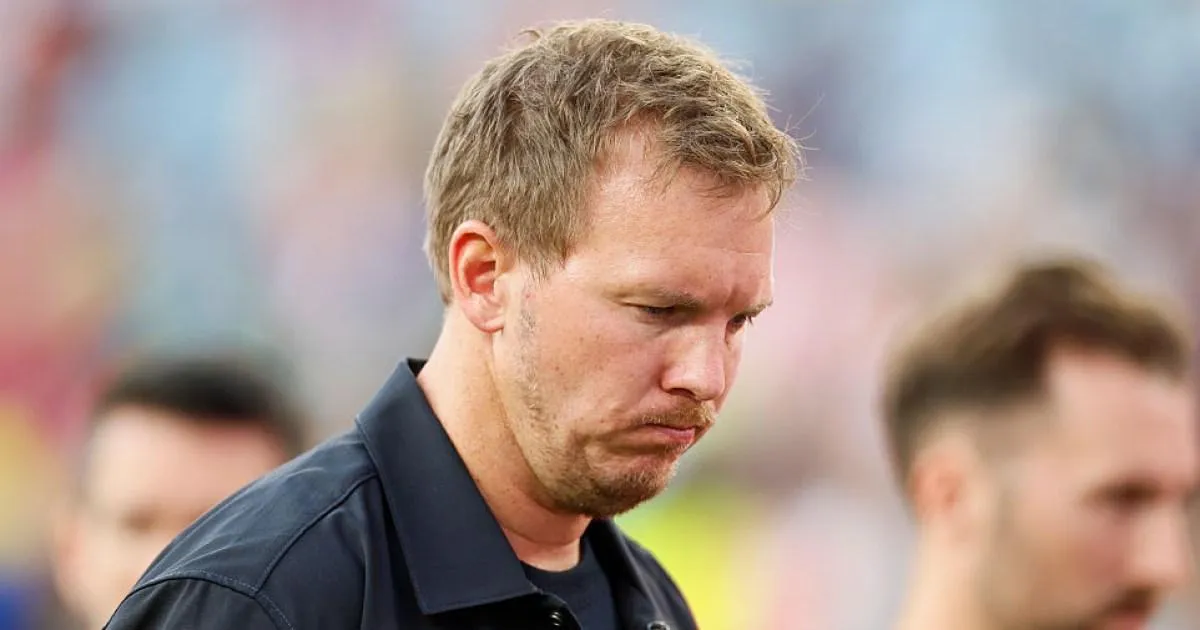
Julian Naglesmann blunt on his Germany future after nightmare World Cup exit | Football

Published

on

Julian Naglesmann blunt on his Germany future after nightmare World Cup exit | Football

Close Overlay

In The Mixer’s World Cup special

Everything you need to know about the World Cup – England updates, the games to watch and stories you missed – in five minutes, at 1pm, every day.

Source link

Advertisement
Continue Reading

NewsBeat

ASK Italian reducing price of Aperol Spritz during World Cup

Published

on

ASK Italian reducing price of Aperol Spritz during World Cup

The promotion is part of a limited-time ‘Hydration Break’ offer, giving customers a saving on the popular summer drink, usually priced from £8.95.

Fans can take advantage of the deal by ordering a main meal and quoting the phrase “I’d like an Aperol Hydration Break, please” to their server.

Jemma Townsend, marketing director at ASK Italian, said: “At its heart, Italian dining is a generous occasion, all about a fuller table for everyone to enjoy.

Advertisement

“Our tournament deal shows up loud, proud, and playful – exactly how we like it.

“Whether you’re stopping by for a £3 Aperol Hydration Break before the big game or getting the gang together for a late-night kick-off, we’ve got the ovens fired up, the drinks on ice, and a seat at the table waiting for the ultimate home team.”

The offer draws inspiration from the hydration breaks being used in this summer’s football tournament, turning a moment of controversy into a reason to celebrate.

It aims to give football fans a chance to enjoy Italy’s favourite aperitivo for almost two-thirds the usual price while dining out during the tournament.

The £3 Aperol Spritz Hydration Break will be available daily at all ASK Italian restaurants until the end of the tournament (Sunday, July 19).

Advertisement

ASK Italian offers new summer menu

Alongside the ‘Hydration Break’ deal, ASK Italian has launched some new summer menu items, which are available until Monday, August 31.


Recommended reading:


New dishes include the likes of Pollo Picante Crocchettes as starters, a Prosciutto, Truffle and Stracciatella pizza and a Lemon Meringue Pie Sundae.

Jemma Townsend, Marketing Director at ASK Italian, said: “At its heart, Italian dining is a generous occasion, all about a fuller table for everyone to enjoy.

Advertisement

“Our new menu celebrates this ‘Italian way of dining’, inviting the joy of passing plates and discovering new flavours together.”

Have you made the most of any restaurant/shop deals during the World Cup? Let us know in the comments.

Source link

Advertisement
Continue Reading

NewsBeat

BBC viewers have same complaint about Wimbledon coverage as they say ‘it’s a disgrace’

Published

on

Wales Online

BBC viewers have hit out at the broadcaster’s Wimbledon coverage after fans said they missed a crucial moment

BBC viewers have criticised the broadcaster’s Wimbledon coverage.

Advertisement

The tennis championship began on Monday (June 29), with the BBC alternating between BBC One and BBC Two to deliver coverage from SW19, alongside streaming games on iPlayer.

However, numerous fans expressed frustration during the evening broadcast, claiming a crucial moment was missed due to a channel switch, with some describing it as “a joke”, reports the Mirror.

Former Wimbledon champion Novak Djokovic was facing Wu Yibing on Centre Court when the broadcast changed channels, prompting many fans to share complaints on X about the disruption occurring just as Wu was poised to claim the second set.

One viewer wrote on the platform, formerly known as Twitter: “They didn’t just miss that Wu set win because they were changing channel. Oh wait… they did. Shambles.”

Advertisement

Another person said it “spoiled the tension”, while someone else exclaimed: “Channel change at set point @BBCSport – really!!”

“Shocking from @BBCSport to leave the channel at such a crucial point to switch channels and it’s not even on there!!” posted another viewer.

One person described it as “appalling”, while another remarked: “Fed up of BBC coverage of #wimbledon only just started and already there is constant channel hopping, and missing crucial stages of the match as a result is unacceptable.”

Advertisement

“Shocking #Wimbledon coverage from BBC there,” commented another spectator.

“Djokovic serving to stay in the set, they switch channel with both showing an advert, then come back to the game with the set over. What’s the point watching for hours then missing a key moment!”

Another viewer questioned: “Would have been nice to watch that set point live @BBC but instead you switched from BBC One to BBC Two with no great hurry… missed the set point and now they’re closing the roof so there’s a delay anyway – Could you not have waited one minute?!”

Advertisement

Someone else posted: “The BBC coverage of Wimbledon truly is a joke,” adding: “An absolute disgrace. If you’re going to follow a match live, then don’t keep switching channels halfway through. Either dedicate yourself to the tournament, or let it go.”

Coverage of Wimbledon will air on BBC One and BBC Two, as well as being available to stream on BBC iPlayer

Source link

Advertisement
Continue Reading

NewsBeat

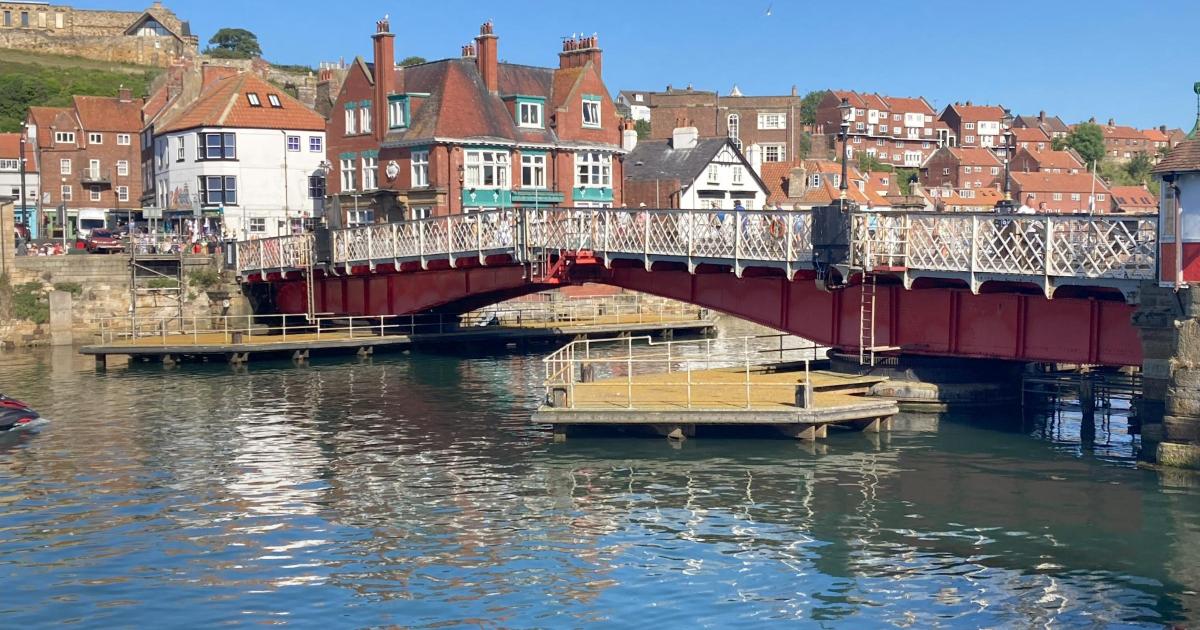
Whitby Swing Bridge shut for urgent works to tackle problems

Published

on

Whitby Swing Bridge shut for urgent works to tackle problems

A North Yorkshire councillor has spoken to The Press today (Monday, June 29) in the wake of the latest closure of Whitby Swing Bridge.

Last weekend, as reported in The Press, the bridge failed due to high temperatures caused by the expansion of metallic parts with the council saying it can become stuck during swing operations.

This led to an impromptu closure and warning from the police over people ignoring the closure signs.


Recommended reading:

Advertisement

North Yorkshire Council said a team of bridge and highways experts will work through tonight to try and resolve the issues that stop it from closing properly.

A council spokesperson said the work will require a full road closure from 6pm tomorrow until 2am on Wednesday of this week.

North Yorkshire Council’s assistant director for highways and infrastructure, Barrie Mason, said: “We fully appreciate the impact this issue is having on the town, its residents, businesses and visitors and we will do everything we can to get to the bottom of it as quickly as possible.

 “The structure is inspected every three months, but for this particular programme we will be looking for, and removing, any build-up of corrosion on the deck ends.

Advertisement

 “Normally the function of the swing bridge’s own opening and closing would naturally remove any rust building up as the two sides move.

“The extremes of heat we have seen may well have impacted on this, so we will be looking for any signs of that.”

The structure was completed in 1908 and opened a year later to allow traffic and pedestrians to cross between the east and west of the town over the River Esk, whilst also allowing vessels to pass along the navigable channel.

Over the years, the bridge has seen increasing footfall and demands on its engineering and heritage, which has led to impromptu closure.

Advertisement

North Yorkshire Council publishes a list of scheduled bridge closures – except for buses – to improve pedestrian safety over 13 weekends and two Bank Holiday Mondays in 2026.

The surface of Whitby Swing Bridge in WhitbyThe Whitby Swing Bridge was constructed in 1908 and opened a year later – the council are set to put in new light-coloured high-friction surfacing to try to reduce heat build up (Image: Kevin Glenton)

The council said a shuttle bus will run between 6pm tonight and 11.59pm tomorrow.

Mr Mason added: ““

Some noise is to be expected, and there may be a delay in starting if the bridge is too warm, but we are committed to sorting it out.

Advertisement

“In the near future, we are also looking to put in some light-coloured high friction surfacing as a further measure to reduce heat build-up.

“I want to thank everyone for their patience and reassure them we are taking this very seriously.

“While we do this, we ask that people don’t take unnecessary risks and respect the closure.”

Whitby Swing BridgeNorth Yorkshire Council said Whitby Swing Bridge is set to undergo urgent works to try and solve issues with unforeseen closures (Image: North Yorkshire Council)

Councillor Neil Swannick, who represents the Whitby Streonshalh division on North Yorkshire Council, which includes the town harbour said the swing bridge closure is not a new occurrence and there’s a degree of recognition locally that it’s a problem which is not easy to fix.

Advertisement

He said: “There has been varied number of reasons in recent years for the closure.

“Primarily because of health and safety issues over too many people and too much traffic at the same time, and the bridge closing at peak time.

“The question is where do we go from here? A new bridge is not an option so we’ll have to deal with the here and now.”

The councillor said North Yorkshire Council will always try to get the bridge working as soon as possible but said there’s always a problem of getting staff and customers around the town to their shops and offices when the bridge is closed because it’s a long way round to take the next bridge upstream in the town which is the A171 New Bridge, just under a mile away.

Advertisement

The council did provide shuttle buses last weekend but the bridge was still being used, prompting the police warning.

Engineers have identified that the black road surface is absorbing too much heat, causing the bridge to expand.

This expansion then leads to the bridge’s swinging sections interfering with each other and the edges of each section when opening and closing.

In response, engineers will test a new light-coloured surfacing, expected to reflect the sun’s rays, thereby reducing the thermal build-up and expansion.

Advertisement

Cllr Swannick said: “We are up against problems inherent in keeping a 116-year-old bridge working in times when climate change is creating extreme conditions, which were not anticipated when the bridge was built.

“I am hopeful that the plan to cover the black tarmac with a light-coloured high-friction surfacing this summer will at least reduce the number of mechanical problems and that, if this plan works, the job can be completed out of season.”

The issue of overheating is not unique to Whitby Swing Bridge, as other swing bridge owners frequently encounter similar problems, he added.

Advertisement

Source link

Continue Reading

NewsBeat

The condition that causes people to get lost in their own home

Published

on

The condition that causes people to get lost in their own home

Think about the last time you used your phone to find your way somewhere. What would happen if, halfway through the journey, the route instructions vanished or your phone battery died? You might find yourself starting to panic. But once you notice something familiar or are able to ask someone for directions, this will usually subside, and you can adapt.

For some people, though, this feeling of getting lost doesn’t go away. It can even occur when navigating their own home.

Some estimates suggest up to one in 30 people may be affected by developmental topographical disorientation (DTD). This condition has been described as a lifelong inability to orient oneself – even in extremely familiar surroundings.

People with DTD report getting lost frequently (at least a few times a week) since childhood. DTD is not caused by a brain injury, a neurological disease or a psychiatric condition. As far as researchers can tell, this is just simply how their internal navigation system has always worked.

Advertisement

Early research on DTD focused on the extreme cases in people whose disorientation was disruptive enough that they sought professional help. But we now know there’s substantial variation between cases of DTD. Milder forms may pass by unnoticed across a person’s entire lifetime – quietly written off as merely being “bad with directions”.

Over the past decade, the DTD label has stretched to cover a broad range of navigation problems. The breadth of this label has caused issues of precision, making it difficult to accurately understand and provide support for people living with this experience.

So our research is working to disentangle these navigation impairments. We are focusing on a specific subgroup of people with DTD – those without a cognitive map.

Mapping our world

Most of us make sense of our surroundings by building a mental representation of landmarks and where they are in relation to ourselves and each other. This is referred to as our “cognitive map”. It allows us to predict what’s around the corner and get from one place to another without having to think too much about it.

Advertisement

Being able to build and use a cognitive map also allows us to work flexibly in our environment. We can cut across a street we’ve never walked before, or point roughly toward home even when we’re somewhere new.

Working closely with people who have this experience through consultation and qualitative interviews, we propose that this sub-type should be termed “atopia”, which literally means to live without a place or map.

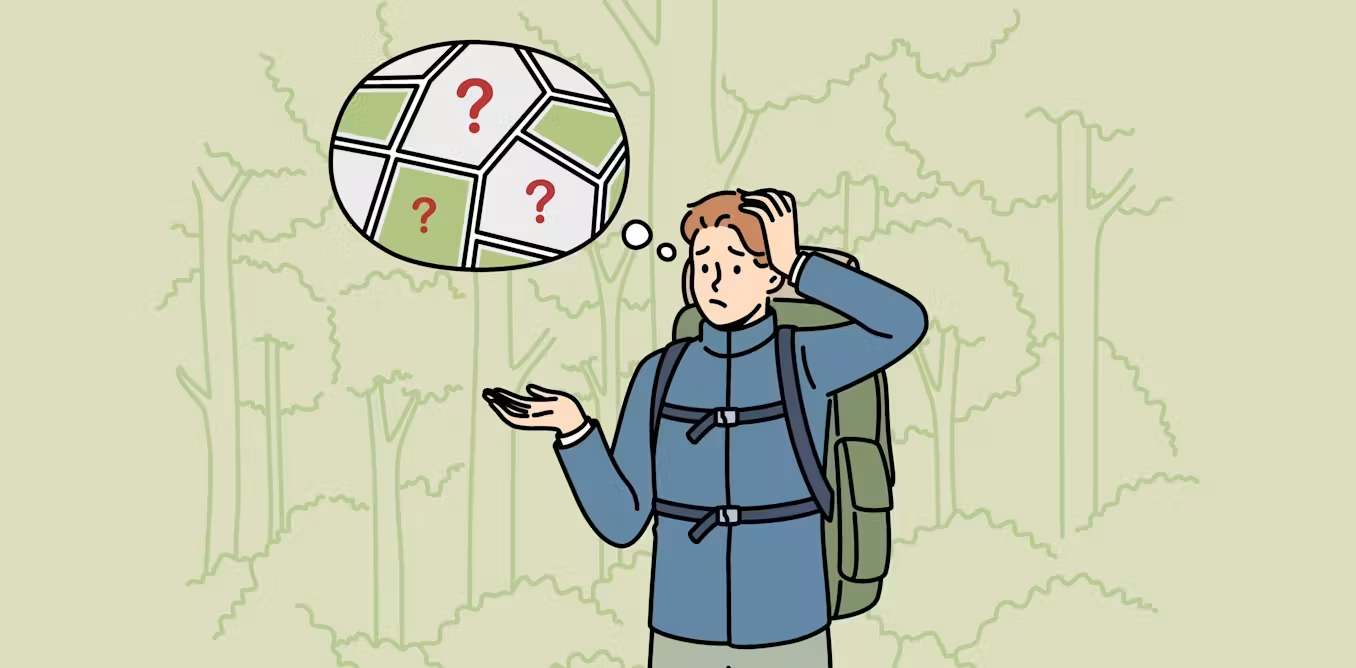
People with atopia do not build a cognitive map of their surroundings. So although they actually have a good landmark memory – the ability to recognise and remember distinctive features of their environment – their overarching cognitive map never quite assembles.

People with atopia don’t develop the ‘cognitive map’ that normally helps people navigate.
Nanzeeba/ Shutterstock

This means they might know their home is somewhere near the station, and that the shops are somewhere near home – but the pieces stay as separate facts rather than fusing into a single layout they can mentally rise above and read.

Advertisement

So the moment a familiar route is interrupted (a closed road, a wrong turn or approaching a building from an unexpected side) there’s no map to fall back on. The landmarks tell them what they’re looking at, but not how it all fits together.

As one participant we interviewed as part of our research explained: “I am always in one place in my head, so I cannot imagine what my environment looks like.”

When everyday navigation becomes more challenging, it creates a perfect setting for people with atopia to become more rigid, avoid leaving their house or become reliant on GPS devices. This behaviour can be misread as carelessness, anxiety or even low intelligence – which is completely unfounded, but would have significant negative impacts on these people.

Without the right support, people with atopia can quickly lose their independence. For instance, one of our participants would not go anywhere by herself as she relied on her husband whenever she wanted to go anywhere further than a few streets away from their house.

Advertisement

Finding your way

The reassuring part is that atopia and DTD is not degenerative and navigation is more trainable than some people might think.

There’s good evidence that navigation can behave like a muscle. In one study, people who did not exercise their navigation system and relied more heavily on GPS had measurably worse spatial memory when later asked to find their way without it. When the same people were followed over three years, heavier GPS use predicted a steeper decline.

Previous studies have shown that virtual training programmes can be helpful for people with DTD in improving spatial orientation skills. We’re currently testing a similar kind of training to help people with atopia. We developed a six-week virtual programme that aims to reduce navigation complaints and improve navigational skills in people with the condition.

The next time you reach for your phone to follow directions, it might be worth a moment’s pause. Can you still find your way without it? This remarkable ability to find our own way through the world is something many of us take for granted. Maybe we should try to nurture it before it gets lost.

Advertisement

Source link

Continue Reading

NewsBeat

Spotless medieval town with riverside town is the ‘cleanest in the UK’

Published

on

Daily Record

The town of 10,000 people was home to one of Scotland’s greatest ever sports stars, has a particularly old library and some of the cleanest air you’re like to find

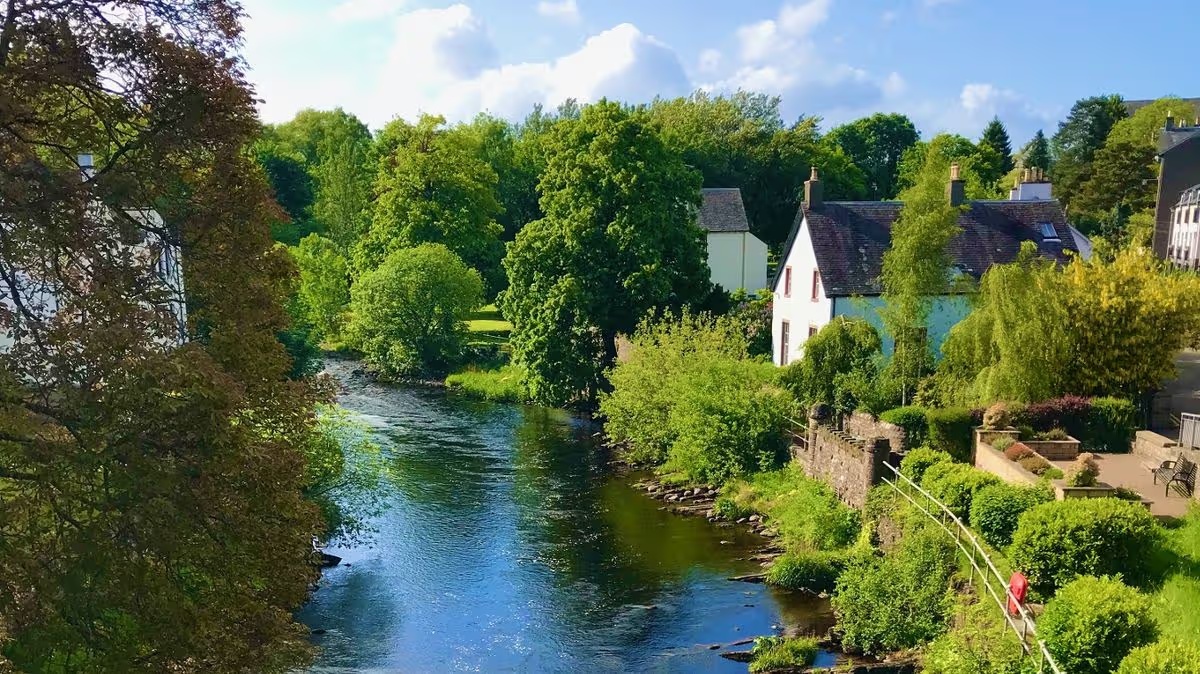
A small town with medieval charm and a charming riverside has the country’s cleanest air.

The UK may be a place beset by sewage-swamped rivers that struggles to control its town centre air quality, but there are a few places that buck that trend.

One of them is Dunblane, a small but elegant town in Stirlingshire, central Scotland. The town of 10,000 had the cleanest air of anywhere in the UK last year, according to air monitoring firm IQAir.

Advertisement

Aside from a lovely lungful of O2, there are plenty of other reasons why Dunblane has a reputation as a lovely place to stop if you’re travelling between Edinburgh, Glasgow and the Highlands, or a peaceful destination in its own right for a weekend break.

What to do in Dunblane

1. Dunblane Cathedral The Cathedral dates back to the 13th century, with a small section of one tower 200 years older than that. Its highlights include fragile blue-purple stained glass and delicately carved pews, screen and choir stalls, as well as a tenth-century Celtic cross-slab standing stone. The church is dedicated to the 6th-century saint, St Blane, who gave the town its name: Dunblane, meaning hill of St Blane.

2. The Leighton Library Scotland’s oldest private library building might not look like much from the outside, but there are treasures within. It dates back to the death of Archbishop Robert Leighton in 1984, who left his book collection and £100 to the Cathedral, along with orders for a library to be built. Today, it holds over 4,500 rare books and manuscripts covering theology, medicine, law and classical literature. Stepping inside feels like entering a scholarly time capsule, with oak shelves and leather-bound volumes.

Advertisement

3. Andy Murray’s Gold Postbox Dunblane is the hometown of tennis star Sir Andy Murray. Locals celebrated his gold medal win at the 2012 London Olympics by painting the town’s Royal Mail postbox gold. It is proudly displayed outside the Dunblane post office on the High Street.

4. Kippenrait Glen Right on Dunblane’s doorstep is the ‘wildwood’ of Kippenrait Glen. The extensive woodland clothes the steep-sided banks of the Wharry Burn, much of which is thought to have been continuously wooded since the last ice age. Given how little ancient woodland remains anywhere in the UK, Kippernrait Glane is arguably more exciting than it first sounds. In spring, bluebells, white wood anemones, and wild garlic are particular highlights.

5. Deanston Distillery Deanston Distillery sits by the River Teith, ten minutes from Dunblane. Having been a cotton mill for 180 years, it was transformed into a distillery in the 1960s and has been producing whisky using traditional methods ever since, with a visitor centre and café on site.

6. The Battle of Sheriffmuir & Clan MacRae Monument Those interested in Scottish Jacobite history can visit the scene of the 1715 Battle of Sheriffmuir. An obelisk monument to the Clan MacRae erected in 1915 stands on the battlefield, alongside the Gathering Stone (a block of grit enclosed in an iron cage since 1840) where the standard of the Scottish clans is said to have been placed.

7. Argaty Red Kite Feeding Station Argaty is central Scotland’s red kite feeding station, offering daily ranger-led visits to a hide where you can watch these birds flying without disturbing their fragile population. There are beavers and red squirrels living on the site, with a good chance of spotting both.

8. The Allan Water & River Walks A visit to Dunblane is not complete without a walk along the beautiful River Allan, which runs through the middle of the town. Paths can be accessed from the cathedral or either end of the bridge in the town centre.

9. Blair Drummond Safari Park A short distance from Dunblane is Blair Drummond Safari Park, home to 350 rare and exotic animals including Scotland’s only giraffes and Chimp Island, which visitors can reach by boat.

Advertisement

10. Independent High Street Dunblane’s High Street is compact and full of independent shops, bakeries, gift stores, and bookshops. There’s also a regular farmers’ market with local produce, crafts and street food. Getting there is easy: Dunblane is on the main railway line through Scotland, with regular direct services to Stirling (7 mins), Edinburgh (1 hr) and Glasgow (40 mins).

Source link

Continue Reading

NewsBeat

Monaco explosion live: Ukrainian oligarch critical with man on run after leaving bag

Published

on

Daily Mirror

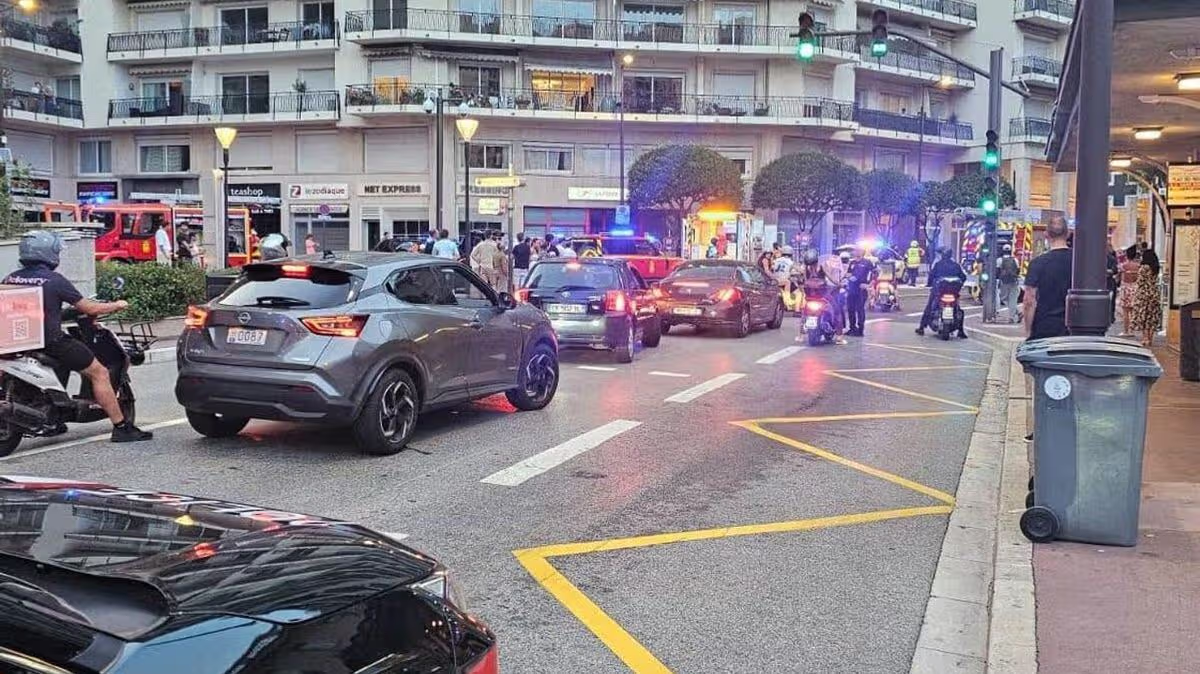
A British resident living in Monaco has told of the “commotion” at the police station following the explosion.

She told The Mirror: “We live next door to the police station so we are overlooking it. It all began at around 9pm when we saw lots of police in the street. First of all we heard a big commotion outside and then there was a procession of police cars heading off.

“Everything is on high alert at the police station. There are now two armed police outside who are being ultra-cautious, they are checking everyone who is going past.”

Advertisement

According to local reports the suspect fled towards the neighbouring town of Beausoleil, which the Brit explained “is just over the border into France”.

They added: “I imagine he has just disappeared into France.”

Source link

Advertisement
Continue Reading

NewsBeat

The average waiting times learner drivers face at Northern Ireland’s driving test centres

Published

on

Belfast Live

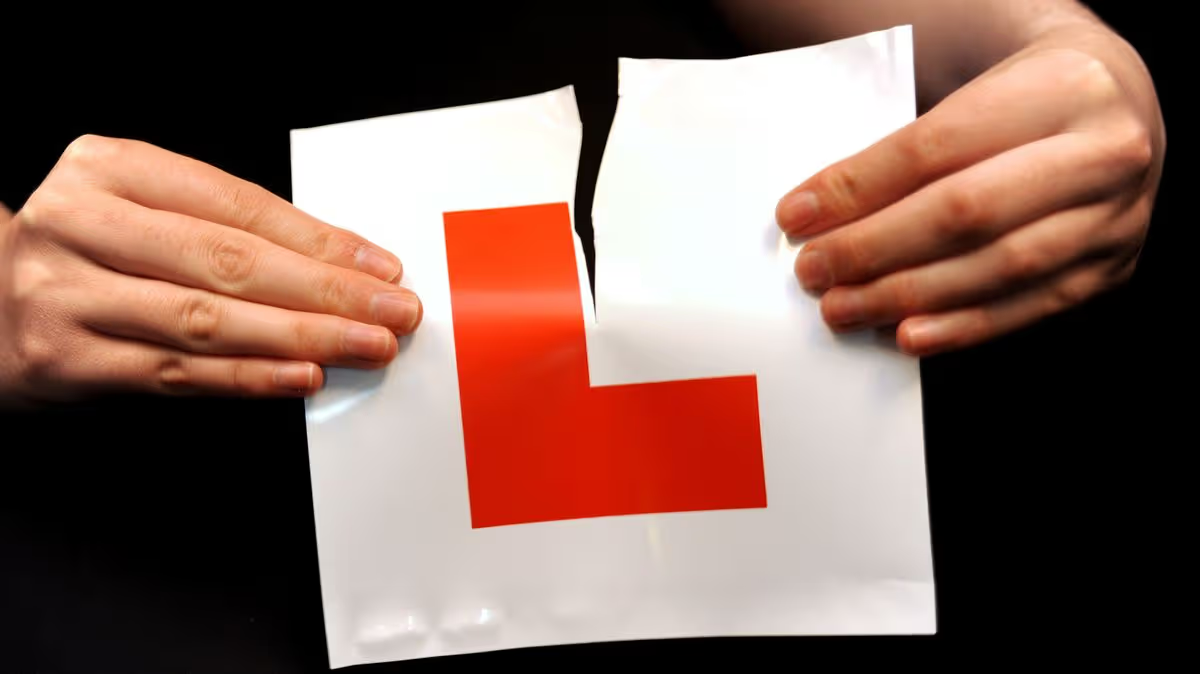
From new driving test booking changes and lengthy waiting times to insurance premiums and vehicle costs, getting on the road has become increasingly challenging for young drivers.

New research today reveals a striking postcode lottery when it comes to waiting times driving test centres in Northern Ireland and across the rest of the UK.

Advertisement

From new driving test booking changes and lengthy waiting times to insurance premiums and vehicle costs, getting on the road has become increasingly challenging for young drivers. New research today by Confused.com reveals the growing cost of getting on the road, with learner drivers facing costs of at least £924 before getting their licence. Before learner drivers are ready to take their test, the cost of multiple lessons adds up in the first instance. The average learner has already paid for more than 18.5 hours of driving lessons. Based on the average cost of driving lessons in the UK, this equates to a minimum cost of £777, with costs depending where you live.

Meanwhile lengthy waits can also add to the overall cost of learning to drive. With wait times for tests remaining longer than ever, some learner drivers might have to wait a long time to get behind the wheel of their first car from the time they purchase it. Between 2023 and 2025, practical driving test waiting times averaged 12.3 weeks in Great Britain.

These delays can leave learners waiting months to retake a failed test, increasing both the time and expense involved in obtaining a licence. In some cases, long gaps between attempts could even mean a learner’s theory test certificate expires before they pass their practical test, requiring them to pay to take it again.

The average waiting times (in days) for test centres in Northern Ireland

Test Centre

Advertisement

2023

2024

2025

Altnagelvin

Advertisement

41

33

20

Armagh

Advertisement

52

21

24

Ballymena

Advertisement

49

46

27

Balmoral

Advertisement

40

39

26

Coleraine

Advertisement

42

40

15

Cookstown

Advertisement

66

38

18

Craigavon

Advertisement

27

27

18

Dill Road

Advertisement

71

77

Downpatrick

Advertisement

74

63

35

Enniskillen

Advertisement

35

30

19

Hydebank

Advertisement

55

36

Larne

Advertisement

60

62

37

Lisburn

Advertisement

62

46

29

Mallusk

Advertisement

32

31

28

Newbuildings

Advertisement

6

7

7

Newry

Advertisement

46

44

32

Newtownards

Advertisement

46

42

30

Omagh

Advertisement

30

30

26

And for those who need to retake their practical tests, the amount of money required can become unmanageable and unpredictable. Data obtained through a Freedom of Information (FOI) request to the Driver and Vehicle Standards Agency (DVSA) shows that more than 2.3 million practical driving tests were taken by 17 to 24 year-olds in Great Britain between January 2023 and March 2025, yet almost half resulted in a fail.

Advertisement

With half of learners taking at least two driving tests, by the time they get their licence, they will have paid around £124. Adding this with theory test prices and the cost of driving lessons, this takes the average cost per learner driver for getting on the road to at least £924.

Item

Cost

Average number of driving lessons = 18.5

Advertisement

£777

2 x practical driving tests

£124

1 x theory test

Advertisement

£23

Total

£924

The costs faced by learner drivers are reflected in national spending figures. Data obtained through Freedom of Information (FOI) requests to the DVSA and Driver & Vehicle Agency (DVA) shows that more than £400 million was spent on practical driving tests across the UK between 2023 and 2025.

Advertisement

Annual income from practical driving tests increased by 7% over the period, rising from £128 million in 2023 to £137 million in 2025, highlighting the substantial scale of the driving test industry and the significant revenue it generates each year. Meanwhile, learners across Great Britain also spent £221.6 million on theory tests between 2023 and 2025, spending £79.6 million in 2025 alone. But the costs don’t stop when drivers get their licence. New drivers face the additional challenge of buying and insuring their first car, with even some of the most popular models for young drivers carrying significant upfront and ongoing costs. Research shows that among the most common first cars driven by 17 to 20-year-olds, total costs, including purchase price, insurance and road tax, range from around £3,430 for a Fiat 500 Pop to more than £7,707 for an Audi A1 Sport.

Purchase prices range from around £1,970 to more than £6,200, while insurance premiums almost double from £1,063 for the Fiat to £2,015 for the Audi. Drivers must also factor in road tax of £20 to £35 for both models, although for other popular first cars among 17 to 20-year-olds, such as the Volkswagen Polo S, it can reach £360.

Matt Crole-Rees, Confused.com car insurance expert, says learning to drive has always been a major milestone, but for many young people the costs involved are becoming increasingly difficult to ignore.

He added: Between lessons, theory tests, practical tests and the expense of buying and insuring a first car, it’s easy to see how the total cost can quickly run into the thousands.

Advertisement

“Our research shows that many learners are already making sacrifices to afford getting on the road, with some even questioning whether they can afford to learn to drive at all. At the same time, lengthy waiting times and the need to retake tests can add further costs and delays to the process.

“And once you’ve got past the hurdle of getting your licence, there are other major expenses to consider, including buying a car, insurance, fuel and road tax.

“While some costs are unavoidable, choosing the right first car can make a real difference to how much you spend overall. That’s why we’ve created our cost of driving calculator, helping young drivers and their parents compare the costs of different cars and get a better idea of what their first year on the road could cost before making a decision.”

For all the latest news, visit the Belfast Live homepage here and sign up to our daily newsletter here.

Advertisement

Source link

Continue Reading

Trending

Copyright © 2025