
Dolly Parton has sung disco, pop, bluegrass and even metal – but for all her genre-hopping, she has always come back to country. From the disco bop of Baby I’m Burnin’ to the metal-influenced Bygones, featuring Judas Priest’s Rob Halford, Parton’s career has repeatedly pushed beyond country’s boundaries while remaining firmly rooted in it.
Although some of her country fan-base waned as she became a pop star, Parton ultimately belonged to country music. She had 25 number one singles in the Billboard’s country music charts, ten Academy of Country Music Awards and her 1999 induction into the Country Music Hall of Fame to prove it.
Country music has had something of a revival in recent years. This has been accompanied by a revaluation of its cultural contributions, partly driven by the popularity of artists such as Parton. But country music can be a hard sell. The oft-repeated response of “anything except rap or country” to questions of musical taste speak to how it has appeared as an example of bad music, widely disliked outside a core audience. If everyone loves Parton, it does not follow that everyone loves country music.
Frequently conservative in its aesthetics and politics, country music is associated with particular people, tropes and values. Many of these associations can be traced to the early years of its invention. What would come to be called country music (the term came into use in the 1940s) had its origins in a racially segregated music industry, where record companies directed “old-time”, “cowboy” or “mountain” music toward white consumers.
Often trading in nostalgic and romantic ideas of the simplicities of rural life, these records were framed as belonging to an authentic tradition the US south. Country’s cultural associations have endured efforts to make it more mainstream, including the emergence of the Nashville Sound in the 1950s: a style of music production that smooths out the “rougher” edges of country performance by incorporating some of pop’s conventions.
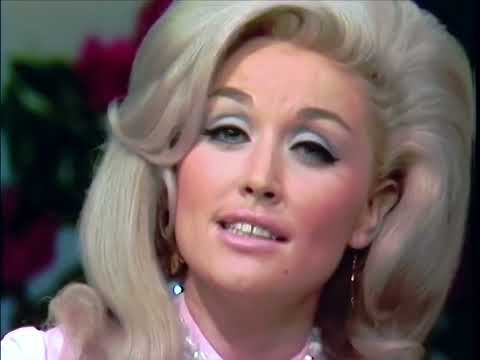
Parton, with her rhinestones and wigs, her Tennessee twang, her Appalachian rags-to-riches life story and her all-American patriotism, fits with many ideals of who country music is by and for. Country’s musical markers – uncomplicated melodies, instrumentation such as banjos, fiddles, guitars and mandolins, adept storytelling about everyday life, and lyrical themes of love, work, family, religion and death – can all be found across her prolific catalogue of “little simple songs” (to borrow Parton’s understated description of one of her most successful compositions, I Will Always Love You).
At the same time, Parton reshaped country music in her own image. As journalist Natalie Weiner has pointed out, when Parton first signed to Monument records in 1965 at the age of 19, her high-pitched voice was considered incompatible with country.
Early releases from this time, such as her 60s girl group style Busy Signal, were part of efforts to market Parton as a pop singer. The problem wasn’t just her voice. Parton was having success as a country songwriter in Nashville, but during this time country music and its industry were male-dominated fields, and commercially successful women singer-songwriters were few and far between. Notable exceptions include Loretta Lynn, whose 1966 hit single You Ain’t Woman Enough (To Take my Man) is a rather less mannered counterpart to Parton’s Jolene.

Benefitting from the groundwork of figures like Lynn, Parton’s musical talent won out, and in 1967 her first album Hello, I’m Dolly, announced her arrival as a country singer and songwriter.
Subverting country
Country has often traded in reductive gendered tropes, with women frequently appearing in songs as either as loving angels or wayward seductresses. But Parton was a key contributor to a body of songs that offered a richer and more complex account of womanhood.
Just Because I’m a Woman, for example, asserts equality in the right to make (sexual) “mistakes”, while Your Ole Handy Man expresses frustration at having to do all the work around the home for a man that behaves as if he is “as helpless as a baby”. Some of these songs, however, proved too much for country music’s institutions. Her gothic ballad The Bridge, narrating the desperation of an abandoned pregnant woman, and Down from Dover, a song about out-of-wedlock pregnancy loss, were both banned by radio stations.
In other instances, Parton has taken up country’s tropes only to refigure them – 9 to 5, for example, belongs to country music’s tradition of (anti)work songs. What was at stake, however, was not the country’s typical work imaginary of factories, mining or trucks but the feminised, white-collar grind of typewriters and toxic office politics. The sentiment landed. In 1981 9 to 5 spent two weeks at number one in Billboard’s Top 100 chart.

In 1997, Parton dissolved her fan club, which, according to the Country Music Hall of Fame, had previously been one of the staunchest in country music, due to falling numbers among her core country fan base. Although her success exceeded it and distanced some original fans, Parton often returned to country music.
After dissolving her fan club, Parton released her critically acclaimed bluegrass trilogy – The Grass is Blue (1999), Little Sparrow (2001) and Halo & Horns (2002). 2008’s Backwoods Barbie and 2014’s Blue Smoke (the 44th of her 49 studio albums) were grounded in her distinctive blend of country pop.
Parton’s skilful negotiation the demands of the genre, while remaining resolute in doing country her own way, deserves recognition among her many achievements.
You must be logged in to post a comment Login