

















Exclusive: Patients have been put at risk of infection with viruses such as HIV, Hepatitis B and Hepatitis C. The hospital says the risk is ‘extremely low’
Twenty-one patients underwent operations at a Welsh hospital in which unsterilised surgical tools were used, in a huge blunder.
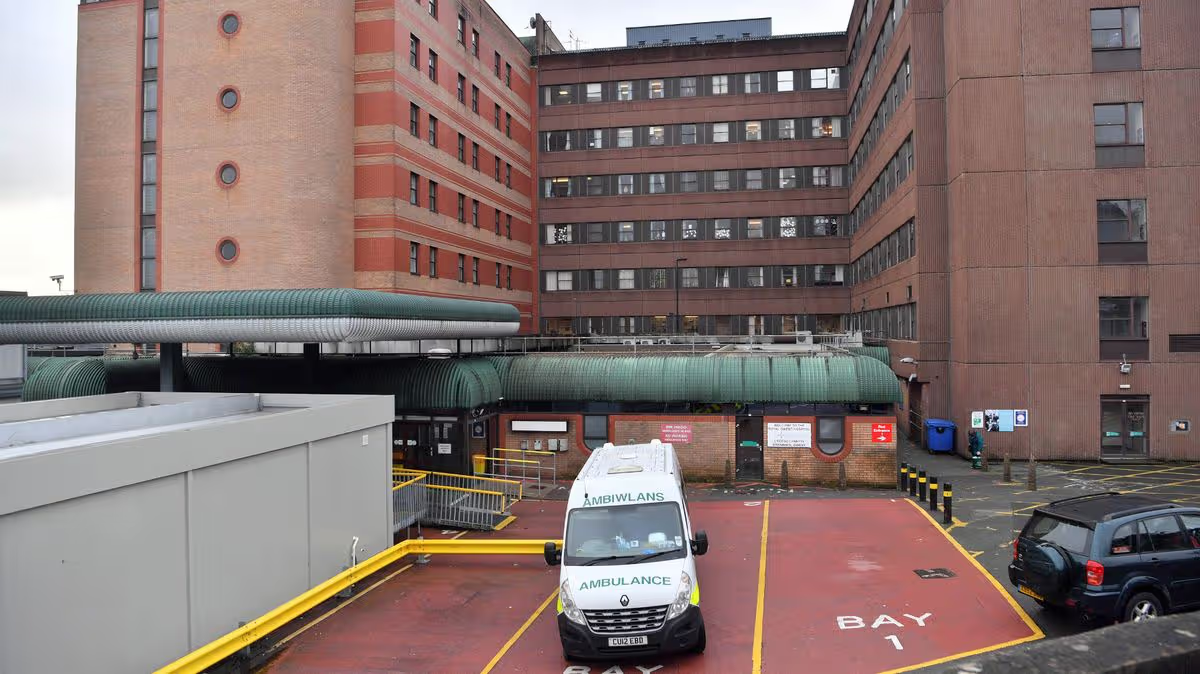
WalesOnline can reveal the repeated use of unsterilised instruments in procedures at Newport’s Royal Gwent Hospital across two days – February 25 and 26 this year – before the mistake was discovered on the 27th.
Last week a whistleblower told us they were concerned that the affected patients had still not been informed despite a risk of serious infection from the instruments, which we understand had previously been used in other operations. The whistleblower also claimed management had warned staff not to speak to the press about what happened.
After we approached the hospital for comment last Friday, it asked us to hold off on publishing until today (Tuesday) so that patients could be informed. The hospital has now contacted all affected patients and insists the delay in doing so was purely a case of ensuring the correct information was given to the correct patients.
Aneurin Bevan university health board, which runs the hospital, told us there was an incident on February 24 in which surgical instruments were disinfected but not put through a key sterilisation procedure. Those tools were then used in operations, leading to a risk of blood-borne viruses such as HIV, Hepatitis B and Hepatitis C being transmitted. Patients are now anxiously awaiting tests.
“There is a potential but extremely low risk,” the health board’s medical director Dr Seema Srivastava told WalesOnline in an exclusive interview.
“We are very sorry this has occurred and for the distress caused to those affected and their families. We fully recognise the impact this has had on those people.
“The instruments were fully disinfected, and that in itself reduces lots of microorganisms. They are then meant to be put into a final stage machine called an autoclave, and that helps do the sterilisation process to ensure the instruments are free of specific viruses.”
The autoclave, which sterilises using heat and steam, was not used on this occasion – an unprecedented error for the hospital. A whistleblower expressed incredulity at the mistake, telling us: “The trays of instruments have been picked up from the sterile supplies department without the proper checking process.”
When exposed to the heat of the autoclave, the tape on a set of instruments is designed to change colour. Staff are meant to check the colour change and the date of sterilisation before approving a tray for use.
“For 21 procedures to happen with unsterilised trays, that’s a serious concern,” said our source. “It needs to be seriously investigated.”
Asked how the failing happened, Dr Srivastava said: “Although we have strong processes in place, human error can occur, and I know that has happened in this situation.”
The error was discovered through a “routine check” on February 27, she said, adding: “We immediately took steps to remove those instruments from circulation, and stood up a specialist team to investigate this matter.
“A number of medical instruments are reusable in healthcare treatment, and every hospital has a sterilisation and decontamination unit. We’re talking about a limited number of instruments affected by this issue.”
The hospital has not identified any harm to a patient from the incident. “We have been working very closely with an expert virologist, and that is why we are confident in saying the risk is extremely low,” said Dr Srivastava.
“Throughout the day [Monday], patients have been contacted and supported by our team of nurses. They have had answers to any questions they have, and we are arranging for any tests they might need.
“We have started an active investigation into what happened. It will take time to ensure we have a thorough review. I visited the sterilisation and decontamination unit earlier today, and I can see how deeply committed the staff are in ensuring patient safety, and the number of checks that were already in place. But we have now added further to ensure this doesn’t happen again.”
A whistleblower voiced concern that the error appeared to be “kept quiet” in the fortnight after it was discovered. Asked why patients were not informed earlier, Dr Srivastava said: “We really needed to be sure we had an accurate list of patients and that we were only contacting those impacted… We needed to be clear about what steps were taken to ensure their health needs are responded to.”
She said she was not aware of staff being told not to contact the press, but added: “We would not want patients to hear about this from anyone other than our specialist team.”
Asked if disciplinary action was being taken, she replied: “We are conducting a full review. There’s nothing else I want to say about that at this stage.
“It’s important to come back to how very sorry I am that the incident occurred and that distress has been caused to those affected. And it’s really important to know that if patients have not been contacted, they will not have been impacted by this issue.”
Dr Srivastava said she could not give any detail as to the types of operations affected for patient confidentiality reasons.
A health board spokeswoman added: “While the clinical risk of blood‑borne virus exposure is extremely low, we have arranged precautionary testing and support to give full reassurance. We fully recognise the concern and distress this may cause, and we are truly sorry. The wellbeing of our patients is our highest priority, and we are taking all necessary actions to understand how this happened and to prevent it from occurring again.
“We also understand that others may feel concerned on hearing about this. We want to reassure all patients that this was a very limited incident, those affected have been contacted directly, and there is no wider cause for concern.”
Earlier this month we revealed an alarming failing at another Welsh hospital. A surgical swab was accidentally left at the back of a patient’s throat for more than 24 hours after an operation at Cardiff’s University Hospital of Wales, which you can read more about here.
If you would like to let us know about a story we should be investigating, email us at conor.gogarty@walesonline.co.uk
Get daily breaking news updates on your phone by joining our WhatsApp community here. We occasionally treat members to special offers, promotions and ads from us and our partners. See our Privacy Notice.




































You must be logged in to post a comment Login