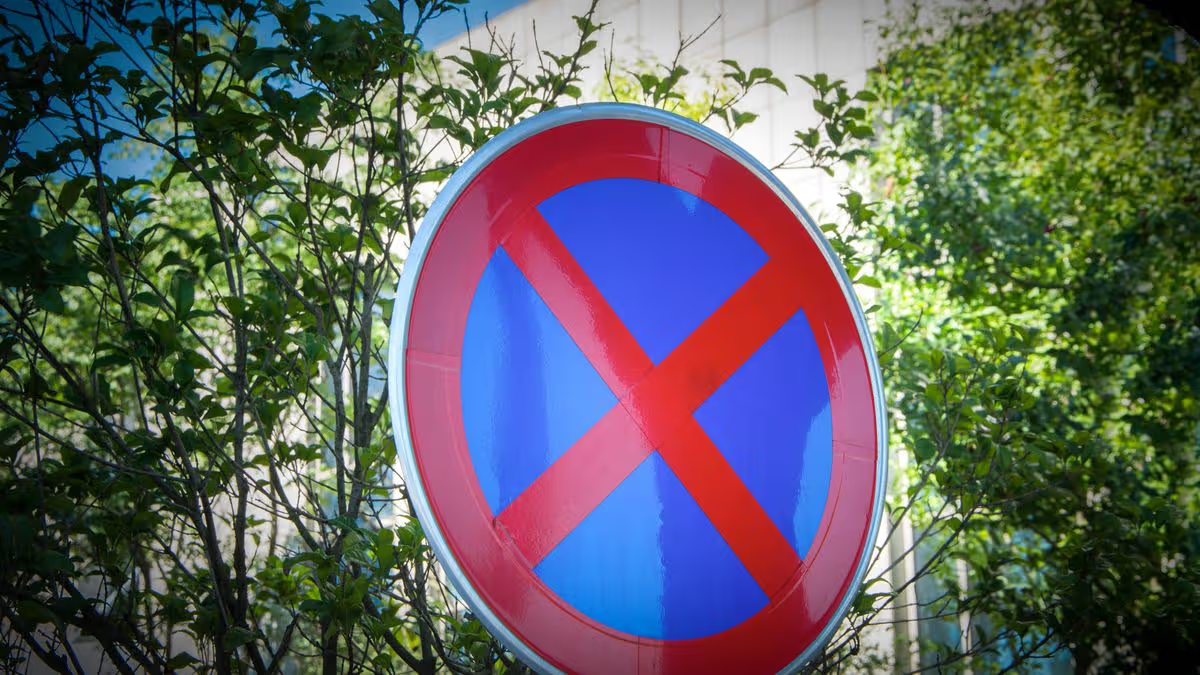
The clearway sign features a red circle with a blue background and a red cross through it – and drivers who stop in these areas could face fines
Motorists are being urged to refresh their understanding of road signage after experts highlighted that many drivers remain baffled by one of the Highway Code’s most recognisable – yet frequently misinterpreted – symbols.
The sign features a red circle on a blue background with a red diagonal cross, and whilst it appears familiar to most people behind the wheel, not everyone grasps its precise meaning. Insurance experts at One Sure Insurance say confusion surrounding road signs is far more widespread than many assume.
Figures from the AA indicate that whilst the majority of drivers consider themselves safe on the roads, approximately half acknowledge they find certain aspects of the Highway Code challenging.
This gap in understanding can result in motorists inadvertently contravening regulations or misreading signs whilst driving.
The red-and-blue cross symbol denotes a clearway, meaning drivers must not stop at any time, reports the Express.
Unlike certain other restrictions which only operate during specific hours, the clearway regulation means you cannot halt your vehicle on that section of road for any purpose, except in an emergency.
This includes stopping to:
- Pick up or drop off passengers
- Check directions
- Make a phone call
- Wait briefly in the car
As stopping is entirely forbidden, drivers who pull up in a clearway zone risk receiving a fine or penalty notice.
One factor behind the sign’s confusion is its visual similarity to other blue-and-red road signs found throughout the UK. For instance, a sign displaying a single red line across a blue circle signifies no waiting, which still permits motorists to pause momentarily to collect or drop off passengers.
Conversely, the clearway symbol featuring the red cross prohibits stopping entirely, representing a more stringent restriction.
Confusion between these two could lead motorists to think they’re stopping lawfully when they’re in fact breaking the regulations.
Clearways are generally implemented on congested routes where stopping might create traffic jams or safety hazards, such as principal routes into urban areas or high-volume thoroughfares.
By prohibiting vehicles from stopping, authorities seek to maintain smooth traffic flow and minimise the risk of abrupt braking or blockages.
For motorists uncertain about traffic signs, specialists recommend consulting the Highway Code again to ensure complete understanding of the regulations – particularly as confusion can result in penalties or hazardous situations on the roads.
Specialists suggest that updating your knowledge of road signage could help drivers prevent fines, collisions, and insurance claims.
A spokesperson for One Sure Insurance said: “We see a lot of accidents or traffic violations happen because drivers simply don’t understand or recognise certain road signs.
“These mistakes may seem minor at first, but they can lead to fines, insurance claims, and in worst-case scenarios, serious accidents. It’s vital to take the time to understand every road sign you encounter.”