




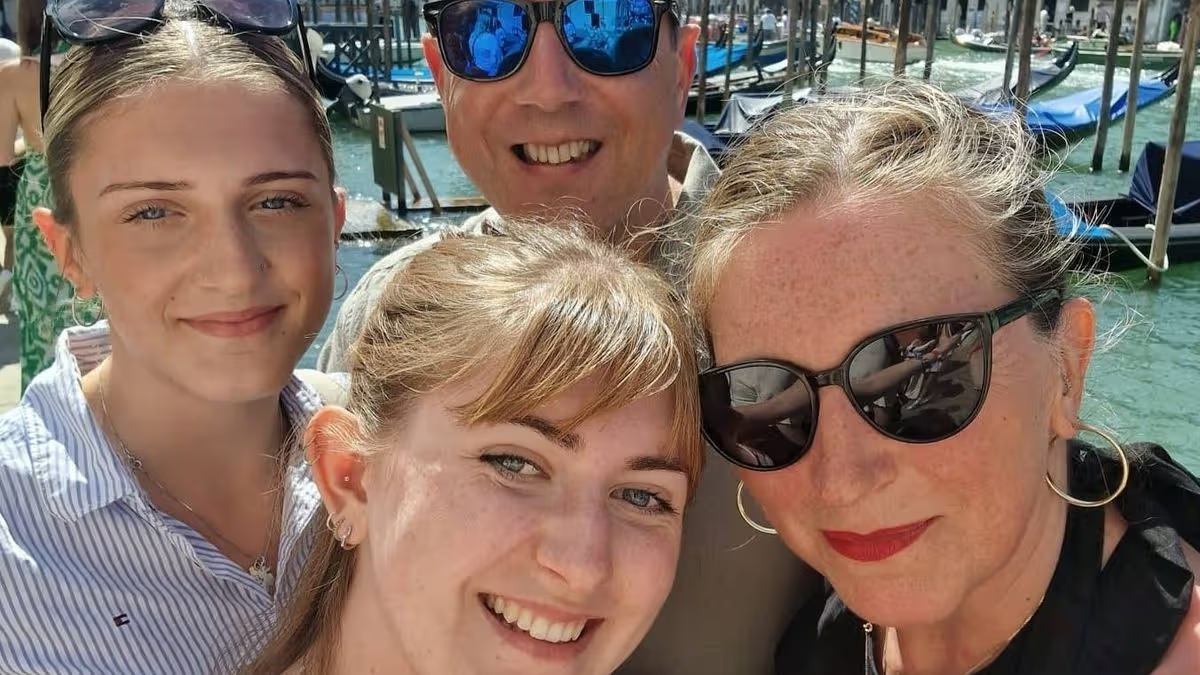
Michael Kenny’s daughter Juliette died from meningitis B on 14 March, just hours after first showing symptoms, prompting the family to campaign for better teenage vaccination access
The father of a teenager who tragically died in Kent following a meningitis outbreak has shared the family’s deep sorrow over their loss.
Juliette Kenny passed away on Saturday, 14 March, just one day after first showing symptoms. Now, the family of the 18 year old is campaigning for better protection for young people.
Michael Kenny, Juliette’s father, has spoken about the grief his family is dealing with, saying that his daughter had been “fit, healthy and strong” before her sudden death. She had completed the practical assessment for her PE A-level on Thursday, 12 March – and just a day later, was showing symptoms including vomiting, and discolouration in her cheeks.
Ensure our latest headlines always appear at the top of your Google Search by making us a Preferred Source. Click here to activate or add us as Preferred Source.
Juliette, who was described by her father as having a “beautifully positive energy”, is one of two students who have sadly died following the outbreak of meningitis B in the county. Mr Kenny stated that “no family should experience this pain and tragedy” and that “this can be avoided”, adding that he wanted his daughter’s legacy to be “lasting change”.
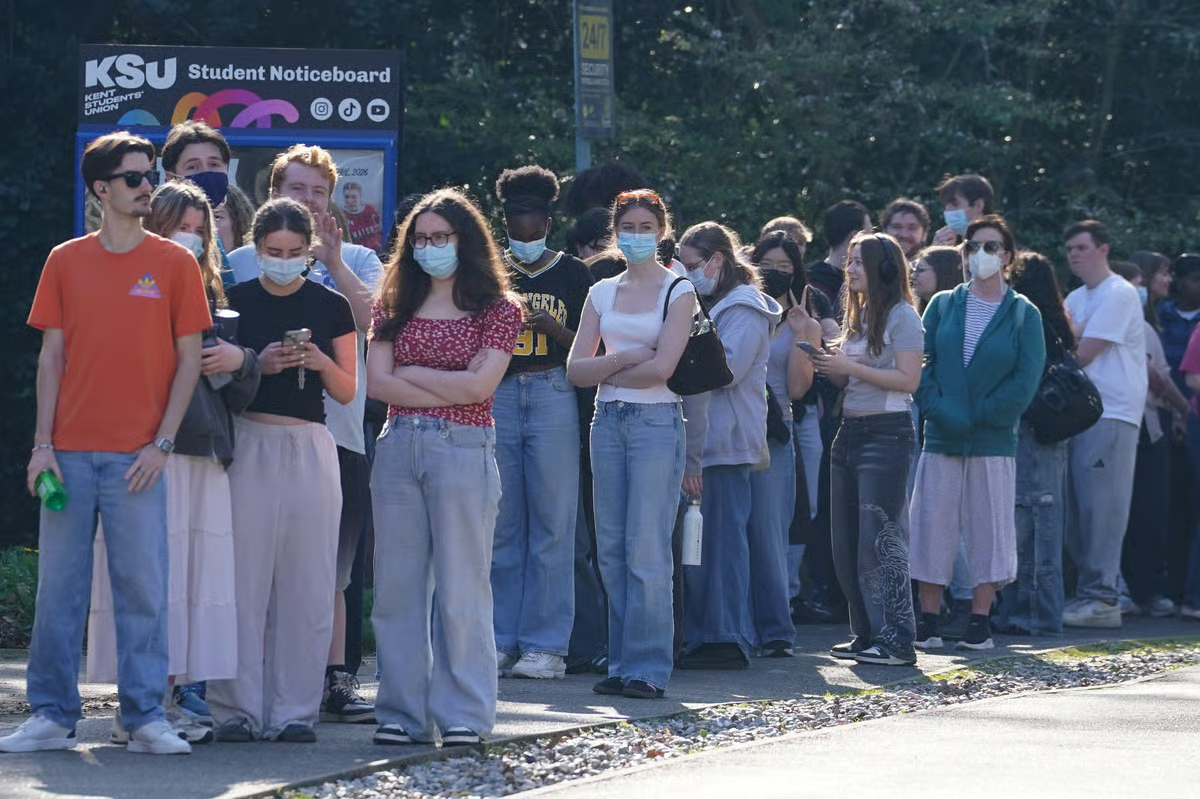
This comes as more than 100 students in Kent were turned away whilst trying to get a meningitis vaccine after officials closed the queue on Thursday.
In a statement given to the Press Association, Mr Kenny expressed: “We are incredibly proud parents to two wonderful daughters. Juliette is a force in this world. With her beautifully positive energy she spread fun, love and happiness to those around her and she continues to do so now.
“The devastation of her loss to us, her family and friends is immeasurable. Sharing stories of the empathy, warmth and fun that she created is helping her family and friends through at this time. Her energy continues to make the people who love her find a way.
“The illness took her from us so quickly.”
Mr Kenny detailed how he first became aware of his daughter’s illness when she was sick during the early hours of Friday, March 13. At that stage, Juliette, a year 13 student at Queen Elizabeth’s Grammar School in Faversham, displayed no other symptoms, he added.
“In the morning on Friday, she was taken, by us, to our local emergency drop-in as a discolouration appeared on her cheeks,” Mr Kenny explained.
“She was given antibiotics and sent by ambulance to AandE. Juliette fought bravely for hours, but despite the fantastic NHS hospital staff fighting alongside her, meningitis took her from us less than 12 hours later.
“We were with her at the end, and the last sounds that she heard were the voices of those who loved her telling her how very much loved and cherished she is.”
In collaboration with the Meningitis Research Foundation, Mr Kenny and his family are calling on the UK to take immediate steps to enhance access to the menB vaccination for teenagers and young people.
“No family should experience this pain and tragedy,” he expressed.
“This can be avoided. There are young people currently battling this and young people still at risk.
“As parents, we knew our children would change the world and be a force for good. The work to protect young people has started. It needs to be more.
“Juliette’s impact on this world must be lasting change. Now is the time to ensure families are safe from the impact of meningitis B.”
Vinny Smith, chief executive of Meningitis Research Foundation, revealed that in 2015 the charity’s calls for the menB vaccination to be “routinely available” on the NHS for all at-risk age groups was “not taken forward” as it was “judged not to be cost-effective”. The menB jab was introduced on the NHS for babies in 2015, meaning the majority of young people born before then are not protected against it unless they have had the jab privately.
The Kenny family were not aware that the vaccination is not routinely available on the NHS for teenagers and young adults, and that to have this they would need to pay for it privately. Mr Smith urged the Government to “decide now to save lives” and highlighted menB’s “lifelong impact”, including disabilities caused by the bug.
He stated: “When we made the case for menB vaccination to be routinely available on the NHS in 2015 for all at-risk age groups, wider protection for teenagers and young adults was not taken forward (it was judged to not be cost-effective within the criteria used at the time). Our concern, then and now, is that this has not fully reflected the impact of menB or the full value protection from a vaccine brings.
“It hasn’t accounted for the severity of meningitis, its lifelong impact, or the trauma and bereavement experienced by families. People across the country will have seen that impact this week; we believe the UK Government can decide now to save lives and limit the lifelong disabilities caused by meningitis, protecting people for generations to come.”
The UK Health Security Agency (UKHSA) confirmed that as of 5pm on Wednesday, 15 cases of meningitis have been verified with a further 12 currently being investigated. This takes the total to 27 cases of either confirmed or suspected meningitis, an increase from 20 on Wednesday.
Currently, nine of the 15 confirmed cases are understood to be caused by menB. On Thursday, 40 MPs put their names to a letter sent to the Health Secretary calling on the Government and health officials to work with universities across the country on catch-up vaccination programmes, and to improve awareness.
The letter further indicated that the joint committee on vaccination and immunisation (JCVI) should promptly review eligibility for meningitis vaccines. As of Thursday, the vaccine programme in Kent has been expanded to include anyone who visited Club Chemistry between 5th and 15th March, year 12 and 13 pupils at impacted schools, students and staff at the University of Kent and Canterbury Christ Church university, as well as close contacts of confirmed or suspected cases.










































You must be logged in to post a comment Login