


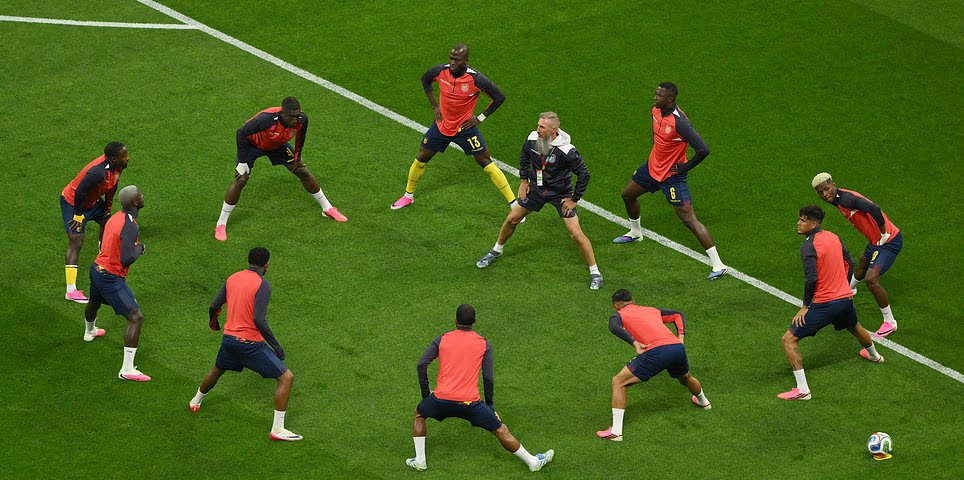
Follow Daily Mail Sport’s live coverage of the latest updates as co-hosts Mexico take on Ecuador in the last 32 of the World Cup in Mexico City.
NewsBeat
El Nino dampens Atlantic hurricane risk, but increases it in Pacific

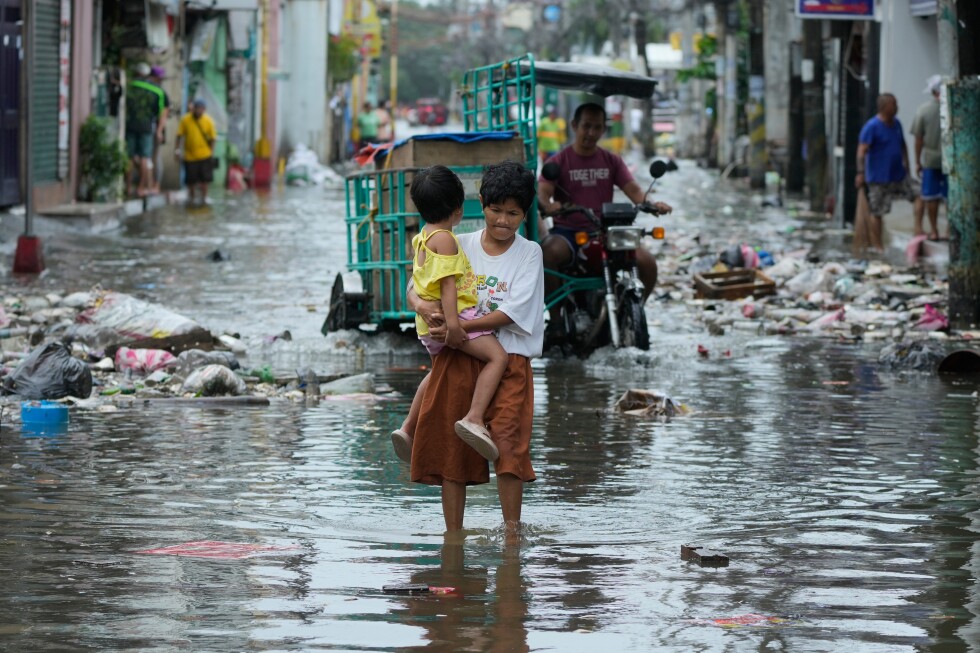
A developing El Nino that is forecast to get quite strong will likely dampen the upcoming Atlantic hurricane season, but it won’t make the potentially deadly storms disappear, federal and outside meteorologists predict.
The National Oceanic and Atmospheric Administration on Thursday issued its seasonal outlook for the Atlantic, giving a 55% chance of a below-average season. The agency forecasts eight to 14 named storms, with three to six of them becoming strong enough to hit hurricane status and one to three of those intensifying to major hurricanes.
A normal hurricane season has 14 named storms, seven of them becoming hurricanes and three of them reaching major hurricane level, which is more than 110 mph (177 kph).
Eighteen other groups, private and academic, have also forecast what they think the season will be like and most of them also call for a below average summer and fall. Those other forecasts average a dozen named storms, only five becoming hurricanes and two of those being major ones. Those forecasts also call for the Accumulated Cyclone Energy index, which takes into account strength and duration of storms, to be 80% of normal.
Colorado State University, which pioneered the science of hurricane seasonal forecasting in 1984, is predicting the lowest overall activity since 2015, which was the strongest El Nino in the last 75 years. And that forecast is likely to be revised to even lower numbers in June, said Colorado State’s hurricane expert Phil Klotzbach.
This is after nine of the last 10 Atlantic hurricane seasons have been above normal or even hyperactive, Klotzbach said. Last year started slow, but then had a burst, producing a near-record total of three Category 5 hurricanes, including Melissa which devastated Jamaica and Cuba, said Suzana Camargo, a climate scientist and tropical weather expert at Columbia University.
Inflation-adjusted damage across the globe from tropical cyclones has increased from an average of $11.4 billion a year in the 1980s to $109.7 billion a year over the past 10 years, with three-quarters of the damage done in the Atlantic, Gulf of Mexico and Caribbean, according to insurance giant Munich Re.
Hurricanes, typhoons and cyclones are the same weather event, with the different names being used in different parts of the world.
“We should expect a less active year than certainly what we’ve seen recently, and perhaps significantly so below average,” said University at Albany atmospheric scientist Kristen Corbosiero. “But again, it only takes one to cause real devastation and destruction in the mainland U.S. or even in Hawaii.”
El Nino decapitates Atlantic storms
It’s mostly because of “the elephant in the room” which is an El Nino, Camargo said.
An El Nino is the natural and cyclic warming of parts of the central Pacific that warps weather patterns around the globe, especially during winter. Scientists for decades have found a correlation between an El Nino and below average Atlantic hurricane activity and stronger and more storms in the central and eastern Pacific. This year many forecasts are calling for a strong, superstrong or even record setting intense El Nino. During a La Nina, the cool flip side of El Nino, the Atlantic is generally busier with stronger storms.
There’s a 98% chance that there will be an El Nino this summer and an 80% chance it will be moderate or strong, NOAA Administrator Neil Jacobs said Thursday.
Atlantic hurricane seasons when an El Nino reaches strong or very strong status have two-thirds the named storms and half the hurricanes of the 1991-2020 average, according to an Associated Press analysis of storm and El Nino statistics.
El Ninos fight Atlantic storm formation in several ways, especially with cross winds about 1 mile to 7 miles (1.5 to 11 kilometers) above the surface “which can basically blow apart the thunderstorms that make up” a hurricane, Corbosiero said.
“A stronger than normal wind shear tends to tilt storms as they try to develop,” said University at Albany atmospheric scientist Brian Tang. “It pushes dry air into storms. And prevents storms from developing in the first place. And if they do develop, it also prevents them from intensifying.”
El Nino reduces the number and intensity of weaker storms, but once a storm hits hurricane status with 74 mph winds, “they can be kind of like a self-feeding entity” and are less prone to being dampened by El Nino’s wind shear, said Matthew Rosencrans, lead hurricane season forecaster with NOAA’s National Weather Service.
Forecasts for peak hurricane season show strong wind shear from the west in the main development region for the largest and long-lasting hurricanes that come off of Africa and develop as they head west over the Atlantic, Klotzbach said. Fewer of these type storms happen during El Ninos.
In the 15 strongest El Nino years since 1950, 37 named storms, 11 hurricanes and three major hurricanes made landfall on the continental United States, but in the 15 coldest La Nina years 61 named storms, 31 hurricanes and 10 major hurricanes hit America’s Gulf and Atlantic coasts, according to Klotzbach. He said El Nino shrinks the number of hits on the Atlantic coast, but has less of an influence on the number of Gulf coast landfalls.
In addition to El Nino, dry conditions in Africa and water in the Atlantic being only slightly warmer than normal contribute to the forecast of a weaker season, Rosencrans said.
Opposite effect in the Pacific
El Ninos and La Ninas have the opposite effect on storms in the central and eastern Pacific as they do in the Atlantic, so experts are expecting a busier season in those regions. Jacobs said there’s a 70% chance that the eastern Pacific will have an above normal season.
NOAA forecasts 15 to 22 named storms in the Pacific with nine to 14 becoming hurricanes and five to nine of those being major hurricanes. Average is 15 named storms, eight hurricanes and four major hurricanes. Rosencrans said the main area of central Pacific storm development shifts closer to Hawaii during El Ninos.
Eastern Pacific storms near Baja Mexico tend to “go west, affect the fishies and little else,” Corbosiero said. But at times they can turn east or north and cause massive damage as in Hurricane Otis in 2023 that smashed into Mexico, or 1992’s Hurricane Lester, which caused heavy rains in the U.S. Southwest, she said.
Hawaii is a small island chain in a big ocean that can be threatened. In 1992, an El Nino year when there were few Atlantic storms (though Miami was devastated by Hurricane Andrew ), Hawaii was hit by Hurricane Iniki.
Further west toward Asia and India, “your odds of any storm forming becoming a super typhoon go up significantly in El Nino,” Klotzbach said.
The eastern Pacific hurricane season started May 15 and the Atlantic season begins June 1 and both end November 30.
El Ninos can also make hurricane season longer, said John Bravender, a weather service meteorologist in Honolulu. “With the warmer waters across the area, not only can hurricanes maintain their strength at higher latitudes, but also longer through the year,” he said.
The state is preparing for hurricanes just as parts of Hawaii are still reeling from recent back-to-back storms that caused catastrophic flooding, Gov. Josh Green said.
___
Associated Press writer Jennifer Sinco Kelleher in Honolulu contributed to this report.
___
The Associated Press’ climate and environmental coverage receives financial support from multiple private foundations. AP is solely responsible for all content. Find AP’s standards for working with philanthropies, a list of supporters and funded coverage areas at AP.org.
Continue Reading
NewsBeat
Mexico vs Ecuador – World Cup last 32 LIVE: FIFA reveal new kickoff time after thunderstorms and lightning delayed proceedings in Mexico City

The Magnet chain kitchen and joinery depot in Lysander Close off Kettlestring Lane is among the affected locations named by the company in a reorganisation as it said it aims to address “property costs that are no longer sustainable”.
The closures will take place under a company voluntary arrangement (CVA), and while Magnet has not disclosed the exact number of workers affected, the company said it pledged support and alternative roles where possible.
Recommended reading:
Sophie Rose, Magnet Group’s chief executive, said: “This is a difficult decision and not one we have taken lightly, particularly where colleagues may be impacted.
“But taking this action now is the right thing to do for the long-term health of Magnet Group.
“It allows us to deal with property costs that are no longer sustainable and protect the stronger parts of our estate.
“I am confident these proposals will help Magnet Group build a stronger, more resilient business that is better placed to serve customers, support partners and return to sustainable profitability.”
The majority of Magnet’s 159 stores will remain unaffected and continue operations as usual.
The restructuring proposals, which require creditor approval, will be managed by Interpath.
For customers with pending orders at closing stores, Magnet has assured that their orders will be transferred to the nearest alternative store.
The other nationwide closures include Andover, Birmingham Minworth, Blackburn, Bridgwater, Brighton, Colwyn Bay, Dorking, Farnborough, Ramsgate, Romford Trade, Stirling, Stockton, Watford and Weymouth.

Clydesdale Community Initiatives (CCI) has been awarded £2,500 from UKSE’s Community Grant Fund.
A Lanark-based social enterprise supporting people with complex additional needs has received a third round of funding from UKSE, a subsidiary of Tata Steel, to help strengthen its impact across the community.
Clydesdale Community Initiatives (CCI) has been awarded £2,500 from UKSE’s Community Grant Fund to support the continued development of its monitoring and evaluation database, a vital tool that helps track participant progress and shape personalised development plans.
Based at Langloch Farm, CCI works with individuals across Lanarkshire who are facing barriers to employment and inclusion, including those living with mental health conditions, learning disabilities, and young people disengaged from mainstream education.
Through a pioneering social enterprise model, CCI provides individuals with opportunities to contribute to their community through activities such as landscaping, horticulture, woodcraft, and microbusiness initiatives.
The organisation currently supports around 140 people each week, with each participant following a tailored plan based on their interests, goals and support needs.
The database, funded by UKSE, plays a key role in tracking these journeys and measuring outcomes across the organisation.
Niall McShannon, managing director at CCI, said: “Everything we do is about supporting people to make a meaningful contribution to their community. We don’t focus on labels or limitations; we focus on what people are interested in, what they want to achieve, and how they can be part of a team.
“This funding allows us to better understand and demonstrate the impact of that work. It helps us track progress for each individual and ensure we’re continuing to provide opportunities that build confidence, skills and a sense of purpose.”
In recent years, CCI has seen a significant rise in demand, with more referrals of individuals experiencing complex mental health challenges and social isolation.
The enhanced database will enable the team to respond more effectively to this growing need, ensuring everyone receives tailored support while also helping the organisation evaluate and improve its services.
Niall said: “What people benefit from most is the feeling that they’ve done something valuable for someone else. Being part of a team, contributing to real work, and seeing the results of that effort builds confidence and connection in a way that traditional approaches often don’t.”
CCI has received previous support from UKSE in 2019 and 2023, and the continued partnership reflects a shared commitment to innovation, community impact, and creating meaningful opportunities.
Scott Webb, regional manager at UKSE, said: “Clydesdale Community Initiatives is doing important work to support people who face significant barriers to employment and inclusion, and we’re pleased to provide this third round of funding.
“Their approach is innovative, practical and rooted in the community, helping individuals build confidence, develop skills and play an active role in their local area. This is exactly the kind of initiative our Community Grant Fund is designed to support.”
*Don’t miss the latest headlines from around Lanarkshire. Sign up to our newsletters here.
And did you know Lanarkshire Live had its own app? Download yours for free here.
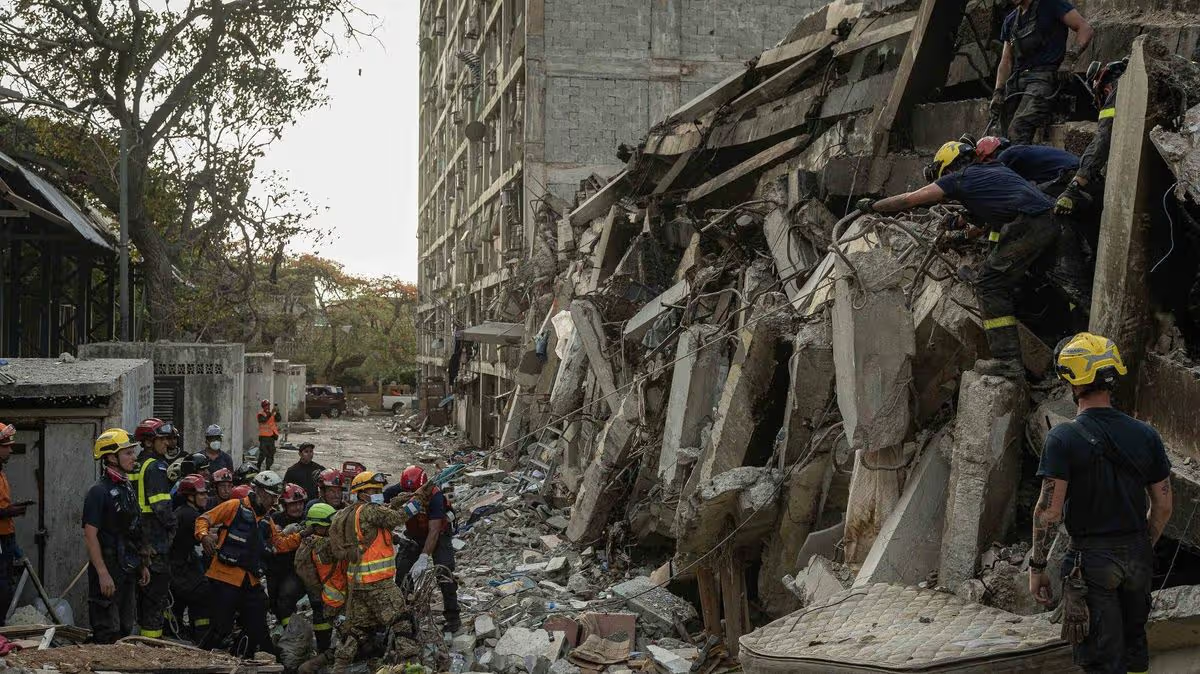
A three-year-old boy has been pulled alive from earthquake rubble in Venezuela six days after the disaster struck
A three year old boy has been pulled alive from the rubble six days after the devastating earthquake in Venezuela in what has been described as a ‘moment of hope’.
A Jordanian rescue team erupted in celebration as the youngster was freed from the wreckage. The country’s interim president has identified him as Klieber Morán.
Delcy Rodríguez hailed the child’s rescue as a moment of hope after the earthquake.
The remarkable discovery comes as the UN has warned that tens of thousands of people are in desperate need of food and shelter.
The Jordanian civil defence confirmed that Klieber received first aid treatment before being transferred to hospital, where his vital signs were reported as stable.
He was receiving treatment in the capital Caracas, according to Venezuelan Assembly President Jorge Rodríguez, the BBC reports.
The death toll from the catastrophic disaster has risen to 1,943, with more than 10,000 people injured.
The earthquakes, registering magnitudes of 7.2 and 7.5, have also left tens of thousands more unaccounted for.
Rodríguez stated that Klieber’s rescue demonstrated there remains hope of finding further survivors. He added that both domestic and international teams were continuing to search through the debris to locate those still missing.
An initial assessment of satellite data from NASA indicated the tremors also damaged or destroyed approximately 58,870 buildings.
Experts cautioned following the destruction that the three-day window after the quake offered the greatest chance of finding survivors. Numerous residents in La Guaira, amongst the most severely affected areas, have been conducting their own rescue operations to locate family members.
The UN’s refugee agency reported on Tuesday that food scarcities were widespread, essential services had collapsed and communications had been mostly cut off in La Guaira.
“Community tensions are rising as access to assistance remains constrained,” the UNHCR said in a statement on its website.
The World Health Organization (WHO) stated that healthcare services are facing “extreme pressure.
“There’s an increased risk now of outbreaks of vaccine-preventable diseases” such as measles and diphtheria due to low vaccination coverage, WHO spokesman Christian Lindmeier said.
Four days following the earthquake, a father and his son were also recovered alive from the wreckage of a destroyed building.
The two were rescued on Sunday after a 12-hour operation by search teams in the coastal state of La Guaira.
According to Venezuelan officials, more than 2,600 rescue personnel from across the globe are now participating in the search operation, assisted by nearly 140 specially trained search dogs.
International assistance is reaching the country to provide support during this crisis.
A UN spokesperson confirmed a 47-tonne shipment of humanitarian aid arrived on Tuesday.
It contained emergency medical kits, provisions for safe deliveries, newborn care and disease prevention. The threat of additional damage persists as aftershocks continue to rattle Venezuela, with smaller tremors measuring 4.2 and 4.5 in magnitude recorded on Sunday morning.
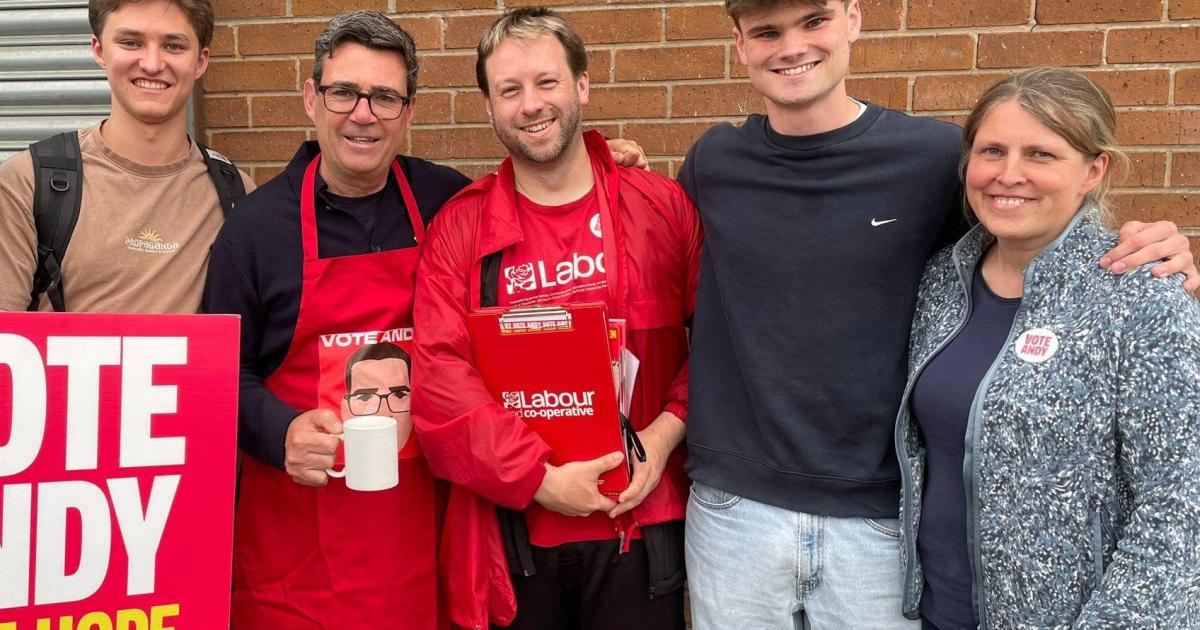
Rachael Maskell, Labour’s York Central MP, welcomed the former Greater Manchester mayor’s announcement to move power out of London by setting up a No 10 North operation based in Manchester.
Mr Burnham, in his first speech since Sir Keir Starmer announced he would be resigning, said he will lead a decade-long plan to transform Britain by transferring power out of Whitehall and giving regions the ability to control essential utilities, transport and housing.

Ms Maskell, who served in Jeremy Corbyn’s Labour shadow cabinet with Mr Burnham, welcomed the prospective prime minister announcing the “biggest rebalancing of power our country has seen”.
“Over the last 11 years, I have consistently fought in Parliament for our city at every opportunity, but like so many, have found that the ‘can’t do’ culture of Westminster and Whitehall has stifled our aspiration,” she said.
“Now we have the greatest opportunity to get things done for all who were left behind by the broken state.”
Recommended reading:
Ms Maskell, who lost the Labour whip after rebelling over the government’s welfare reforms, said: “In setting out that MPs will be able to advocate for their communities, what that means to me is that in the future, when I speak up on things like winter fuel payments for pensioners, for taking children out of poverty or to protect disabled people from losing vital funds to keep their independence, instead of being stripped of the whip, I will be heard.
“Such a pluralist approach to policy and politics speaks right back to our roots as a Party where it was the voices of communities which shaped the priorities of Labour. This is the leadership we have longed for.
“I am excited about working with residents and workers across our city to ensure we rebuild the opportunities we long for as a city.”
No 10 North will help deliver full potential of thousands of civil servant jobs moving to York, says industry chief
Meanwhile, Henri Murison, chief executive of the Northern Powerhouse Partnership, said Mr Burnham devolving power out of Whitehall will help ensure the relocation of thousands of new civil servant jobs in York will deliver its full potential.

It comes as part of plans for a new government hub, home to 2,600 civil servants, to be built at the York Central development. Civil servant jobs will also be relocated to Darlington and Manchester under the plans.
“These new government offices are helping regenerate those places, but ministers themselves have not yet made effective use of them. A regular ministerial presence outside Whitehall would strengthen decision-making and bring government closer to the communities it serves,” Mr Murison told the Guardian.

Former NBA player Malik Beasley has been indicted in the government’s sprawling investigation of illicit gambling on basketball games, accused of tailoring his 2024 performance with the Milwaukee Bucks to reward bettors and chip away at his own financial problems, authorities said Monday.
Beasley has been out of the NBA since playing with the Detroit Pistons in 2024-25. Another former NBA player, Ed Davis, was also charged in the indictment unsealed in Brooklyn federal court against six people.
U.S. Attorney Joseph Nocella Jr. said they “turned professional basketball into a criminal betting operation.”
The schemes, he added, “erode the integrity of American sports and victimize the sports-watching public.”
Nocella said hundreds of thousands of dollars were wagered through popular gambling sites. The indictment says Beasley had financial woes, including millions of dollars in gambling losses, and had relied on Davis, a former teammate, for help.
“Malik maintains his presumption of innocence throughout this two-year investigation,” Beasley’s attorney, Steve Haney, said. “We ask that people reserve judgment until all the facts are known.”
Feds say Beasley tipped others about his play
In return for fixing his performance, Beasley got paid by his money-winning co-conspirators and his debts to Davis were reduced or eliminated, the indictment alleges.
In one example, according to the court filing, Beasley informed Davis that he would try to outperform the 3.5 prop line bet for rebounds in Milwaukee’s game against the Los Angeles Clippers on March 10, 2024.
With a second left, and the Bucks ahead by seven points, any shot by the Clippers would not have affected the outcome. But Beasley challenged the shot and then dashed past four players to grab the rebound as the horn sounded.
Beasley finished with four rebounds that night — an overperformance and a winning prop bet, the indictment states.
“What’s funny is after he got it he had a big sigh of relief,” a co-conspirator said in a text message, according to the indictment.
In other games, Beasley told Davis that he would underperform certain statistics, the government alleges.
The NBA said it would continue to cooperate with authorities.
“We take these allegations with the utmost seriousness, and the integrity of our game remains our top priority,” spokesperson Mike Bass said.
Investigation has kept Beasley on sidelines
Beasley last played in the NBA for the Pistons in 2025, averaging 16 points per game. He is one of five players in NBA history with more than 300 3-pointers in a season, but he did not play in the league last season because of the investigation.
Beasley’s financial problems have been widely reported, including disputes with a Detroit landlord, a Milwaukee barber and a Minnesota dentist. In 2025, when the Pistons were in New York for a playoff game, he was served with a lawsuit from a local sports marketing agency, which subsequently got a $1 million default judgment against Beasley.
Davis’ attorney did not immediately respond to messages seeking comment. He was an NBA journeyman who was primarily a backup in a 12-year career that got him roughly $48 million in gross salary. Davis and Beasley were teammates in Minnesota in 2020-21.
Paolo Zamorano, a sports agent who formerly represented Davis, was also charged with placing bets based on Beasley’s information. Defense attorney Ken Breen said Zamorano denies wrongdoing and “looks forward to his day in court.”
Other NBA figures arrested in 2025
Authorities last fall announced a gambling sweep that led to the arrests of more than 30 people, including reputed mobsters and well-known basketball figures such as Chauncey Billups, a member of the Basketball Hall of Fame and coach of the Portland Trail Blazers at the time.
Billups is accused of conspiring to fix high-stakes card games tied to La Cosa Nostra organized crime families that cheated unsuspecting gamblers out of at least $7 million. He has pleaded not guilty.
In April, former NBA player Damon Jones, 49, became the first person to plead guilty. He was accused of defrauding major sportsbooks, including DraftKings and FanDuel, and filching millions of dollars from unwitting poker players.
Jones was charged with selling or attempting to sell insider information to bettors based on his relationships in the NBA.
Terry Rozier is accused of conspiring with friends to help them win bets on his performance during a 2023 game when he played for the Charlotte Hornets. He, too, has pleaded not guilty. He was on the Miami Heat when he was charged in 2025.
In 2024, former Toronto Raptors player Jontay Porter pleaded guilty in a separate gambling case. Porter, who had gambling debts, said he took himself out of games early so co-conspirators could win bets on his performance.
___
Associated Press writers Tim Reynolds in Miami and Michael R. Sisak in New York contributed to this report.

The limited-time sale comes as families prepare for the expensive return-to-school season, with experts warning that popular sizes often sell out well before the end of the holidays.
M&S says its uniforms are designed to last the entire school year, with anti-stain technology, fade-resistant fabrics and easy-iron finishes helping clothes stay looking smart for longer.
With multipacks starting from £7 before the discount, it’s one of the retailer’s biggest uniform promotions of the year. The full range is available here.
Retailers release their school uniform collections weeks before the end of term for one simple reason – the most popular sizes often sell out long before September.
M&S school uniform sale: best buys
Some of the standout deals include:
- 3-pack stain-resistant polo shirts from £7
- 2-pack school trousers from £11
- 2-pack pleated skirts from £10
- 2-pack school jumpers from £11
- 3-pack easy-iron school shirts from £10
- Leather school shoes from £28
- Backpacks, socks and school accessories also included
M&S uniforms feature StayNew technology to help colours stay brighter after repeated washing, while StainAway fabric helps repel everyday spills.
Many pieces also include adjustable waists, grow-with-me hems and crease-resistant fabrics to help children get more wear from each item.

The 20% discount starts on July 2 for a limited time.
Aldi’s famous £5 school uniform bundle is back
If your priority is spending as little as possible, Aldi has once again brought back its hugely popular £5 School Uniform Bundle.
Available while stocks last, the bundle includes:
- Two polo shirts
- Sweatshirt or cardigan
- Trousers, skirt or shorts
The retailer also includes a 12-month satisfaction guarantee, making it one of the cheapest school uniform offers available anywhere on the high street.
Other Aldi highlights include:
- Leather school shoes — £7.99
- Football boots — £9.99
- Backpacks — £9.99
- Hair accessories — £1.99
- Lunch bags from £4.99

Because Aldi uniforms are sold as Specialbuys, parents are being urged not to leave shopping until August, when many sizes disappear.
Lidl’s £5 bundle returns for a fifth year
Lidl has also relaunched its popular £5 school uniform bundle, matching Aldi on price.
The bundle includes:
- Two polo shirts
- Sweatshirt
- Choice of trousers, shorts or skirt
Individual items start from £1.50, with practical features including water-repellent fabrics, machine washable materials and tumble dryer-safe finishes designed to survive the school year.
The range is available in stores while stocks last.

Tu keeps prices frozen for a fourth year
Sainsbury’s Tu Clothing is taking a different approach by freezing prices for a fourth consecutive year.
Although its earlier 20% promotion has now ended, shoppers can still benefit from prices that have remained unchanged since 2022.
Highlights include:
- Uniform starting from £3
- Two complete uniforms from around £14
- Reinforced knee trousers
- Permanent pleats
- Non-iron shirts
- Scuff-resistant school shoes
- Easy Dressing range with pull-on trousers and touch-fastening clothing for younger children
For parents who missed recent discount events, Tu still remains one of the strongest value options available.
Which school uniform deal offers the best value?
Each retailer has a different strength depending on what you’re looking for.
M&S is ideal for parents wanting longer-lasting uniforms with premium features, especially with the new 20% discount.
Aldi offers the lowest upfront cost thanks to its famous £5 bundle, but shoppers will need to move quickly before stock disappears.
Lidl matches Aldi on headline price and offers practical everyday essentials from just £1.50.
Tu remains a solid all-round option thanks to its price freeze, durable fabrics and wide availability in Sainsbury’s stores.
Recommended reading:
Shop early to avoid the biggest problem parents face every summer
Parents who wait until the final weeks of the holidays can find fewer sizes available and may end up paying more elsewhere.
With M&S now launching its 20% sale alongside bargain bundles from Aldi and Lidl, early shoppers have the best chance of saving money before demand peaks later this summer.
What’s your best back-to-school tip? Tell us in the comments below.

Many drivers assume displaying a Blue Badge automatically allows them to park in a parent and child space at supermarkets and retail parks. In reality, the rules are very different – and getting it wrong could leave you facing a parking charge.
The confusion comes because Blue Badges are primarily designed for on-street parking and council-run car parks, while parent and child bays are usually located on private land, meaning different rules apply.
Can Blue Badge holders use parent and child spaces?
In many cases, no.
Parent and child spaces are intended for parents or guardians travelling with young children, typically under the age of 12. They are wider than standard bays to allow room for pushchairs, child seats and safely getting children in and out of vehicles.
If you’re a Blue Badge holder visiting a supermarket, shopping centre or retail park, you should normally use one of the designated disabled bays instead – unless signs tell you otherwise.
Why doesn’t my Blue Badge apply?
The Blue Badge scheme mainly applies to parking on public roads and local authority car parks.
Government guidance makes clear that off-street car parks such as supermarkets, hospitals and shopping centres operate under their own rules, with operators deciding how disabled parking and parent and child bays are managed.
That means supermarkets are free to decide who can use their parent and child spaces and whether a Parking Charge Notice should be issued if the rules are broken.
Could you get fined?
You won’t usually receive a council Penalty Charge Notice because supermarket car parks are private land.
However, you could receive a Parking Charge Notice from the private parking company managing the site if you park in a parent and child bay without meeting the retailer’s conditions.
Individual retailers have different policies, so it’s always worth checking the signs before leaving your vehicle.
What can Blue Badge holders use?
A valid Blue Badge can provide a range of parking concessions, including:
- Parking in designated disabled bays.
- Free parking at many on-street pay-and-display bays – those on public roads administered by the council, not private companies.
- Parking on single or double yellow lines for up to three hours where loading restrictions do not apply – although check with your local council as this can vary.
- Access to council-operated disabled parking concessions, depending on local rules.
These concessions generally do not automatically extend to private supermarket or retail park car parks.
Blue Badge holders also need to remember…
The badge can only be used when the disabled person is travelling in the vehicle, or is being picked up or dropped off.
Allowing friends or relatives to use your badge when you are not present is a criminal offence and can result in the badge being confiscated and a fine of up to £1,000.
Expired badges, copied badges or badges belonging to someone who has died must also not be used.
Frustrated parents have taken to Mumsnet to complain about not being able to get a parent and child space, with one saying: “No matter where I go I struggle to get a parent and child space because they’re all taken up by idiots with no children.”
Another added: “The amount of times I had to just go home and try another day as there was no child parking free. I had twins and I NEEDED the bigger space to have any chance of getting both sides of the car open wide enough for both car seats.
It’s mostly single males that I’ve noticed parking there and they just hurl abuse if you dare question them.”
One poster responded that she had previously used the spaces when there were no disabled spaces free: “Irrelevant now as I have a baby and I’m pregnant but if the disabled were full (usually with no badges displayed) and I had my disabled husband with me I’d use them.”
Another agreed: “Only when no disabled bays left… which is often.. because those are taken up by able people with no blue badge.. it’s a vicious circle really..”
Many said they were abused by selfish drivers who were not disabled and had no children: “Most people I see using them without kids drive overpriced and oversized cars and exit them with a swagger of self importance and entitlement.”
Recommended reading:
Quick Q&A – blue badges and parent and child parking
Can I park in a parent and child bay if I have a Blue Badge?
Not automatically. Parent and child bays are usually on private land and are reserved for drivers travelling with young children.
Does a Blue Badge work in supermarket car parks?
Not necessarily. Supermarkets set their own parking rules, although most provide dedicated disabled parking bays for people with blue badges.
Can I get a parking ticket?
Yes, but not a council one. Private operators may issue a Parking Charge Notice if you use a parent and child bay contrary to the site’s rules.
Where does a Blue Badge apply?
Mainly on public roads and in local authority parking areas, subject to local restrictions and conditions
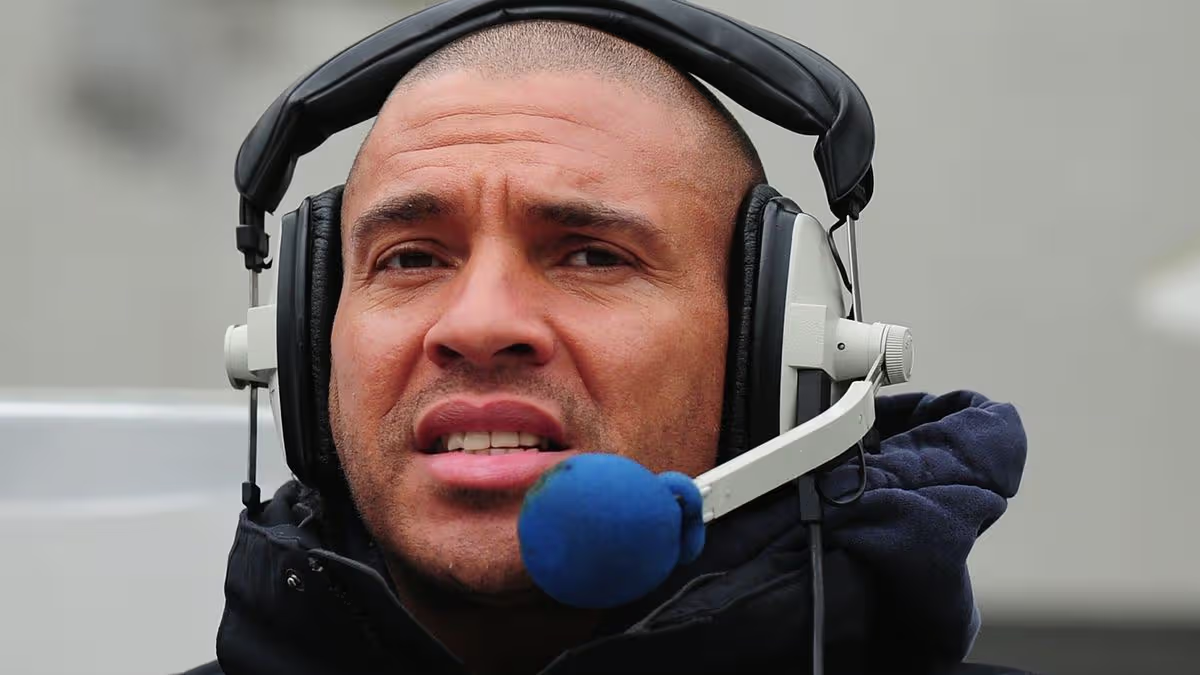
The former Nottingham Forest and Liverpool player responded with an impressive rant
As you’ve probably seen or heard, the FIFA 2026 World Cup is well and truly underway.
On Wednesday England face the Democratic Republic of Congo in their Round of 32 match, having won their group in the tournament, which is taking place across the USA, Canada and Mexico.
While the decision to expand football’s most prestigious tournament from 32 teams to 48 has proved controversial, perhaps the most notable change to play for this edition of the World Cup has been the inclusion of hydration breaks – effectively turning the game of two halves into a game of four quarters.
Click here to get the biggest stories straight to your inbox in our Daily Newsletter
This has not gone down well with many fans, who have taken to booing the hydration breaks, which many view as a chance to cram more adverts into the games.
And it is not just fans who are unhappy with the change. Former footballer Stan Collymore has taken to social media to express his annoyance with the change, which he said he viewed as unnecessary.
While Mr Collymore – who played for teams including Liverpool, Nottingham Forest, Aston Villa and Crystal Palace – may be a well known name to anyone who watched English football in the 1990s, his fame does not appear to be international.
Responding to his comments, one American user on X, formerly Twitter, decided to question his credentials on the subject.
He wrote: “Have you ever played a sport for more than 45 minutes straight? Would your performance had been better with a short break to hydrate and rest? Do you think fans want to see athletes perform at their best?”
This may have been a mistake, as Collymore – with 287 appearances and 110 goals in his professional career and three England appearances – responded on Tuesday night. And the result was impressive.
He wrote: “Yes, I’ve played elite level sport where my particular job was running with a ball at feet at around 30kph+ multiple times a half. 6 ft 4, 95kg. The tactical information given to me through a 7 day, not 3 minute period sufficed, as did the occasional squirt of electrolyte water per half.
“My performance would not have been improved at all by a hydration or tactical break. Pretty much like 99% of players over a 150 year period playing the most popular and most played sport on the planet by far. So maybe you can tell me.
“When was the last time you put your f****g Doritos, big gulp and chicken wings down long enough to know what professional sportsmen need rather than advertising executives or couch potatoes who need to be told 6 times in 20 minutes to buy a Jeep Cherokee, Whopper or diabetes medication instead of just enjoying the sport?”
No need for a penalty shoot out to determine the winner in that exchange.
NewsBeat
Starmer’s defence plan is woefully inadequate and the price we could all pay is unthinkable. Will Burnham do any better? Our enemies are watching: GENERAL THE LORD DANNATT

In January, it emerged that a Ministry of Defence analysis of the Strategic Defence Review calculated that £28billion of extra spending would be required to fund its recommendations and ensure the UK is prepared for a potential war with Russia as early as 2030.
What Starmer announced in yesterday’s Defence Investment Plan is woefully inadequate.
Despite his tub-thumping about ‘doing what it takes’ and ‘meeting the new world head-on’, the reality is that a huge shortfall is built into the defence budget. And it’s likely to get bigger – quickly.
Far from being given £28billion more, the Ministry of Defence will have to make do with just £15billion – of which nearly £4billion is money that was already allotted to other projects.
Yes, there were some eye-catching elements in the DIP package. Yesterday’s headlines focused on Britain’s ‘largest ever drone investment’, for example, with £5billion allotted to unmanned aerial systems. But the reality is that only 20 per cent of that figure is additional investment.
The MoD will also spend £500million on new tech for Special Forces, including the Royal Marine Commandos, and an extra £50million on attack drones equipped with cameras that give the operators a ‘first-person view’, as well as interceptor devices to bring down enemy drones.
There is £115million in the DIP to bolster our defences against the threats posed by artificial intelligence. And the plan includes jet-powered drones taking off from aircraft carriers, and six ‘common combat vessels’ (CCVs) as part of a ‘hybrid Royal Navy’.
Starmer’s Defence Investment Plan is woeful, considering that the Ministry of Defence said £28billion of extra spending would be needed to ensure the UK is prepared for war with Russia

General the Lord Dannatt, a former Chief of the General Staff, says it is a terrible mistake to assume warfare today relies entirely on new tech, as the old weaponry is not yet redundant
These will serve as control hubs for drones, meaning that when the Navy identifies a foreign vessel as a threat, such as a Russian ship, ‘they will do so with outriders, uncrewed ships above and below the surface,’ according to the PM. But this capability will come at a high cost, since that money could have been spent on upgrading our traditional fleet. Instead, the CCVs are expected to replace our Type 45 destroyers, which are currently a mainstay of our sea defences.
At the same time, the Royal Air Force will develop its own drones as well as autonomous ‘wingmen’ designed to fly alongside fighter jets such as Typhoons. Starmer claimed these aircraft, which are due to be ready for testing by 2030, would be ‘invisible to enemy detection’.
The PM also reiterated Britain’s commitment to the £8.6billion Global Combat Air Programme in partnership with Italy and Japan, based on sixth-generation Tempest fighter jets. These, he said, ‘will secure our skies for decades to come’.
All the above goes to show that warfare has become more complex than ever. But it is a terrible mistake to assume it now relies entirely on new tech. The old weaponry is not yet redundant. Britain needs destroyers and main battle tanks as well as drones. We are at real risk of neglecting the unglamorous but necessary parts of our fighting machine, while placing too much trust in the latest electronics.
And we will achieve the appropriate combination of weaponry only if we increase our defence budget.
At the Munich Security Conference last February, Starmer was telling our allies that Britain would be committing 3 per cent of its GDP to defence by 2029, up from about 2.3 per cent.
The reality revealed yesterday is that the actual figure will be nowhere near that – more like 2.7 per cent.
Worse, he also talked of hitting 3.5 per cent of GDP by the middle of the next decade. That target is already slipping away from us – and fast. By contrast, Germany is on target for 3.7 per cent of GDP by 2030 and Sweden is not far behind at 3.5 per cent. Meanwhile, Poland is already spending 4.8 per cent of its GDP on defence and is calling for Nato allies to up spending to 5 per cent by 2030.
Our allies have every right to accuse us of backsliding.
In the years since the end of the Second World War, Britain has been at the forefront of defending Europe, spearheading Nato in its role as the West’s peacekeeper.
As recently as 2022, when Russia invaded Ukraine, we took the lead in going to its defence. But we are no longer in that position. The potential cost of our failure is incalculable.

Last year, Starmer told our allies Britain would be committing 3 per cent of its GDP to defence by 2029. But it has since been revealed that the actual figure will be nowhere near that

In his ‘coronation’ speech in Manchester on Monday, Burnham made no mention of defence and only the briefest of references to national security, Lord Dannatt writes
Join the discussion
How should Britain balance spending on defence with urgent needs at home and abroad?
Starmer would have been far less vulnerable to Andy Burnham’s coup if he had taken a strong, decisive stance on our national security. Instead, he failed to back his former defence secretary John Healey and former Armed Forces minister Al Carns, who quit in protest – the final death knell for his premiership.
The new Defence Secretary, Dan Jarvis, would surely not have taken the job without a guarantee that more money would be forthcoming. But the top-up was minimal.
Healey and Carns resigned because the increased spending in the DIP amounted to 0.08 per cent of GDP. That has now risen to 0.09 per cent.
Despite protests from Burnham’s team that Starmer had no right, in the dying days of his premiership, to be talking about future plans at all, the outgoing PM insisted on making the announcement. But we have no idea whether Burnham will honour it.
What we do know is that, during his ‘coronation’ speech in Manchester on Monday, Burnham made no mention of defence and only the briefest of references to national security.
He told us repeatedly that other things, such as devolution, were the ideals closest to his heart. The unwelcome inference is that he is not putting defence at the top of his agenda. Tory leader Kemi Badenoch highlighted this, declaring that if Burnham refuses to find the money to fund defence, he should call a General Election.
This isn’t purely a matter of money, though. It’s about restoring Britain’s role at the front line of Europe’s collective security.
We need to accept that we can no longer rely on the US to come to our aid when next we face attack. That means a readiness to fight a war in whatever form it takes and, as we have seen in Ukraine, that can mean the brutal realities of old-fashioned battlefield conflict as well as developing modern electronic and uncrewed weapons.
The Strategic Defence Review was not a starting point for negotiations and haggling. It identified the bare minimum that our Armed Forces require if we have any hope of keeping Britain safe. And what Starmer announced yesterday falls far short of securing that objective. We need £28billion; he conceded £15billion. We’re aiming for 3 per cent of GDP by 2030 and 3.5 per cent by 2035 but, as we have seen, we’re struggling to get to 2.7 per cent.
Military budgets are not about the cost of fighting a war. That’s incalculably higher, in human lives most of all, as we have seen in the daily tragedy of Ukraine’s struggle to hold back the Russian invasion.
The point of spending money on defence is so that we don’t have to fight a war. It’s about deterrence, not aggression.
Right now, Britain does not have the deterrent we desperately need. The price we could all pay for this failure is unthinkable as this underfunded settlement heightens the risk to our security.
Keir Starmer is a gambler in the last-chance saloon. Andy Burnham is calling ‘time’ – but will he do any better? Our enemies, our allies and our electorate are all watching.
General The Lord Dannatt is a former Chief of the General Staff
Sports23 seconds ago
Justin Jefferson Lands on Dubious Trade List

Tech2 minutes ago
Huawei’s thinnest flagship tablet goes on sale in Europe
NewsBeat4 minutes ago
Mexico vs Ecuador – World Cup last 32 LIVE: FIFA reveal new kickoff time after thunderstorms and lightning delayed proceedings in Mexico City





-

 Fashion4 days ago
Weekend Open Thread: Staud – Corporette.com
-

 Politics5 days ago
The House | Manchesterism won’t survive the painful trade-offs unless it gets citizens on board
-

 Crypto World23 hours ago
Strategy authorizes up to $1.25B in Bitcoin sales under new capital plan
-

 Politics5 days ago
Potential 2028er World Cup attendee leaderboard
-

 Business5 days ago
Asia stock markets slide as tech shares slump
-

 News Videos2 days ago
MAJOR BITCOIN & MARKET UPDATE!!!! (MUST WATCH ASAP!!!)
-

 Tech5 days ago
A Look At A Gaggle Of Transputer Boards
-

 Crypto World7 days ago
Securitize Wraps Roubini's SEC-Registered ETF as Dubai VARA Digital Security
-
Crypto World7 days ago
Bitcoin (BTC) Dips Below $62K, Ethereum (ETH) Plunges 6% Daily: Market Watch
-
 Crypto World5 days ago
Dell (DELL) Shares Tumble Over 5% Following Analyst Downgrade to Hold
-

 Crypto World3 days ago
Coinbase, Circle Deepen Crypto Stock Losses Despite Resilient S&P 500
-

 Crypto World4 days ago
Kraken's xStocks Opens Bending Spoons IPO Registration to EEA Retail
-

 Business22 hours ago
Australia treasurer says alleged access of prime minister’s bank data ’incredibly concerning’
-

 Sports4 days ago
FIH Pro League: India defeat Pakistan 7-1, register biggest win of campaign | Other Sports News
-

 Crypto World5 days ago
Bitcoin Sparks $600M Hourly Liquidations With $65,000 Set To Become Resistance
-

 Tech3 days ago
Bluekit phishing kit adopts browser-in-the-middle for login theft
-

 Tech4 days ago
Russian hackers now target Signal backup recovery keys
-
 Crypto World4 days ago
Hyperliquid Named on Singapore MAS Investor Alert Register
-

 Crypto World6 days ago
Ripple and SBI launch RLUSD in Japan after JFSA approval
-

 Crypto World4 days ago
RTX holders must register wallets before token distribution begins
You must be logged in to post a comment Login