Connect with us
DAPA Banner
DAPA Coin
DAPA
COIN PAYMENT ASSET
PRIVACY · BLOCKDAG · HOMOMORPHIC ENCRYPTION · RUST
ElGamal Encrypted MINE DAPA
🚫 GENESIS SOLD OUT
DAPAPAY COMING

NewsBeat

Euthanasia of teenage girl that divided the Netherlands: How tormented 17-year-old was granted ‘death wish’ – before doctor who gave her lethal injection was condemned by peers

Published

on

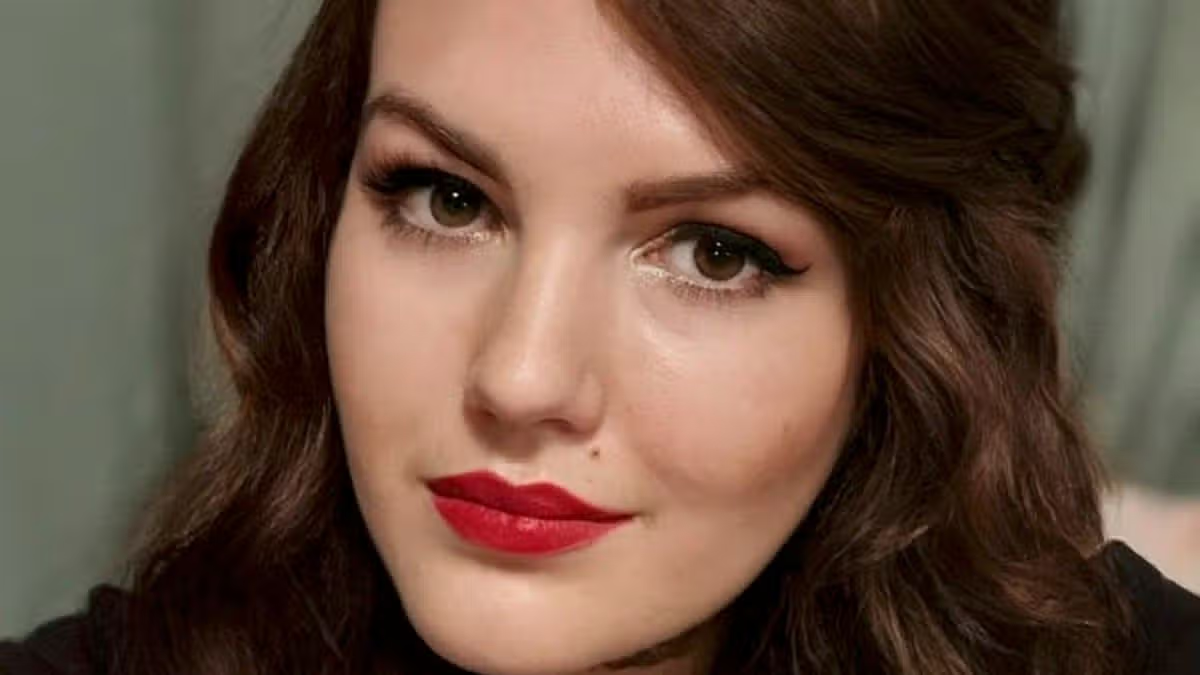
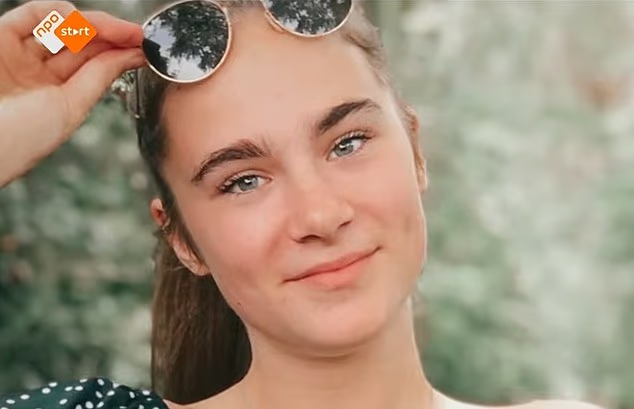
Milou Verhoof, 17, had once been described by her mother as a cheerful, sensitive girl who enjoyed a happy middle-class upbringing

In October 2023, Dutch doctor Menno Oosterhoff made a home visit to one of his patients. But unlike most of his work, his purpose that day was not to save a life, it was to end one.

His patient was 17-year-old Milou Verhoof, a rape survivor who had endured profound psychological trauma.

After years of unsuccessful treatment, she asked to be euthanised, and Mr Oosterhoff was the doctor who carried out her request.

Now, years later, Milou’s parents and Mr Oosterhoff are facing legal battles after 14 psychiatrists and doctors privately wrote to the Dutch public prosecutor asking to conduct a preliminary criminal investigation into Milou’s euthanasia.

Advertisement

They asked to examine the extent to which Milou’s parents, together with two psychiatrists, influenced the teenager in her choice for euthanasia, suggesting she was no longer mentally competent.

Her parents are now filing a disciplinary case, arguing the letter has seriously harmed them.

But behind the legal disputes is the story of a young girl whose life was defined by years of trauma.

Milou had once been described by her mother as a cheerful, sensitive girl who enjoyed a happy middle-class upbringing.

Advertisement

Milou Verhoof, 17, had once been described by her mother as a cheerful, sensitive girl who enjoyed a happy middle-class upbringing

During a stay as an inpatient in a secure psychiatric facility, Milou was sexually abused by another patient

During a stay as an inpatient in a secure psychiatric facility, Milou was sexually abused by another patient

But her life changed dramatically after her older brother, Daan, who has Down’s syndrome, became critically ill when she was 11, spending a month in a coma.

Advertisement

The ordeal left her plagued by nightmares and flashbacks, and within two years she had been raped, sending her into a spiral of post-traumatic stress disorder, depression and self-harm.

During a later stay as an inpatient in a secure psychiatric facility, she was sexually abused again by another patient.

The years that followed were dominated by repeated treatments, medication, psychiatric admissions and suicide attempts.

Her parents were shocked. Speaking to The Telegraph, her mother Mireille said: ‘We always said to each other, my husband and I, that the only one we were not going to expect any trouble from is our girl.

Advertisement

‘She was so nice and so sweet. Always, always laughing… That was what made her vulnerable, I think.’

While doctors continued trying to help her, Milou repeatedly requested euthanasia, convinced that her suffering had become unbearable.

Most psychiatrists rejected those requests, arguing she was simply too young, while another delayed her application altogether.

Her family says this was a severe blow to the teenager, who felt like her suffering was being ignored and her voice was silenced.

Advertisement

Desperate, Milou sought out Mr Oosterhoff after learning about him through media coverage.

By then, the doctor had already become synonymous with one of the Netherlands’ most controversial medical practices.

Supporters had lauded him as a compassionate doctor who helps patients whose psychological suffering has become unbearable, while critics denounced him as crossing an ethical line.

He had increasingly specialised in psychiatric cases since the country legalised euthanasia in 2002 for patients making a ‘voluntary and well considered’ request to end ‘unbearable’ suffering where there is ‘no prospect of improvement’ and ‘no reasonable alternative’.

Advertisement

Although the overwhelming majority of physician-assisted deaths still involve terminal physical illness, the number granted solely on the grounds of psychological suffering has risen sharply in recent years.

Unlike many of his colleagues, Mr Oosterhoff believes severe psychiatric illness can be every bit as unbearable and untreatable as terminal cancer.

Over more than four decades as a psychiatrist, he says he concluded that some patients have exhausted every realistic treatment option and deserve the same right to what he considers a peaceful death.

Mr Oosterhoff told The Telegraph: ‘It is quite unnatural to give a person that is physically healthy a lethal injection.

Advertisement

‘But we underestimate the burden of psychiatric illnesses. We say, “come on, the sun is shining,” and so on. The other way is that people suffer unbearably, or that they commit suicide.’

At first, Mr Oosterhoff suggested Milou should try deep brain stimulation, a procedure sometimes used to treat severe OCD. But the teenager insisted she simply wanted to die.

On October 2, 2023, Mr Oosterhoff travelled to the Verhoof family home, where Milou had chosen to spend her final hours in her childhood bedroom.

Menno Oosterhoff had already become synonymous with one of the Netherlands' most controversial medical practices

Menno Oosterhoff had already become synonymous with one of the Netherlands’ most controversial medical practices

Advertisement
A documentary titled Milou's Battle Continues, which followed the teenager's path to euthanasia, became Dutch public television's most watched programme of the year

A documentary titled Milou’s Battle Continues, which followed the teenager’s path to euthanasia, became Dutch public television’s most watched programme of the year

Her parents said she was 'so nice and so sweet. Always, always laughing'

Her parents said she was ‘so nice and so sweet. Always, always laughing’

 She had done her nails and selected the evening gown and high heels she wanted to be buried in.

As her parents stood beside her, Mr Oosterhoff administered the lethal injection, consisting first of lidocaine to numb the area where the needle would prick her, a coma-inducing drug and a muscle relaxer called rocuronium, which made her stop breathing.

Advertisement

‘Have a good trip,’ he told the teenager, ‘You’ve been through so much.’

Her parents have never hidden their support for the decision. Milou’s mother, Mireille Verhoof, has consistently argued that Mr Oosterhoff’s careful assessment confirmed what they had witnessed for years.

‘Because of Dr Oosterhoff’s extremely careful and cautious approach, we as parents trusted that his conclusion – that Milou truly could not go on and that the days were unlivable for her – was the only correct one and confirmed what we as parents had long seen in our child,’ she said.

Keeping close to the family in the process, Oosterhoff later spoke at Milou’s funeral. However, the case was far from over.

Advertisement

A documentary titled Milou’s Battle Continues, which followed the teenager’s path to euthanasia, became Dutch public television’s most watched programme of the year and brought the issue of psychiatric euthanasia into homes across the country.

To supporters, it portrayed a young woman whose suffering had been acknowledged after years of failed treatment.

But to critics, it represented a devastating indictment of a mental health system that had ultimately offered a vulnerable and defeated teenager death instead of recovery.

Within months of Milou’s death, 14 psychiatrists and doctors privately wrote to the Dutch public prosecutor expressing concerns about Mr Oosterhoff’s handling of the case, including his decision to publicly share a filmed conversation with Milou discussing her wish to die.

Advertisement

They argued she ‘may not have been fully decision-competent to assess her own right to life or adequately safeguard her care needs in a situation of acute distress’.

The footage included Milou reflecting on the future she believed had been denied to her.

‘I would have liked to have had another life, but that was not granted to me,’ she said.

When Mr Oosterhoff asked how she would answer people who said she was still too young, Milou replied: ‘It’s not about age; it’s about the suffering. I tried everything I could to make it better.’

Advertisement

The doctors never explicitly called for a criminal investigation but Mr Oosterhoff responded publicly, demanding they apologise, which they refused to do.

In July of this year, Milou’s parents launched disciplinary proceedings in an effort to uncover the identities of the 14 doctors and psychiatrists who signed the letter, arguing that its allegations caused them serious harm and that they should have the opportunity to defend themselves.

Their lawyer said the letter had a profound impact on the family. By the time it became public, the regional euthanasia review committee had already concluded that Milou’s death had been carried out with due care and in full compliance with Dutch law.

The disclosure came while her parents were still grieving their daughter’s death, after years spent fearing she would instead kill herself.

Advertisement
One case that reverberated across Spain was that of 25-year-old Noelia Castillo Ramos, a paraplegic woman who died through the country's euthanasia law in March

One case that reverberated across Spain was that of 25-year-old Noelia Castillo Ramos, a paraplegic woman who died through the country’s euthanasia law in March

Speaking to Dutch media, Milou’s mother said: ‘These psychiatrists never treated Milou. They never saw her. They didn’t know her medical file, yet they portrayed us to the justice system as parents who drove our child to her death. We still suffer from that, day and night.’

Mr Oosterhoff has continued to defend both his actions and the wider principle of psychiatric euthanasia.

The doctor has maintained that everything he did complied with Dutch law and argued that ‘Milou wanted attention for her situation’.

Advertisement

Milou’s story is far from unique. In the Netherlands, statistics reveal that women attempt suicide at roughly twice the rate of men. 

Among young people aged 12 to 30 who have died through euthanasia, more than three-quarters are female.

The debate extends well beyond the Netherlands, with assisted dying laws dividing opinion all across Europe.

One case that reverberated across Spain was that of 25-year-old Noelia Castillo Ramos, a paraplegic woman who died through the country’s euthanasia law in March after surviving a gang rape and a suicide attempt.

Advertisement

Unlike Milou, whose parents supported her decision, Noelia’s father fought relentlessly to stop the procedure, taking his challenge through the Spanish courts and ultimately to the European Court of Human Rights. 

His unsuccessful legal battle fractured his relationship with his daughter in the months before her death.

Months later, however, Noelia’s mother, who had supported her daughter’s decision at the time, publicly appealed to opposition leader Alberto Núñez Feijóo to repeal Spain’s euthanasia law.

‘My daughter did not have a terminal illness,’ Yolanda Castillo said in a social media video. ‘She had borderline personality disorder and obsessive-compulsive disorder. She had her whole life ahead of her.’

Advertisement

She said Noelia had never received the psychiatric care she needed after a 2022 gang rape, after which she attempted suicide by jumping from a fifth-floor window. 

She survived but was left permanently paralysed from the waist down and in chronic neuropathic pain.

‘We’ve been told euthanasia is for people with terminal illnesses, but that’s not true,’ she said. ‘My daughter didn’t have any terminal illness.’

Around the same time, another young Dutch woman, Iris, ended her life through voluntary stopping eating and drinking (VSED) after spending years on a waiting list for euthanasia.

Advertisement

The Daily Mail spoke to Iris’s parents, who said they had exhausted every avenue in search of treatment for their daughter’s severe depression and suicidal illness, but nothing brought lasting improvement.

And similarly to Mr Oosterhoff, her father, Omar, a nurse and medical educator trained in the Dutch healthcare system, believes society applies a double standard to psychiatric illness.

Omar and Cissy Dekker with their daughter Iris, who ended her life through voluntary stopping eating and drinking

Omar and Cissy Dekker with their daughter Iris, who ended her life through voluntary stopping eating and drinking

‘We’re taught to take a holistic view, that the body and mind work together,’ he said. ‘But when it comes to psychiatry and euthanasia, people see it differently.

Advertisement

‘If someone has cancer and they’ve gone through every available treatment, most people in the Netherlands accept euthanasia if several doctors agree they’re not going to get better.

‘But if someone has a psychiatric illness, and five doctors all agree the illness isn’t going away and the person isn’t going to recover, people are much more judgmental.

‘I think that’s something we need to have a much deeper discussion about.’

Mr Oosterhoff personally carried out 12 euthanasia procedures for patients suffering solely from psychiatric illnesses over a 13-month period in 2023 and 2024. 

Advertisement

Among them were the first legally approved euthanasia cases involving minors aged 16 and 17 on the grounds of mental illness. 

The psychiatrist, who has become one of the most prominent defenders of euthanasia for psychiatric suffering, argues that, in carefully assessed cases, it can be the least harmful option.

He sees euthanasia as a middle path between two difficult outcomes – allowing a patient’s suffering to continue indefinitely or forcing them towards what may be a violent or impulsive suicide.

‘Not giving euthanasia has consequences too,’ Mr Oosterhoff said in an interview with The Atlantic. 

Advertisement

One of those consequences, he said, is that people who are ‘mentally terminal’ may ultimately take their own lives.

Mr Oosterhoff acknowledges that psychiatric diagnoses and prognoses are far less certain than those for physical illnesses. 

‘The scientific basis of psychiatry is still very, very unclear,’ he said. ‘A lot of things people say are just based on nothing.’

Yet he does not believe that uncertainty should prevent psychiatrists from making life-or-death decisions. 

Advertisement

Instead, he argues, they should rely on clinical judgment, their patients’ autonomy and the intention to relieve unbearable suffering.

For Mr Oosterhoff, the reactions of patients after their requests are approved reinforce that belief. ‘The gratitude for what I did is so immense sometimes,’ he said.

Source link

Advertisement
Continue Reading
Click to comment

You must be logged in to post a comment Login

Leave a Reply

NewsBeat

Bridget Phillipson Announced As Labour Party Chair

Published

on

Bridget Phillipson Announced As Labour Party Chair

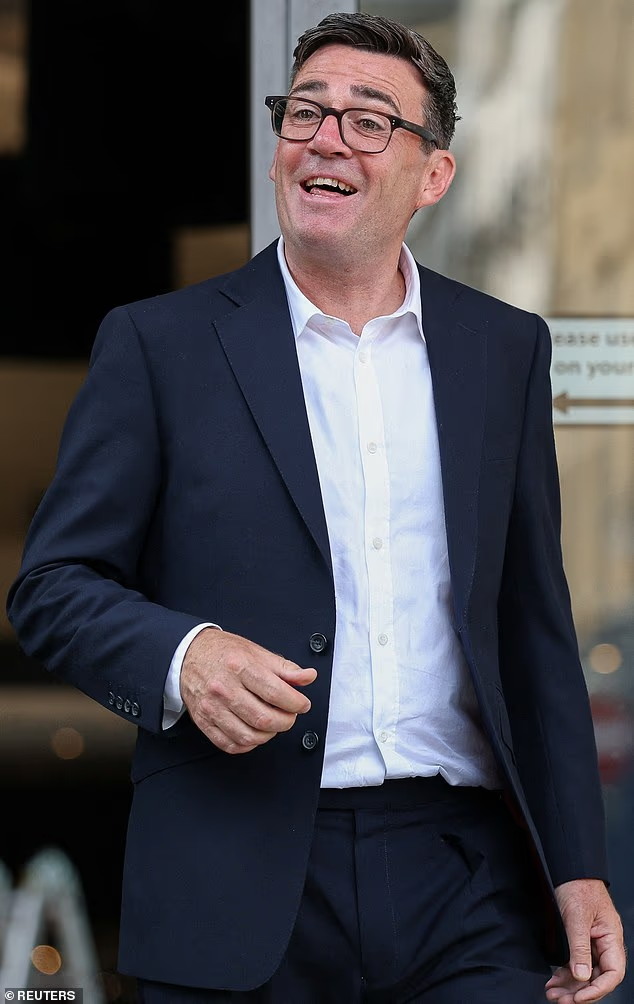
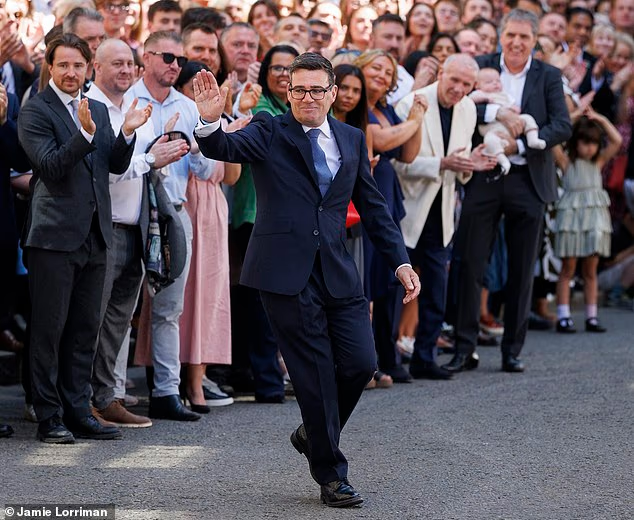
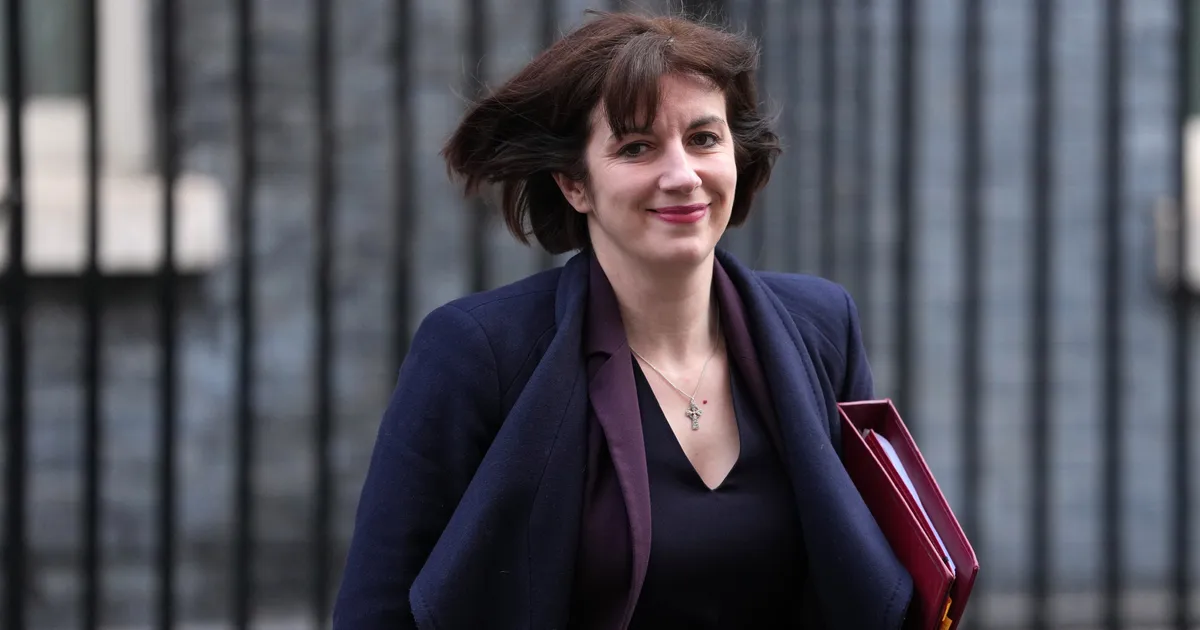
Andy Burnham has appointed Bridget Phillipson as Labour Party chair a week after he confirmed the rest of his cabinet appointments.

Phillipson served as the education secretary and minister for women and equalities in Keir Starmer’s cabinet but was stripped of the former when Burnham took over last Monday.

The prime minister kept her on in his top team with the equalities brief while handing the education department to deputy Labour leader Lucy Powell in a major blow to Phillipson.

The reason for the delayed announcement about her appointment as chair is unclear.

Advertisement

The last Labour Party chair, Anna Turley, was moved to be an immigration minister in the Home Office by Burnham.

In this role, Phillipson will work closely with the prime minister, the deputy Labour leader and chief whip Anneliese Midgley in what Labour has described as an effort to “embed a new culture” within the party.

Burnham has pledged to end “factionalism” in Labour and make the party more united after the deep tensions that emerged in the last days of the Starmer government.

Phillipson is seen as from a “Starmerite” wing of Labour, having been loyal to the former prime minister.

Advertisement

She also ran unsuccessfully against Powell to be deputy Labour leader last year.

The announcement alludes to this in the press release, saying: “The appointment reflects Andy Burnham’s commitment to drawing on the full breadth and depth of talent across the Labour Party as he builds one united team focused on changing Britain and delivering a second term Labour government.”

Burnham said: “Bridget Phillipson, as party chair, will help drive the culture change our party needs, working alongside Lucy Powell and me to ensure Labour remains focused on delivering for working people.

“She will play a vital role in ensuring the Labour Party is match fit for the next election.

Advertisement

“I am delighted Bridget has accepted this role and I look forward to working closely with her on this vital task.”

Phillipson said: “I am honoured to take on the role of Labour Party chair, working alongside our prime minister to put our Labour values and the voices of our movement at the heart of government.

“By uniting together, we will bring hope back to communities and strengthen British society against those working to divide us.

“With the change Labour in government is delivering and will deliver, we have the chance to write a new chapter for our country, one which brings justice, opportunity and fairness for working people, one which brings back hope that tomorrow can be better than today.”

Advertisement

Powell said: “I look forward to working with Bridget as we build on the culture change in the party that Andy has made a priority.

“Working together, we will ensure the party continues to lead the way in campaigning, with the strongest ground operation in British politics as we prepare for the next general election.”

Listen to Commons People, the podcast that makes politics easy. Every week, Kevin Schofield and Kate Nicholson unpack the week’s biggest stories to keep you informed. Join us for straightforward analysis of what’s going on at Westminster.

Advertisement

Source link

Continue Reading

NewsBeat

Wingstop Belfast giving away free chicken to mark National Wing Day

Published

on

Belfast Live

The first 100 people through the door will receive free wings

Wingstop is celebrating National Wing Day by giving out free wings in Belfast.

Advertisement

The chicken chain is hosting its biggest ever chicken wing giveaway, handing out 20,000 free wings across the UK and Ireland on Wednesday.

The first 100 guests through the doors of the Boucher Crescent restaurant will receive a free portion of 10 wings, no purchase necessary.

Rather than picking locations at random, Wingstop analysed where fans order the most wings across the UK and Ireland, revealing the country’s biggest wing-loving communities, with Belfast ranking 11th on the top 20 list.

Wingstop opened its doors for the first time in Northern Ireland in March this year, before opening a second store in May.

Advertisement

Chris Sherriff, CEO at Wingstop UKI, said: “National Wing Day is the perfect moment for us to connect with our community.

“Nobody loves wings like our fans, so we looked at where the obsession runs deepest and decided those communities deserved something back.

“Bringing 1,000 free wings to Belfast is our way of celebrating the people who have made Wingstop a local favourite. Thank you!”

The promotion is available on a first-come, first-served basis on Wednesday July 29 only.

The first 100 guests in line at opening time across will receive a ten-piece wing portion, hand-sauced and tossed in any of Wingstop’s iconic flavours, from Lemon Pepper and Garlic Parmesan to the fiery Atomic and sweet-heat Mango Habanero.

Doors open at 11:00 AM across all participating sites and guests are encouraged to head down early to secure their spot.

Wingstop has two further locations in Northern Ireland in Dundonald and Craigavon, with plans to open another spot in the heart of Belfast city centre.

Advertisement

For all the latest news, visit the Belfast Live homepage here and sign up to our daily newsletter here.

Advertisement

Source link

Continue Reading

NewsBeat

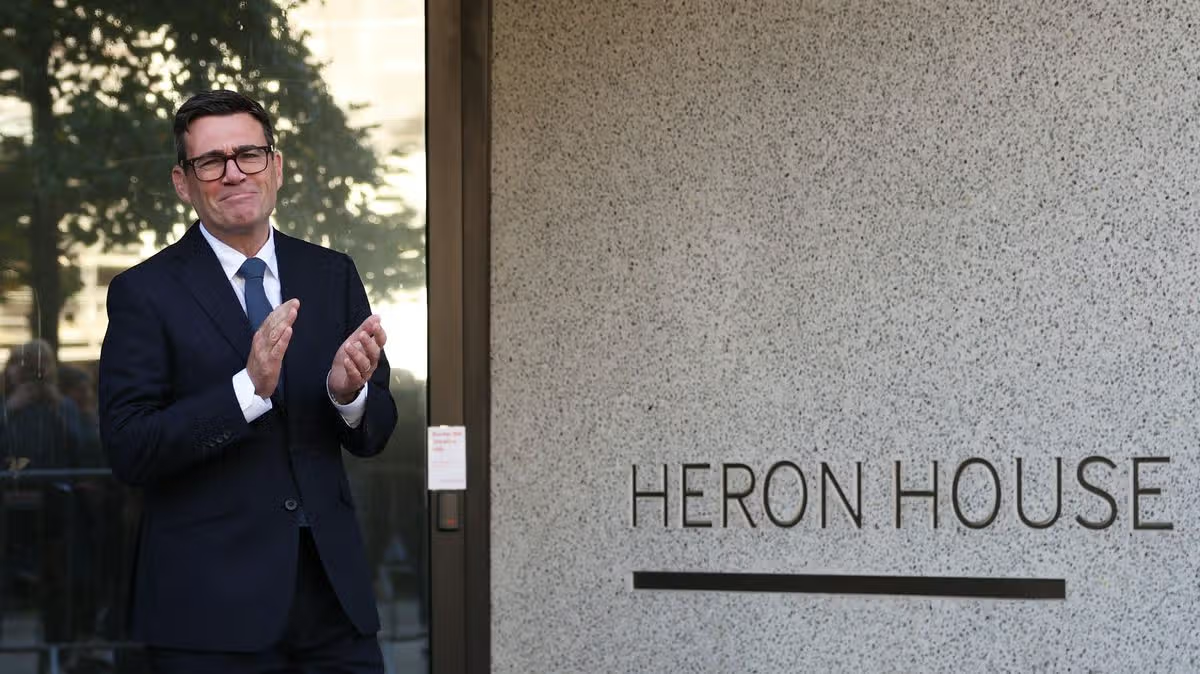
Andy Burnham vows to ‘value the hard hat as much as the graduation cap’ in sweeping new plans

Published

on

Manchester Evening News

The PM is to introduce a ‘fundamental shakeup’ to technical education

Prime Minister Andy Burnham is set to unveil a raft of sweeping education reforms aiming to tackle the youth unemployment crisis and put technical education ‘on an equal footing’ with academic routes.

Advertisement

The Makerfield MP has long been a champion of technical education, launching the proposed Greater Manchester Baccalaureate during his tenure as Greater Manchester mayor which would ‘guide students’ towards technical roles with local employers.

And this latest national policy announcement follows a report delivered by a former Labour minister on the so-called ‘lost generation’, which found that qualifications alone are ‘no longer enough to secure a good job’, with around an estimated million 16-to-24 year olds not in education, employment or training.

Click here to get the biggest stories straight to your inbox in our Daily Newsletter

Alan Milburn’s report published at the end of May painted what Downing Street called a ‘stark picture’ of a ‘system that too often leaves young people leaving school without the skills, experience or connections they need to step into the world of work’.

Advertisement

The Prime Minister is to prioritise funding into technical education and establish routes which will provide students from year 10 onwards, so that there are ‘no dead ends’ for young people coming out of the education system.

From September 2028, year 10 students will have the chance to combine core academic subjects with a technical education and work experience linked to available jobs in their area, ‘skilling them up with the specific knowledge and capabilities that local employers need’.

Set to be part of the government’s devolution programme, local leaders, schools and employers will shape the new pathways, rather than a ‘one-size-fits-all’ approach ‘designed in Whitehall’.

The reforms aim to do away with the technical route being treated as an ‘optional add-on’ or a ‘less valued alternative’ to the academic path.

Advertisement

And they are expected to shape Ofsted inspections too, with changes to the way schools are measured to increase recognition for places providing ‘high quality technical education’.

The Prime Minister said: “For too long in this country, students have been told that you must take the academic path to do well and to be respected.

“The whole school system has been built around it and that has let down young people seeking technical qualifications.

“I want an education system based on parity between academic and technical which gives all young people a clear path in life. From today, Britain will value the hard hat every bit as much as the graduation cap.

“In a fundamental change to the education system, we will introduce prestigious routes that will give students the chance to combine the core academic subjects with the skills, technical knowledge and experience they need to get quality, well-paid jobs where they live.

“My message to young people is this – whether you choose construction, coding or classics, or maths, manufacturing or mechanics, you’ll get the skills you need and be given the respect you deserve.

“Fixing the youth unemployment crisis in Britain will require a major shake-up in how we do things – and that’s what this government will do. I want to ensure that our education system leaves no dead ends for our young people.”

Advertisement

The measures have been praised by other regional mayors – but the shadow education secretary Laura Trott told PA that the measures ‘don’t come close’ to ‘undoing the damage Labour has done’ to the job market.

“Labour measures are making it too expensive to hire young people, and destroying jobs with their jobs tax and employer red tape,” she said.

General Secretary of the NAHT school leaders union Paul Whiteman said: “We welcome the ambition to strengthen technical and vocational education…

Advertisement

“However, this announcement sets out a direction of travel rather than detailed proposals, and schools will need much greater clarity about what it means in practice and over funding.”

General Secretary of the Association of School and College Leaders Pepe Di’Iasio said they are pleased the Government is treating this as an “urgent priority”, but the timing of the announcement is “unfortunate”.

He said: “To make major educational policy announcements in the middle of the summer holiday is wrong, particularly when there is so little detail.”

Source link

Advertisement
Continue Reading

NewsBeat

Bolton’s Ruth Madeley breaks new ground as star of BBC’sThe Rapture

Published

on

Bolton’s Ruth Madeley breaks new ground as star of BBC'sThe Rapture

Ruth, who grew up in Westhoughton, stars in the series based on Liz Jensen’s novel of the same name,.

It unfolds during a sweltering heatwave as protesters take to the streets amid growing environmental unrest.

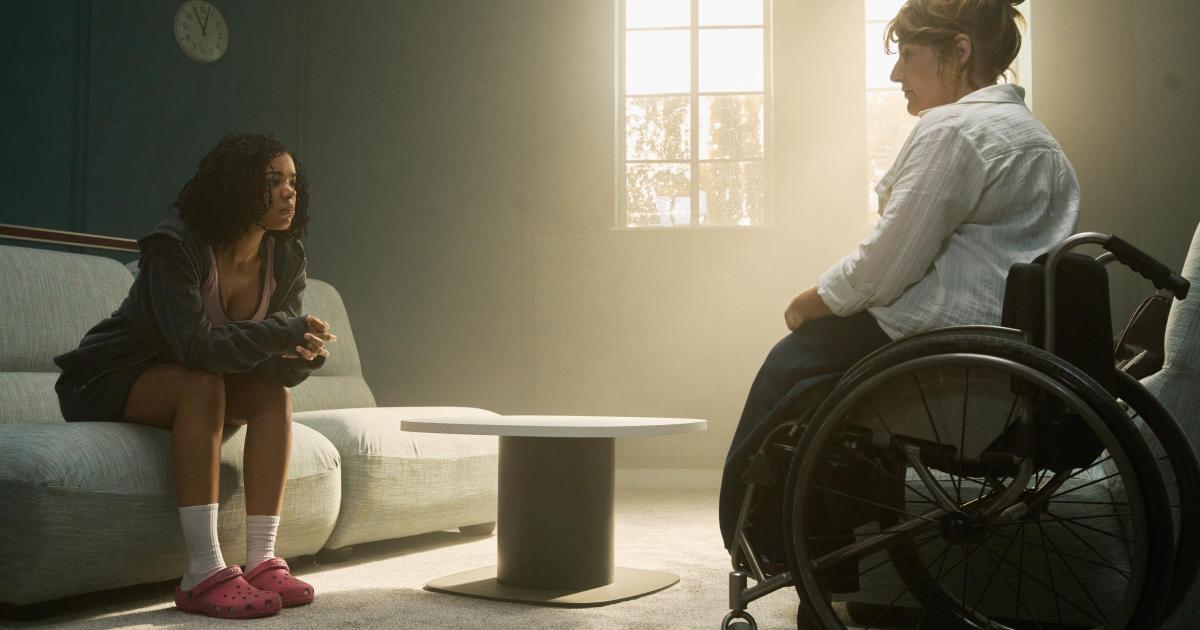
The series follows forensic psychologist Gabs Fox, played by Ruth, who begins a new role at a high-security psychiatric hospital. There, she meets There, she meets 17-year-old Bethany Krall, played by India Amarteifio, who was convicted of murdering her mother, but insists she is innocent.

Bethany is estranged from her father, Leonard, played by Sam Hazeldine, the charismatic leader of an influential religious movement.

Advertisement

Ruth Madeley as Gabriele Fox and India Amarteifio as Bethany Krall (Image: BBC / Mammoth Screen)

She tells Gabs that she has psychic powers and can predict the future. But what will it take for Gabs to believe her? And if Bethany didn’t kill her mother, then who did?

The five-part series, set in Wales, also stars Jack Farthing, Iwan Rheon, Siena Kelly and Ruth Jones.

Ruth, who attended Thornleigh Salesian College, and best known for playing Shirley Anne Bingham in Doctor Who, was born with spina bifida and says it is a significant milestone to portray a wheelchair user in a leading role on screen.

“I think being given the privilege to do something like this is incredibly special,” she says.

Advertisement

“To be able to tell a story with such important themes, and to bring a character to the screen who is so complex, is something I feel really honoured by.

Pictured: Iwan Rheon as Dick Carwyn and Ruth Madeley as Gabriele (Image: BBC / Mammoth Screen)

“But then to add disability into that, as someone who didn’t grow up seeing herself represented on screen, makes it even more significant. It’s not only a privilege, but also a huge achievement, and I’m incredibly proud of it.

“It’s something I want to keep doing. I want to keep seeing these kinds of stories being told, keep pushing boundaries and keep exploring what representation can look like.”

Speaking about Gabs, she says: “I’m always drawn to the messy decisions characters make – the moments where you think, ‘Why on earth would you do that?’. I’m really interested in what drives a character’s decision-making.

Advertisement

Stephen Campbell-Moore as Max Leland and Ruth Madeley as Gabriele Fox (Image: BBC / Mammoth Screen)

“I found the dynamic between Gabs and Bethany really intriguing. It felt fresh and new. I loved the push and pull between them. Even without the disability or psychological elements, I think the way they play this cat-and-mouse game with each other is incredibly compelling.”

In the series, Gabs is involved in a car accident and becomes a wheelchair user.

“Gabs is still getting used to everything. She’s very much dealing with the trauma and grief of having her family life completely obliterated, while also trying to build a new life in a new place, in a new body. I think she’s a little unsure of herself.

“I also feel she gravitates towards Bethany in a way that perhaps she wouldn’t have if she hadn’t experienced the accident and everything that came with it. She’s trying to be the psychologist she was before the accident, but she begins to realise she has a new level of empathy – one she perhaps didn’t have before.

Advertisement

“She’s intrigued by Bethany, and I think that’s a really strong thread that comes across, even while she’s trying to protect herself, her career, and her own sanity.”

Amarteifio, 24, who gained global recognition for her role as young Queen Charlotte in Queen Charlotte: A Bridgerton Story, says she was fascinated by a series centred around a neurodivergent lead and a lead character who is a wheelchair user.

“For me, what really stood out was the idea of bringing a young, potentially neurodivergent character into a central role who shares the screen with a person who also uses a wheelchair,” says the London-born actress.

“In what world do those identities usually come together? I think it’s a really interesting combination of experiences that exist in real life, but that we rarely get to see represented, particularly on screen.

Advertisement

“That was one of the first things that appealed to me. I’d also read the book, and I thought it was really intense and incredibly compelling. I don’t think I’d seen an adaptation on that scale from the BBC aimed at such a broad audience before. The topics we delve into are quite niche and specific, and they’re the kind of stories you’d normally expect to see on a streaming platform.

“So the fact that this will be available to so many people, and accessible to the majority of the public, is really exciting to me. It explores important topics and themes that we should all be talking about.”

Speaking about the supernatural elements in the series, Amarteifio says: “I wanted to embrace the magical realism in the show, but as an actor, I also wanted to find the emotional reality in every situation. That’s how I approached it.

“It’s the first time in your life when you really begin to question things, to form opinions that differ from your parents’ or your peers’, and to see the world through your own eyes. That can be really frightening because it challenges everything you’ve grown up believing.

Advertisement

“For Bethany, enough of these visions have come true that she knows they’re not just random coincidences. At that point, she’s thinking, ‘Okay, this isn’t a fluke. This is really happening’.

“There are also strong religious and biblical themes running through the story, which raises questions: Is this a gift from God? Is it something else? Is it something darker? We never really know, and I think keeping that ambiguity was important. If we pinned it down to one definitive explanation, it wouldn’t be nearly as interesting.”

Both loved how the climate emergency theme was integrated into the story.

“There’s so much happening within the series that the climate change conversation is almost there without the audience necessarily realising it. It’s part of the backdrop rather than something that’s being forced upon you,” said Ruth.

Advertisement

“I think it’s beautifully done. So for that to reach a wider audience, as India mentioned earlier, is really exciting. But for me, it was less about the subject itself and more about the way it was told, the way it was conveyed to the audience. I thought that was really clever and really effective.”

“There’s a really lovely but, in my opinion, quite frightening element to the story, because climate change is this constant undercurrent throughout,” says Amarteifio.

“There aren’t loads of obvious references to it, but it’s always there, the relentless heat, the feeling of that heat building all the time.”

The Rapture is on BBC iPlayer and the BBC.

Advertisement

Source link

Continue Reading

NewsBeat

Archie Goodburn breaks down after Commonwealth Games final two years after incurable brain cancer diagnosis

Published

on

Daily Mirror

The Scottish breaststroke record holder broke down in tears after his final and he delivered a powerful message about brain cancer just two years on from his diagnosis

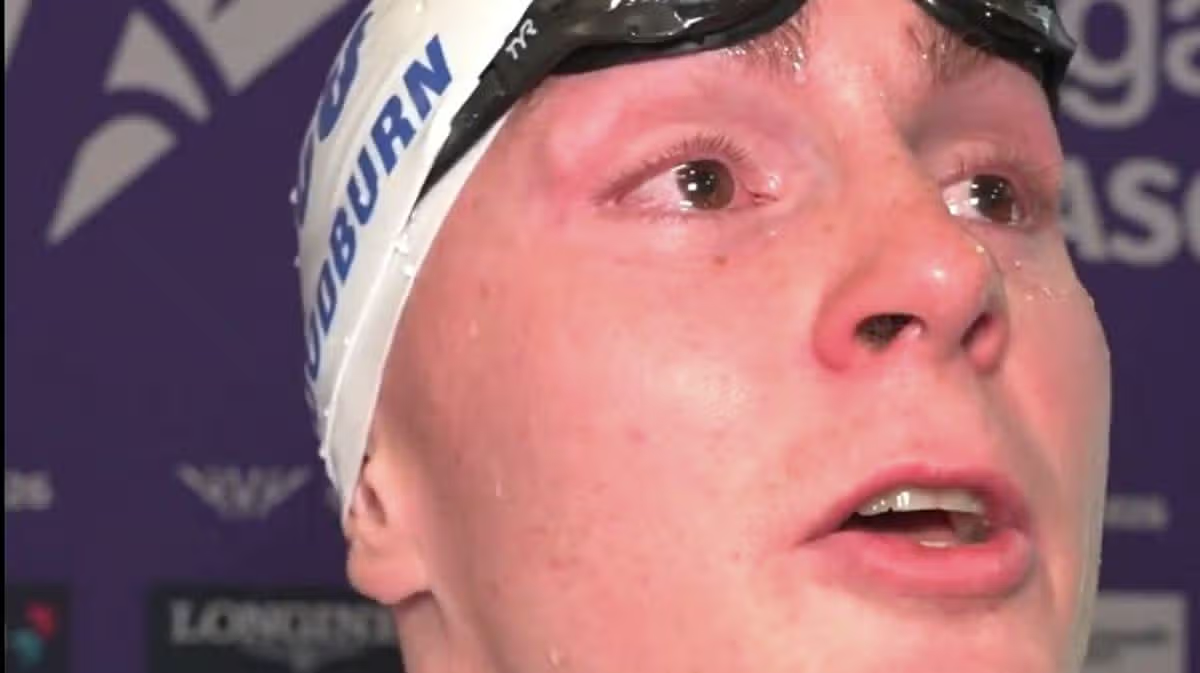
An emotional Archie Goodburn broke down after the Comonwealth Games final as he declared his biggest dream comes outside of the pool, where brain cancer isn’t the biggest killer of those under 40.

The Scottish 50m breaststroke record holder found out the devastating news of his diagnosis after a training session just over two years ago.

He had been having some issues impacting his training including seizures and numbness on his left side.

Advertisement

He had been for some tests and missed a call whilst in the pool.

When he called back he was told he had brain cancer.

Advertisement

The 22-year-old was told that he may not make it to his 40s.

On Monday, Goodburn was met by an outstanding ovation as he walked out at Tollcross to compete in a Commonwealth Games final.

He finished seventh in the Men’s 50m Breaststroke final at Glasgow 2026.

Following the race, Goodburn broke down in to tears as he delivered an extremely powerful message.

He said: “Outside the pool I dream of a future where brain cancer isn’t the biggest killer of those under 40.

“Where the UK government establish a brain cancer lead to make that change.

“I’d much prefer that change is made and that dream is completed than any of my personal goals in the pool because what families and young people are going through out there is really beyond the comprehension of many people out there and certainly harder than anything I’ve had to do as a world class sportsman.”

Advertisement

Goodburn has been having new treatments, which he fought to be able to receive, and they have slowed down the growth of his tumours.

The swimmer recently graduated from Edinburgh University with a first in chemical engineering.

After qualifying for the final he told BBC Sport Scotland that the past 24 hours has been “pretty indescribable”.

Goodburn added: “Usually the words flow easily, but I’m finding myself quite speechless.”

Advertisement

The Games became a focus for Goodburn during the tough times, but rather than just focus on himself he used the opportunity to talk passionately about guaranteeing brain cancer research is fully funded.

Despite the result, his team-mate unsurprisingly labelled Goodburn “inspirational”.

Source link

Advertisement
Continue Reading

NewsBeat

When Suzie hit her 40s, she put her thinning hair, irritability, wired brain and palpitations down to the perimenopause. Then she started to mysteriously lose weight…

Published

on

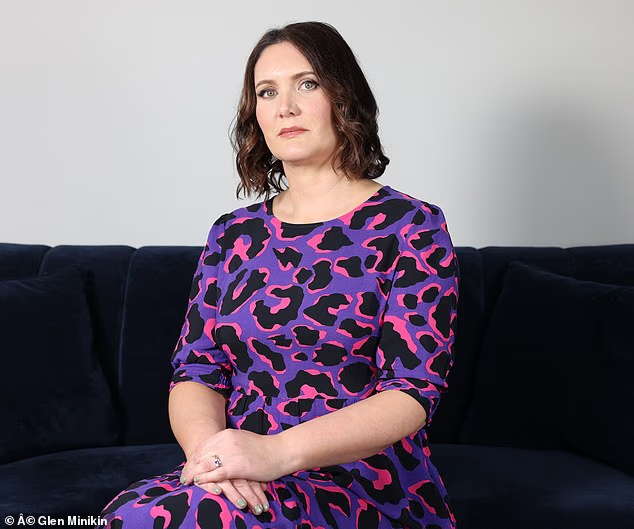
Suzie suffered from chest palpitations for eight months before getting a diagnosis

For nearly eight months, Suzie Brown simply assumed the pounding palpitations in her chest were stress-related.

‘My dad had been diagnosed with terminal cancer so I was under immense stress – and as I was only 40, I didn’t think it could be anything serious,’ recalls Suzie, an insurance claims manager.

Nonetheless, the repeated random episodes of thumping heartbeats and mild chest pains left her terrified.

‘I could be picking up my eight-year-old daughter from school, or lying in bed – there didn’t seem to be any pattern,’ says Suzie, now 42.

Advertisement

But then one weekend in December 2024, four months after her symptoms first began, Suzie’s heart started pounding constantly and ‘very loudly’ in her ears – excruciating chest pains kept her awake at night.

‘I was convinced I must be having a heart attack,’ she says.

By the Tuesday, the family was so concerned that Suzie’s dad drove her to hospital, while her husband Ashley, 38, who also works in insurance, took their daughter to school.

Tests – an ECG (to measure heart rate) and blood tests – ruled out a heart attack, so Suzie was discharged.

Advertisement

But her symptoms continued.

Suzie, who lives in Heysham, Lancashire, also began feeling hot and sweaty, so wondered if it might be related to the perimenopause, despite her young age.

Her GP got her to fill in an online symptom-checker, but nothing was flagged up.

Over the following months, with the palpitations continuing, Suzie lost a stone and a half and had trouble sleeping.

Advertisement

Suzie suffered from chest palpitations for eight months before getting a diagnosis

‘Irritable and wired’, she also noticed her hair thinning and her eyes feeling ‘dry and gritty’.

Finally, out for a jog one day in April 2025, she happened to glance at her fitness watch and saw her heartbeat was 180 beats per minute (a healthy exercising rate for a 40-year-old is 90 to 153). She contacted her GP, who told her to go straight to A&E.

Advertisement

Once again, all the checks were normal – but this time Suzie stood her ground. ‘I said I wasn’t happy and knew something was wrong,’ she says. It was a nurse who – after asking a few more questions – suggested Suzie might have an overactive thyroid gland (hyperthyroidism) and arranged a blood test.

With hyperthyroidism, the gland produces too much of the hormone thyroxine, which controls metabolism.

High levels can cause bodily functions to speed up, leading to a rapid irregular heartbeat, a racing pulse, sudden weight loss despite an increased appetite, as well as anxiety and difficulty sleeping, heat intolerance and excessive sweating.

Other symptoms include itchiness, passing large amounts of urine (a higher metabolic rate causes the kidneys to filter blood faster), thirst, an enlarged thyroid gland (a goitre) or thyroid eye disease (when the immune system attacks the tissue behind the eyes, producing a characteristic ‘bulging’ appearance). It can also cause erectile dysfunction in men.

Advertisement

It’s estimated that around 800,000 to a million people in the UK have an overactive thyroid – with women twice as likely as men to be affected. The most common cause is Graves’ disease, an auto-immune condition caused by antibodies over-stimulating the thyroid gland to produce too much thyroid hormone. (It’s not clear what triggers Graves’, but smoking may increase the risk.)

Excess thyroid hormone overstimulates the heart – which, along with the nerves and gut, has a particularly high concentration of thyroid hormone receptors, explains Kristien Boelaert, a professor of endocrinology at the University of Birmingham, and adviser to the British Thyroid Foundation charity. This leads to a faster metabolism, and potentially heart palpitations.

‘It can also cause faster transit through the gut, weight loss, tremor and heat intolerance [feeling hot and sweaty], as well as a whole host of other symptoms,’ she told the Mail.

Symptoms of hyperthyroidism ¿ such as palpitations, sweating and trouble sleeping ¿ can overlap with other common conditions including stress and cardiac condition

Symptoms of hyperthyroidism – such as palpitations, sweating and trouble sleeping – can overlap with other common conditions including stress and cardiac condition

Advertisement

But symptoms – such as palpitations, sweating and trouble sleeping – can overlap with other common conditions including stress and cardiac conditions – which can make diagnosis tricky, particularly for women, as they also mimic classic menopause symptoms, says Professor Boelaert.

This can often lead to delays in diagnosis – yet early identification of an overactive thyroid is crucial. Left untreated, the constant strain on the heart can lead to atrial fibrillation (an erratic heartbeat) and an increased risk of stroke. In rare cases, uncontrolled overactive thyroid can develop into a life-threatening ‘thyroid storm’ – where a sudden, massive release of thyroid hormones into the bloodstream tips the metabolism into overdrive.

Symptoms include high blood pressure, fever, sweating, shaking, vomiting and agitation: it’s a medical emergency that can lead to death in up to 30 per cent of cases.

Yet despite having classic symptoms of an overactive thyroid, more than eight months passed before the condition was even mentioned to Suzie. She had another four-month wait to see an endocrinologist, a hormone specialist.

Advertisement

Her experience is troublingly common. A 2023 survey by the University of Aberdeen of 1,200 people with thyroid disease found people waited on average four and a half years for their diagnosis.

Sometimes women with heart palpitations may be misdiagnosed with other conditions, including panic disorder. Others may have unnecessary cardiac investigations without first being tested for thyroid function – Professor Boelaert says that a middle-aged woman with repeated bouts of significant heart palpitations should be first given a thyroid function test.

But this was not the case for 42-year-old Michelle Smythe, a mother of two, from Maidstone, Kent, who underwent two unnecessary cardiac procedures because doctors wrongly diagnosed a heart complaint when in fact she had an overactive thyroid.

It was only after both procedures failed that she was finally given a blood test to check her thyroid function and the truth was revealed – despite having a family history of thyroid problems. Her symptoms began during her pregnancy 15 years ago, when her heart rate shot up to 209 beats per minute.

Advertisement
After she was started on the drug carbimazole to control her thyroid levels, Suzie's palpitations are 70 per cent improved

After she was started on the drug carbimazole to control her thyroid levels, Suzie’s palpitations are 70 per cent improved

‘I was short of breath and shaking, it was really terrifying,’ recalls Michelle, who works as a caretaker and has asked to use a pseudonym because of ongoing medical treatment.

She was diagnosed with supraventricular tachycardia – episodes of abnormally rapid heartbeats caused by faulty electrical signalling in the heart – and told she’d need a cardiac ablation, when heat is used to destroy the tissue triggering the faulty signalling. The five-hour procedure was performed under local anaesthetic.

‘I found it extremely painful as morphine doesn’t work for me,’ says Michelle.

Advertisement

When the operation proved ineffective, doctors repeated it three months later.

‘Again, it didn’t work and my palpitation attacks continued,’ says Michelle.

It was only when planning a third ablation that her consultant finally did a thyroid function test, and Michelle was diagnosed with an overactive thyroid caused by Graves’ disease.

‘I went through 17 months of hell having completely unnecessary heart procedures,’ she told Good Health. ‘I don’t understand why they didn’t do a thyroid blood test when I first started with palpitations.’

Advertisement

By the time she was diagnosed, her thyroid gland was so badly damaged it had to be surgically removed.

Michelle will now take an artificial form of thyroid hormone for the rest of her life.

She was later awarded £6,000 in compensation by the hospital.

‘All of this trauma could have been avoided had the right test been done at the right time,’ she says.

Advertisement

Suzie echoes this frustration. After her diagnosis with an overactive thyroid, she was started on the drug carbimazole to control her thyroid levels – although it would take another four months for her palpitations to subside while doctors tried to find the right dose for her.

Now her palpitations are 70 per cent improved.

But she adds: ‘The delays mattered because my symptoms were getting worse all the time – putting my heart under stress and me at risk of serious long-term symptoms.’

Professor Derek Connolly, a consultant cardiologist at the Midland Metropolitan University Hospital, says that palpitations are often caused by atrial fibrillation, high blood pressure and coronary artery disease.

Advertisement

But he adds: ‘One of the things you should absolutely screen everyone who comes in with palpitations for is thyroid disease – with a blood test.

‘That is a standard test, even though it is a relatively rare cause. In younger women with palpitations, I would be looking for thyroid disease.’ 

btf-thyroid.org

Source link

Advertisement
Continue Reading

NewsBeat

Brit woman allegedly ‘murdered’ in Florida was ‘the gentlest soul’

Published

on

Daily Record

Sonia Exelby was reported missing from her home in Southsea, Portsmouth, Hampshire, on October 12 last year, and her body was found in Marion County, Florida, on October 17

The relatives of a British woman thought to have been killed in Florida following her disappearance from her UK residence described her as a “truly beautiful person” and “the gentlest soul”.

was reported missing from her home in Southsea, Portsmouth, Hampshire, on October 12 last year, with early police investigations confirming she had already departed the country.

US authorities discovered her body in Marion County, Florida, on October 17. Dwain Hall, 53, from Ocala, was later apprehended on charges of first-degree murder and kidnapping by the Florida Department of Law Enforcement (FDLE).

Advertisement

He had previously been held over allegations of fraudulently using Ms Exelby’s credit cards. Hall is anticipated to stand trial in November.

In a statement issued through Hampshire police on the family’s behalf, they said: “Sonia was a truly beautiful person, inside and out.

“She had the gentlest soul – so gentle that she chose to become vegan, because she couldn’t bear the thought of any animal suffering just so she could eat. That was who she was: kind, compassionate, and full of quiet love.

Advertisement

“She was incredibly talented. Sonia could play the piano so effortlessly, and when she sang, she had the voice of an angel. Being around her felt special – she brought a calmness and warmth that made everything feel a little lighter.

“Sonia was one of those rare people who made you feel completely safe to be yourself. She never judged, never criticised – she simply accepted people as they were and loved them for it. That is something so many of us will carry with us forever.”

The youngest of six children, the family described her as “deeply loved by all her siblings”.

They continued: “She was softly spoken and always gave the best most intense hugs. She was the baby out of us that kept us bound together.

Advertisement

“We will never get over losing her, which has left an emptiness in our lives that can never be filled. The world has lost so much kindness and light, and her absence will be felt by so many people for so many years to come.

“We know that life wasn’t always easy for you, but your life was so much more than the struggles you faced. This is so important to us that the life you lived is what you are remembered for.

“You were deeply loved, and you will always be deeply loved. We miss you more than words can ever say. We love you so much, always, and forever.”

Advertisement

Hampshire Police confirmed: “We received a report on Sunday October 12 that Sonia was missing from her home in Southsea.

“Initial inquiries established that she had travelled outside of the UK prior to the report being received.”

The force stated it continues to assist the FDLE investigation, while specially trained officers are supporting Ms Exelby’s family in the UK.

Source link

Advertisement
Continue Reading

NewsBeat

DAILY MAIL COMMENT: King of the North is rapidly turning into a robber baron

Published

on

We have no detail of which taxes the self-styled King of the North will dream up or increase to fund his ‘new economic model’

Advertisement

If you are aspirational, own a property, have saved prudently into a pension and hope to leave a little to your children after you’ve gone… be afraid.

If you also happen to live in the South of England, be very afraid. Andy Burnham has you in his sights.

While we have no detail of which taxes the self-styled King of the North will dream up or increase to fund his ‘new economic model’, he has floated a number of possibilities – all of them worrying.

In a showcase BBC interview, he strongly hinted that southern homeowners should pay more in council tax than the rest of the country because they live in more expensive properties.

Advertisement

What he failed to mention is that they also have bigger mortgages and pay more income tax. And if they commute into the capital, they must pay either eye-watering public transport costs or, if they drive, punitive ULEZ, congestion zone and parking charges.

London and the South East already contribute 45 per cent of the UK’s total income tax bill, with much of that flowing to less affluent regions. (Incidentally, the North West, which includes Manchester and Liverpool, contributes under 8 per cent.)

He should be proud that the South is working so hard for Britain. Instead, he’s so fixated on the politics of envy that he risks throttling the golden goose.

He might also consider the possibility that many Tory councils charge lower council tax because they are more careful with their spending than Labour and employ fewer staff in spurious diversity, outreach and public relations roles.

Advertisement

We have no detail of which taxes the self-styled King of the North will dream up or increase to fund his ‘new economic model’

In addition, though southern middle-class householders may live in relatively valuable properties, they are not all cash rich. Higher taxes could well force some out of their homes. Is that Mr Burnham’s idea of fairness? Then there is the new PM’s plan to provide a social care service free at the point of need. A laudable notion but, again, where’s the money coming from?

He has let it be known he favours a ‘national care levy’ on all estates – otherwise known as a death tax. A figure of 10 per cent has been mooted, but is that to replace existing inheritance tax, or in addition to it?

Advertisement

Rachel Reeves has already fleeced private pensioners like a demented sheep shearer. Under pre-existing rules, any money left in a pension fund after death can be left to children or grandchildren inheritance tax-free.

But from April, if you are over 75 when you die, any remaining pension will be subject first to IHT at 40 per cent, then income tax when it is drawn down.

A further 10 per cent levy would mean it had been taxed three times. IHT is one of the most hated of all taxes. This would make it the most iniquitous.

It’s true of course that these are merely spectres of things foretold. We don’t know exactly what Mr Burnham will do because he became Prime Minister in a party coup rather than after an election.

Advertisement

He didn’t even stand as an MP in 2024, so although he pays lip service to honouring Labour’s manifesto, it’s clear he has massive tax-raising plans. If he had any respect for democracy, he would put those plans to the people in a general election. But he hasn’t, and he won’t.

He may fancy himself as the King of the North but, after just a week in Downing Street, he’s looking more like a robber baron.

Advertisement

Source link

Advertisement
Continue Reading

NewsBeat

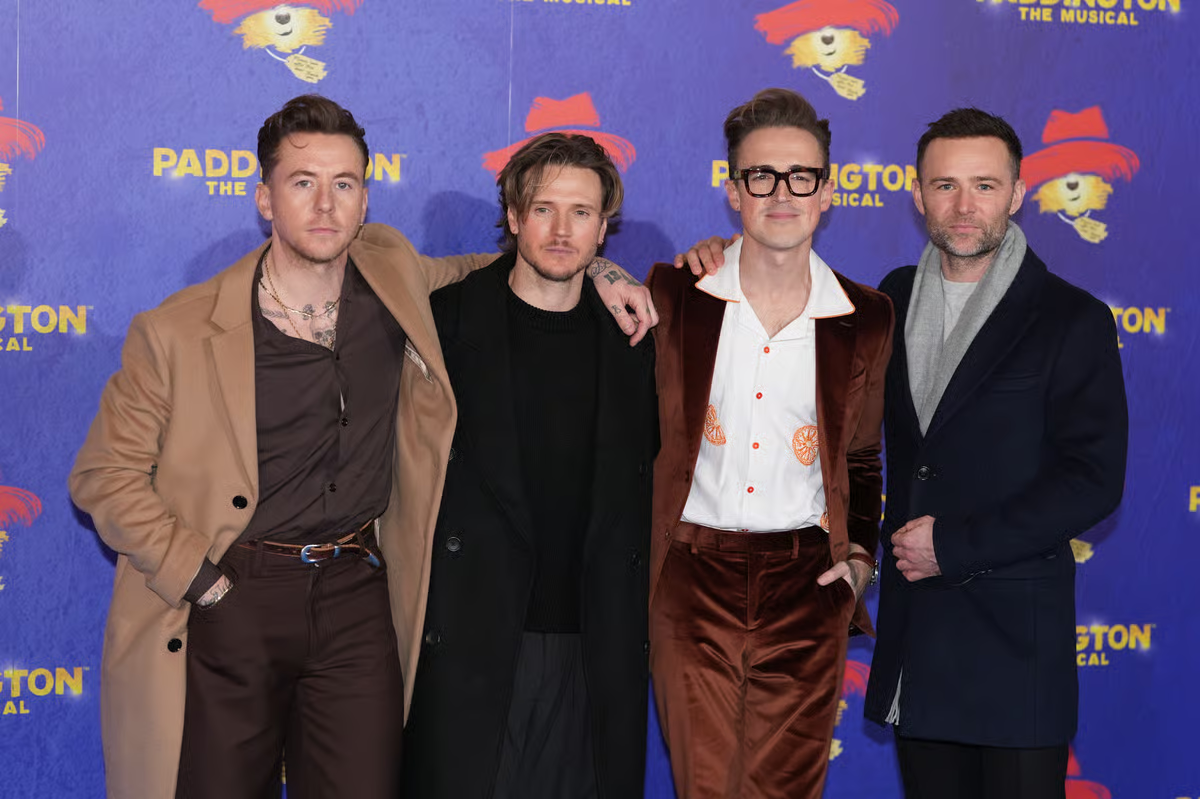
Singer Danny Jones reveals McFly are working on new album

Published

on

Singer Danny Jones reveals McFly are working on new album

“Because over the years, I feel like maybe we’ve tried to fulfil one of us more than the others, and what we discovered on our last album, there’s been a couple of albums, (Radio:Active) and Power To Play. And when we play those songs, we look at each other and we’re laughing and we’re thinking this is badass, this is awesome.

Source link

Continue Reading

NewsBeat

Newquay deaths: Dad and daughter die at Britain’s top surfing spot as police search for handbag

Published

on

Daily Mirror

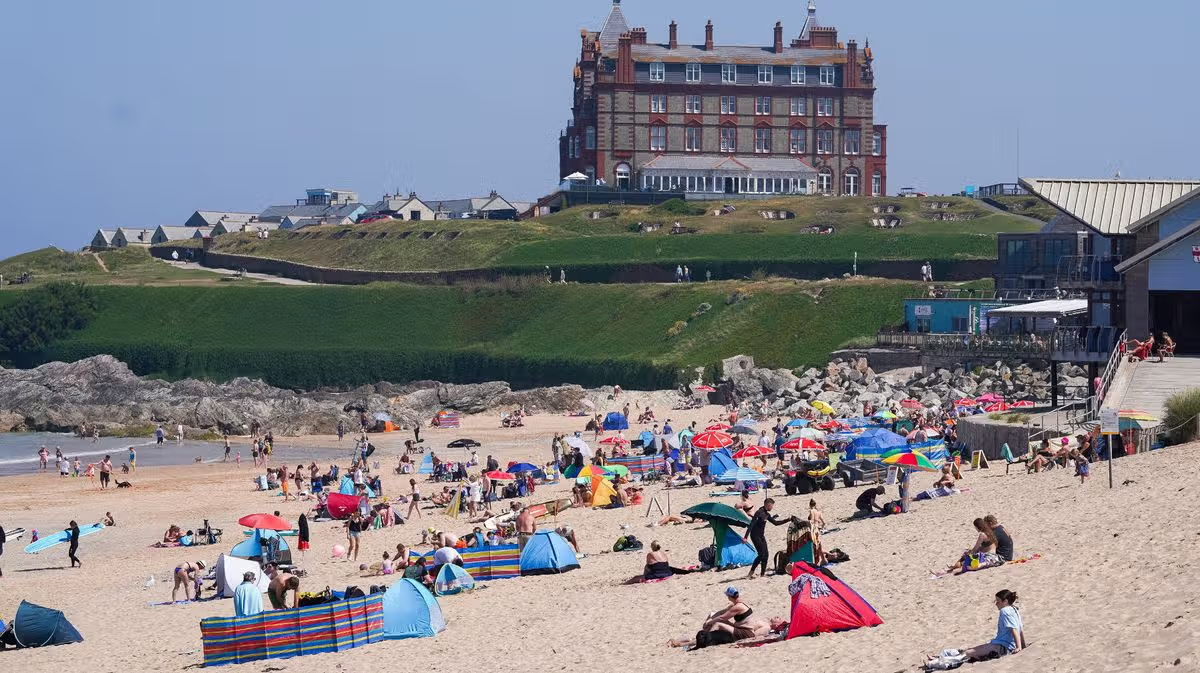
The woman and man who died at Fistral Beach are said to be a father and his daughter, with the pair understood to have been on holiday in Cornwall.

The Sun reports that one witness – a local beach artist – claims the man had “gone in to try and rescue his daughter”.

Sand Phoenix, 33, said he “sprinted” up to help, jabbing the man with an adrenaline pen he had to hand and trying to give him oxygen.

Advertisement

His attempts to save the man’s life were in vain, however, as the victim’s lungs were “full of water”.

Mr Phoenix, who was sleeping on the beach at the time of the incident, said: “He had been pulled out of the water but had been in there about seven minutes.

“The paramedics arrived and carried on trying to give CPR. He was still wearing his trousers so I don’t think he had been swimming.

“It looks like they had been walking near the rocks and had fallen in.”

Advertisement

Another bystander explained he heard shouts for help and saw a woman lying face down in the water when he went down the cliff.

The brave man went into the sea fully clothed in an attempt to grab the woman, who was being bashed against rocks by waves.

Another witness told the Sun: “A woman was desperately trying to ring someone but couldn’t get through [and] was in tears.

“There was a helicopter overhead and there was a lifeboat in the water.

Advertisement

“They recovered one body on the beach, while the other one was brought up the cliff.

“Another man came up soaking wet and in a foil blanket. He knew them and had been trying to help. I’m just in shock, it was awful to watch.”

Source link

Advertisement
Continue Reading

Trending

Copyright © 2025