








His family described him as being “one of the finest young men ever to have walked this earth”
A police force has confirmed “with deep sadness” that a 27-year-old officer has died having suffered fatal injuries while responding to an emergency call.
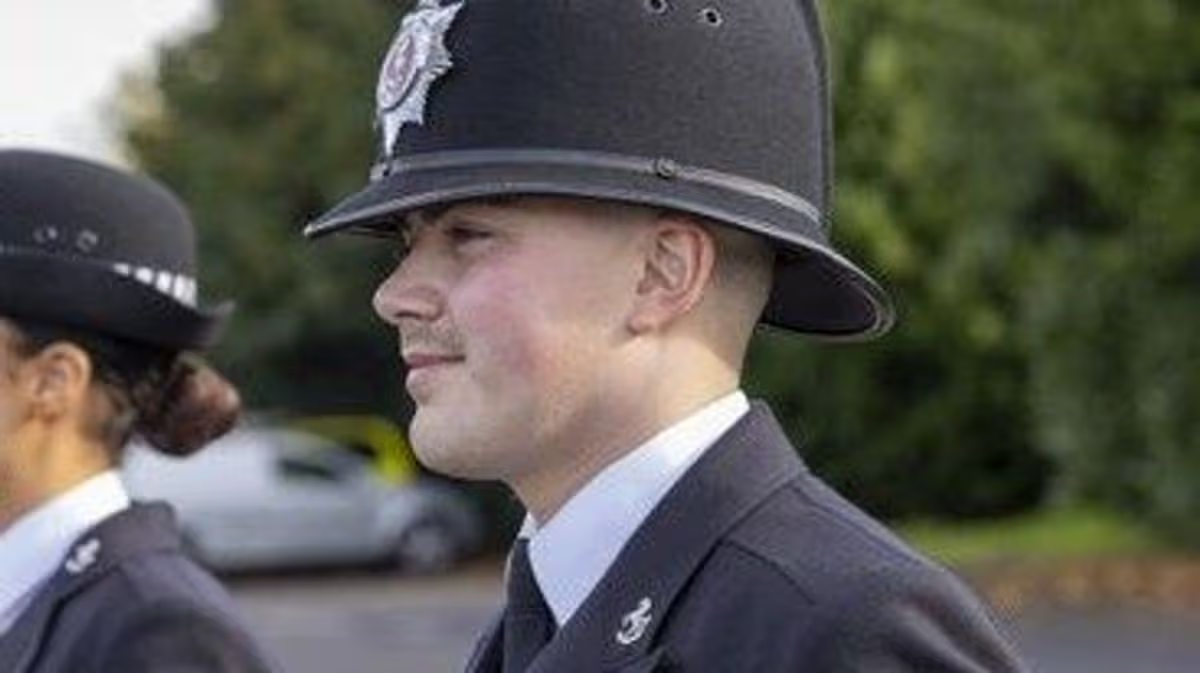
Twenty-seven-year-old PC Bradley Corke passed away on Saturday (March 21), two days after the patrol car he was travelling in was involved in a serious collision. Kent Police announced his death while adding that his colleague remains in a critical condition in hospital following the incident.
A member of the public in the second vehicle is also being treated for serious injuries. PC Corke “selflessly gave up his life while trying to save others”, the force described, also praising his courage, commitment and sense of duty.
“PC Corke served with the force since May 2022. He was based in Tonbridge and spent his police service in the towns of West Kent. The force is supporting his family and colleagues, who are devastated.”
Bradley’s family also paid tribute to their “beautiful boy” who was “cruelly taken away from us far too young”.
“Bradley was one of the finest young men ever to have walked this earth. A credit to himself, to us as parents and to all his family and friends who loved him dearly,” the tribute said.
“He was proud to be PC Bradley Corke, and in turn we are proud of his dedication to the profession. We have been touched by the outpouring of love and affection from all who knew him.
“In particular, we have taken comfort from the kind words of those who he helped in his line of duty, supporting them in their hour of need. It comes as no surprise to us that so many had such a positive experience in his presence, because that’s just Brad – a true gentleman in every situation he encountered.
“Son, we are broken and will probably never recover from your loss, but we hope we can draw strength from all that you are and forever will be. We love you son, love you with every ounce of our being. Sleep tight our most beautiful boy.”
Kent Police has urged anyone with information about the collision to come forward and help with its investigation.
“The incident, involving a marked Ford Focus police car and a VW Scirocco, happened on the westbound A20 London Road at the junction with Button Street, Farningham at approximately 7.45pm on Thursday 19 March,” the appeal said.
“Witnesses or anyone with dashcam footage should contact the Serious Collision Investigation Unit on 01622 798538, quoting EW/AL/025/26.
“Alternatively, email sciu.td@kent.police.uk quoting. Dashcam footage can be uploaded here.”







































You must be logged in to post a comment Login