It looked a pretty sobering weekend for McLaren to be so far off the pace after being the best car the last couple of years. Is it realistic to hope they can compete this year or is being best of the rest, as Lando Norris was in Melbourne, the best they will be able to do? – Tom
The fastest McLaren in Australia qualified more than 0.8 seconds slower than George Russell’s pole time, and Norris finished the race 51 seconds behind Russell.
McLaren – world champions for the past two years – admitted their car was not quite on the level of the Mercedes. As team principal Andrea Stella put it: “When we look at the GPS overlays, we see that Mercedes is faster in some of the corners.”
But the vast majority of McLaren’s deficit was down to usage of the power unit and the energy recovery system.
Advertisement
It’s clear the works team has more knowledge of how to get the most out of the engine, and it’s equally clear that, with software systems so complex, more information and knowledge translates into a significant advantage on track.
In Melbourne, the Mercedes cars were able to deploy a significant amount more energy on the long run from Turn Six to Turn Nine, where much of the lap time was being lost by McLaren.
F1 rules dictate that manufacturers must supply engines of exactly the same specification to all their teams – works or customer. However, they don’t say they have to share all the information about how to exploit them fully.
After the race, Stella came quite close to expressing frustration with the lack of information McLaren had from Mercedes and their engine company HPP.
Advertisement
“We remain a little puzzled by the difference we see in the data between the speed of our car and the speed of other cars using the same power unit,” Stella said.
“The discussion with HPP about having more information has been going on for weeks because even in testing, we were pretty much going on track, run the car, look at the data, ‘oh, that’s what we have’, good, now we react to what we have.
“That’s not how you work in Formula 1. In F1, what happens on track, you simulate [beforehand]. You know what is happening. You know what you are programming. You know how the car is going to behave.
“You also have your plans as to how you evolve it that you have figured out before because you know what you are expecting from the car.
Advertisement
“This is the first time since we have been a customer team that we feel we are on the back foot even when it comes to the ability to predict how the car will behave and to anticipate how we can improve the car.”
Mercedes’ argument would be that, as a customer, McLaren can’t expect as close a relationship with the engine department as the works team has.
McLaren would probably counter that they accept that, but they feel they should be a lot better informed than they are.
The McLaren car is believed to be a little overweight, so there is lap time to be gained there – even without aerodynamic upgrades, which are in the pipeline.
Advertisement
In theory, the knowledge of how to exploit the engine will come.
The key questions are how long it will take to learn it, and whether starting with extra knowledge is an advantage that keeps on giving.
The systems in the cars keep learning and improving. It’s yet to be seen whether this is a virtuous circle that never stops, or whether Mercedes will reach diminishing returns and McLaren can catch up.
With a career spanning over two decades, this nineties heartthrob has taken to the stage with a new look – as fans are left gobsmacked over the unrecognisable star
He’s an iconic indie star that had fans swooning in the Noughties – but can you recognise him now?
Advertisement
Fran Healy, frontman of the band Travis, shocked fans with a completely look during a recent performance at Estero Picnic Festival in Colombia.
The 52-year-old rose to fame over two decades ago, and is known for hits such as Why Does It Always Rain On Me? and Sing. Travis heavily dominated the charts during the Nineties and early Noughties.
Swapping his signature bright red locks for a bleached look, the star looked unrecognisable on stage. He also wore a blue jumper and thick rimmed round glasses as he joined a number of artists, including his Travis bandmates Dougie Payne, Andy Dunlop and Neil Primrose at the Columbian festival infront of a bustling crowd.
Other performers included The Killers, Sabrina Carpenter, Tyler the Creator and Swedish House Mafia for the three-day festival. Travis joined The Killers for a performance as well as their own set on Sunday.
Fran was born in Stafford but he was raised in Glasgow before he formed Travis in 1991 while studying at the Glasgow School of Art. The band are still going, and are currently performing across South America, with a show in Chile this month and next, and then heading to Viña del Mar, Frutillar and Santiago.
Despite taking breaks throughout their career spanning two decades, they have never parted ways. Travis released their tenth album, L.A Times, in 2024, with Fran writing the majority of their albums.
Advertisement
Away from the bright lights and the stage, the frontman lives in Los Angeles, having moved there in 2017 with his wife Nora Kryst, a German photographer.
The couple split after 23 years together in 2019. They share a 20-year-old son named Clay, who studies at an art school in New York, and has started a band of his own. Of the break-up, Fran said the pair transitioned from ‘lovers to parents’ but still refers to her as his ‘soul sister’.
The star suffered more heartbreak when he lost his best friend Ringan Ledwidge to cancer in 2021. Then, Travis also sacked their long-standing manager after more than 25 years together. “It was like being in a storm and you think you might sink,” he told the BBC in 2024. “Then it clears, because that’s what life does.”
Advertisement
Meanwhile, Fran said sacking their management was one of the “most empowering moments” as it allowed him to take control of the band again.
During a US gig last year, the frontrunner was rushed off stage and taken to hospital after twisting his ankle. He took to Instagram to tell fans it wasn’t broken but just a “gnarly sprain”.
The FA Cup quarter-final takes place this weekend (Allstar via Getty)
The FA Cup returns this weekend with eight teams competing for a place in the semi-final at Wembley later this month.
Manchester City and Liverpool kick off the action with their tie at the Etihad Stadium at 12:45pm on Saturday.
Chelsea are next up as they host League One side Port Vale at Stamford Bridge at 5:15pm before Southampton host Premier League leaders Arsenal at St Mary’s at 8pm.
In the only FA Cup tie held on Sunday, West Ham play Leeds United at the London Stadium at 4:30pm.
Advertisement
When is the FA Cup semi-final draw?
The FA Cup semi-final draw will be held on Sunday, April 5, after West Ham’s quarter-final tie against Leeds United at the London Stadium.
The match kicks off at 4.30pm and the draw will take place approximately 15 minutes after full-time.
Get your football fix
Metro‘s weekly newsletter In The Mixer delivers punchy analysis and breakdowns of the biggest football stories directly to your inbox.
“Stores usually do turn over eggs pretty quickly, so the recommendations is you should consume eggs three to five weeks after you purchase them,” said Kara Lynch, food safety educator with Michigan State University Extension.
Advertisement
There is also a benefit in letting eggs age just a bit, as older eggs can be easier to peel. That’s because eggs shrink over time within the shell, creating an air pocket between the egg and the shell.
Hard boil your eggs
Egg processors clean eggs before they reach store shelves, but it also is important to thoroughly cook eggs to reduce the risk of foodborne illness, especially salmonella. That bacteria lives naturally in the gastrointestinal and reproductive tracts of chickens, said Kimberly Baker, associate extension specialist at Clemson University.
To cook your eggs, place them in a saucepan, fill it with water and bring it to a boil. After that, put the lid on, turn the heat off and let it sit for about 12 minutes. Some also favor turning down the heat and simmering eggs.
You can vary the time in the hot water depending on a desire for harder boiled or slightly creamier eggs, but the yolk should be pretty solid to be safe. Boiling them for too long can risk creating green sulfur development on the outside of the yolk.
Advertisement
How to cool the eggs
After that, Don Schaffner, food science department chair at Rutgers University, said there are two options.
You can run your eggs under cold water to reduce the temperature. From there, you can color them right away or place them back in the fridge until you’re ready. Or, after you’ve boiled them, you can let them air dry until they’ve cooled.
The boiling process sanitizes the eggs, and as long as they are kept out of water, Schaffner said, they will remain safe to eat.
This article is part of AP’s Be Well coverage, focusing on wellness, fitness, diet and mental health. Read more Be Well.
Advertisement
“You’ve boiled the egg, you’ve gotten rid of any bacteria that might be in the egg. And now you’ve air-cooled it, right? So it’s going to cool more slowly, it’s probably going to cook more,” he said. “But most importantly, you don’t have to worry about any bacteria from the water getting internalized into the egg.”
It’s OK to get food dye on your eggs
Either artificial or natural food dye is OK as long as the dye label says it’s food grade. For those keeping track, the U.S. Food and Drug Administration has been updating its guidance and regulations regarding certain dyes.
And no, it’s not a problem if the dye seeps through the shell.
“Eggs kind of naturally have their own abilities to absorb only so much,” Baker said.
Advertisement
As you’re decorating the eggs and have the eggs outside, she suggested keeping your eggs in an ice bath, so they can stay at a cooler temperature while you’re decorating.
Follow the 2-hour rule
Eggs should generally be kept at or below 40 degrees (4.4 degrees Celsius) to minimize the risk of contaminants.
Cooked eggs that weren’t air-cooled should spend no more than two hours at room temperature. And that’s cumulative, including the time spent decorating and the time spent hiding during the Easter egg hunt.
But if it’s particularly warm, then that two-hour rule may be shortened to one hour, Lynch said.
Advertisement
Hard boiled eggs are generally good for about a week in the fridge.
Give your eggs a rinse before peeling
Be careful with your eggs as you handle them.
One of the biggest concerns is making sure your eggs haven’t cracked during an Easter egg hunt, making them vulnerable to contaminants. And once the egg has been hard boiled, there’s no way to kill bacteria that get inside, Baker said.
“We don’t want to be putting them in the soil or in lawns where pets have gone to the bathroom,” she said.
Advertisement
Whether the eggs are hidden outdoors or in a corner of your home, you should rinse them in cool water before you peel them. And wash your hands, too, just in case the eggs have picked up something.
Consider using plastic eggs
If the Easter egg hunt means your eggs will be at room temperature for longer than two hours, experts recommended using plastic eggs for the hunt instead of real ones to minimize food safety risk.
“If it’s an outdoor Easter egg hunt at any time, I would say go with the plastic eggs and be safe,” Baker said. “And use your dyed Easter eggs as your centerpiece on your table or your buffet, and enjoy them that way.”
NEW YORK (AP) — On a recent weeknight, three tenants of an aging Bronx building were trading apartment horror stories inside a packed ballroom lined with city bureaucrats.
The occasion was the third in a series of “rental rip-off hearings,” a new forum launched by New York Mayor Zohran Mamdani for disgruntled renters to air their complaints directly to housing officials — and in some cases, the mayor himself.
As she waited in line, Gulhayo Yuldosheva said she worried that noxious mold in her apartment had worsened her child’s asthma. Nearby, her downstairs neighbor, Marina Quiroz, was showing a video of rats scurrying through her kitchen to a representative of the city’s tenant protection office.
Ann Maitin, a longtime resident of the same building, had just met with the mayor.
Advertisement
“He let me go over my three minutes,” she said, holding up a spiral notebook’s worth of grievances.
Mamdani, a democratic socialist swept into office on a promise of zealous tenant advocacy, framed the event as a struggle session for renters, assuring the standing room only crowd that their stories would guide the city’s efforts “to actually hold landlords accountable when they don’t follow the law.”
To the residents of 705 Gerard Avenue, this raised a practical problem: No one seemed to know who actually owned their building.
“It feels like such a basic question,” said Maitin, a retired Verizon technician who recently organized the building’s tenant association. “You’d think we’d have the right to that information.”
Advertisement
Their situation is hardly unique. As corporate owners and investor groups have grown their share of the rental market in New York City, they are increasingly shielding their identities behind limited liability companies, or LLCs.
Gulhayo Yuldosheva, 33 , center right, Marina Quiroz, 65, top, pose for a portrait with other two residents in an apartment building where tenants report maintenance issues and pest infestations, in the Bronx borough of New York, Tuesday, March 17, 2026. (AP Photo/Andres Kudacki)
Advertisement
Gulhayo Yuldosheva, 33 , center right, Marina Quiroz, 65, top, pose for a portrait with other two residents in an apartment building where tenants report maintenance issues and pest infestations, in the Bronx borough of New York, Tuesday, March 17, 2026. (AP Photo/Andres Kudacki)
Advertisement
Advertisement
Advertisement
Marina Quiroz stands in her living room in a Bronx apartment building, where tenants report maintenance issues, pest infestations, Tuesday, March 17, 2026, in New York. (AP Photo/Andres Kudacki)
Advertisement
Marina Quiroz stands in her living room in a Bronx apartment building, where tenants report maintenance issues, pest infestations, Tuesday, March 17, 2026, in New York. (AP Photo/Andres Kudacki)
Advertisement
Advertisement
Advertisement
Advertisement
The practice, which has also been spreading nationally, is legal. But experts warn it could complicate Mamdani’s promised crackdown, making it harder for the city and tenants to track the chronically negligent owners whose buildings the mayor has vowed to target and even seize.
“There are these big slumlords that everyone knows are doing predatory investment, but pinning them down is going to be difficult, for the LLC reason,” said Oksana Mironova, a housing policy analyst at the Community Service Society. “That’s a problem for the administration, and it’s even worse for tenants.”
‘They treat us the same as the rats’
For Yuldosheva and her neighbors, finding their landlord is one of many problems afflicting their six-story building near Yankee Stadium.
Heat and hot water outages are regular enough that some tenants keep a thermometer on their fridge and the city’s complaint hotline on speed dial. Common areas are often filthy, and increasingly populated by drug users. Getting help with an urgent maintenance issue “feels like waiting for Christmas in July,” said Maitin.
Advertisement
During a monthslong elevator outage, a tenant who uses a wheelchair, Tommy Rodriguez, said he was forced to “slide down the steps, like a kid.” Calls to the building management about a repair timeline went unanswered, he said.
Growing up in the building in the 1980s, Rodriguez recalled the previous landlord as a friendly and responsive neighborhood presence.
“This felt like a home before,” Rodriguez said. “Now they treat us the same as the rats.”
A large rodent had recently chewed a hole through his couch cushion. He handled the extermination himself, with a two-by-four.
Advertisement
Tommy Rodriguez, right, talks to his relative, Francisco Medina, left, in an apartment building where tenants report maintenance issues and pest infestations, in the Bronx borough of New York, Tuesday, March 17, 2026. (AP Photo/Andres Kudacki)
Advertisement
Tommy Rodriguez, right, talks to his relative, Francisco Medina, left, in an apartment building where tenants report maintenance issues and pest infestations, in the Bronx borough of New York, Tuesday, March 17, 2026. (AP Photo/Andres Kudacki)
Advertisement
Advertisement
Francisco Medina, left, cleans his apartment next to his relative, Maria Frias, right, in an apartment building where tenants report maintenance issues and pest infestations, in the Bronx borough of New York, Tuesday, March 17, 2026. (AP Photo/Andres Kudacki)
Advertisement
Francisco Medina, left, cleans his apartment next to his relative, Maria Frias, right, in an apartment building where tenants report maintenance issues and pest infestations, in the Bronx borough of New York, Tuesday, March 17, 2026. (AP Photo/Andres Kudacki)
Advertisement
Advertisement
A distressing breakthrough
Recently, tenants received a clue about their landlord, following the partial collapse of another Bronx building. The man identified in news stories as the owner of that building, David Kleiner, shared a Brooklyn office with their building manager, Binyomin Herzl.
A handful of tenants visited each of the building’s 72 units, logging an array of decrepit conditions and unusual alterations.
Advertisement
“We didn’t want to become the next news story,” said Yuldosheva, pointing to a crack in the wall of a bedroom shared by her three children — a result, she feared, of the subway that rumbles just below her windows.
Lawsuits show that Herzl has been ordered to pay more than $100,000 for violations across at least six Bronx buildings, several of which were found by a judge to pose an imminent hazard.
Reached by phone, Herzl said he didn’t own any of those properties, but simply acted as a middleman between tenants and the true owners, whom he declined to list. “There’s no one landlord,” he said. “It’s a group of investors.”
Kleiner, who was previously featured on the city’s “worst landlord” list, confirmed his partial ownership of 705 Gerard in a brief phone call, but declined further comment.
Advertisement
Herzl, meanwhile, attributed the tenants’ complaints to “normal wear and tear” of a nearly century old building. He said Mamdani should focus on improving the city’s public housing, rather than going after private landlords.
“Our buildings look like five star hotels against his,” he added.
From fines to seizures
When landlords refuse to address a serious violation, like heat or hot water outages, the city can step in and order repairs, then bill the owner directly.
In the last three years, inspectors have ordered emergency repairs at 38 buildings that list either Herzl or Kleiner as an owner, according to records provided by the city’s housing department. The men have been billed $446,521 for those repairs.
Advertisement
Mamdani has proposed using such fines as a vehicle to bring distressed rental properties under city stewardship, by aggressively pursuing liens on delinquent landlords and buying up their portfolios through foreclosure auctions.
Just as the city can shut down unsanitary restaurants, Mamdani has said, landlords that “repeatedly put New Yorkers at risk will not be allowed to operate in New York City — with no exceptions.”
In reality, the process is resource-intensive and legally fraught. It is made more complex by the nest of LLCs often used by landlords to obfuscate the full scope of their portfolios, according to Cea Weaver, director of the Mayor’s Office to Protect Tenants.
“It’d be great to have a better sense of who owns the buildings that we are regulating and overseeing,” she said.
Advertisement
State legislation that would have made it easier to identify LLC owners was recently vetoed by New York Gov. Kathy Hochul amid pressure from landlords.
New Yorkers vs. Bad Landlords
Kenny Burgos, the CEO of the New York Apartment Association, a landlord lobbying group, said Mamdani’s tenant proposals — including freezing the rent for regulated tenants — would force landlords to cut back on maintenance and services.
“That’s going to take away from the elevator budget, the boiler budget, the heating budget,” he said. “It’s a question of math: These buildings are crumbling because of policy, not because of bad landlords.”
He characterized the rental rip-off hearings as “show trials” that took a “tribal approach” to the city’s affordable housing crisis.
Advertisement
Despite the combative branding — “New Yorkers vs. Bad Landlords,” blares one promotion — the Bronx event mostly resembled a standard constituent service night: City officials fielded questions about local laws, helped residents with paperwork and connected them to service providers.
Maitin left feeling “glad to be heard by someone who can actually do something about the problem,” but felt it was too early to tell “if it’s all talk.”
The next morning, she was surprised to find the building’s superintendent applying a fresh coat of paint to a staircase. Outside, workers were removing scaffolding that had been in front of the building for years.
“I think they caught wind of the rental rip-off,” Maitin said. “They’re scared.”
Carrick has won seven of his ten games in charge of United since being hired as caretaker manager following the sacking of Ruben Amorim in January.
The ex-United midfielder has taken the Red Devils up to third in the Premier League table, above top-four rivals Aston Villa, Liverpool and Chelsea.
Scholes has described Manchester United’s transformation as ‘unbelievable’ and insists his former teammate Carrick is ‘putting real pressure’ on the Old Trafford owners to get the job on a permanent basis.
Advertisement
Carrick’s return was only expected to be temporary but United’s recent resurgence has convinced many pundits and fans that he should be handed the reins on a full-time basis.
Scholes wants to see how Carrick deals with a period of ‘adversity’ before endorsing him for the job, however, and believes the ‘perfect’ candidate is Carlo Ancelotti.
Manchester United caretaker boss Michael Carrick (Picture: Getty)
Get your football fix
Metro‘s weekly newsletter In The Mixer delivers punchy analysis and breakdowns of the biggest football stories directly to your inbox.
Currently preparing to take Brazil into this summer’s World Cup, Ancelotti is one of the most decorated managers of all time, winning titles in England, Italy, Spain, France and Germany and lifting five Champions Leagues.
‘Michael Carrick is doing great, it’s unbelievable the change,’ Scholes said on The Good, The Bad & The Football podcast. ‘If you put yourself in the owner’s shoes or whoever is making the decision, he’s putting real pressure on them to get the job.
‘The people making that decision might have to think about it a little bit differently because I don’t think you need the most technical or talented coach.
Advertisement
‘You’re at a big club with good players who know what they’re doing, maybe they need a man-manager more than anything.
Brazil boss Carlo Ancelotti (Picture: Getty)
‘If you look back to Sir Alex [Ferguson] he was never a coach really but he knew the players, he knew what the players needed and how to treat players to get the best out of them.
‘If you look at Real Madrid with Carlo Ancelotti, Zinedine Zidane, I don’t think they’re the most technical or tactical coaches but they’re good man-managers.
‘Ruben Amorim seemed obsessed with tactics and it didn’t work, Xabi Alonso seemed the same at Real Madrid. Do those type of big clubs need those coaches or a more man-manager?
‘I don’t know what Michael’s coaching style is like but I can imagine as a man-manager he’s very good because he’s brilliant with people and players.
Advertisement
‘The question over Michael is does he have the experience? I know he’s managed in the Championship but this is obviously different.
Paul Scholes is unsure if Michael Carrick is suited to the job long-term (Picture: Getty)
‘Can we see Carrick winning United the Premier League? Look, we don’t know yet.
‘Now the perfect one out there… Ancelotti is still out there, I know he’s with Brazil, but he’s that perfect one for Manchester United where you think he would make players feel a million dollars and he’s got the experience of winning trophies.
‘The only question would be is he too old? That’s the only thing, is there anyone else of that ilk with a bit more experience?
‘The way you judge a Manchester United manager is to look ahead and think, “can United win the league with this manager?” It’s not a case of finishing in the top-four, you need a manager who you think can win you the Premier League.
Advertisement
‘The great thing someone like Ancelotti has is experience – I know that sounds obvious – but we don’t know yet how Michael Carrick will deal with going through a bit of adversity.’
Fellow Old Trafford legend Nicky Butt initially had reservations about Carrick getting the Manchester United job but now expects the 44-year-old to be in charge for the start of next season.
Manchester United have turned a page since Michael Carrick took charge (Picture: Getty)
‘It’s amazing what he’s done because the club was in turmoil,’ Butt said. ‘It’s brilliant what they’re doing.
‘If I was a betting man I’d be putting my money on Carrick being the permanent manager. How can you sit here now and say he shouldn’t get the job?
‘There’s not that many other options, who else would they go for? There’s nobody jumping out for me.
Advertisement
Should Michael Carrick be appointed as the permanent manager?
Yes – he’s perfect for the job
No – there are better options out there
Sign up to In The Mixer, your guide to the week in football. Exclusive analysis, FPL tips and transfer talk – sign up, it’s an open goal.
These are the things we did – and ate – while on our school holidays back in the day
belfastlive.co.uk
06:00, 04 Apr 2026
The season of summer isn’t nearly as fun when you’re an adult as it was when you were a kid. And between the weather, the discontinuation of some of our favourite treats and holidays abroad being far more common than holidays at home, summers just aren’t what they used to be.
You can’t blame us, then, for being nostalgic for the summers we experienced growing up. From trips to the likes of Portrush or Newcastle to the thrill of playing outside ’til way past your normal bedtime, there’s no comparison to the summers of our childhood.
Take a walk down memory lane with us as we revisit some classic childhood memories of summers in Northern Ireland. If you were a kid here in the ‘70s, ‘80s, ‘90s or ‘00s, some of these likely played a role in your past summers.
Advertisement
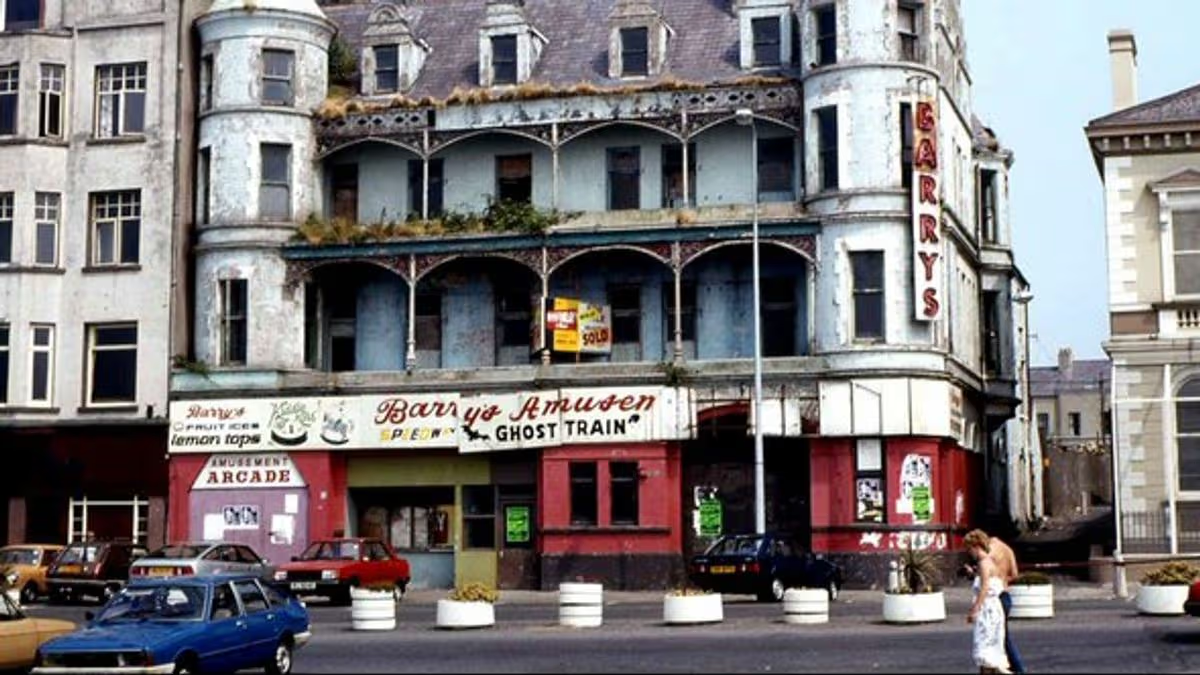
A trip to Barry’s Amusements
Located in Portrush and Bangor, Barry’s Amusements was home to many summer memories over the years. First opened at the pier in 1926, the Portrush location is the longest-running amusement park in Northern Ireland, though it’s now called Curry’s Fun Park under new ownership.
Many generations spent a summer’s day at either location through the years. Those who went to the Portrush Barry’s will remember various fairground rides such as its Dipper roller coasters, the Satellite, the Freak Out and so on, while visitors to the Bangor location (now demolished) particularly loved riding the Ghost Train and playing games at the arcade.
Watching summer TV schedules
These days, kids watch shows on every streaming service known to man or else YouTube videos of adults unboxing toys. We’ll never understand this on-demand selection of children’s programming when we grew up with TV channels airing marathons of kids shows to make the most of summer viewership.
Advertisement
Depending on your age, you might’ve been glued to anything like ‘Why Don’t You?’, ‘ThunderCats’, ‘Teenage Mutant Ninja Turtles’, ‘Ed, Edd n Eddy’ or ‘Hey Arnold!’ and so on. And on a rainy day, your square eyes were in front of the telly so long you’d catch repeats of the episodes shown that morning in the evening.
Going to Dreamworld
Another one for the amusements lovers, Dreamworld off Boucher Road was very well-named. Its swinging Fredo-sponsored ship and the PlayStation area made it a haven for kids in the late ‘90s/early ‘00s.
Swimming at Pickie Pool
While Bangor is still home to Pickie Funpark, it was once home to the be-all-and-end-all of Northern Irish swimming: Pickie Pool. First opened in 1931, it was an outdoor sea-water pool with a 35ft diving board.
Advertisement
Pickie Pool attracted many casual swimmers looking to make the most of a sunny day. It also hosted many participants and spectators of swimming and diving contests until it was demolished in the late ‘80s.
Going on family picnics
There was nothing like making use of local scenery for a day out that cost your parents nothing but the price of the journey there and the packed lunch they brought along. Whether it was at Belfast Castle, Mount Stewart, Minnowburn or elsewhere, as long as we had a packet of Fives and space to run around, we were happy out.
Eating old-school ice-creams & ice-lols
The power the ice-cream man and the freezer in the local corner shop had over us knew no bounds. Our favourites included a 99, Dale Farm classics like Pear Picking Porky, Polly Pineapple and Joker, or HB products like Fat Frog and Loop the Loop.
Advertisement
Fish and chips by the sea
There’s plenty of gorgeous coastal towns and villages in Northern Ireland, and plenty of gorgeous food to be had within them. As a kid, nothing beat a day of being burnt alive at the seaside, finished off with a trip to the chippy – be it Morton’s in Ballycastle, John Macs in Newcastle or so on.
Visiting Belfast Zoo
Still a summer staple, a trip to the zoo was a must during the weeks you had off school as a kid. Remember the days of watching the birds at the free flight area or having your snacks or belongings nicked by Tina the kleptomaniac elephant?
What other childhood memories do you have of summer in Northern Ireland? Let us know in the comments below
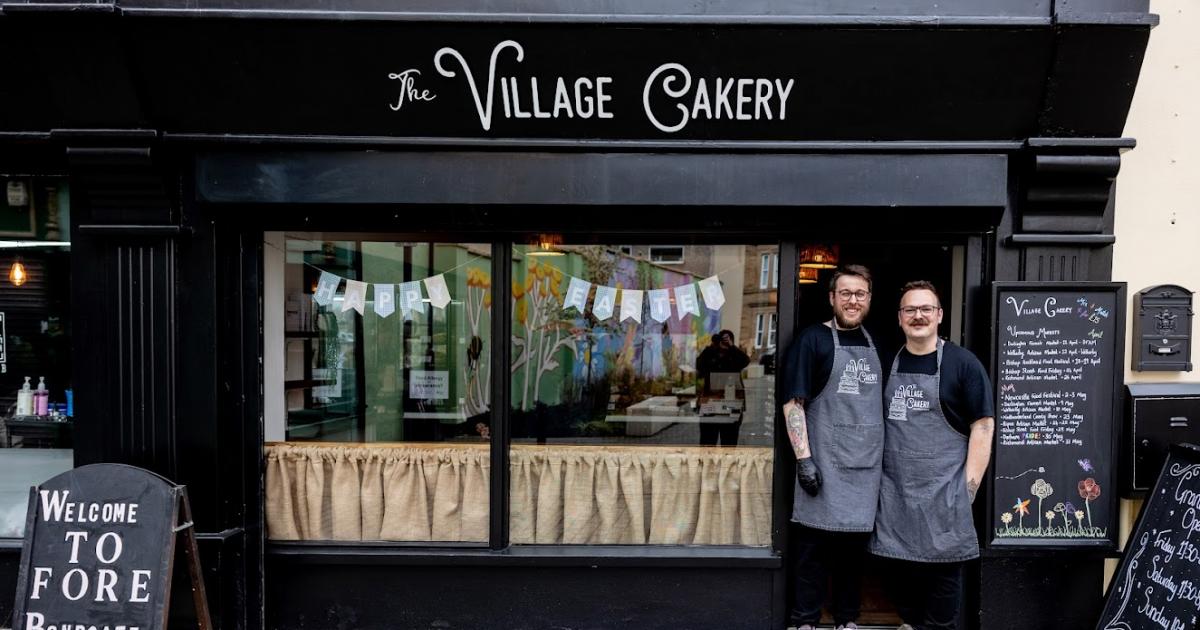
Village Cakery, run by couple Andy Hope and Bradley Skeen, launched its new premises on Fore Bondgate, having operated from their home in Cockfield.
The bakery welcomed its first customers on Friday, April 3, marking a major milestone for the couple who first started the business in 2024.
The Village Cakery opened in Bishop Auckland pictured owners Andy Hope & Brad Skeen (Image: SARAH CALDECOTT)
Photos inside the shop show the new bakery ready for customers, with displays set up of the wide range of cakes and baked goods the business has become known for.
Village Cakery began mainly producing celebration cakes, with Andy explaining that opening a physical shop had always been part of the plan. But despite months of preparation, he said the moment still feels surreal.
Advertisement
Andy said: “It is daunting, but the excitement is just unbelievable.”
The Village Cakery opened in Bishop Auckland pictured owners Andy Hope & Brad Skeen (Image: SARAH CALDECOTT)
The couple, from Bishop Auckland, secured the keys to the Fore Bondgate premises on Sunday, March 1 and have been preparing the shop ever since.
Andy said: “We had always talked about opening a shop, but it was about Christmas time when we decided to do it.
“We viewed a few shops around Bishop because we were both born and bred here, and it is where we want our base to be.
Advertisement
“We are all about the community, working together to make a better high street.
“We are trying to get the other shops involved in our opening by giving out 20 per cent discount vouchers.”
The Village Cakery opened in Bishop Auckland pictured owners Andy Hope & Brad Skeen (Image: SARAH CALDECOTT)
The bakery was originally started by Andy before his sister joined the venture, with the business initially building its reputation at markets across the region.
After taking a short break, Andy restarted the bakery with Bradley, with the pair deciding to fully commit to growing the business.
Advertisement
The Village Cakery opened on Fore Bondgate in Bishop Auckland pictured Imogen Watkins (Image: SARAH CALDECOTT)
Andy said: “We just decided to dive right in, do it properly, get the shop, go to markets and just do everything we possibly can.
“It has gone so well. The markets that we’ve had this year have just been phenomenal.”
The Village Cakery opened on Fore Bondgate in Bishop Auckland (Image: SARAH CALDECOTT)
The Village Cakery opened on Fore Bondgate in Bishop Auckland (Image: SARAH CALDECOTT)
The Village Cakery opened on Fore Bondgate in Bishop Auckland (Image: SARAH CALDECOTT)
Customers visiting the new shop can expect a wide selection of baked goods, with the owners keen to keep introducing new ideas.
Andy added: “We are always trying to do something different. We are going to trade back on TikTok, and we are looking to do home delivery service.
Advertisement
“Down the line, we’re looking to do bakery classes or demonstrations. The possibilities of what you can do are pretty much endless.”
Bikers will visit Darlington Memorial Hospital and University Hospital of North Durham to hand out Easter eggs to sick children this weekend.
Huge crowds normally turn out to see the impressive convoy of bikers, often dressed as bunnies and donning other fancy dress.
Where to watch and when
The bikers will leave Durham Tesco at Dragonsville at 10am on Sunday (April 5).
From there they will ride into Durham city centre, over the Elvet Bridge and towards the Cock o’ the North roundabout where they will join the A167.
Advertisement
You will be able to catch the hundreds of bikes throughout the region (Image: CHRIS BOOTH)
Graeme expects the first riders to reach the A167 around 10.10am.
From there they will ride to Darlington Memorial Hospital, arriving between 11am and 11.15am.
There will be a break of around 45 minutes so children can look at the bikes, with the procession setting off again at 12pm.
It will then head back out of Darlington along the A68, through School Aycliffe and Newton Aycliffe between 12.30pm and 12.45pm.
Advertisement
They are due to arrive at University Hospital of North Durham at 1pm.
Children will be able to see the bikes at Darlington Memorial Hospital (Image: CHRIS BOOTH)
All timings are approximate.
Graeme said: “Everything is in place with the councils and safety advisory groups. It is when the police bikes say we need to leave.
“We have got their support, which we greatly appreciate.”
Advertisement
Durham Police said: “If you are travelling in County Durham this Sunday, please be aware that the annual Durham Easter Egg run is taking place from 10am.
“The charity ride will see hundreds of bikers meet at Tesco at Dragonville Retail Park before riding to Darlington Memorial Hospital and then to University Hospital of North Durham.
“The bikers are delivering Easter eggs to children at the hospitals.
Children will be able to see the bikes at Darlington Memorial Hospital (Image: CHRIS BOOTH)
“We expect considerable disruption to traffic in the general areas of Durham City, the A167 to Darlington, Darlington town centre, the A68 out of Darlington, School Aycliffe Lane, the A167 north to Durham City and Sniperley roundabout to Southfield Way.
Advertisement
“If you are due to be driving in these areas between 10am to 1pm, please be aware there will be congestion on the roads as the bikers make their way to the hospitals.”
There is also a fundraiser for the event, which has already smashed its £2,500 target, with nearly £4,000 being raised so far.
You can donate to the fundraiser by clicking here, with the money raised supporting the following charities:
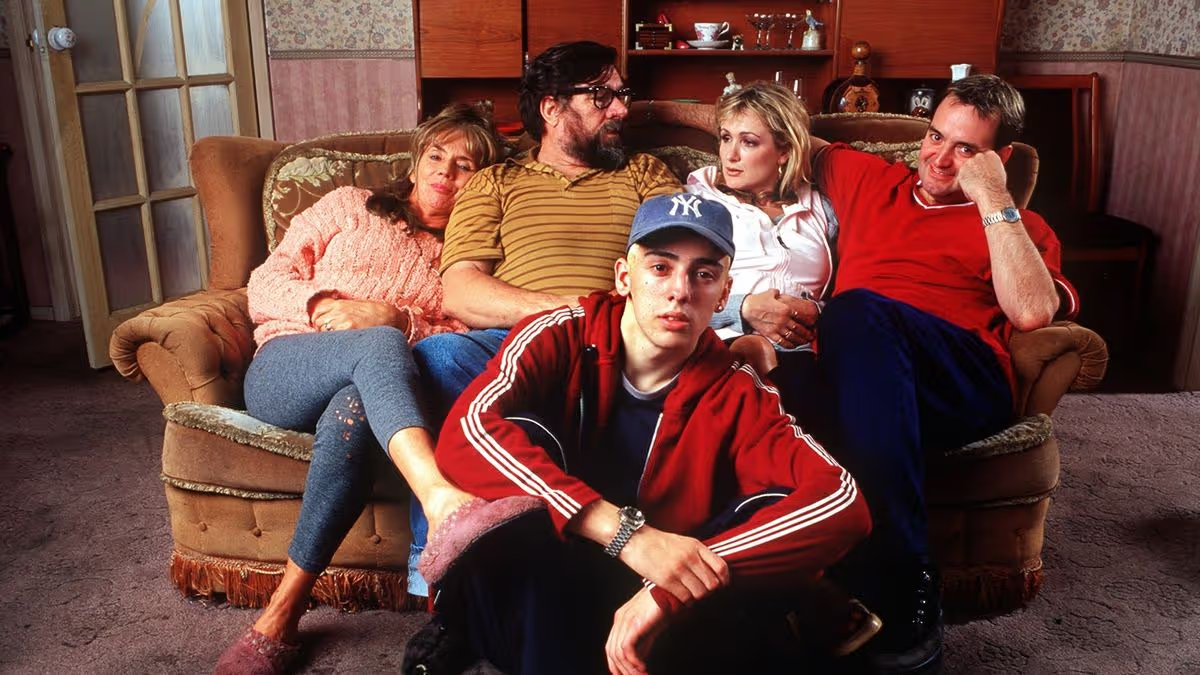
The beloved BBC sitcom The Royle Family ended over a decade ago, we look at where the stars are now, from heartbreaking deaths to career updates.
It’s been over a decade since fans of The Royle Family last saw the cherished characters on their screens.
Advertisement
First broadcast back in 1998, the BBC series followed the Royle’s, a typical working-class family from the North West. Originally it ran for a total of three series before concluding in 2000.
However, between the years 2006 and 2012, there were multiple standalone episodes with the final one being a Christmas special, which was titled Barbara’s Old Ring.
Despite the sitcom ending 13 years ago, The Royle Family is often cited as one of the most popular classic sitcoms that aired on British TV.
It centred on the Royle family with husband Jim, his wife Barbara (Sue Johnston), their daughter Denise (Caroline Aherne), and son Antony (Ralf Little) at the forefront, reports the Mirror.
Advertisement
Also featured in the show is Craig Cash, who played Denise’s husband Dave. With the entire series available to watch on BBC iPlayer, we’re taking a look at where the stars from the programme are now.
Ricky Tomlinson
Following his role in The Royle Family, Ricky continued his acting and comedy career, appearing in the likes of In the Flesh, Great Night Out and the festive film Nativity.
Outside of his acting career, he faced personal heartache in 2004 when his 33-year-old son died from alcoholic liver disease. Clifton was one of the three children Ricky shared with ex-wife Marlene Tomlinson.
Advertisement
Reflecting on the tragedy in the past, Ricky stated in 2016 that he continues to communicate with his late son. At the time, he expressed: “I talk to him all the time, in my head,” after commemorating the painful anniversary.
He further added: “It’s not just this time of year, it’s regularly. He was great and harum-scarum. He knows I loved him. And although I can’t see him, now and then he sits on the bed with me.
“I can feel him, this weight. I know that sounds strange because ghosts are invisible. But I know it’s him.”
Caroline Aherne
Despite portraying the daughter in The Royle Family, Caroline co-created and co-wrote The Royle Family alongside Craig Cash, her former real-life partner.
Caroline also contributed to the creation of shows like Dossa and Joe, ITV comedy-drama The Fattest Man in Britain and The Security Men.
One of her final significant roles was as the narrator for the popular Channel 4 reality show Gogglebox. Tragically, Caroline was diagnosed with lung cancer in 2014.
Two years later, she sadly passed away from the disease at the age of 52. At the time of her death, her on-screen brother Ralf Little penned a heartfelt tribute.
Advertisement
He remarked: “Sorry for silence – I just… don’t know what to say. What a sad, sad day. We’ve lost another one of our best.
“A character. A legend. A boss. A sister, real and (for me) fake. A boss. A writer. An actor. A genius. A friend. Big, big heart. Goodbye x.
“Thing is, amidst all sadness, Caroline would now say something grounded, incisive, and hilarious. I can’t think of anything, but she would.”
Sue Johnston
Sue’s portrayal as Barbara Royle was a favourite on the programme, recognised for being the ‘heart and soul’ of the household. Since departing from the BBC show, Sue has featured in a multitude of renowned shows.
In 2012, she joined the cast of Coronation Street as Gloria Price before exiting in 2014.
She also appeared as Gladys Denker in the fifth series of Downton Abbey. In 2009, she was awarded an OBE in the Queen’s Birthday Honours list for her contributions to drama and charity.
Reflecting on Coraline Aherne’s tragic passing, Sue admitted she still finds it incredibly difficult. Speaking to The Star On Sunday back in 2018, she disclosed: “I still can’t delete her number from my phone. It’s just too hard, it’s too big.
Advertisement
“I just miss her so much. Sometimes it catches me completely unaware and I realise that she’s gone.”
Craig Cash
Craig is best known for his role as Dave in The Royle Family, which he also co-created with Caroline.
When the series concluded, he went on to co-write and star in the popular BBC sitcom Early Doors.
Advertisement
Alongside his acting career, Craig also proceeded to direct and produce many well-known sitcoms.
In 2016, he took over as the narrator of Gogglebox following Caroline’s death, which he shared felt like a ‘gift’ she left him. Three years ago, he told BBC Radio Manchester: “It was really lovely, because it feel like a gift she has left me and I’m very grateful.
“It felt like only natural I should keep doing it and I feel like she’s with me sometimes. When I go in the studio where we used to record it, I can feel her presence sometimes. That feels a bit weird but true.”
Ralf Little
Ralf made his acting debut in The Royle Family when he was merely 17 years old, recently describing it as a ‘privilege’ to have been involved.
Since then, he went on to star in Two Pints of Lager and a Packet of Crisps alongside his friend and co-star Will Mellor. However, he’s most recognised for his role as Detective Inspector Neville Parker in Death in Paradise.
Beyond the world of acting, he’s experienced personal tragedy as his sister Ceri passed away when he was nine years old. Recently, the actor became highly emotional as he discussed his late sibling.
In his programme with Will Mellor, he touched on one of the reasons he hasn’t decided to have children of his own, reflecting on what happened to his family.
Advertisement
He said: “Everything, their entire lives crumbled right in front of their eyes from that moment on. It’s like, you know, you can’t protect them. My mum was really… my mum was really protective of us.
“Really protective. And it happened anyway. It happened anyway because you can’t wrap your kids in cotton wool and protect them 24-7. Like, it’s a lot. And it’s only when I’m forced to sort of say these things out loud that I realise quite what a lot it is.”
Sheridan Smith
Sheridan joined the sitcom in 1999 as Emma Kavanagh, the girlfriend of Antony Royle.
Advertisement
The actress has gone on to enjoy a highly successful career and has featured in numerous shows, including Cilla, Mrs Biggs, Gavin and Stacey and Inside No. 9.
Alongside receiving an OBE in 2015 for services to drama, she’s also had a thriving West End career, having starred in Little Shop of Horrors, Legally Blonde, Funny Girl and Flare Path.
In 2021, Sheridan was involved in a serious car crash when her Range Rover veered into a tree due to icy weather conditions, according The Sun.
A source told the publication at the time: “Sheridan is so lucky to be alive. It could have been so much worse. Her car was stuck in the tree, it was a really bad crash.”
Advertisement
The Royle Family is available to watch on BBC iPlayer.
An Easter-themed trail returned for the Easter bank holiday weekend at Crook Hall Gardens in Durham.
Visitors can explore the gardens while completing an Easter-themed trail designed for the whole family.
Easter trail at Crook Hall, Durham pictured Charlotte Coulson, five (Image: SARAH CALDECOTT)
Participants can follow the route through the grounds, taking part in activities along the way.
Each £3.50 trail includes an Easter trail sheet, bunny ears and a dairy or vegan and Free From chocolate egg for children completing the challenge.
Advertisement
Easter trail at Crook Hall, Durham pictured Elishia Martin and her dog Hetty (Image: SARAH CALDECOTT)
Organisers said the event aimed to bring families together outdoors during the Easter break, saying: “Easter is full of fun for families at Crook Hall Gardens.”
Easter trail at Crook Hall, Durham pictured Sophie & Chris Doughty (Image: SARAH CALDECOTT)
Families were encouraged to explore different areas of the gardens and discover the variety of activities on offer throughout the site.
Visitors also have the opportunity to learn more about local wildlife at the gardens’ wildlife hub.
Easter trail at Crook Hall, Durham pictured Lexie, 12 (Image: SARAH CALDECOTT)
Easter trail at Crook Hall, Durham pictured Harriet & Emily Knight (Image: SARAH CALDECOTT)
Easter trail at Crook Hall, Durham pictured Abby & Millie Ampleford (Image: SARAH CALDECOTT)
Children can also challenge themselves by trying to find the centre of the garden maze.
Advertisement
Meanwhile, visitors looking for a quieter activity were able to browse the second-hand bookshop for holiday reading.
After completing the trail and exploring the gardens, you can also stop at the Garden Gate Café, which is open daily from 10am to 4.30pm.




















![OMG...The IMF Said Ripple/XRP Will Be LEVERAGED and 99% of XRP Holders MISSED THIS! [HARDCORE PROOF]](https://wordupnews.com/wp-content/uploads/2026/04/1775281159_maxresdefault-80x80.jpg)



































You must be logged in to post a comment Login