WASHINGTON (AP) — Holiday gatherings and major life events have come with an empty seat. Certain dates on the calendar meant time at a cemetery, standing before granite stones.
They are a relatively small group of people, scattered across different states, but they share a common bond that stretches back decades: Each had a family member die violently in the struggle for voting and civil rights, victims on a long and difficult path marked by blood that ended when the country seemed to mature into the nation of its creed.
But 61 years later, and as the country approaches its 250th anniversary, those sacrifices are in question. In a series of decisions over the past dozen years, including one in April, the Supreme Court has effectively dismantled the law that their family members died to see enacted, the Voting Rights Act of 1965.
“My mother’s blood is on that bill. We were always proud of that, and now it’s gone,” said Anthony Liuzzo, whose mother, Viola Liuzzo, died on an Alabama highway between Selma and Montgomery while driving marchers in 1965.
Advertisement
Critics of the law argue that times have changed, a point Chief Justice John Roberts made in a 2013 decision that was the first major step in rolling back the law.
Survivors of lost loved ones disagree, pointing to the speed with which Republican-led state legislatureseliminated majority-Black congressional districts after the court’s April ruling, which severely weakened a section of the law that had protected voting rights for minority communities. They feel anger and sadness that a milestone political victory decades ago has been reversed, but they are committed to keep fighting.
A church bombing and a chunk of concrete
Lisa McNair was born Sept. 19, 1964. Her older sister, Denise, died in the Sept 15, 1963, bombing of the 16th Street Baptist Church in Birmingham, Alabama. The church had been a central organizing point for civil rights protest.
Advertisement
Lisa McNair poses for a photo inside 16th Street Baptist Church, the site of the Sept. 15, 1963 terrorist bombing of the church, Monday, June 1, 2026, in Birmingham, Ala. (AP Photo/Mike Stewart)
Advertisement
Lisa McNair poses for a photo inside 16th Street Baptist Church, the site of the Sept. 15, 1963 terrorist bombing of the church, Monday, June 1, 2026, in Birmingham, Ala. (AP Photo/Mike Stewart)
Advertisement
Advertisement
Advertisement
The explosion killed Denise McNair, 11, Addie Mae Collins, 14, Carole Robertson, 14, and Cynthia Morris Wesley, 14. Nearly two dozen others were injured. Three Klansmen were convicted years later.
Advertisement
One of Lisa McNair’s early memories of her sister was of the box that their grandmother kept from the funeral home. It included Denise McNair’s shoes, a purse and a rock-sized piece of concrete that had been embedded in her skull.
The crime brought the civil rights struggle onto the national stage and outraged Democratic President John F. Kennedy.
The times were tumultuous, McNair said, but it seemed the nation was heading in the right direction. Most of her life, “I’ve seen advances” on television, in commercials, with interracial marriages, civil rights and voting rights, “a plethora of rights that we got over the greater part of my lifetime.” But that has changed, she said.
McNair, 61, said she is “physically sick” about the Supreme Court decision and subsequent actions by lower courts and legislatures.
Advertisement
“I am constantly working to pray my way through it, so I can get up and go to work in the morning and do what I need to do. But I just want to ask every white person I see, What more do you want?” she said. “Why do you hate us so?”
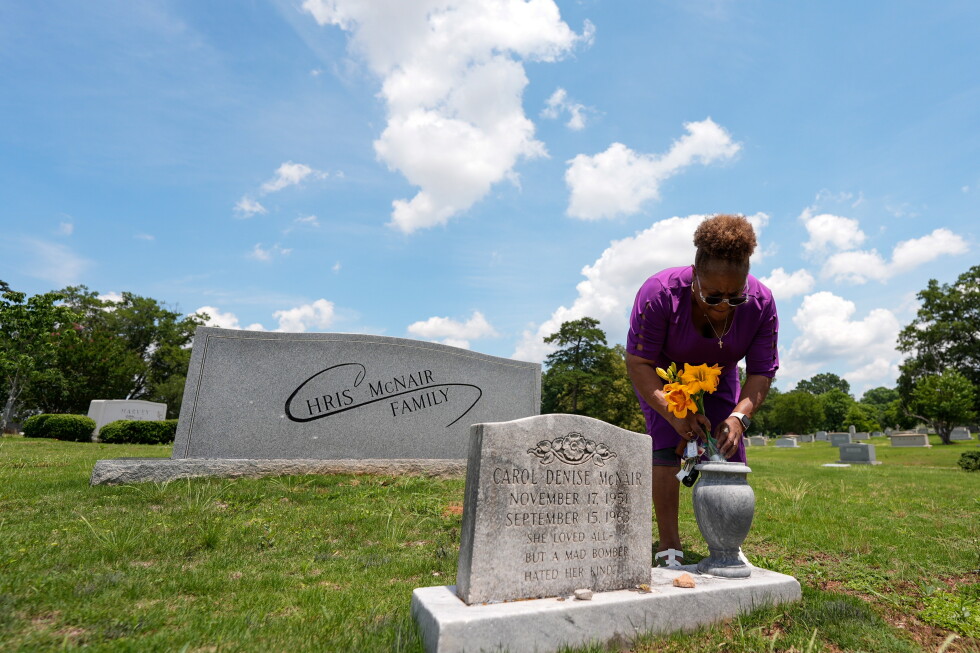
Lisa McNair arranges flowers on the grave of her late sister, Carol Denise McNair, Monday, June 1, 2026, in Birmingham, Ala. (AP Photo/Mike Stewart)
Advertisement
Lisa McNair arranges flowers on the grave of her late sister, Carol Denise McNair, Monday, June 1, 2026, in Birmingham, Ala. (AP Photo/Mike Stewart)
Advertisement
Advertisement
Advertisement
Advertisement
They left for Freedom Summer and never came home
Michael Schwerner, known as Mickey, came from a family in which human rights activism and challenging social norms were expected. He was in Mississippi in 1964 as part of Freedom Summer when he, Andrew Goodman and James Chaney vanished one day in June while investigating a bombing at a Black church.
In this file photo civil rights leader Dr. Martin Luther King displays pictures of three civil rights workers, who were slain in Mississippi the summer before, from left Michael Schwerner, James Chaney, and Andrew Goodman, at a news conference in New York, Dec. 4, 1964, where he commended the FBI for its arrests in Mississippi in connection with the slayings. (AP Photo/JL, File)
Advertisement
In this file photo civil rights leader Dr. Martin Luther King displays pictures of three civil rights workers, who were slain in Mississippi the summer before, from left Michael Schwerner, James Chaney, and Andrew Goodman, at a news conference in New York, Dec. 4, 1964, where he commended the FBI for its arrests in Mississippi in connection with the slayings. (AP Photo/JL, File)
Advertisement
Advertisement
Advertisement
Advertisement
Their bodies were found weeks later, buried in an earthen dam in a rural area of Neshoba County. Schwerner, 24, and Goodman, 20, were white; Chaney, 21, was Black.
Stephen Schwerner, who died earlier this year and was a social activist in his own right, told The Associated Press in a 2023 interview that as soon as the family heard his younger brother and the other men were missing, they knew they were dead.
“Our family was very out front in the media that the only reason there was international attention was two of the young men were white,” said Stephen’s daughter, Cassie Schwerner. “Had all three of those young men been Black, they would have ended up absent from our history and our narrative.”
The executive director of Morningside Center for Teaching Social Responsibility, Cassie Schwerner, said her family has followed voting rights through their ups and downs. That includes the 2013 Supreme Court decision that allowed states and counties with a history of discriminatory voting rules to make changes without prior approval from the Department of Justice.
Advertisement
The court’s April decision, she said, brought rage “and a good deal of sadness — not for me and my family, but for this country.” There is, she said, work to be done on multiple fronts.
Rights paid for in blood turned out to be fragile
Tamara Orange said among her many thoughts when she heard of the Supreme Court decision in this year’s Voting Rights Act case, there was relief — “relief that my dad is not here to see that; that Jimmie Lee Jackson is not here to see it; that Viola Liuzzo is not here to see it,” she said. “I’m relieved for them because to me, it’s as though the sacrifices that were made were done in vain.”
Her father, James Orange, was working with the Southern Christian Leadership Conference to organize voting rights protests in Marion and Perry County, Alabama, in 1965. When juveniles joined the effort, he was arrested for contributing to the delinquency of minors. Concern arose that Orange was going to be taken out of the jail and lynched.
Advertisement
The Rev. James Orange, right, and Obang Metho pray after helping to lay a wreath at the tombs of the Rev. Martin Luther King Jr. and his wife Coretta Scott King at the King Center for non-violent Social Change in Atlanta, Jan. 12, 2007. (AP Photo/John Bazemore, File)
Advertisement
The Rev. James Orange, right, and Obang Metho pray after helping to lay a wreath at the tombs of the Rev. Martin Luther King Jr. and his wife Coretta Scott King at the King Center for non-violent Social Change in Atlanta, Jan. 12, 2007. (AP Photo/John Bazemore, File)
Advertisement
Advertisement
A protest to intervene ended with Jackson, a 26-year-old Black church deacon, being shot in the stomach by a state trooper while Jackson tried to shield his mother and grandfather.
His death was the catalyst for what became the Selma to Montgomery march and “Bloody Sunday.”
Advertisement
Orange stayed in the movement all his life and died in 2008, Tamara Orange said. But even after the Voting Rights Act passed, “He would say, be careful or we’re going to lose it.”
‘We got bad news for you’
Anthony Liuzzo had just turned 10 when his mother, 39, left their middle-class neighborhood in Michigan and headed for Selma, Alabama. She had cried as she watched scenes from “Bloody Sunday” on television.
Viola Liuzzo participated in a portion of the second march and then helped drive other civil rights protesters around the Black Belt region of the state. On March 25, 1965, she was driving one protester between Selma and Montgomery when a vehicle pulled alongside and fired into the car.
Advertisement
This combination image shows an undated file photo of white civil rights activist from Detroit, Viola Liuzzo, left, who was helping to shuttle black demonstrators between Selma and Montgomery, Ala., and at right, a March 26, 1965, file photo of an Alabama state trooper’s car, parked near Liuzzo’s car, after she was shot to death in it near Lownsboro, Miss., on route to Montgomery. (AP Photo/Jack Thornell, File)
Advertisement
This combination image shows an undated file photo of white civil rights activist from Detroit, Viola Liuzzo, left, who was helping to shuttle black demonstrators between Selma and Montgomery, Ala., and at right, a March 26, 1965, file photo of an Alabama state trooper’s car, parked near Liuzzo’s car, after she was shot to death in it near Lownsboro, Miss., on route to Montgomery. (AP Photo/Jack Thornell, File)
Advertisement
Advertisement
The phone call came around midnight. Anthony Liuzzo remembers the caller asking his dad, “Is your wife Viola? We got bad news for you. She’s been shot.” When his father asked whether she was all right, the caller said “No, she’s dead,” and then hung up.
An informant for the FBI quickly identified members of the Ku Klux Klan as her killers. The three men charged would escape conviction on state charges but be convicted in federal court.
Advertisement
An iron fence surrounds the memorial to civil rights activist Viola Liuzzo on Friday, July 7, 2000, near Lowndesboro, Ala., on U.S. 80. (AP Photo/Dave Martin, File)
Advertisement
An iron fence surrounds the memorial to civil rights activist Viola Liuzzo on Friday, July 7, 2000, near Lowndesboro, Ala., on U.S. 80. (AP Photo/Dave Martin, File)
Advertisement
Advertisement
Advertisement
Anthony Liuzzo and his siblings lived with the lost birthdays and other missed milestones. His comfort was that the voting rights she had died for had become a reality. But the April ruling by the Supreme Court and the subsequent rush by Republican-led legislatures in several Southern states to eliminate congressional districts represented by Black lawmakers left him angry and distraught.
Advertisement
Even so, he said he is still proud his mother had the courage to go to Selma “when others sat in their pretty little houses.”
One morning, the Klan returned
The inscription at the bottom of Vernon Dahmer Sr.’s tombstone reads simply: “If you don’t vote, you don’t count.”
It is a message that embodies his life’s work and the story behind his death.
Even after Democratic President Lyndon Johnson signed the Voting Rights Act, not every state was eager to implement the new law. In Mississippi, it came with a “poll tax.” The amount was $2, but in a world where a farmworker’s wages might only be $5 a day, that was substantial, said Dahmer’s son, Dennis Dahmer Sr.
Advertisement
Dennis Dahmer stands next to a statue of his father, Vernon Dahmer, Sr. who was killed when the Ku Klux Klan firebombed the family home 1966, outside the Forrest County Courthouse in Hattiesburg, Miss., Wednesday, June 3, 2026. (AP Photo/Gerald Herbert)
Advertisement
Dennis Dahmer stands next to a statue of his father, Vernon Dahmer, Sr. who was killed when the Ku Klux Klan firebombed the family home 1966, outside the Forrest County Courthouse in Hattiesburg, Miss., Wednesday, June 3, 2026. (AP Photo/Gerald Herbert)
Advertisement
Advertisement
Advertisement
The elder Dahmer, 57 at the time of his death, was a successful businessman who owned a store, sawmill and farm near Hattiesburg. He also was a civil rights leader and NAACP president in Ford County. He offered to pay the $2 for Black residents who wanted to register to vote.
Advertisement
He had already been under scrutiny by the local Ku Klux Klan. There was harassment and there were threatening phone calls. The windows were shot out of his store, but no one challenged him directly because his sons were always present and armed.
That seemed to trail off after Johnson signed the law.
“The Klan quit calling,” Dennis Dahmer said. “They quit shooting out the windows, so my family thought that all of this was behind us.”
Advertisement
Dennis Dahmer, whose father Vernon Dahmer, Sr. was killed when the Ku Klux Klan firebombed the family home 1966, holds a photo of his brothers as they overlook the destroyed home after, after retiring home from military service, in Hattiesburg, Miss., Wednesday, June 3, 2026. (AP Photo/Gerald Herbert)
Dennis Dahmer, whose father Vernon Dahmer, Sr. was killed when the Ku Klux Klan firebombed the family home 1966, holds a photo of his brothers as they overlook the destroyed home after, after retiring home from military service, in Hattiesburg, Miss., Wednesday, June 3, 2026. (AP Photo/Gerald Herbert)
Advertisement
Advertisement
Advertisement
A copy of a poll tax receipt sits in the old schoolhouse meeting place, as part of the legacy of Vernon Dahmer, Sr., who was killed when the Ku Klux Klan firebombed the family home 1966, in Hattiesburg, Miss., Wednesday, June 3, 2026. (AP Photo/Gerald Herbert)
A copy of a poll tax receipt sits in the old schoolhouse meeting place, as part of the legacy of Vernon Dahmer, Sr., who was killed when the Ku Klux Klan firebombed the family home 1966, in Hattiesburg, Miss., Wednesday, June 3, 2026. (AP Photo/Gerald Herbert)
Advertisement
Advertisement
Advertisement
That changed in the early hours of Jan. 10, 1966, when two carloads of Klansmen showed up. They firebombed the house and adjacent grocery store and began shooting at the house. The elder Dahmer shot back, using his ample arsenal to fight off the attack.
His wife and the three children who were home survived, but he suffered severe injuries from inhaling the smoke and fumes from the flames. He died later that day.
Dennis Dahmer was 12 as he stood next to his dad’s hospital bed. He wondered why some people wanted his father dead just for trying to help Black people vote.
Advertisement
Dennis Dahmer, whose father Vernon Dahmer, Sr. was killed when the Ku Klux Klan firebombed the family home 1966, speaks about seeing his father dying in the hospital, in Hattiesburg, Miss., Wednesday, June 3, 2026. (AP Photo/Gerald Herbert)
Advertisement
Dennis Dahmer, whose father Vernon Dahmer, Sr. was killed when the Ku Klux Klan firebombed the family home 1966, speaks about seeing his father dying in the hospital, in Hattiesburg, Miss., Wednesday, June 3, 2026. (AP Photo/Gerald Herbert)
Advertisement
Advertisement
Advertisement
A former Imperial Wizard of the Ku Klux Klan, Sam Bowers, was convicted in 1998 for the attack and sentenced to life.
Advertisement
Like the families of other survivors, Dennis Dahmer’s family has witnessed the methodical dismantling of the Voting Rights Act.
“Finally, they basically turned it into a relic,” he said.
His plan now is activism, to speak out and promote the need for a massive voter turnout. He also wants to remind people of the price that certain families paid for everyone to have the right to vote and be represented by someone of their choosing.
“We’re living in a time when America has a lot of the same characteristics of the 1960s that I grew up in,” he said. “People say, are we going back? Hell, we’re already there.”
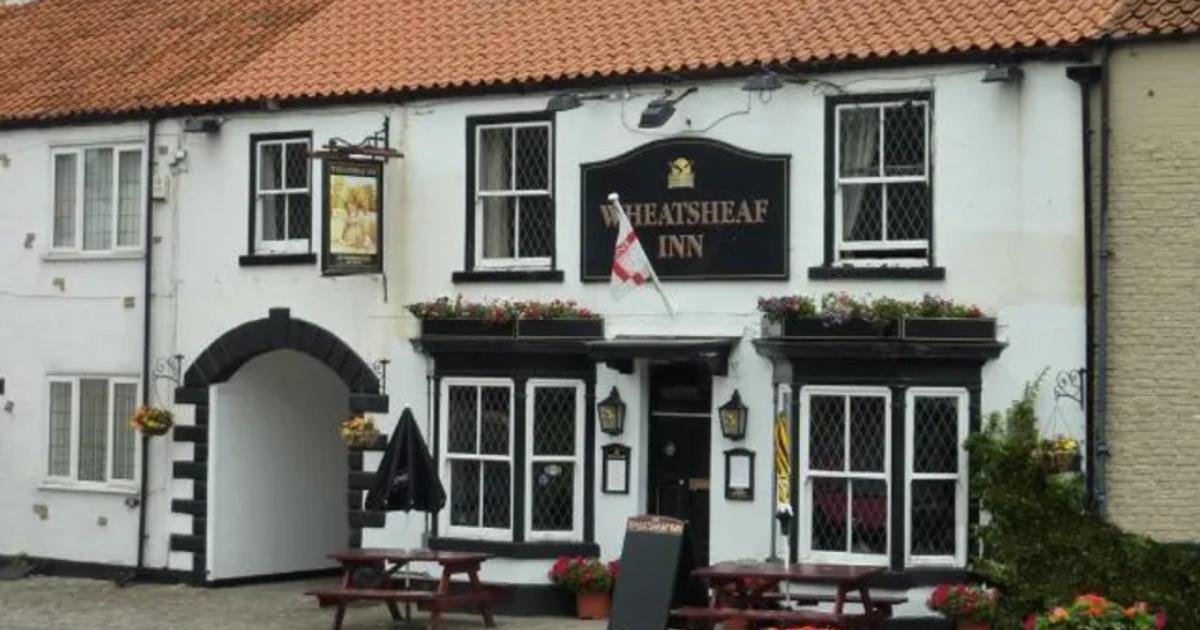
The Wheatsheaf Inn, on East Side in Hutton Rudby, currently holds a 4.4-star rating on TripAdvisor and is listed as one of the top-rated restaurants in the area.
The pub describes itself as a place for “catching up with friends”, “enjoying well-reviewed” food and using its beer garden, while also highlighting its digital jukebox, pool table, and two dart boards.
That gives The Wheatsheaf a more old-fashioned village pub feel than some modern dining-led venues.
The Wheatsheaf Inn, on East Side in Hutton Rudby (Image: CAMRA)
For many visitors, the appeal is not just the food, but the sense of being a “proper local”.
Advertisement
Reviewers regularly praise the pub’s friendly staff, generous portions and traditional British food.
One recent visitor said they came across the pub “by accident” and were glad they did, describing the food as “absolutely delicious” and the staff as “nice and friendly”.
Another called it a “lovely village pub”, praising its clean, welcoming feel, friendly staff and “amazing” food menu.
Sunday lunch is one of the most frequently mentioned reasons people visit.
Advertisement
One reviewer described the pub as serving an “old-fashioned Sunday lunch” with large portions, quality meats, simple but tasty desserts and a fine range of beers.
Another said it had been recommended as one of the best places in the area for Sunday lunch, adding that the food was “lovely”, “reasonably priced” and “served in a great atmosphere”.
The pub’s Christmas Fayre meals have also attracted praise.
Advertisement
One customer said a large party enjoyed a “fabulous evening from start to finish”, with excellent service, hot food served swiftly and generous portions of well-cooked seasonal vegetables.
Another reviewer described a Christmas Fayre meal as “superb”, “very well priced” and worthy of five stars.
The Wheatsheaf’s menu is built around hearty pub classics.
Its own menu includes Saturday breakfasts, Sunday roast dinners, steaks, fish and chips, parmos and other familiar favourites.
Advertisement
The Sunday roast offers beef, pork, turkey or lamb with Yorkshire pudding, mash, roasties and vegetables, while the Saturday Big Breakfast includes bacon, sausage, egg, mushrooms, tomato, black pudding, beans, toast and a drink.
Fish and chips have also been singled out by visitors, with one reviewer praising the batter as “lovely, golden and crispy”.
Another visitor said the steaks were cooked as requested, the chips were hot and plentiful, and the desserts were “gorgeous”.
The dog-friendly policy is another useful draw in a village surrounded by countryside walks.
Advertisement
Hutton Rudby sits near the River Leven and close to walking routes around the Cleveland Hills, making The Wheatsheaf a convenient stop for residents, day-trippers and visitors exploring the area.
England can book their flights for Atlanta in the round of 32.
While it took a while, two second-half goals did the job for England.
They were helped, in truth, by Panama’s brave approach to the match. Already eliminated and having failed to score in both of their first two matches, the Central Americans did not park the bus. Instead, they went at England in patches and tried to muster a moment for their fans to remember.
England are through to the last-32 as group winners
Advertisement
Getty
They failed to do so and, in turn, England found more space than against Ghana. Marcus Rashford and Bukayo Saka, in their first starts of the tournament, had to be patient but were put through by a midfield trio of Elliot Anderson, Morgan Rogers and, playing deeper as a No8, Bellingham.
England did not create a multitude of chances but created enough. Bellingham stabbed home cleverly from a Saka corner and Kane headed in the second to send England on their way.
Fresh wingers fails to deliver a telling answer
Advertisement
Neither Saka nor Rashford put in a poor display, but neither set the match alight either. Handed the initiative to prove themselves as better alternatives to Anthony Gordon and Noni Madueke, their answers to the question was unconvincing.
Rashford was lively throughout, cutting in and looking to shoot or cross from the left. He came close with a low shot early on and put wide with a free-kick from a presentable area in the first half. Things just didn’t come off. He was often stopped in his tracks into the box with a well-timed tackle and will have left the field feeling frustrated at not scoring or assisting given how much of the ball he saw.
Marcus Rashford struggled in the win over Panama
PA
Saka was finally fit enough to start but found similar difficulty in beating his man and breaking through a Panama defence that was well organised.
Advertisement
The Arsenal star combined well with Rogers on one or two occasions and did manage to leave the pitch with an assist as his corner set up Bellingham’s opener, which came as a relief to the England fans inside the MetLife Stadium.
He will likely keep his place for the round of 32. He will be keen, though, to still go up a level or three.
By the round of 16, England might have to ring up Kieran Trippier and Kyle Walker and tempt them to come out of international retirement through desperate measures, because a right-back crisis appears to be brewing. And spare a thought for Trent Alexander-Arnold.
Newcastle’s Tino Livramento dropped out of the squad on the eve of the tournament after suffering a calf injury and Reece James missed out against Panama after skipping training with yet more hamstring pain.
Advertisement
Jarell Quansah was forced off in the second half
PA
Quansah made his major tournament debut as the man to come in and replace James on Saturday and looked the part.
Yet he could not finish the match, going down midway through the second half and having to be substituted as he walked off gingerly.
England will be desperate for good news as he heads for a medical assessment after the match. Luck has not been on Tuchel’s side in the right-back position as yet.
England progressed to the last-32 of the World Cup with a 2-0 win over Panama on Saturday night thanks to Jude Bellingham’s heroics at the New York/New Jersey Stadium
Thomas Tuchel’s nationality found itself in the spotlight just minutes after England secured its place in the World Cup knockout stages.
It was a much-welcomed two goals after three goalless halves of football in the World Cup. But like England, Germany has also progressed to the last-32 of the tournament.
With wins over Curacao and Ivory Coast, Germany had already qualified for the knockout stages. But a defeat against Ecuador in its final game would have ended things on a slightly sour note.
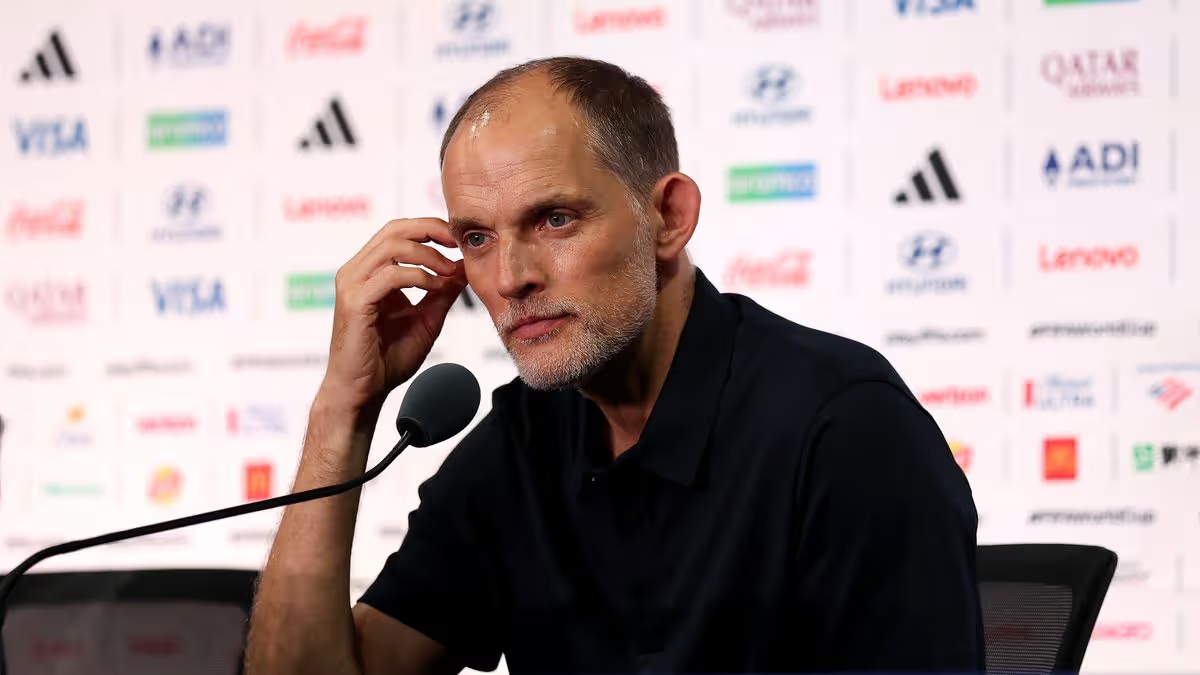
In his post-match press conference, Tuchel was asked about his loyalties to home country, Germany.
Advertisement
“I follow the German team, of course, but my focus and my heart beats for the England national team in this World Cup, so that’s where my focus is.
“They have a top coach and a top team. They find solutions for themselves.”
Naturally, Tuchel’s nationality was grilled when he first got the job. But the 52-year-old played down that it had any real impact.
Advertisement
“The biggest con is I don’t have an English passport but that’s maybe it,” Tuchel said. “That was clear from the beginning, I love to be the England coach and I was never shy about that.
“I have huge affection for the country and for the people in the country and the way they approach football and sports in general.”
Tuchel previously managed in England, guiding Chelsea to Champions League glory in 2021. When taking the England job he said reuniting with English players was a huge factor.
“I fell in love with the country and the Premier League,” he explained.
Advertisement
“That was a dream, to work there.
“Now to have the chance to work with these kind of players is an amazing opportunity and I am very grateful for it. “No one wants it more than me.”
Tuchel also disussed his team’s opponent, Panama, sharing similarities in how their low block frustrated his England side like Ghana.
Advertisement
“Not bad,” he said when assessing his own team’s peformance. “We saw a team who didn’t allow any chances in the first two matches. They conceded a 95th-minute counter attack against Ghana.
“They conceded from a half chance against Croatia with two shots on target. There is no problem if these matches feel tight and tough, it will help us in the next match.”
As the 2026World Cup moves through its third game week, teams are starting to secure their spot in the knockout rounds.
29 teams have made it to the round of 32 – which is a new round of games due to the 48-team expansion of this World Cup – so there are still three spaces up for grabs.
Another change this tournament is how the group tables work: they are decided on head-to-head results, rather than goal difference, so several teams secured their place as group winners after only two games.
Ahead of the final evening on group-stage action, here is every team which has qualified, and who are still waiting to confirm their spot.
Advertisement
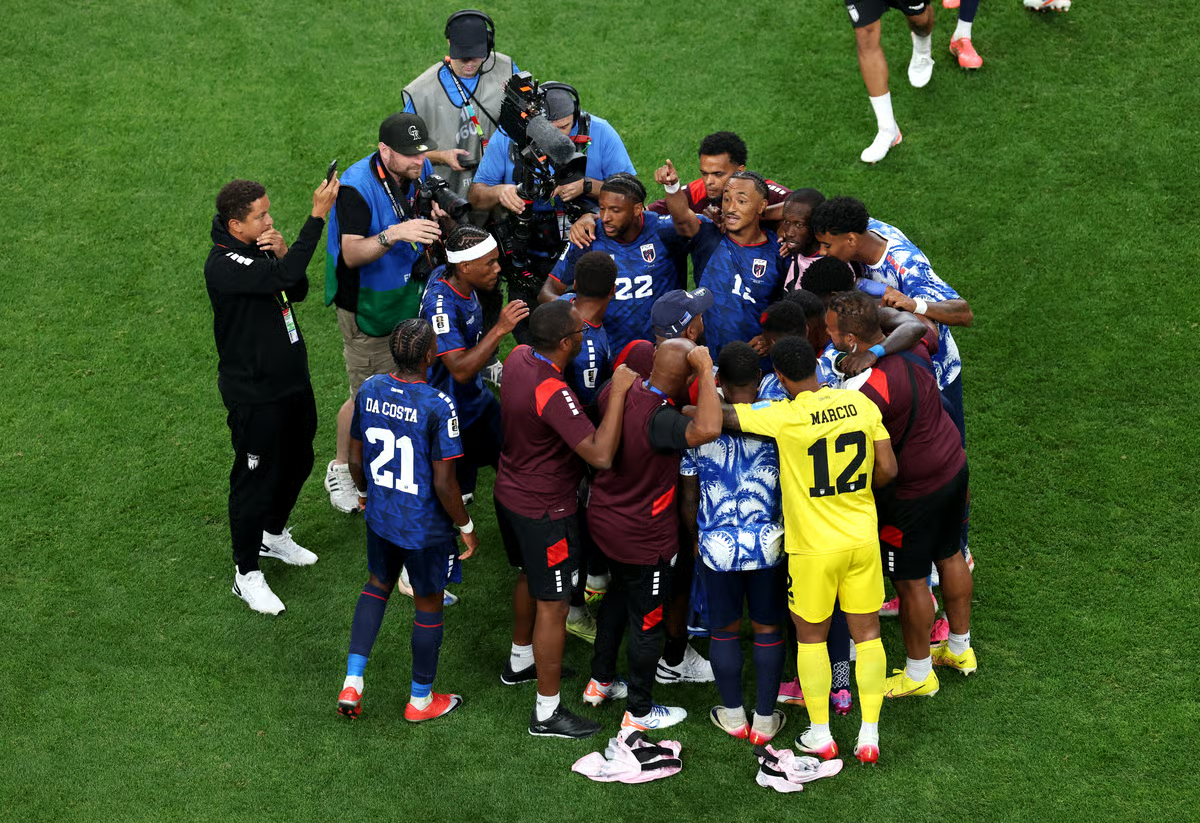
The biggest shock of the group-stage so far as been Cape Verde finishing second in their group to make the knockout stage for the first time. South Africa have also navigated out of a World Cup group for their ifrst time in their history. The most high-profile exit is, arguably, Uruguay.
All three co-hosts – United States, Mexico and Canada – are all also through.
Residents living close to Prospect House say the issue has gone on for years, with concerns ranging from blocked sunlight to large branches falling into gardens.
The comments come after a resident submitted a high hedge complaint to Bolton Council over trees at the Prospect Avenue property earlier this month.
The application was made under legislation allowing councils to investigate evergreen hedges which are more than two metres high and are alleged to unreasonably affect neighbouring properties.
Advertisement
One resident said: “It doesn’t actually bother us, I do appreciate it bothers everyone else. We’re on the other end but this is a mess.
“I think it’s been going on for a long time.
“It’s not bothering his property, it’s bothering everyone else’s. It’s not good.”
The neighbour said they had heard similar concerns from other residents living nearby.
Advertisement
They added that the trees “take all the light off the gardens” and described them as “a bit humungous”, claiming one neighbour had developed “bald patches” on their lawn because of the overhanging trees.
Another resident said branches regularly ended up in their garden during winter.
He said: “Branches in my garden at winter time.
“We had one at 10 foot long.”
Advertisement
The Bolton News previously reported that the complaint was submitted on June 9 by a resident of Prospect Avenue against Prospect House.
Under the Anti-Social Behaviour Act 2003, a high hedge is defined as a barrier formed mainly by two or more evergreen or semi-evergreen trees or shrubs that is more than two metres high and may adversely affect a neighbour’s reasonable enjoyment of their property.
Jude Bellingham’s place in England’s World Cup starting line-up was a point of debate before the tournament, under pressure from the outstanding form of his boyhood friend, Aston Villa’s Morgan Rogers.
Tuchel, correctly, decided he could not do without Bellingham’s class and big tournament experience.
He has been rewarded with a crucial goal in their opening World Cup win against Croatia then here, even more significantly, with a game-changing performance in New York New Jersey Stadium in the face of Panamanian defiance.
Bellingham worked in tandem with Rogers as Tuchel rested Declan Rice, who has been struggling with a hamstring injury and was on a yellow card.
Advertisement
The pair’s attacking instincts occasionally left Elliot Anderson over-run and overworked as a single pivot, but Bellingham’s brilliance made it work.
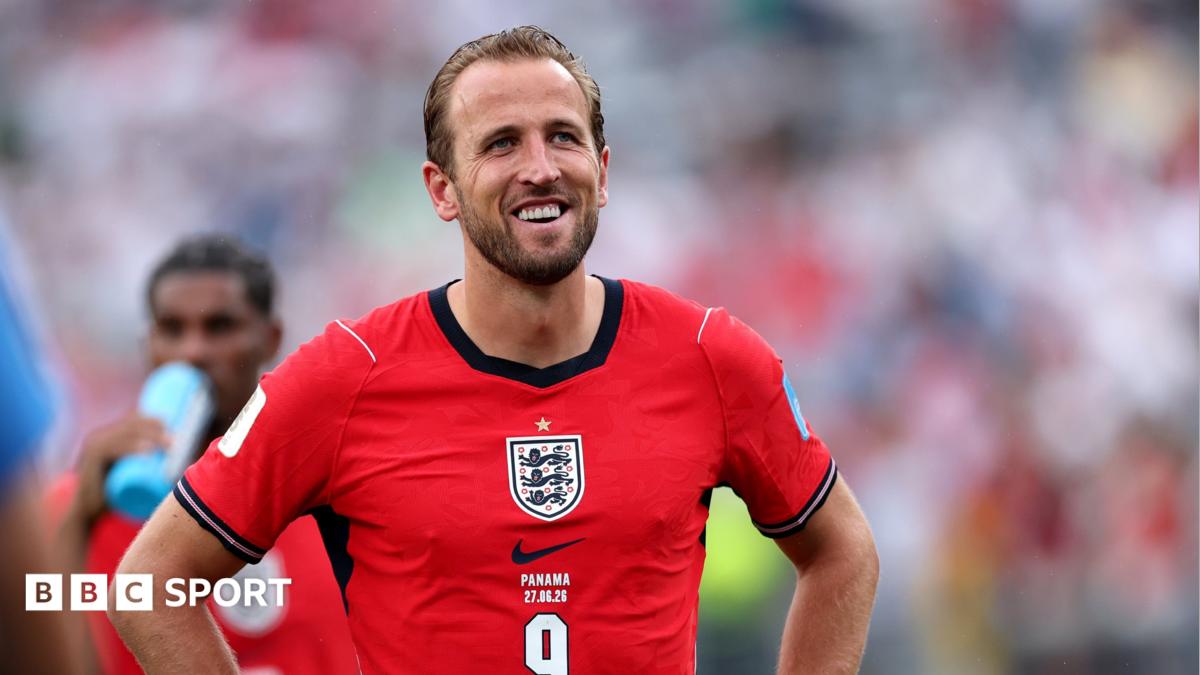
Despite fairly obvious attempts by Panama to play on his combustible temperament, Bellingham was the inspiration by forcing home the first goal, then crossing for Harry Kane to head the second, making England’s captain the country’s leading World Cup finals scorer with 11, one ahead of Gary Lineker.
Bellingham and Kane have now made decisive contributions to victories against Croatia and Panama. How England needed them here.
Marcus Rashford, deservedly given his chance after two disappointing displays from Barcelona new boy Anthony Gordon, was England’s brightest spark in the first half as he forced a save from Panama keeper Orlando Mosquera, headed narrowly over, then sent a free-kick just wide.
Advertisement
But frustration was mounting until Bellingham’s quality and industry paid off with England’s opener, capping a man-of-the-match performance further embellished with his assist for Kane.
If England are to win the World Cup, they will need Bellingham at his brilliant best. This display suggests he is in the mood to deliver.
Clarke‘s team claimed three points in the opening game against Haiti but crashed out after Croatia’s 2-1 victory over Ghana saw the Scots fail to finish among the top eight teams who progress to the last 32 with a third place finish.
Advertisement
The former Killie and West Brom boss had penned a new four year deal that would have taken him through to the European Championships in 2030 before the World Cup, which would have entered his 11th year in the job.
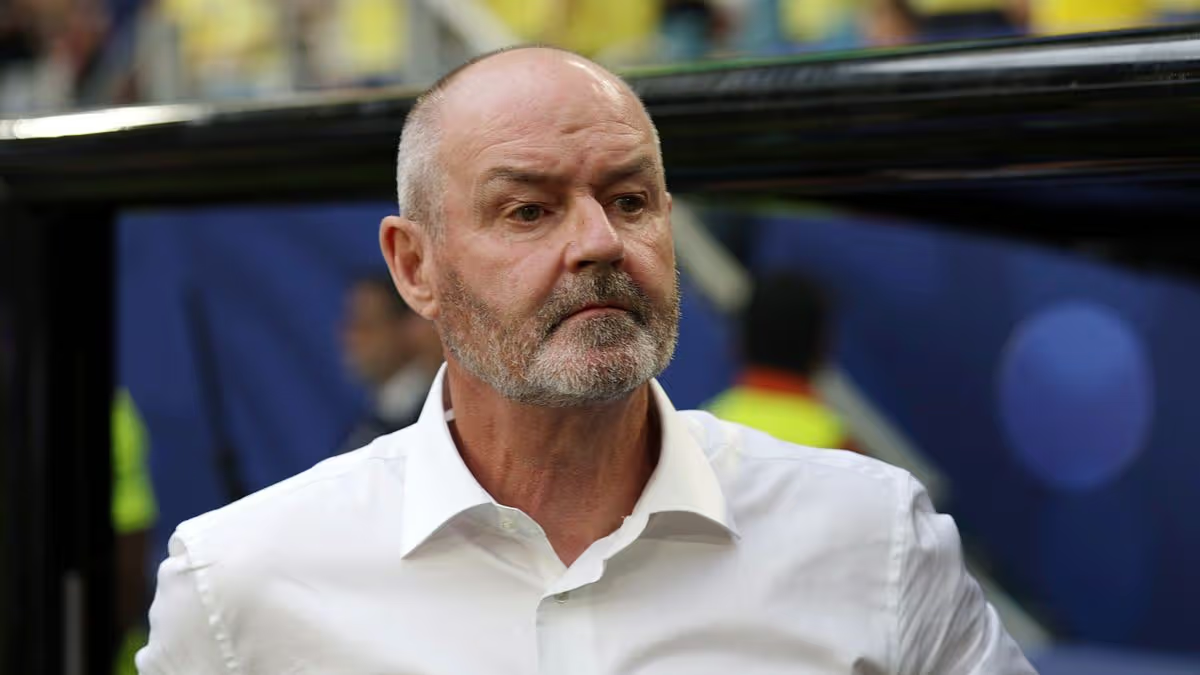
But in a bombshell statement on Sunday morning, the 62-year-old has penned a heartfelt farewell to his players, staff and the Tartan Army.
He said: “When I was first approached by the Scottish FA about the position of Head Coach I was advised by many people to leave well alone as the job had become a poisoned chalice. In my head I was just the wee boy from Saltcoats who had done well in his chosen profession and my country wanted me to be their leader, at least in a football sense. I couldn’t find a reason to turn the approach down. My job remit was simple: qualify for a major tournament.
“As I reflect on my seven years in the job my overriding emotion is pride, closely followed by satisfaction. To be the first coach since Craig Brown, in 1998, to lead the country to the finals of a major tournament was the stuff of dreams. That night in Belgrade with no supporters in the stadium due to Covid was an experience of pure, raw emotion from start to finish. It gave the nation some welcome cheer from the restrictions of the pandemic.
Advertisement
“Although the tournament was, for us at least, a bit of a damp squib, there was an unforgettable night at Wembley when we more than matched the eventual beaten finalists England and held them to a 0-0 win! The biggest disappointment of that tournament was the absence of the Tartan Army in their tens of thousands.
“Roll on three years and we did it again, this time overseas in a great footballing country, Germany. With no Covid restrictions this time the Tartan Army made sure they were there in even greater numbers than ever before – after all, it was a 26-year wait for the older members of the battalion.
“Again we came up short in the matches but a marker had been set and a new generation of Scotland supporters took my squad to their hearts. Qualify and they will come in their thousands. While emotions are raw following our elimination, I genuinely believe that if we continue to qualify regularly for these tournaments, we will inevitably break the glass ceiling of reaching the knockout phase.
“Winning our group from a position as third seeds is a truly remarkable achievement from a remarkable bunch of players that I have been lucky enough to lead. The campaign was difficult against quality opposition but time and time again we found a way to get the required points culminating in the most incredible Scotland game ever seen at Hampden Park in a 4-2 win versus Denmark.
Advertisement
“In time I will be able to reflect on a tumultuous seven years but one element that has given me the greatest satisfaction is witnessing the reconnection of our national team and our fans. From my opening game against Cyprus in front a half-empty Hampden Park – and a largely apathetic crowd-to the frenzy of such unforgettable matches as our 2-0 defeat to Spain and that memorable night against Denmark.
“The were magical occasions; nights that will endure in Scottish football folklore. This reconnection was never more evident than during the past few weeks. From Miami to Boston and New Jersey our fans won the hearts and minds of the American public and football fans across the world.
“Let us not forget that the players won a World Cup finals match for only the fifth time in Scottish football history, and the first for 36 years. The team were responsible for giving everyone the chance to create memories that will last a lifetime and I am proud to have played a part in that.
“As I conclude my reflection on a wonderful seven years I really need to thank my ever-changing coaching staff who have all helped me immensely: Alex Dyer, Steven Reid and Stevie Woods initially; followed by John Carver, Steven Naismith and Chris Woods as the key men by my side. Austin MacPhee and James Morrison joined us to help the push to Euro 2024, then Alan Irvine, who brought great experience to our group, and Andrew Hughes joined the team to help clinch our World Cup 2026 qualification. All good coaches but even better people.
Advertisement
“The auxiliary staff [too many to mention but they know who they are] who did the match analysis, medical, sports science,
kit, logistics and media. When I started the Head of Performance, Graeme Jones, was my go-to with any problem or issue and we worked well together in implementing our off-field progress with facilities and structure. When Graeme departed for pastures new, Mark Leslie stepped-up seamlessly to continue that push for higher standards off the pitch, reflected in our preparation for World Cup 2026.
“Thank you to both my administrative support staff for looking after me so attentively: firstly Frank Reilly who, after a long wait, represented his country when we qualified for Euro 2020 before retiring a happy man. Ashley Phillip replaced Frank and continued to support me on top of her other duties with the Scottish FA.
Advertisement
“Thank you to my two Presidents, the sadly departed Rod Petrie, and Mike Mulraney both of whom supported me in their own particular way. Two good men with the best interests of Scottish football at heart.
“Thanks also to Chief Executive lan Maxwell for putting his head on the chopping block and making me his first Head Coach appointment and to the board who always listened to me when I made my requests for help in trying to improve facilities and matters concerning the team and players.
“The most emotional part of this goodbye is for my players, without whom we wouldn’t have had any of the memories that we’ve accumulated from 2019 until now. From our captain Andy Robertson with 97 caps to those at the start of their journey with the national team, almost every player that has been called upon in my time as Head Coach has turned up and given everything for their country, hence a period of sustained improvement for our national team.
I quite quickly realised that continuity and familiarity would help these players to bond with each other and my staff, leading them to understand what is needed to be more successful at international level. They deserve all the praise and adulation that they receive and it was truly an honour to be called their Gaffer.
Advertisement
“Thanks for having me and good luck to my successor.”
SFA Chief Executive Ian Maxwell added: “From starting as a pot four team in 2019 to topping our World Cup qualifying group, he has more than delivered on the remit to take Scotland back to a major tournament.
“We thank Steve for his record-breaking contribution and know that when the disappointment of World Cup elimination subsides, the Scotland supporters will be thankful for the memories of marching with pride at major tournaments once again.
“Finally, on behalf of the board of the Scottish FA I would like to make special mention to our incredible supporters.
Advertisement
“The many thousands who have travelled to the United States to celebrate the return to a World Cup – making a significant financial commitment to do so – have once again shown themselves to be exceptional ambassadors for our country and our national game.”
Get more Daily Record exclusives by signing up for free to Google’s preferred sources. Click HERE.
Get Daily Record Premium for just £1 per month in an exclusive offer to celebrate the World Cup. Click HERE.
The teenager tragically died in a two-car crash near Eastbourne, that saw three others seriously injured, as police are appealing for witnesses of the collision
A 17-year-old has died in a horror two-car crash near Eastbourne, with three others seriously injured.
Advertisement
The boy died after the collision took place on Friday evening, police say.
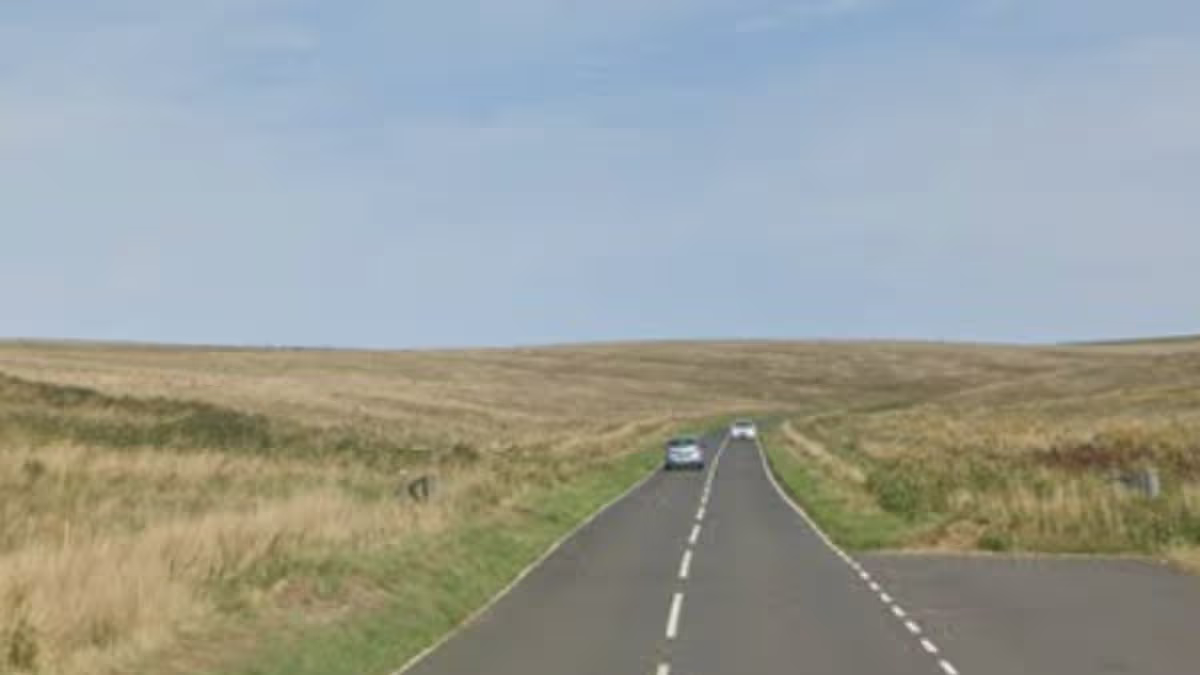
The car, in which the teenager was a passenger, crashed with another car car near Shooters Bottom car park, by Beachy Head, at around 9.30pm on June 26.
The collision involved a blue VW Golf and a white VW Polo.
Two other men in the car, a 19-year-old from Polegate and a 21-year-old from Hellingly, were also seriously injured.
Advertisement
The 21-year-old driver of the second car was also seriously injured.
The police are appealing for witnesses.
Detective Sergeant Ian Foxton, from Sussex Police’s serious collision investigation unit, said: “This is a tragic incident and are thoughts are with those involved and their families.
“We are aware there were a number of people in the area at the time of the collision and we would ask anyone who hasn’t spoken to us or has any video or dashcam footage to get in touch. Please email collision.appeal@sussex.police.uk, quoting Operation Nashville.”
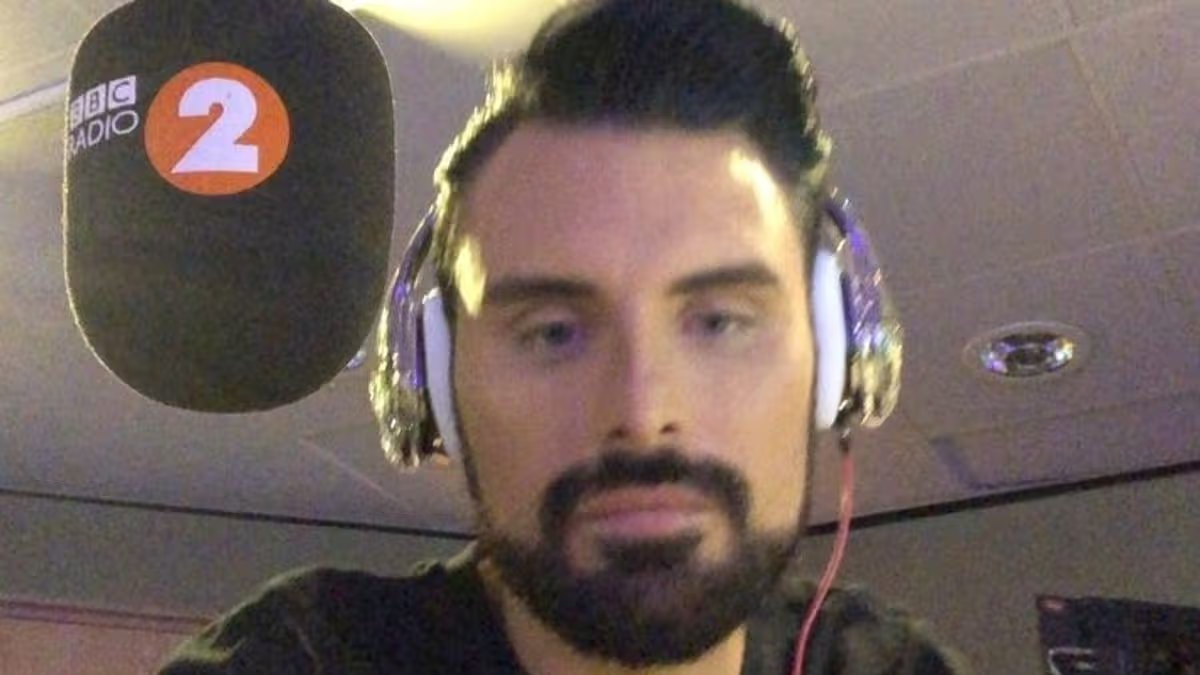
Rylan Clark, presenter on Radio 2, has issued a cheeky response as to why he was not on his weekly radio show and it includes him blaming ‘everyone but himself’
Rylan Clark missed his Radio 2 show yesterday but in a cheeky post he explained why.
Taking to his Instagram story Rylan said: “Soz about today’s show. I blame everyone but myself. Genuinely had it all sussed out and then flights all cancelled. Thanks Mark for stepping in you legend. Gonna have a rosé and think of you all.”
It comes after the presenter complained about the fact that his weekend show still hasn’t received any awards back in May.
Advertisement
Rylan aimed a cheeky swipe at The ARIAS (The Audio and Radio Industry Awards) for failing to nominate him, saying: “Always snubbed at The ARIAS even though I host the thing. It kills me, I’m the host of it and I can’t even get a nomination!”
Last week Rylan was asked if he regretted telling his husband he had cheated on him as he addressed it for the first time in a new interview. Rylan revealed his infidelity to his husband, Dan Neal, which caused the downfall of his six-year marriage back in 2021.
And now on The Assembly one audience member asked him: “When you told your husband you cheated on him, he divorced you. Is honesty always the best policy?”
Stunned, he replied: “Yeah, I think it is. I’m okay admitting I’m in the wrong, because actually I don’t deal well with guilt, and I don’t deal well with secrets. It made me so ill, like so ill. It sounds a terrible thing to say, but I’m glad it happened.”
The Scots, backed in the USA by tens of thousands of Tartan Army, then suffered a 1-0 defeat by AFCON champions Morocco at the same venue after losing a goal in 70 seconds before a sobering and, in parts, self-inflicted loss to five-times winners of the competition, Brazil, in Miami.











![DO NOT LET BITCOIN FOOL YOU! [DUMP INCOMING.......]](https://wordupnews.com/wp-content/uploads/2026/06/1782609231_maxresdefault-80x80.jpg)




























You must be logged in to post a comment Login