

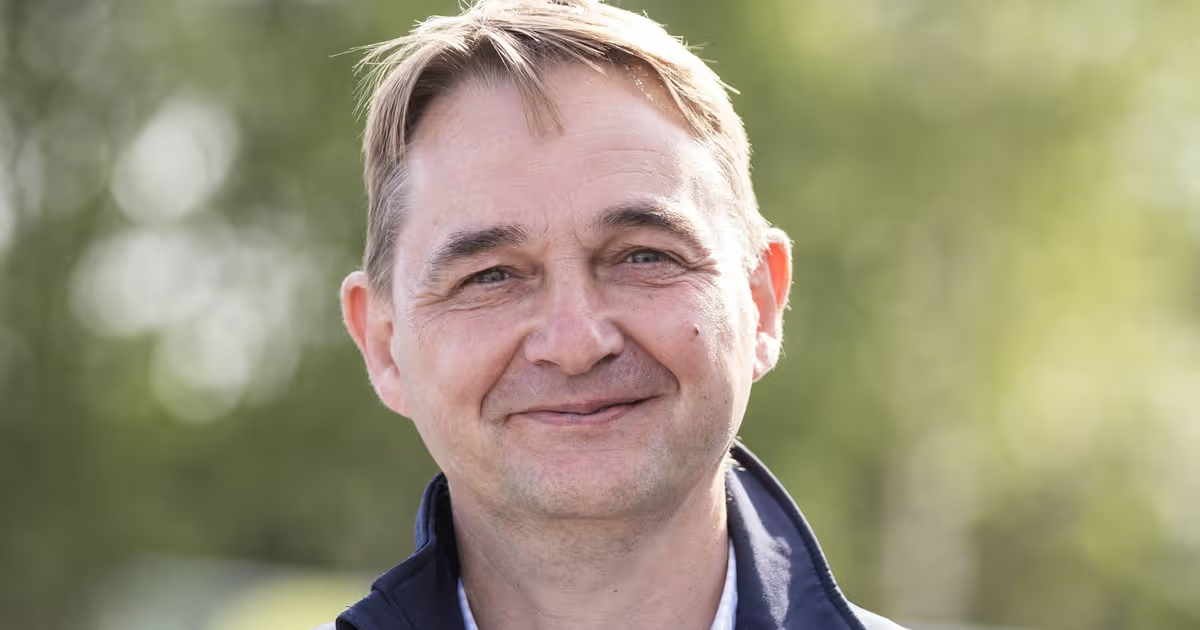
“They generally put themselves last, they put their animals first, and they don’t know how to switch off.”
A man from Northern Ireland has urged other farmers to treat their mental health as seriously as they would physical safety on the farm, as farmer wellbeing is at its lowest point in four years.
The Farm Safety Foundation (Yellow Wellies) is marking its ninth annual Mind Your Head week from February 9 to 13, by looking at tackling the issue of suicide risk in the UK agricultural industry.
The campaign is calling on farmers, rural organisations, colleges and Young Farmers Clubs to start life-saving conversations, learn practical skills and connect communities to support – addressing what many now recognise as the industry’s “biggest hidden problem.”
READ MORE: MLA emotional as she pays tribute ‘amazing little boy’ killed in road accidentREAD MORE: Young Lisburn farmer raising awareness of mental health in the industry after losing friends to suicide
Gyles Dawson from Co Armagh has been working in the agri-business sector for over 30 years, is a part-time farmer, and works for the charity Rural Support to ensure agricultural workers in Northern Ireland have the support they need.
He said the demand for help regarding mental wellbeing is “rising sharply.” In the year 2024-2025, Rural Support received 446 calls through their confidential support helpline, a 22% increase on the previous year, with the most common age group being those from 45-54.
Speaking to Belfast Live, Gyles said: “The most alarming thing is two in five of those calls are people showing suicial ideation, which is very concerning. The top concerns we are seeing are financial difficulties, mental health struggles, succession planning, and weather issues.
“We have seen a 55% increase in counselling referrals and a 54% rise in the overall business mentoring support we provide. There is an awful lot for farmers to navigate, but we can work alongside them to offer support.”
He said Rural Support are proud to support the Mind Your Head campaign, adding that farmers need to reach out for help when they need it, and must treat their mental wellbeing as seriously as physical safety on the farm.
Gyles added: “Farming is hard work, seven days a week, with many farmers working 60+ hours a week. Many are struggling with rural isolation, alongside financial stress and uncertainty.
“Weather makes a significant difference to farming practises. Then you have family succession pressures, and unfortunately 91% of farmers now see mental health as one of the biggest hidden challenges in the industry.
“In bygone days, farmers would have had employees to help out on the farm. Mechanisation has helped tremendously, but the issue now is because farm incomes over the past two years have not been so good, you’re finding a lot of farms are having to cut back on employee labour. They’re working longer hours themselves, which causes a rise in fatigue and the possibility of farm accidents increasing.
“Farmers generally put themselves last, they put their animals first, and they don’t know how to switch off. They are very resilient people and will go a long way before they actually go out and ask for help.”
The latest research from the Farm Safety Foundation found that overall wellbeing within the farming community lags behind the UK general population and has fallen to its lowest point in four years. This is measured by the Warwick-Edinburgh Mental Wellbeing Scale (WEMWBS), a widely used national measure of positive mental health.
Mental wellbeing among farmers over 40 years old hits a four-year low, with the sharpest decline being among those aged 61 – historically the most resilient group. Until recently, this age group consistently reported mental wellbeing levels above the UK average – a sign of resilience in one of the toughest professions. But that resilience is now under severe strain.
As for the support provided by the charity Rural Support in Northern Ireland, Gyles said: “We provide support through community-based counselling and business mentoring, we will go out to a farm and provide that support there.
“Farmers feel safe in their own environment, and if we can meet them in their own environment, then that tends to drop the barriers a little bit more, and they feel more open to talk, and it combats that rural isolation part as well.
“We also have a crisis support and non-crisis support platform. So the crisis support platform consists of business mentors and mental health counsellors who provide that service directly on farm to farmers, and then we have sort of the non-crisis side of things which is the likes of Plough On groups which are to combat loneliness.”
Stephanie Berkeley, Manager of the Farm Safety Foundation, said: “Over the past nine years, we have made significant strides in raising awareness and improving education around mental health. However, when it comes to suicide prevention, progress has been far more limited.
“While agriculture in the UK benefits from rural support groups and charities who deliver vital, high-quality support, a critical gap remains: there is still very little suicide prevention training tailored specifically for those working in agriculture.
“Farming brings a unique set of pressures – long hours, isolation, financial uncertainty, generational expectations and physical risk. Conversations about suicide in rural communities require approaches that are real, relatable and rooted in lived experience. Without training designed for the realities of agricultural life, we risk leaving those most vulnerable without the tools they need to recognise warning signs and intervene effectively.”
Stephanie continued: “Farming is tough. Long hours, hard graft and a mindset that says ‘just get on with it.’ That grit is admirable – but it is also why some farmers leave it too late to ask for help.
“As we enter 2026, we want to address the issue of suicide awareness and prevention. Too many farming families are quietly carrying the weight of crisis and loss. The message this year is simple: learn the steps, start conversations earlier and look out for each other. When communities know what to say and what to do, lives can be saved.”
To find out more about Rural Support, click here. You can also call their confidential helpline on 08001381678.
Anyone who needs to talk to someone about mental health issues can call the Samaritans on 116123 or Lifeline on 0808 808 8000.
For all the latest news, visit the Belfast Live homepage here and sign up to our daily newsletter here.








































You must be logged in to post a comment Login