NewsBeat
Farro: The Best Ancient Grain For Fibre And Protein

Not to brag (or overshare) here, but I consider myself something of a fibremaxxer. I’ve been upping my intake of the nutrient, which is linked to lower dementia, cancer, and heart disease risk, over the past couple of years.
I now regularly get over my recommended 30g a day, which 90% of us struggle to in the UK.
So you can imagine what a blow it was to my inflated (gaseous?) ego when I read that farro, which I’d never tried before, blew my previous faves – including oats and butter beans – out of the cistern when it came to fibre content. It packs up to 13.5g fibre in 100g; for oats, that’s about 11g, and for cooked butter beans, it’s roughly 7g.
That’s before you consider farro’s protein content, which can be as high as its fibre content (13.5g/100g), too.
Naturally, I tried it as soon as I could.
What is farro?
It’s not actually one food. It’s a range of whole grains from different wheat species, and because these date back thousands of years, farro is sometimes called an “ancient grain”.
“Emmer wheat” farro is popular in the UK, and comes in smaller grains. You can also get einkorm (medium size) and spelt (larger) farro.
It’s popular in Tuscan dishes, like soups and risotto. It needs to be soaked before boiling to soften it.
What are the health benefits of farro?
It’s very high in fibre, which keeps us fuller for longer and (as we mentioned) can reduce our risk of heart disease, cancer, and even dementia. Farro outperforms a lot of other whole grains on that front, including brown rice and couscous.
It’s also remarkably high-protein for a grain. Eating enough protein ensures our brain, muscles, heart, and liver function well.
It’s also rich in nutrients like vitamin B3, zinc, and magnesium. These help to convert food into energy, boost your immune system and healing ability, and keep your bones, nerves, and muscles healthy.
And they’re high in polyphenols, which could help to protect us from heart disease and even bone conditions like osteoporosis.
What does farro taste like?
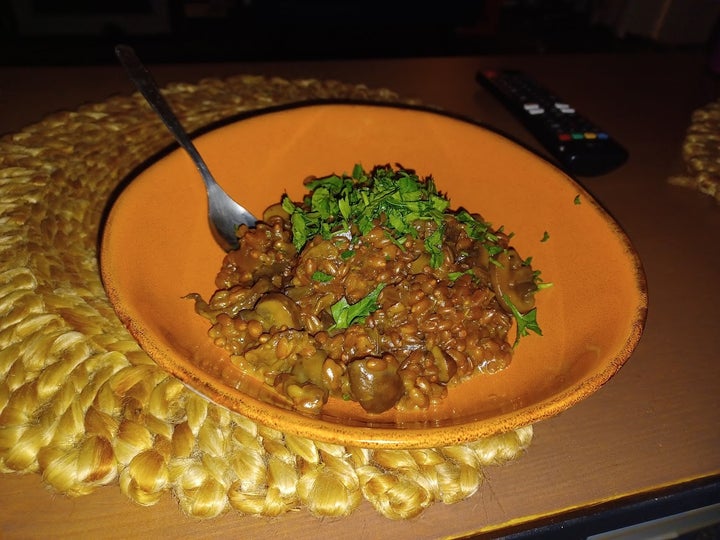
I tried Emmer wheat farro, which I soaked for two hours before cooking it. I think it probably would have benefited from a longer soak (maybe overnight), as it took about an hour in this mushroom “risotto” recipe to make the grains soft enough to eat.
But once I did, I loved them. They have a unique, chewy texture; bouncy, a bit like a combination of springy fishballs and toasted oats. It’s also a bit like “meatier” pearl barley.
The flavour is nutty, toasty, and rich. I couldn’t believe how satisfying it was when paired with umami-packed mushrooms; I could have believed there was beef in the all-veggie dish.
Of course, that’s only one way to cook it. You can try it in salads, soups, and grain bowls.
And based on how much I loved it, I definitely will be.

You must be logged in to post a comment Login