The full lineup remains hush-hush, but Sephora has now unveiled seven products included in the 2026 calendar. Think Medik8, Dr.Sams, and Sol De Janeiro.
There will be 25 boxes (no sneaky tapping out at twenty-four here) filled with 41 products, including 27 full-size products, that will total over £1,000 in value.
The calendar is thought to cost less than £250 (it set you back £225 in 2025), making it a reliably affordable though luxurious winter splurge. Without further ado, here’s what I know, from wishlists to pre-orders to what’s hidden inside.
What’s inside the Sephora beauty advent calendar 2026?
Advertisement
Sephora
Worth: Over £1,000
Confirmed cost: Not yet announced, but it cost £225 in 2025
Number of products: 41, including 27 full-size products
Advent calendar highlights: One/Size on ’till dawn mattifying waterproof setting spray, Discotheque Lola at coat check candle, Medik8 Niacinamide Peptides
Available: Join the waitlist to be first to find out when it’s live
Adding to the mystery is the only promotional image we’ve seen of the entire calendar. Backlit and shrouded in darkness, the shady image highlights nine full-sized items that only a pro could detect and deduce. Luckily, however, I’ve worked in the shopping space for just under a decade, and I know a Mac lipstick when I see one.
I also think I can spy a Discotheque Lola candle, a Phlur vanilla skin eau de parfum, a Makeup by Mario 12-colour eyeshadow palette (specific palette unknown), a Kayali eau de parfum (scent unknown), a Sephora Collection lip tint felt liner and the Kosas shiny objects wet glisten powder.
Sephora are teasing products in the run-up to the calendar’s launch – and it’s confirmed seven so far. These include a One/Size on ’til dawn mattifying waterproof setting spray, Discotheque Lola at the coat check candle, Makeup by Mario ethereal eyes palette, Sephora Collection lip tint felt liner, Sol de Janeiro body wash, Medik8 niacinamide peptides, and Dr Sam’s flawless cleanser. All the currently confirmed products are full-size – a promising start.
When does the Sephora beauty advent calendar 2026 launch?
Huge news – the waitlist is now open. Be warned, though, this beauty calendar has sold out at rapid speeds for the last four years in a row, so you’re going to need to have your finger on the buzzer with this one. Better register your email ASAP, you’re not going to want to miss this.
The incident took place on Glen Avenue the South Lanarkshire town around 2pm on Saturday, July 25. Emergency crews rushed to the scene after police received a report of two of their uniformed officers having been knocked down.
The force confirmed that the pair had been carrying out enquiries at a property in the area before a white Renault Traffic was “deliberately driven at them”. Both male officers, aged 41 and 43, were blue-lighted to hospital.
They suffered serious injuries. Both have since been discharged, although they will remain unfit for duty for a prolonged period. Detectives investigating the attempted murder arrested a woman on Friday, August 14.
Jemma McQuade appeared at Hamilton Sheriff Court on Monday, August 17. The 34-year-old from Larkhall was charged with attempting to pervert the course of justice.
She made no plea and was committed for further examination. Ms McQuade has been granted bail and it is still to be confirmed when she is due to appear at court again.
A man is still being hunted in connection with the incident, and extensive enquiries are ongoing to track him down. More than 80 properties have been searched throughout Lanarkshire and the Scottish Borders.
Police have also trawled through a significant amount of CCTV footage and made extensive door-door enquiries, which has allowed police to track this man’s movements since the date of the incident.
Advertisement
Images previously taken from the scene showed the injured cops lying on the tarmac after being rammed. In one photo, one officer appears to be lying motionless on his side with a member of the public attending to him, while his colleague tries to recover on his hands and knees.
A massive police and ambulance presence later descended on the area. Both officers were seen being attended to by members of the force and paramedics. Police later recovered the van in Kirkstyle Place, Glassford.
Detective Inspector Alister Thom said “This act of violence left two police officers seriously injured and significant enquiries remain on going to trace the man responsible.
“We know he has been travelling throughout Lanarkshire, Glasgow and the Scottish Borders and know that he is being assisted by associates.
Advertisement
“If you know where he is, or have information which could assist us, I am urging you to do the right thing and contact us immediately in confidence.”
Anyone with information is asked to call Police Scotland on 999, quoting incident number 1652 of 25 July, 2026, or speak to Crimestoppers anonymously on 0800 555 111.
Get more Daily Record exclusives by signing up for free to Google’s preferred sources. Click HERE.
The five teenagers died in the collision on the M9, in County Kildare, on Sunday morning
Five teenagers killed when their stolen BMW ploughed head-on into a family while driving on the wrong side of a motorway had been ‘terrorising’ people over the previous days.
Joey Carthy, Alex McCarthy, Jeremy O’Brien, Jack Kennedy and Kamil Pustkowski, all aged between 15 and 18, died in the collision on the M9, in County Kildare, on Sunday morning.
Speaking soon after the ‘horrific’ crash, Garda Commissioner Justin Kelly said that ‘in some cases’ cars were being driven the wrong way down motorways for social media likes.
And it has now emerged the five teens often posted videos of themselves being chased by gardaí, with one clip showing the view in their rear mirror captioned ‘wrong way’.
Advertisement
A stolen BMW ploughed into a family car after speeding up the wrong way on the M9 motorway in Co Kildare, Ireland (Picture: Niall Carson/PA Wire)
All five were also suspected in several thefts and burglaries, in addition to further anti-social activities across Kildare and Carlow over the previous two weeks.
Sign up for all of the latest stories
Start your day informed with Metro’s News Updates newsletter or get Breaking Newsalerts the moment it happens.
Each was wearing a mask when their bodies were retrieved from the wreckage, the Daily Mail reports.
Advertisement
The newspaper quotes security sources as saying the teenagers were part of an increasing number of youths trying to ‘one up’ each other in dangerous videos posted to social media.
‘These young guys have been terrorising communities for weeks if not longer,’ they added.
‘They did not care if they were caught as they knew they were underage and that there was little the courts system could do with them.
‘It’s becoming a growing social media trend and it’s been a nightmare for gardaí to police because they are often ordered to stand down from pursuits because of the danger that chasing these guys could put the public in.’
Advertisement
Jeremy O’Brien was in the stolen BMW when it crashed into a Hyundai carrying a family going on holiday (Picture: Facebook)
Kamil Pustowski’s family have been notified of his death (Picture: TikTok)
Sisters Niamh and Alma Kinsella, both in their 30s, younger sister Ella Hendricken, in her 20s, and Alma’s seven-year-old son Yemi all suffered serious injuries in the other car.
Taoiseach Micheál Martin said yesterday he was ‘shocked and saddened’ at the crash, which was the result of ‘an irresponsible and dangerous act’.
He said: ‘This is the second appalling crash we’ve seen on our roads in a matter of days as a result of the reckless driving of a car on the wrong side of the motorway, endangering the lives of innocent road users.
‘As the Garda Commissioner has said, it is an irresponsible and dangerous act and it is shocking in some cases that it is being done for likes on social media.’
Alex McCarthy was among five killed in the crash on the M9 in County Kildare
Jack Kennedy was in the car that crashed into a family about to go on holiday (Picture: TikTok)
Mr Martin added: ‘My thoughts and prayers are with the family who have been injured.
‘I wish them a full recovery.
Advertisement
‘The lives of five teenagers have also been lost as a result.
‘Every death on our roads brings untold grief to families and communities.
‘There can be no tolerance for this reckless behaviour that we have seen on our roads recently.
The mounts of rubbish have persisted on the backstreets around Elmwood Grove near Queens Park at least since May this year despite repeated complaints.
Parents have been particularly alarmed by used nitrous oxide canisters, which are classed as a Class C drug, and by the potential to attract rats.
Zishan Sarwar said: “I heard about this from one of the families here and when I saw it, obviously it just disgusting.
“It’s like a jungle to be honest.”
Advertisement
He added: “I rang the council and they said they would get someone to sort it, I’ve rung them three times.”
The Bolton News went to visit the area around Elmwood Grove and found huge amounts of rubbish, a large bag full of used nitrous oxide cannister, and furniture strewn around.
In an ironic twist, lying amongst the rubbish there was an old Bolton Council sign warning people against fly-tipping and warning them they faced fines or prosecution.
Cllr Arif with an abandoned sign warning against fly tipping (Image: Newsquest)
Mr Sarwar said he later got in touch with Cllr Baggy Khan who then introduced him to Cllr Zan Arif, of the Queens Park and Central ward which covers Elmwood Grove.
Advertisement
He said that he and many of the residents would first like to see the rubbish cleaned up and then to see permanent solutions like CCTV cameras installed.
Mr Sarwar said: “We’re engaging and trying to build strong relations here, one individual would not be enough to get this removed, it needs to be a collective.”
Cllr Arif was particularly troubled to find used nitrous oxide cannisters (Image: Newsquest)
On a visit to the site, Cllr Arif came across dumped rubbish, bins that appeared to have been vandalised, and boxes of used nitrous oxide canisters.
He said: “This is the sort of stuff we’re finding in the area, and this has accumulated for quite some time.”
Advertisement
He added: “It’s been reported, nothing’s been done, we need to act on it as soon as possible because once something’s become a dumping ground, everybody else is going to come and think well why not? I could do that too?”
Huge amounts of rubbish have been dumped (Image: Newsquest)
Cllr Arif said he was particularly concerned to come across nitrous oxide canisters, vodka bottles, and beer cans.
He said: “There’s a theme here, its people doing some kind of recreational activity, whether its this, drinking, needles, whatever comes with it, it’s these types of people that are doing this unfortunately.”
In an apparent reference to the recent bin strike in the West Midlands, he said: “It’s a dumping ground, it looks like Birmingham!”
Advertisement
Bolton Council leader Cllr Akhtar Zaman said: “Fly tipping is a problem all over the borough which we are trying to deal with.
“Where possible we try to identify and deal with the culprits, bring them to court and issue fines and fixed penalty notices.
“We encourage people to always report fly tipping to local authorities.”
An official store closure date has been confirmed for a popular fashion brand
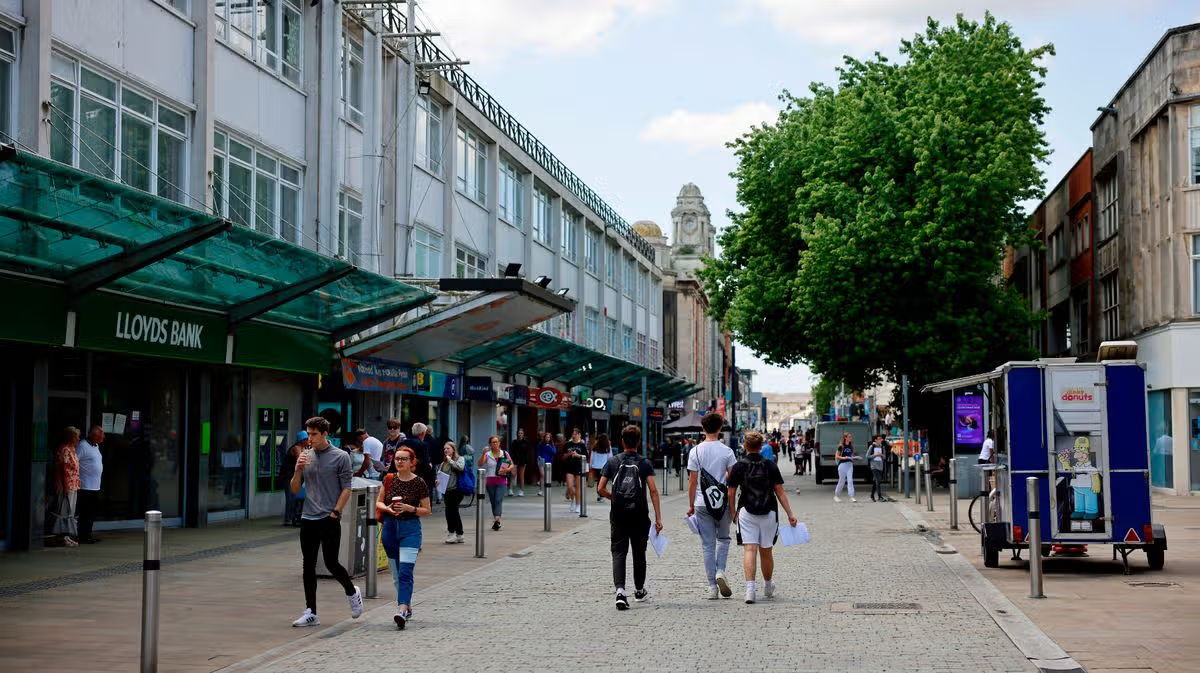
River Island will close its Swansea store next month.
Advertisement
The shop on Oxford Street has been a longstanding presence in the city centre but will officially close its doors on Saturday, September 12.
Signs have appeared in the windows confirming the closure, with a message thanking customers for their support. It reads: “Thanks for shopping with us – we’ve had a blast!”
The loss of M&S left many locals disappointed, with one shopper previously telling WalesOnline: “I don’t know why or where these big shops go… British Home Stores, Next. It’s terrible. There will be nothing here before long – other than the market.”
Advertisement
The city has also seen the loss of other major brands like The Body Shop and Zara, however, both units have since been filled by the likes of premium home and body cosmetics brand, Rituals and Scandinavian lifestyle brand Søstrene Grene.
The Swansea closure comes as River Island continues with a major restructuring of its store estate. Earlier this year, the fashion retailer announced plans to close 27 branches as part of efforts to secure the future of the business.
In Wales, its Wrexham shop closed on January 18, while its Llandudno Retail Park branch also subsequently ceased trading. Never miss a Swansea story by signing up to our newsletter here
Advertisement
At the time, River Island chief executive Ben Lewis said the retailer had been affected by the long-term shift in shopping habits, with more customers choosing to shop online rather than on the high street.
He stated: “River Island is a much-loved retailer with a decades-long history on the British high street.
“However, the well-documented migration of shoppers from the high street to online has left the business with a large portfolio of stores that is no longer aligned to our customers’ needs.
“The sharp rise in the cost of doing business over the last few years has only added to the financial burden. We have a clear strategy to transform the business to ensure its long-term viability.
Advertisement
“Recent improvements in our fashion offer and in-store shopping experience are already showing very positive results, but it is only with a restructuring plan that we will be able to see this strategy through and secure River Island’s future as a profitable retail business.”
WalesOnline has contacted River Island for comment.
Head of health and safety Mike Pickard told BBC South East the team were “exhausted and being pushed to limits” trying to manage the “unacceptable” situation.
While understanding the difficulties faced by customers, he said the company was aware of a number of incidents of abuse directed at staff and contractors, which it would “not tolerate”.
On Tuesday, he added: “Being angry about the situation is understandable, but attacking a vehicle, threatening a member of staff or subjecting our teams to abuse is not acceptable.
Advertisement
“No one should face threats, intimidation or violence simply for doing their job, our people are not responsible for the disruption.
“If our teams feel unsafe, they may have no choice but to leave an area.”
On Monday, the Department for Environment, Food and Rural Affairs (Defra) said the situation was “simply not good enough.”
A spokesperson said the company’s new leadership “must now deliver a step change in performance, where customers’ needs are prioritised”.
Advertisement
SEW was the first water firm to issue a hosepipe ban this summer, having barred 850,000 customers in Kent on 3 July.
An employee of a company that provides accommodation for asylum seekers has been charged with misconduct in public office over sharing the properties’ addresses.
Houses in St John’s Way, Bracken Road, Clover Way, Elm Road and Chester Way in Thetford, Norfolk, were targeted by crowds over three nights earlier this month.
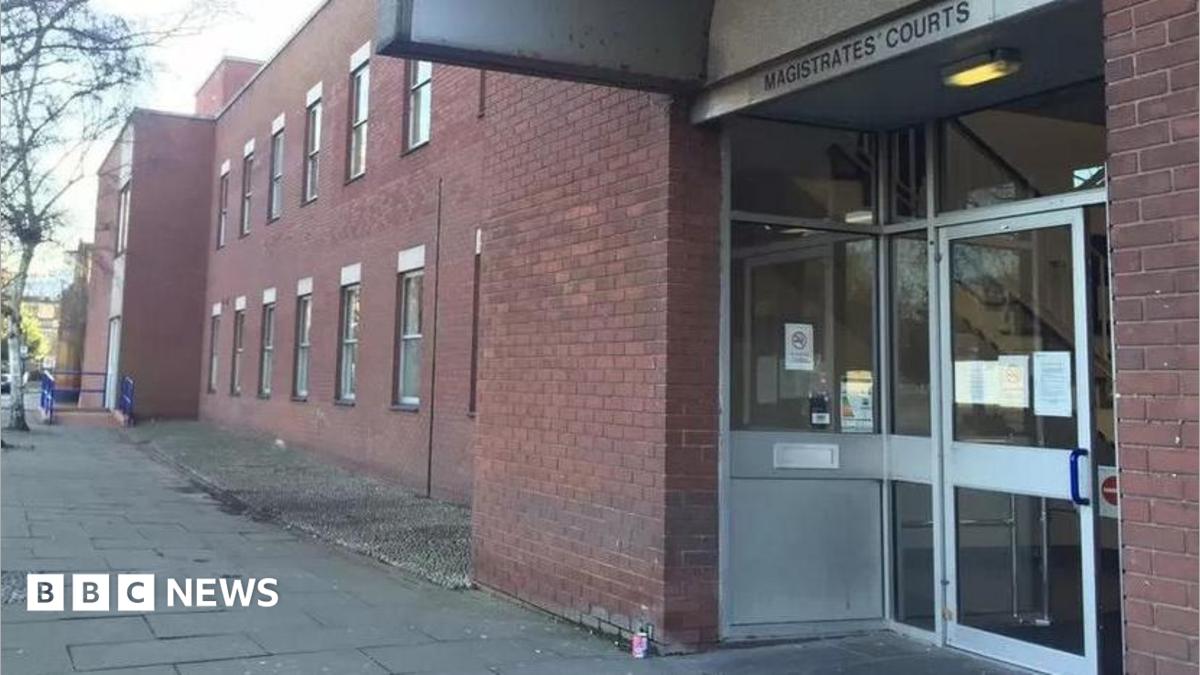
James Jobson, 62, from Highlow Road, Costessey, near Norwich, works at Serco and appeared at Ipswich Magistrates’ Court on Monday.
He was remanded in custody and will appear at Norwich Crown Court on 14 September.
Advertisement
The charge states that between 3 and 14 August, while acting as a public officer namely Serco, Jobson “wilfully and without reasonable excuse, or justification” committed misconduct in a way which “amounted to an abuse of the public’s trust in the office”.
Norfolk Police said the charge was in connection to the “release of information relating to a number of addresses in Thetford, which were later targeted during several nights of violent disorder in the town”.
A spokesperson for Serco said: “This matter is currently being handled by the police, and we are cooperating fully. As this relates to an ongoing legal process, it would be inappropriate to comment further.”
This breaking news story is being updated and more details will be published shortly. Please refresh the page for the fullest version.
University resits are a second chance for students who have experienced academic difficulties. Typically resit exams are sat during the summer break.
But while resits are available to all eligible students, the ability to engage with them is influenced by broader inequalities.
When students fail assessments, the conversation typically shifts towards personal responsibility. The assumption is that students need to work harder or manage their time more effectively to bounce back.
However, this way of thinking can oversimplify a much more unequal experience. Bouncing back from educational adversity, called academic resilience, is linked to wellbeing. Less resilient learners are more likely to suffer the negative cognitive effects of adversity.
Advertisement
By focusing only on individual resilience, universities risk overlooking the inequalities that determine who can make the most of their second chance.
Unequal circumstances
Students with stable housing, family financial support and access to quiet study spaces are better positioned to focus on revision over the resit period.
On the other hand, many students will have a different experience. Some students need to work more to cover basic living costs, while others face housing problems such as paying rent. Financial pressures can reduce the amount of time, energy and emotional capacity these students have available for revision.
A recent research report found that 66% of students work to cover basic living costs, while 26% work to support their families. Students balancing work commitments alongside resits may face disadvantages compared to peers with greater financial security.
Social isolation and belonging also play a significant role. During the summer months resit period, many students return home or move away from campus. This reduces their opportunities for connecting with other students. Revising alone can intensify feelings of disconnection and perceptions of failure or exclusion.
Belonging is not simply an individual feeling, but is shaped by institutional culture and access to academic support. When those studying at university are separated from this environment, they may feel less connected to the academic community and begin to lose their sense of academic identity.
Summer resits can also leave students with little downtime from university work. This be especially challenging for students with caring responsibilities, including those who are parents.
Resits can result in students becoming more anxious and losing confidence in their academic abilities. They may trigger concerns about disappointing family members, losing financial support or jeopardising career plans. Feelings of disappointment may discourage students from seeking support, reinforcing isolation and disengagement.
Advertisement
In some cases, repeated academic difficulties may lead students to drop out of their degree. Resits therefore involve far more than simply retaking an assessment. They are an emotionally complex experience.
Helping all students
Workshops on exam technique and study skills provided by universities are valuable. However, students often require broader forms of help during periods of academic difficulty.
Research has found that students undertaking resits value clear guidance and opportunities to help build their self-confidence.
One proposed approach for universities arising from our work is the development of “resit roadmaps”. These plans provide students with individualised guidance, structured timelines and signposting to support services. While this could add to academic staff workload, it should help make resit support more consistent and equal.
Advertisement
Support should be proactive and tailored to students’ individual circumstances. Universities can help students by improving the quality of feedback after failed assessments and supporting them to understand and use that feedback. However, it is unclear to what extent universities can fully level the playing field, when many of the challenges students face during resits are due to wider financial and social inequalities beyond institutional control.
When universities aim to increase participation to make themselves open to people from all parts of society, they often focus heavily on access. Less attention is given to how students are supported once they encounter difficulties.
The resulting awarding gaps, where some groups are more likely to achieve top degrees than others, significantly and disproportionately affect students from Black and other ethnic minority groups. If universities are committed to equity and inclusion, support during periods of struggle must become a central part of widening participation strategies rather than an afterthought.
Vladimir Putin’s leading TV propagandist called for a nuclear strike on Britain in a chilling threat after UK drones were used to strike deep inside Russia
Vladimir Putin’s most prominent TV mouthpiece has issued a chilling call for a nuclear strike on Britain, as fears of World War 3 continue to escalate. The threat follows the revelation that UK drones are now being used by Ukraine to carry out strikes deep within Russian territory.
Advertisement
On Tuesday, Moscow threatened the UK with ‘consequences’ over reports that British drones have been used by Ukraine in strikes on Russia’s mainland for the first time. Russia’s embassy to the UK said in a statement the reports ‘confirm that London is deliberately opting for an escalation of the Ukraine crisis’.
The embassy accused Britain of ‘seeking to contain Russia and inflict maximum damage on it by proxy’. “London’s actions will inevitably carry consequences for which it will have to answer,” it added. “The deeper its involvement in the conflict and the greater its support for Kyiv’s terrorist machinery, the higher the price it will pay.”
Click here to get the biggest stories straight to your inbox in our Daily Newsletter
A Ministry of Defence spokesperson said in response: “Britain stands shoulder to shoulder with Ukraine and we are committed to providing the equipment Ukraine needs to defend itself against Putin’s illegal invasion.
Advertisement
“Russia should be in no doubt about the resolve of this Government to stand against Russian aggression, in Ukraine and against the UK and our allies.”
Attacks on Russia have been stepped up by Kyiv this year, with long-range missiles and swarms of drones increasingly targeting military industries and energy facilities. Ukraine has also targeted giant depots for Russia’s largest online retailer, Wildberries, burning billions of pounds of merchandise.
‘Give the British 3 days to learn to breathe underwater’
Now, Putin’s propaganda mouthpiece, Vladimir Solovyov, has demanded that British arms factories be targeted with Poseidon – the country’s underwater nuclear drone which is reportedly near completion.
“Hit them with Poseidon [underwater nuclear drone],” Solovyov declared during a primetime broadcast on state television. “Give the British three days to learn to breathe underwater, then hit them with Poseidon.”
Advertisement
Moscow military sources claim Russia’s Poseidon will be capable of triggering a coastal nuclear explosion, unleashing a radioactive tidal wave over Britain once the weapon becomes operational. Last month, Putin claimed the weapon is nearing completion and will be ready for deployment shortly.
Solovyov also called for the British Embassy in Moscow to be shut down and UK journalists expelled from Russia, reports the Express.
“When will they finally get rid of all these British journalists [in Moscow], all this vomiting anti-Russian scum, from here….?”. Drive them all out of here, and close the [British] embassy and kick them out.”
Advertisement
Vladimir Kornilov, another Kremlin propagandist, insisted Britain should be “nervous” following the revelation that UK drones are striking deep inside Russia.
“They write with pride that finally British drones are hitting Russian enterprises, they name these enterprises,” he said. “They cite an anonymous source from the British Ministry of Defence who says that Russia has been keeping us on edge the whole time….
“Now we’re showing Russia, we’re not nervous anymore….The bad thing is that they’re not nervous. Of course they should be.”
Advertisement
He threatened: “If British newspapers are boasting that their drones are already hitting civilian targets deep in Russia, then surely we can do the same. Or is that something else entirely?”
Solovyov added: “Now, strikes deep into Russia are being carried out with British weapons…this is classic Anglo-Saxon warfare. We need to understand who we’re fighting and respond asymmetrically….”
Advertisement
“We shouldn’t pay attention to what they say or what they think. They need to be destroyed.
“Starting with the Baltic states, through which drones have flown again, ending with the ports in Romania through which they’re importing weapons, with factories in England, Italy, France, and Germany, we need to sink their ships that are transporting military supplies for the Ukrainian Armed Forces. And don’t even worry about it. There’s no point.”
This came as hardline MP Andrey Lugovoy claimed Britain had been intimidated by Vladimir Putin’s warning Russia could arrest Western ships in the Pacific and other oceans in retaliation for the impounding of the Kremlin’s shadow fleet vessels.
Advertisement
“The British attempt to legalise piracy ended in another flop. Was it worth the risk?
“Vladimir Putin’s promise to respond in kind to the West’s seizure of Russian ships forced London to admit that its strength is no longer what it once was. England is no longer the ‘mistress of the seas’.”
A spray of perfume on the neck is a familiar final step before leaving the house. But a viral Instagram post by a cancer specialist has singled out the neck as an area “worth thinking about” because it lies close to the thyroid gland.
The caption says there is no evidence that spraying perfume on the neck damages the thyroid. Yet its references to hormone disruption and lifelong chemical exposure through thin skin may suggest a possible link with thyroid disease or cancer. Could a quick spritz really pose a special risk?
Current evidence does not show that applying perfume over the thyroid selectively delivers fragrance chemicals to the gland or exposes it to a higher dose than spraying elsewhere. Research on skin absorption and the anatomy of the neck do not support the idea of a direct, selective route to the thyroid.
The thyroid is a butterfly-shaped gland in the lower front of the neck. It releases hormones that help control how the body uses energy and sits beneath the skin and several layers of connective tissue and muscle.
Advertisement
What happens when perfume reaches the skin?
Skin acts as a barrier. An ingredient may evaporate, remain on the surface, enter the skin’s layers or reach the bloodstream. Absorption depends on the chemical, its mixture, skin condition and location, dose and contact time.
Body site can influence absorption. Once a chemical reaches blood vessels in the deeper skin, it can circulate more widely. Applying a substance near an organ does not automatically target that organ.
Safety assessments of sprayable cosmetics also consider inhalation. This route does not give the thyroid special exposure from neck application.
What about phthalates and hormones?
Much of the concern centres on phthalates, a family of chemicals with different uses and health effects. Diethyl phthalate, or DEP, has been used as a solvent and fixative in fragrances. Other phthalates have mainly been used to make plastics flexible. Evidence about one member of the family cannot simply be applied to all the others.
Advertisement
A systematic review published online in 2024 brought together 17 studies involving 5,616 children and adolescents. It reported associations between phthalate exposure and levels of some thyroid hormones, while findings for other hormones were inconsistent. The studies examined exposure from multiple sources. They did not investigate perfume application to the neck or the development of thyroid disease, and cannot establish cause and effect.
Perfume can contribute to DEP exposure. In a study of 337 women, perfume users had higher urinary levels of monoethyl phthalate, a breakdown product of DEP. This supports perfume as a source of DEP exposure. The study did not examine thyroid damage or application site.
An “endocrine disruptor” is an outside substance that changes the hormone system and causes a harmful effect. Risk depends on the chemical, dose, route, timing and duration of exposure. A hormonal effect in a laboratory experiment does not establish the risk from a finished perfume used in everyday conditions.
Repeated use means repeated exposure, although it does not necessarily mean accumulation. Phthalates are converted into breakdown products that pass out of the body quickly in urine, while frequent use can repeatedly renew exposure.
Advertisement
In Great Britain and Northern Ireland, cosmetics must undergo a safety assessment before being placed on the market, although the regulatory systems differ. Assessors consider ingredients, concentrations, intended use and likely exposure. Fragrance mixtures may be listed as “parfum”, while specified allergens must be named above prescribed concentrations under Great Britain and Northern Ireland’s rules.
Fragrance ingredients can affect the skin and trigger migraine, but current evidence identifies no special risk to the thyroid. ViDI Studio/Shutterstock
The better-established skin risks
For perfume applied directly to skin, the clearest established concern is allergic contact dermatitis, an itchy, inflamed rash caused by contact with an ingredient. A review estimated that fragrance contact allergy affects 0.7% to 2.6% of the general population.
Some fragrance ingredients can cause a phototoxic reaction, a sunburn-like response when a chemical on the skin is exposed to light. A human study of model perfumes found that bergamot oil containing a light-reactive chemical could cause such a reaction after exposure to ultraviolet A, or UVA. The risk depended on the concentration and UV dose, so this does not apply to every perfume.
Advertisement
Long-term sun exposure is considered a main contributor to poikiloderma of Civatte, which causes reddish-brown, thinned skin with visible small blood vessels on the sides of the neck. A small study of 32 patients suggested fragrance allergy might contribute in some people, but could not show that fragrance caused the condition.
Perfume odour can also affect people with migraine. In one clinic-based study, people with migraine frequently named perfume as an odour they believed had triggered attacks. The study relied on recollections, so cannot provide a population estimate or prove causation. It provides no evidence of thyroid damage.
So, should you avoid spraying your neck?
For most people, current evidence provides no thyroid-related reason to avoid the neck specifically. Cancer Research UK reports no evidence that using perfume causes cancer.
Further research could clarify the effects of repeated exposure to fragrance mixtures. Current evidence does not show that spraying the neck gives fragrance chemicals special access to the thyroid.
Half of Britons think Nigel Farage should face a second by-election if the Reform leader is found to have broken parliamentary rules, a poll has found.
The move came as the Reform leader faced heightened scrutiny over his finances, particularly a £5 million donation from a crypto-billionaire which he failed to declare to parliament when he became an MP in 2024.
All other major parties refused to stand in the by-election, meaning his main contestant was comedy candidate Count Binface.
Farage comfortably won back his Clacton seat with a majority of 8,500 though he dodge the vote count, claiming he wanted to avoid being “humiliated by nobodies”.
Advertisement
However, his return to the Commons means the parliamentary watchdog has resumed its probe into the donations and political support he has failed to declare in the register of MPs’ interests.
The standards commissioner could recommend Farage has to fight for his seat in another by-election if he is found guilty.
Even so, more than a third (39%) of Brits told More in Common his by-election win was a good result for the Reform leader – compared to 15% who said it was not.
The think tank also discovered 49% of Brits say the Clacton MP should be forced to fight for his seat again, compared to 34% who said he should not.
Advertisement
Most Brits (54%) also said Farage is being treated like any other MP, amid Reform’s insistence that the investigation is “being used as a political tool”.
UK director at More in Common, Luke Tryl, said: “If one of Farage’s aims in calling this by-election was to motivate supporters and project confidence, it seems to have proven quite successful: Britons tend to think that the result was a victory for Farage, and among Reform’s own voters four in five say that it was a good result for him.
“Yet the public are less aligned with Farage’s hopes that winning the support of the people of Clacton might put the donations row to bed. If Farage is seen to have broken the rules, Britons tend to say he should face a second by-election. Beyond Reform’s own supporters, few think that this by-election lets him off the hook, or that he is being unfairly targeted.
“So while it seems the public see Clacton as a victory for Reform, most don’t see it as a vindication of Farage’s position on the finance row.”
Advertisement
Listen to Commons People, the podcast that makes politics easy. Every week, Kevin Schofield and Kate Nicholson unpack the week’s biggest stories to keep you informed. Join us for straightforward analysis of what’s going on at Westminster.





















































You must be logged in to post a comment Login