NewsBeat
Foods To Store In The Refrigerator Vs. The Pantry

There are two kinds of people when it comes to storing food: those who put everything they buy directly into the fridge or freezer and throw out any food that’s within a day of a sell-by date, and those who take a more relaxed view.
Is their ketchup out on the counter? You bet it is, perhaps sitting next to some hot sauce and a package of tortillas. It’s a scene that might make a germophobe cringe.
But who’s right? It depends on the food in question, experts say.
“Where to store food is exactly the kind of everyday issue where small misunderstandings can lead to real consequences,” said Darin Detwiler, professor of food policy and corporate social responsibility at Northeastern University.
Many people think that keeping food in the fridge will keep it fresh longer, but he said the purpose of refrigeration is more of a strategy to control risk. “That risk may be from microbes that make food unsafe, chemical reactions that can lead to rancidity or a loss in nutritional value,” he added.
Mary Anne Amalaradjou, associate professor of food microbiology at the University of Connecticut, said packaging instructions have two distinct purposes.
“The real distinction isn’t fridge vs. pantry, it’s safety vs. quality,” she said. “Some foods need refrigeration to prevent spoilage or risk, while others are refrigerated simply to stay fresher longer. The exact same label language may appear on foods that truly require refrigeration for safety, as well as on foods where refrigeration can help food last longer.”
To help sort the must-be-chilled from the pantry-is-fine options, we talked to food scientists and food safety experts for a rundown of storage recommendations for foods that many of us find confusing.
Surprising foods you should refrigerate:
Spices, especially ground ones: Many people keep them in cabinets near the stove so they’re within easy reach, but that’s a mistake, Detwiler said. “Heat, light and oxygen degrade volatile compounds. For long-term storage, refrigeration helps preserve potency.” Transferring your spice rack to the fridge means you’ll be able to postpone how often you need to replace pricey spices, so it might be worth clearing out some fridge space to change things up.
Whole-grain flour: Refrigeration is a good idea for long-term storage, experts said. “Cold delays the oxidation of fats, which can cause ‘off’ flavours such as rancidity,” said Francisco Diez-Gonzalez, director of the Center for Food Safety and professor in the department of food science and technology at the University of Georgia. “Some flour companies even recommend storing whole-wheat flour in the freezer if it is going to be stored for a very long time.” Amalaradjou added, “This is more about quality than safety, but it makes a big difference for home bakers.”
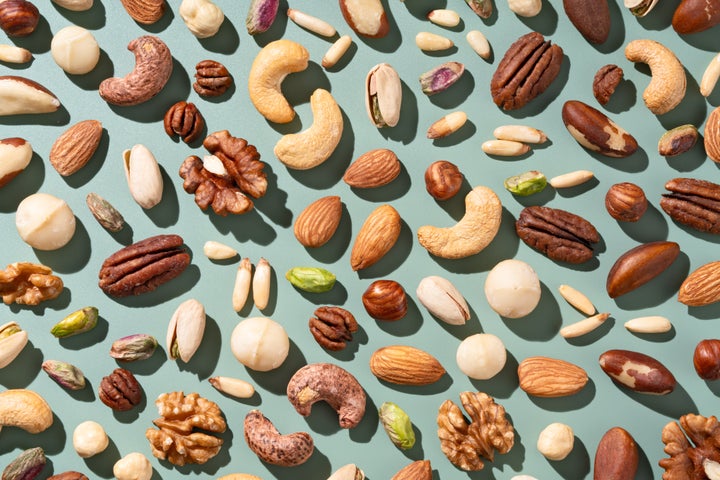
Nuts: “Especially with raw or unsalted nuts, they’re best stored in the refrigerator or even the freezer if you won’t be eating them for a while,” Detwiler explained. “Their high fat content makes them prone to oxidation. Heat and oxygen accelerate spoilage, even before you notice taste changes or that rancid quality.”
Jarred pesto: “This is a big one,” Amalaradjou said. “It’s moist, low-acid and can spoil quickly. The USDA FoodKeeper app recommends refrigerating it after opening, and using it up within at least three days.”
Prepared horseradish: “People often leave this in the pantry incorrectly,” Amalaradjou said. “But once opened, it can lose its stability and can spoil.”
Tortillas: Check the fine print on the package, because many tortilla manufacturers recommend refrigeration after opening. “That suggestion is for the prevention of mould,” said Keith Warriner, a professor in the department of food science at the University of Guelph in Ontario, Canada. “Although they’re considered a low-moisture food, it’s possible for condensation to occur, resulting in mould growth.” But if they sit on the counter for a while, it’s probably OK. “Tortillas can vary in terms of their formulation, but, generally speaking, refrigeration is used for quality extension, not for safety,” said Donald W. Schaffner, food science department chair at Rutgers University.

Hot sauce is one food that can go either way, depending on its label.
Vanessa Coffman is the alliance director at Stop Foodborne Illness, and she discussed the reason some hot sauces may require refrigeration and some do not. “It often depends on acidity, since harmful microbes struggle to grow in highly acidic environments,” she said. “This means some hot sauce is safe at room temperature after opening, while others with lower acidity should be refrigerated.”
It’s an especially tricky category, Schaffner agreed: “Generally speaking, these products have a very low pH, so refrigeration is not needed for safety. For example, we consume a lot of Sriracha in my house and we never refrigerate it. But other types of hot sauce go right in the fridge.”
If you’re wondering how to know where yours goes, we have an entire guide on which ingredients to look for on your hot sauce label.
Are these taking up fridge space? They could go in the pantry.
Ketchup: “I store my tomato ketchup in the cupboard next to the barbecue sauce,” Warriner said. There’s a science-backed reason for the placement, he noted: “It’s high in acid, so microbes die off quicker at room temperature compared to in the refrigerator.” There’s another reason, too. “Ketchup has a lower viscosity at room temperature, so it’s easier to pour than fridge-stored stuff,” he said. If you consider the difference between the quick pour of room-temperature ketchup at a restaurant versus how long it takes to pour at home when it’s been chilled, you might be convinced to adopt Warriner’s method.
It’s worth noting that the United States Department of Agriculture agrees with Warriner, since its official guidance is that “shelf-stable commercial ketchup, cocktail sauce and chili sauce are safe when stored at room temperature after opening. “Quality, not safety, is the reason the labels on these products suggest that they be refrigerated after opening,” the government website says.
Soy sauce: “Even though this is a liquid food, it has a low water activity because of its high salt content,” Schaffner said. However, he noted, “There’s no harm in refrigerating it if you really want to, and if you don’t use it very often, the colder temperature may extend the quality of its shelf life.”

Ricky Herawan / 500px via Getty Images
NEVER refrigerate these foods:
Honey: “It should never be refrigerated,” said Diez-Gonzalez. “Otherwise, it may solidify by crystallising its sugars.” While this doesn’t mean the honey is unsafe to eat, you’ll need to reliquefy it by putting the jar in a bowl of warm water.
Bread: For the best taste and maximum freshness, it should never be refrigerated. “This has to do with the chemistry of starch retrogradation, which can cause breads that are refrigerated to stale faster than breads that are stored at room temperature,” Schaffner said. At his house, freshly baked bread gets sliced and put into the freezer, where it stays fresh.
Coffee: Whether you have whole beans or ground, avoid the refrigerator. Detwiler explained, “Coffee absorbs moisture and odours. Refrigeration introduces condensation, which degrades flavour and aroma.” Warriner added that the moisture can cause “clumping and loss of volatile flavours.”
Chocolate: While an ice-cold candy bar may be the ultimate summer treat, baking chocolate should stay at room temperature. “Condensation in the refrigerator can cause chocolate to get white patches called ‘blooming,’” Warriner explained. While harmless, it can cause chocolate to lose its glossiness and have a powdery texture.
Remember, it’s all about the microbes.
It’s important to remember that products sitting safely on your pantry shelf might need to be moved once you crack into them. “Opening changes everything,” Detwiler said. “Once opened, foods are exposed to air, moisture and germs from handling. Items like sauces, dressings and shredded cheese often shift from shelf-stable to perishable.”
Warriner added, “People don’t always appreciate that the products like mayonnaise or pasta sauce are heat-treated prior to packing to kill microbes, but once opened, the microbes can come back, leading to spoilage.”
Finally, don’t use smell as a barometer for safety. “Many of the pathogens that cause foodborne illness, like listeria, salmonella, and certain strains of E. coli, don’t produce noticeable odours, discolouration or texture changes,” Detwiler said. “That means food can smell perfectly fine while still posing a real risk.”
What to do instead? Make sure food hasn’t been at room temperature for more than two hours, keep track of when you bought something and how long it’s been opened, and follow the “when in doubt, throw it out” rule. Expiration dates can be used as rough guides, but remember that they’re usually there to indicate quality more than safety.
You must be logged in to post a comment Login