Formula 1 is set to cancel its upcoming races in Bahrain and Saudi Arabia over security concerns because of the war in the Middle East, Sky Sports News understands.
A grand prix was scheduled in each country next month, with Bahrain’srace on 12 April and Saudi Arabia’s on 19 April.
The decision is expected to be officially confirmed within the next two days. As of writing, both events still appear on the Formula 1 schedule.
Sky Sports News understands the set-to-be-cancelled Middle East races will likely not be replaced on F1’s March-December calendar, meaning the season would run to 22 Grands Prix weekends.
The outlet reported that the decision comes as the situation in the Middle East has not improved in recent days. Both organisations declined to comment.
Formula 1 races are also set to be held in the Middle East this winter, with Grands Prix in Qatar on 29 November and Abu Dhabi on 6 December.
Iran war day 14: On the ground
Advertisement
Mohammed Ben Sulayem, head of the FIA, said on Monday that “safety and wellbeing” will be the main concern when deciding on whether the races will go ahead.
It comes as several major banks closed their branches in Gulf states and evacuated staff from their building in the wake of Iranian strikes.
Advertisement
Standard Chartered began evacuating staff from offices in Dubai and told them to work from home, Reuters reported on Wednesday, citing two sources.
Citigroup, an American bank, also told its staff to evacuate offices in the Dubai International Financial Centre (DIFC) and Dubai’s Oud Metha neighbourhood.
JP Morgan said its employees in the Middle East would also be working from home “for the time being” but said its businesses and client servicing “remain uninterrupted”.
Advertisement
And HSBC has closed all branches in Qatar until further notice, according to a customer notice, saying the measure is to ensure the safety of staff and customers.
“The safety of our colleagues and customers remains our top priority,” a HSBC spokesperson said.
Bleu Stean-Tannis’ advocate said his client found taking cannabis was beneficial for his ADHD
03:51, 03 Apr 2026
Advertisement
A man who was out of prison on licence after committing a serious assault is back behind bars after turning his hand to growing cannabis.
Acting on intelligence police officers went to Bleu Stean-Tannis’ house and found he had converted three bedrooms to the production of the drug on a commercial scale. The defendant’s advocate told Swansea Crown Court his client had initially started growing cannabis to self-medicate his ADHD but it was accepted that “things became bigger than that”.
At the time of the drugs bust Stean-Tannis was out of prison on licence from a five-and-a-half-year sentence imposed for a brutal attack carried out with his cousin which saw the men punching, kicking, and stamping on their victim and leaving him with a collapsed lung, smashed eye socket, and ruptured eardrum.
Caitlin Brazel, prosecuting, told the court that on October 12 last year police executed a search warrant at the defendant’s house in the Mount Pleasant area of Swansea following intelligence reports that he had set up a cannabis cultivation operation.
Advertisement
In the property officers found three of the bedrooms had been dedicated to the growing of cannabis with two of the rooms containing a total of 48 plants at various stages of maturity along with lights and other equipment and the third bedroom showing evidence of a previous harvest.
The prosecutor said when arrested 40-year-old Stean-Tannis said he was “going to go guilty to everything” as he didn’t want to get “stitched up”. He subsequently answered “no comment” to all questions asked in interview.
Bleu Stean-Tannis, formerly of of Cedar Avenue, Gorseinon, but now of Harries Street, Mount Pleasant, Swansea, had previously pleaded guilty to producing cannabis when he appeared in the dock for sentencing.
Advertisement
He has 21 previous convictions for 37 offences including robbery, using violence to enter premises, battery, breach of a restraining order, possession of bladed articles, and five for the simple possession of cannabis.
In 2021 the defendant was sentenced to five and a half years in prison for inflicting grievous bodily harm with intent for a joint assault carried out with his cousin Michael Gilbert which saw them repeatedly punching, kicking, and stamping on their victim outside his home. The victim sustained a collapsed lung, smashed eye socket, and ruptured eardrum. Stean-Tannis was released on licence from that sentence in 2024.
Dan Griffiths, for Stean-Tannis, said the defendant had ADHD and found the consumption of cannabis to be beneficial.
He said his client had been in receipt of a private prescription for the drug but when the cost became “prohibitive” he turned to growing the drug initially for his own use – though he said it had to be accepted “things became bigger than that” and it progressed to a “modest commercial operation”.
Advertisement
The advocate said Stean-Tannis had responded well to being on licence and it was perhaps a sign of his level of compliance that the decision had been taken not to recall him back to prison following his arrest in October last year.
Judge Paul Thomas KC told Stean-Tannis he would have known the consequences of committing further offences while subject to licence but had ignored that and had decided to set up a commercial-scale cannabis growing operation. The judge noted, however, that the defendant had obviously “impressed” those responsible for his licence as they had not recalled him.
With a one-third discount for his guilty plea Stean-Tannis was sentenced to 32 months in prison. He will serve 40% of the sentence in custody before being released on licence to serve the remainder in the community.
Get daily breaking news updates on your phone by joining our WhatsApp community here. We occasionally treat members to special offers, promotions and ads from us and our partners. See our Privacy Notice.
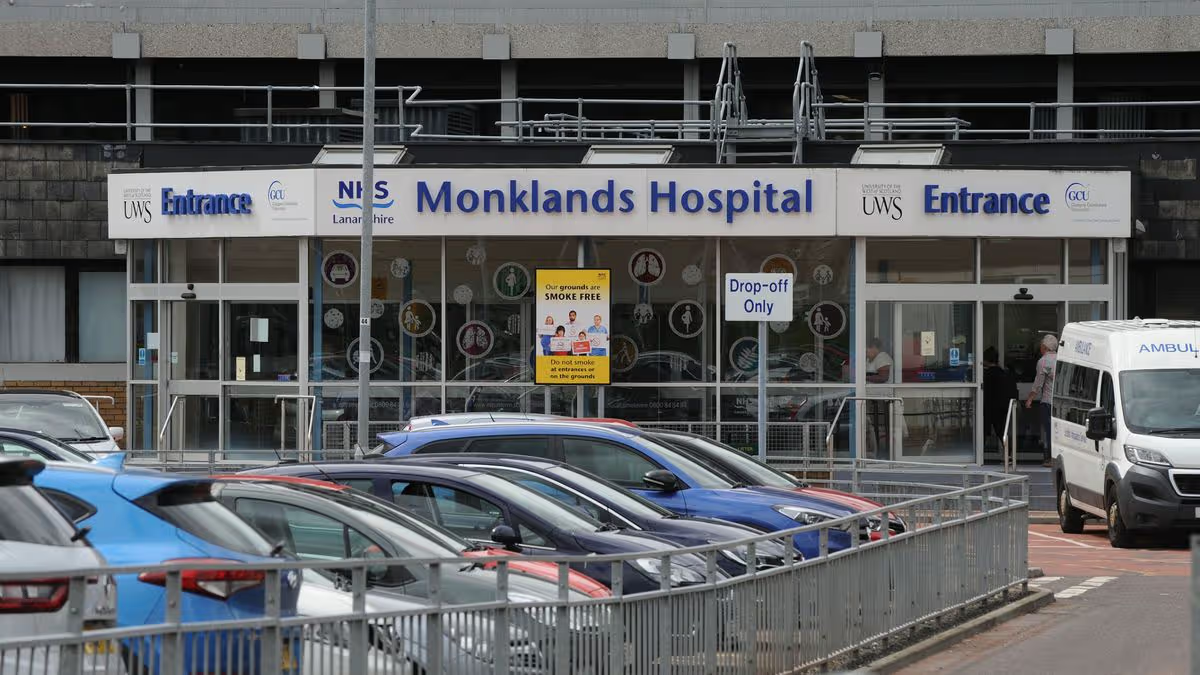
Patients were moved as a precaution from ward 16 at the hospital in 2022 to the adjacent ward 15 while remedial works were carried out. But the refurbishment has yet to be finished – and fresh infection concerns have since been raised within the temporary replacement ward.
The Record understands new fears were raised about mould in ward 15 in November last year but staff were only informed in recent weeks. Patients have since been advised to not use tap water to brush their teeth.
The Scottish Government said an Incident Management Team has monitored infections in the ward but it was stood down last week.
Advertisement
A whistleblower told the Record that refurbishment works were halted on ward 16 three years ago and had only resumed in recent months.
Wards have previously been closed at the £1bn Queen Elizabeth University Hospital (QEUH) in Glasgow due to an infection scandal which has rocked Holyrood.
John Swinney has repeatedly denied the health campus was rushed open in 2015 despite fears from health bosses it was not ready to do so.
The Monklands infection outbreak comes amid continued uncertainty about the future of the current hospital, which has been open since 1977 and is due to be replaced.
Advertisement
Plans were submitted last year by NHS bosses to build a new facility at Wester Moffatt but have yet to be signed off by the SNP Government.
The current hospital lies in the Airdrie & Shotts constituency which is being contested by SNP Health Secretary Neil Gray at May’s election.
Kieron Higgins, Scottish Labour candidate for the neighbouring Coatbridge & Chryston constituency, said: “This is absolutely appalling.
Advertisement
“While SNP ministers like John Swinney and Neil Gray were falsely assuring people that Glasgow’s £1 billion super hospital was safe, there was a separate infection issue in the blood cancer ward at Monklands Hospital, in the Health Secretary’s own backyard.
“This is completely unacceptable and the SNP need to explain why they kept this quiet. Politics and PR must never come before patient safety.
“Our NHS doesn’t belong to SNP ministers and it doesn’t belong to senior managers. It belongs to patients, staff, their families, and all of us.
“This is just a latest example of SNP secrecy in our health service and why Scotland needs change.”
Advertisement
Christina Coulombe, director of infection prevention at NHS Lanarkshire, insisted patient safety “has remained our priority” as remedial work continues to bring ward 16 back up to standard.
“We have been carrying out work on environmental issues affecting haematology inpatient areas at University Hospital Monklands,” she said.
“This has been managed in line with national infection prevention and control guidance. An Incident Management Team to support this work was established on November 12, 2025, and has since been stood down on March 27. We provided regular updates to Antimicrobial Resistance & Healthcare Associated Infection (ARHAI) Scotland.
“Patient safety has remained our priority. Where issues have been identified, appropriate infection prevention and control measures have been put in place. Remedial work is underway to allow ward 16 to reopen once it meets all required standards.”
Advertisement
Neil Gray, the Health Secretary, said: “As NHS Lanarkshire has already made clear, this issue was dealt with by expert clinicians at Monklands and thanks to their efforts this incident was stepped down last week. The SNP Government’s budget in February – which Labour didn’t even bother to vote for- progresses the replacement of Monklands hospital.
“Anas Sarwar and the Labour party should know better- they’ve been caught out lying about the QEUH and to now try and scaremonger over an incident closed and handled safely by our NHS professionals shows just how desperate they are.”
To sign up to the Daily Record Politics newsletter, click here
DVLA and DWP have outlined when contact centres and phone lines will be available over Easter weekend, with closures on Good Friday and Easter Monday affecting services
The DVLA and DWP have detailed exactly when their contact centres and telephone lines will be operational over the bank holiday weekend. However, those needing support from these departments during the bank holiday may need to plan ahead to get in touch.
The Easter weekend includes two bank holidays on Good Friday, April 3, and Easter Monday, April 6. Bank holidays are generally not considered working days, even within government departments, so the extended weekend could cause disruption for those needing to contact the departments or waiting for updates, payments and deliveries.
Department for Work and Pensions
The DWP posted an alert for claimants stating: “Jobcentre Plus offices and phone lines will be closed on Fri 3 and Mon 6 Apr over the Easter period.”
Advertisement
The telephone lines will also remain closed throughout Saturday and Easter Sunday as they’re normally only open from Monday to Friday between 8am and 5pm, reports the Express.
Even those accessing their online Universal Credit account will typically only receive responses during weekdays.
The DWP contact number you need to use will depend on your initial reason for contacting the department. Some of the most frequently requested numbers are available here on the GOV.UK website.
The offices and telephone lines should return to normal operation from Tuesday, April 7.
Advertisement
However, it’s not just DWP contact centres that are affected by the bank holidays. Payments from the DWP scheduled for either Good Friday or Easter Monday will not be processed on these days due to most banks ceasing transactions. Instead, they will primarily be paid on the first working day prior, which is Thursday, April 2.
DVLA
Throughout the Easter period, customers will have access to DVLA’s online services. However, the department’s contact centres will be completely shut on Good Friday, Easter Sunday and Easter Monday.
On Saturday, April 4, the DVLA contact centre will maintain its usual Saturday operating hours from 8am to 2pm. Normal operating hours will also resume from Tuesday, April 7.
If you’re expecting deliveries from the DVLA, the department typically makes provisions for bank holidays and non-working days. The GOV.UK website features a tool that can direct individuals to the appropriate DVLA contact to resolve their issue.
She added: “In today’s meeting, we are focusing on the diplomatic and international planning measures, including collective mobilisation of our full range of diplomatic and economic tools and pressures, reassurance work with industry, insurers and energy markets, and also action to guarantee the safety of trapped ships and seafarers, and effective coordination that we need across the world to enable a safe and sustained opening of the strait.”
Halo: Campaign Evolved – not necessarily the biggest Xbox release of the year (Xbox Game Studios)
The Friday letters page tries to guess what the Nintendo Switch 2 Lite will cost, as one reader is shocked by the behind the scenes info on The Last Of Us Online.
Games Inbox is a collection of our readers’ letters, comments, and opinions. To join in with the discussions yourself email gamecentral@metro.co.uk
First party trio I know that Xbox gets ragged on a lot everywhere nowadays, and I’m not going to pretend they don’t deserve most of it. However, it’s not all bad and, as someone that owns an Xbox Series X/S, I feel I have to try and look on the bright side.
This is easier than you might think because they have a really stacked first party line-up this year, including Forza Horizon 6, Halo: Campaign Evolved, and Fable. There might also be Gears Of War: E-Day, but I’m not clear if that’s meant for 2026 or not.
Advertisement
That is a much better line-up than either Sony or Nintendo at the moment, in my opinion, and while I agree it may get overtaken by the end those are not games to be ignored. I would assume Forza to be the biggest, but I think Fable has a chance to do very well too. I’m not so sure about Halo though, given we’ve already had one remake of it and there’s no multiplayer.
Crazy to think Halo has gone from Xbox’s most important franchise to a second-stringer. Nothing lasts forever, I guess. Korey
Expert, exclusive gaming analysis
Sign up to the GameCentral newsletter for a unique take on the week in gaming, alongside the latest reviews and more. Delivered to your inbox every Saturday morning.
Advertisement
GC: Gears Of War: E-Day has no release year, so it could conceivably be this year.
Lite on value With prices constantly going up it seems to be only a matter of time before the Switch 2 is even more expensive and I still haven’t got one. I have to assume this is encouraging Nintendo to fast-track the Switch 2 Lite, although who knows how quickly it will be to appear. But perhaps the biggest question now is how cheap could it be?
The normal Switch 2 is £400, or thereabouts, so surely the aim would be to get the Lite version to under £300. But even that seems a lot. That’s still only what the original Switch was at launch, so I’d appreciate at least another £50 off. Although in this case I do accept that there are outside factors.
Advertisement
Gaming is going too expensive in every aspect and I really think it’s about time console manufactures acknowledge this and make an effort to change things as a priority. I would look to Nintendo more than anyone to lead the way on this but so far there’s not really been anything. Ollienaut
Come back later I completed Life Is Strange: Reunion over the weekend and basically agree with your review. The whole thing is a rushed mess, with reused graphics, bad branching storytelling, and a terrible plot. Not only do I not think there’ll be another one after this, but I don’t want it after this; Max and Chloe deserved so much better.
Square Enix obviously knew all this would be disaster or they wouldn’t have held back the review copies, so why do it at all? Better to let the series rest for a few years, until people really start to miss it, and then do a new game, even if it ends the story, then with a team that wants it and hasn’t just been gutted by their corporate overlords. Grackle
The budget of Zelda The idea of Nintendo becoming a big time film studio is so funny to me. The company with the least interest in telling a story is making the most successful movies… even if they don’t have stories either. The success of the second Mario film, which I haven’t seen, is only going to cement them further and other studios will be knocking down their door trying to get involved.
But like you said, that live action Zelda seems near impossible to get right. It could be done but I don’t have enough faith in the director or Nintendo as producer to make it work. I also can’t believe that Nintendo will pony up enough money to do the visuals justice.
An animated movie would’ve been such a better choice and a really good thing for more adult themed animation at the cinema. Or at least more adult than Mario. Zelda is the best video game franchise ever but what’s the betting it won’t be the best film ever? Or anything less than an embarrassment? Coolsbane
Advertisement
Virtual worlds within worlds Buying a game to pretend to own boxes of games you already have on digital is a hell of an elevator pitch. It’s always fascinating to me to read about these weird PC simulators, like truck sims and that powerhouse one.
I’d never want to play them but after thinking they’re a joke I always end up looking them up and it turns out they’ve sold 10 million or something. It’s easy to forget that non-gamers have very different interests and priorities to the rest of us. Snoopy PS: What is an elevator pitch anyway? Is that an American thing and they mean lift?
GC: We think they mean lift, yes.
Cyberdyne Systems That guy that was working on The Last Of Us Online for seven years only for it to cancelled must have a level of patience I can’t even begin to imagine. Apart from anything, I’m surprised he stayed in the games industry and didn’t go off and work for a saner kind of company afterwards.
Advertisement
Never mind the amount of hours everyone must’ve spent on the game, how much money did it cost to employ hundreds of people for seven years to make absolutely nothing? And the reason they cancelled it is because they didn’t want to spend the next 10 years making more content for it? Did they not know what a live service game was before they started?!
The more you learn about the games industry the more you begin to wonder whether anyone in it has any common sense. There are some creative geniuses making the games but everyone else around it seems to be running on only half a tank.
They keep trying to replace developers and artists with AI but how about swapping out some of these producers and exec types? As useless as AI is I don’t see how it could do any worse in most cases. Lynch
Resiopia PD I knew fans would get creative with Pokémon Pokopia and some of those examples were really great. I particularly appreciate whoever did the Resident Evil one because they edited the video for it so well too!
Advertisement
My dream is to recreate the towns as they were, but I don’t know if I’ll ever really get there. I still hold out enough hope that I don’t want to read that Reddit that tells you how to do it though. The fun of the game is working things out for yourself, and I appreciate that it doesn’t hold your hand as much as you’d think. Bosley
Don’t miss Gaming news! Add us as a Preferred Source
As a loyal GameCentral reader, we want to make sure you never miss our articles when searching for gaming stories. We have all the latest video games news, reviews, previews, and interviews, with a vibrant community of highly engaged readers.
Click the button below and tick Metro.co.uk to ensure you see stories from us first in Google Search.
GameCentral has been delivering unique games news and reviews for over a decade
Do a barrel roll Nice article on The Super Mario Galaxy Movie. I agree that it’s definitely not a dumb Minions style movie that just wants you to ‘switch off your brain’ (ever notice that the people that say that are the least likely to ever watch something where you need to switch it on?).
It’s crazy and weird (I saw it yesterday with my kids) but it’s meant to be like that and, as you say, it’s closest thing you can get to a game without actually playing it. Is there a better movie that could be made with more character depth? Maybe but I don’t know who you’d get to write it.
As far as I’m concerned the only thing it could do with is more proper jokes in the dialogue, as it was kind of flat like that. But I enjoyed it. The only character that came anywhere close to being annoying was Yoshi and he was fine. I don’t anticipate getting to watch it 100 times when it hits streaming but the first time at least it was pretty fun.
Advertisement
I especially like the Star Fox bit, which I don’t see how any kid could properly understand, but Glen Powell was perfect and I now fully expect a new game to appear, because there’s no way they did all that just so people can play Lylat Wars on Nintendo Switch Online.
I do wonder what it’s going to be but perhaps something lower budget, that is just an on-rails shooter, and go back to basics like that? That’s not the normal approach Nintendo takes but then they don’t have many dead franchises like that, that they have to try a different trick with. Gordo
Inbox also-rans If it really is just a fiver I think I’d be a lot more interested in an Indie Game Pass than the Xbox one. I had it for a while and I barely played any of the first party games. Renton
I’m not sure I see the point in a PlayStation 6 portable. If you’re only going to use it in the house how would it be any different from using a PlayStation Portal? Wilks
The small print New Inbox updates appear every weekday morning, with special Hot Topic Inboxes at the weekend. Readers’ letters are used on merit and may be edited for length and content.
You can also submit your own 500 to 600-word Reader’s Feature at any time via email or our Submit Stuff page, which if used will be shown in the next available weekend slot.
You can also leave your comments below and don’t forget to follow us on Twitter.
Liberal Democrat environment spokesperson Cllr Paula Widdowson said there were concerns City of York Council’s consultation on the changes did not allow participants to leave feedback about specific issues they could face.
Cllr Jenny Kent, the Labour administration’s environment executive member, said residents could have their say in person as well as in the council’s consultation broadly covering issues around the proposals.
It comes as the consultation on the changes has so far received more than 10,000 responses, the Local Democracy Reporting Service (LDRS) understands.
RECOMMENDED READING:
Advertisement
People can take part online, over the phone or by attending one of the in-person drop-in events planned in April.
The consultation is set to close on Friday, May 1.
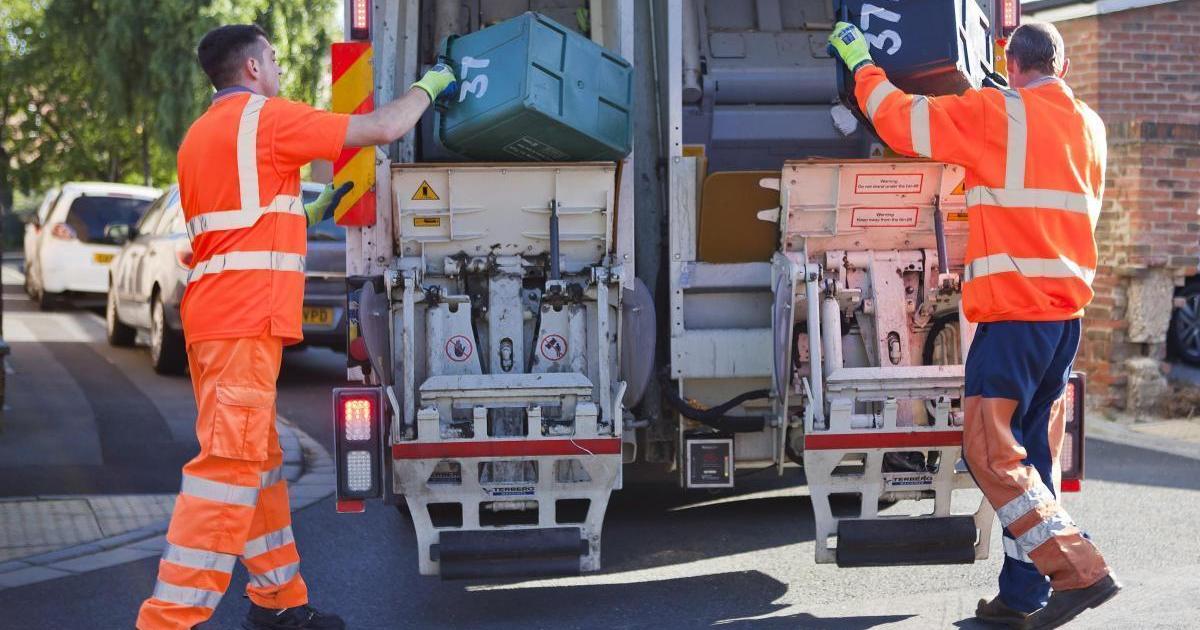
The proposals would see most households’ existing recycling boxes swapped for two 240-litre bins, one for paper and cardboard and another for glass, tins and plastic.
Each one would be collected every four weeks in two-week alternating cycles.
Advertisement
The changes come as the council looks to save £520,000 from its wider waste collection services over the next two years.
Council officials have said wheelie bins would allow people to recycle more ahead of requirements for soft plastics including film to be collected from the kerbside from March next year.
They added they would help reduce work-related injuries among council waste collection staff, make bin rounds more efficient and stop litter being left behind afterwards.
But concerns have been raised about the plans including how those living in smaller terraced houses will cope with having to store more wheelie bins.
Advertisement
The Liberal Democrats have also said waste being collected less frequently could see residents whose collections are missed waiting up to eight weeks for it to be taken away.
York recycling boxes. Picture is from York Council (Image: City of York Council)
Opposition environment spokesperson and deputy leader Cllr Widdowson said they were now asking people to them their views directly so they could build a clearer picture the potential effects.
Cllr Widdowson said: “We know residents care strongly about recycling and want to see a system that works well for everyone.
“Many people have told us they don’t feel the current consultation gives them the opportunity to explain their individual circumstances or concerns.
Advertisement
“It’s especially important we understand the impact on different households before any final decisions are made.”
Cllr Kent said she believed the changes would be positive but needed to hear from residents to understand how they could be affected.
She added it would be impossible to create a bespoke system for each of York’s roughly 95,000 households but the council wanted to know about any difficulties residents foresaw.
Cllr Kent said: “Proposed changes will see the capacity most residents have for recycling go up from 165 litres to 240 litres fortnightly, allowing more to be recycled at the kerbside.
Advertisement
“It will allow us to collect more from residents, reducing the need for them to go to the tip, and make collections more efficient, saving the council money.
“Liberal Democrats running another consultation is just confusing for residents and is not going to add anything to both the more than 10,000 responses the council’s consultation has already received, and the in-person drop in events we are running.”
People can share their views with the Liberal Democrats here: https://digitallibdems.typeform.com/2026Recycling
The council’s recycling consultation is available online here, along with the dates, times and locations of the in-person drop-in events scheduled for April: https://www.york.gov.uk/RecyclingReview
Advertisement
People can also take part by calling the council on: (01904) 551551 and paper copies of the survey can be found in Explore libraries.
Bondi early last year played into fevered speculation about the Epstein files, saying a client list was on her desk for review. But after an initial release included material that had largely already been public, the DOJ and FBI declared in July that the case was closed and that no further disclosures were warranted.
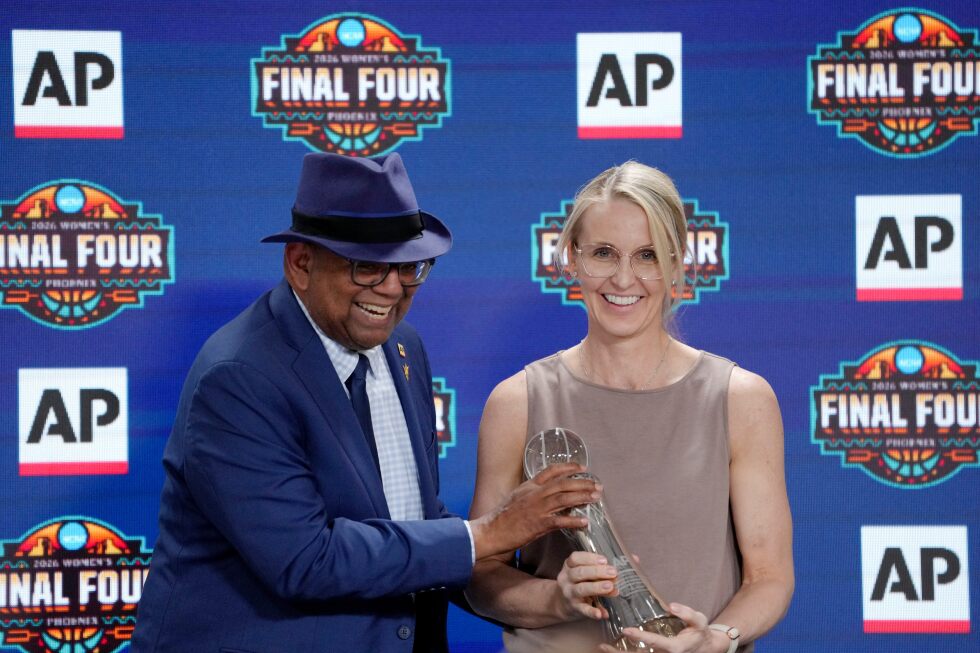
PHOENIX (AP) — Shea Ralph of Vanderbilt was named The Associated Press women’s basketball Coach of the Year on Thursday after turning the Commodores into one of the top teams in the nation.
Ralph led a team that returned just one starter to the most successful season in school history. The team went 29-5, with 13 of those wins coming in the regular season against a rugged Southeastern Conference schedule. The Commodores finished tied for second in the conference, which matched the best finish in program history. They earned a 2-seed in the NCAA Tournament and reached the Sweet 16.
“It’s wild. It’s hard to wrap my mind around it. This whole year we haven’t slowed down,” Ralph told the AP. “I love basketball, I love the group that I coach.I love they stayed with me. It’s been hard and it’s been challenging, but in a good way.”
Ralph received the award with her entire Vanderbilt coaching staff, as well as her mom, husband and daughter in attendance. It was also special for Ralph with her UConn family there as well as they were also there to celebrate AP Player of the Year Sarah Strong.
Advertisement
Ralph received 23 votes from the 31-member national media panel that votes on the AP Top 25 each week. UCLA’s Cori Close, who was the AP Coach of the Year last season, was next with four. Ralph’s mentor at UConn, Geno Auriemma, received two votes while Mark Kellogg of West Virginia and Kara Lawson of Duke each received one.
”The thing I love the most of where I’m at is the vision never changed,” Ralph said. “That’s really important to me. Do it at a high level at Vanderbilt is really important to me. They’ve shown what that looks like to invest in women. Really invest in women. The resources and money, but also the development and academics.”
Ralph is the first Vanderbilt coach to win the award, which was launched in 1994-95. Her team, which won seven more games than the year before and was ranked as high as No. 5 in the AP poll, was led by All-America guard Mikayla Blakes.
“She’s someone you would want to run through a brick wall for,” Blakes said. “She has bought so much into us that it’s only right that we continue to fight in this game for her, and she’s someone who in tough moments you want to lean on. And that’s the reason why I came here.”
Advertisement
Vanderbilt started out 20-0 and had seven wins over ranked teams this season.
“I think truly we never talked about it,” Ralph said of the undefeated start. “I chuckled to some of my staff members this is what I’m used to. I feel comfortable here. Keep kicking their butts in practice and challenging them and keep preparing the same way no matter what our record is.”
___
AP Sports Writer Teresa M. Walker contributed to this report.
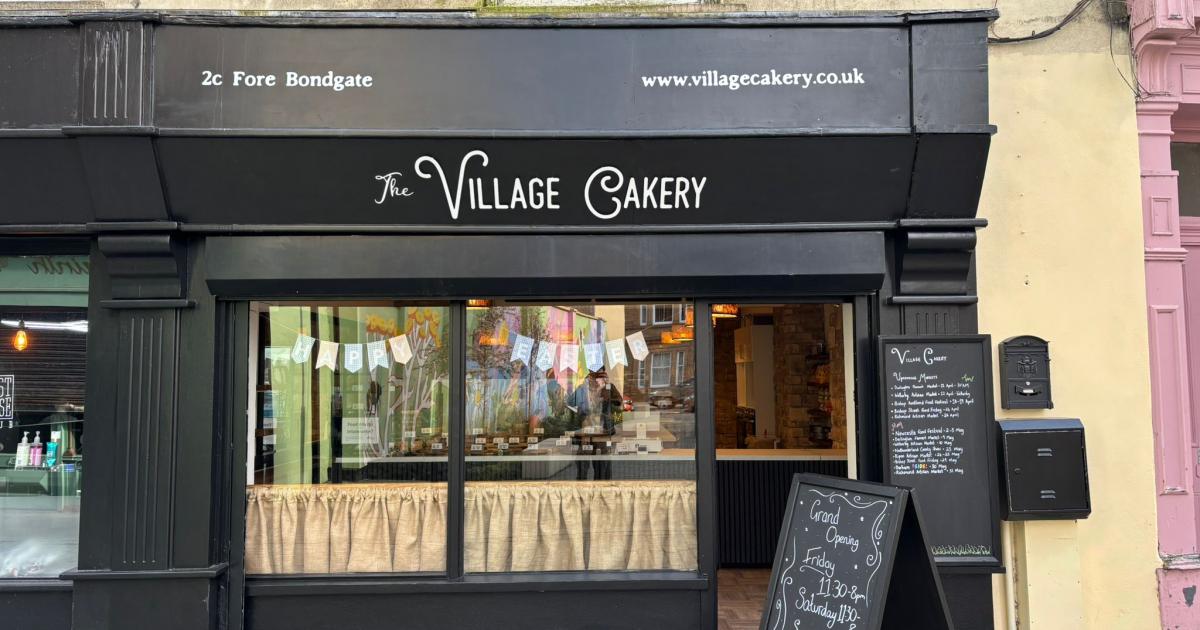
Village Cakery, run by couple Andy Hope and Bradley Skeen, has been operating from their home in Cockfield, County Durham.
The bakery will open at 11.30am on Friday (April 3).
The business started in 2024, mainly doing celebration cakes, with Andy saying they had always talked about opening a shop.
But he said it still “does not feel real”.
Advertisement
Andy said: “I do not think it will ever sink in until that first customer walks through the door. It is daunting, but the excitement is just unbelievable.”
The bakery will open at 11.30am tomorrow (Image: THE NORTHERN ECHO)
The couple, who are both from Bishop Auckland, got the keys to the shop on Fore Bondgate on Sunday, March 1.
Andy said: “We had always talked about opening a shop, but it was about Christmas time when we decided to do it.
“We viewed a few shops around Bishop because we were both born and bred here and it is where we want our base to be.
Advertisement
“We are all about the community, working together to make a better high street.
“We are trying to get the other shops involved in our opening by giving out 20 per cent discount vouchers.”
The bakery, which was originally started by Andy before his sister joined, started by going to various markets in the region.
A list of upcoming markets the bakery will be attending over the next two months (Image: THE NORTHERN ECHO)
He took a little break but started it up again with his partner, Bradley, and the business has gone from strength to strength.
Advertisement
Andy said: “We just decided to dive right in, do it properly, get the shop, go to markets and just do everything we possibly can.
“It has gone so well. The markets that we’ve had this year have just been phenomenal.”
And Andy has said what people in Bishop can expect from Village Cakery.
“A wide variety of good quality products,” he said.
Advertisement
“We are always trying to do something different. We are going to trade back on TikTok, and we are looking to do home delivery service.
“Down the line, we’re looking to do bakery classes or demonstrations. The possibilities of what you can do are pretty much endless.”
Former solider John Landgon requested a photo and used it generate sexual AI videos
03:05, 03 Apr 2026
Advertisement
A social worker sent sexual AI-generated videos to someone he believed to be a 14-year-old girl, a court has heard.
Former solider John Landgon contacted the profile of what appeared to be a child on a chat app and requested photos which he then used for making AI videos of them hugging and kissing and a video where the “girl” was undressed. When arrested he denied getting any sexual gratification from what he had done.
A judge at Swansea Crown Court said was clear the 63-year-old defendant was in denial about being a paedophile – at least publicly – and said given that fact there was no realistic prospect of rehabilitation and immediate custody was the only appropriate sentence.
The court heard that in March this year Landgon made contact with a profile on the dating and chat app Just Say Hi which appeared to be that of a 14-year-old girl. In reality the profile was being operated by members of a so-called paedophile hunter group.
Advertisement
The defendant and the decoy moved to WhatsApp where they continued chatting with Langdon saying he was looking for “fun with the ladies”. When reminded of the decoy’s age he said he was “fine” with it. For the latest court stories sign up to our crime newsletter.
The court heard Landgon told the decoy he wanted to give her a hug and then asked for pictures. When an appropriate photo was provided, he used it to generate AI videos of him and the “girl” hugging and kissing which he sent back to the decoy. He then sent an AI-generated video of the “girl” being undressed.
The court heard the defendant went on to send the decoy further AI videos of oral sex.
The court heard the operators of the decoy subsequently went to Landgon’s address and confronted him in an incident which was livestreamed on social media.
Advertisement
The police were called and the defendant was arrested.
In his interview Langdon said when he realised the person he was chatting to was only 14 he only wanted to be her friend, saying he spoke to other 13- and 14-year-olds and had “platonic friendships” with them.
He accepted making the AI-generated videos in what he called “a moment of madness” and said he did not get any sexual gratification from doing so.
John Langdon, of Brickfield Street, Machynlleth, had previously pleaded guilty to attempted sexual communications with a child and to attempting to cause a child to watch a sexual act when he appeared in the dock for sentencing. He has no previous convictions.
Advertisement
Caitlin Brazel, for Langdon, said the defendant had served for nine years in the Army and then found employment in a variety of jobs before working a social worker for adults with learning difficulties for the last eight years.
She said her client’s “troubled upbringing” no doubt contributed to his mental health battles and his time in the military “did not help”.
The barrister said the offending was out of character for her client and said he had told her he wished he could turn the clock back and undo what he did.
She said they remained her instructions that the defendant is not sexually attracted to children.
Advertisement
Judge Paul Thomas KC said there were elements of grooming and deviousness in what the defendant did and he noted Langon had told the author of the pre-sentence report that he was not guilty and had been, in effect, “stitched up” by his legal representative.
He told the defendant: “It is clear from the facts of the case you are a man with a significant sexual interest in young girls. In other words you are a paedophile. It is equally clear that you do not – publicly at least – accept you are a paedophile.
“Perhaps you do not want to admit this fact to others.
“Your continued denial that you are a paedophile makes me question the effectiveness of any intervention designed to address this deviancy.
Advertisement
“he author of the pre-sentence report comes to the same conclusion. I find there is no realistic prospect of rehabilitation at the moment.”
With a one-third discount for his guilty pleas Langdon was sentenced to 16 months in prison.
He will serve 40% of the sentence in custody before being released on licence to serve the remainder in the community.
The defendant will be a registered sex offender for 10 years and was made subject to a sexual harm prevention order to run for the same length of time.
Advertisement
Get daily breaking news updates on your phone by joining our WhatsApp community here. We occasionally treat members to special offers, promotions and ads from us and our partners. See our Privacy Notice.





















































You must be logged in to post a comment Login