People who aren’t on benefits may still be entitled to some National Insurance credits depending on their circumstances
Individuals failing to claim the National Insurance credits they are entitled to could find themselves receiving reduced state pension payments. Contrary to common misconception, these credits aren’t solely available to those claiming specific benefits.
Advertisement
National Insurance credits can fill gaps in your National Insurance record, which determines your state pension entitlement. Typically, these credits are awarded to individuals receiving certain benefits such as Carer’s Allowance and Child Benefit, preventing carers from losing state pension rights whilst looking after family members.
Nevertheless, there are four situations where individuals can obtain National Insurance credits without being in receipt of any benefits. Some of these aren’t awarded automatically, meaning people must claim their entitlement or face the prospect of missing out.
Training courses
Individuals aged 18 or over who have been placed on a government-approved training course by Jobcentre Plus should receive Class 1 National Insurance credits automatically. This only applies if the course duration doesn’t exceed one year.
Should you be over 18 and attending a government-approved training course lasting no more than one year without being referred by the Jobcentre, you may still qualify for credits but will need to make an application. This requires writing to HMRC, detailing the period for which credits are being claimed and explaining your eligibility.
Advertisement
Jury service
Individuals who are not self-employed and have received a summons for jury service may qualify for National Insurance credits covering their period of court attendance. To obtain these Class 1 credits, you must submit a written application to HMRC.
Partners of people in armed forces
To potentially qualify for National Insurance credits, you must be married to or in a civil partnership with a member of the armed forces and have accompanied your partner on an overseas deployment.
For those who departed for their posting after 6 April 2010 and are now back in the UK, Class 1 credits can be requested. If your overseas posting took place after 6 April 1975, you reached state pension age on or after 6 April 2016, and you’re not receiving Class 1 credits, then you may apply for Class 3 credits as an alternative.
Wrongly imprisoned
If the Court of Appeal, or Court of Criminal Appeal in Scotland, overturned your conviction, you’re eligible to apply for Class 1 credits. You must contact HMRC in writing, providing your National Insurance number alongside an explanation of your eligibility.
Advertisement
Information regarding the application process and submission locations for these credits is available on the Gov.uk website.
Class 1 National Insurance credits contribute towards additional benefits such as Jobseeker’s Allowance as well as your state pension. Class 3 National Insurance credits exclusively contribute towards your state pension qualification.
You can review your National Insurance record and state pension forecast online to identify any gaps that could be filled with credits, and to verify that any credits you’ve requested have been correctly applied.
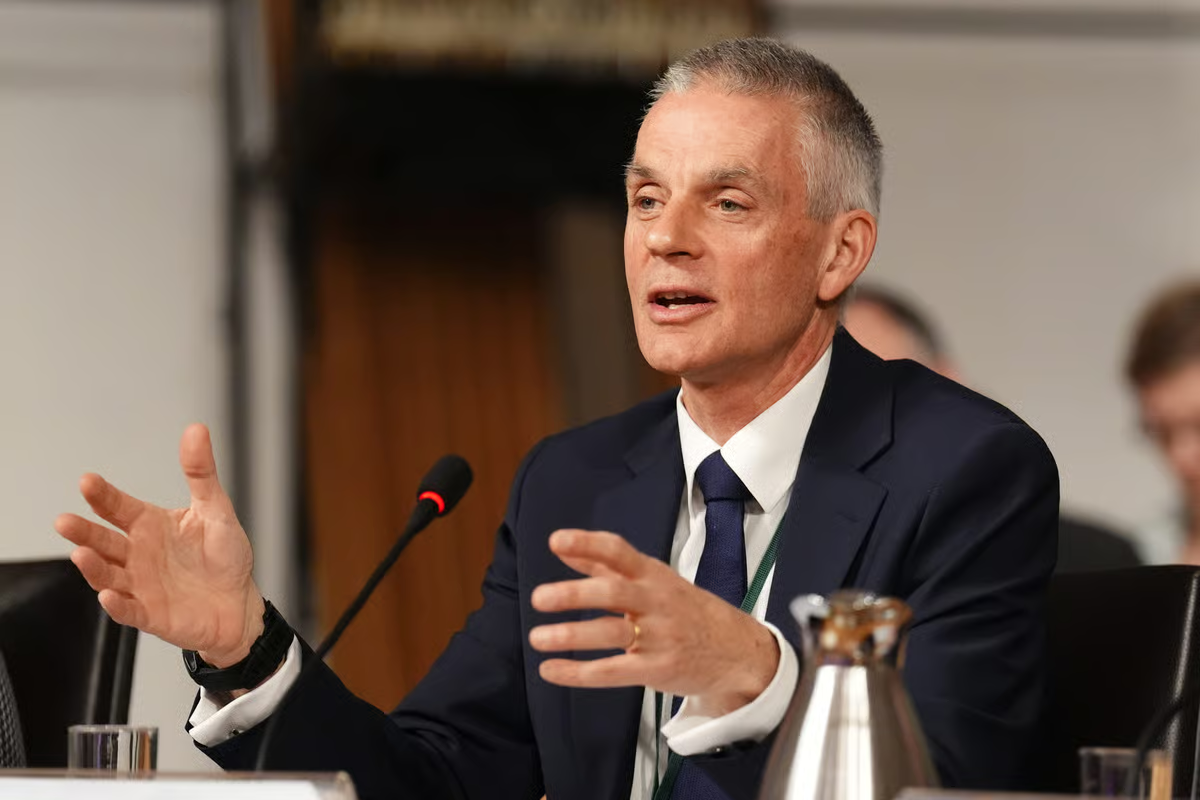
“But I do think the idea of a basic level of charter – I don’t know, there might be an example out there – but an overall charter that has a time length like this, I think there should be a standard provision that just goes forever, basically, until Parliament, or whatever the mechanism is, decides through recent debate – actively, actively, not passively – to say, okay, we don’t want the BBC anymore.”
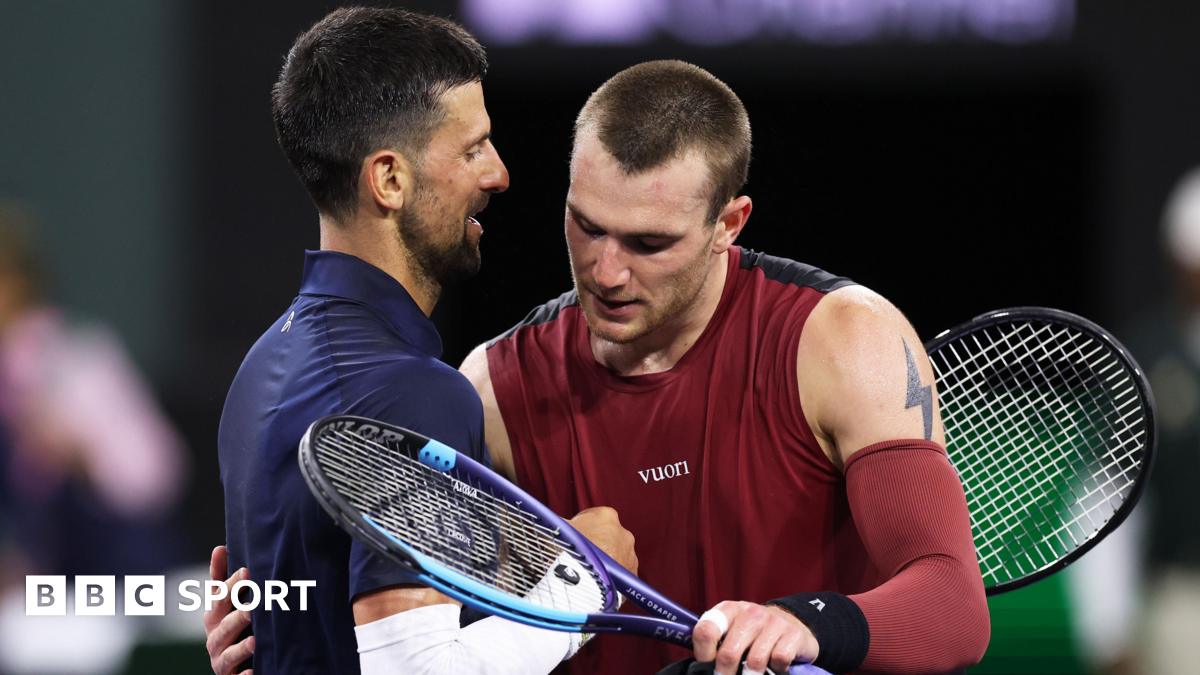
Djokovic, runner-up to Alcaraz at January’s Australian Open, won 87% of points on his serve as he clinched the opening set.
However, Draper levelled to force a decider as the quality rose, with Djokovic winning a gruelling 26-shot rally in the opening game at 30-30 on the Serb’s serve.
The Briton broke his rival’s next service game but, serving for the match at 5-4 up, was broken back as the match went to a tie-break.
Once again, Draper regrouped impressively to advance and set up a quarter-final against former world number one Daniil Medvedev.
Advertisement
“It was a real physical battle, there were definitely a lot of ups and downs in the match,” Draper, 24, said.
“To come through that match is something I will never forget.”
Djokovic, playing his first tournament reaching the final of the Australian Open in January, believes he paid the price for the 26-shot rally.
“It cost me a break after,” he said. “It was great winning that point in that game, but I just ran completely out of the gas.
Advertisement
“I got the crowd backing me and I felt the energy. It was, like, ‘maybe I’m going take this one’.
“It was so close, so close. I mean, just unfortunate few mistakes from my side.”
“He is playing at a great level. Just, overall, a great player, great guy.”
The 24-time major winner regularly leaned on his racket between points as Draper broke but the Briton was unable to see the contest out as, serving for match, he hit a wild backhand wide, double faulted and prodded a tame drop shot into the net, with a magnificent Djokovic drop shot seeing him take the second break point.
Graham Foster believes he was rejected by Rhona Goskirk again (Picture: ITV)
The following article contains spoilers from the episode of Emmerdale dated March 12. It hasn’t aired on ITV1 yet, but can be viewed on ITVX.
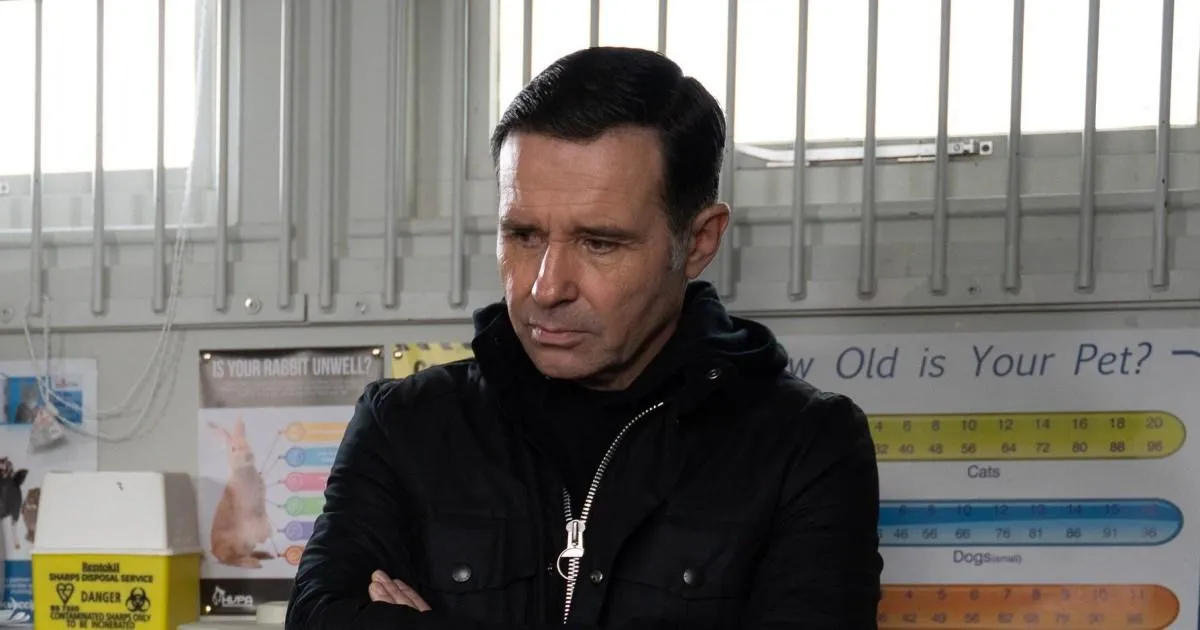
He’s a man of mystery, but a hurt Graham Foster (Andrew Scarborough) is just like any other character in Emmerdale – he searches for comfort in the wrong place.
He explained that he was only there for Joe Tate (Ned Porteous), leaving Rhona to wonder what else Graham actually wants now he’s back in the village.
Advertisement
Graham hoped that Rhona would meet with him to talk about their dynamic (Picture: ITV)
He got closer to her and made it clear that he wanted her. Rhona has previously told just about everyone in the village that she’s not interested in Graham, but the look on her face and the length of time she gazed into his eyes suggested otherwise.
Graham and his one and only tie (seriously can the man do some shopping) was back at Smithy Cottage in today’s episode and asked Rhona if they were going to do anything about their obvious chemistry.
Rhona had every intention of meeting Graham, but got distracted due to daughter Ivy injuring herself at nursery. As soon as she was back though, she got Vanessa Woodfield (Michelle Hardwick) to watch Ivy as she raced across the village.
When she got there, Graham was nowhere to be seen.
Advertisement
Lydia witnesses the exchange between Graham and Rhona (Picture: ITV)
He was back at Home Farm drowning his sorrows with a fresh glass of water. As someone who also doesn’t drink alcohol, I like to mix things up and pour a glass of orange juice when I’m heartbroken but you do you Graham.
Don’t miss a Soaps scoop! Add us as a Preferred Source
As a loyal Metro Soaps reader, we want to make sure you never miss our articles when searching for stories. We have all the latest soaps news, spoilers, videos, and interviews, with a vibrant community of highly engaged readers.
Click the button below and tick Metro.co.uk to ensure you see stories from us first in Google Search.
Now you can ensure you never miss a story from the Soaps team
Advertisement
The door went and a certain someone entered. Her dislike towards Graham suddenly didn’t exist in this moment though, as all she could focus on was the argument she just had with someone else in the village.
Graham poured some alcohol and then started coming onto the character. They ended up going upstairs, with Graham failing to spot a phone call coming in from Rhona.
Want to know who it is? You’ll have to check out the episode tonight, or watch it on ITVX right now.
A circular red mark was spotted on Trump’s left eyebrow on Wednesday, sparking social media speculation about his health as the White House remains silent on the cause
Michael D. Carroll, Maria Villarroel News Reporter and Rachel Vickers-Price
07:03, 12 Mar 2026
Concerns about US president Donald Trump’s health have resurfaced after a fresh bruise emerged on his eyebrow.
A circular, red mark was spotted at the top of the US President’s left eyebrow on Wednesday. The White House has not yet commented on any possible fall or incident that may have resulted in the marking.
Advertisement
Social media users were swift to ridicule the leader’s appearance in the photograph, reports the Daily Star, with independent journalist Aaron Rupar joking, “Trump’s face today looks downright radioactive.”
A second user took to X, formerly Twitter, to say: “What’s going on in Trump’s left (our right) eyebrow? Is that a new bruise?” one user pointed out.
Ensure our latest stories always appear at the top of your Google Search by making us a Preferred Source. Click here to activate or add us as your Preferred Source in your Google search settings.
Another chimed in with: “Dear Leader is healthier and stronger than 1,000 men!”
Trump’s bruise was noticeable on Wednesday (March 11) as he spoke to journalists before leaving the White House alongside US press secretary Karoline Leavitt.
The 79-year-old president has regularly been seen with bruises since returning to the White House last year. However, this marks the first time the commander-in-chief has had a mark on his face.
Advertisement
It has not been uncommon for Trump to have large, dark bruises visible on the back of both his hands.
In February, Trump was seen with considerable bruises on his hands. Leavitt has previously explained that the spots are due to the president constantly shaking hands, as he is a “man of the people.
“President Trump has bruises on his hand because he’s constantly working and shaking hands all day, every day,” Leavitt stated last year.
On a separate occasion, the White House announced in January that his bruising was due to “clipping” his hand on a table prior to attending the World Economic Forum.
However, this explanation has been disputed by experts, many of whom propose the marks are likely due to his aspirin regimen, which he asserts he follows to prevent “thick blood pouring through my heart.”
In July 2025, Trump was diagnosed with chronic venous insufficiency, a benign common condition amongst individuals in their 70s, typified by blood pooling in the veins, leading to increased pressure and strain on the vein walls.
In July 2025, Trump was diagnosed with chronic venous insufficiency, a benign common condition amongst individuals in their 70s, typified by blood pooling in the veins, leading to increased pressure and strain on the vein walls.
Advertisement
“Bruising can be just simply a one-off thing when you have some trauma, you bump into something,” Dr Jonathan Reiner, a professor at George Washington University’s School of Medicine and Health Sciences, informed CNN. “Aspirin will make you more prone to bleeding.”
Nonetheless, bruising is not the only issue raising concerns about Trump’s health.
Last year, Leavitt revealed the president had undergone a “preventive” MRI scan to thoroughly evaluate the president’s health. She asserted that despite Americans’ worries, Trump’s health remains “excellent.
Advertisement
“President Trump’s cardiovascular imaging is perfectly normal. There is no evidence of arterial narrowing impairing blood flow or abnormalities in the heart or major vessels.
“The heart chambers are normal in size, the vessel walls appear smooth and healthy, and there are no signs of inflammation or clotting. Overall, his cardiovascular system shows excellent health,” Leavitt announced, reading a statement from White House physician Sean Barbabella.
The President has also confessed to regularly undergoing health checks, although he insists he has “aced” them all.
However, despite Leavitt’s evaluation, The New York Times reported in November that Trump’s total number of appearances has decreased by 39% compared to his first term.
Advertisement
That analysis also discovered that the President’s public schedule has significantly shortened during his second term, with most public engagements taking place between noon and 5pm.
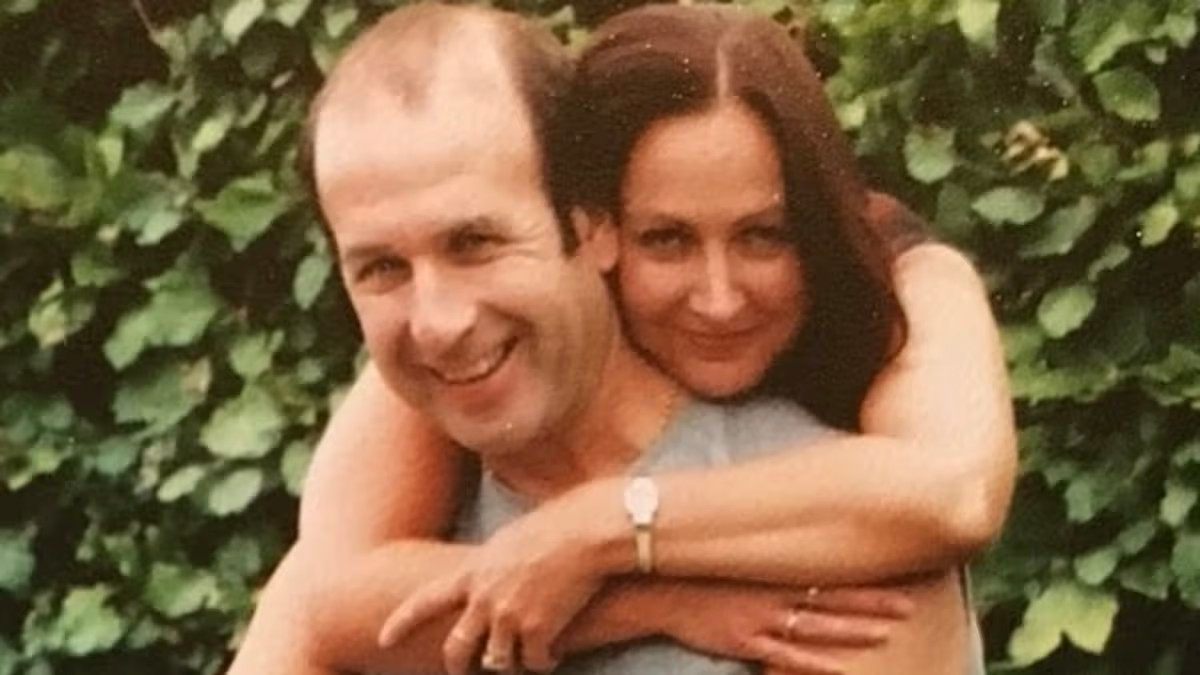
The daughters of a couple who both died of pancreatic cancer are sharing their parents’ story to help others in “knowing what different symptoms to look out for” when it comes to the “deadliest common cancer”. Rebekah Stubbs, 44, a former primary school teacher, and Laura Smith, 36, a nurse, said their mother Susan Smith died of pancreatic cancer in February 2012, while their father Richard Smith died of the same disease in October 2023.
According to Pancreatic Cancer UK, roughly 50% of people diagnosed with pancreatic cancer die within three months, which is something Rebekah and Laura said they have witnessed first-hand after their mother and father died within six months and three months, respectively.
Rebekah told PA Real Life: “Not only did mum die of it, but then dad did too. You couldn’t write it.” Laura added: “They weren’t smokers and they weren’t drinkers. They probably had a bit of whiskey every so often, but they went to a fitness club and looked after themselves.
Advertisement
“They didn’t have risk factors that you’d think ‘that could be why’. They were both health-conscious people, but yet both then developed pancreatic cancer.” Looking back on their relationship with their parents, Rebekah said they had a “really loving, close-knit family” and her mother was her “best friend”, while Laura said they were “supportive with anything that we wanted to do”.
The daughters noticed a change in their mother around the summer of 2011, when Rebekah said Susan “kept swallowing like she’d got something stuck in the back of her throat” and was “really thirsty” all the time, while Laura added their mother was experiencing “acid reflux” and generally felt “not well in herself”.
Rebekah said Susan started going “backwards and forwards” to the doctor, who initially prescribed antacids that Laura added “didn’t seem to help”. Within weeks, Rebekah said Susan’s symptoms worsened, including “going to the loo” a lot with “tummy issues”, which her mother put down to irritable bowel syndrome, as well as difficulty eating, yellowing of the skin, and nausea.
Advertisement
Susan had an ultrasound and was formally diagnosed with pancreatic cancer in October 2011. Laura said: “Because mum was a nurse, I remember her looking in the mirror and thinking, ‘I look and I feel as if I’ve got something nasty going on’, (and) she was right.”
“They basically said that she’d got a tumour on the head of her pancreas and it had spread to the bile ducts, which was causing her to be yellow because they were blocked,” she added. Laura said her mother had surgery to fit a stent in either side of her bile ducts to try to stop the jaundice, then a “couple of rounds of chemotherapy” that made Susan “so poorly and unwell”.
By Christmas, Rebekah said Susan could not keep “anything down” and was struggling to “get on top of the pain medication”, which escalated significantly after she experienced bloating and swelling around her abdomen that she needed to have drained.
Advertisement
Laura said: “It was quite a sudden death. She had been sitting in bed and talking to us and been quite content. And then, unfortunately, she had a big seizure and passed away quite unexpectedly. Dad had actually gone to have a look around a hospice for mum. Then he returned and mum was no longer here. That must have been very difficult to understand what just happened,” she added.
After Susan died in February 2012, aged 55, Rebekah and Laura said they took on the responsibility of caring for their maternal grandmother who had dementia, and who died in February 2022. Within a year of losing their grandmother, Laura said her father started experiencing back pain on his right side, for which he saw a physiotherapist and tried to “go down the correct route of going to your GP”.
He had blood taken and, despite seeing a physiotherapist, Laura said his back pain was “getting progressively worse”.
After months of inaction from Richard’s doctors, Laura said she told her father that “we need to do something about it”, so she took him to A&E in July 2023 where they waited 12 hours to be seen. This is when a further blood test and scans confirmed Richard “had something going on with his liver”, which an endoscopic biopsy of his liver would later confirm was pancreatic cancer.
Advertisement
“So dad was then faced with going through everything that his wife did,” Laura said, after Richard’s diagnosis in July 2023. “And then knowing what may lie ahead.”
Laura said their father had pancreatic enzyme replacement therapy, which helped him digest food, and was due to start palliative chemotherapy. But by the end of August, Richard was driving his van when he had an accident after what doctors initially believed to be a stroke, which was later revealed to be cancer metastasising in his brain.
After this incident, Rebekah said: “His personality wasn’t even the same. He seemed to lose his mobility. He was really weak too. He couldn’t even put his Pin in his mobile phone.”
Advertisement
Laura added that her father’s decline was “so much quicker” than her mother’s because it had spread to his brain, meaning treatment options were “really limited”. She said it also meant he became “aggressive and challenging”, remarking that “he’d never been like that before”.
Richard died in October 2023, aged 70, just three months after his diagnosis. In the aftermath of Richard’s death, Rebekah said she wanted to do something to raise awareness about pancreatic cancer, so she wrote to Pancreatic Cancer UK to tell them about her family’s story.
Rebekah said: “I suppose it’s part of my grieving process.” On why it is important for her to share their parents’ stories, Rebekah explained: “Misdiagnoses, awareness, quicker pathways (to diagnosis), and knowing what different symptoms to look out for.”
Advertisement
According to the NHS, the main symptoms of pancreatic cancer are yellowing of the skin or eyes, itchy skin, change in toilet habits, loss of appetite, losing weight without trying to, fatigue, a high temperature, nausea and indigestion.
The sisters said they felt encouraged by Pancreatic Cancer UK’s announcement last year that the charity is funding a world-first new clinical study that could detect pancreatic cancer through a breath test.
Laura said: “Hopefully, that’ll be successful. It’s a quicker route (to diagnosis) than surgery and that’s got to be positive.”
She added: “In terms of our circumstances, I think it’s certainly unusual to have both parents diagnosed with pancreatic cancer. They’re not related. They’ve got different genetics. It’s hard and really tough that neither one of them survived.”
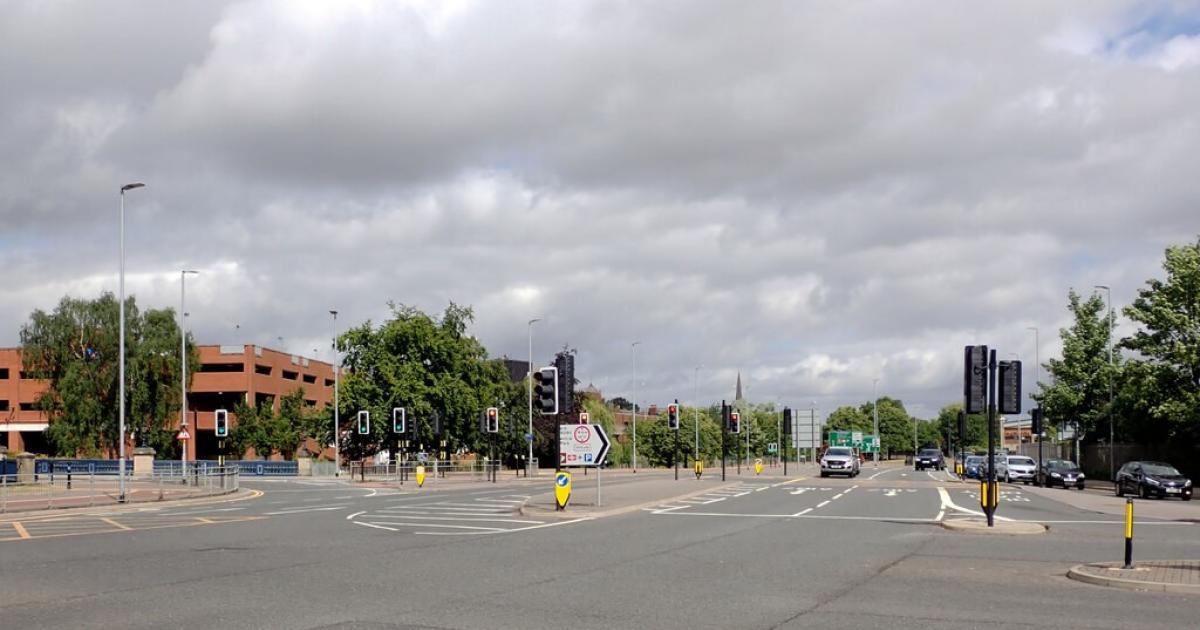
Kazie Lee’s Audi struck the back of the victim’s Suzuki Ignis, which had only reached about 15-mph after the lights changed to green on St Cuthbert’s Way, Darlington, late on June 3, 2023.
Teesside Crown Court was told the Suzuki was briefly thrown into the air and came to rest in the next lane, with the victim, who was travelling home from work, thrust into the rear of her car.
She was later to say she saw two bright lights approaching in her rear-view mirror just before the collision, which left her car a write-off.
Advertisement
Despite suffering great pain, she managed to clamber back into the driver’s seat to try to alight the car.
A witness, who went to her aid, said he saw the defendant’s car travelling at about 30mph and making no attempt to brake or stop before the collision.
Lee told police his brakes had failed.
He also tested positive for cocaine in his system in a roadside test, but at a level less than the legal limit for driving.
Advertisement
The 30-year-old, of Oak Tree Road in Stokesley, was initially charged with causing serious injury by dangerous driving and pleaded not guilty on the basis his brakes failed and that he was not driving at excessive speed.
Once it was established it was not a brake failure, his guilty plea to the slightly lesser charge of causing serious injury by careless driving was accepted by the prosecution several months later.
The victim, who recalled the defendant asking how she was, said she had no recollection of the incident after that.
She was left in great pain with a broken wrist and needed a metal plate and pins inserted.
Advertisement
She also suffered whiplash and other cuts and bruises.
In two impact statements read to the court she outlined the effect the injury had on her with the loss of mobility in the short-term, but also mentally in the longer term.
She said she was nervous about driving again and when she did, she would not use St Cuthbert’s Way for some time after the accident and, also, avoided other busy higher-speed roads, preferring quieter back roads.
In her most recent updated statement, she said she does not yet have full-strength back in her wrist, despite having undergone physiotherapy, and it had affected her work, at first through sickness leave, and then due to a reduction in her duties, affecting her financially.
Advertisement
Paul Abrahams, for Lee, said this was his first conviction.
Mr Abrahams said: “He acknowledges the impact it’s had on her life.
“I can only apologise on behalf of the defendant.”
Mr Abrahams added that Lee, who has some mental health issues of his own, has been out of work but hopes to regain employment.
Advertisement
Judge Amanda Rippon said the witness described the defendant appearing to make no effort to swerve or brake before his Audi hit the back of the Suzuki.
“I could tell by your reaction in court that you are ashamed of what you have done.
“The impact on the victim has been substantial, mentally, physically and financially.
“There’s nothing I can do to put her back to where she was before you hit her car.
Advertisement
“I accept you didn’t intent to cause the damage or injuries that you did.
“You have said the harm inflicted has had a profound effect on you and you think about it every day.”
The judge accepted a probation assessment that the defendant poses a low risk of re-offending or causing further harm.
She, therefore, imposed a 12-month prison sentence suspended for two years, during which Lee must attend five rehabilitation activity sessions and perform 100 hours’ unpaid work.
Advertisement
Judge Rippon also imposed a 12-month driving disqualification on the defendant.
He must pass an extended re-test to lawfully drive in future.
Judge Rippon told Lee: “I have given you a chance today.
“If you don’t take it, there isn’t a second one.”
Advertisement
The judge added that the victim strikes her as a woman with, “inordinate mental strength”.
A study has been launched to examine potential mass rapid transit options
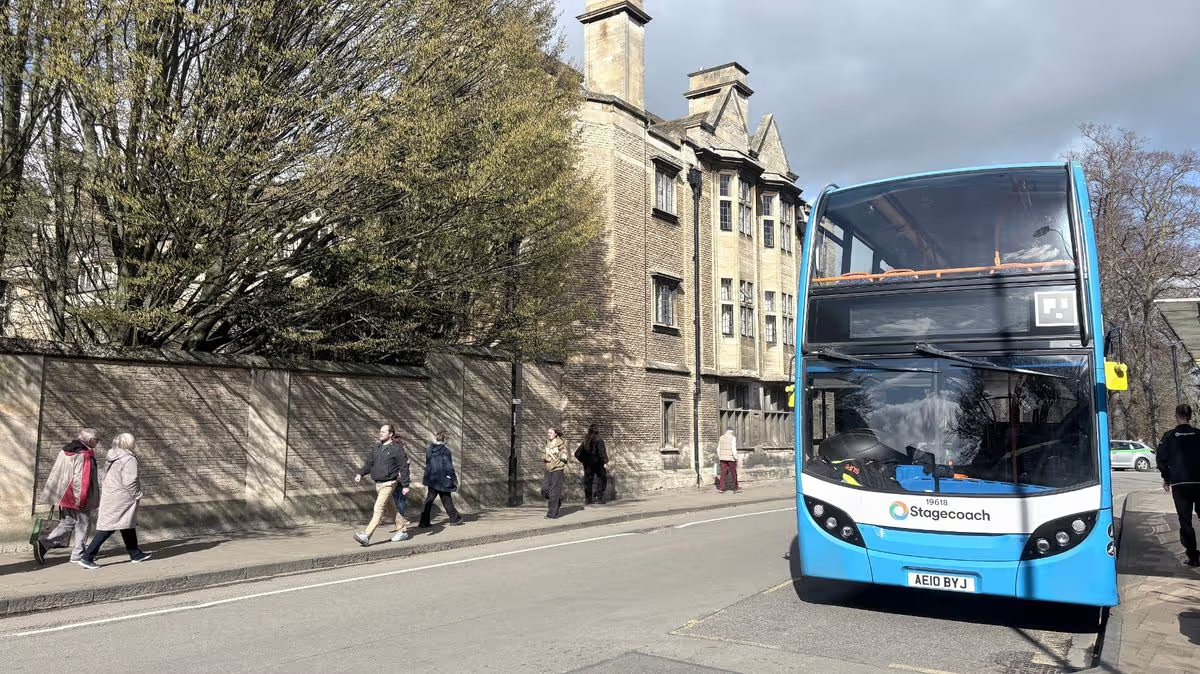
Locals and commuters have said that the tram and light rail transport options that could be considered for Cambridge would “cause chaos” while others said it could “help waiting times”. A study has been launched to examine potential mass rapid transit options to support future growth in the city including tram and light rail.
Advertisement
Cambridge Growth Company (CGC) and Cambridgeshire and Peterborough Combined Authority (CPCA), have launched the preparation of a Project level Strategic Outline Business Case for a potential Mass Rapid Transit (MRT) system in the city. The study is to investigate creating fast, and reliable public transport like trams to reduce traffic congestion and connect key areas.
The new commission will include identifying and appraising a longlist of transport options, from lower scale interventions to full MRT model possibilities, including tram, light rail, bus rapid transit, and automated systems.
This has been commissioned by the Department for Transport, the Ministry of Housing, Communities and Local Government, and the HM Treasure.
We spoke to some locals and commuters in Cambridge about their opinions on the transport options to be considered.
Advertisement
Vera Mmeni, who was in Cambridge for work, said trams in Cambridge could help with waiting times for commuters.
Ben Negus, 42, has lived in Cambridge for more than eight years. He said that adding trams to the city “may be pushing it a bit”. He thinks that the buses and Park & Ride routes are effective but “Cambridge wouldn’t suit” adding further transport options like trams.
Ben highlighted the “unique style” of the city as well as the busyness so he could see both sides to the matter.
Others were not so keen on the transport options to be considered in the city. A 62-year-old who wished to remain anonymous said that trams or light rail transport would “cause chaos”.
Advertisement
She continued: “It is bad enough with the traffic nowadays, what is it going to be like if they plan to put trams in?”
The 62-year-old believes that in comparison with London, the roads are smaller and narrow and the city doesn’t have the space that other big cities have.
Marcus Arnold, 55, from Cottenham likes the idea because he believes it will attract tourists. He added: “I like the idea of trams, it would go together well with Cambridge. They have a long way to go for that one. What a beautiful idea.”
Tony Johnson, who lives in Cambridge said that “it would create more chaos and I don’t see the point.” Tony chooses to walk through the city to save money. He said that the busways work, however he doesn’t believe that other mass rapid transit options like trams and light rail would be effective.
The trail, at RHS Garden Harlow Carr, will challenge families to solve a mystery involving the Easter Bunny and a missing batch of Easter eggs.
Families can take part from March 28 to April 19.
The storyline involves all the Easter Bunny’s egg baskets being found empty, with a single carrot left behind, hinting at something “far more mischievous”.
Families can take part in the trail from March 28 to April 19 (Image: RHS Garden Harlow Carr)
Eight curious characters were spotted near the scene of the crime, with children tasked to piece together the clue.
Advertisement
For £3, children get a detective activity pack, which includes various age-appropriate puzzle-solving challenges.
The trail not only promises an engaging day out but also offers a chocolate prize for successful detectives.
The Wind in the Willows Garden Adventure is also open for exploration.
Entry to RHS Garden Harlow Carr is free for RHS members and children under five.