Simister Island, also known as junction 18, connects the M60, M62 and M66 motorways.
The junction is notorious for chock-a-block traffic during rush hour, which is why National Highways are working on an upgrade to ease congestion.
Anyone who has driven eastbound towards Simister Island around peak times knows they could be sat in a queue as far back as junction 17, if they’re lucky. The same goes for anyone going west from the Pennines.
To solve this problem, the scheme aims to create five lanes for traffic on both sides of the M60; a new loop road to avoid queues on the carriageway; and widen the M66 road.
Carrying out this work means average speeds of 50mph, overnight closures, lane closures and weekend closures for motorists. It’s going to get worse before it gets better.
Most commuters will allow more time when using this stretch of road, which attracts around 90,000 vehicles a day.
National Highways have urged motorists to allow even more time over the coming years due to the roadworks and thanked them in advance for their patience.
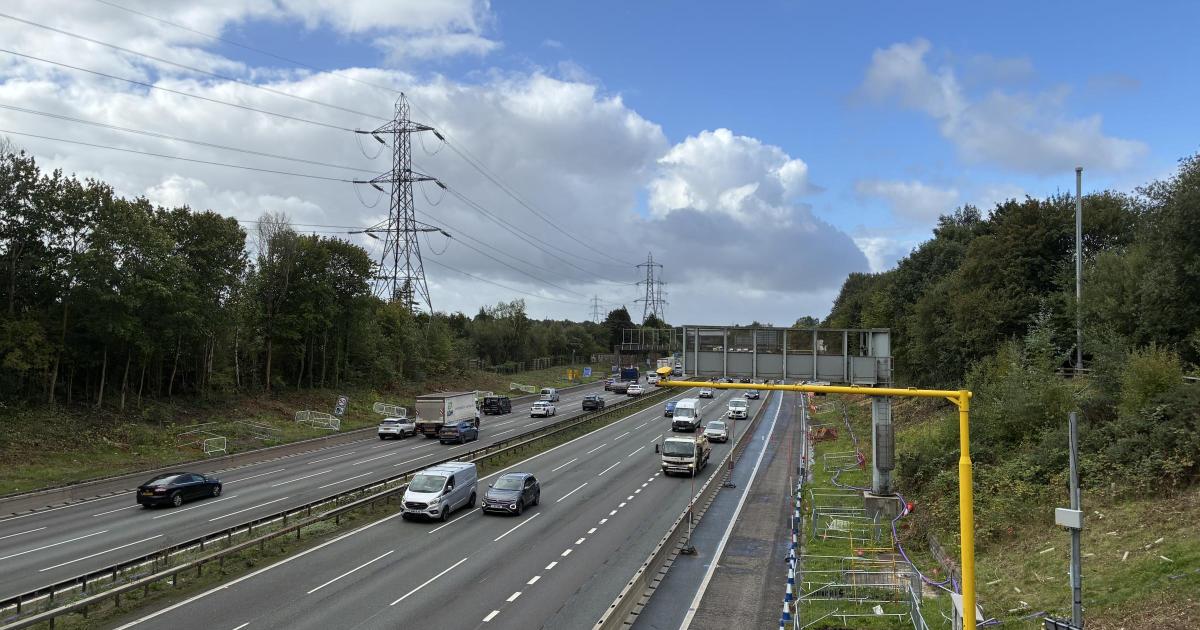
On the weekends of September 26 and October 10, the junction will be closed completely so workers from Costain, the contractor, can remove the overhead gantries.
These closures are the first significant disruptions since the scheme started earlier this year.
What many people won’t know is that these closure dates are carefully selected to avoid what is anticipated to be busy periods. The National Highways team has a schedule of all the major events taking place in the city-region.
This includes sporting fixtures, gigs or cultural events such as Manchester Pride.
Highways bosses pointed out the start of the closure in October is slightly later than in September because a big Pussycat Dolls gig is taking place at Coop Live.
The idea is they don’t want to cause major disruption on the motorway when lots of people will be travelling away from a busy venue.
They may even reopen the roads earlier if their monitoring systems suggest the road network is dangerously busy.
Senior project manager from National Highways, Frances Oliver, said: “National Highways have a system where we have a huge list of all the events going on in the area, which is a really key strategic route for the wider region.
“We’ve got sporting events at various football and rugby grounds; we’ve got a shopping centre and the Christmas peak for those; we’ve got an awful lot of concert venues; and marathons and half marathons.
“If you can think about an event, we’ve got it on our list. We will try our best not to do our closures based around those events.
“For the second weekend closure (coming up) the closure time slightly varies from the first weekend. That is because we are starting later to accommodate the events going on.”
Through the interview about the scheme, Frances explained how safety is paramount to the project, which has been meticulously planned for years.
So safety was her answer when quizzed over why you rarely see workers out during the day on the project – a common frustration for motorists queuing past roadworks.
Safety is also the reason drivers can expect to see an average speed zone marked out through the stretch of motorway until 2030.
Frances added: “In delivering a scheme like this we need to manage the safety of the travelling public, but also the safety of our road workers.
“Also, we have really high quality barriers out there that are protecting people, so the sheer amount of time it takes to move those things is quite a lot.
“It is frustrating to drive past and not see people in the daytime, but it is really all about the safety of people. I can assure people we are working very hard to get things done.
“I hope through the lifetime of the scheme that people will drive through and see how things change and develop.
“There is a reduced speed limit, and there are temporary enforcement yellow cameras, and you will see them through the lifetime of the scheme. We recommend people travel at the speed limit or lower.
“Safety is our number one imperative. It’s not just about us and our staff; it’s about people travelling through. So if we shut the road completely and did things really quickly, it might not be the safest way.
“We often get told that in China they’re doing this overnight, but that’s all well and good but here we have really high safety standards.”
The scheme itself is going to come forward in seven phases, with the team currently moving into phase 3 – once the gantries removal is complete. During this time, the road will also be resurfaced with material that will reduce road noise, according to highways bosses.
Joel MacFarlane is the site agent for contractors Costain. He went into intricate detail about the upcoming gantry removal over two weekends.
Joel said the concrete gantries weigh around 450 tonnes collectively, and each one weighs between 90 and 120 tonnes, so getting them out is no simple task.
They also have to completely clear the road, including the central reservation, to do it.
This has to be done as the road is going to be widened to create extra capacity for the 90,000 vehicles streaming through the area every day.
The main aspects of the scheme include a ‘northern loop’ built to stop thousands of vehicles using the current traffic light-controlled roundabout every day.
A five-lane section on both sides of the M60 between Prestwich and Simister (junctions 17 and 18) has been touted as well.
The M66 on the Bury side of the junction would also be widened with new lanes introduced at the interchange and a second lane added from the M60 northbound link.
All these benefits people can expect to get ahead of the 2030 completion date as the roundabout is the last bit of work to do.
Joel said: “During the period of the scheme the maintenance of the site will be managed by Costain. The surfacing will be managed and upgraded during that period. It won’t be done during the demolition works.
“Towards the end of the project, it is necessary to put traffic on the feature before we undertake the roundabout works in the centre and close the existing off slip and open the new free flow link.
“So that will come into play before the completion of the project, but not until the tail end. Trying to maintain traffic flow during the construction of the scheme is the challenge.
“20-30mph is about the average speed at the moment around Simister Island. Once we’ve opened up the scheme and traffic is free-flowing between junction 17 and 19 they won’t need to queue. Traffic should flow freely and it should mean the average speed will increase.”
Steve Askham, community relations and stakeholder manager at Costain, has arguably one of the most difficult jobs – dealing with the local community. Residents in the village of Simister as well as around Prestwich and Besses o’ th’ Barn get the tough job of living right next door to this scheme.
That will mean more traffic, more noise from construction and general disruption. Steve feels residents’ concerns and thoughts have been taken into consideration throughout the planning process.
The main example of this was the construction of the site compound for construction workers off the motorway, which stopped construction vehicles traipsing through local residential areas to park up post-shift. Other smaller details like electric, rather than petrol, power tools to trim back foliage at the sides of the road and taking part and funding community projects are also a major part of his role.
Overall, the scheme – estimated to cost between £255m and £296m – aims to reduce congestion, improve journey times and create a safer route through what is one of the North West’s busiest motorway junctions. Unfortunately will be some pain for drivers until that happens.
National Highways have urged people to sign up to their website updates so they can avoid the junction when major works or closures are taking place. They have thanked everyone for their patience during this time.

























































You must be logged in to post a comment Login