

Connect with us

NewsBeat

Girl, 7, from Blackburn missing off Morroccan coast

Published

on

Girl, 7, from Blackburn missing off Morroccan coast

The incident happened on Wednesday, January 28, when the family were sat on rocks by the coast near Casablanca.

Family members were swept into the water alongside Inaayah Makda, seven, who is still missing.

They have appealed for any help in trying to find Inaayah, and blasted the police and local authorities in Morocco for a lack of support.

Advertisement

Speaking today, a family member in the UK said: “We are all really worried. You can understand this is really distressing for everyone.

“We have reached out for help, but the support has not been forthcoming.

“The support we have got from the local authorities in Morocco can only be described as inhumane.

“The family over there have been walking up and down the beach conducting their own search. They have been disregarded.

Advertisement

“If anyone knows any locals who can offer support, please tell them to come forth and help, in whatever way they can.”

The family member said her relatives not been told of any dangers of going onto the rocks outside the historic city, which sits on the Atlantic Ocean.

She said: “They were not been told of any warnings.

“There were no warning signs of any dangers at the beach, so when the large wave came across, they were all caught by surprise.

Advertisement

“The support since has been zero, they actually got told it was too rough to go out to sea, and they should wait for the body to wash up on sea.

“It is shocking to hear this.”

The father of the young girl, Zubair, had sent a message to Naseem Khan of Blackburn-based non-profit television channel, UCTV.

In it, he said: “What has happened is – we were just on rocks – rocks that were spread apart.

Advertisement

“They were sort of like half a metre high. So that’s when the tide suddenly swept everyone out.

“Inaayah was on the rock behind me.”

He added: “We got swept to the right and she got swept to the left.

“Before that, I did not see where Inaayah was as she got swept away so quickly.

Advertisement

“I couldn’t find her at all.

“We are trying to get help, because the police here are pathetic and useless. They are not doing anything.”

MORE: Blackpool Zoo unveils name of new £500,000 giraffe development

MORE: Deal to run leisure centres in Pendle extended to 2033 with £5.4m investment

Advertisement

MORE: East Lancashire MP’s response to rumours he’s defecting from Labour to Reform UK

Blackburn MP Adnan Hussain said he had spoken to the father of the child today.

He said: “This is an utterly heartbreaking and deeply distressing situation.

“My thoughts are with Inaayah’s family at this unimaginably difficult time.

Advertisement

“I have spoken directly with her father and aunt to offer my full support, and my office is doing everything it can to assist them.

“I am urgently raising this matter with the relevant UK authorities, including the Foreign Office, to ensure that every possible step is being taken to support the ongoing search efforts and to provide the family with clear and timely answers.

“I will also be making direct contact with the Moroccan Ambassador to press for continued assistance and cooperation.

“The whole community in Blackburn is holding Inaayah and her loved ones in their prayers, and I will continue to do all I can to support the family during this devastating time.”

Advertisement

Cllr Suleman Khonat said: “It is very worrying when you’re out on a family holiday in a foreign country and an incident like this happens.

“Our prayers to the Almighty that he saves this beautiful girl. It’s so sad to hear the news.

“Our heartfelt feelings for her parents and family who are going through a difficult time.”

A mosque shared a short message asking people to pray for the family.

Advertisement

The Masjid-e-Saliheen, based in Disbury Street, said: “We ask our community to please keep a very special seven-year-old girl from our madrassah in your sincere duas.

“She has sadly gone missing at sea whilst in Morocco, and this is an incredibly difficult time for her family and all who know her.

“Please raise your hands and ask Allah (SWT) to grant her safety, surround her with his mercy, and give her family strength, patience, and comfort during this unimaginable test.”

The British Foreign Office have been approached for comment.

Advertisement

Source link

Continue Reading
Click to comment

Leave a Reply

Your email address will not be published. Required fields are marked *

NewsBeat

The next cancer breakthrough may be stopping it before it starts

Published

on

The next cancer breakthrough may be stopping it before it starts

Cancer treatment follows a familiar pattern: doctors spot symptoms, diagnose the disease and start treatment. But scientists are now exploring a radical shift in how we tackle cancer. Instead of waiting for tumours to appear, they want to catch the disease decades before it develops.

This approach is called “cancer interception”. The idea is simple: target the biological processes that cause cancer long before a tumour ever forms.

Researchers are hunting for subtle early warning signs. These include genetic mutations that quietly build up in our cells, giving them advantages against our immune defences.

They’re also looking at precancerous lesions like moles or polyps, and early visible changes in tissue. All of these appear long before cancer becomes obvious.

Advertisement

Large genetic studies reveal that as people age, their bodies accumulate small groups of mutated cells called clones that grow silently. Scientists have studied this particularly well in blood. These clones can help predict who might develop blood cancers like leukaemia, and the genetics, inflammation and environmental factors strongly influence them.

Crucially, doctors can measure and track these changes over time. This opens up possibilities for early intervention.

A 16-year study followed around 7,000 women and uncovered how these mutations work. Some mutations helped clones multiply faster, while others made them particularly sensitive to inflammation.

When there was inflammation, these sensitive clones expanded. Breaking down these patterns helps researchers identify people with a higher chance of developing cancer later.

Advertisement

Not a sudden event

The research reveals something fundamental about cancer. It’s not a sudden event that instantly produces a tumour.

Instead, cancer develops through a slow, multi-step process with detectable warning signs along the way. These early signs could become powerful targets for stopping cancer before it starts.

Scientists are developing blood tests to spot cancer long before symptoms appear. These tests, called multi-cancer early detection tests (MCEDs for short), search for tiny fragments of DNA in the blood.

MCEDs work by looking for circulating tumour DNA, or ctDNA – DNA fragments that cancerous or precancerous cells release into the bloodstream. Even very early cancers shed this DNA, so the tests might detect disease long before it shows up on a scan.

Advertisement

The results so far look promising. MCEDs can boost survival rates through early detection, especially for colorectal cancer. When doctors diagnose colorectal cancer at stage one, 92% of patients survive five years. But when they catch it at stage four, only 18% survive that long.

If colon cancer is caught at stage one, most patients are still alive after five years.
sebra/Shutterstock.com

The tests aren’t perfect, though. They miss some cancers entirely, and positive results still need follow-up tests to confirm.

Even so, research suggests MCEDs could become crucial for catching cancers that usually go unnoticed until much later. The potential to save lives is significant.

Heart doctors already use a similar approach. They calculate a person’s risk using age, blood pressure, cholesterol and family history, then prescribe drugs like statins years before a heart attack happens.

Advertisement

Cancer researchers want to copy this model. They envision combining genetic mutations, environmental factors and MCED results to guide early cancer prevention.

But cancer differs from heart disease in important ways. Cancer doesn’t follow a predictable path, and some early lesions shrink or never progress.

There’s also the risk of over-diagnosis. Being told you’re at higher risk when you feel perfectly healthy creates anxiety.

Cancer prevention tools also vary widely in their effectiveness, unlike statins that work broadly across different cardiovascular risk groups. The risk-based model shows promise, but needs careful handling.

Advertisement

Treating cancer risk instead of cancer itself raises difficult ethical questions. When someone feels completely healthy, judging whether intervention will truly help them becomes harder.

There’s a danger of causing unnecessary worry or harm. Scientists warn that doctors sometimes overestimate benefits and underestimate risks, particularly for older adults.

MCED tests bring their own ethical concerns. Accuracy isn’t the only issue that matters.

The tests sometimes flag cancer when none exists, leading to follow-up scans and biopsies that patients don’t actually need. The anxiety from all of this carries a high cost, both for patients and the healthcare system.

Advertisement

If these tests are expensive or only available privately, they could make health inequalities worse. This concern hits hardest in low-income countries.

In the US, the medicines regulator is investigating how MCED blood tests should work. They’re examining how reliable the tests need to be and what follow-ups doctors should require to keep patients safe.

The UK is following suit. The National Cancer Plan for England, published on February 4, 2026, commits to providing 9.5 million extra diagnostic tests through the NHS each year by March 2029.

The plan also states that ctDNA biomarker testing will continue in lung and breast cancer. It will extend to other cancers if proven to be cost effective.

Advertisement

What all this shows is clear. Cancer doesn’t suddenly appear; it’s a steady process that begins decades earlier. Catching it before it grows could save countless lives. The question now is how to do that safely, fairly and effectively.
Source link

Advertisement
Continue Reading

NewsBeat

UEFA investigating alleged racist abuse directed at Real Madrid’s Vinicius Junior | World News

Published

on

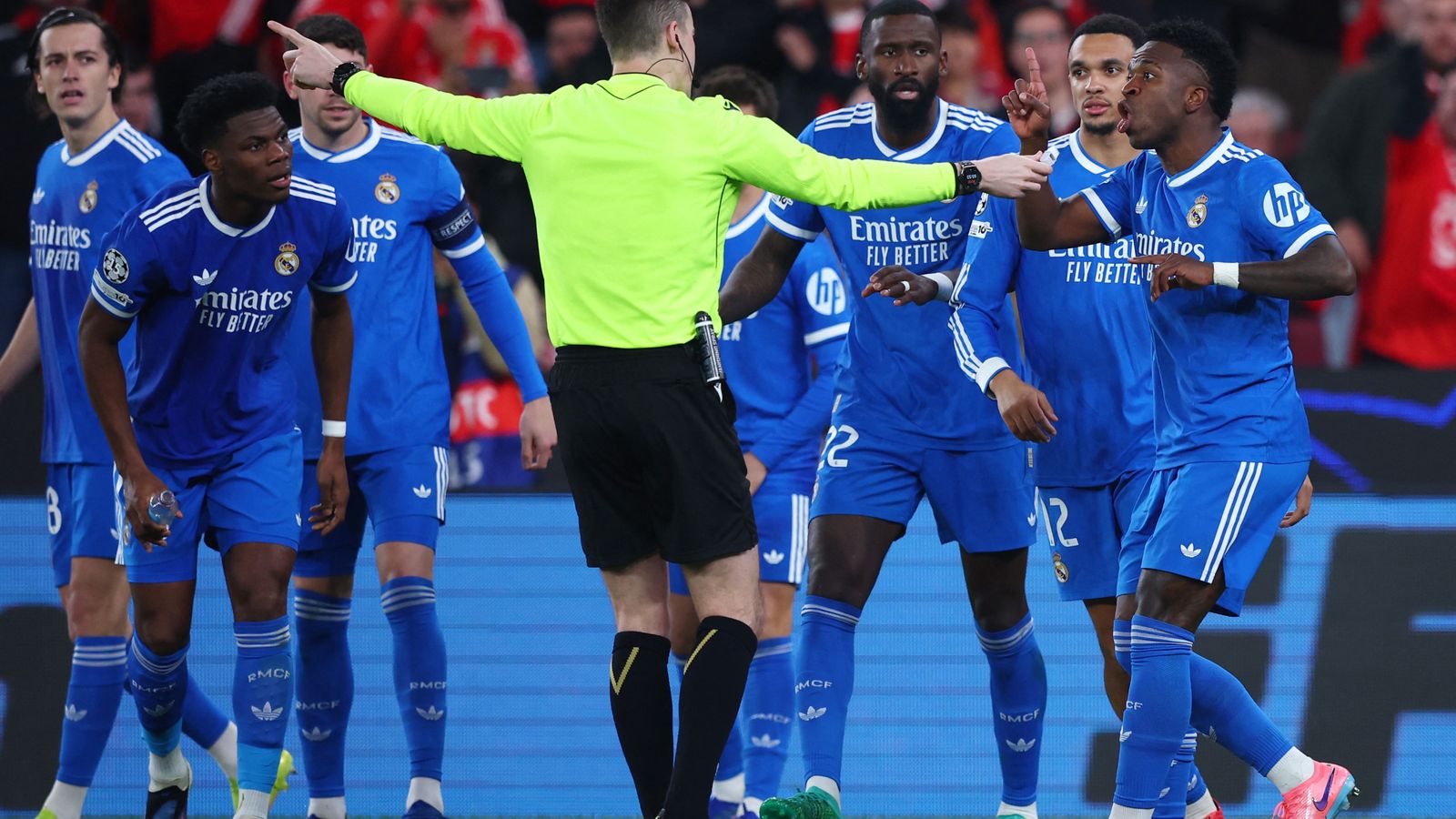
Real Madrid's Vinicius Junior demonstrating with referee Francois Letexier. Pic: Reuters

UEFA has appointed an ethics and disciplinary inspector after allegations a racist ‌slur was directed at Real Madrid forward Vinicius Junior during last night’s Champions League match against Benfica.

The match, in Lisbon, Portugal, was halted five minutes into the second half, shortly after ​Vinicius gave the away side a 1-0 lead in the first leg of the knockout playoffs.

Cameras picked up the 25-year-old telling French referee Francois Letexier he had been targeted in a comment made to him by Benfica’s Gianluca Prestianni.

Prestianni has denied making a racist slur, claiming the Real player “misinterpreted what he thought he heard”.

Advertisement

In a statement, UEFA said that an “Ethics and Disciplinary Inspector has been appointed to investigate allegations of discriminatory behaviour” during the game.

It added that “further information regarding this matter will be made available in due course”.

Responding to the UEFA announcement, Benfica said the club viewed the appointment “with a spirit of complete collaboration, transparency, openness and a sense of clarity”.

The statement added the club “clearly and unequivocally” reaffirms their commitment to “equality, respect and inclusion” but added that they regret “the defamation campaign to which the player has been subjected”.

Advertisement
Image:
Prestianni has denied making a racist slur, claiming Vinicius ‘misinterpreted’ him. Pic: Reuters

The Champions League match was stopped for 11 minutes as Vinicius went to the sidelines at the Estadio da Luz.

Both coaches, Benfica’s Jose Mourinho and Madrid’s Alvaro Arbeloa, talked to him at one point.

It appeared that Benfica players were not happy with the forward because he celebrated his goal by dancing in front of the corner flag, and some went to confront him.

Vinicius had been shown a yellow card after the celebration.

Advertisement

After the forward’s complaint, the referee responded by crossing ​his arms in front of his ⁠face, activating FIFA’s anti-racism protocol and stopping the match.

Real’s players threatened ⁠to leave the pitch ​as tensions rose, but the referee ​eventually allowed the match to resume.

UEFA’s three-step procedure for dealing with alleged racism inside stadiums

Step one – If the referee becomes aware of alleged racist behaviour, or is informed of it by the fourth official, he or she will stop the game.

Advertisement

The referee will then request an announcement to be made over the public address system asking spectators to immediately stop any alleged racist behaviour – if the alleged racism involves the crowd.

Step two – If the alleged racist behaviour does not cease after the game has restarted, the referee will suspend the match for a reasonable period of time, for example, five to ten minutes, and request teams to go to the dressing rooms.

A further announcement is then made over the public address system.

Step three – As a final resort, if the alleged racist behaviour continues after a second restart, the referee can definitively abandon the match.

Advertisement

The UEFA delegate responsible for the match will assist the referee, through the fourth official, in determining whether the alleged racist behaviour has ceased.

Any decision to abandon the match will only be taken after all other possible measures have been implemented and the impact of abandoning the match on the security of the players and public has been assessed.

After the match, the case is referred to UEFA’s disciplinary authorities.

Advertisement

The teams are due to go to Madrid to play the second leg, with the Spanish side 1-0 up, but Sky News’ sports correspondent Rob Harris said there could be sanctions – including a ban for the Benfica player if he is found guilty of racial abuse.

In a post on his Instagram story after the game, Vinicius said that “racists are, above all, cowards”.

He added, however, that he felt “they have, on their side, the protection of others who, theoretically, have the obligation to punish”.

Real Madrid's Vinicius Junior demonstrating with referee Francois Letexier. Pic: Reuters
Image:
Real Madrid’s Vinicius Junior demonstrating with referee Francois Letexier. Pic: Reuters

“Nothing that happened here today was new in my life and my family’s”, the Brazilian player said. “I received a yellow card for celebrating a goal. I still don’t understand why.

“On the other hand, just a poorly executed protocol that served no purpose. I don’t like appearing in situations like this, even more so after a great victory and when the headlines have to be about Real Madrid, but it’s necessary.”

Advertisement

In a message on his own Instagram, Prestianni said: “I want to clarify that at no point did I direct racist insults at the player Vinicius Junior, who unfortunately misinterpreted what he thought he heard.

“I have never been racist towards anyone, and I regret the threats I received from Real Madrid players.”

Gianni Infantino, president of FIFA, football’s world governing body, said he was “shocked and saddened” to see the incident of alleged racism towards Vinicius.

“There is absolutely no room for racism in our sport and in society,” he said. “We need all the relevant stakeholders to take action and hold those responsible to account.”

Advertisement

Read more from Sky News:
Police blow in case of TV host’s missing mother
Is Charles Bronson on the verge of freedom?

Vinicius has made multiple allegations of racist abuse by both players and fans since he moved to Spain’s La Liga in 2018, including during matches against Real’s fiercest rivals, Atletico Madrid and Barcelona.

In 2023, he reacted to alleged racist abuse in a match at Valencia by saying “racism is normal in La Liga”.

Later that year, the Vinicius Jr law was passed in Brazil to combat racism at sporting events.

Advertisement

In 2024, at a news conference ahead of Brazil’s friendly against Spain in Madrid – a game organised to raise awareness of racism in the sport – Vinicius broke down, admitting he had “less will to play” because of the abuse directed toward him.

Source link

Advertisement
Continue Reading

NewsBeat

Child poverty figures in the UK expected to be revised down

Published

on

Child poverty figures in the UK expected to be revised down

Tom Wernham, senior research economist at the Institute for Fiscal Studies, told the BBC using administrative records to “correct benefit amounts is going to be a big improvement to the quality of the data underpinning the UK’s official income and poverty statistics, and we definitely welcome that”.

Source link

Continue Reading

NewsBeat

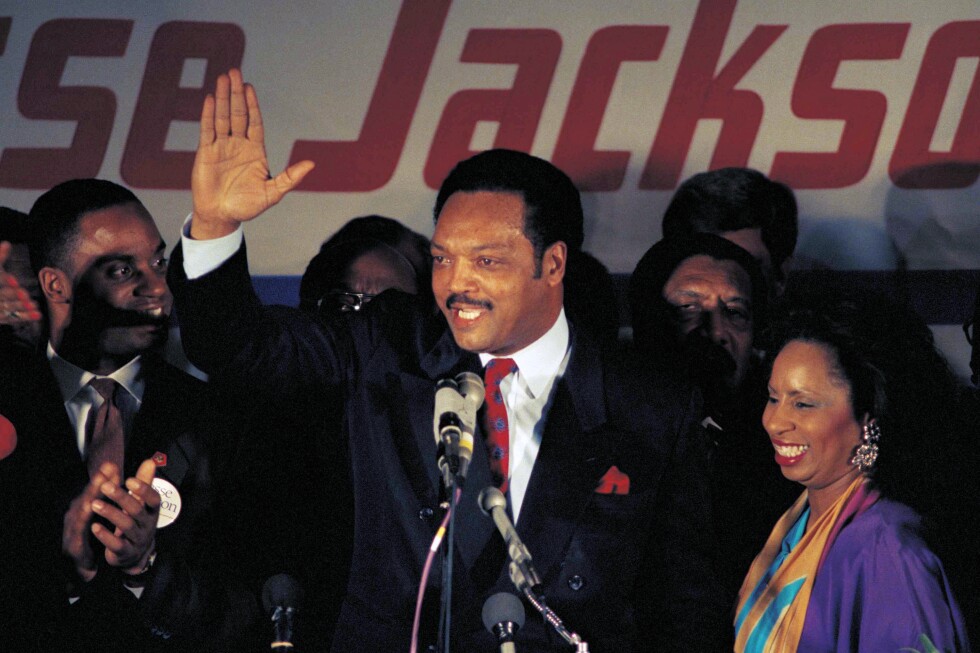
Jesse Jackson’s 1988 presidential run inspired generations

Published

on

Jesse Jackson’s 1988 presidential run inspired generations

When the Rev. Jesse Jackson announced his second presidential bid in 1988 in Pittsburgh, he saw the campaign as a chance for the country to realize its highest ideals.

“If I can become president,” said Jackson, who grew up poor and Black in segregated South Carolina, “every woman can. Every man can. I’m giving America a chance to make a choice to fulfill the highest and best of an authentic and honest democracy.”

While unsuccessful, the campaign captured the imaginations of countless Americans who were inspired by Jackson, who died Tuesday at 84.

Decades later, generations of young people who watched his historic campaigns or learned about his career have become veteran activists, clergy members, civic leaders and lawmakers. Many say that his unapologetic message of equality and justice informs their work today.

Advertisement

“Here I was, a kid growing up in public housing, and I got to witness this Black man running for president. He gave me a glimpse of what is possible, and he taught me how to say, ‘I am somebody’,” said Democratic Sen. Raphael Warnock of Georgia, referring to one of Jackson’s slogans adopted from a poem.

Warnock also serves as the senior pastor of Ebenezer Baptist Church in Atlanta, the congregation once led by the Rev. Martin Luther King Jr. The Georgia Democrat said Jackson’s example was “needed now more than ever” in response to the Trump administration’s actions on elections, global affairs and immigration.

“His voice is now silent, but his example is eternal, and that work is left to us,” Warnock said.

Advertisement

Advertisement

A life of advocacy

Jackson’s life included work as a globe-trotting humanitarian, a champion for a progressive economic agenda and leadership of the Civil Rights Movement that was once led by King, Jackson’s mentor. Jackson was present when King was assassinated at a Memphis hotel.

Jackson’s 1988 presidential bid pushed many Americans to contemplate whether, two decades after King’s killing, one of his protégés could be elected to the White House. His message of equality in the Democratic primary resonated with a broad set of voters and blindsided party leaders, who reformed the primary system in response to the surge of engagement.

Strategists credit those reforms with enabling the election of another Black candidate from Illinois to the presidency two decades later.

Barack Obama agreed in a statement praising Jackson’s life.

Advertisement

Former first lady Michelle Obama “got her first glimpse of political organizing at the Jacksons’ kitchen table when she was a teenager,” Obama wrote. “And in his two historic runs for president, he laid the foundation for my own campaign to the highest office in the land.”

The connection did not stop Jackson from criticizing Obama or mentoring activists who challenged the first Black president’s administration.

“He continued to reach out to young Black activists throughout the protests that started in 2014,” said DeRay McKesson, a racial justice activist who organized in Ferguson, Missouri, as part of the Black Lives Matter movement. “As an activist and organizer, I appreciate that Jesse, just like the generation of people he came up with, had a deep understanding of structural change.”

Jackson remained a political force after his presidential bids. From the Chicago headquarters of his organization, the Rainbow PUSH Coalition, he mentored leaders for decades. After his death, scores of activists, political operatives and members of Congress credited their careers to Jackson.

Advertisement

Democratic Rep. Troy Carter of Louisiana was a young staffer to New Orleans Mayor Sidney Barthelemy when he first met Jackson.

“Over the years, since our first meeting, he encouraged me in every step of my political career. His legacy will endure in every life he inspired,” Carter said.

Former Vice President Kamala Harris eulogized Jackson in a statement that remembered how his 1988 presidential run built a sense of community among supporters. When she was a law student in San Francisco, she recalled, people “from every walk of life would give me a thumbs-up or honk of support” upon seeing her car’s “Jesse Jackson for President” bumper sticker.

“They were small interactions, but they exemplified Reverend Jackson’s life work — lifting up the dignity of working people, building community and coalitions, and strengthening our democracy and nation,” wrote Harris, who went on to become the first Black woman to be nominated by a major political party for president.

Advertisement

Even people with opposing views acknowledged Jackson’s impact as a civil rights giant and a stalwart force for progressive, humanitarian values.

“I don’t have to agree with someone politically to deeply respect the role Jesse Jackson, a South Carolina native, played in uplifting Black voices and inspiring young folks to believe their voices mattered,” Sen. Tim Scott of South Carolina, the lone Black Republican in the Senate, wrote on social media. “Those that empower people to stand taller always leave a lasting mark.”

A mentor to a new generation

Tennessee state Rep. Justin Pearson was 8 years old when he first learned about Jackson from a picture book on Black history that his mother gave him. Jackson’s face was on the cover.

Pearson, 31, thanked Jackson for “creating space for people like me to be where I am.” He met Jackson after Republicans expelled him and another Black Democratic lawmaker after they joined a protest for gun control at the Tennessee Statehouse.

Advertisement

Pearson, who represents Memphis in the statehouse, later joined Jackson on a trip to lay a wreath at the site where King was killed. Pearson has appeared alongside Jackson at other civil rights events throughout the South. Even at memorials filled with towering figures, he said, Jackson stood out.

“You have a lot of civil rights elders who you read about, but it means something different when you have somebody who you can talk to, who can be present, who is there physically,” said Tennessee state Rep. Justin Jones, the other lawmaker who met Jackson after being expelled. Both men were later reelected to their seats.

Jackson “was committed to raising the rising generation of civil rights voices and leaders and legislators, and somebody who has a whole movement that is standing on his shoulders,” said Jones, 30.

Stacey Abrams was 10 years old in Gulfport, Mississippi, during Jackson’s first presidential bid. The daughter of ministers, Abrams remembers being “transfixed” by a “larger than life figure who did not look like everyone else.”

Advertisement

Now a former minority leader of the Georgia House, Abrams mounted two unsuccessful bids for governor. Each time, she sought to rally a wide range of voters, including voters of color and lower-income voters, in a strategy that emulated Jackson’s political philosophy. Jackson advised her throughout both bids.

“I’ve been one of, I would say, thousands of people who received counsel and support from Jackson, but also got a phone call that said, ‘I’m thinking about you,’ or an offer to come and be a part of something he was doing,” Abrams said.

“I think that’s the legacy that’s most important, that he didn’t stand as a single figure who wanted to be alone. He built community.”

Advertisement

Source link

Continue Reading

NewsBeat

Comedian Jon Richardson helps boost shares for The Plough, Fadmoor

Published

on

Comedian Jon Richardson helps boost shares for The Plough, Fadmoor

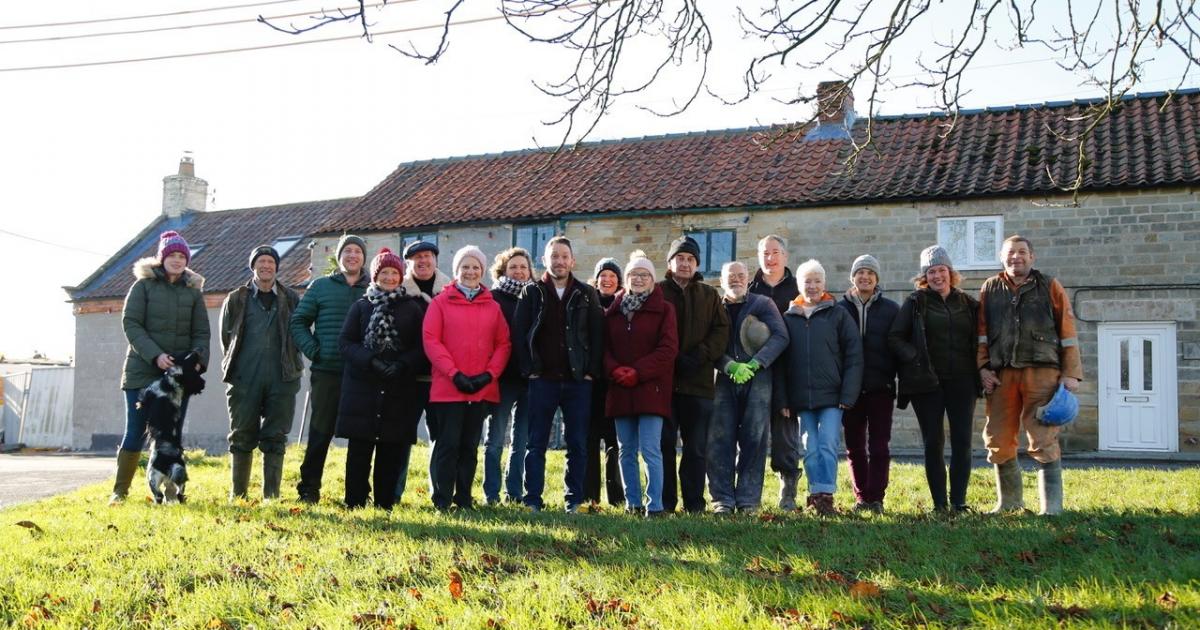
The Plough in Fadmoor is the focus of a new four-part observational series called Our Yorkshire Pub Rescue, fronted by comedian Jon Richardson, which follows its transformation into a community-owned pub after 14 years of closure.

The programmes began on More4 on Wednesday, February 4, and half-way through the series, the pub has closed its Community Share Offer having reached the current limit of £375,000 with £90,000 of that raised in the last fortnight.

The Community Share Offer, which was initiated in October 2021, now has 388 members with investors from all corners of the U.K. and as far afield as Australia, New Zealand and Canada.

Advertisement

The Plough has also received £3,555 in donations. All donations, which can be made online via The Plough’s website, will be used for the renovation of the outbuildings, garden space and match funding for additional grants. These areas of the site were not included in the original Community Share Offer refurbishment forecasts.

Peter Jones, Chairman of the Fadmoor Community Pub Limited, said: “Thank you very much to each and every person who has invested in The Plough through our share offer scheme to date, enabling us to re-open the doors to this historic pub.

“We now have the funds to renovate and refurbish the downstairs pub building, but this is only the start as work and money is still needed for the outbuildings, garden and refurbishment of the first floor enabling accommodation on site. So there is a lot still to do.”

The Plough Management committee are now reviewing the feasibility and options for a new share offer scheme. Anyone still wishing to invest in The Plough can make an expression of interest through the website if any future share offers are launched or donations for the renovation can be made instead.

Advertisement

The Plough, which dates back to 1782, closed in 2011. It was registered as an Asset of Community Value in 2013 and then further renewed in 2019.

Throughout this time, a community group worked tirelessly to save The Plough with strong support from the local and wider community, many local businesses, key organisations, councillors, Plunkett UK and the local MP.

The purchase of The Plough by the Fadmoor Community Pub Limited was completed on 30 September 2024 using Grant funding from Government and Reach Funds along with paid up shareholder funds which covered the purchase cost, stamp duty, and legal fees.The Plough’s committee, all volunteers, are now working to renovate the building so that the doors of the community pub can reopen.

Peter added: “The majority of the renovation of the pub is done by volunteers at weekends and 45 people have come forward to help since work began. If anyone would like to give their time and skills with this project please get in touch. Everyone is welcome and it’s a great way to be involved in bringing the pub back to life and being part of this community.

Advertisement

For further information about The Plough please visit our website theploughfadmoor.co.uk. The Plough is featuring in Our Yorkshire Pub Rescue with Jon Richardson on More4 available to view now.

Source link

Advertisement
Continue Reading

NewsBeat

Ex-Man Utd star Mikael Silvestre has strong words for Jose Mourinho over Vinicius Junior’s racist abuse claim | News UK Video News

Published

on

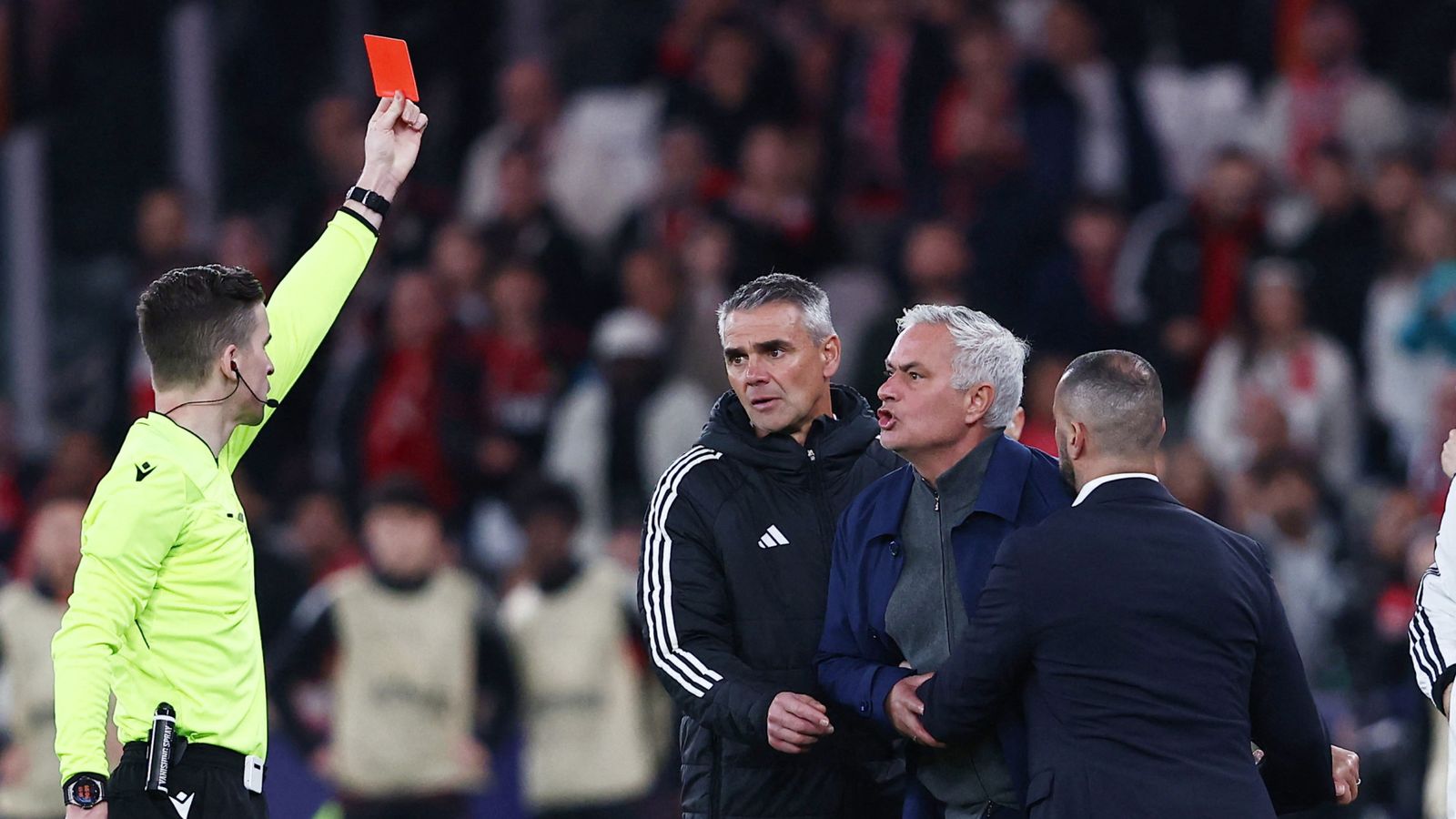
Jose Mourinho is shown a red card during Benfica's match with Real Madrid. Pic: Reuters

Former Manchester United player Mikael Silvestre has claimed Jose Mourinho has “failed us” over his response to Vinicius Junior’s allegations of racist abuse.

The 25-year-old left the field during Real Madrid’s Champions League play-off in Lisbon on Tuesday after reporting Benfica winger Gianluca Prestianni to the referee.

But Benfica manager Mourinho appeared apportion some blame to Vinicius, telling reporters afterwards: “A stadium where Vinicius plays, something happens, always.”

On Wednesday, former France international Silvestre told Sky News that Mourinho was trying to mislead fans with his comments.

Advertisement

Advertisement

Mourinho’s reaction after Madrid game halted

“In terms of what high level and reputation he has, Jose Mourinho failed us,” Silvestre told chief presenter Mark Austin. “As an industry, and as human beings, he completely misled everyone – or he tried.

“But we are not foolish – and we know what happened.”

Prestianni, however, has denied making racist comments towards Vinicius, claiming he was “misunderstood” by his opponent.

Advertisement

Advertisement

Should Mourinho have shown more empathy?

Mourinho also came under fire for claiming Vinicius had provoked the abuse with his celebration after scoring the only goal early in the second half.

The Brazilian danced around the corner flag, an apparent nod to Cameroonian Roger Milla’s iconic World Cup celebration.

Jose Mourinho is shown a red card during Benfica's match with Real Madrid. Pic: Reuters
Image:
Jose Mourinho is shown a red card during Benfica’s match with Real Madrid. Pic: Reuters

Mourinho told Amazon Prime: “I told him, when you score a goal like that, you just celebrate and walk back.”

Silvestre hit back against the former Manchester United manager, adding: “For Jose Mourinho to divert and even vilify Vinicius Junior behaviour for celebrating the goal that he did – remembering Roger Milla for Cameroon years ago – it’s not the way a top manager like him should do.

Advertisement

“We expect better, clearly it was bad for everyone, and I hope he’s regretting his comment during the game, and also after during the press conference.”

Mourinho sounded like he was victim blaming


Rob Harris
Rob Harris

Sports correspondent

Advertisement

@RobHarris

Vinicius Junior had every right to want to leave the pitch – and for the game to be abandoned.

Because while he is a superstar of the game, well used to the biggest Champions League occasions, being the target of racism cannot be excused as coming with football’s tribalism.

Advertisement

This was reporting being racially abused at work. Just after adding another wondrous strike to his collection of goals.

The accused – Benfica’s Gianluca Prestianni – has every right to a thorough process if he persists with denials.

And the UEFA case has to be watertight before imposing the minimum 10-game ban for racism.

But Benfica have gone beyond defending their man with statements, showing no empathy with a player who has been singled out for hate because he is black too often in his career.

Advertisement

Read Rob’s full analysis here

Advertisement

Silvestre is a member on the FIFA Player’s Voice Panel, tasked with advising on on-pitch racism incidents, alongside legends such as George Weah and Didier Drogba.

Advertisement

Kick It Out Chair: ‘What Mourinho said was shameful’

Prestianni’s response to abuse allegation

In a statement in Portuguese on Instagram, shared by Benfica on social media, Prestianni denied he made any racist comments.

Advertisement

He wrote: “I want to clarify that at no time did I direct racist insults to Vinicius Junior, who regrettably misunderstood what he thought he heard.

“I was never racist with anyone and I regret the threats I received from Real Madrid players.”

Source link

Advertisement
Continue Reading

NewsBeat

the fashion brand that lifted a drab postwar Britain into the swinging 60s

Published

on

the fashion brand that lifted a drab postwar Britain into the swinging 60s

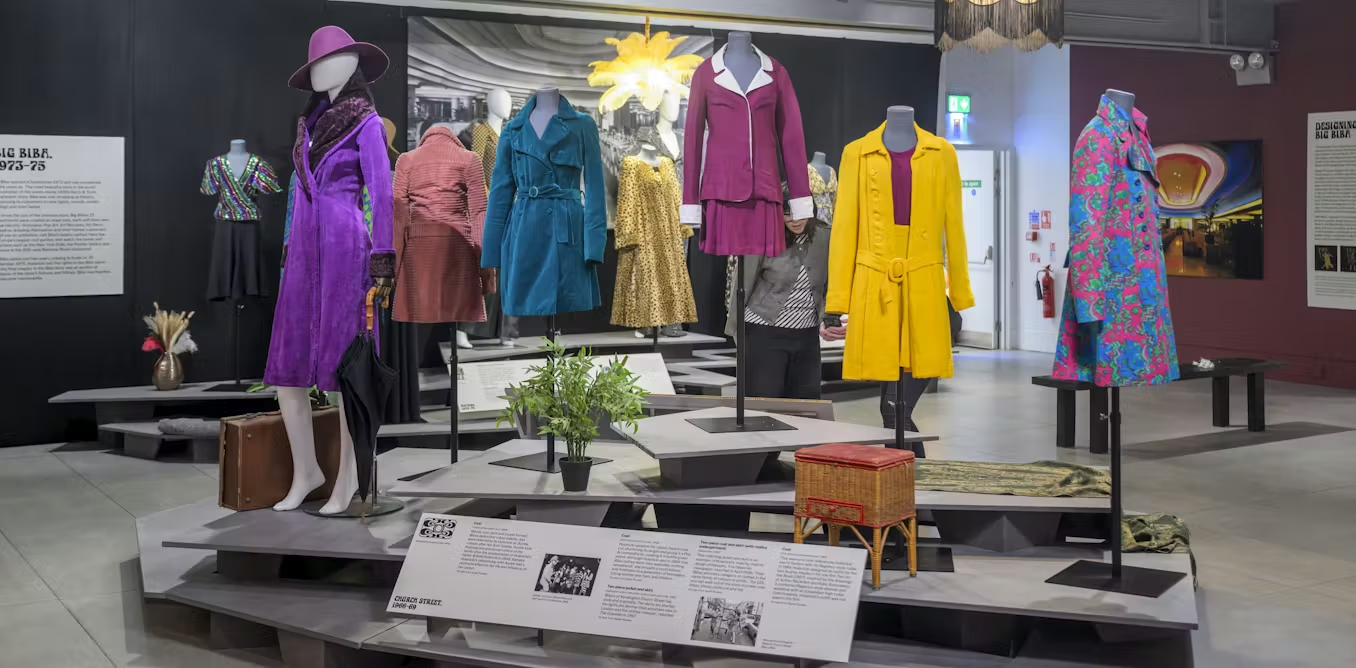
First conceived as a mail-order-only company in 1963, known as Biba’s Postal Boutique, the brand captured the revolutionary 1960s and 1970s attitude and style, offering trend-seekers affordable, high-fashion aesthetics and glamour akin to Paris catwalks.

Influenced by art deco, Biba’s covetable mini dresses, luxurious fabrics, rich prints and colour palettes quickly achieved a cult following, embodying the “swinging London” look. Worn by celebrities like Twiggy and Mick Jagger, and film stars like Brigitte Bardot and Raquel Welch, Biba embraced a glamorous and rebellious style that had enormous global influence.

Now, The Biba Story: 1964–1975, a new exhibition at the Dovecot Studios in Edinburgh, is showcasing the iconic fashion brand founded by designer Barbara Hulanicki and her partner Stephen Fitz-Simon.

Expanding from a small chemist shop on Church Street, Kensington, to a seven-storey department store on Kensington High Street, Biba sold a range of goods, from fashion to home products. The brand revolutionised retail with its lifestyle-focused department store and immersive interior opulence, setting a precedent for experiential luxury shopping that continues today.

Advertisement

Sadly, despite its significant impact on fashion and culture, Biba struggled financially and closed in 1975, leaving a lasting legacy as a symbol of the 1960s style revolution.

Jean Shrimpton and Barbara Miller in Biba for the Telegraph in 1973.
Photo Duffy @Duffy Archive

Historic moments

First seen at the Fashion and Textile Museum in London, The Biba Story communicates an engaging narrative covering the swift rise of Hulanicki’s design brand. It starts by setting the scene with a visual timeline, cleverly plotting the Biba story alongside pivotal historical movements and events, demonstrating the broader societal and cultural context that provided the backdrop to Biba’s fashion reign.

This includes reference to the not-guilty verdict for the legal action brought against Penguin Books, which in 1960 published the unexpurgated version of D.H. Lawrence’s 1932 book Lady Chatterley’s Lover. It caused a huge furore at the time and heralded the more liberal age of the swinging 60s that Biba embraced.

The exhibit also introduces Biba’s first major commercial success – a simple pink and white gingham shift dress paired with a Bardot-style headscarf. This dress, first featured in the Daily Mirror in May 1964, sold a record 17,000 dresses at 25 shillings (£1.25) each, marking the commercial success that swiftly elevated Biba to the iconic status it still retains today.

Advertisement

This evocative exhibition includes a wonderful sequence of drawings, illuminating how Hulanicki started out as a talented fashion illustrator, providing artwork for major magazines like Vogue and Women’s Wear Daily. Offset by the warm decor of plum walls, The Biba Story creates a sublime, high-end feel, further complemented by vintage retro-style lighting.

Here, you really get a nostalgic sense of the 1960s and 1970s, when art nouveau, art deco and modernism combined to create the style for the time.

Biba wasn’t just about fashion, it was an aesthetic that was part of a lifestyle.
Fashion & Textile Museum

The exhibition’s collective energy conveys the essence of the Biba aesthetic – it wasn’t just about the clothes, it was a whole lifestyle. Beautifully curated cases of Biba products, from cosmetics to tinned food to matches and branded wine, reveal how Biba was one of the first high street brands to offer more than clothes. Here was an accessible, glamorous and perhaps more indulgent lifestyle to the masses, especially uplifting in a drab post-war Britain.

A section dedicated to Biba textiles highlights the boldness of its patterns and prints offset by the contrasting simplicity of the garments’ designs. Biba was all about functionality over fussiness.

The outfits on display embody a somewhat stringent uniformity infused with a rebellious attitude, transitioning into a slick showcase of classic black dresses that remain timeless and enduring. Here, the exhibition also highlights the desirable body standards of the era, with the Biba look demanding wearers have “long thin arms, flat chests, low waists and straight hips”.

Advertisement

This segment subtly hints at the more problematic influence of fashion in defining body image (and perhaps it’s important to note that most of the clothes on display reflect a very small body shape), offering valuable reflections on the historical evolution of beauty standards and fashion’s continuing role in shaping them.

Bring Oot Your Biba

Especially illuminating, too, are the stories of Biba customers reminiscing about the brand, describing how “there was nothing like Biba in Edinburgh. The colours, the cut, the design, the materials, all fabulous.” Personal stories are melded with the exhibition narrative throughout, and there is a wonderfully touching conclusion titled Bring Oot Your Biba. This showcases the results of an invitation to the people of Scotland to share their Biba memories and purchases, all adding warming generational insights into the treasures of Biba fashions.

Notably, the exhibition ends with a small, beautiful tapestry of the Biba Logo, woven by talented Dovecot Studios apprentice Sophie McCaffrey – a perfect, and fitting wrap to a beautifully curated exhibition.

Advertisement

The Dovecot not only pays a sincere and authentic homage to Biba’s lasting legacy, it immerses the viewer in a real sense of the palpable excitement of the era: change, youth, liberation and opportunity. Many visitors will no doubt feel connected to the nostalgia of Biba’s style, while being reminded of the importance of fashion visionaries like Barbara Hulanicki to our design cultures, identities, and economies.
`

Source link

Advertisement
Continue Reading

NewsBeat

Ex-Victoria’s Secret mogul says Jeffrey Epstein ‘stole vast sums from our family’ | US News

Published

on

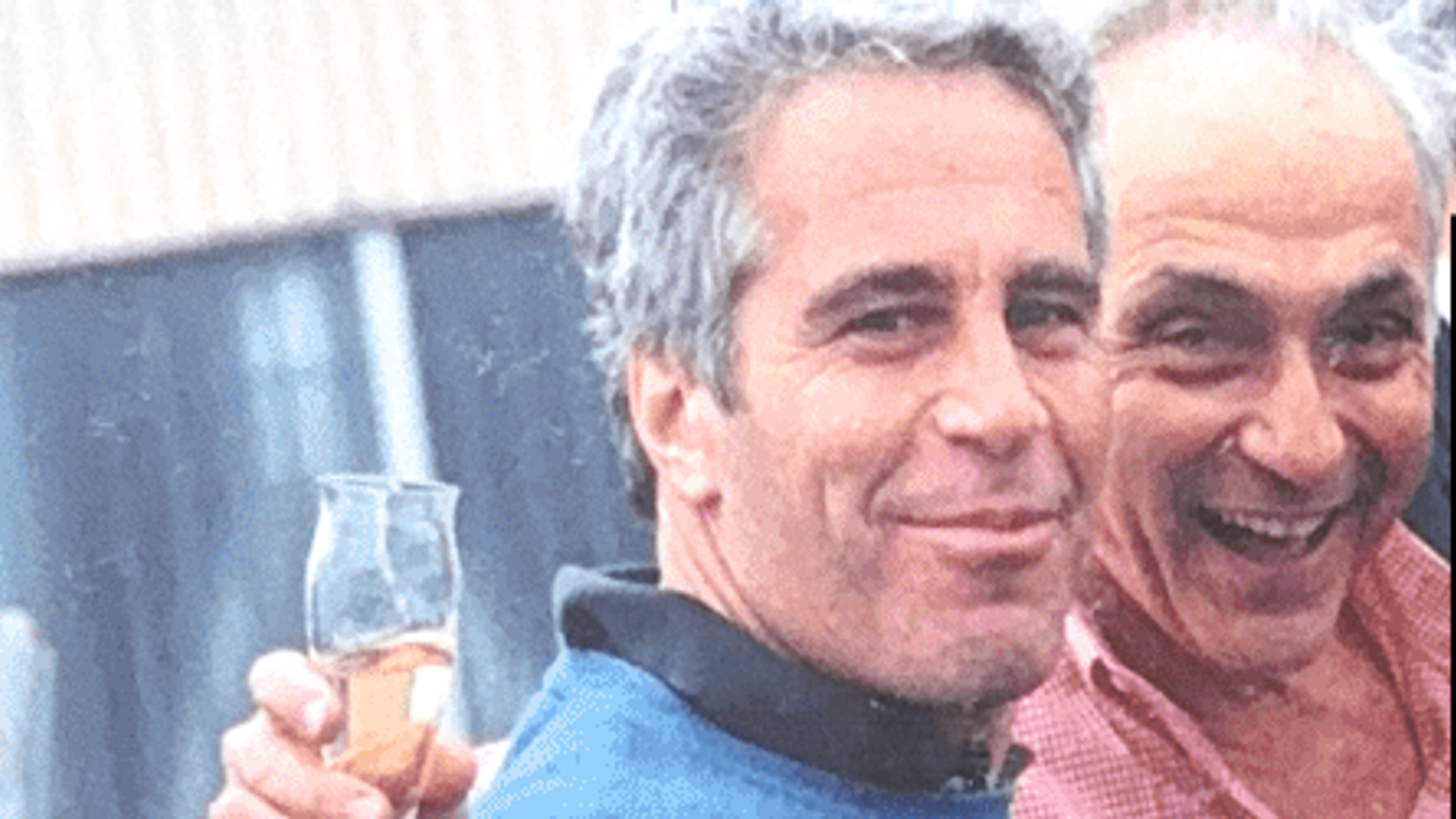
Mr Wexner allowed Epstein to manage his finances. Pic: US Department of Justice

A billionaire mogul says paedophile financier Jeffrey Epstein stole vast sums from his family.

Les Wexner, 88, who was behind retailers including Victoria’s Secret and Abercrombie & Fitch, was answering questions about his friendship with Epstein in a behind-closed-door session on Wednesday with US Congress.

Mr Wexner, who is pictured in the Epstein files, has not been accused of any wrongdoing and always denied any knowledge or involvement in Epstein’s crimes.

He is one of Epstein’s most prominent former friends, and their relationship stretches back to the 1980s, but he is on the record as saying he regrets the friendship.

Advertisement

In August 2019, he said: “I am embarrassed that, like so many others, I was deceived by Mr Epstein.

“I know now that my trust in him was grossly misplaced and I deeply regret having ever crossed his path.”

Epstein files latest

Image:
Mr Wexner denied knowing about Epstein’s crimes. Pic: US Department of Justice

Ahead of the hearing, Mr Wexner, who had allowed Epstein to manage his finances, released a statement he was due to provide to US Congress.

Advertisement

He said he was “pleased to testify” because it would provide “an opportunity to set the record straight”, but added he had been “naive, foolish, and gullible” for trusting Epstein with his business.

Mr Wexner stressed he did not know about or witness Epstein’s crimes or take part in them.

He added that Epstein had revealed in 2006 that he had legal issues in Florida, which later turned into his conviction for sexual abuse.

Read more:
Police assess information around private flights to and from Stansted Airport
Trump administration accused of ‘purposefully muddying waters’

Advertisement

A year later, he revealed the situation “could become messy” and left it to Mr Wexner’s wife to handle their personal finances.

This led to the family discovering “Epstein had stolen vast sums from our family”, he said.

Mr Wexner said: “Once I learned of his abusive conduct and theft from my family, I never spoke with Epstein again. Never.”

The businessman also testified on Wednesday that he had never seen Epstein with any young girls, and his heart goes out to each of his victims. “The pain he inflicted upon them is unfathomable to me,” he said

Advertisement
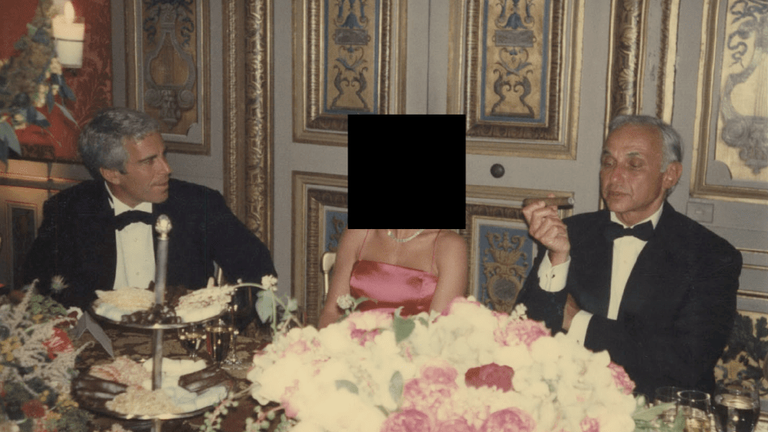
Mr Wexner allowed Epstein to manage his finances. Pic: US Department of Justice
Image:
Mr Wexner allowed Epstein to manage his finances. Pic: US Department of Justice

‘Birthday book’

A note from a person signed as “Leslie” featured in Epstein’s “birthday book”, which was released as part of the Epstein files.

The note addresses Epstein and says the author wanted to “get you what you want” over what appears to be a drawing of breasts. It is then signed with “your friend Leslie”. As there is no surname, it is unclear who the author is.

Sky News’ data and forensics team have analysed the signature and believe there are similarities with Mr Wexner’s handwriting.

Being featured in the Epstein files is not an indication of wrongdoing.

Advertisement
Mr Wexner said he regrets his friendship with Epstein. Pic: US Department of Justice
Image:
Mr Wexner said he regrets his friendship with Epstein. Pic: US Department of Justice

UK police forces investigating information from Epstein files

On Wednesday, West Midlands Police said it was assessing information “that has emerged in relation to private flights into and out of Birmingham Airport following the publication of the US DoJ Epstein files”.

It is understood private jets linked to Epstein passed through BHX, according to flight logs between the early 1990s and 2018.

That was the fourth UK police statement, connected to the Epstein files, since Tuesday.

Essex Police had said on Tuesday it was working through logs of private jets that had travelled through Stansted Airport, while Bedfordshire Police said it was reviewing links to London Luton Airport.

Advertisement

On Wednesday afternoon, Surrey Police said it was carrying out enquires over claims of human trafficking and sexual assault, dating back to 1994.

Advertisement

Where do the Royal Family stand on Andrew’s links to Epstein?

The National Crime Agency confirmed “a number” of UK police forces are assessing allegations that have emerged through the Epstein files.

Last week, Thames Valley Police said it was assessing claims that Andrew Mountbatten-Windsor shared confidential documents with Epstein while acting as trade envoy.

Advertisement

Andrew has vigorously denied any accusations against him related to Epstein and his crimes.

Earlier this month, the Metropolitan Police confirmed Peter Mandelson would face a criminal investigation into allegations he leaked market sensitive information from Downing Street to Epstein while serving as business secretary.

Lord Mandelson has said of his connection to Epstein in a statement: “I was wrong to believe Epstein following his conviction and to continue my association with him afterwards.

“I apologise unequivocally for doing so to the women and girls who suffered.”

Advertisement

Source link

Continue Reading

NewsBeat

Highfield Primary shows ‘hope for future’ with green flag

Published

on

Highfield Primary shows 'hope for future' with green flag

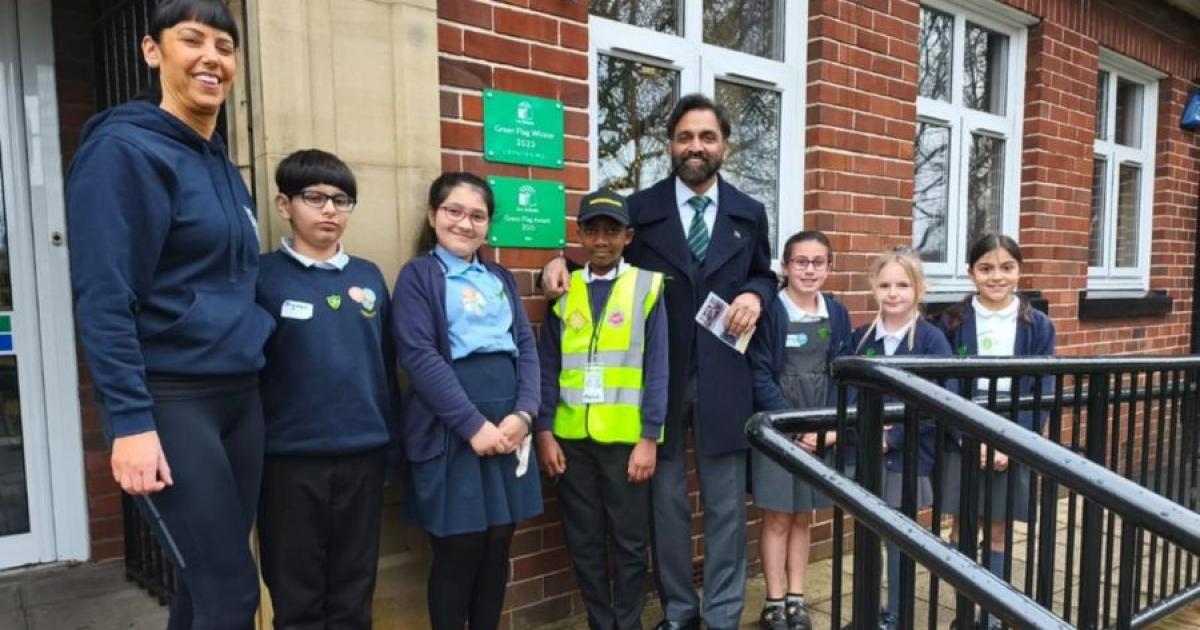
This comes after Highfield Primary School, on Marsh Lane in Farnworth, was given an another Eco Schools Green Flag Award in recognition for the work they do.

The Green Party’s Cllr Hanif Alli said: “The children are a credit to the school and its focus on the environment and practically developing the land around themselves.

“I heard about a mud kitchen and a bug hotel and a new pond that they had created.

The schoolchildren were honoured for their environmental work (Image: Public)

“The children aptly call themselves eco warriors and were an absolute inspiration. 

Advertisement

“There is hope for our future yet, with young environmentalists like this in our midst!”

Cllr Alli says he was invited by year three pupil Penelope and year five pupil Aseel as Bolton’s only elected Green councillor to see their eco school and green projects for himself.

He said he was thrilled to be able to congratulate them on their Green Flag award.

Cllr Alli said he found the children’s work inspiring (Image: Public)

The Eco-Schools programme was established in 1994 and has been inspiring young environmentalists for over 30 years.

Advertisement

It has grown into a global movement, with Eco Schools Green Flag accreditation awarded to schools in more than 100 countries.

Highfield Primary School has won nine Eco School Green Flag award over the last 20 years with the most recent having come just last November.

The school was honoured for its work across key areas like biodiversity, healthy living and litter.

They worked together to produce a detailed and impactful year-long action plan to address these priorities.

Advertisement

Activities included monitoring dinnertime lunches and encouraging healthy eating.

There was also litter picking in the school grounds, eco team presenting litter picking assemblies and joining Bolton at Home for community litter picking events every term.

The school also received a grant from National Education Nature Park for a £10,000 biodiversity project with contractors North West Ltd added a pond and platform to the woodlands.

An Eco-Schools Green Flag is then valid for one academic year, before renewal is required to remain an Eco-Schools accredited Green Flag school, college, or nursery.

Advertisement

Source link

Continue Reading

NewsBeat

How US military is assembling within striking distance of Iran | World News

Published

on

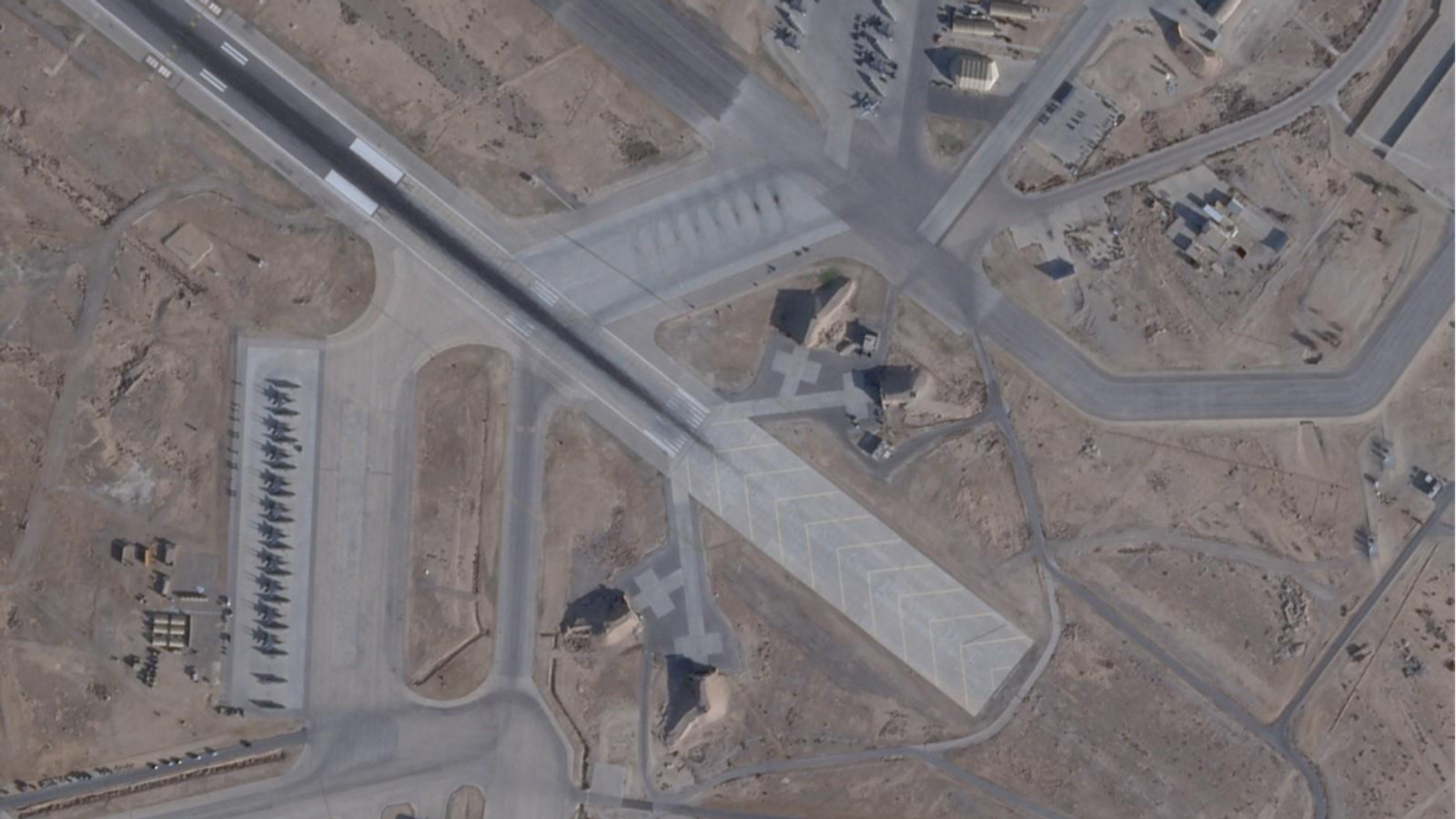
Satellite imagery shows F-15s and A-10 Thunderbolts at Muwaffaq Salti Air Base, Jordan

Donald Trump told protesters in Iran that “help was coming” little over a month ago.

But at that time, there was almost no US military presence that would have made a difference in the region.

On 22 January, he said there was a “great armada” assembling, when what he was referring to was the aircraft carrier, the USS Abraham Lincoln and its attendant Carrier Strike Group 3.

None of it matched his rhetoric. But by this weekend, it will have done so, as a powerful US military force assembles within striking distance of Iran. It has three main elements.

Advertisement

First is the naval force. The Lincoln and its CSG 3 will shortly be joined by the USS Gerald Ford, and its attendant CSG 12. The USS Ford is passing through the Gibraltar Strait in the next 24 hours and can be expected to be on station south of Cyprus in about four days, travelling at normal cruising speed.

Read more:
Middle East seemingly edging closer to war
Iran and US agree ‘guiding principles’

These two Nimitz-class carriers (CVN 72 and CVN 78) will be bringing extra air defence and Tomahawk-carrying destroyers with them, bringing the number of known, and named, US destroyers in the region to 11. They will join three Littoral Combat Ships already on station and a good number of support ships as well. In addition, each CSG includes – though never usually named – a nuclear attack submarine (an SSN), probably of the Virginia class.

And there may also be an Ohio-class SSN in the area, which is specifically designed to launch Tomahawk and other missiles at land targets.

Advertisement

The second element has been provided over the previous 10 days by an extensive series of C-5 and C-17, Galaxy and Globemaster flights in and out of the region, bringing air defence assets to US bases, presumably as cover in the event of any Iranian retaliation in response to potential US attacks. Israeli “Iron Dome” air defence batteries have also been moved from its frontier with Gaza to its borders in the east, probably for the same reason.

Image:
Satellite imagery shows F-15s and A-10 Thunderbolts at Muwaffaq Salti Air Base, Jordan

And thirdly, the US has sent an extensive force of KC-130 air-to-air refuelling tankers to bolster its existing air tanker force. They left from the British base at Mildenhall (six tankers on 16 February) to Greece, and (on 18 February) no fewer than 10 more came from bases in the continental United States, via Britain, to bases in Greece and Bulgaria. In addition, US aircraft are known to be in the British base at Akrotiri in Cyprus, at Aviano in Italy, in the Azores, in Spain and at the Chagos Island base of Diego Garcia. Well over 100 US combat aircraft – F-15s, F18s, F-22s, F35s and B2 bombers – are now available to US military planners in the potential theatre of operations.

But the extra KC-130 tankers are the giveaway. They give away the possibility that US aircraft might be operating from bases not sited on the territories of America’s Middle East allies, but from less politically sensitive bases further away. And they give away the possibility that any air campaign might be quite prolonged, not just a sudden one-off attack.

The final piece of the jigsaw: no fewer than six E3 Sentry aircraft. These flying control centres can survey and control everything that happens beneath them. They are, in effect, flying HQ’s and a country can run a war from one of them. By the weekend, there will be a lot for these six E3 Sentry aircraft to look at and control.

Advertisement

What all this military power will be used for is still a matter of some speculation.

What does the tracking data show us?

By Freya Gibson, junior OSINT producer

Sky News Data & Forensics team has tracked the locations of US military planes and ships heading to the region in recent days and weeks.

Advertisement

Several US Navy boats have been sent to the Middle East, including the USS Abraham Lincoln, a nuclear-powered aircraft carrier that carries 90 aircraft, including F35 fighters, and 5,680 crew. The Lincoln is leading a carrier strike group which includes three destroyers. The ship was last seen in the Arabian Sea around 240km off the coast of Oman. Sky News confirmed the location of this ship on 15 January.

In addition, the USS Gerald R Ford, the lead ship of the US Navy’s nuclear-powered aircraft carriers, is en route to the Middle East. Sky News has confirmed its latest location as tracking shows the Ford was around 600km from the Strait of Gibraltar at 1.58pm on 18 January. This aircraft carrier, like the USS Abraham Lincoln, also forms a carrier strike group that includes three destroyers. In total, there are reported to be more than 12 US ships now in the Middle East.

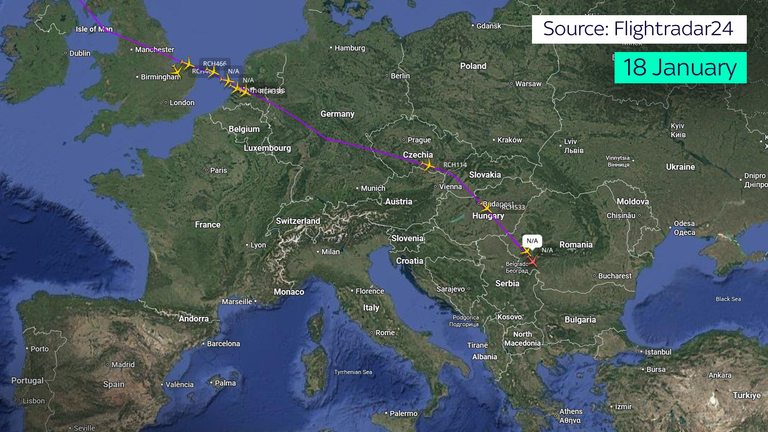
Sky News has also tracked movements of US aircraft
Image:
Sky News has also tracked movements of US aircraft

Sky News has also tracked movements of US aircraft in the region. More than 15 refuelling tankers have repositioned towards the Middle East and Europe since 16 January. These aircraft, the K-135s, are aerial refuelling aircraft. They can carry up to 200,000 pounds of fuel and 83,000 pounds of cargo. They have four engines and operate at speeds up to 530mph and altitudes up to 50,000 feet. 

The aircraft came from multiple locations, including RAF Mildenhall in the UK, Tampa in Florida and Sioux City in Iowa. They have been landing in different locations, including Chania Airport in Greece and Sofia Airport in Bulgaria.

Satellite imagery shows F-15s and A-10 Thunderbolts at Muwaffaq Salti Air Base, Jordan. They can conduct precision airstrikes and engage armoured targets, alongside C-130 transport aircraft providing logistical support.

Advertisement

What is Iran doing?

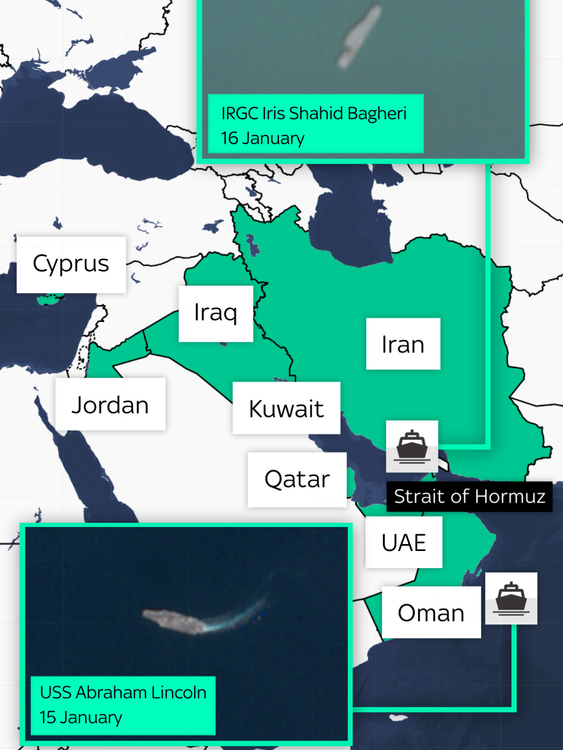
Sky News has tracked positions of Iranian Navy vessels using data by TankerTrackers
Image:
Sky News has tracked positions of Iranian Navy vessels using data by TankerTrackers

Sky News has tracked the positions of Iranian Navy vessels using data from TankerTrackers. Around six vessels can be seen just off the coast of Bandar Abbas on 16 January. One of these ships is an Iranian Drone Carrier, IRIS Shahid Bagheri. Satellite imagery confirmed its location on 16 January, 10km from the coast.

It is often spotted around this location in the Strait of Hormuz. It can deploy roughly 60 drones along with helicopters.

Source link

Advertisement
Continue Reading

Trending

Copyright © 2025