

Hironobu Sakaguci, one of the creators of the long-running Final Fantasy game series, once observed: “The game itself is fun to play, but its strongest characteristic is the visual entertainment the game provides.”
This aesthetic appeal is a big part of the enjoyment players take from their favourite games. Far from the simple graphics of early games, players can now explore photorealistic forests in Kingdom Come Deliverance II (2025), cross neon-drenched cities in Cyberpunk 2077 (2020), or explore alien planets in No Man’s Sky (2016) – all while taking pictures of them.
Players have long documented their adventures in virtual worlds. The practice of taking “screenshots” – still images captured from the screen during gameplay, like a single frame from a film – predates today’s culture of live streaming. At the turn of the millennium, players were already sharing screenshots on forums and early social media platforms. Some wanted to show how they had overcome a difficult section of the game, while others highlighted interesting locations, or captured funny moments.
Game developers noticed, and over time “photo modes” became a standard feature in many games. These allow players to pause the action and take pictures of the game as if they were using a virtual camera.
Advertisement
Australie/Australia (2025) from Death Stranding 2 (Kojima Productions 2025). From the book Photography, Video Game, Landscape by Pascal Greco. Courtesy of Pascal Greco
This feature is implemented in different ways. In Grand Theft Auto V (2013), the player character can equip the camera like any other in-game item. They can frame the shots and tune the settings as in a real camera, and export the images from within the game world. Western game Red Dead Redemption 2 (2018) even equips the player with a period-accurate 1898 Kodak camera.
Other games still provide a photo mode without tying it to the in-game world. A camera appearing in the inventory of the 13th century samurai of Ghost of Tsushima (2020) would be out of place. But with the powerful photo mode, the player can still modify numerous image settings, and also the game world itself, such as time of day, weather and the character’s facial expressions, to get the “perfect shot”.
In-game photography as art
Video games are a visual medium, and promotional screenshots remain central to how they are advertised. But several artists have now turned in‑game photography into a serious artistic practice, with radically different approaches.
British in-game photographer Duncan Harris is a pioneer. Already active in the early 2000s, his photographic works are collected in the blog Deadendthrills. Harris also produces promotional imagery for major games-publishers. His images push game-engines to their limits, often using custom tools to showcase impressive graphics of detailed characters and sweeping vistas.
Advertisement
Other artists have taken more critical or experimental approaches. Dutch artist Robert Overweg takes pictures from impossible angles: inside a wall, underground or inside buildings that are not meant to be accessed by players. His series Flying and Floating, showing visual glitches and the impossible structures of the 1950s Chicago-like city of the game Mafia 2 (2010), was exhibited at the Centre Pompidou in Paris in 2015.
Los Angeles-based artist Kent Sheely adopts a documentary approach and subverts the gameplay accordingly. For his DoD series, inspired by war photographer Robert Capa, he modified the second world war online shooter Day of Defeat (2003). His character carried no weapons, no user interface cluttered the screen, and the “shoot” button was converted into a screenshotting key, as if he were an actual war photographer on the field.
Swiss artist Pascal Greco occupies yet another position between documentary and the avant-garde. A self-taught filmmaker, cinematographer and photographer, Greco has staged live performances in which he plays Death Stranding (2019) while capturing in-game photographs in front of an audience. His photobook Photography, Video Game, Landscape (2025) presents pristine virtual natural landscapes, devoid of human elements, interjected by glitches – fragmented vistas of these landscapes, between the sublime and the abstract.
Advertisement
Tales From The Real World by Mélanie Courtinat & Pascal Greco.
Questions of authorship
In 2024, the first academic conference dedicated to in-game photography was held in Milan. Among the key topics was authorship. Who owns the rights to in-game photographs: the photographer who takes the picture, or the developers who created the game?
The work of Italian artist Leonardo Magrelli is emblematic in this regard. His photobook West of Here (2021) collects screenshots taken by other players in Grand Theft Auto V. Magrelli edited them into a black-and-white photobook, echoing the traditions of American documentary photography and appropriation work such as Sherrie Levine’s After Walker Evans (1981).
The project provoked strong reactions from online users, who argued that Magrelli had no right to use images he had not personally captured. Subsequent legal enquiries suggested that, in principle, only Rockstar Games – the developer – could pursue legal action regarding the use of its intellectual property. At the time of writing, no such action has been taken.
Advertisement
In-game photography is an innovative artistic medium that sits at the intersection of play, technology and artistic expression. It is not merely an aesthetic exercise, but rather an experimental terrain where the barrier between spectator and creator is removed, and players become artists, chroniclers or archivists of ever-changing virtual universes.
That’s Donald Trump’s dilemma as the war escalates with Iran.
He says there could be weeks more to go, so is he serious and can the US last that long?
Ahead of the war, in highly unusual leaks Pentagon commanders warned the force being assembled in the region would have enough firepower for a week or two at most.
Image: President Donald Trump and Defence Secretary Pete Hegseth. Pic: AP
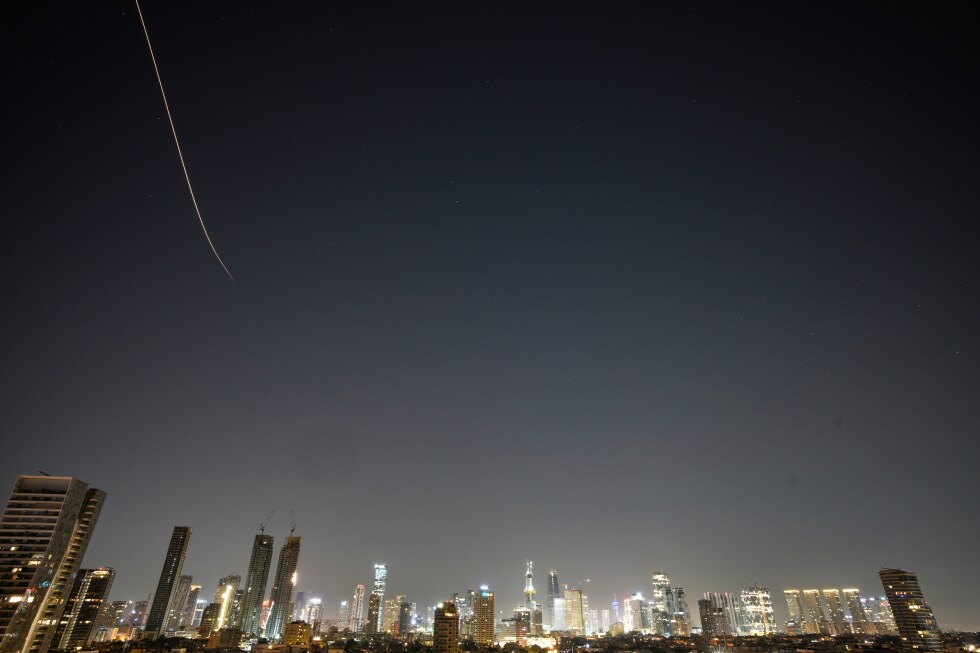
The clock may be running faster for America’s allies in the region. Well-sourced reports claim Gulf states are already begging the US presidentto end this soon, not least because their stocks of air defence missiles are dwindling worryingly quickly.
This war is asymmetrical. As unbalanced as using Ferraris against e-bikes it’s been said. A multi-million-dollar state-of-the-art Patriot missile for instance will bring down a drone worth only thousands, but doing so indefinitely is not sustainable.
Iran’s strategy to lash out in multiple directions has surprised many. It should not have. They have long warned they would take the gloves off if they faced an attempt to change their regime.
Advertisement
Advertisement
What’s happening inside Iran?
It could cost them. Gulf states and Saudi Arabia will now be considering joining the fight against Iran with their own forces.
But for now, the strategy is already working putting pressure on the US from vital regional allies to end this war but also forcing their attackers to deplete their stocks of astronomically expensive weaponry.
There are unknowns. How quickly can the US reinforce its fighting capability and crucially what is happening on the ground. Is Israel softening up parts of the country from the air to enable regional uprisings armed by agents in the field?
That could take the war in a very different direction – the fragmentation of Iran and internal civil war.
There is no sign of that yet. In the absence of such strategies the regime will most likely survive a few weeks of aerial onslaught however ferocious.
This war is asymmetric in another way too, that of desired outcomes. To win Israel and America must bring about regime change because that is their objective. To declare victory the regime therefore needs only survive, for as long as it takes.
Advertisement
And maintaining the pace of their attacks on Iran indefinitely for both the US and Israel is not an option.
More US pilots will be shot down, or troops killed on the ground, the impact on the global economy will be too great, regional allies and stability will be too punishing. Domestic support for another foreign war will continue haemorrhaging.
For whatever reason this war will have its limits and if the Iranian regime still stands when it reaches that point, what happens then?
Holi celebrations in the north Indian town of Mathura filled the air with music, dance, and clouds of colored powder.
Hundreds of men and women gathered at a temple in the north Indian town of Mathura, believed to be the birthplace of Lord Krishna, one of the most revered Hindu gods with whom this festival is closely associated, to celebrate the festival marking the arrival of spring.
Their faces smeared with colored powder and their wet clothes hanging to their bodies, they swayed to the rhythm of beating music. Holi colors represent spring’s bounty and the festival is seen as a time to forget old grudges and renew friendships.
On a large stage behind the revelers, folk actors recreated scenes from Krishna’s life and his playful flirting with his consort Radha.
Advertisement
The dark-skinned god is believed to have smeared color on Radha’s fair cheeks to make her look more like him, setting off a tradition in which people smear colors on each other’s cheeks to mark the festival of colors. The divine couple is a favorite subject of the traditional Indian miniature paintings.
Actors then gear up to play another Radha-Krishna episode to the delight of the merry crowd.
In Mathura and other places linked to Krishna’s life, the celebrations last for several days, but March 4 marks the main day of Holi and festivities spread across the country.
When South Korean doctors launched a nationwide thyroid cancer screening programme, diagnoses shot up 15 fold. Yet the death rate from thyroid cancer didn’t budge. More patients were being created than lives were being saved.
It is a clear illustration of a problem that is quietly reshaping how doctors think about cancer: overdiagnosis. Not misdiagnosis but the accurate detection of tumours that would not actually harm the patient.
Modern cancer screening is rightly celebrated as one of medicine’s great achievements. Finding cancer early saves lives. But as technology has become ever more sensitive, are we sometimes doing more harm than good?
Better detection
A cancer doesn’t spring from a single rogue cell flicking a switch. It develops through multiple steps, and many clusters of abnormal cells never complete that journey.
Advertisement
Some sit quietly in the body for decades. Only a fraction ever become life threatening. The problem is that once an abnormality is detected and labelled as cancer, it triggers a chain reaction – anxiety, aggressive treatment, serious side-effects – for a condition that might never have caused the patient any trouble at all.
Twenty years ago, many of these abnormalities would have been impossible to find. Today, state-of-the-art imaging and highly sensitive detection tests can identify tiny clusters of abnormal cells, faint genetic changes, and the smallest growths. As that technology improves, the boundary between a dangerous cancer and a harmless biological quirk becomes increasingly blurred.
This raises an uncomfortable question about rising cancer rates, particularly the well documented increase in diagnoses among the under-50s. Is this a genuine biological shift – cancers becoming more aggressive and appearing earlier in life – or is it partly a reflection of the fact that today’s younger adults are being screened, scanned and monitored far more intensively than previous generations?
Thyroid cancer is the starkest example. In South Korea in 2011, that 15-fold surge in diagnoses came almost entirely from screening, not from any real increase in disease. Researchers and clinical bodies eventually revised their guidelines in 2013, moving away from screening slow-growing lesions and towards monitoring rather than immediate surgery.
Prostate cancer tells a similar story. The introduction of the prostate-specific antigen (PSA) test produced a large jump in diagnoses, but death rates stayed flat – suggesting many men were being treated for cancers that grow so slowly, they never would have become life-threatening.
The consequences were serious. Surgery left many men incontinent or impotent, with no improvement in survival. Guidelines now favour active surveillance for many prostate growths.
For these two types of cancers, also those of the colon, the evidence increasingly points in the same direction: “watchful waiting” is often safer than immediate intervention. Surgery, radiotherapy and chemotherapy all carry significant risks and long-term side effects. Exposing a patient to those risks for a tumour that was never going to threaten their life is difficult to justify.
None of this means early detection should be abandoned. For fast-moving cancers – pancreatic, lung, some breast cancers – finding the disease early remains critical. The challenge is learning to distinguish between the cancers that demand urgent action and those that can safely be watched. That requires not just better technology, but better judgement about when to use it.
Advertisement
Fairness and transparency
Shifting towards a risk-based approach to screening also raises difficult questions about fairness and transparency. Who gets screened, how often and on what grounds? Those decisions carry real consequences, and they deserve a more open public debate than they currently receive.
What is becoming clearer, though, is that the old logic of cancer screening – find it, remove it – is no longer sufficient on its own. Overdiagnosis is a genuine harm, even if it is a less visible one than a missed diagnosis. For some patients, learning to live carefully with a monitored cancer may turn out to be safer than trying to eliminate it entirely.
Overall shop inflation fell slightly to 1.1% from January’s 1.5%, in line with the three-month average of 1.1%, as fierce competition between retailers kept price rises in check and customers benefited from promotions across health, beauty and fashion, according to the British Retail Consortium (BRC) and NIQ.
A United Airlines flight was forced to evacuate following an engine fire and an emergency landing at Los Angeles International Airport
Eliana Nunes and Annette Belcher
21:41, 02 Mar 2026
A United Airlines flight was forced to evacuate and perform an emergency landing after a fire broke out mid-air.
The aircraft was flying from Los Angeles International Airport (LAX) to Newark, New Jersey, when air traffic control received reports of a fire in its left engine.

Advertisement
The plane turned back and landed safely at LAX at around 11.20am local time. Smoke could be seen billowing from the engine around 40 minutes later as the aircraft was parked on the runway, ABC7 reports.

All 256 passengers and 12 crew members evacuated the jet using emergency slides and air stairs before being taken by bus to the terminal, United said in a statement, The Mirror reports.
The airline added that it was working to ensure passengers reached their final destinations as soon as possible. One person suffered a cut to their finger, but no other injuries were reported.
The Federal Aviation Agency said in a statement: “United Airlines Flight 2127 returned safely to Los Angeles International Airport around 11:20 a.m. local time on Monday, March 2, due to a left engine issue. Passengers deplaned on a taxiway.
Advertisement
“The Boeing 787-9 Dreamliner was heading to Newark Liberty International Airport in New Jersey. The FAA will investigate. Please contact the airline and airport for additional information.”
The school previously said investigations into Pepys uncovered “actions that were harmful, abusive and exploitative, especially in his relations with women”
A new house name has been chosen at the Cambridgeshire school where students previously voted to drop the name of Samuel Pepys. Students at Hinchingbrooke School in Huntingdon were asked to vote on whether to choose a new name for Samuel Pepys House.
Staff and students at the school, which is part of CAM Academy Trust, have chosen Olivia Bernard Sparrow to replace Pepys as the figurehead for one of the school’s pastoral houses. Sparrow was a local philanthropist committed to improving education.
Sparrow (1775 to 1863) was committed to improving education, investing her own resources into village schools and widening access to learning. Her philanthropic work reached across the Hinchingbrooke estate and surrounding areas, including Brampton, Godmanchester, Huntingdon, and Buckden.
The school council chose three local figures for the school’s vote. The shortlist also included Mary Stuart and former headteacher at Huntingdon Grammar School, John Wakelin.
Advertisement
The school said both were key figures in transforming Hinchingbrooke from a small grammar school to the largest comprehensive school in Cambridgeshire, as it is today. It said “local connection was key”, meaning the candidates needed to have a link to the school, Huntingdon Grammar School, or the Hinchingbrooke House site.
Andy Hunter, Principal of Hinchingbrooke School, said: “Olivia Bernard Sparrow was a remarkable and influential figure in Huntingdonshire’s history and the school community has enjoyed finding out more about her important work. Her belief in education as a force for opportunity and fairness, combined with her strong local ties, makes her an inspiring and relevant figurehead for our students today and we are very pleased to be naming one of our houses after her.
“Throughout this process, what has stood out most to me as Principal has been the level of thoughtful discussion and genuine engagement from the students in this matter. They have approached the responsibility of choosing a new figurehead with maturity, curiosity and respect and it has been wonderful to see them debating ideas, weighing up the criteria and taking ownership of the final decision.
“I have been incredibly proud of the real sense of student agency I have witnessed across the school. I would also like to thank all parents and carers for their support throughout this process. Their encouragement has helped our students take pride in their school community and engage meaningfully in decisions that shape it.”
Extraction shooters are older than you’d think and they stand to only become more commonplace (Embark Studios/Bungie/Metro)
GameCentral examines the current state of the extraction shooter genre and what sort of impact Arc Raiders’ success could have on it.
The games industry loves to chase trends. That’s always been the case, but it’s never been more obvious than since so many of them started pumping out live service games, with Sony and Ubisoft in particular trying (and failing) to release a mega multiplayer hit.
Any time a new video game manages to prove even marginally successful, you can count on other publishers eventually releasing their own alternative, just as Fortnite helped spark a surplus of battle royale games.
As such, the recent success of Arc Raiders has made it, and extraction shooters in general, the hot new genre to copy, but whether Arc Raiders will become a trendsetter or a one hit wonder remains to be seen.
Advertisement
What is an extraction shooter?
Since there aren’t that many of them, and they’ve only recently come into the spotlight, there’s no strict definition of what an extraction shooter is, but put simply it’s a game where you have to escape a map rather than shoot anything, or anyone, in particular.
Expert, exclusive gaming analysis
Sign up to the GameCentral newsletter for a unique take on the week in gaming, alongside the latest reviews and more. Delivered to your inbox every Saturday morning.
Advertisement
Typically, the games are shooters (often first person) with PvPvE gameplay, which means player versus player versus environment. Or to put it in actual English, you have to combat, or avoid, both human-controlled opponents and computer-controlled enemies.
There’s typically resources and/or loot involved too, which you can take back to your extraction point with you. If you’re playing in a team, and depending on the game, this can sometimes be used to determine who won a match. Although often merely escaping is the only achievement you need.
Escape From Tarkov is undeniably popular but Arc Raiders is arguably closer to a mainstream success (Battlestate Games)
When did the extraction shooter genre start?
Despite feeling like a new concept, extraction shooters are much older than you might think. One of the most famous examples, Escape From Tarkov, has been around since early 2017 but it was by no means the first.
It is the one that helped to popularise the genre, though, resulting in similar military themed extraction shooters, like 2024’s Gray Zone Warfare and 2025’s Delta Force.
Curiously, there doesn’t seem to be a common consensus on what the first extraction shooter actually was. There’s arguments in favour of Ubisoft’s The Division from 2016 (which has an extraction shooter style post-game in its Dark Zone mode), elements of 2012’s famous DayZ, and even 2008 zombie shooter Left 4 Dead.
Advertisement
Don’t miss Gaming news! Add us as a Preferred Source
As a loyal GameCentral reader, we want to make sure you never miss our articles when searching for gaming stories. We have all the latest video games news, reviews, previews, and interviews, with a vibrant community of highly engaged readers.
Click here and tick Metro.co.uk to ensure you see stories from us first in Google Search.
GameCentral has been delivering unique games news and reviews for over a decade
None of these games explicitly advertise themselves as extraction shooters, but then this list of extraction games available on Steam includes many other titles that don’t either.
Advertisement
We wouldn’t call Helldivers 2 a dedicated extraction shooter, but it does involve reaching an extraction point once you clear a mission in order to reap any rewards, which is apparently enough for it to count.
Similarly, Dark & Darker is billed as a fantasy dungeon crawler, but despite the lack of guns, it too is counted as an extraction shooter since you form a squad with other players to gather loot, and you don’t get to keep it unless you successfully escape from the dungeon.
What are the best extraction shooters?
Although there have been a lot of extraction shooters over the years very few examples have come from any of the big name publishers, with most being indie titles.
Advertisement
There was Ubisoft’s Rainbow Six Extraction from 2022, but that wasn’t much more than a professionally made mod and didn’t have much impact.
Instead, publishers have tended to include extraction modes in already existing games. EA had something like that in Battlefield 2042, with its Hazard Zone mode, and its current Battlefield Redsec battle royale spin-off has extraction missions as part of its Gauntlet mode.
Activision, meanwhile, added its own extraction shooter mode, titled DMZ, to 2022’s Call Of Duty: Modern Warfare 2. It was only ever labelled as a beta and effectively abandoned just a year later, but DMZ’s influence can be felt in Call Of Duty: Black Ops 7’s PvE Endgame mode (one of the few enjoyable things about the game). Plus, insider TheGhostOfHope previously claimed DMZ will be brought back for this year’s instalment.
2019’s Borderlands 3 received a battle royale mode as DLC, where you need to use a loot extractor to keep any loot you obtain, while 2024’s Warhammer 40,000: Space Marine 2 has a squad-based Operations mode that requires you to reach an escape ship upon completing missions.
Advertisement
How popular can extraction shooters get?
It seems many publishers feel there’s merit to the extraction shooter genre, but not necessarily enough to warrant full games.
The only noteworthy exceptions are Arc Raiders (developer and publisher Embark Studios is a subsidiary of South Korean company Nexon), Arena Breakout (which comes from Chinese conglomerate Tencent), and Bungie’s upcoming Marathon reboot.
Sony and Bungie obviously settled on turning Marathon (an otherwise single-player series of shooters) into a multiplayer extraction shooter long before Arc Raiders dropped, but after years of only half-attempts, perhaps the tides have shifted and made publishers less hesitant to commit to the genre.
Advertisement
A success like Arc Raiders is undeniably going to have turned heads. As a reminder, it has sold at least 14 million copies since its October launch (proof that such games don’t need to be free-to-play) and has remained consistently popular, currently sitting among the top 10 most played games on Steam at sixth place.
Arc Raiders was even outperforming Battlefield 6 at one point (Embark Studios)
Most importantly, Nexon is happy with Arc Raiders’ performance, bragging that it has maintained six million active players weekly across all platforms. What’s more, Embark’s CEO Patrick Söderlund was recently given the new role of executive chairman so he can help spearhead Nexon’s entire games business.
‘Patrick and I are fully aligned on transforming Nexon,’ said Nexon CEO and president Junghun Lee, ‘He’s built studios, attracted the industry’s best people to work with him, and shipped massive global hits. That’s exactly what Nexon needs right now.’
Arc Raiders’ success could also be to the benefit of Marathon since it has helped introduce the extraction shooter genre to a wider audience. Few have seemed confident in Marathon’s chances, given Sony’s track record with live service games, the troubles within Bungie, and Marathon being a niche IP, but it looks like it might start off strong after all.
Not only was its free open beta popular, but the game shot up Steam’s best sellers chart in the US to the number three spot, ahead of its full launch this week (Thursday, March 5), overtaking Arc Raiders and only losing to Valve’s dominant multiplayer shooter Counter-Strike 2 and the recently released Resident Evil Requiem.
Advertisement
If Marathon manages to at least rival Arc Raiders in popularity, that’s not only a win for Sony but a sign to the rest of the industry that a lot of people enjoy extraction shooters. And if they remain popular over a long period of time, publishers will be encouraged to not just make extraction-lite modes in their shooters, but whole games.
All signs point to a strong start for Marathon, but will it maintain that pace? (Sony Interactive Entertainment)
The 9 best extraction shooters you can play right now
Arc Raiders
PlayStation 5, Xbox Series X/S, and PC
The obvious first choice, Arc Raiders’ current popularity means there’s no shortage of people to play with, but you are free to scavenge the ruined future Earth and fight giant robots solo.
The PvP can be annoying if you’re not looking to fight other players but developer Embark has made efforts to downplay that aspect, with no plans for competitive leaderboards and the like. The AI generated voicework may be a dealbreaker for some though.
Advertisement
Escape From Tarkov
PC
Although it’s technically been around for almost a decade, Escape From Tarkov has spent most of that time in beta and only saw a full launch last November, when it became more widely available via Steam.
Aside from the core multiplayer, it has a story campaign, but its more realistic military sim style approach to combat means the whole game is considered brutally difficult by even ardent fans and thus hard to get into for newcomers.
Advertisement
Arena: Breakout Infinite
PC, iOS, and Android
Another one for the military sim sickos, Arena: Breakout Infinite’s high learning curve makes it a hard sell, but it’s one of the more technically impressive examples of the genre, boasting strong visuals and good performance.
It was previously decried for being pay-to-win, since you could obtain better weapons with a premium currency you could buy for real money, but that currency has since been removed.
Advertisement
Delta Force
PlayStation 5, Xbox Series X/S, PC, iOS, and Android
Like Marathon, Delta Force was a series of single-player shooters that vanished for years until suddenly coming back as a multiplayer game. It only launched last year and is a solid, if uninspired shooter, but it must be doing something right to be the seventh most played Steam game at the moment. Being free-to-play probably helps.
Hunt: Showdown 1896
PlayStation 5, Xbox Series X/S, and PC
Advertisement
A personal favourite of ours, even if we haven’t played it much lately. This one’s unique not only for its supernatural setting, but for its premise of gathering clues to locate and hunt one of six ferocious bosses.
Even if you fail to hunt the boss, you can kill the player who did and steal their bounty, making for a more novel and oftentimes unpredictable experience compared to other extraction shooters.
Helldivers 2
PlayStation 5, Xbox Series X/S, and PC
Advertisement
Helldivers 2 is the one live service game success Sony has and it didn’t even make it, only publish it. While it’s long past its honeymoon period, Helldivers 2’s consistent content updates have kept things fresh and interesting, and the extremely chaotic nature of its harder missions, combined with friendly fire, lend themselves well to unintentional comedy.
It’s also an extremely rare instance of a Sony published game being ported to Xbox, with strong word of mouth leading to it selling new copies faster than it did on PlayStation 5.
The Division 2
PlayStation 4, Xbox One, and PC
Advertisement
It may not necessarily be billed as an extraction shooter, but The Division 2 is one of the best examples thanks to its very well thought out Dark Zone mode and endgame content.
You do need to beat the main campaign to access it, but it’s arguably the best part of the whole game and worth reaching. It’s seen years of updates since launchand will likely be keeping fans occupied until The Division 3 eventually comes out.
Escape From Duckov and Zero Sievert
PC
Advertisement
While the extraction shooter genre is tailor made for multiplayer games, there have been some attempts at catering to those who like the formula but don’t want to deal with other players.
Escape From Duckov, despite its status as an Escape From Tarkov parody, is one such example, being a top-down shooter where you play as a cartoon duck trying to build a spaceship and escape a hostile planet.
Alternatively, there’s Zero Sievert, which offers pixel art graphics and some roguelike DNA in its randomly generated maps. Its numerous weapons and items help keep each playthrough fresh, although it may be too challenging for some.
Advertisement
Marathon
PlayStation 5, Xbox Series X/S, and PC
Technically this isn’t out until March 5 but the beta (or *Server Slam* as developer Bungie call it) has made a strong first impression, with Marathon fanson Reddit praising the gunplay and visuals.
The one downside is that the game won’t be free-to-play and is being sold for £34.99, but it’s already charting well on Steam, purely on pre-orders, so it looks like Sony doesn’t need to worry about another Concord level disaster.
The former Durham Light Infantry (DLI) Museum at Aykley Heads, Durham, has been renamed The Light as part of a major redevelopment project.
It previously housed the collection of historic DLI artefacts but closed in 2016 as part of cost-cutting measures after falling into a state of disrepair.
Cllr Karen Allison, cabinet member for leisure, tourism, regeneration and high street, and Cllr Joe Quinn, cabinet member for planning, investments and assets, at The Light. (Image: Durham County Council)
A new café and retail space will open alongside exhibition areas, galleries, studios and teaching spaces.
Advertisement
Between 80,000 and 100,000 visitors are expected to visit each year.
During the extensive renovation work, the building was stripped down to its basic structure and almost completely rebuilt.
Ben Kelsey, the council’s senior manager for projects and performance, told an economy and enterprise scrutiny committee that the project has faced challenges but is on track to open later this year.
He said: “Supply chain pressures and challenges in the construction sector have affected the construction in key stages of its delivery.
Advertisement
“The existing building, when it was stripped back, had a number of challenges and issues which added pressures in terms of cost and time.
“The Light is due to open this Summer; it’s down for practical completion in March.”
The new venue will be a sister site to The Story at Mount Oswald, which provides the permanent home to the DLI collection.
The local authority said: “We want to shake up the traditional view of a museum and gallery, by listening and collaborating, utilising technology and developing innovative partnerships across cities and sectors, ensuring we are on people’s ‘must visit’ bucket list.
Advertisement
“Artists and scientists will be encouraged to create, experiment and collaborate. Communities will gather for events, learning and participation.”
Celeriac doesn’t normally fall into my top five vegetables, but it works brilliantly as a mash, and with buttery leeks and fish completes a fantastically tasty trio. Any leftover mash mixed with extra cheddar or feta and the Syrian-style spice mix makes for a delicious sort of potato cake/fritter! I like the eggs in this, but if you’d rather not include them, up the quantities of fish from 250g to 300g.