NewsBeat
Hannah Einbinder Interview: Hacks Star Talks Gillian Anderson And Political Activism

In her latest role, Emmy winner Hannah Einbinder plays a young up-and-comer in the entertainment industry, who finds herself in close quarters with a daunting, no-nonsense veteran star.
Hannah’s character strikes up a unique and close bond with the former screen icon, once considered to be at the top of her field, and they manage to overcome their differences through their shared work on an exciting creative endeavour.
Should any of that sound a little familiar, rest assured that this is where the similarities with Hacks abruptly end.
Teenage Sex And Death At Camp Miasma, in fact, is a blood-soaked slasher that both pokes fun at and celebrates, in equal measure, the horror movies that so many of us discover at formative stages of our lives, in all their problematic glory.
Hannah takes the lead as Kris Williams, a young director tasked with rebooting a beloved slasher series that has been a favourite of hers since childhood. To help get the film off the ground, she tracks down the original’s “final girl”, who has turned her back on the industry and is now living a quiet and solitary life off the grid.
As the two grow closer, things take a number of surreal and unexpected turns, until – true to form for director Jane Schoenbrun, who previously helmed We’re All Going To The World’s Fair and I Saw The TV Glow – the lines between reality and fantasy begin to blur, all while the film tackles ambitious subjects like gender identity, sexual repression and the impact the art we love can have on us, for better or worse.
Camp Miasma is the first project many of us will have seen Hannah in since her five-season stint as aspiring comedy writer Ava Daniels in Hacks came to an end, something she acknowledges was on her mind while considering her next steps after the award-winning comedy.
“It definitely was something that I considered,” Hannah tells HuffPost UK, shortly before Teenage Sex And Death At Camp Miasma’s release on this side of the Atlantic.
“How could I do something that felt ‘on par’ with Hacks in a way – which is a very high bar – but also felt tonally and stylistically very different? And how could I embody a character that felt really, really different from Ava? And it is my hope that that has occurred.”
Initially, she was attracted to “the fantasy element of Miasma, and how we get to kind of dive deeply into a world within a world”.
“Even reading the script, you could see that it was going to be this magical, visual feast,” she recalls. “And having seen the film, it’s far more visually dazzling than you could ever imagine. It’s a really far out, crazy ride. So, yeah, I was really pleased to do Miasma after Hacks.”
While Hacks paired Hannah with seven-time Emmy winner Jean Smart as the formidable Deborah Vance, in Camp Miasma, she shares the screen with another legendary performer, Gillian Anderson, who shines throughout the film as the eccentric former-scream-queen-turned-recluse Billy Presley.

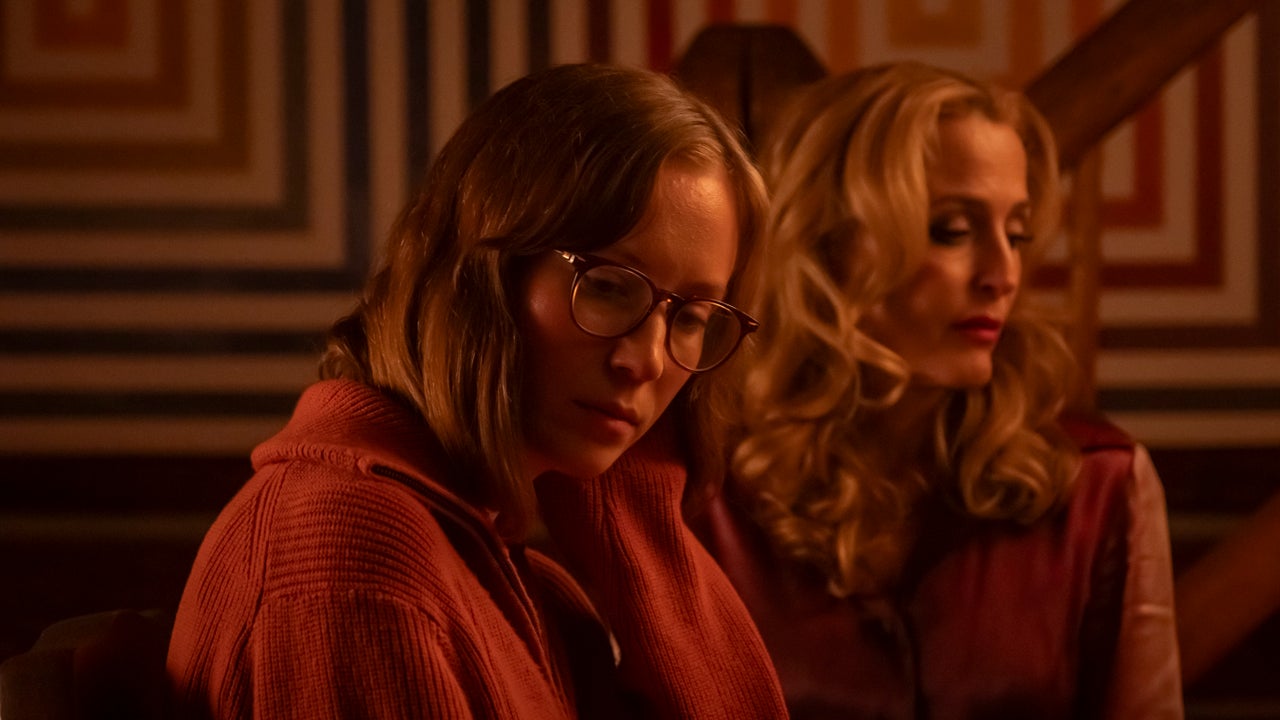
At the time she was first cast, Hannah didn’t actually know who would play the Billy to her Kris, but recalls Jane “telling me a couple of the people that they were thinking of for Billy”.
“Gillian was the most exciting person to me, and to them,” she explains. “So, when she said yes, it was very cool.”
Thankfully, Gillian more than lived up to expectations of being “super cool, really funny and warm”.
“In her press and in her interviews… if you get a sense of her in that way, that is very much who she is,” Hannah enthuses. “So, yeah – I was stoked to feel, like, embraced by her. And also, just to watch her work, and watch her process, is very interesting. I learned a lot.”
She’s also happy to concede how “really crazy” it feels to have already worked with two such iconic performers so early on in her own on-screen career.
“I don’t know what I must have done in a past life, but thanks to that person,” Hannah says with a laugh. “I totally could not have received a better artistic education than I have, just watching these women [Jean Smart and Gillian Anderson].
“And not only them, but Paul [W Downs], Lucia [Aniello] and Jen [Statsky], the creators of Hacks. And Jane. Getting to watch their approaches to their work, and their passion, I’ve been impossibly, impossibly lucky.”

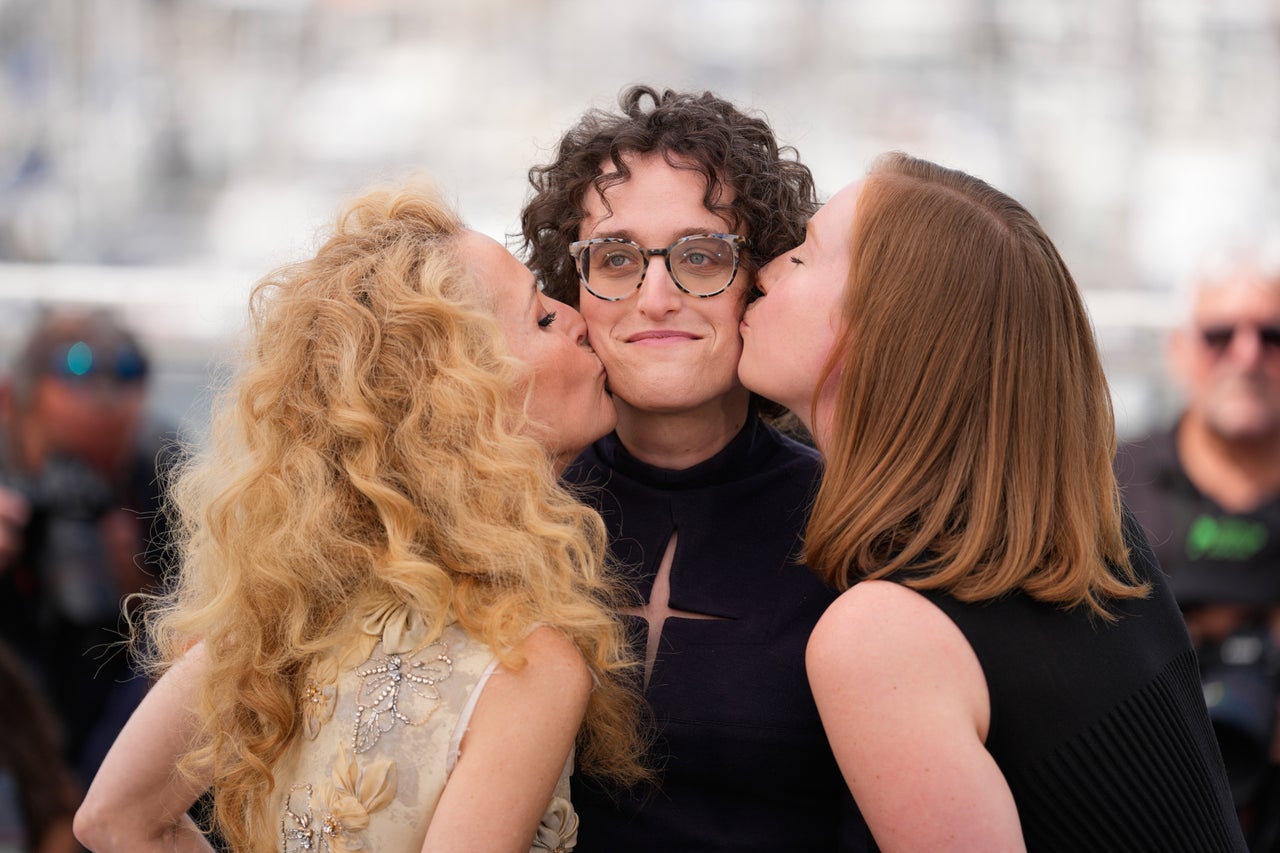
While promoting Camp Miasma, Jane – one of the most prolific trans filmmakers working today – has spoken candidly about how their film reflects their own relationship with gender and, in particular, their changing attitude towards sex since transitioning.
“Sex was trauma for me for the first 32 years of my life,” they said in the film’s promotional materials. “It was something that I was completely dissociative and avoidant about. When I was having sex, I didn’t want to be having sex, and I certainly wasn’t present with myself, because how could I be when I wasn’t in the right identity and body?
“After transition, this dysphoria slowly started to heal, as I slowly stepped into a new identity, and into an identity and a body and a physical form that I finally felt comfortable with.”
Hannah notes that Camp Miasma celebrates “embracing desire and trying to feel liberation from shame”.
“I had met with Jane and understood that their films were allegorical for their experience,” she says. “My understanding of that only deepened as we had more conversations, as we were shooting the movie.”
Much has already been made of the film’s more sexual themes, and as a result, Camp Miasma definitely doesn’t shy away from its frank and, at times, graphic depictions of sex.
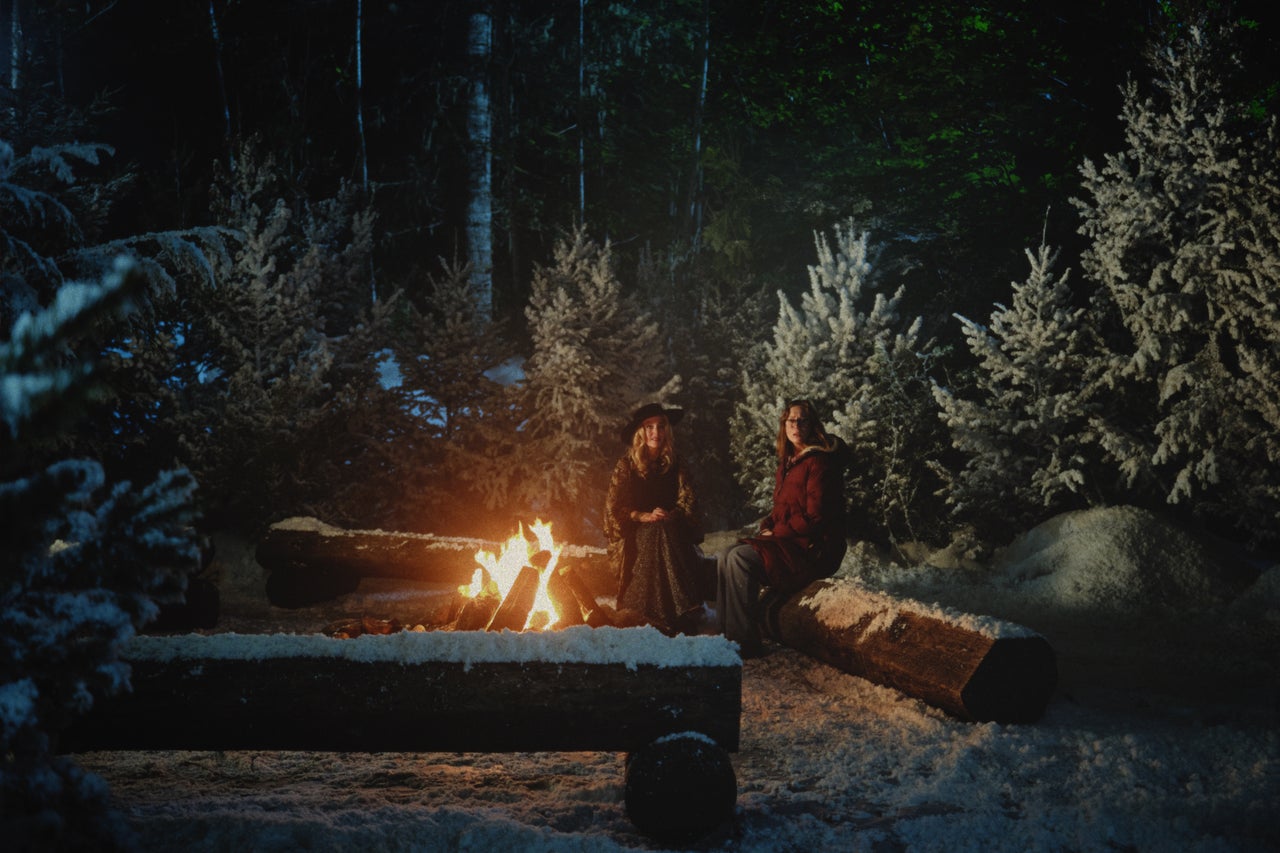
This was a prospect that Hannah initially found “exciting” to explore, and intrigued her from the jump. However, she was also somewhat taken aback by just how much her character’s feelings and experiences wound up mirroring her own.
“It kind of sent me down a path of self-exploration in a way that I didn’t necessarily expect,” she admits. “I had to sort of grapple with how much of what Kris experiences is true for myself.”
Fortunately, she notes, the set was a “really safe environment to explore all of those things” (the film used the services of intimacy co-ordinator Aryn Mott, who has spoken positively about her experiences working with Hannah, Gillian and Jane).
“It felt like an important thing to nail,” she adds. “And I’m glad to feel like I lent some of my true experience to the performance in those moments.”
For Hannah, she’s “certainly” proud to be part of a project inspired by a positive experience of gender transition, particularly in the current climate, when the trans community is under an alarming amount of scrutiny and attacks.
“I’m always, first and foremost, after good work from good people,” she notes, suggesting this is “why I’ve worked with a lot of women and queer people”.
She enthuses: “I definitely feel like the film is political in its nature, and that’s obviously something that’s very important to me. So, I feel really honoured to be part of it.”
Indeed, anyone familiar with Hannah’s career will know that she’s never shied away from speaking out about social and political causes close to her heart.
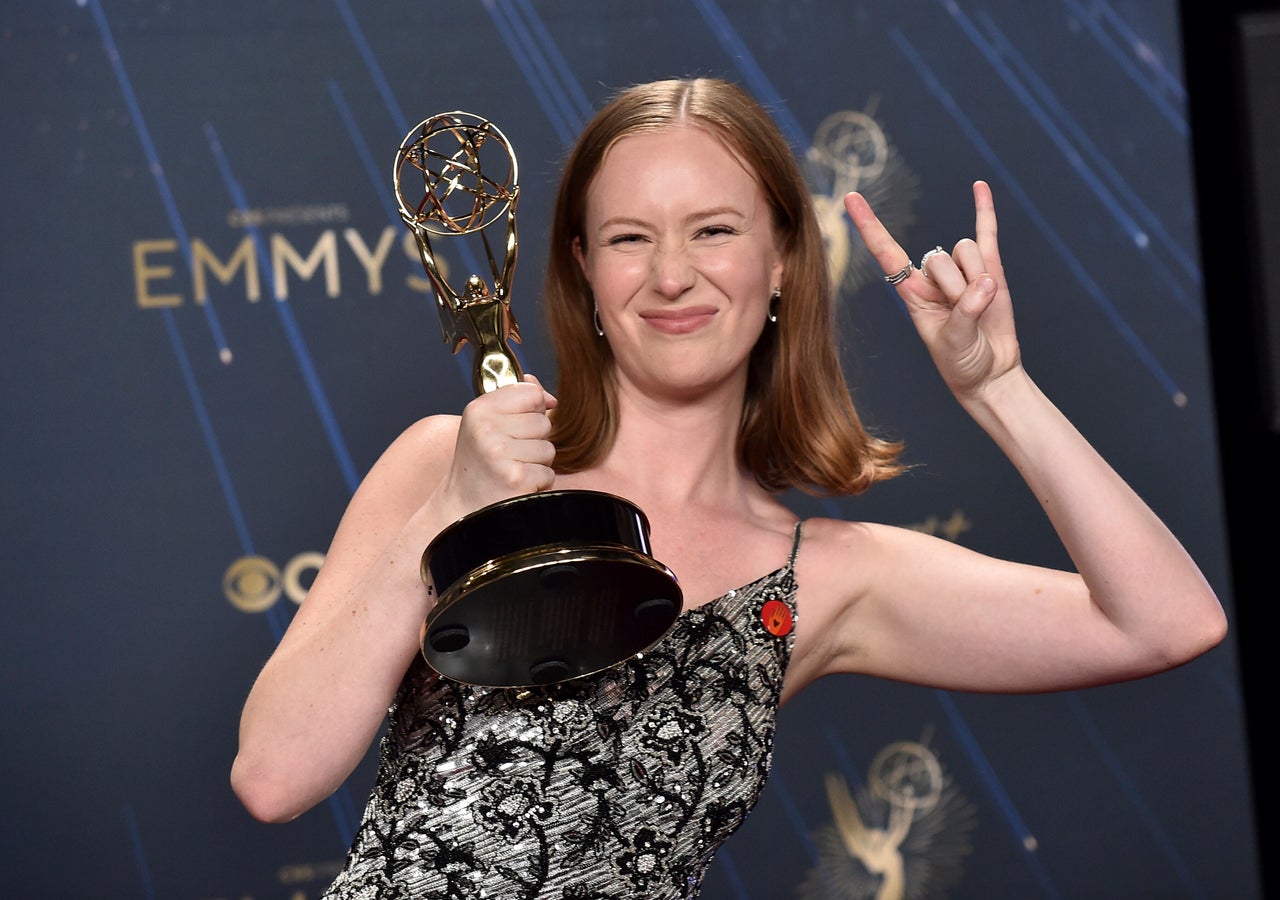
Case in point, after winning Best Supporting Actress In A Comedy Series at last year’s Emmys, Hannah took to the stage in an Artists4Ceasefire pin, ending her acceptance speech by declaring: “Go Birds, fuck ICE and free Palestine.”

Elsewhere, she’s been a vocal supporter of trans rights and has spoken passionately about climate change.
“I understand that, yes, in my work as an artist, we are doing what we are doing as a method of trying to connect to people, and reflect the human experience back to them, and make them feel less alone, or give them relief from their pain to provide them with some sense of joy,” she begins, noting that, as a result, celebrities’ voices are amplified more than she believes they should be.
“Unfortunately, I think we live in a culture that places a little too much – in fact, a lot too much – emphasis on celebrity,” she laments.
“And our voices are elevated – and people [pay more attention to] famous people than, frankly, people who deserve attention: academics and scientists and journalists and people who are screaming about the state of the world and not being heard.
“So, to me, it makes total and complete sense to try to work in messages that I think are important. I just think that there’s nothing more important than bringing awareness to the suffering in the world, and what we’re facing in America, and in the Middle East, and [globally] with the climate crisis.”
“I take that seriously,” she continues. “It is important to me that I am continuing my education on all of these issues, and staying up to date, and that I’m able to speak [about] them in a way that is true and informed.”
As for the rest of Hollywood, Hannah adds: “I really just hope that more people are vocal, because I see so many people with far more influence than I have, and I think of what they could do, and I think of the impact that it could have, and I just know that it would be so large and so appreciated by so many people.”

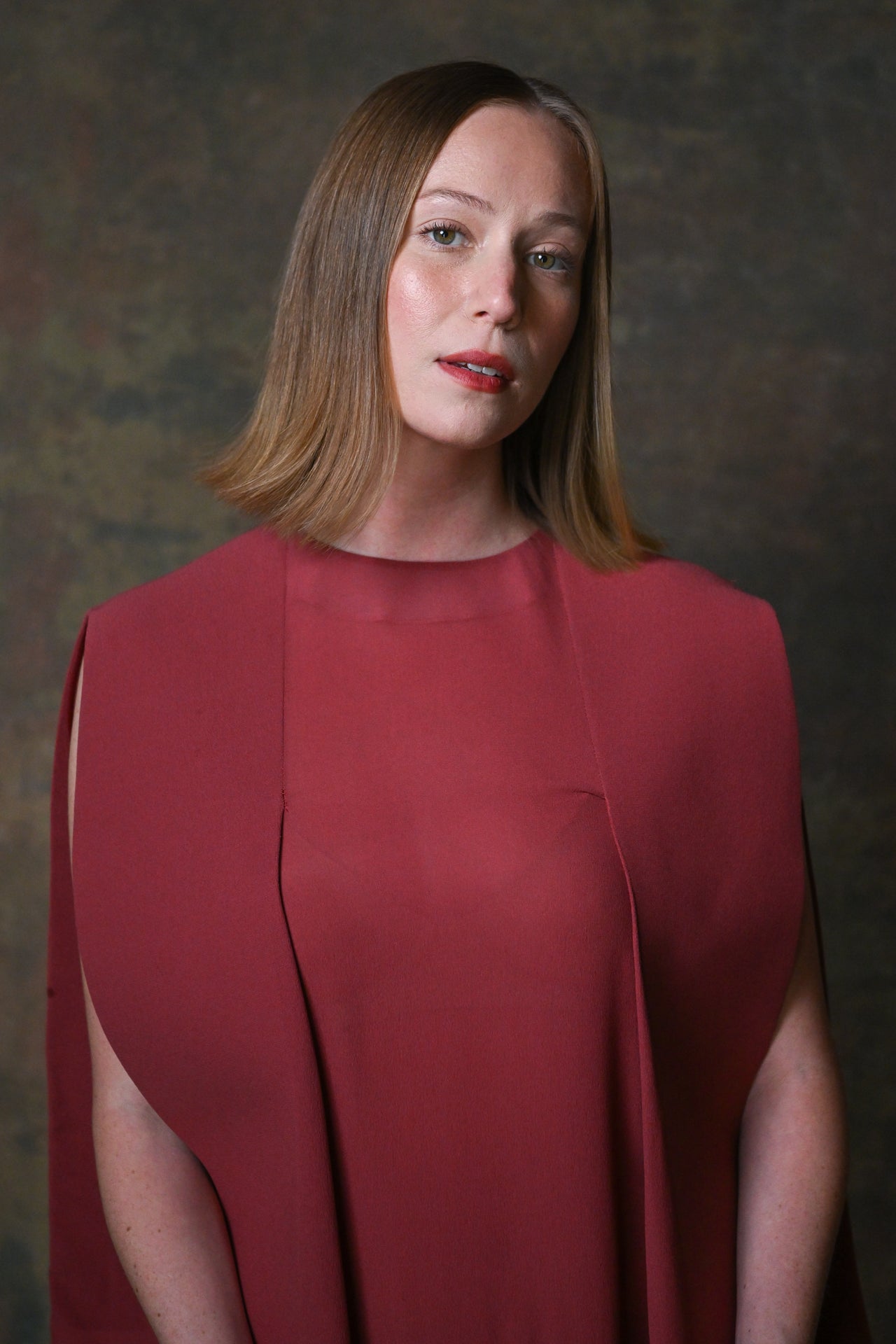
Stephen Lovekin/Shutterstock
One controversial subject Hannah has become synonymous with since the final season of Hacks is the rise of artificial intelligence (AI) across the creative industries, thanks to an impassioned speech her character gave in one episode that has since reached viral status. “People like you are always saying that it’s happening whether you like it or not, but you’re the ones making it happen,” Ava fumes to one AI entrepreneur in the series.
“And you could easily stop it if people could say that they didn’t want it. But you don’t want to give people a choice. So you just say, ‘the train’s already on the tracks’, and you don’t let people decide for themselves. Obviously, you want us to believe that, because you stand to profit from it. So, of course, you’re going to tell us that it’s happening no matter what and it’s inevitable.”
For Hannah, she takes a similar stance to her character, stating simply of generative AI: “Oh. [It’s] bad. You heard it here first, folks. Go ahead and print that. Bad. Not good. No.”

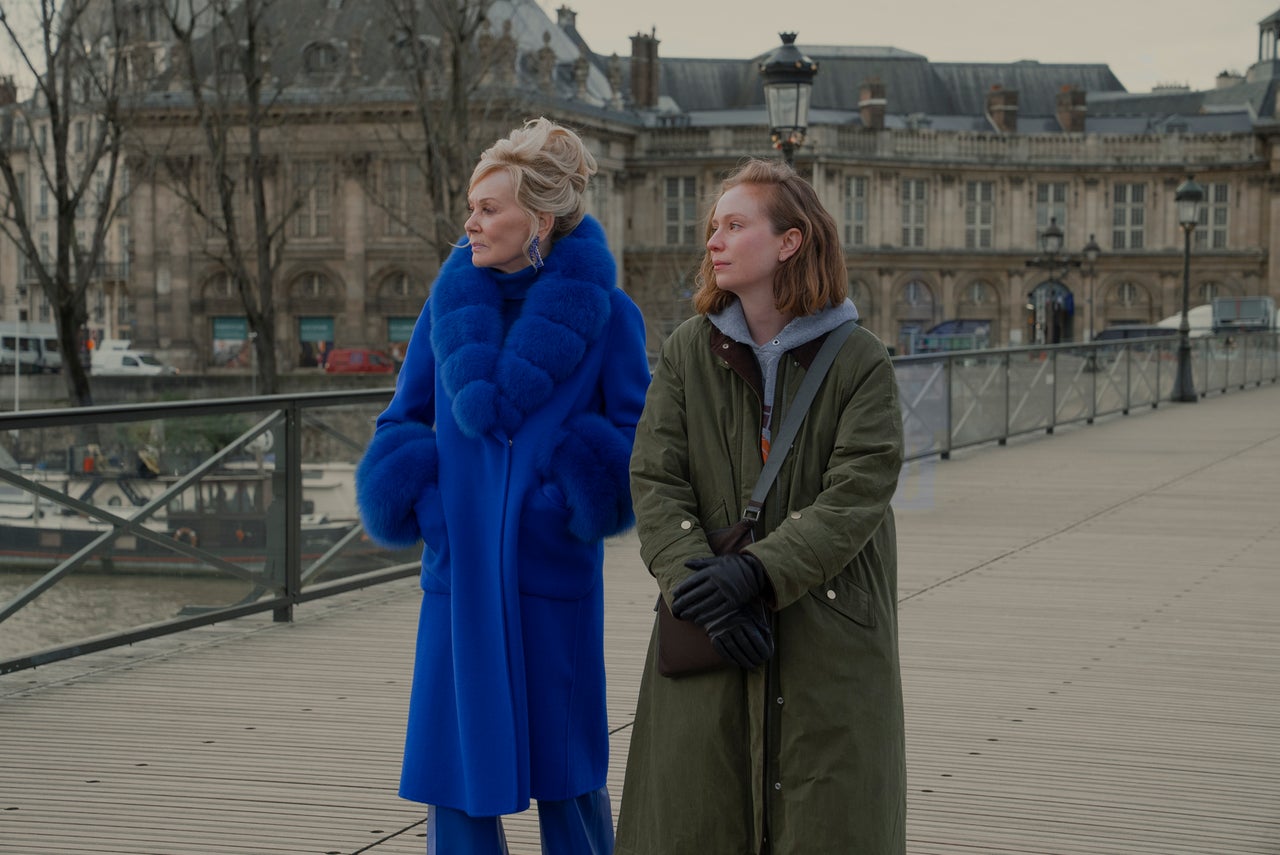
With Camp Miasma having already caused a stir with its US release, Hannah has been encouraged by the way the film is starting conversations that “we really don’t have culturally”.
“The feedback that we’re getting from a lot of people is ‘why do I not hear this being dealt with in culture?’,” she says. “I think we come from a sort of puritanical culture. America is currently fighting a sort of Christian nationalist movement, that is trying to repress queer people and repress women and repress all marginalised folks.”
With Camp Miasma, she believes the movie is “trying to defiantly grapple with the topic of sexual repression”.
“That’s my hope – that people leave the theatre and start to wonder, like, either ‘oh wow this is something I’ve been thinking about’ or ‘I haven’t really thought about it but this is how I feel, I’ve never seen that verbalised so directly’,” Hannah shares.
“I hope people feel as moved by it as I did in doing the role, because like I said, I had to really dig deep and examine in what ways this was true of my experience as well.”
Teenage Sex And Death At Camp Miasma is in cinemas now.
You must be logged in to post a comment Login