


Across the UK, Black students remain significantly underrepresented in doctoral programmes. This is despite years of widening participation policies and a growing awareness that the pathways into a PhD are often far harder to navigate for some groups than others.
My research with colleagues shows that a different approach is possible: one that draws on long-standing African philosophies of community, character and collective care.
In 2021, I and colleagues launched the Accomplished Study Programme in Research Excellence (Aspire), an initiative led by Sheffield Hallam University in partnership with Manchester Metropolitan University and higher education charity Advance HE. The programme emerged from a national funding competition aimed at widening access and participation for Black, Asian and minority ethnic groups in postgraduate research.
Aspire provides personalised, culturally grounded mentorship that combines academic development and wellbeing support. The programme works with Black students in their final year of undergraduate and master’s degrees, as well as graduates who may have left university long ago, helping them find their way into doctoral study.
Aspire takes inspiration from two African philosophies. One is ubuntu, a concept from Southern Africa meaning: “I am because we are.” It emphasises community, mutual support and shared humanity.
The other is omoluabi, a Yoruba principle of “good character”. It values integrity, humility, respect and responsibility towards others.
These ideas may be centuries old, but they offer a powerful framework for modern mentorship. Students told us that mentoring based on these values felt different: more personal, more understanding and more connected to who they are. It gave them permission to see themselves not as outsiders in academia, but as people whose experiences and identities belong there.
Each participant is paired with a Black academic mentor who offers personalised guidance and support throughout the six month duration of the programme. Instead of presenting the doctoral process as a rigid checklist, mentors helps students understand the unwritten expectations of academia.
This includes how to approach potential supervisors, how funding works and how to build a research profile. The programme builds confidence and opens up the possibility of a PhD for people who may never have imagined doctoral study as an option for them.
The programme, and the research my colleagues and I have published on its methodology, offer the clearest evidence yet that culturally grounded mentorship is not simply beneficial; it is transformative.
ASPIRE, CC BY-NC-ND
Many students begin thinking about doctoral study years before they apply. But for Black students, this journey is often shaped by additional pressures. These include limited access to academic role models, navigating structural inequalities, and the experience of feeling out of place in academic spaces. Standard university support, such as one-off career talks or short mentoring schemes, rarely addresses these deeper issues.
Feeling seen and heard
A key element of the programme is the Talk About Race Forum, a structured but open discussion space where students can reflect on their experiences of university life. For many, this was the first time they could speak honestly about the challenges such as racial microaggressions or the fear of “not being good enough”.
These conversations were not counselling sessions, nor were they complaints forums. Instead, they became places of validation. Students heard others articulate struggles similar to their own. This helped them realise that these challenges were not personal failings but often the result of broader inequalities. Mentors and peers provided reassurance and practical advice rooted in lived experience.
This sense of recognition was central to students’ growth. Many described gaining a stronger sense of who they were academically, and beginning to picture themselves in doctoral settings they once assumed were “not for people like me”.
One of the strongest findings from the research is that culturally informed mentorship can create measurable impact.
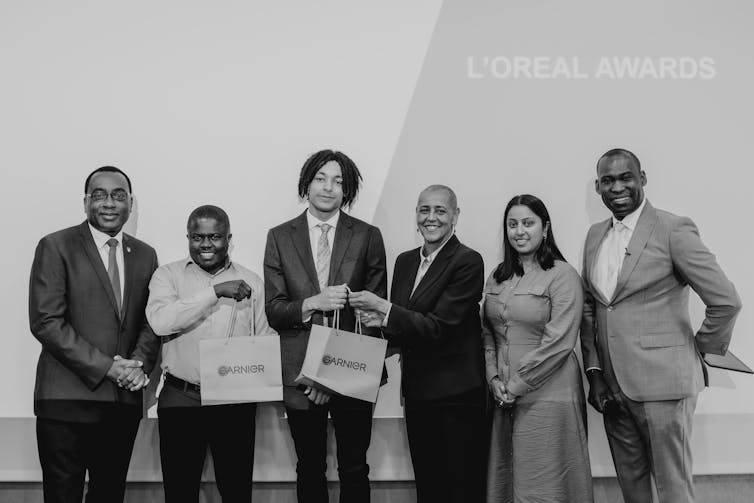
Across three cohorts, the programme has supported 59 Black students. Of these, 15 scholars have progressed into fully funded PhD programmes in different UK universities. This 25% progression rate far exceeds typical sector patterns for Black students. These achievements stem not only from academic guidance but also from the emotional support students received and the reassurance that they belonged, that their ideas mattered, and that doctoral study was within reach.
ASPIRE, CC BY-NC-ND
A model for the future
Universities often call for increased diversity in postgraduate research. However, many rely on surface-level initiatives that do little to address structural barriers. The Aspire approach suggests a realistic alternative.
It is about adopting principles that make mentorship meaningful. This includes seeing students as whole people, not problems to be “fixed”. The programme values cultural knowledge and lived experience and invests time in building trust. It provides personalised guidance rather than one-size-fits-all workshops.
For institutions, the benefits extend beyond individual student success. A more diverse doctoral community enriches research, expands perspectives and strengthens the university’s connection to the society it serves.
The under-representation of Black students in UK doctoral programmes is often seen as a long-standing, stubborn inequality. But our findings show it is neither mysterious nor impossible to address. When mentorship is rooted in compassion, culture and community, it becomes a powerful tool for change.
Culturally grounded approaches like ubuntu and omoluabi do more than help students navigate an unfamiliar system. They reshape students’ sense of possibility. They also challenge universities to rethink the kinds of support that truly foster inclusion.


















































You must be logged in to post a comment Login