Connect with us

NewsBeat

How artists are tracking environmental change through poetry, film and sound

Published

on

How artists are tracking environmental change through poetry, film and sound

As Elaine, an artist in her 80s, stood at her window in north Manchester, she noticed new apartment blocks dominating the nighttime skyline: “The moon is no longer in view; I have to crane my neck out of the window in order to see it. Or to see the reflection of the moon.”

I have been meeting with the Many Hands Craft Collective – a group of older artists, knitters and poets – most Tuesdays for almost a year. The group has been gathering at the community room in Victoria Square, Manchester, for over a decade.

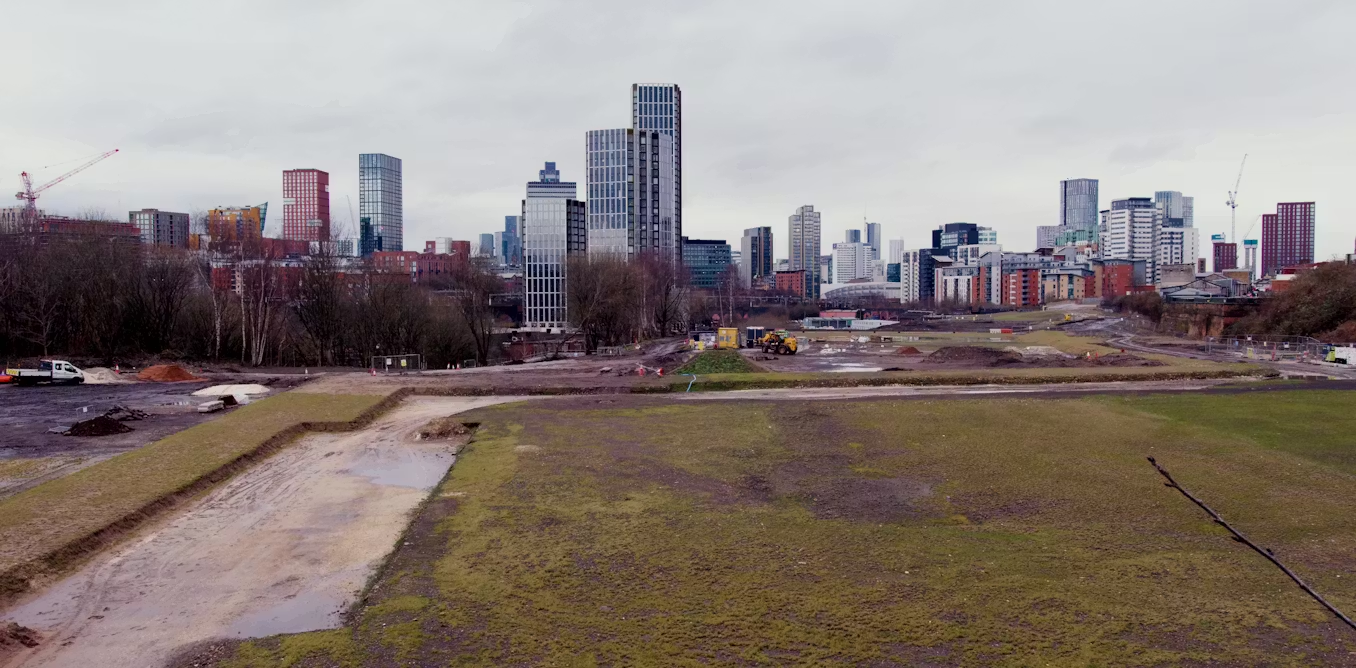
They have been reflecting on Manchester’s massive building boom as Victoria North – Britain’s largest regeneration project – transforms their neighbourhood with 15,000 new homes. City centre construction is also reshaping skylines they’ve known for decades.

Together, we have created a film tracking how urban regeneration transforms their world. The film explores their relationship with the elements through shifting light, redirected wind and changing rain.

Advertisement

People who have lived here for decades – reading wind patterns, tracking seasonal light, noticing atmospheric shifts – hold memories that city planners cannot see. Residents’ observations also reveal how wildlife experience urban change – birds, insects and nocturnal animals are all affected by altered light and wind.

Construction alters wind, blocks views of the moon and stars, and changes the subtle conditions residents have learned to read over lifetimes. Observations from these artists show that heritage is not just about preserved buildings or recorded rivers, but about the knowledge people carry.

As a film-maker and sound artist, I study the connections between people and the natural world. In 2008, when Manchester City Council rehoused my 82-year-old grandmother after she had lived in the same house for 60 years, she wrote poetry to process her loss.

“Bodies, not walls, carry memories,” she wrote. Her words inspired The Flowering (2020), my first poetic documentary exploring urban regeneration through the memories the body holds. This influenced my research into how cities transform.

Advertisement

Artists from the Many Hands Craft Collective meet weekly at Victoria Square in Manchester.
Fiona Brehony, Author provided (no reuse)

In Manchester, the River Irk flows through Victoria North. New riverside properties rise while the river itself needs care. For two centuries it powered mills, was contaminated by dye works, then was eventually culverted (channelled into underground pipes, hidden from view). Yet the river flows on, and so does the memory it carries.

The artists at Many Hands carry intergenerational knowledge about how this urban environment has changed. Our conversations about riverside properties blocking sunlight led the group to reflect on how construction changes light in their own streets. Views of the moon disappeared, high-rise buildings shifted wind and rain, and the sound of water tapping against windows stopped.

My PhD project analysed atmospheric transformations alongside the river itself: how these numerous new buildings and developments change homes as well as waterways.

Advertisement

As climate change forces cities to adapt, observations accumulated over decades – how rain moves through streets, how wind patterns shift, how rivers sound differently with the seasons – could inform climate-responsive urban design. Yet regeneration often displaces the very people who carry this knowledge before it is even recognised.

Materials and memory

To retrace the Irk’s history, we worked with clay and natural materials from the river – silt, stones, industrial brick fragments. An artist called Dot recalled seeing blue pigeons from old dye works, with feathers stained from chemical colours.

As the clay stiffened as it dried, conversations turned to how cities are built. Victorian brick from the 1890s still stands solid, while new apartment exteriors are designed for 20-year lifespans.

Poetry emerged from the conversations: “Sand, soil, silt, leaves, clay, decaying plants, coal and dust, ash chemical waste” and “human hearts holding on to heritage, ours. Made of natural materials, hands, rain, wind, sunlight”. Different perspectives recognise people and rivers as bodies carrying memory through change.

Advertisement
woman holds page of paper with poetry text over tables

Artists created poetry and artwork that represented their interactions with their urban surroundings.
Fiona Brehony, Author provided (no reuse)

Sound and poetry

As a group, we reconstructed waterwheels to explore how the Irk powered mills. One artist, Jean, suggested recording with hydrophones (special microphones that work underwater) in kitchen sinks. Water through household pipes connected us directly to the river, flowing through our fingertips. Playing hydrophone recordings for the first time, Jean said it sounded like being deaf – without her hearing aids, it was like being underwater.

This revealed a crucial insight: listening is shaped by our bodies. Jean’s deafness meant she heard the river differently, noticing frequencies and vibrations others might miss. Kitchen sink hydrophones create access where it did not exist, bringing culverted, fenced or distant rivers into homes through soundwaves in domestic pipes.

These conversations evolved into Two Worlds, a sound installation created with composer and sound artist Simon Knighton. This piece of sound design informs the film score and explores how people coexist with the environment. The Irk pulsates different rhythms depending on where you listen. Harsh urban concrete or gentler upstream flows are heard differently by each set of ears.

As we wrote poetry together after discussing how some long-forgotten waterways have been buried beneath streets, Rose asked: “What happens to a river when it becomes a road?”

Advertisement
woman holds white fabric with printed words, people sit on chairs in background

Editing poetry and screen-printing words on fabric was part of the collaborative process.
Fiona Brehony, CC BY-NC-ND

Rose’s question lies at the heart of my research: when cities develop, what environmental knowledge disappears?

Manchester has lost multiple rivers to culverting, development and roads. Older residents carry knowledge younger generations never knew existed. As climate change requires us to expose or “daylight” culverted rivers for flood management, these memories could guide restoration.

Many Hands’ Material River, a collection of films and poetry printed onto fabric, is on display within the River Stories exhibition until March 23 2026 in Manchester Histories Hub at Manchester Central Library.


Imagine weekly climate newsletter

Don’t have time to read about climate change as much as you’d like?

Get a weekly roundup in your inbox instead. Every Wednesday, The Conversation’s environment editor writes Imagine, a short email that goes a little deeper into just one climate issue. Join the 47,000+ readers who’ve subscribed so far.


Advertisement

Source link

Continue Reading
Click to comment

Leave a Reply

Your email address will not be published. Required fields are marked *

NewsBeat

England vs Ireland LIVE: Six Nations match stream, latest score and updates

Published

on

How to watch England vs Ireland: TV channel and live stream for Six Nations today

The 2026 Six Nations continues this afternoon, with England hosting Ireland in a tie which could prove pivotal for both sides’ campaigns. England come into the tie off the back of a humbling Calcutta Cup defeat at Murrayfield, which brought the mood in the camp down considerably after they had trounced Wales on matchday one. Ireland, meanwhile, have momentum on their side after they came from behind to beat Italy last time out with a gritty, if imperfect, performance.

Source link

Continue Reading

NewsBeat

Man with Scotland tattoo fighting for life after ‘E-bike dropped on his neck’ in Dublin

Published

on

Ipso logo

Gardai are trying to identify the man following the incident in the heart of the Irish capital’s nightlife district.

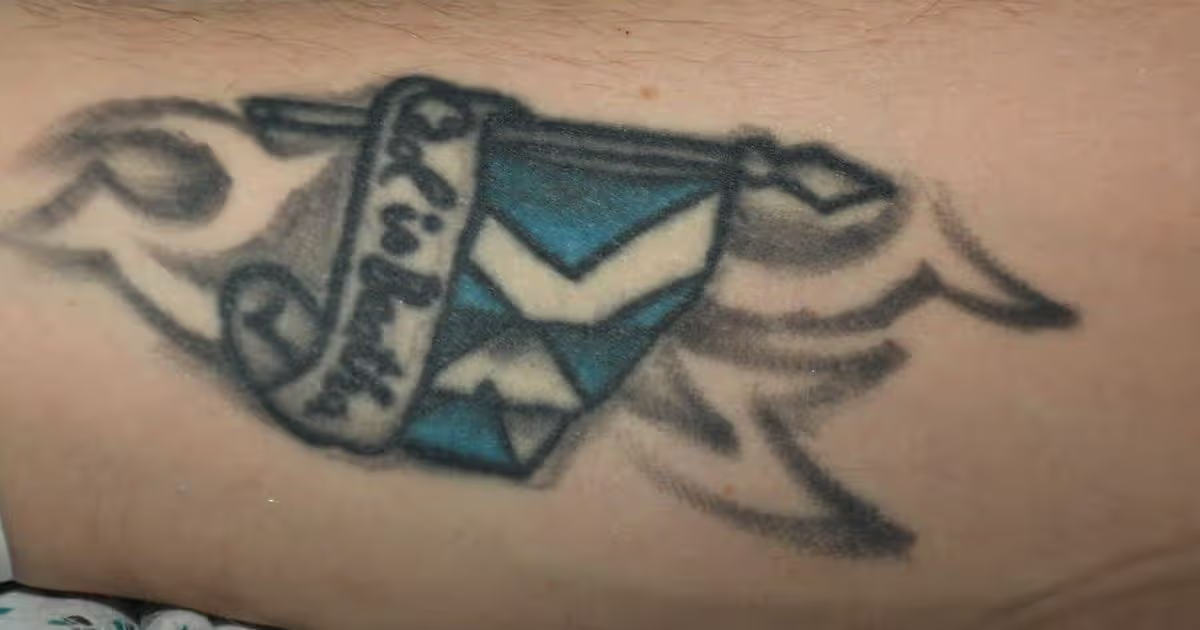
An appeal has been launched to identify a man with a distinctive Scottish tattoo who has been left fighting for his life following an alleged attack in Ireland. Emergency crews rushed to Cope Street, just off the old Central Bank building in the Temple Bar area of Dublin, at around 12.30am on Wednesday morning, February 18.

Advertisement

Two men, aged in their 20s and 30s, were arrested on Friday evening in connection with the alleged attack in the heart of the Irish capital’s nightlife district.. The victim was allegedly repeatedly kicked and stamped in the head before an E-bike was dropped on his neck.

The Irish Mirror reports that one of the attackers, who had walked away, allegedly came back and stood over the lifeless victim, who was in the middle of the road, stripped him of his shoes and lobbed them over a fence.

The as-yet unidentified man remains in a critical condition in Beaumont Hospital, where he is being treated for extensive head injuries. In a press release on Thursday, gardai have made the unusual step of asking the public for their assistance in identifying the man – by describing a tattoo on his forearm.

On Friday evening, Gardai shared an image of the man’s tattoo, which is described as the saltire flag with the words ‘Ceol is Beatha’, meaning ‘music is life’, in the hopes that someone may be able to help identify him. Gardaí are continuing to appeal for any witnesses to this incident to contact them.

“Anyone who was in the area of Cope Street between midnight and 1:00am, and who may have any information about the incident is asked to contact investigating Gardaí,” a Garda spokesperson said.

“Gardaí can be contacted at Pearse Street Garda Station on 01 666 9000, the Garda Confidential Line on 1800 666 111, or any Garda Station. Investigations are ongoing.”

Get more Daily Record exclusives by signing up for free to Google’s preferred sources. Click HERE.

Advertisement

Source link

Continue Reading

NewsBeat

UK should send non-combat troops to Ukraine now, former PM Boris Johnson tells BBC

Published

on

UK should send non-combat troops to Ukraine now, former PM Boris Johnson tells BBC

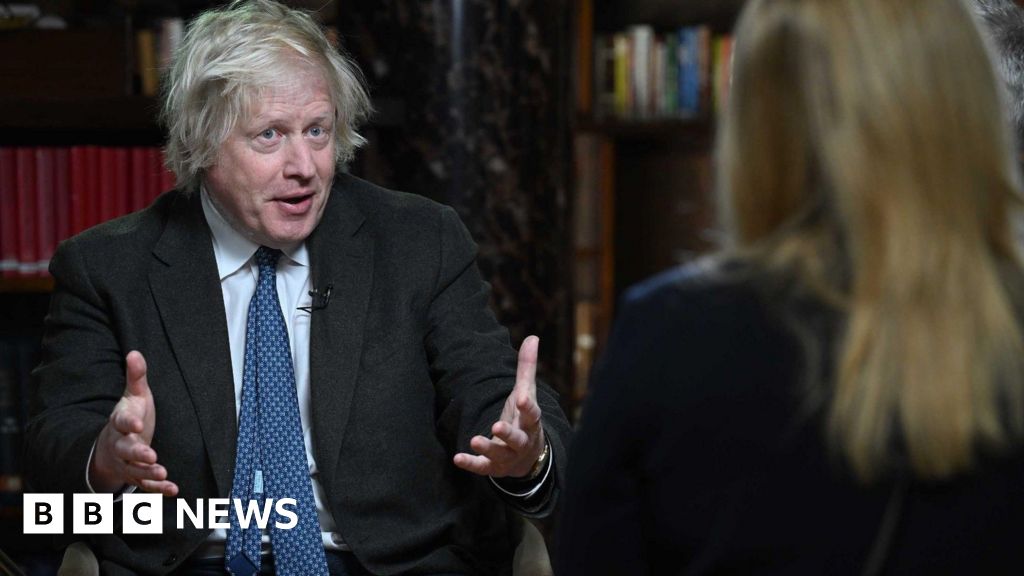
Asked if he meant that UK and other European allies’ forces should go to safe parts of Ukraine now to “flip a switch”, he said: “Yes, I think, you know, if we are willing to do it in the context of a ceasefire, which of course puts all the initiative, all the power in Putin’s hands, why not do it now?

Source link

Continue Reading

NewsBeat

UK’s new passport rules for dual citizens are a result of border control in the digital age

Published

on

UK’s new passport rules for dual citizens are a result of border control in the digital age

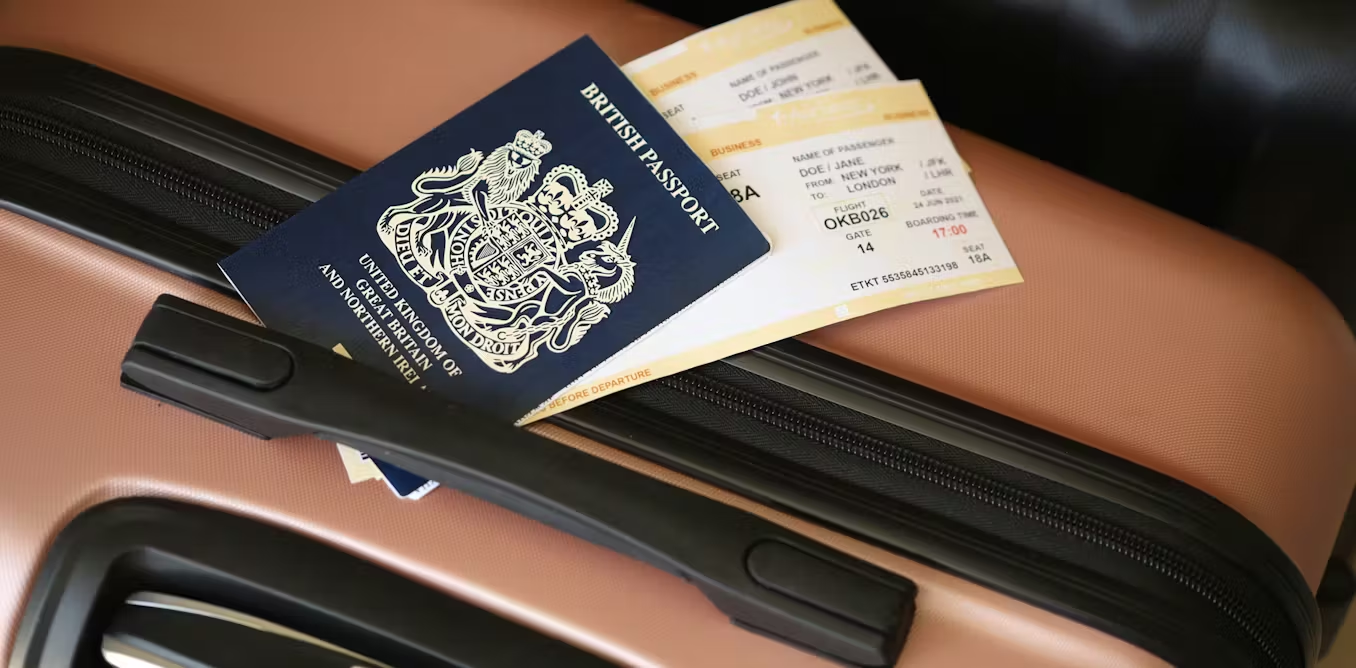
From February 2026, most dual British citizens will need to use a British passport to travel to the UK. Presenting only a non-British passport will no longer be sufficient for boarding flights or ferries, unless it carries a certificate (costing £589) that confirms right of abode.

The rule was introduced to align dual nationals with the UK’s new electronic travel authorisation (ETA) system and to prevent confusion in border checks.

In legal terms, nothing fundamental has changed. British citizens still have the right to enter and live in the UK. But in practice, the way that right must be demonstrated has shifted. And that shift tells us something important about how citizenship is being reshaped in the digital age.

Over the past three decades, dual citizenship has become widely accepted internationally. In 1990, fewer than a third of countries allowed dual nationality in cases of naturalisation. By 2016, roughly three-quarters did.

Advertisement

This change reflected globalisation. As populations became more mobile, states adapted. Migrants often maintain attachments to more than one country. Dual citizenship is a pragmatic recognition of that reality, allowing people to belong in more than one place without forcing an exclusive choice.

According to the 2021 census, 1.2% of UK-born residents (587,600) were dual citizens with another country, rising from 0.5% in 2011 (231,600). For non-UK-born residents, 6.5% were dual citizens with the UK in 2021 (648,700), up from 5.1% in 2011 (381,200).

The rise reflects broader demographic change, but it also coincided with Brexit. The number of people holding both British and EU passports increased significantly between 2011 and 2021, suggesting that many UK residents sought to retain EU citizenship protections as the UK left the EU, while some EU residents acquired British citizenship to preserve unrestricted access to the UK.

In other words, dual citizenship in the UK today includes longstanding migrant and diasporic communities, but also a growing cohort shaped by recent geopolitical change.

Advertisement

Digital borders

The UK’s new passport rule does not mean the country is less tolerant of dual citizens. But it is a consequence of borders becoming more digitised in recent years.

Borders today are not confined to passport control desks. They operate through airline check-in systems, pre-travel authorisations, biometric databases and algorithmic risk assessments. Airlines are required to confirm eligibility before boarding. Digital systems match names, dates of birth and passport numbers against centralised records. Such systems prioritise coherence and consistency, aiming to eliminate ambiguity.

But dual citizenship, and transnational life more broadly, produce precisely the kind of complexity that digital systems struggle to accommodate. Names may differ across jurisdictions. Marriage can produce surname changes in one country but not another. Accent marks may appear in one passport and not in its transliteration. Children born abroad may be citizens by descent but have never held a British passport.


À lire aussi :
How the UK’s immigration system splits families apart – by design

Advertisement

There is little room for discretion when border checks are digitised. The administrative solution is to use the British passport when entering Britain. Yet this is not always straightforward. Some dual citizens born abroad have never needed a British passport and must now apply for one in order to travel. Others may consider renouncing British citizenship to avoid the administrative burden — but this option is not available to underage dual citizens.

Dual citizens are not a homogeneous group. They include naturalised migrants who have retained their original nationality; British-born citizens who later acquired another citizenship through residence or marriage; children of mixed-nationality families; foreign-born children of British emigrants who are citizens by descent; and members of long-established Commonwealth communities whose plural affiliations are a result of British imperial history.

For some, the new rule simply means ensuring that their British passport is valid. For others — particularly families living abroad who have never needed a British passport for their children — it introduces an unexpected bureaucratic step.

This is where borders intersect with inequality. Families with easy access to consular services, financial resources and familiarity with UK administrative systems can adapt quickly. Those living further from British bureaucratic infrastructure face greater friction.

Advertisement
Border control looks different in the digital age.
1000 Words/Shutterstock

The UK’s passport requirement is being introduced during a wider political moment in which states are exerting tighter control over citizenship. In the US, Donald Trump’s administration pledged to restrict birthright citizenship and expand the state’s power to remove citizenship.

In a number of countries, citizenship revocation powers have disproportionately targeted dual nationals, precisely because removing citizenship from mono-nationals would breach international law by rendering them stateless.

What we may be witnessing is not the retreat of dual citizenship, but its transformation. It remains widely tolerated. Yet it is increasingly bureaucratically policed.

The cumulative effect is subtle but significant. Citizenship is no longer just a legal status secured once and for all. It must remain legible to digital border systems and be continuously probed through interconnected databases.

Advertisement

Dual citizenship emerged as recognition that identities and attachments can be layered. Digital borders, by contrast, favour clarity and singular representation. This tension is unlikely to disappear.

The UK’s move signals how, in an era of digital borders and geopolitical uncertainty, the lived experience of citizenship is being reshaped — not through headline constitutional change, but through the quiet reorganisation of administrative systems.

Source link

Advertisement
Continue Reading

NewsBeat

Four on bail after ‘arson attack’ on Newton Aycliffe home

Published

on

Four on bail after 'arson attack' on Newton Aycliffe home

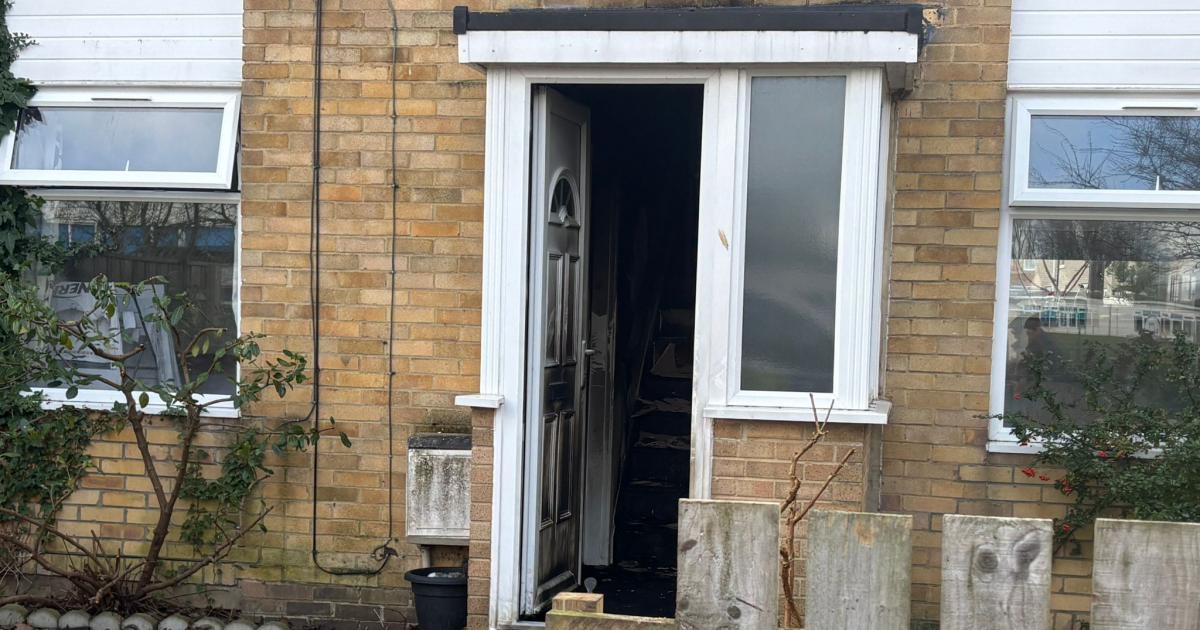
Emergency services were called to a terrace property on Ashfield at around 8.45am yesterday, February 20.

The fire is being treated as arson, and a police investigation was launched.

A fire and crime scene investigator were examining the home on Friday afternoon (Image: NORTHERN ECHO)

Pictures from the scene showed a Durham Police van and a crime scene investigation van outside the property.

Four men, aged between 23 and 34, were arrested on Thursday afternoon and taken into police custody.

Advertisement

In a new update from Durham Constabulary, they have since been released on bail while further enquiries are carried out.

CSI van and fire investigation car on the scene yesterday (Image: THE NORTHERN ECHO)

Residents described the incident as “frightening” as police and fire crews flooded the street during the morning school run.

One man said: “It’s a quiet road. You get the odd stuff which you do anywhere now, but it’s never usually as full as it was with police all over.

“I was just leaving the house when they all came, and with the school run and everything, it was really busy.

Advertisement

“I’ve heard everyone is okay, but the house doesn’t look good.”

A police cordon was around the home whilst investigations were carried out (Image: NORTHERN ECHO)

A woman who lives a few doors away said she had initially heard nothing while out on the school run, but was alarmed when she returned.

She said: “We were frightened, as when I was heading back, we didn’t know whether it was ours, but it’s all okay, it’s just that property affected.”

The picture shows the blackened entrance way to the home after the fire (Image: NORTHERN ECHO)

A spokesperson for County Durham and Darlington Fire and Rescue Service said: “We were called at 8.37am today (February 20) to a house fire on Ashfield in Newton Aycliffe.

Advertisement

“Three fire engines from Darlington and Newton Aycliffe Fire Stations attended the incident.

“Firefighters wearing breathing apparatus used one hose reel to put out the fire and a positive pressure ventilation fan to clear the smoke.

“Crews left the scene at 9.41am.”

A spokesperson for Durham Constabulary added: “Anyone with information that could assist the investigation is asked to call Durham Constabulary on 101, quoting incident number 67 of February 20.

Advertisement

“Information can also be submitted anonymously to Crimestoppers on 0800 555 111.”

Source link

Advertisement
Continue Reading

NewsBeat

Chelsea vs Burnley LIVE: Premier League match stream, latest team news, lineups, TV, prediction

Published

on

Chelsea FC vs Burnley: Prediction, kick-off time, TV, live stream, team news, h2h results, odds

Burnley, meanwhile, produced a remarkable comeback against Crystal Palace in their last league outing but are still ten points from safety and suffered a shock FA Cup exit at the hands of Mansfield last weekend. Follow the game LIVE below with our dedicated match blog, featuring expert insight and analysis from Dom Smith at Stamford Bridge.

Source link

Continue Reading

NewsBeat

I was on BBC One’s Death in Paradise – Don Warrington and Ralf Little showed true selves

Published

on

Daily Mirror

Detective drama, Death in Paradise, has a legion of loyal fans, including one star-struck viewer, who asked if he and his wife could be extras on the show, which is filmed on the stunning island of Guadeloupe

A die-hard Death in Paradise fan has revealed what the stars of the show are really like. Filmed on the stunning island of Guadeloupe, the BBC smash hit, currently starring Don Gilet as detective inspector, Mervin Wilson, has a legion of loyal fans.

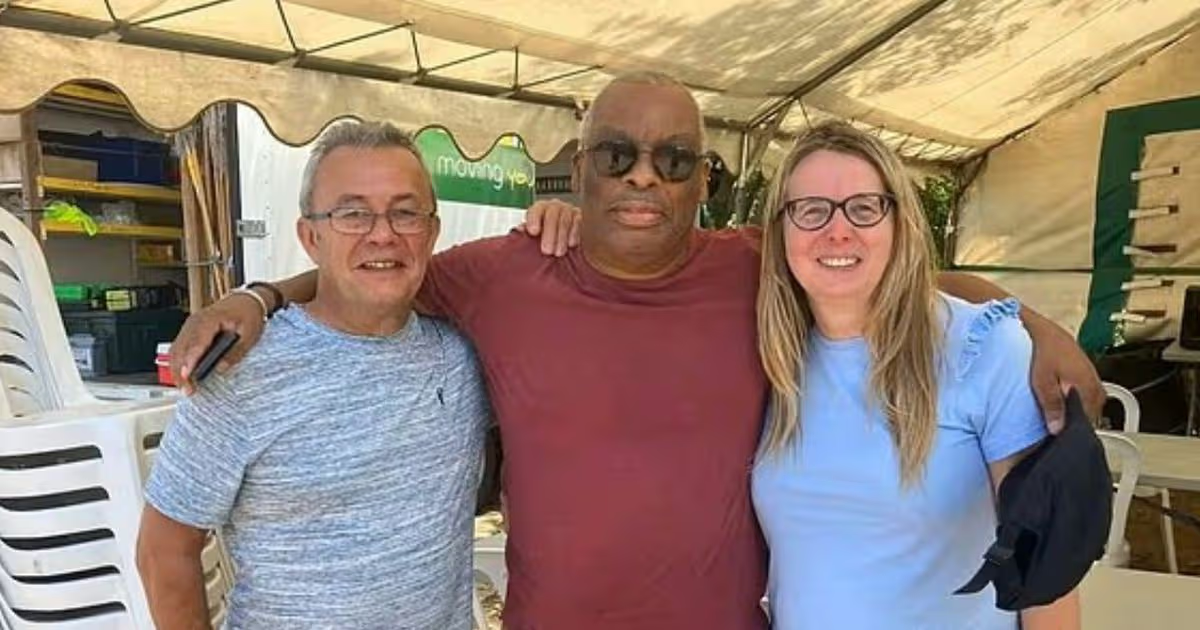
Death in Paradise stans, Mike Mitchell and his wife Liz, became so engrossed in the detective drama during lockdown that they hot-footed it to the Caribbean in 2022 and asked producers if they could be extras in the series.

Much to their delight, they were welcomed to the fictional island of Saint Marie with open arms and were soon rubbing shoulders with the stars of the show. Here’s what they had to say about the famous faces from the Honoré police station starting with fan favourite, Selwyn Patterson

Advertisement

Author avatarJasmine Allday

READ MORE: BBC Death In Paradise first look teases surprise return and devastating double exit

Ensure our latest headlines always appear at the top of your Google Search by making us a Preferred Source. Click here to activate or add us as your Preferred Source in your Google search settings.

Don Warrington – Commissioner Selwyn Patterson

Don Warrington has played Commissioner Selwyn Patterson since Death in Paradise began in 2011.

Advertisement

Speaking to the Express, Mike said he shared a few rums with the famous thespian, who has long list of theatre and film credits under his belt revealing: “We’ve met Don Warrington. Don used to come and join us for a drink in the bar at the hotel in the evening.

“He’d go to the hotel and have a meal, on his own usually, and then he’d come to the bar where we were sitting. We’d sit and drink rum together and tell stories.”

Ralf Little – DI Neville Parker

Advertisement

The couple also met Royale Family star, Ralf Little, who starred as DI Neville Parker from 2020 before leaving in 2024 to be replaced with EastEnders star, Don Gilet.

Revealing Ralf wished him luck before making his debut on the show, Mike recalled: “Ralf came and stood next to us and he said, ‘Good luck. I hope it goes well.’ He was very encouraging. Afterwards we all just had a bit of a chit-chat.”

Ginny Holder – Officer Darlene Curtis

As well as Ralf, Mike and Liz also met with Shantol Jackson (DS Naomi Thomas), Ginny Holder (Officer Darlene Curtis) and Tahj Miles (Officer Marlon Pryce).

Advertisement

Of this group, they stayed in touch with one popular cast member. Mike said: “We stayed in touch with Ginny, she still messages us now. They’re all really nice people.”

Sadly, Ginny is no longer in the series. Accompanied by a compilation of footage from Darlene’s stint on the programme, a statement from the BBC: ” Sadly, we’re saying goodbye to Darlene this series. Ginny Holder has been a much-loved cast member, and we’re hugely grateful to her for bringing her talent, personality, and energy to Officer Darlene Curtis.”

Happily for Ginny’s fans, the star is still acting and appeared in the new series of Midsommer Murders at the beginning of the year.

Advertisement

Following their successful stint in 2022, Mike and Liz later returned to Guadeloupe for a third visit in 2024, this time seeing current lead actor Don, who plays Mervin Wilson, who has been hailed by some as the ‘greatest inspector’ the show has had.

The couple also came across the much-loved Élizabeth Bourgine, who plays bar owner, Catherine Bordey, in the smash-hit show, which is now in its 15th series.

* Join The Mirror’s WhatsApp Community or follow us on Google News , Flipboard , Apple News, TikTok , Snapchat , Instagram , Twitter , Facebook , YouTube and Threads – or visit The Mirror homepage.

Advertisement

Source link

Continue Reading

NewsBeat

Counter protestors hit back as Britain First rally descends on Manchester city centre

Published

on

Manchester Evening News

Far-right group Britain First are marching in Manchester, with a number of counter-demos also being held by anti-racism groups

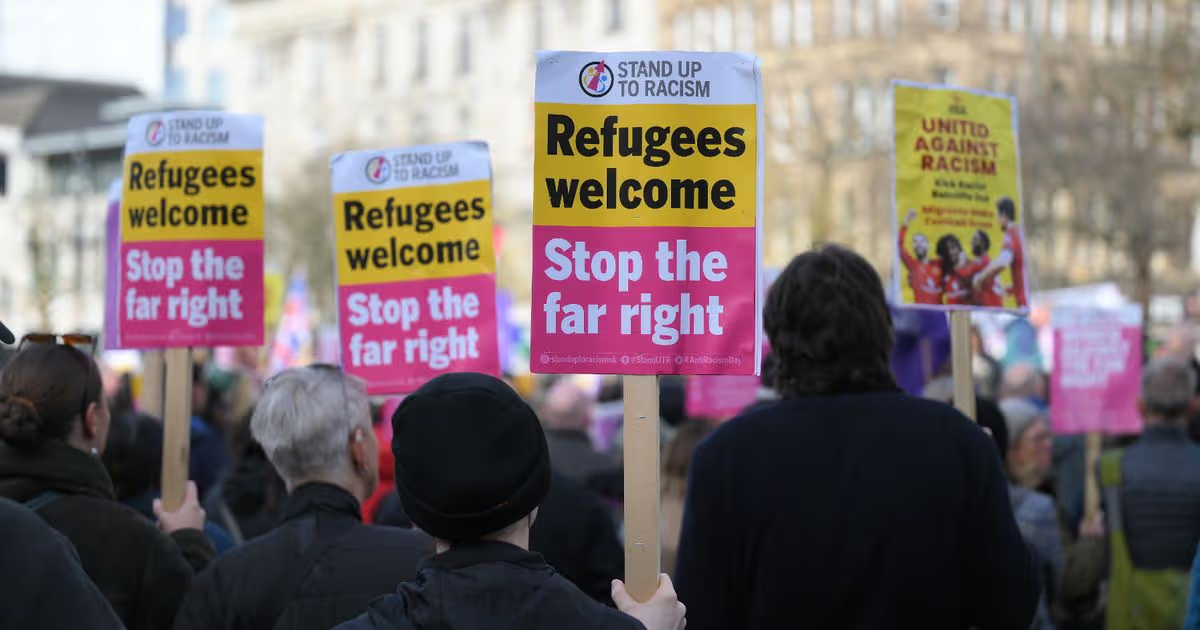
Counter protestors gathered in Manchester city centre today ahead of a Britain First march for ‘remigration’. Various signs were spotted in amongst the group boasting phrases such as ‘Refugees welcome’ and ‘Smash the Far Right’.

Advertisement

It comes as supporters of the far-right group were due to meet outside Piccadilly station at noon before taking part in a ‘march for remigration and mass deportations’.

The several counter-protests, including Resist Britain First – a coalition of Greater Manchester campaign groups – and Stand Up To Racism Manchester, took place from 11.15am in the city centre. Former Labour leader Jeremy Corbyn addressed the SUTR rally in Piccadilly Gardens from 11.30am.

Click here to prioritise Manchester news in Google from the MEN

Police have issued a 10-hour dispersal order on the city centre, giving officers extra powers to remove people from the area, while the demonstrations take place. GMP say it aims to ‘prevent anti-social behaviour, crime, harassment, alarm, or distress’.

Advertisement

In pictures, hundreds of counter protestors can be seen gathering in Piccadilly Gardens. Homemade signs state: “Stop Racist Reform UK”, ‘Health workers against the far right” and ‘Migrants make our NHS“.

Britain First protestors have also been seen holding the English flag.

On Thursday, Manchester council leader Bev Craig said Britain First were not welcome in Manchester and urged people to come together to ‘send a clear message that hate has no place in our city’.

The protest comes amid ongoing travel disruption across Manchester due to a ‘major overhaul’ project at Manchester Piccadilly station. The station is effectively closed until tomorrow (Sunday).

Source link

Advertisement
Continue Reading

NewsBeat

Rory McIlroy chasing leaders at Genesis Invitational after superb 65 at Riviera

Published

on

Belfast Live

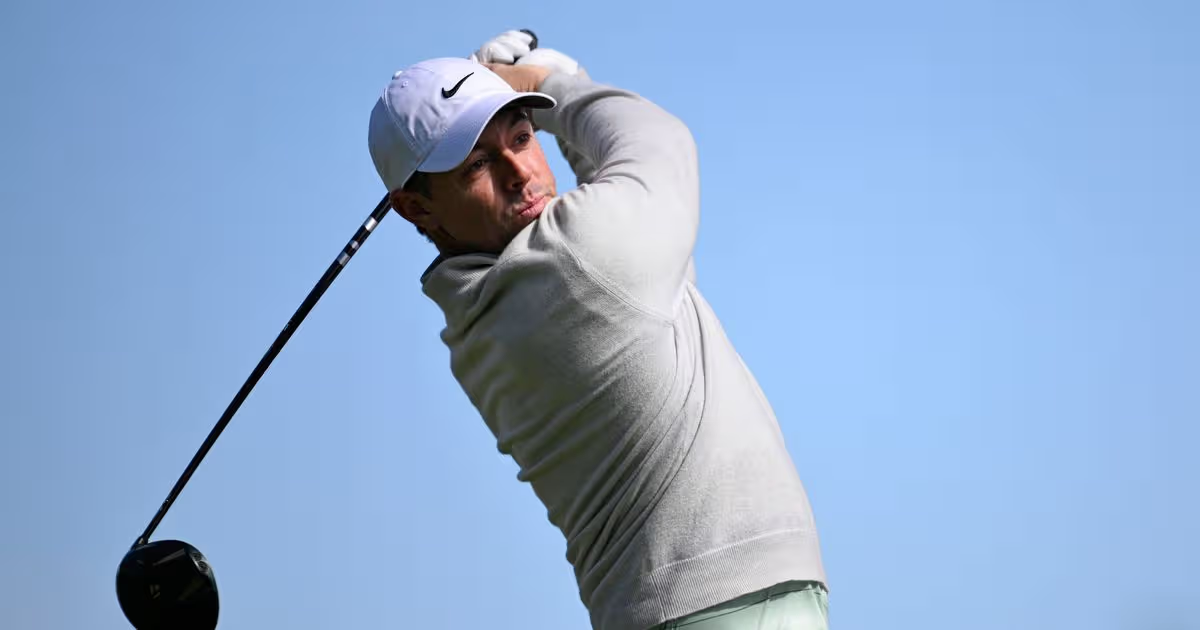
Rory McIlroy is one shot back after a 65 in the second round of the Genesis Invitational at Riviera, where newcomers Marco Penge and Jacob Bridgeman share the lead at 12-under

Marco Penge and Jacob Bridgeman delivered outstanding performances at Riviera on Friday, both carding 7-under 64s that saw them share the lead at the Genesis Invitational, with Rory McIlroy breathing down their necks.

Advertisement

For Scottie Scheffler, the goal was simply making the cut. He managed that by the narrowest of margins, sinking a 7-foot par putt that caught just enough of the cup’s edge to drop in.

Penge, the top performer from the European tour to earn a PGA Tour card this season, surged ahead with five birdies across his closing seven holes and was first to post 12-under 130. Even more impressive than his scorecard was maintaining his focus on golf – his wife is settling into their new Florida home whilst expecting their second child next week.

“It’s been quite tough, to be fair, the last four weeks for me and my family,” Penge said. “She’s been in the US. on her own, heavily pregnant, looking after a 1 1/2-year old at the same time with no family or friends around.

“It’s been like a bit of a gamble of me just kind of going to compete and leaving her on her own.”

Advertisement

Bridgeman only experienced Riviera for the first time on Wednesday due to rain. He birdied his final three holes, closing with a 5-iron through a cool breeze to 8 feet to draw level with Penge.

The former Clemson standout has developed an affinity for poa annua, the grass variety that becomes bumpy with spike marks and footprints and late afternoon growth, and can prove genuinely intimidating on short par putts when the greens are running this quick. Joe Greiner, a caddie in his group, even questioned him, “Are you sure you’re not from the West coast?”.

“It’s shocking how soft they are and how fast they are,” Bridgeman remarked. “I think two or three times today I hit it 6 feet by the hole and was just like, ‘Wow, I don’t know how they’re that fast,’ because you can hit a 5-iron and it will back up. This is probably the most pure poa annua I’ve ever seen.”

McIlroy has started strongly with rounds of 66-65, recording just a single bogey across 36 holes – a stark contrast to his performance at Pebble Beach last week, where three double bogeys and a triple bogey derailed his challenge.

Advertisement

He navigated the three par fives impressively with two birdies and an eagle at the 11th, whilst also birdieing the par-3 fourth for consecutive days. The hole was extended to 273 yards, a modification McIlroy described as a “horrible change” at the season’s outset.

The PGA Tour has yet to utilise that tee box.

The most significant improvement has been eliminating costly errors from his scorecard.

“There’s no Pacific Ocean to hit it into around this golf course, so that helps,” McIlroy noted. “I still hit some loose shots, but the course setup is in a way that you can get away with it a little bit more. But I’ve hit it well, I’ve controlled my distance well for the most part, and I’ve holed some nice putts from inside 8 feet for pars when I’ve needed to.”

Advertisement

Xander Schauffele demonstrated further signs of returning form with a 65 that positioned him three strokes off the pace, alongside two-time Riviera champion Adam Scott, who posted the day’s lowest score of 63.

Scott reached 9 under through 13 holes before spending the closing stages battling to save par, only dropping a shot at the final hole.

This marks one of three signature events featuring a 36-hole cut to the top 50 and ties, plus anyone within 10 shots of the lead. Scheffler, who had to fight back on Friday morning with a 74 to complete the rain-delayed opening round, was acutely conscious of his position.

He found himself in trouble, 4-over par for the tournament with 10 holes remaining, calculating he needed to reach even par.

Advertisement

The world No1 responded immediately with three consecutive birdies around the turn, the latter two showcasing his exceptional short game, before adding another at the par-5 17th. However, he caught a straightforward chip too steeply at the 18th and subtly pumped his fist when the 7-footer for par dropped into the cup.

It marked the third consecutive week he’d failed to post an under-par opening round – something he hadn’t experienced since his maiden season in 2020 – yet he’d rallied in Phoenix and Pebble Beach to contend for victory. This time, it was simply about securing his place for the weekend, and he was thrilled.

“I started the day not where I wanted to,” Scheffler said. “But yeah, battled and it looks like I get another couple rounds to see what I can do.”

Click here to sign up to our sport newsletter, bringing you the latest sports news, headlines and top stories

Advertisement

Source link

Continue Reading

NewsBeat

Noughties reality TV star announces cervical cancer diagnosis | Lifestyle

Published

on

Video Player Placeholder

Jersey Shore star Nicole “Snooki” Polizzi has urged fans to attend their cervical screenings as she publicly announced her cancer diagnosis.

The noughties reality TV star, 38, revealed that she has been diagnosed with stage one cervical cancer in a TikTok video posted on Friday (20 February), explaining that a biopsy confirmed the diagnosis.

Polizzi described that she had been struggling with abnormal results from her Pap smears for several years before her diagnosis.

Advertisement

“Get your appointments done,” she urged her followers.

Source link

Continue Reading

Trending

Copyright © 2025