


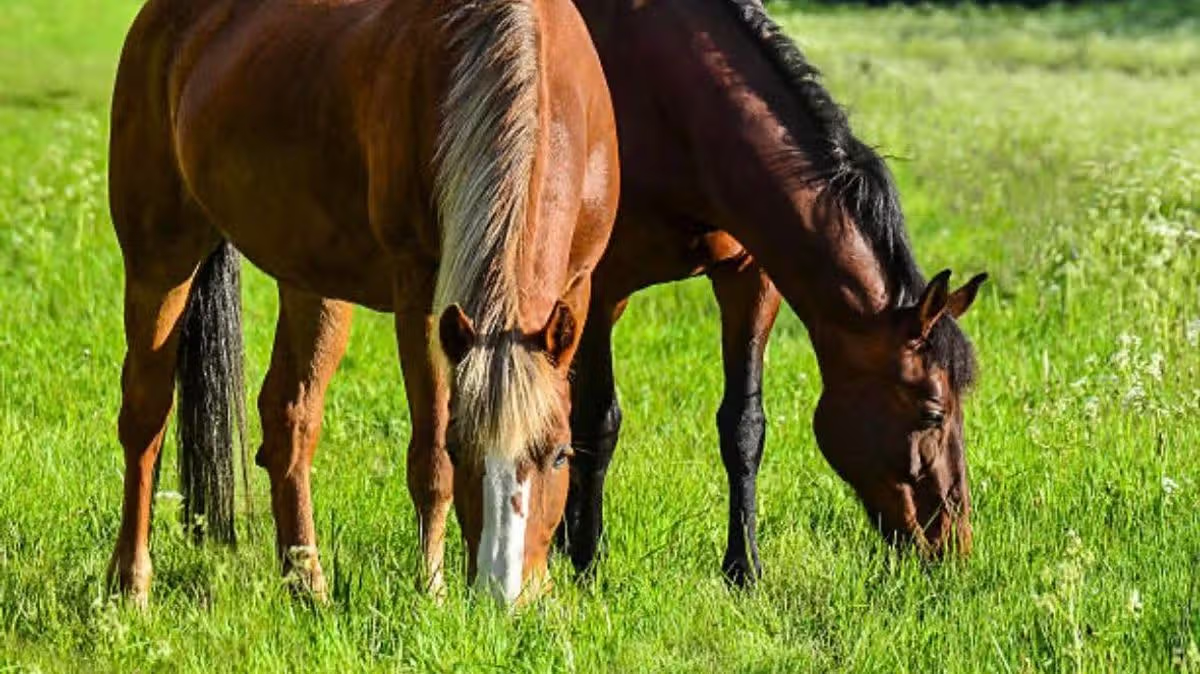
A vet says the disease has caused “multiple losses” with unusual weather conditions potentially linked to the outbreak.
A vet in Dumfries and Galloway has reported an outbreak of equine grass sickness, saying it has already led to “multiple losses” of animals in the area.
Machars Veterinary Services, based in Wigtown, said this year’s “unusual weather conditions” may have contributed to the outbreak, and urged horse owners to familiarise themselves with the condition.
In a post on social media, the vet said: “Attention all horse owners: we are currently dealing with an ‘outbreak’ of grass sickness locally with multiple losses.
“Grass sickness is a disease of horses and ponies which causes paralysis of the digestive system.
“Sadly, it is inevitably fatal once symptoms develop, with no vaccine or effective treatment.
“Cases in south-west Scotland are usually very rare, however we believe the unusual weather conditions this year may have predisposed to the development of the disease.
“It is not a contagious disease, however it is not uncommon to see multiple horses affected on the same premises, and/or pockets of disease within an area.”
The vet urged horse owners in the area to consider whether reducing grazing times might be appropriate for their animals.
The Equine Grass Sickness Fund (EGSF), a charity set up to fund research into the disease, said there have been cases of the disease throughout the UK.
“Unfortunately we have started to see an influx of equine grass sickness cases following a period of changeable weather,” it said in a post on social media on Thursday.
“Cases have been seen throughout the whole of the UK, so we would like to remind owners that EGS does not discriminate, and can affect racehorses and family Shetland ponies alike.
“If you suspect your horse has symptoms of grass sickness then call your vet ASAP.”.
The EGSF said the cause of the disease is unknown but that it occurs almost exclusively in horses with access to grass, and that there are a number of possible risk factors.
It said current research is looking into whether a soil-borne bacteria called Clostridium botulinum type C is behind the disease.
The condition was first recorded in Scotland in about 1907, when there was an outbreak among army remount horses near Dundee.
Incidence of the disease then rose markedly, and in Scotland in the 1920s hundreds of horses, mainly draught animals, died annually from grass sickness.
It is thought the losses were so severe that the introduction of tractors was artificially accelerated as a result.
Today in some parts of the UK it has been estimated that approximately one in 200 horses of all breeds die annually from the disease.
Get more Daily Record exclusives by signing up for free to Google’s preferred sources. Click HERE.























































You must be logged in to post a comment Login