Connect with us
DAPA Banner

NewsBeat

How Iran cryptocurrency demands explain a key role of money throughout history

Published

on

How Iran cryptocurrency demands explain a key role of money throughout history

When Iran began demanding payment in exchange for safe transit through the Strait of Hormuz, it offered the option to pay in cryptocurrency. Likewise, the shadowy network of tankers that have smuggled Russian oil to world markets since the full-scale invasion of Ukraine in 2022 have often been paid this way.

Illicit actors the world over have increasingly turned to cryptocurrency as a way to conduct business while avoiding the risk of US sanctions. In so doing, countries like Russia and Iran are drawing on a characteristic of money that has been around since at least the bronze age: its ability to facilitate trade between strangers and across political boundaries.

In my book Shell Money (2024), which investigates some of the world’s earliest forms of money, I show how similar dynamics have been at play throughout history.

Advertisement

Cryptocurrency has been Iran’s preferred payment method for safe transit through the Strait of Hormuz.
Somkanae Sawatdinak/Shutterstock

Modern currencies like the US dollar and euro are backed by confidence in the financial institutions of nation states – in a similar way to the first metal coins of antiquity, which were issued by Greek city states in order to collect taxes and pay soldiers.

In prehistory, however, there are many examples of monetary systems that developed without state support, such as bronze ingots.

The bronze age (roughly 3300BC to 1200BC) was a time of long-distance voyaging and interregional connectivity. Against this backdrop, having a shared medium of exchange was critical for maintaining trade connections.

Bronze tools were made from copper and tin, which were only available in a few locations in the ancient world. In northern Europe, copper came from sources such as Wales, the Alps, Austria, Sardinia and Iberia, while tin largely came from Cornwall and Devon. This meant that all the copper used in Scandinavia, for example, had to be acquired through long-distance trade.

Advertisement

Much of this trade was dominated by bronze ingots – rings, bars or axe-heads – that were highly standardised in weight and form across regions. This meant that each ingot was interchangeable – a critical characteristic of money. Bronze objects were also broken down into sizes consistent with market-based trade.

The bronze age need for money

Travel during the bronze age would not have been easy. Long-distance journeys would have been dangerous and could take months to complete.

A travelling merchant would have no way to know if the traders they dealt with on one journey would still be around on the return trip. The reciprocity you could depend on in your home community would no longer hold – exchanges needed to be transactional.

Against this backdrop, bronze became standardised into a medium of exchange. By carrying bronze ingots, a traveller could conduct business across the world, confident that wherever they went their money would be accepted.

Advertisement

In other parts of the ancient world, shells and shell beads were accepted as money. The Chinese symbol (bèi) originated as a pictograph of the cowrie shell and is now used in hundreds of finance-related Chinese characters, including those for buy, sell, wealth and profit. Cowrie shells were traded to China from the Indian Ocean and used as money during the Zhou dynasty.

In North America, small shell beads were used as money and circulated throughout the interior of the continent, thousands of miles from the oceans where they were collected and produced. These examples show that trade money was not restricted to metals but could develop from anything that was desirable and scarce.

The US dollar diminished

The dominance of government-issued “fiat currencies” (meaning they are not backed by physical commodities such as gold) depends on the trust, liquidity and institutional backing they provide.

International trade is currently dominated by the US dollar. However, as we move into an increasingly multipolar world – with competing centres of gravity in North America, Europe and China – we can expect to see the dollar’s role diminish.

Advertisement

Indeed, there is some evidence that this has already happened. The dollar’s role as the world’s reserve currency (meaning it is held in large quantities by other governments and central banks to stabilise their economies) has declined from around 70% in the late 1990s to less than 60% today. This trend is likely to continue amid signs of increased US isolationism, strains in North Atlantic cooperation, and the rising economic position of China.

Political fragmentation, however, hardly means the end for international trade. History is rife with periods, from the bronze age on, when political fragmentation coexisted with bustling trade economies. And for those seeking to avoid state control in future, this may mean a growing shift in the type of money that is used.

Video: Bloomberg Television.

New forms of money

There are many differences between cryptocurrency in the modern world and the commodity money of prehistory. Cryptocurrency is still rarely used or accepted in daily transactions, is highly volatile and, as with modern fiat currencies, does not have “use value” in the same way as bronze ingots or even shell beads.

Advertisement

Nonetheless, both are forms of “bottom-up” (non-state controlled) money that exist outside of the oversight of any single government or large financial actor.

This lack of state control is exactly what drives sanctioned states such as Iran and Russia to request payments in crypto. As US financial leverage weakens, crypto payments become harder to block and sanction, potentially reshaping how future conflicts are financed.

Cryptocurrency may be well positioned for this environment, continuing to provide one of money’s oldest functions: the ability to conduct business with strangers.

This article references a book included for editorial reasons with a link to bookshop.org. If you click on this link and go on to buy something from bookshop.org, The Conversation UK may earn a commission.

Advertisement

Source link

Continue Reading
Click to comment

You must be logged in to post a comment Login

Leave a Reply

NewsBeat

Kanye West spotted in public for first time as two more concerts cancelled

Published

on

Kanye West spotted in public for first time as two more concerts cancelled
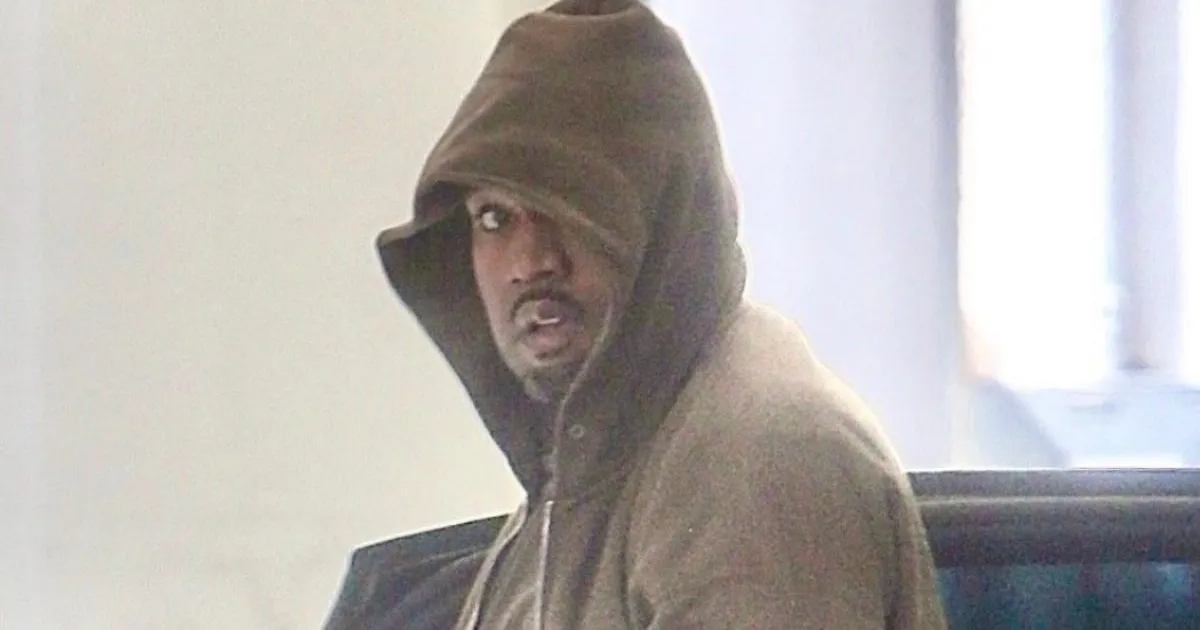
Kanye West has been since for the first time publicly since being banned from the UK (Picture: Backgrid)

Kanye West has been spotted looking downcast after being banned from the UK and having four shows cancelled in the past few weeks.

Earlier this month the American rapper, 48, came under the spotlight following backlash to him being announced as the headliner to the Wireless Festival in London.

Although the organisers doubled down on the decision to book the controversial musician – who in recent years has been slammed for making antisemitic, racist, sexist, and homophobic comments – they eventually had to call it off after the Home Office refused to grant West a UK visa.

It said the permission had been denied because his ‘presence would not be conducive to the public good’.

Advertisement

Within days the rapper announced he was postponing a show in France following calls from him to also be banned from entering the country.

In the past few days, he’s since had two more shows cancelled – in Poland and Switzerland.

Kanye West
The American rapper was set to headline Wireless Festival before his visa was denied (Picture: Jordan Strauss/ Invision/ AP)
BGUK_3552960 - *PREMIUM-EXCLUSIVE* Los Angeles, CA MUST CALL FOR PRICING BEFORE USAGE - Kanye West was spotted publicly for the first time since being banned from entering the UK and Poland, keeping a low profile as cameras caught him out. Following his two-night run at SoFi Stadium, West was dropped from Wireless Festival and a planned concert in Poland. Authorities in both countries enforced the restrictions amid strict rules on hate speech and incitement, after his past antisemitic remarks were widely criticized as crossing those lines. He was seen Friday afternoon at a dentist???s office with a noticeably swollen right cheek, drawing attention given his history of a broken jaw and his very public custom grill work as he kept a low profile since his LA shows. Pictured: Kanye West BACKGRID UK 17 APRIL 2026 UK: +44 208 344 2007 / uksales@backgrid.com USA: +1 310 798 9111 / usasales@backgrid.com *Pictures Containing Children Please Pixelate Face Prior To Publication*
He was spotted in Los Angles attending a dentist’s appointment this weekend (Picture: Backgrid)
BGUK_3552960 - *PREMIUM-EXCLUSIVE* Los Angeles, CA MUST CALL FOR PRICING BEFORE USAGE - Kanye West was spotted publicly for the first time since being banned from entering the UK and Poland, keeping a low profile as cameras caught him out. Following his two-night run at SoFi Stadium, West was dropped from Wireless Festival and a planned concert in Poland. Authorities in both countries enforced the restrictions amid strict rules on hate speech and incitement, after his past antisemitic remarks were widely criticized as crossing those lines. He was seen Friday afternoon at a dentist???s office with a noticeably swollen right cheek, drawing attention given his history of a broken jaw and his very public custom grill work as he kept a low profile since his LA shows. Pictured: Kanye West BACKGRID UK 17 APRIL 2026 UK: +44 208 344 2007 / uksales@backgrid.com USA: +1 310 798 9111 / usasales@backgrid.com *Pictures Containing Children Please Pixelate Face Prior To Publication*
He did his best to shield himself from waiting photographers (Picture: Backgrid)

West – who recently dropped his latest album Bully – had been due to play at the Silesian Stadium in Chorzów on June 19, his first performance in Poland in 15 years.

However, this weekend the venue announced it would no longer take place ‘due to formal and legal reasons’.

That cancellation came after the country’s culture and heritage minister Marta Cienkowska described the decision to book West as ‘unacceptable’.

Advertisement

‘We are talking about an artist who has publicly made antisemitic views, downplayed crimes and profited from selling swastika T-shirts. These are not “controversies”. This is a deliberate crossing of boundaries and the normalisation of hatred,’ she posted on X.

Since then, Swiss soccer club FC Basel has also pulled the plug on an upcoming concert as it was not ‘in accordance with our values to provide a platform ‌for ⁠the artist in question within this context’.

BGUK_3552960 - *PREMIUM-EXCLUSIVE* Los Angeles, CA MUST CALL FOR PRICING BEFORE USAGE - Kanye West was spotted publicly for the first time since being banned from entering the UK and Poland, keeping a low profile as cameras caught him out. Following his two-night run at SoFi Stadium, West was dropped from Wireless Festival and a planned concert in Poland. Authorities in both countries enforced the restrictions amid strict rules on hate speech and incitement, after his past antisemitic remarks were widely criticized as crossing those lines. He was seen Friday afternoon at a dentist???s office with a noticeably swollen right cheek, drawing attention given his history of a broken jaw and his very public custom grill work as he kept a low profile since his LA shows. Pictured: Kanye West BACKGRID UK 17 APRIL 2026 UK: +44 208 344 2007 / uksales@backgrid.com USA: +1 310 798 9111 / usasales@backgrid.com *Pictures Containing Children Please Pixelate Face Prior To Publication*
Since Wireless was cancelled, he’s also had three more concerts canned (Picture: Backgrid)
BGUK_3552960 - *PREMIUM-EXCLUSIVE* Los Angeles, CA MUST CALL FOR PRICING BEFORE USAGE - Kanye West was spotted publicly for the first time since being banned from entering the UK and Poland, keeping a low profile as cameras caught him out. Following his two-night run at SoFi Stadium, West was dropped from Wireless Festival and a planned concert in Poland. Authorities in both countries enforced the restrictions amid strict rules on hate speech and incitement, after his past antisemitic remarks were widely criticized as crossing those lines. He was seen Friday afternoon at a dentist???s office with a noticeably swollen right cheek, drawing attention given his history of a broken jaw and his very public custom grill work as he kept a low profile since his LA shows. Pictured: Kanye West BACKGRID UK 17 APRIL 2026 UK: +44 208 344 2007 / uksales@backgrid.com USA: +1 310 798 9111 / usasales@backgrid.com *Pictures Containing Children Please Pixelate Face Prior To Publication*
The rapper appeared downcast (Picture: Backgrid)
BGUK_3552960 - *PREMIUM-EXCLUSIVE* Los Angeles, CA MUST CALL FOR PRICING BEFORE USAGE - Kanye West was spotted publicly for the first time since being banned from entering the UK and Poland, keeping a low profile as cameras caught him out. Following his two-night run at SoFi Stadium, West was dropped from Wireless Festival and a planned concert in Poland. Authorities in both countries enforced the restrictions amid strict rules on hate speech and incitement, after his past antisemitic remarks were widely criticized as crossing those lines. He was seen Friday afternoon at a dentist???s office with a noticeably swollen right cheek, drawing attention given his history of a broken jaw and his very public custom grill work as he kept a low profile since his LA shows. Pictured: Kanye West BACKGRID UK 17 APRIL 2026 UK: +44 208 344 2007 / uksales@backgrid.com USA: +1 310 798 9111 / usasales@backgrid.com *Pictures Containing Children Please Pixelate Face Prior To Publication*
He previously released a statement in which he detailed wanting to bring ‘peace, unity and love’ with his shows (Picture: Backgrid)

Following the cancellation of four of his concerts in the past two weeks, West was seen publicly for the first time this weekend.

Doing his best to keep a low profile wearing a hoodie and keeping his head down while being snapped attending a dentist appointment in Los Angeles, the rapper was seen wearing a brown tracksuit set and did his best to avert his eyes from waiting photographers.

Earlier this month West performed two sold-out concerts at LA’s SoFi Stadium, but soon after the furore over his Wireless Festival booking erupted.

Advertisement

Last year West released a song titled Heil Hitler, also wearing selling a T-shirt with a swastika on it after declaring himself a Nazi.

However, in January this year he took a full-page advertisement in the Wall Street Journal, in which he issued an apology and said he was ‘deeply mortified’ by his past behaviour.

Attributing his actions to bipolar disorder, West declared he was ‘not a Nazi or an antisemite’ and that he ‘loves Jewish people’.

He had previously launched into online rants praising Hitler, opposing abortion and gay marriage, supporting gun rights, and endorsing US President Donald Trump.

Advertisement

When defending the decision to book him as the only headliner for Wireless Festival, organisers addressed the backlash and shared a statement which read: ‘Antisemitism in all its forms is abhorrent, and we recognise the real and personal impact these issues have had. As YE said today, he acknowledges that words alone are not enough, and in spite of this, still hopes to be given the opportunity to begin a conversation with the Jewish community in the UK.’

Before the shows were cancelled, West issued a brief statement in which he said his ‘only goal’ was to ‘come to London and present a show of change, bringing unity, peace, and love through my music’.

‘I would be grateful for the opportunity to meet with members of the Jewish community in the UK in person, to listen.

MILAN, ITALY - FEBRUARY 23: Kanye West attends the Marni fashion show during the Milan Fashion Week Womenswear Fall/Winter 2024-2025 on February 23, 2024 in Milan, Italy. (Photo by Arnold Jerocki/Getty Images)
West has come under fire in recent years for his antisemitic, racist, sexist and homophobic remarks and actions (Picture: Arnold Jerocki/ Getty Images)

‘I know words aren’t enough – I’ll have to show change through my actions. If you’re open, I’m here. With love, Ye.’

His three headlining shows were due to take place at the Finsbury Park festival in July, with the appearance estimated to have earnt him well over an estimated £1million per night.

Advertisement

However major sponsors including Pepsi, Rockstar Energy, PayPal and Diageo, which owns Captain Morgan rum and Johnnie Walker whisky, then all dropped out and announced they would remove all branding and support.

West is next due to play in New Delhi, India, on May 23. Subsequent shows are set to be held in Istanbul, Arnhem, Reggio Emilia, Madrid and in the Algarve.

Got a story?

If you’ve got a celebrity story, video or pictures get in touch with the Metro.co.uk entertainment team by emailing us celebtips@metro.co.uk, calling 020 3615 2145 or by visiting our Submit Stuff page – we’d love to hear from you.

Advertisement
Advertisement

Source link

Continue Reading

NewsBeat

Keir Starmer ‘appalled’ after another arson attack at London synagogue

Published

on

Keir Starmer ‘appalled’ after another arson attack at London synagogue

A spokesperson for the CST, the charity which monitors antisemitism and provides protection for Jewish communities in the UK, said: “We are aware of another attempted arson, this time targeting a synagogue in north London, following similar recent incidents targeting the Jewish community in Finchley, Golders Green and Hendon.

Source link

Continue Reading

NewsBeat

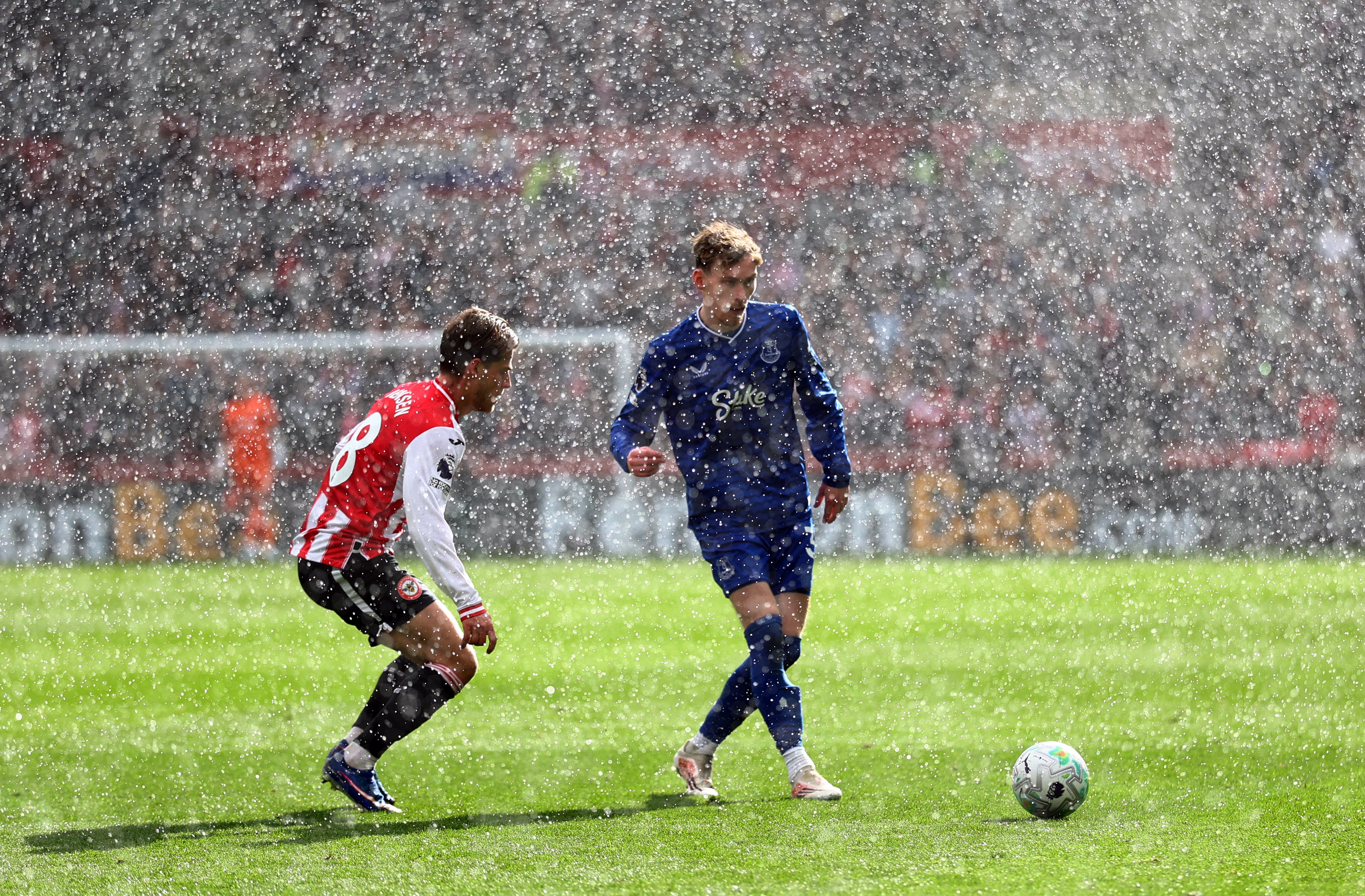
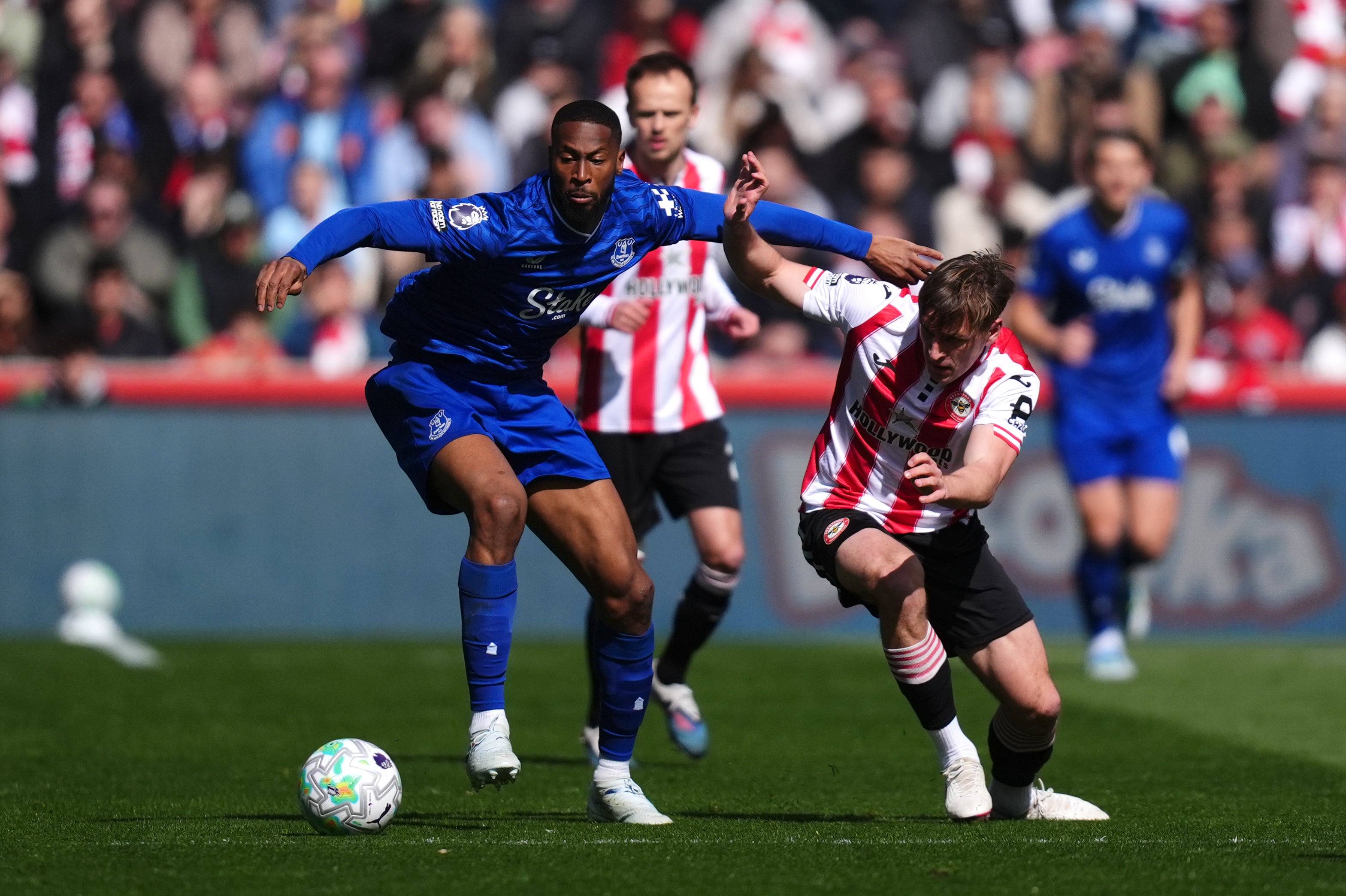
Everton v Liverpool LIVE: Team news as Alexander Isak starts for injured Hugo Ekitike in historic Merseyside derby

Published

on

Everton v Liverpool LIVE: Team news as Alexander Isak starts for injured Hugo Ekitike in historic Merseyside derby

Everton v Liverpool team news

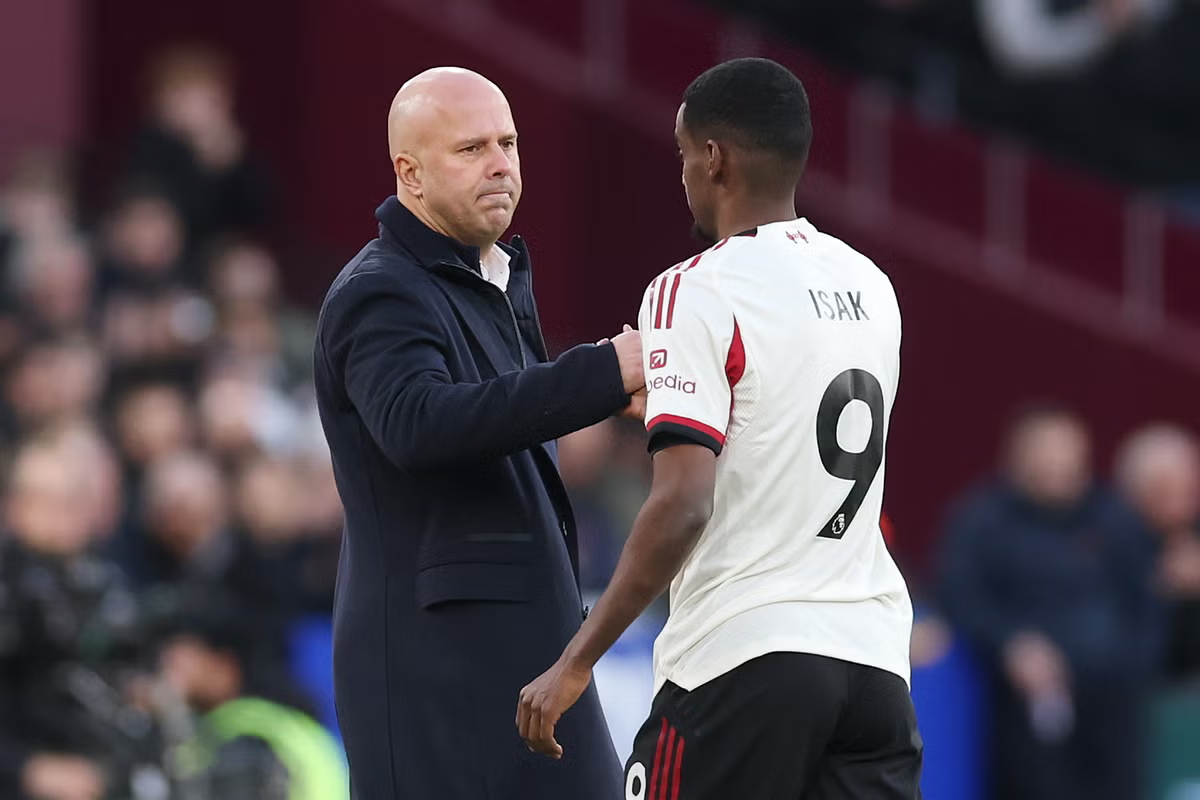
It’s certainly an attacking line-up from Arne Slot today! Alexander Isak starts up tip but Mo Salah, Cody Gakpo and Florian Wirtz are all in the team as well.

It looks like Dominik Szoboszlai will be the fill-in right-back once more (although feasibly, Curtis Jones could slot in there) and Alisson is still not fit enough to return, so Giorgi Mamardashvili continues between the sticks.

Everton line up pretty much as expected, with Dwight McNeil, Kiernan Dewsbury-Hall and Iliman Ndiaye providing the creative ingenuity behind Beto.

Advertisement

Everton XI: Pickford; O’Brien, Tarkowski, Branthwaite, Mykolenko; Gueye, Garner; McNeil, Dewsbury-Hall, Ndiaye, Beto

Liverpool XI: Mamardashvili; Szoboszlai, Konate, Van Dijk, Robertson; Gravenberch, Jones; Salah, Wirtz, Gakpo; Isak

Luke Baker19 April 2026 13:03

Advertisement

Everton team news

And here’s how Everton will line up. Beto leading the line for them

Luke Baker19 April 2026 12:52

Liverpool team news

Here’s the Liverpool team for this afternoon. We’ll have full analysis shortly but Alexander Isak starts up top in place of Hugo Ekitike

Advertisement

Luke Baker19 April 2026 12:50

Team news incoming

We’re a couple of minutes away from today’s team news. The big question of course is who will start up top for Liverpool in place of the injured Hugo Ekitike.

After a season-ending achilles injury to Ekitike, Arne Slot must now weigh up the risk of starting Alexander Isak, who is not ready to play 90 minutes, or use Cody Gakpo from the outset.

Advertisement
Hugo Ekitike has been ruled out for the long-term after suffering an Achilles injury (Reuters)

Luke Baker19 April 2026 12:43

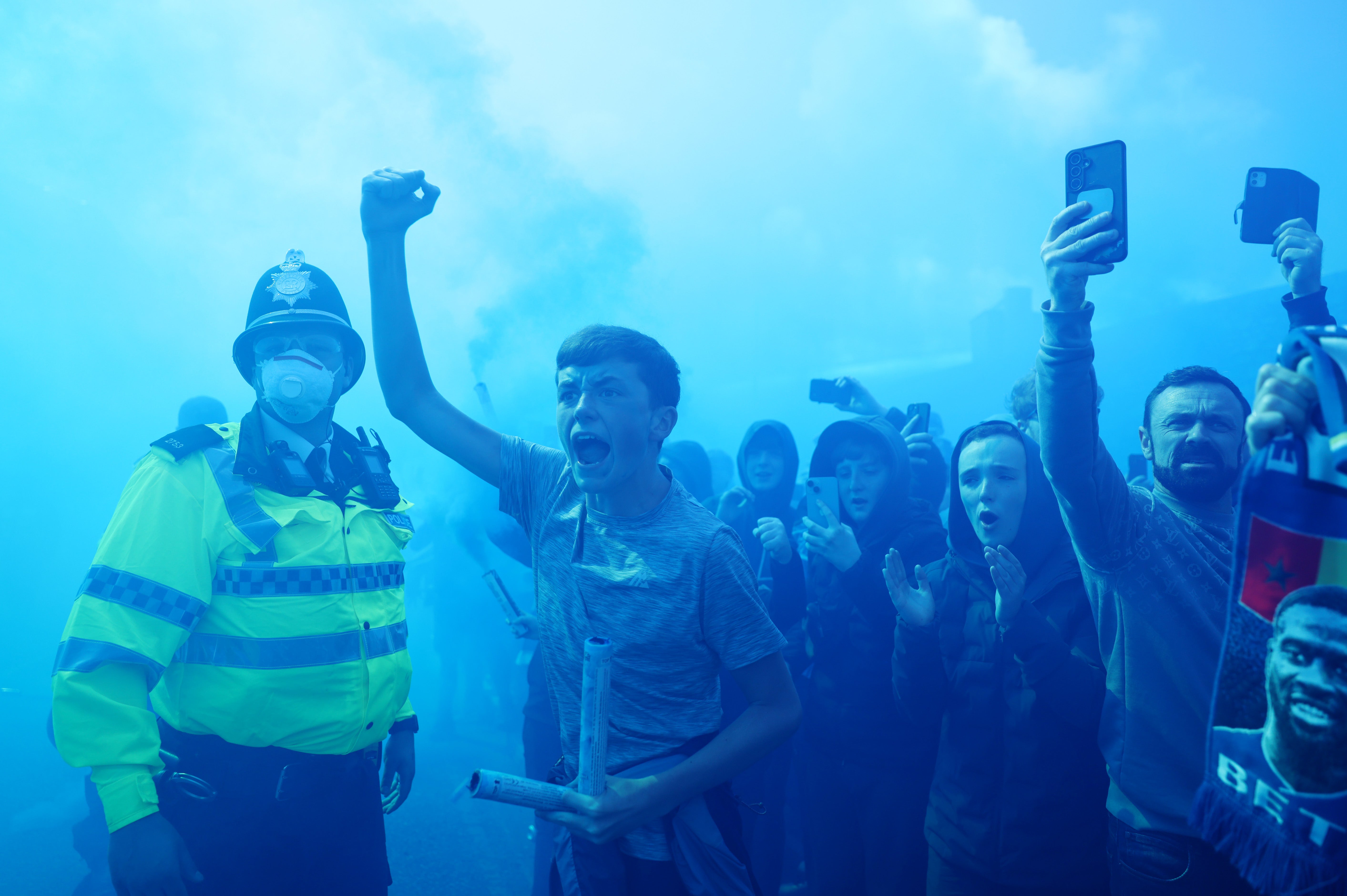
Atmosphere building ahead of Merseyside derby

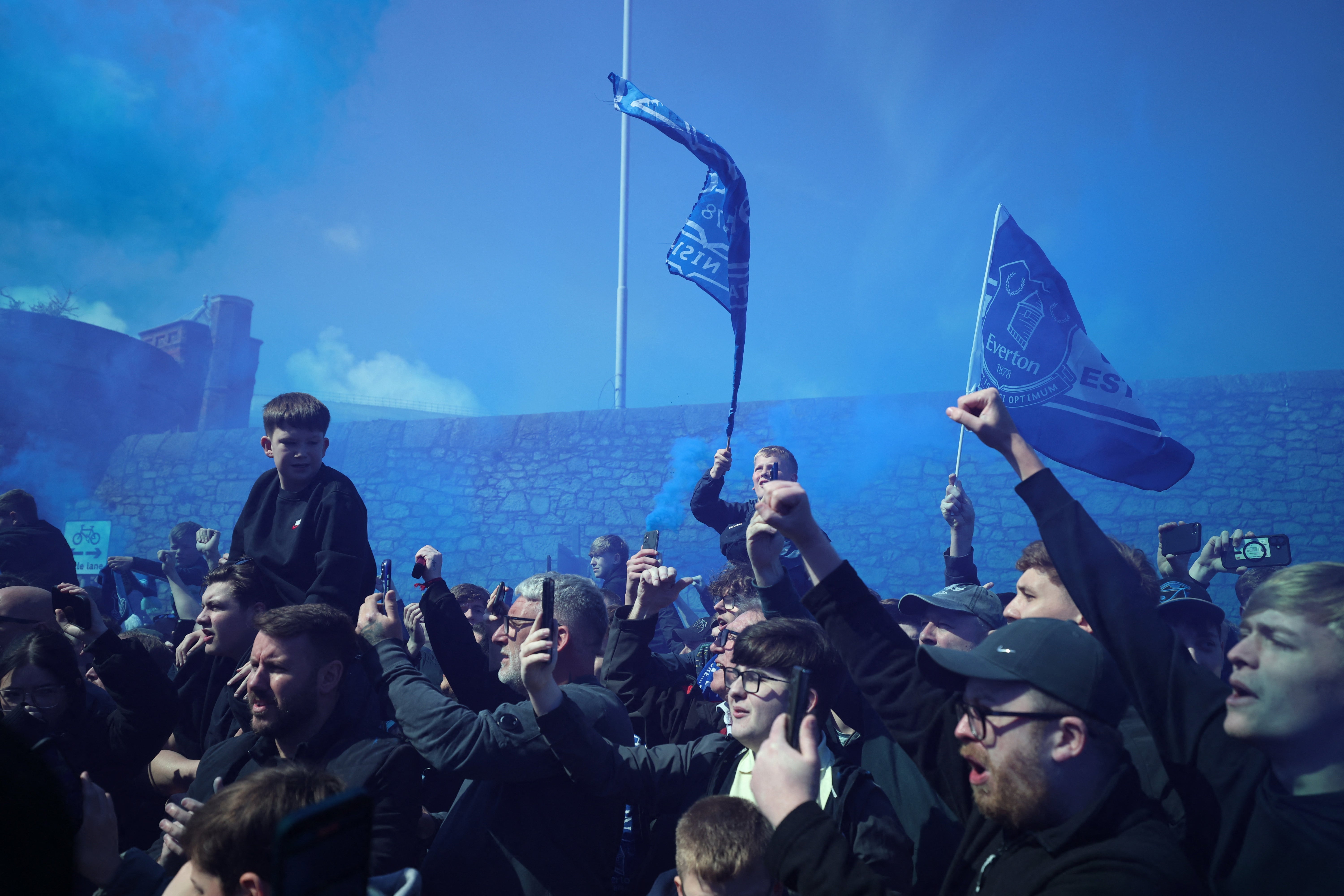
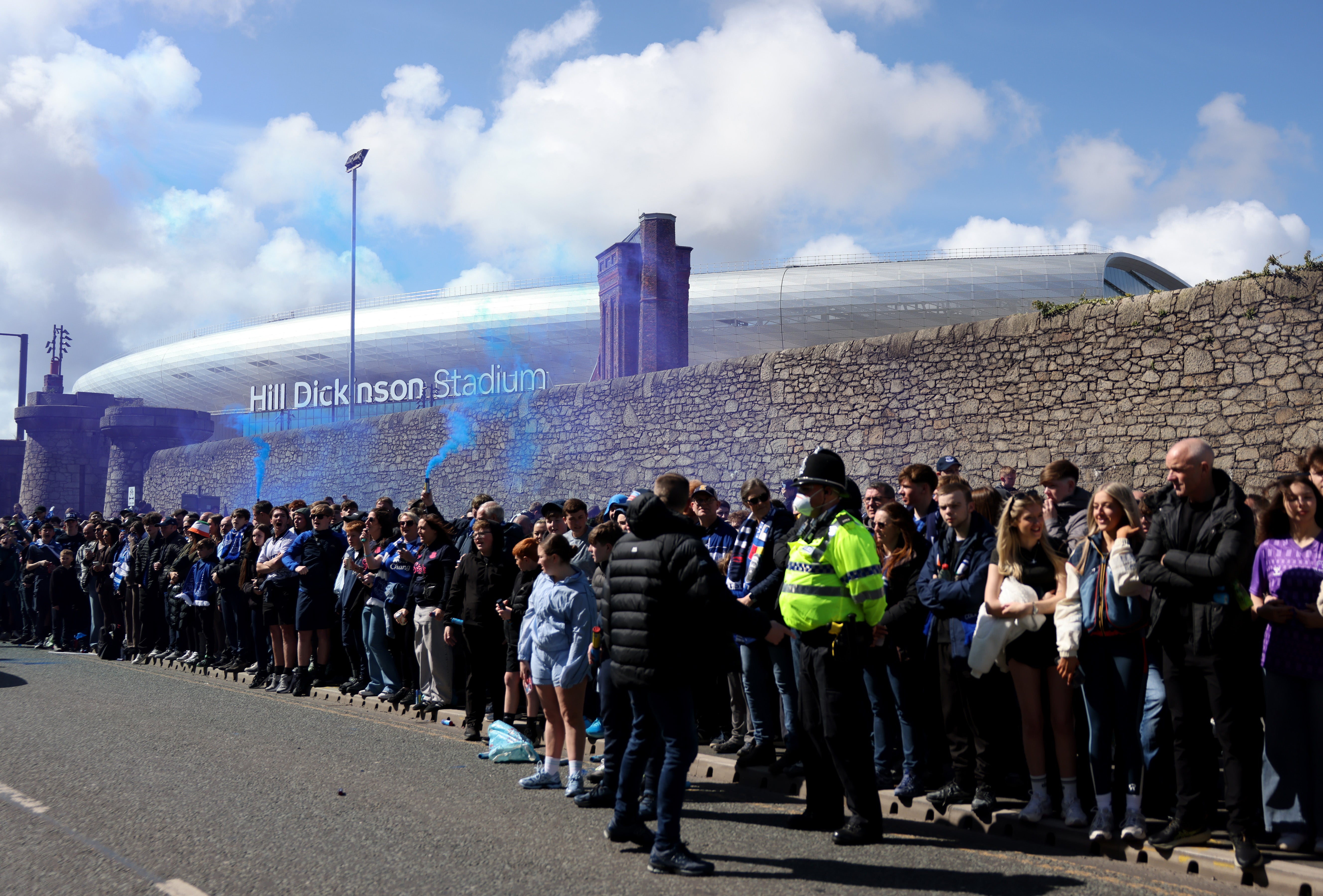
It should be a cracking atmosphere for the first Merseyside derby at the Hill Dickinson Stadium today.

Fans are flooding the streets around the ground already and anticipation is rising

Advertisement
(Reuters)
(Getty)
(Getty)
(Reuters)

Luke Baker19 April 2026 12:34

Key battle: James Garner vs Dominic Szoboszlai

One of the more intriguing contests today could be the middle of the pitch, with in-form James Garner up against Dominic Szoboszlai.

Liverpool will hope to win in this key area to act as the platform for a derby victory.

Both men have great engines, but its their passing that could also prove decisive.

Advertisement

The Hungary international is third in the league on 2.0 key passes per game, whike Garner has 1.4 per game.

While the England international has 3.0 tackles per game on average, putting him joint-second.

(Reuters)

Jack Rathborn19 April 2026 12:22

Could Everton launch late bid for Champions League football?

With all the talk about Liverpool and qualifying for the Champions League again after their quarter-final exit midweek against PSG, could Everton suddenly find themselves in the hunt?

Advertisement

A win today against the Reds takes them within two points of their rivals in fifth. Here’s how their run-in looks:

  • Liverpool (H)
  • West Ham (A)
  • Man City (H)
  • Crystal Palace (A)
  • Sunderland (H)
  • Tottenham (A)

Jack Rathborn19 April 2026 12:10

Liverpool’s run-in to secure top five and Champions League football

With a four-point gap to Chelsea in sixth, Liverpool only need 12 points to guarantee Champions League football next season.

And with six games remaining, four wins will be enough, though they do play Chelsea at Anfield, meaning they could only need two more wins outside that contest.

Advertisement
  • Everton (A)
  • Crystal Palace (H)
  • Man United (A)
  • Chelsea (H)
  • Aston Villa (A)
  • Brentford (H)

Jack Rathborn19 April 2026 12:00

Pundits claim Liverpool are now ‘underdogs’ for Merseyside derby

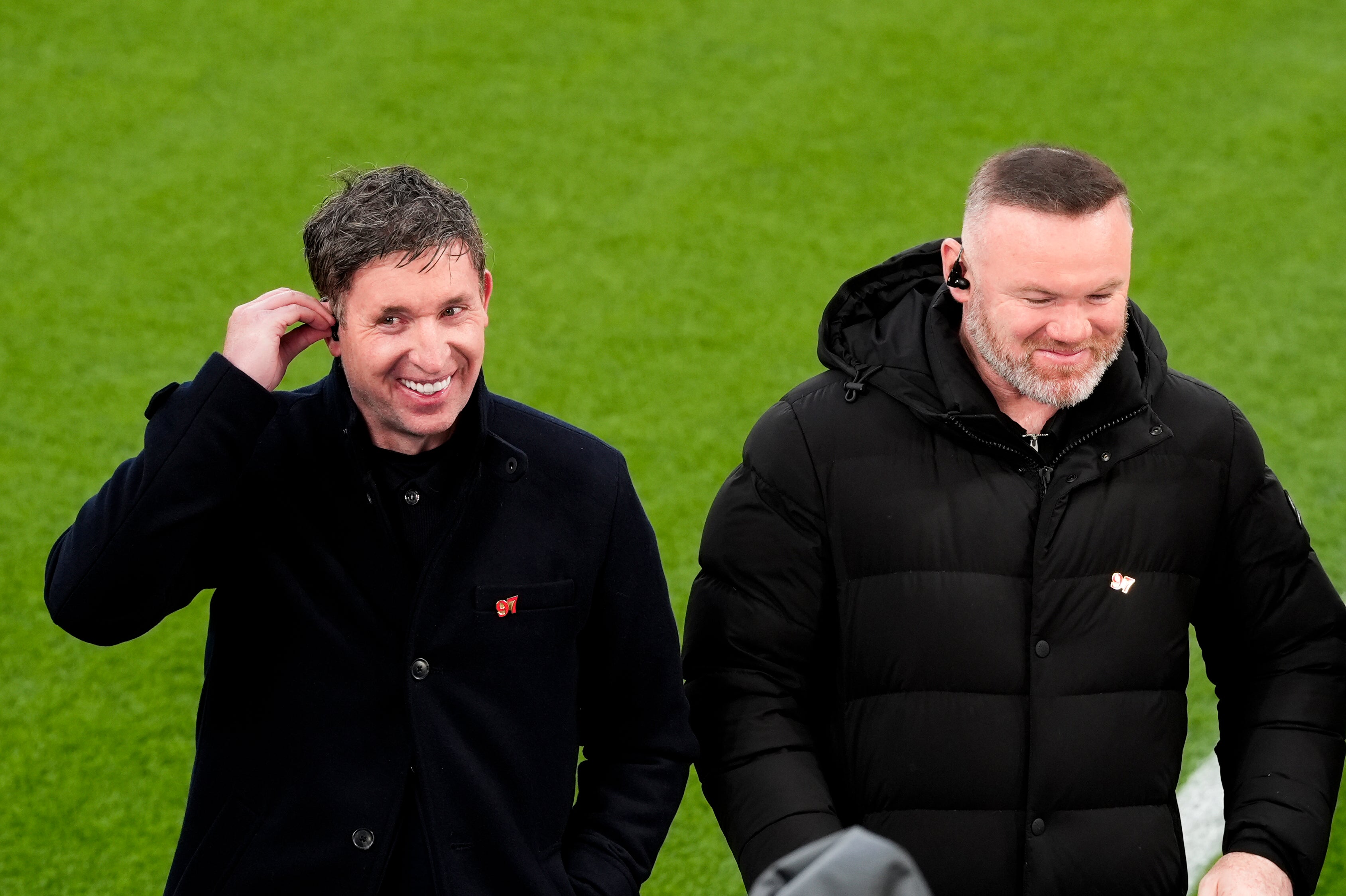
Former Liverpool striker Robbie Fowler has claimed that Liverpool could be underdogs for this weekend’s Merseyside derby against Everton after the Reds were dumped out of the Champions League by Paris Saint-Germain.

Slot’s men have six games left of the domestic season and the first one comes this weekend in a Merseyside derby, though Fowler and former Manchester United striker Wayne Rooney think that the champions could be “underdogs” heading into that game at the Hill Dickinson Stadium.

“Obviously the form in the last month, I know the Galatasaray [win was] a great result but I don’t think Galatasaray are great, so they’ve been turned over by Brighton, beat by Man City. I think Liverpool go into this game as probably underdogs,” said Fowler on Amazon Prime Video after the full-time whistle at Anfield.

Advertisement

“It’s the first time in a long time I’ve spoke to so of many friends who are Liverpool fans and they’re a little bit worried about the Merseyside derby,” explained Rooney.

“We’ve seen this Liverpool team all season not give as much as they can, I believe. And I think this derby game has come at the wrong time for Liverpool,” he added.

(PA)

Jack Rathborn19 April 2026 11:47

Could Beto be the danger man for Everton against Liverpool?

Beto is in fine form for the Toffees, with a surge of goals in 2026.

Advertisement

After a lean period to start the season, scoring just once in 19 games, the Brazilian has six goals in 13 games in 2026.

He’s now at an impressive 83 minutes per goal, up from 782 from August to December 2025.

(PA)

Jack Rathborn19 April 2026 11:35

Source link

Advertisement
Continue Reading

NewsBeat

How long it should take you to run a mile, according to your age

Published

on

How long it should take you to run a mile, according to your age
Age shouldn’t define your potential (Picture: Getty Images)

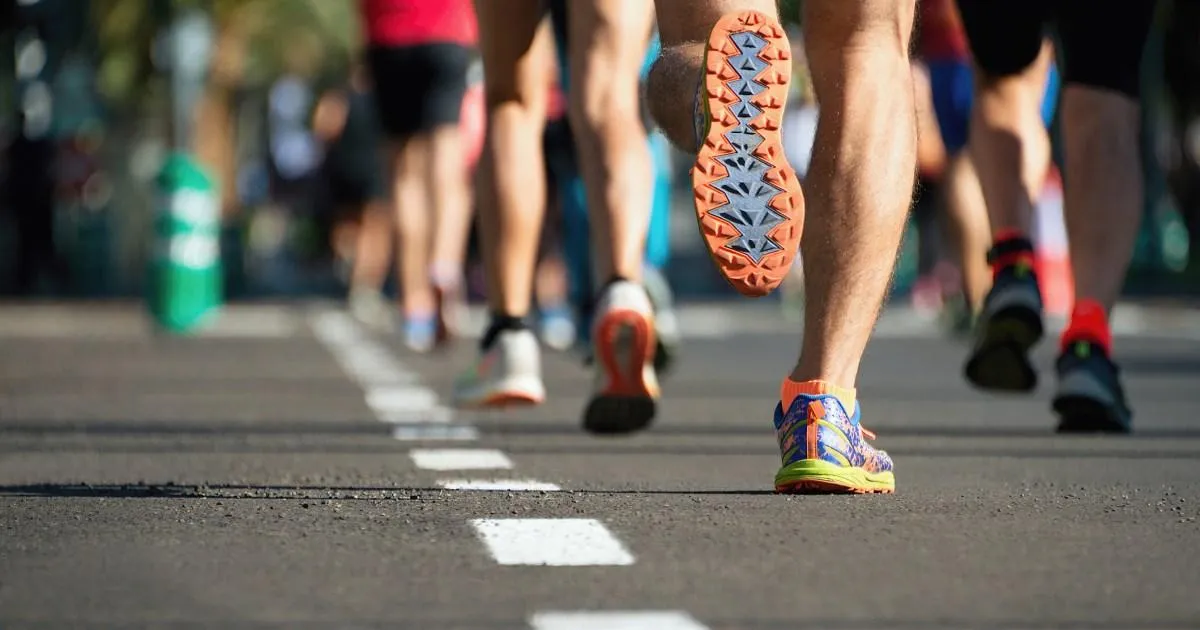
At this year’s London Marathon — on Sunday, April 26 — over 59,000 runners will pound the capital’s pavements, hoping to beat their personal best.

Participants of all ages and abilities have taken on the 26.2-mile challenge — including Fauja Singh, who was 100 years old when he broke records as the oldest person to ever do so, having only picked up the sport at 89.

That said, how fast and well you can run does naturally change as you get older.

And whether you prefer to stick to 5Ks, or train for longer races like marathons, keeping an eye on your mile pace is a great way to measure your fitness, especially for beginners. 

Advertisement
Female runner stretching on park bench.
‘You might surprise yourself at what you’re capable of’ (Picture: Getty Images)

When it comes to running, personal trainer and nutritionist Joseph Webb, tells Metro: ‘Age can guide expectations, but with smart training and recovery, you might surprise yourself at what you’re capable of.’

So, just how fast should you be able to run a mile according to your age?

Ages 20-39: 7-10 minutes

‘Average healthy adults in this bracket typically run a mile between seven to 10 minutes. Trained runners may push under six to seven minutes,’ Joseph says. 

He adds that aerobic capacity (the amount of oxygen your body can utilise during exercise) is at its peak at this age, and you’re also likely to have better joint and tendon resilience to support faster speeds. 

What is your ideal running goal for a mile?

But how often should you be running? Joseph suggests three to five runs per week for most healthy adults is a good number, depending on their goals and experience. He advises a mix of long runs, moderate runs and interval speed sessions. 

‘Recovery is quicker in this age group,’ he explains. ‘There’s potential to build a good aerobic base and speed.’

Ages 40-59: 9-12 minutes

A realistic time for runners in this age category to complete a mile is nine to 12 minutes. At this age, Joseph says that ‘muscle mass and aerobic capacity naturally decline, unless you counteract with regular training’. 

Advertisement

He adds: ‘Recovery takes longer, but with consistency, many in their 40s-50s run similar times as those in their 30s.’

Signs you’re pushing yourself too hard

Many runners feel inclined to push themselves to beat personal records and better their times. However, if you’re dealing with any of these issues, you might want to rethink your training.

  • Sleep disturbance or mood swings
  • Sharp or stabbing pains rather than a more dull soreness
  • Swelling or joint instability
  • Extreme fatigue lasting beyond 48 hours
  • Elevated resting heart rate (a sign of poor recovery)

He advises those aged 40-59 to set themselves two to four runs per week, a mix of long moderate and interval sessions. This, he says, is the ‘sweet spot’ to balance fitness and recovery. 

Joseph explains: ‘Recovery starts to slow, so quality over quantity is key. Longer runs are still possible, but you should be flexible based on how you’re recovering. Strength training becomes vital here to preserve muscle and protect joints.’

Advertisement

Ages 60+: 11-15 minutes

Joseph advises his clients aged 60 and over aim for a mile pace of 11 to 15 minutes. He says two to three runs maximum is ideal for this age category. 

At this age, he says: ‘Joint and tendon recovery slows, and impact tolerance can reduce.

‘Maintaining aerobic fitness, balance, and joint mobility is the priority, not accumulating big mileage.’

Cardio training outdoors. Side view of caucasian grey bearded man and beautiful old woman running along summer park with sunlight on background. Cheerful retired people leading active lifestyle.
Joseph has clients in their 60s who have outperformed 30-year-old runners (Picture: Getty Images)

He adds: ‘Aerobic capacity, muscle strength and joint health naturally shift with age. But training history, nutrition and lifestyle all matter just as much. 

‘I have coached clients in their 50s and 60s who outperform sedentary 30-year-olds.’

Advertisement

Why does running feel more difficult as we age?

There are plenty of reasons why running feels more difficult as we get older. 

Joseph explains: ‘Without strength work, we lose 1% muscle mass per year after 40, weakening running mechanics and increasing joint wear and tear.’

Joints and tendons also stiffen, collagen stiffens, tendons lose elasticity and cartilage thins.

There’s also a longer recovery time. ‘Older bodies take longer to repair micro-tears and inflammation.’ 

Advertisement

Joseph stresses the importance of recovery when running, explaining: ‘You should prioritise seven to nine hours of sleep per night and add in naps if you have the time and need to.’

He also advises taking rest days and eating adequate protein. He adds: ‘Use foam rolling, massage, stretching and hydration to aid recovery.’

Find running too challenging? Here are some alternative exercises

There are plenty of other exercises to build fitness that are less impactful than running. Joseph says:

  • Yoga and Pilates improve flexibility, balance, joint control and breathwork.
  • Brisk walking is easier on joints but still boosts heart and lung health.
  • Cycling both indoor and outdoor is great for leg strength and endurance.
  • Swimming or aqua jogging is a very joint-friendly, full-body workout. 
  • Rowing on a machine is an excellent combo of cardio and strength. 

Do you have a story to share?

Advertisement

Get in touch by emailing MetroLifestyleTeam@Metro.co.uk.

Advertisement
Advertisement

Source link

Continue Reading

NewsBeat

Obama and Mamdani sing with children in New York

Published

on

Obama and Mamdani sing with children in New York

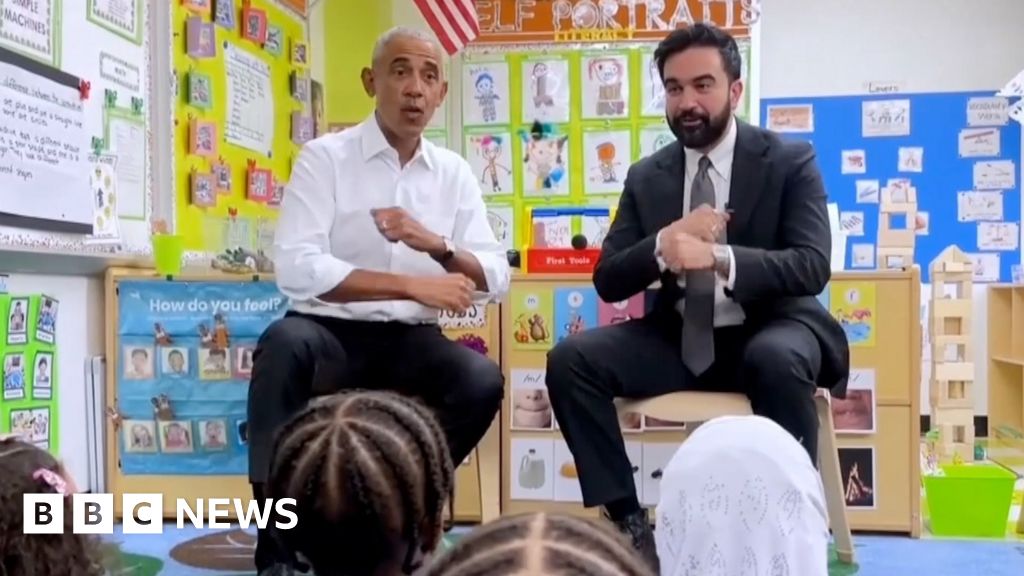
Former US President Barack Obama and New York City mayor Zohran Mamdani met for the first time on Saturday at a child care centre in the Bronx where they sang to preschoolers.

Obama and Mamdani led the group in singing Wheels on the Bus and the children taught them Soda Pop from K-pop film Demon Hunters.

“You made the mayor feel really old”, Obama joked as the children laughed.

“In between singing wheels on the bus, we discussed our administration’s vision for this City – one where New York’s cutest have the strongest start possible”, Mamdani said about the meeting on an Instagram post.

Advertisement

Source link

Continue Reading

NewsBeat

Iranian official says US ‘maximalist’ demands stall face-to-face talks

Published

on

Iranian official says US 'maximalist' demands stall face-to-face talks

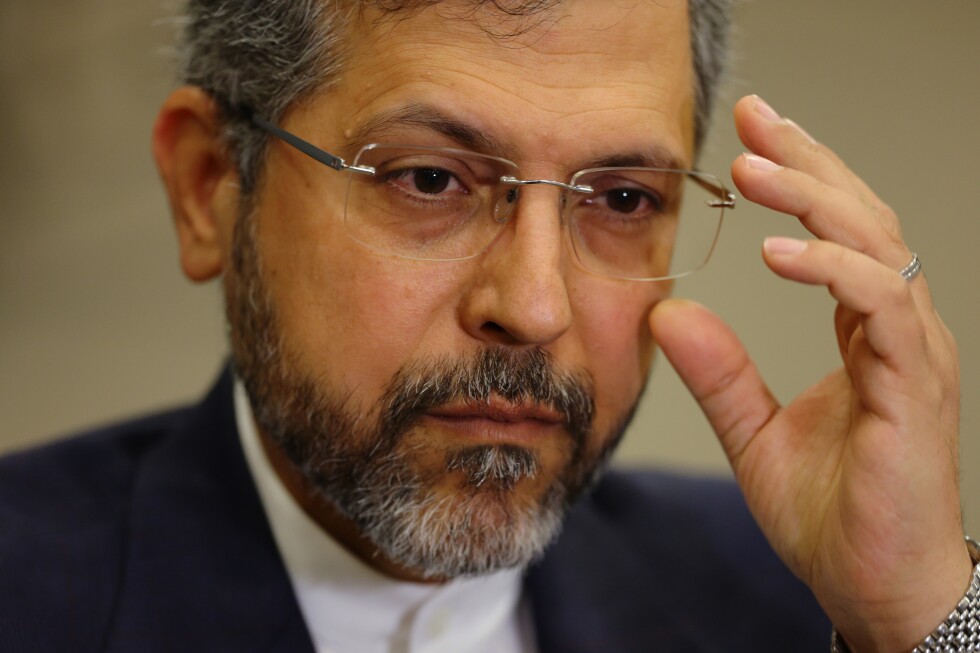
ANTALYA, Turkey (AP) — Iran is not yet ready to hold a new round of face-to-face talks with U.S. officials, a senior Iranian official said Saturday, citing Washington’s refusal to abandon “maximalist” demands on key issues.

In an interview with The Associated Press on the margins of a diplomacy forum in Turkey, Iranian Deputy Foreign Minister Saeed Khatibzadeh also said his country will not hand over its enriched uranium to the United States, rejecting claims made by U.S. President Donald Trump.

“I can tell you that no enriched material is going to be shipped to United States,” Khatibzadeh said. “This is non-starter and I can assure you that while we are ready to address any concerns that we do have, we’re not going to accept things that are nonstarters.”

On Friday, Trump said that the U.S. will go into Iran and “get all the nuclear dust,” referring to the 970 pounds (440 kilograms) of enriched uranium believed to be buried under nuclear sites badly damaged by U.S. military strikes last year.

Advertisement

Khatibzadeh said there have been many exchanges of messages between the sides but accused the United States of holding firm on demands Iran deems to be excessive.

“We are still not there yet to move on to an actual meeting because there are issues that the Americans have not yet abandoned their maximalist position,” Khatibzadeh said. Iran was seeking the finalization of a “framework agreement” before moving to an in-person meeting, he added.

The Iranian official would not go into specifics of the negotiations with the United States or say which issues remain unresolved but called on Washington to address Iran’s concerns, including sanctions imposed on Iran.

“The other sides also should understand and address our main concerns, which are illegal unilateral sanctions that Americans have imposed on Iranians and this economic terrorism which has targeted Iranian people to suffocate them and make them to revolt against the political structure inside Iran,” Khatibzadeh said.

Advertisement

Asked whether Iran would respond to renewed attacks by Israel on Lebanon despite the ceasefire, Khatibzadeh said: “Iran has no option, just to stop aggressors once and forever.”

Trump said that Israel is “prohibited” by the U.S. from further strikes on Lebanon and that “enough is enough” in the Israel-Hezbollah war.

The State Department said the prohibition applies only to offensive attacks and not to actions taken in self-defense.

The Iranian official renewed Iran’s position that Tehran’s actions were defensive and in response to unprovoked aggression occurring in the middle of negotiations.

Advertisement

He also reiterated Iran’s position that the ceasefire must extend to Lebanon, where Israel had been fighting with the Iran-backed militant group Hezbollah.

When the U.S. and Iran declared a temporary truce last week, Pakistan and Iran said it extended to Lebanon, but Israel — and later the U.S. — denied this. Israel then launched a series of airstrikes on central Beirut, prompting Iran to announce it was once again closing the Strait of Hormuz. Following implementation of a truce in Lebanon Friday, Iran said it had reopened the strait.

Advertisement

“Iran negotiated with good faith, accepted a ceasefire and told everybody that this ceasefire should include all countries, including Lebanon,” Khatibzadeh said. “Then the other side said that, it is not committed to this and then started atrocities.”

He said that a “new protocol” would be put in place for the Strait of Hormuz as part of the negotiations with the U.S. and it would “remain open and safe for all civilian passage.”

Trump has said a U.S. blockade of the Strait of Hormuz will remain and attacks will resume if no agreement is reached with Iran.

___

Advertisement

The Associated Press receives support for nuclear security coverage from the Outrider Foundation. The AP is solely responsible for all content.

___

Additional AP coverage of the nuclear landscape: https://apnews.com/projects/the-new-nuclear-landscape/

Advertisement

Source link

Continue Reading

NewsBeat

The stunningPennington Flash walk worth giving a go this spring

Published

on

The stunningPennington Flash walk worth giving a go this spring

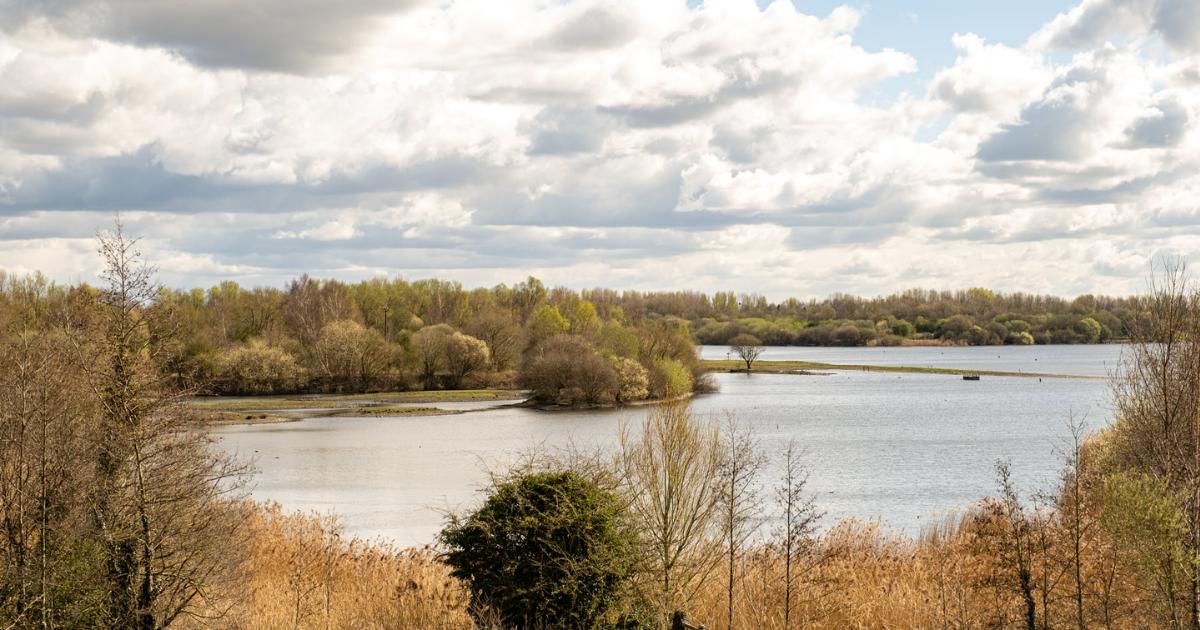
Pennington Flash and neighbouring Lightshaw Meadows offer one of the richest lowland wetland walks in the North West, combining industrial heritage with a landscape now protected as part of the Flashes of Wigan and Leigh National Nature Reserve.

Starting from the Pennington Flash Country Park car park on St Helens Road, Leigh, you’re greeted by expansive views across the 170‑acre flash, formed by mining subsidence and later reclaimed by nature.

Head out on the well‑made paths that fringe the northern edge of the water, sharing the route with dog walkers, runners, and families before the way quietens, narrowing into more rural tracks that lead you east towards the wider wetlands.

Advertisement

Here, the walk leaves the busier core of the country park and picks up the hard‑surfaced paths and pavements that thread through Lightshaw Meadows, a patchwork of pools, reedbeds, and rough grassland alive with birdlife.

The Pennington–Lightshaw circuit gives you regular excuses to stop: bird hides overlooking scrapes and flashes, information boards that explain how these lakes were created, and wide open vistas.

Most of the route is firm underfoot, but due to narrow sections and kissing gates, it’s not suitable for wheelchairs, prams, or bikes.

Looping back, you rejoin the main paths around Pennington Flash, with the option of a final detour to one of the waterside hides before finishing at the café and play area by the visitor hub.

Advertisement

Source link

Continue Reading

NewsBeat

Police hunt man, 31, who ‘may be abroad’ after brutal 2023 Weaste attack

Published

on

Manchester Evening News

The victim suffered a bleed on the brain and is still recovering from his injuries, more than two years on

Detectives are searching for a man wanted in connection with a serious assault that left a victim with a bleed on the brain. Greater Manchester Police has today (April 19) issued an urgent appeal to trace Max Capps, 31, of no fixed address, who is believed to be overseas.

The force says he is wanted in connection with an assault that took place more than two years ago. Officers believe he may be able to help their investigation.

The incident took place in Weaste, Salford, shortly after midnight on Tuesday, December 5 2023. It is believed a man was approached from behind and struck twice in the head with a weapon. The impact caused him to fall, before he was slashed with a knife by the attacker.


Advertisement

Click here to get the biggest stories straight to your inbox in our Daily Newsletter

As well as a bleed on the brain, the victim suffered a fractured skull and two facial wounds. He was left requiring urgent medical treatment and he continues to recover from his injuries today, GMP says.

Officers are now appealing directly to the public to help find Capps. GMP says that since the offence took place, detectives have carried out extensive and wide‑ranging enquiries which have not yet been successful.

He is now believed to be abroad and has remained outstanding for more than two years. Anyone with information about Capps’ current whereabouts, or who may have had contact with him since December 2023, is urged to come forward to GMP.

Advertisement

Detective Constable Ruth Canning, of Salford CID, said: “This was a brutal attack which left the victim requiring urgent medical treatment and has a sustained effect on his life. We have been pursuing every line of enquiry since the incident and despite these efforts, the victim has not been able to get justice.

“We believe someone may have information about where he is now or may have been in contact with him since December 2023. I would urge anyone with information, no matter how small it may seem, to come forward.”

Information can be provided by calling 101, quoting crime reference number CRI/06FF/0035887/23. Alternatively, details can be passed anonymously to Crimestoppers on 0800 555 111 or online here.

Source link

Advertisement
Continue Reading

NewsBeat

Pope Leo XIV heads to Catholic shrine in Angola that was a center of African slave trade

Published

on

Pope Leo XIV heads to Catholic shrine in Angola that was a center of African slave trade

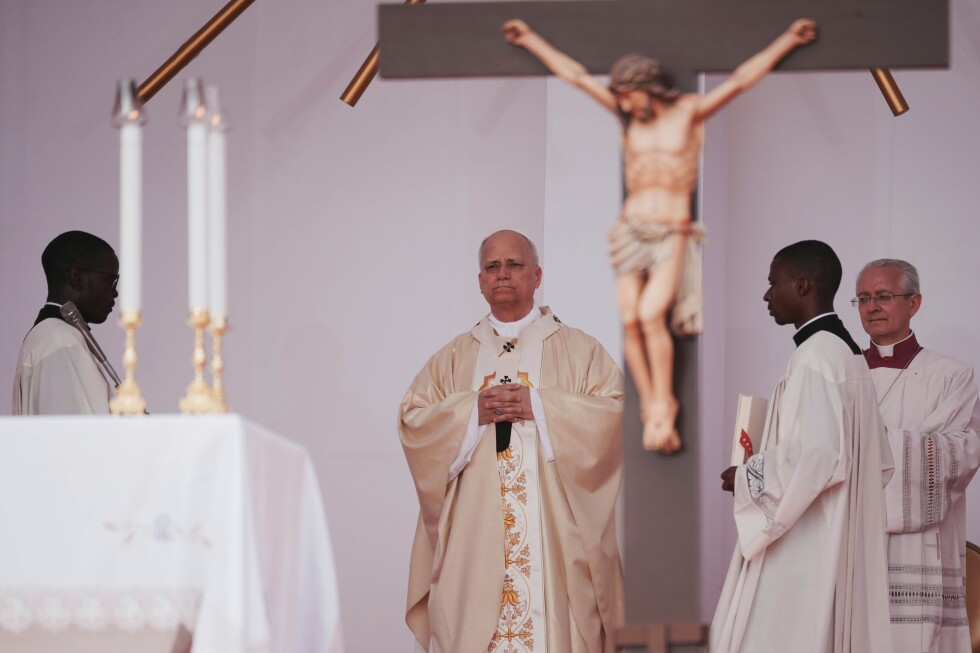
LUANDA, Angola (AP) — Pope Leo XIV called Sunday for Angolans to fight the “scourge of corruption” with a culture of justice as he opened a poignant day in his African odyssey that will take the American pope to an epicenter of the African slave trade.

Leo celebrated Mass before an estimated 100,000 people outside the capital and again sought to encourage Angolans. He denounced the exploitation of their mineral-rich land and people, who still bear the scars of a brutal, post-independence civil war.

“We wish to build a country where old divisions are overcome once and for all, where hatred and violence disappear, and where the scourge of corruption is healed by a new culture of justice and sharing,” Leo said in his homily in Kilamba, a Chinese-built development about 25 kilometers (15 miles) outside the capital.

Later Sunday, Leo will celebrate the Rosary prayer at the Sanctuary of Mama Muxima, an important Catholic shrine on the edge of the Kwanza River about 110 kilometers (70 miles) south of Luanda.

Advertisement

The Church of Our Lady of Muxima, built by Portuguese colonizers at the end of the 16th century as part of a fortress complex, became a hub in the slave trade. It was where enslaved Africans were gathered to be baptized by Portuguese priests before being forced to walk to the port of Luanda to be put on ships to the Americas.

While it’s a popular Catholic shrine today, its history is emblematic of the Catholic Church’s role in the slave trade hundreds of years ago, the forced baptisms of enslaved people and what some scholars say is the Holy See’s continued refusal to fully acknowledge it and atone for it.

The visit is particularly significant because the Creole ancestors of the first U.S.-born pope include enslaved people and slave owners, according to genealogical research.

“For Black Catholics, Pope Leo’s visit to the Muxima shrine is an important moment of healing,” said Anthea Butler, senior fellow at the Koch Center, Oxford University.

Advertisement

She noted that many Black Catholics are Catholic because of slavery and the “Code Noir,” which she said required slaves purchased by Catholic owners to be baptized in the church.

“Others were already Catholic when they were trafficked from Angola to slave holding colonies,” said Butler, a Black Catholic scholar whose maternal family hails from Louisiana, where the pope’s ancestors also had their roots.

The role of papal bulls in the slave trade

Angola’s Portuguese colonizers were emboldened by 15th-century directives from the Vatican that authorized them to enslave non-Christians.

In 1452, for example, Pope Nicholas V issued the papal bull Dum Diversas, which gave the Portuguese king and his successors the right “to invade, conquer, fight and subjugate” and take all possessions — including land — of “Saracens, and pagans, and other infidels, and enemies of the name of Christ” anywhere, said the Rev. Christopher J. Kellerman, a Jesuit priest and author of “All Oppression Shall Cease: A History of Slavery, Abolitionism, and the Catholic Church.”

Advertisement

The bull also gave the Portuguese permission “to reduce their persons to perpetual slavery.”

That bull and another issued three years later, Romanus Pontifex, formed the basis of the Doctrine of Discovery, the theory that legitimized the colonial-era seizure of land in Africa and the Americas, and justified slavery.

The Vatican in 2023 formally repudiated the Doctrine of Discovery, but it never formally rescinded, abrogated or rejected the bulls themselves. The Vatican insists that a later bull, Sublimis Deus in 1537, reaffirmed that Indigenous peoples shouldn’t be deprived of their liberty or the possession of their property, and were not to be enslaved.

Kellerman recalled that most of the 12.5 million Africans who were direct victims of the trans-Atlantic slave trade were sold into slavery by other Africans and were not captured by Europeans.

Advertisement

“That being said, at the time of the building of Muxima, the Portuguese were doing both — buying enslaved people and colonizing/slave raiding. So they were fully using their papal permissions during this time,” he said in emailed comments to The Associated Press.

He said the first pope to condemn slavery itself was Pope Leo XIII, the current pope’s namesake and inspiration, in two encyclicals in 1888 and 1890. But Kellerman said that pope and others since have continued to perpetuate the “false narrative” that the Holy See was always against slavery, when the historical record says otherwise.

While Leo’s visit to Muxima was in honor of its role as a shrine, Kellerman said he hoped that the visit would also give Leo a chance to learn more about the history of the slave trade.

“The popes repeatedly authorized Portugal’s colonization efforts in Africa and Portuguese participation in the slave trade, but the Vatican has never fully admitted this,” he said. “It would be so powerful if at some point Pope Leo were to apologize for the popes’ role in the trade.”

Advertisement

During a 1985 visit to Cameroon, St. John Paul II asked forgiveness of Africans for the slave trade. In 1992 visit to Goree Island, Senegal, the largest slave-trading center in West Africa, he denounced the injustice of slavery and called it a “tragedy of a civilization that called itself Christian.”

Leo’s own personal history a point of reflection

According to genealogical research published by Henry Louis Gates Jr., 17 of Leo’s American ancestors were Black, listed in census records as mulatto, black, Creole or a free person of color. His family tree includes slaveholders and enslaved people, Gates reported in an essay in the New York Times.

Gates, a Harvard University professor who hosts the popular PBS documentary series “Finding Your Roots,” presented his research to Leo during a July 5 audience at the Vatican. According to a report of their meeting in The Harvard Gazette, “The pope asked about ancestors, both Black and white, who were enslavers.”

Leo has not spoken publicly about his family heritage or the Gates research, and some Black Catholic scholars are hesitant to impose on him a narrative about his identity that he himself has not yet addressed publicly.

Advertisement

“It’s important that we tell our own stories,” said Tia Noelle Pratt, a sociologist of religion and professor at Villanova University, the pope’s alma mater.

“We haven’t heard anything from him about what he thinks about it, and so to impose anything on him, I think would be completely inappropriate,” said Pratt, author of “Faithful and Devoted: Racism and Identity in the African-American Catholic Experience.”

Cardinal Wilton Gregory, the retired archbishop of Washington and the first African American cardinal, said he was “delighted” to have facilitated the encounter.

“It’s one of the things that I think for many African Americans and people of color, they identify with great pride the pope has roots in our own heritage,” Gregory said. “And I think he’s happy about that too, because it’s another link to the people that he tries to serve and is called to serve.”

Advertisement

___

Associated Press religion coverage receives support through the AP’s collaboration with The Conversation US, with funding from Lilly Endowment Inc. The AP is solely responsible for this content.

Advertisement

Source link

Continue Reading

NewsBeat

India summons Iranian envoy after tankers come under fire in Strait of Hormuz

Published

on

India summons Iranian envoy after tankers come under fire in Strait of Hormuz

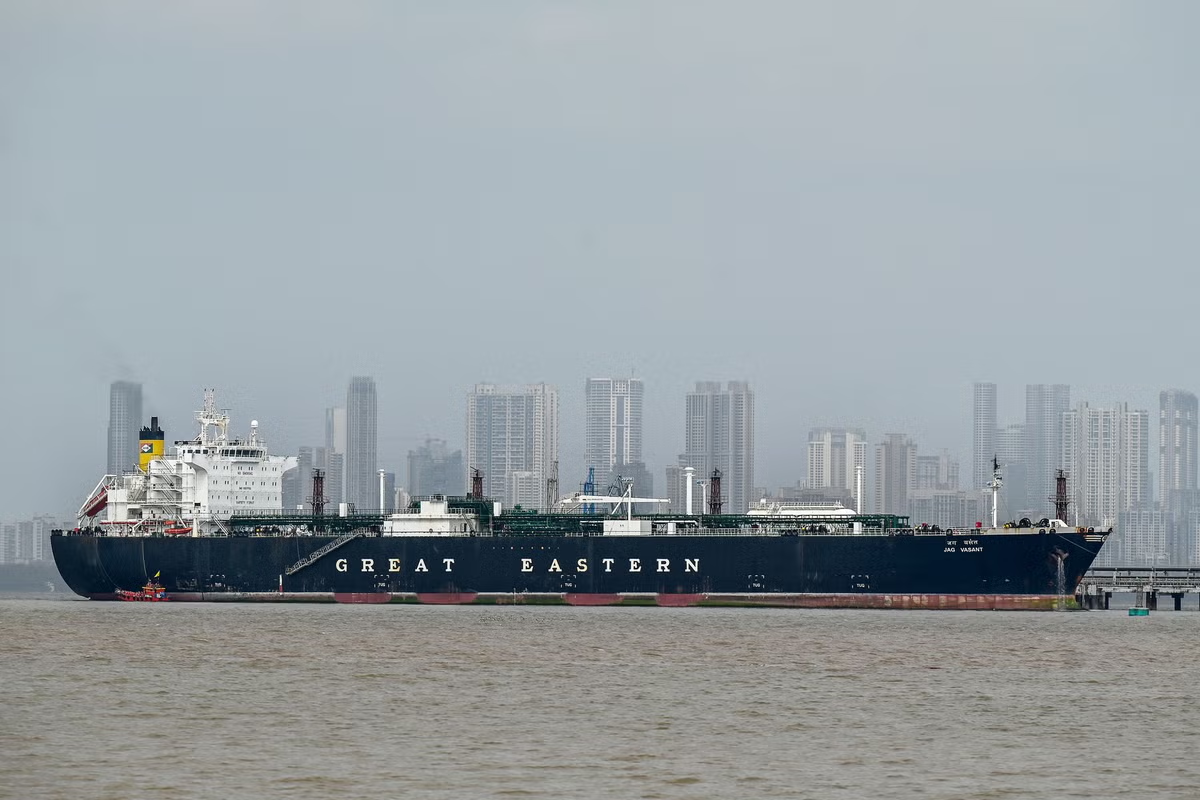
India summoned Iran’s ambassador after two Indian-flagged vessels were fired upon allegedly by Iranian navy while attempting to pass through the Strait of Hormuz, prompting a formal diplomatic protest from Delhi.

India’s foreign ministry summoned Mohammad Fathali after the incident and foreign secretary Vikram Misri conveyed the government’s “deep concern” over the shooting involving two merchant ships bound for India.

Misri stressed the importance India places on the safety of commercial shipping and seafarers, noting that Iran had previously enabled the safe passage of several India-bound vessels.

“Reiterating his concern at this serious incident of firing on merchant ships, the foreign secretary urged the ambassador to convey India’s views to the authorities in Iran and resume at the earliest the process of facilitating India-bound ships across the Strait,” the ministry said.

Advertisement

It added that the ambassador “undertook to convey these views to the Iranian authorities”.

The two vessels were identified as Jag Arnav and Sanmar Herald. Officials said there were no casualties and the ships suffered minor damages, except shattered glass in one of the cabins, reported local media. Both vessels turned back after coming under fire north of Oman.

According to Marine Traffic, Jag Arnav, a bulk carrier sailing under the Indian flag, had departed Al Jubail in Saudi Arabia and was heading to India. Sanmar Herald was travelling to India with crude oil loaded in Iraq.

The Strait of Hormuz lies between Iran and Oman and is one of the world’s most important energy chokepoints. About one-fifth of global crude shipments normally pass through the narrow waterway. India is among the countries with the highest number of vessels transiting the route because of its dependence on energy imports from the Gulf.

Advertisement

Indian officials said the government was treating the alleged firing by the Islamic Revolutionary Guard Corps (IRGC) seriously and continued to support open and free navigation through the strait.

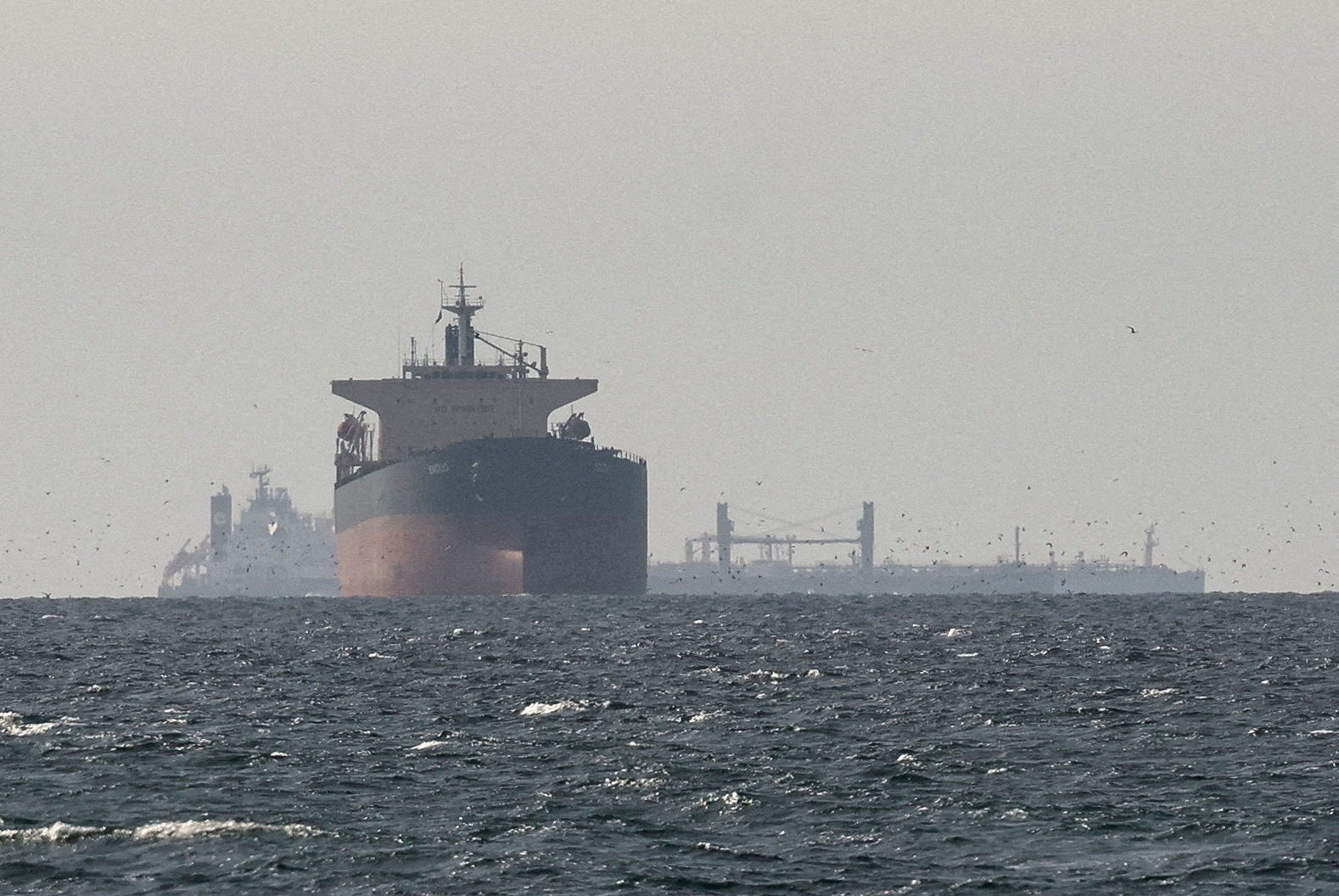
Cargo ships in the Gulf, near the Strait of Hormuz
Cargo ships in the Gulf, near the Strait of Hormuz (Reuters)

The incident also occurred while the Iranian warship IRIS Lavan remained docked at Kochi after seeking refuge from India. Around 120 of its 183 crew members have been repatriated, while essential personnel remain aboard to maintain the vessel. The ship arrived after another Iranian warship, IRIS Dena, was torpedoed and sunk by a US submarine near Sri Lanka on 4 March.

A distress transmission from Sanmar Herald later surfaced. In audio shared by Tanker Trackers and reported by NDTV, a crew member can be heard saying: “Sepah Navy. Sepah Navy. This is motor tanker Sanmar Herald. You gave me clearance to go. My name is second on your list. You are firing now. Let me turn back.”

Video reviewed by NBC News appears to show the Sanmar Herald moving through a designated safe passage or Green Area in the Strait of Hormuz. While travelling east, the ship temporarily switched off its tracking signal (AIS), which is the system ships use to broadcast their location. Later, when the signal came back on farther east, the ship had quickly turned around and was heading back west.

The confrontation came amid wider uncertainty over a fragile ceasefire involving the US and Iran, which is due to expire on Wednesday. The war, entering its eighth week, has killed thousands, spread to Israeli attacks in Lebanon and driven oil prices higher because of the effective closure of the strait.

Advertisement

While Iran has not officially acknowledged the attack on the Indian tankers, it has said it is restricting shipping because of a continuing US blockade of Iranian ports. Its Supreme National Security Council called the blockade a ceasefire violation and said Iran would prevent “any conditional and limited reopening” of the strait.

Earlier, Iran’s Ambassador to India Mohammad Fathali had told NDTV that the strait will remain open for Indian ships. “We have good contact with the [Indian] government for allowing their ships to sail through the Strait of Hormuz.”

Iranian parliamentary speaker Mohammad Bagher Qalibaf said Tehran would continue threatening commercial shipping through the waterway.

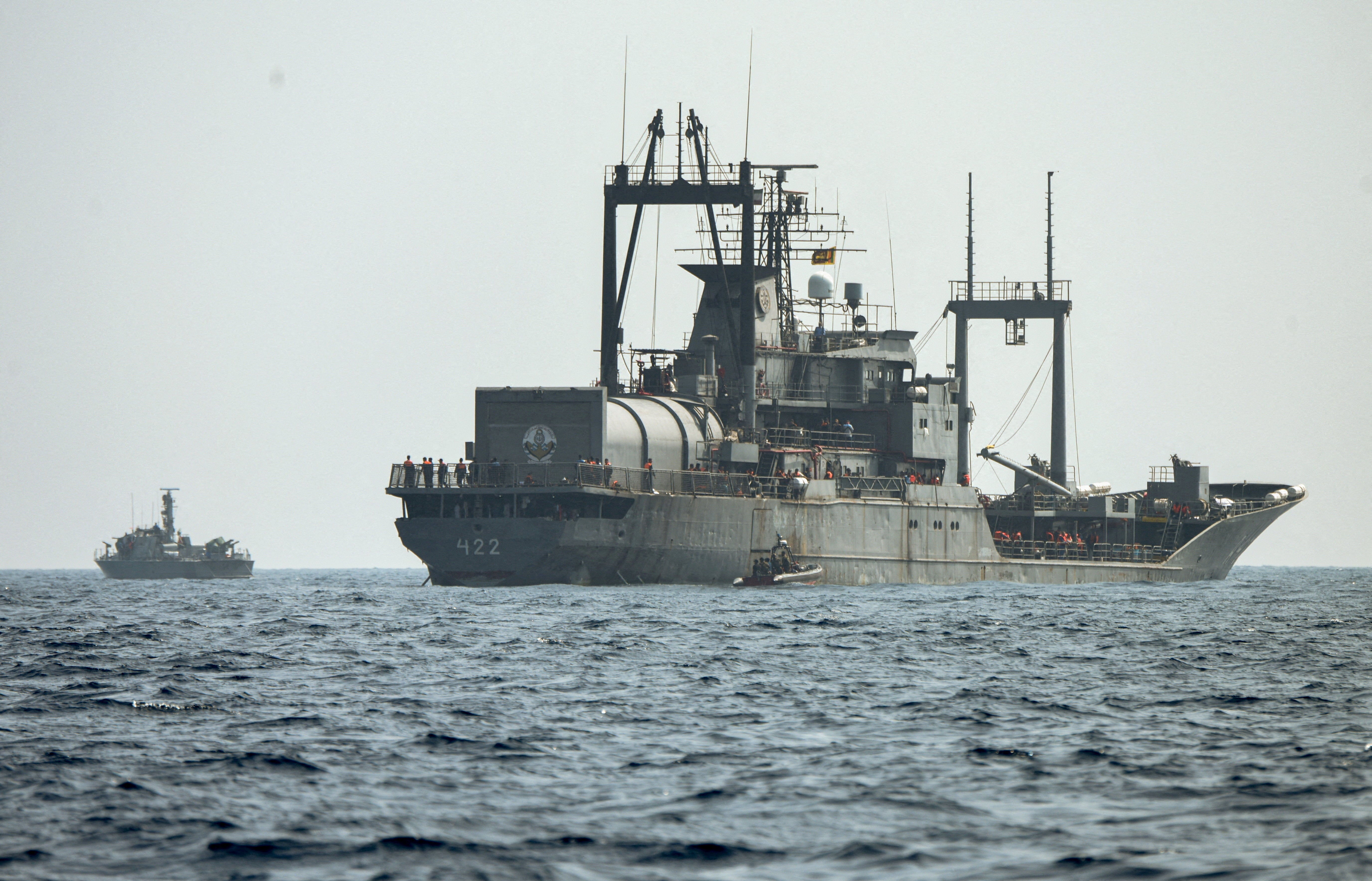
A Sri Lanka Navy vessel approaches an Iranian Navy vessel IRIS Bushehr during a rescue operation, a day after the crew of a distressed Iranian military ship, IRIS Dena, were assisted in waters south of Sri Lanka, off the coast of Colombo, Sri Lanka, 5 March 2026
A Sri Lanka Navy vessel approaches an Iranian Navy vessel IRIS Bushehr during a rescue operation, a day after the crew of a distressed Iranian military ship, IRIS Dena, were assisted in waters south of Sri Lanka, off the coast of Colombo, Sri Lanka, 5 March 2026 (Reuters)

“It is impossible for others to pass through the Strait of Hormuz while we cannot,” Mr Qalibaf said.

In separate comments, he said recent talks with Washington had narrowed some differences but major gaps remained over nuclear issues and the strait.

Advertisement

“We have had progress but there is still a big distance between us,” he told state media. “There are some issues on which we insist … They also have red lines. But these issues could be just one or two.”

US president Donald Trump said there had been “very good conversations” with Tehran, but also described Iran’s move over the strait as “blackmail”. He defended the US blockade and warned he was prepared “to start dropping bombs again” unless a longer-term agreement was reached before the ceasefire ends.

Iranian deputy foreign minister Saeed Khatibzadeh told the Associated Press: “Americans are risking the international community, risking the global economy through these, I can say, miscalculations,” adding that the US is “risking the whole ceasefire package”.

The latest disruption followed a temporary reopening announced by Iran on Friday after a separate US-brokered 10-day ceasefire agreement between Israel and Lebanon on Thursday. Tehran then reversed course on Saturday and reimposed control over the route.

Advertisement

Source link

Continue Reading

Trending

Copyright © 2025