


Connect with us

NewsBeat

How Nigel Farage’s plan to scrap indefinite leave to remain could put thousands at risk of deportation

Published

on

How Nigel Farage’s plan to scrap indefinite leave to remain could put thousands at risk of deportation

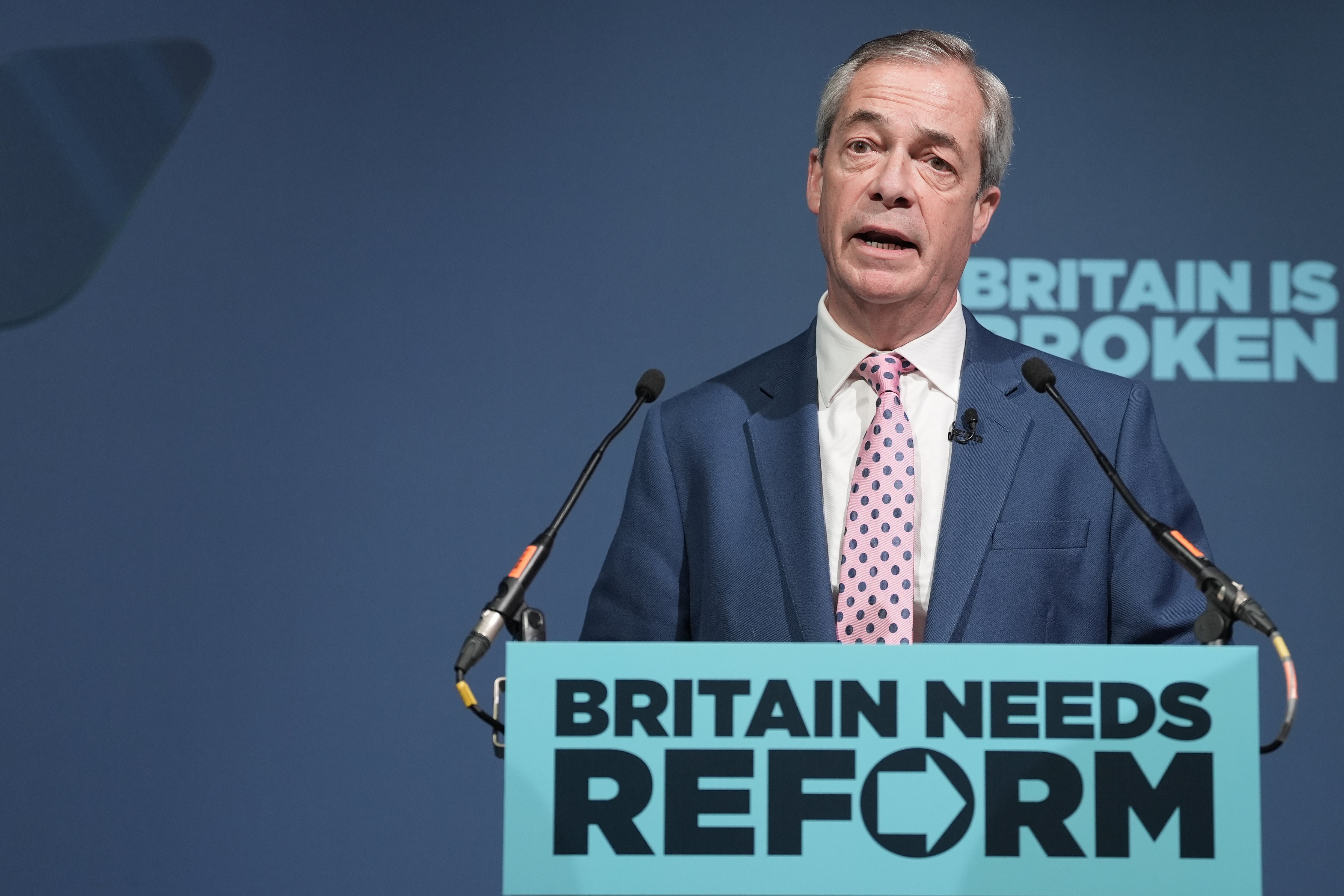
Reform UK has announced a range of policies to crack down immigration, including mass deportations and increased surveillance to complement its radical overhaul of the indefinite leave to remain (ILR) system.

The plans could see hundreds of thousands of legal migrants deported from the UK, and rules severely tightened for people looking to migrate to the country.

The party’s home affairs spokesperson, Zia Yusuf, delivered a speech on Monday on its plans to create a new ‘Trump inspired’ deportation agency with the capacity to detain 24,000 migrants at a time. This will come alongside automatic home searches for anyone referred to Prevent counter-terrorism, and a ban on the conversion of churches into mosques.

In 2025, the party shared disputed figures that its ILR policy alone would save more than £200bn. This is the main route by which migrants are able to settle in the UK and is open to people who have worked and lived in the UK legally for five years.

Advertisement
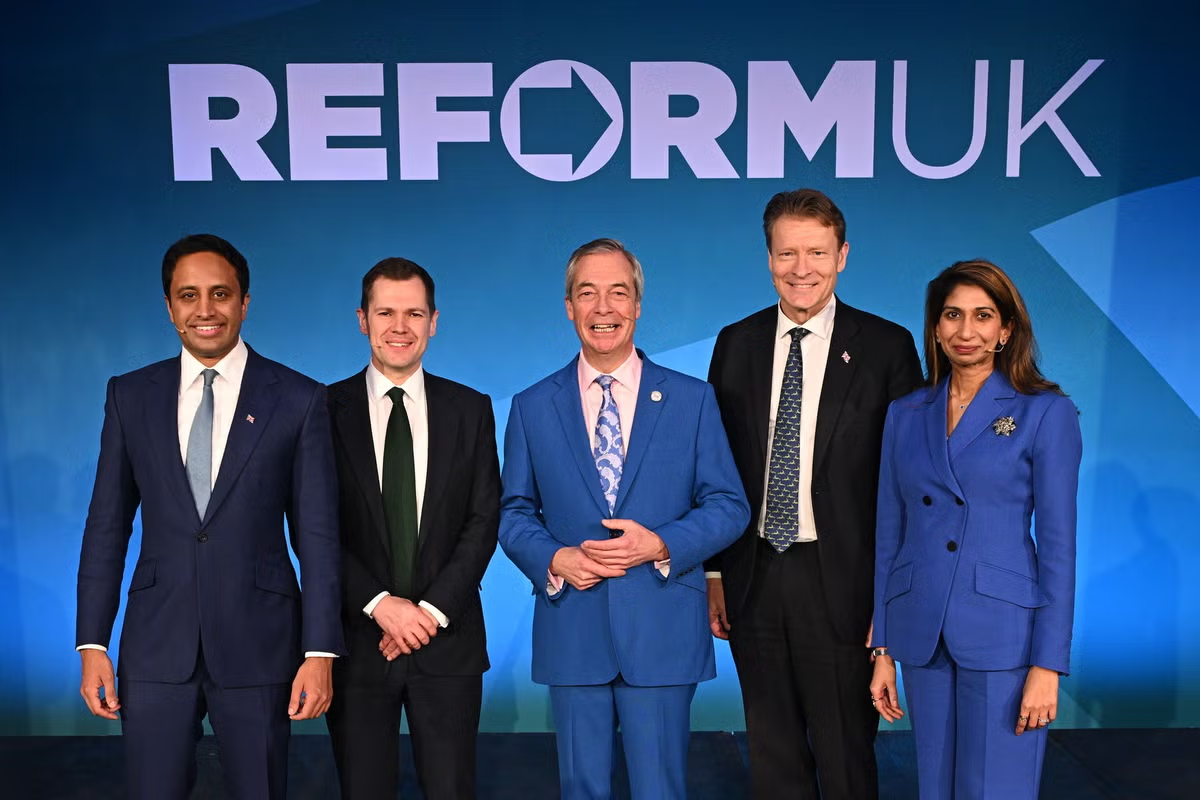
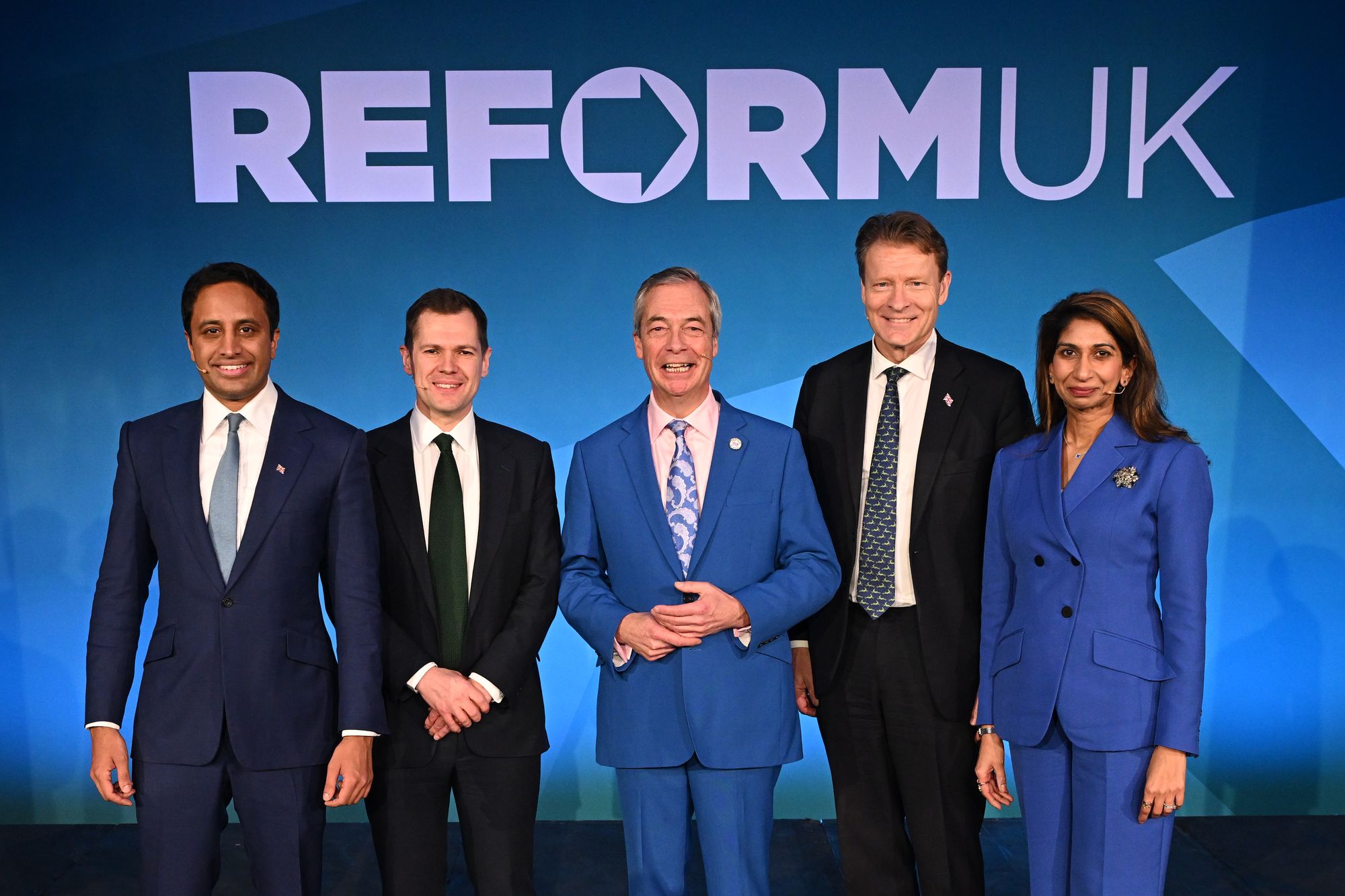
Reform UK Leader Nigel Farage stands with his newly-announced shadow cabinet

Reform UK Leader Nigel Farage stands with his newly-announced shadow cabinet (Getty)

Reform leader Nigel Farage claimed the plans would undo the “Boris wave” of migrants ushered in by the former Conservative prime minister. This refers to around 800,000 migrants who came to the UK under “relaxed” post-Brexit migration rules introduced by Boris Johnson’s government, and who will soon begin to qualify for permanent residence. He added that this group were “going to be a huge burden on the state”.

Mr Farage also claimed the policy would save £234bn, a figure drawn from a Centre for Policy Studies report that has been withdrawn due to a dispute over the numbers. The think tank said the cost estimate should “no longer be used”.

The plans have been widely criticised by politicians, campaigners and experts, who have said the proposals are “morally wrong” and will “tear families apart”.

Advertisement

Here’s what you need to know about the policy:

How does indefinite leave to remain currently work?

Indefinite leave to remain is how most migrants settle in the UK, wherever they come from. It gives them the right to live, work and study in the country permanently, as well as access benefits where eligible.

It also enables their family to migrate to the UK under certain conditions.

Advertisement

In most cases, ILR can be applied for after five years of living and working in the UK. Depending on visa type, the applicant may also need to meet certain salary or financial requirements.

Reform UK head of policy Zia Yusuf (Yui Mok/PA)

Reform UK head of policy Zia Yusuf (Yui Mok/PA) (PA Wire)

For most workers, this will be at least £41,700 per year, or the “standard going rate” for the type of work you’ll be doing, which could be higher. After securing ILR, a person can generally apply for British citizenship after 12 months.

Last May, Labour pledged to introduce tough new restrictions on ILR, meaning most applicants will need to be in the UK for 10 years before they can apply, as well as shortening the list of eligible jobs.

Advertisement

What would change under the plans?

Under Reform’s plans, this settled status would be scrapped – even for those currently residing in the UK on it.

Instead, a new visa with far stricter requirements would need to be successfully applied for and renewed every five years.

The policy would reportedly also see the salary threshold to apply increased to around £60,000, nearly double the median UK salary (£31,602).

Advertisement

The plans would throw the lives of the estimated 430,000 people holding ILR into uncertainty, despite many having lived in the UK for decades. They would be forced to reapply and would face deportation if they do not qualify under the new rules.

Nigel Farage claims the plans would undo the “Boris wave” of migrants(Stefan Rousseau/PA)

Nigel Farage claims the plans would undo the “Boris wave” of migrants(Stefan Rousseau/PA) (PA Wire)

It would also see the rights and freedoms they enjoy restricted, as access to NHS services or benefits would be rescinded. The new visas would require advanced English, with strict new limits on partners and family members being able to join.

Reform is expected to confirm that the policy would be enforced by a newly-created ‘UK Deportation Command’, modelled on America’s controversial ICE agency. Mr Yusuf told The Times last year this will be like “Trump mark two”.

Advertisement

The party has also previously pledged to leave the European Convention on Human Rights and replace the Human Rights Act with a British Bill of Rights. This would enable its government to carry out its pledged mass deportations of asylum seekers – plans which have also had their claimed economic benefit called into question.

Do the plans and numbers add up?

The alleged £234bn in savings would be “over the lifetime of the average migrant”. There is no further breakdown, but the average lifespan in the UK is currently around 80 years old. In this case, then the proposed savings would be less than £3bn a year (£2.9bn) on average — a far more modest number than what Reform is brandishing.

Even over a 50-year lifespan in the UK, the alleged savings could be £4.7bn a year on average – and that’s without considering the economic benefits of the migrant workforce.

Advertisement

It is also unclear where these savings will come from and how they have been calculated. Reform has said that almost £9bn a year in universal credit is claimed by foreign nationals. But getting rid of ILR would not stop most foreign universal credit claimants from being eligible, since the majority are from the EU Settlement Scheme, agreed under Brexit, and would still be entitled to benefits.

As of July 2025, there were 213,666 people with indefinite leave to remain claiming universal credit. This makes up just 2.8 per cent of all claimants. This small fraction would mean that the government spend around £1.7bn this year on universal credit for people with indefinite leave to remain – far off from the £234bn savings, even if extended over a 50 or 80 year timeline.

And even if 800,000 more people will be granted ILR from the “Boris wave” – as Reform claims – there is nothing to suggest that these people will go on to claim universal credit. There is also no clear figure on how many foreign nationals in the UK have indefinite leave to remain. So, as it stands, the evidence behind Reform’s £234bn savings is murky at best.

Advertisement

Asked about Reform’s claim that they could save £234bn over several decades last year, chancellor Rachel Reeves said: “The numbers that Reform have come out with overnight have already begun to disassemble.”

She added: “It is a difficult challenge, I think everybody can see that, but simple gimmicks like those put forward by Reform that have no basis in reality and where the numbers just fall apart – that’s not the way to tackle a very serious issue, and this Labour government are getting on and doing that.”

Source link

Advertisement
Continue Reading
Click to comment

Leave a Reply

Your email address will not be published. Required fields are marked *

NewsBeat

David Wilson Homes to launch Castra Park in Huntington, York

Published

on

David Wilson Homes to launch Castra Park in Huntington, York

Castra Park promises a range of luxurious, energy-efficient two, three and four bedroom homes on the outskirts of York City Centre.

David Wilson Homes will also be contributing £3.5 million to the surrounding area and community, as part of its planning approval agreement with City of York Council. This includes funding improvements for education, infrastructure, sport and travel.

Sarah Hanna, Senior Sales Manager at David Wilson Homes Yorkshire East, said: “We’re excited to launch Castra Park. The development is the ideal setting for families, first-time buyers and those looking to balance city and country lifestyles.

Advertisement

RECOMMENDED READING:

“We encourage prospective buyers to visit Castra Park and speak to our team about upcoming homes.”

Castra Park promises plenty of green space and all essential amenities within a two-to-three-mile radius.

The developers also highlight easy access to Vangarde Shopping Park, Monks Cross, plus York City Centre and its railway station.

Advertisement

For more information about the development, visit the website at Castra Park.

For more information about developments in the county, visit the website at David Wilson Homes North Yorkshire.

Source link

Advertisement
Continue Reading

NewsBeat

Vinicius Jr: Benfica’s Gianluca Prestianni handed provisional one-match suspension after alleged racist abuse

Published

on

'Breaking' graphic

Benfica’s Gianluca Prestianni has received a provisional one-match suspension after Real Madrid’s Vinicius Jr reported alleged racist abuse during last week’s Champions League meeting.

Vinicius told referee Francois Letexier that he had been racially abused by the Argentina winger during the first leg of their Champions League knockout play-off tie in Lisbon last Tuesday.

Uefa announced the provisional ban on Monday following the appointment of an ethics and disciplinary inspector to investigate the incident.

The European governing body said further punishment could be handed out once the investigation is completed.

Advertisement

Real Madrid and Benfica meet for the second leg in the Spanish capital on Wednesday (20:00 GMT).

Source link

Continue Reading

NewsBeat

Stranger Things Star Winona Ryder Joins Wednesday Season 3 Cast

Published

on

Stranger Things Star Winona Ryder Joins Wednesday Season 3 Cast

Winona Ryder has become the latest A-lister to join the cast of Netflix’s Wednesday.

On Monday afternoon, Netflix shared a new teaser to commemorate production getting underway on the third season of the Addams Family spin-off.

The minute-long teaser featured Lurch laying out an elaborate dinner at the Addams’ home, featuring close-ups of place-cards featuring actors and characters’ names.

During the video, it was confirmed that alongside returning stars like Catherine Zeta-Jones, Joanna Lumley, Billie Piper and, of course, Jenna Ortega, Winona would be joining the cast as a new character named Tabitha.

Advertisement

Check out the teaser for yourself below:

Wednesday is Winona’s first role since her role as Joyce Byers in another of Netflix’s biggest shows, Stranger Things, came to an end.

It’s also the latest in a long line of collaborations between the Oscar nominee and filmmaker Tim Burton, which has also included Edward Scissorhands, Frankenweenie and both Beetlejuice and its 2024 sequel.

“I am so happy that Winona has joined us, she fits right into this world,” Tim Burton said in a statement. “And she’s a dear friend. I always feel lucky to work with her.”

Advertisement

Winona will also reunite with Jenna in the new episodes of Wednesday, having played her mum in Beetlejuice Beetlejuice.

It was previously revealed that Eva Green would also be joining Wednesday for its next run of episodes, portraying Morticia Addams’ sister, Aunt Ophelia.

Back in September, around the release of the second season of Wednesday, cast member Fred Armisen claimed that his character, Uncle Fester, would be getting his own spin-off, though this remains yet to be officially confirmed by Netflix.

Wednesday has been a huge hit for Netflix since premiering in 2022, with the first season remaining the most-watched English-language series in the streaming platform’s history.

Advertisement

Both seasons of Wednesday are now streaming on Netflix.

Source link

Advertisement
Continue Reading

NewsBeat

A61 – Driver fails to stop after crash with Vauxhall Vivaro

Published

on

A61 - Driver fails to stop after crash with Vauxhall Vivaro

North Yorkshire Police said it happened on the Ripon Road in Killinghall around 12.15pm on Thursday, February 19.

A force spokesperson said: “A small dark blue car crashed with a white Vauxhall Vivaro van causing damage and narrowly avoided the vehicle owner stood to the side of it in orange hi-viz clothing.

“The blue car was damaged and its wingmirror was left at the scene.”

Advertisement

North Yorkshire Police said any witnesses to the crash should get in touch by emailing fiona.wilding@northyorkshire.police.uk and quoting reference 12260030922.

Source link

Advertisement
Continue Reading

NewsBeat

What went right this week: new law sends a ‘powerful message’ against online abuse, plus more

Published

on

What went right this week: new law sends a ‘powerful message’ against online abuse, plus more
Children born in Bangladeshi brothels were given state recognition

The tireless efforts of human rights campaigners in Bangladesh have finally paid off: children born in the brothels and streets there are now able to hold a birth certificate. Undocumented children, many born in the sprawling Daulatdia brothel, had previously been denied a birth certificate, and all the rights that come with it. Without official documentation, children cannot attend school and are vulnerable to trafficking. 

This week it was revealed that more than 700 children have now received a birth certificate, thanks to organisations such as anti-slavery organisation Freedom Fund, which identified an ‘overlooked stipulation in the law’. Since 2018, it has in fact been permitted for a birth to be registered, even in the absence of information on the parents. Government officials, however, were not recognising this.  

“When I first came to know about [this stipulation], we massively disseminated this information with our partners,” Khaleda Akhter, Bangladesh programme manager for Freedom Fund, told the Guardian. Akhter has seen firsthand how a birth certificate can be life-changing for children there. “These documents are not just a tool,” she said, “it’s about survival.”

Advertisement

Image: Shafin Ashraf

Source link

Advertisement
Continue Reading

NewsBeat

Brothel madam who trafficked women to Scotland ordered to hand over cash

Published

on

Daily Record

Mananchaya Wanitthanawet, 42, is currently serving a nine year jail sentence for exploiting her two victims in the sex trade.

A woman who trafficked her fellow Thai countrywomen to Scotland to work as prostitutes was today ordered to hand over £3815 to settle a proceeds of crime action brought against her.

Advertisement

Mananchaya Wanitthanawet, 42, is currently serving a nine-year jail sentence for exploiting her two victims in the sex trade. Prosecutors raised an action to strip her of crime profits and a judge at the High Court in Edinburgh was told that a settlement has now been reached in the case.

Advocate depute Bryan Heaney said that it was agreed under the settlement that Wanitthanawet’s benefit from criminal conduct amounted to £123,000, but the available amount for a confiscation order was £3815.

Wanitthanawet offered to help the women find work in the UK but forced them to provide massage and sexual services to repay alleged debts. Victims worked from addresses in Dundee, Edinburgh, Aberdeen and Inverness dealing with up to 15 men a day to pay off the debt.

One victim said she felt like her “hands were tied”. She said: “In my heart, I wanted to escape from that situation, but I had no money, no passport and spoke no English, so then I cry.”

Wanitthanawet was convicted of recruiting and transporting the women, featuring them in adverts for sexual services and forcing them into prostitution between July 2019 and July 2022, following a trial at the High Court in Dundee.

The trial judge, Lord Scott, told her: “This involved the deliberate degrading of fellow human beings. What you put them through was dehumanising.”

“It deprived them of the ability to act as they wished or in their own interests. They were valued only as a source of profit,” said the judge.

Advertisement

Lord Scott told Wanitthanawet: “You are clearly an intelligent person, as evidenced by your degree in business and economics.”

“Unfortunately, you have chosen to use your intelligence and business skills in the exploitation of two vulnerable young women who found themselves trapped into prostitution in a foreign country thousands of miles from their homes and families.”

Get more Daily Record exclusives by signing up for free to Google’s preferred sources. Click HERE.

Source link

Advertisement
Continue Reading

NewsBeat

Fixing, a drag show about car breakdowns and family break-ups, coming to Havant in March

Published

on

Fixing, a drag show about car breakdowns and family break-ups, coming to Havant in March

Fixing, a funny and moving drag theatre show by Matt Miller and Peader Kirk – about family breakups and trying to make things better, learning car maintenance and choosing the right shade of lipstick to do it in – is coming to The Spring Arts Centre in Havant, Hampshire on Wednesday 25 March 2026 at 8pm , as part of a UK tour.

Source link

Continue Reading

NewsBeat

Could the experiences of twins help explain why we don’t trust politicians?

Published

on

Could the experiences of twins help explain why we don’t trust politicians?

In many democracies today, trust in politics is either very low or in decline.

This is a noteworthy development in its own right, but it may be especially important because trust is associated with several other important outcomes, for example, whether we vote and whether we comply with the law. The latter became particularly apparent during the pandemic, when it turned out that people who trusted politicians more were more likely to comply with lockdown rules.

Political scientists often think about trust as a dynamic concept. When politicians perform poorly, our trust falls. And there is plenty of evidence for this. When the economy performs badly or when politicians are embroiled in scandals, trust tends to be lower.

This way of thinking about trust is obviously helpful, but one problem is that it is hard to explain why people’s levels of political trust tend to be stable. Once people reach a level of trust in early adulthood, they don’t tend to change it very much afterwards. And people don’t always have as strong a reaction to events like political scandals as we might think – so it’s not a given that current performance is the only cause of low trust.

Advertisement

One explanation for this apparent contradiction is that trust might also be affected by our formative experiences. Of course, this doesn’t mean that trust never changes later, it obviously does. But on this view, each person would have a stable, base level of trust informed by their early experiences with the political system.

How our parents talked about politics when we were growing up, or how governments performed when we started paying attention to politics, might affect our base level of trust. We know that these experiences affect other aspects of our relationship with politics, for example, our voting behaviour, and our political values.

However, these ideas are difficult to prove. Academics generally study political attitudes by surveying a random sample of the population. These surveys ask about our opinions, and about things that might be influencing them (for example, our household income). But they rarely ask about our formative experiences. That’s partly because people can’t be expected to accurately remember experiences from many years ago. It’s also difficult to know which experiences to ask about. We obviously can’t ask about everything (that would be expensive and tedious), but that means we might miss things.

Labour MPs and twin sisters Angela and Maria Eagle celebrate 100 years of votes for women in 2018.
Alamy

One way around this problem is to look at twins and siblings, because we know they largely share their formative experiences and traits formed early in life. That way, we can study those factors without having to directly measure them.

Advertisement

By comparing non-identical twins and siblings (who share lots of traits and experiences) with identical twins (who share almost all traits and experiences) we can estimate how important these are for our political attitudes. That’s what I’ve been doing in my own work, which suggests that a substantial proportion of our trust is explained by our early experiences – perhaps as much as 40%.

Early life and political trust

One possible explanation for this is that important traits formed early in life, like our personalities, might affect our ability to trust the political system. Some people are naturally more agreeable, for example, and it seems likely that they would also be more trusting.

This is one line of argument I’ve discussed in some of my own work, but the evidence for this is less clear. Instead, it seems likely that people who share similar personality profiles are similarly trusting because they grew up in environments which predisposed them toward those personality traits and also toward having more or less trust in the system.

Another, perhaps more plausible scenario is that the environmental conditions we experience early in life might affect whether we go on to have more or less trust in politics. For example, experiencing economic hardship early in life is associated with our ability to trust the system in the long run, especially if we think the government is to blame for our hardship. We might also expect that our educational experiences affect trust, for example, by giving us the knowledge about the system that can help us make more reasoned judgements about its trustworthiness.

Advertisement

The relationship between trust and voting might, therefore, not be due to trust causing voting, but instead due to our formative experiences affecting both. My work with colleagues suggests that this is likely to be the case. We tested whether differences in political trust within twin pairs predicted differences in how often they voted. That way, we know we’ve accounted for all relevant formative experiences shared by the twins. When we did that, we found that the relationship between how much we trust and how often we vote is much weaker.

Another reason that trust being partly caused by our formative experiences matters is because long-run changes in trust might be generational in nature, and difficult to reverse. In the UK, for example, gen Z tends to be particularly distrusting of institutions, including political ones.

If political trust is socialised when we are young, this has the concerning implication that it might stay that way, even if performance improves. We might then expect younger voters who grow up in a low-trust environment to remain distrusting in the long run.

Advertisement

Source link

Continue Reading

NewsBeat

9p breakfast food helps fatigue and could ward off some serious diseases

Published

on

Cambridgeshire Live

Adding the cheap and healthy food to your diet may help tackle tiredness and reduce your risk of serious diseases

Research has demonstrated that adding just one food item to your breakfast can provide significant health advantages. Making this nutritious ingredient a regular part of your morning routine could help tackle afternoon tiredness, while also potentially reducing your risk of diabetes and bowel cancer.

Aldi is currently selling a 1kg bag of porridge oats for only 85p, equating to approximately 9p per 100g. Whether you mix oats into yoghurt with berries and nuts, or simply heat them with milk for a traditional morning dish, just avoid adding sugar.

Advertisement

Oats are regarded as an outstanding source of energy owing to their complex carbohydrate composition. A portion of whole grains, such as cooked porridge, slowly releases energy that’s steadily absorbed throughout your day.

This can help prevent afternoon lethargy and tiredness whilst keeping you fuller for longer. In addition to sustained energy, oats also provide valuable quantities of thiamine, phosphorus, magnesium, and B vitamins, including niacin and folate, which together help your body process energy efficiently.

Oats have also been demonstrated to assist with blood sugar control, a vital factor in diabetes management. Since your body digests minimally processed oats more slowly than refined grains, this helps avoid dramatic rises in blood sugar following meals, reports the Mirror.

Losing excess weight and maintaining a healthy body mass can help prevent or even reverse type 2 diabetes. The Diabetes Association recommends losing up to 15% of your body weight upon diagnosis.

Advertisement

Adopting a diet rich in fibre and protein, but low in calories, sugar, and fat, can initiate weight loss – making porridge (without any added sugars like syrup) a beneficial breakfast option. Oats are exceptionally low in sugar, with less than a gram of sugar found in 100g of oats.

A review conducted in 2018 discovered that oats may aid in reducing cholesterol levels. This is vital as diabetes can increase your risk of heart disease. Oats are categorised as low-GI foods, with a GI rating below 55.

More recently, according to new research from the University of Bonn published in Nature Communications in January 2026, consuming a large amount of oats for a short period-about 300 grams of oatmeal each day for only two days-can lower LDL (the ‘bad’) cholesterol levels by around 10%.

Further studies suggest that oats can decrease your risk of developing bowel cancer. This is largely due to their high fibre content, as stated by Cancer Research UK.

Advertisement

Fibre increases the size of your stools, dilutes them, and assists in their quick passage through your system. This reduces the time harmful chemicals stay in contact with the bowel, potentially reducing cell damage.

Fibre might also help gut bacteria produce beneficial chemicals that alter conditions within the bowel. Fibre-rich foods have been associated with a decreased risk of bowel cancer.

Cancer Research UK says: “A high-fibre diet, including plenty of wholegrains, can lower the risk of bowel cancer. Not all cases of bowel cancer can be prevented. A person’s risk of cancer depends on many different things. But eating a high-fibre diet can help reduce the risk of bowel cancer.”

Oats also contain many phenolic acids and compounds called avenanthramides. These have antioxidant and anti-inflammatory benefits.

Advertisement

Adding more high-fibre wholegrains and fewer refined grains to your diet can help maintain a healthy weight by keeping you fuller for longer. This not only cuts the risk of bowel cancer but also reduces the likelihood of several other types of cancer.

A major study from January 2025 discovered that consuming plenty of fibre may reduce the risk of various types of cancers in the digestive, reproductive, and urinary systems. The research revealed that total dietary fibre (TDF) lowers the risk of colon cancer by 26% and colorectal cancer by 12%. It also helps protect against Barrett’s oesophagus and stomach cancers. It might also help protect against breast, ovarian, endometrial, prostate, kidney, and bladder cancers.

Source link

Advertisement
Continue Reading

NewsBeat

What is fentanyl? The drug Donald Trump is waging war on | UK News

Published

on

What is fentanyl? The drug Donald Trump is waging war on | UK News

The Trump administration has highlighted tackling substance abuse as one of its priorities, promising to “respond to a crisis of this scale with the attention it deserves”.

The president has previously imposed tariffs on Canada, China and Mexico – citing the need to stop the flow of fentanyl into the US.

Now, with US intelligence support, Mexico’s military has killed “El Mencho” – the leader of one of the country’s biggest cartels behind the trafficking of drugs such as fentanyl.

Image:
The killing of ‘El Mencho’ has sparked retaliatory violence across Mexico. Pic: @morelifediares/Reuters

Fentanyl causes tens of thousands of deaths in the US each year. But what is the drug, and what makes it so dangerous?

Advertisement

What is fentanyl?

Fentanyl is a synthetic opioid that is 50 times more powerful than heroin.

As a prescription drug, it is used to treat severe pain, similarly to morphine.

The fentanyl that is used illegally is most often made in labs and sold as a powder or pill.

Advertisement

What makes it so dangerous?

Its strength, for starters. Because it is so potent, the difference between a dose that can kill and one that won’t is thin.

Fentanyl suppresses breathing at a much lower dose than other opioids.

Drug dealers also mix fentanyl – a cheaper drug – with heroin, cocaine, MDMA and methamphetamine to increase their profits.

Advertisement

Without knowing their drug has been cut with fentanyl, a person might accidentally take too much.

Advertisement

Fentanyl: The story behind America’s deadliest drug

What are the effects of fentanyl?

Fentanyl can provide pain relief and create feelings of extreme happiness.

Advertisement

It can also cause nausea, confusion and sleepiness, problems breathing and unconsciousness.

What happens when someone overdoses?

Overdosing on fentanyl causes a person’s breathing to slow or stop, limiting the amount of oxygen that reaches the brain.

This can lead to a coma, permanent brain damage, or even death.

Advertisement

An overdose can be treated with naloxone, a medicated nasal spray, which restores normal breathing.

Read more:
Coolio died from fentanyl and other drugs
The flesh-rotting drug emerging in America

How many people die of fentanyl overdoses?

In 2021, more than 70,000 Americans died from a fentanyl overdose, and almost 58,000 in 2020, according to the Centres for Disease Control (CDC).

Advertisement

At times, more than 150 people a day in the US were dying from overdoses related to synthetic opioids like fentanyl.

However, overdose fatalities in the US now appear to be falling.

Overdose fatalities for all drugs in the 12 months ending 31 October 2024 fell 25% to 84,000 compared to the same period a year earlier, according to CDC data.

The drop in deaths was even sharper for synthetic opioids, the vast majority due to fentanyl overdoses.

Advertisement

Over the same period, synthetic opioid fatalities fell by 33% to 52,400. Something

Fentanyl is less prevalent in the UK, and that’s reflected in the numbers: 58 people died from known fentanyl poisoning in 2021. The highest number of known fentanyl deaths was recorded in 2017, when 75 people died from the drug.

However, there were 4,859 deaths related to drug poisoning overall in 2021, a 6.4% increase from 2020, and half of those involved an opiate.

Advertisement

Source link

Continue Reading

Trending

Copyright © 2025