NewsBeat
How student art is helping fund change

With a theme exploring identity and unity, the charity Students Rebuild is showing young people how creativity can connect classrooms to communities around the world
A global arts programme has turned the creativity of young people into a million dollars (£790,000) of funding for organisations working to build connection, empathy and unity around the world.
Students Rebuild invites young people aged five to 25 to respond to an annual theme through art, with each creative submission helping unlock funding for organisations working on the issue being explored. The programme is powered by Creative Visions, a nonprofit that supports artists, storytellers and creative activists using media and the arts to drive social change.
This year’s theme is Unique & United, which asks students to explore identity, difference and what it means to live in a more connected world. The theme has prompted young people around the world to make visual art, performances, games, quilts, films and school-wide events about culture, belonging and community.
One of the partner organisations receiving funding through this year’s theme is Choose Love, the UK-based charity that supports refugees and displaced people through emergency aid, advocacy and work with local organisations.
Its connection to Students Rebuild was marked in London on the 12th of June, when Counterpoints Arts, Choose Love and the Southbank Centre hosted an event to launch Refugee Week London 2026, including a preview of a new public artwork by Palestinian artist Malak Matar.
The artwork, commissioned as part of Students Rebuild’s Unique & United theme, is due to be unveiled later this month. It has been shaped through conversations with young people in Greece and Ukraine about what it means to be both unique and united.
Through the Students Rebuild grant, Choose Love is also expanding work with partners including Dobrodiy Club in Ukraine, Refocus Media Labs in Greece and Free Movement Skateboarding in Greece, supporting displaced and conflict-affected young people to learn, process what they have been through and create art in safer spaces.
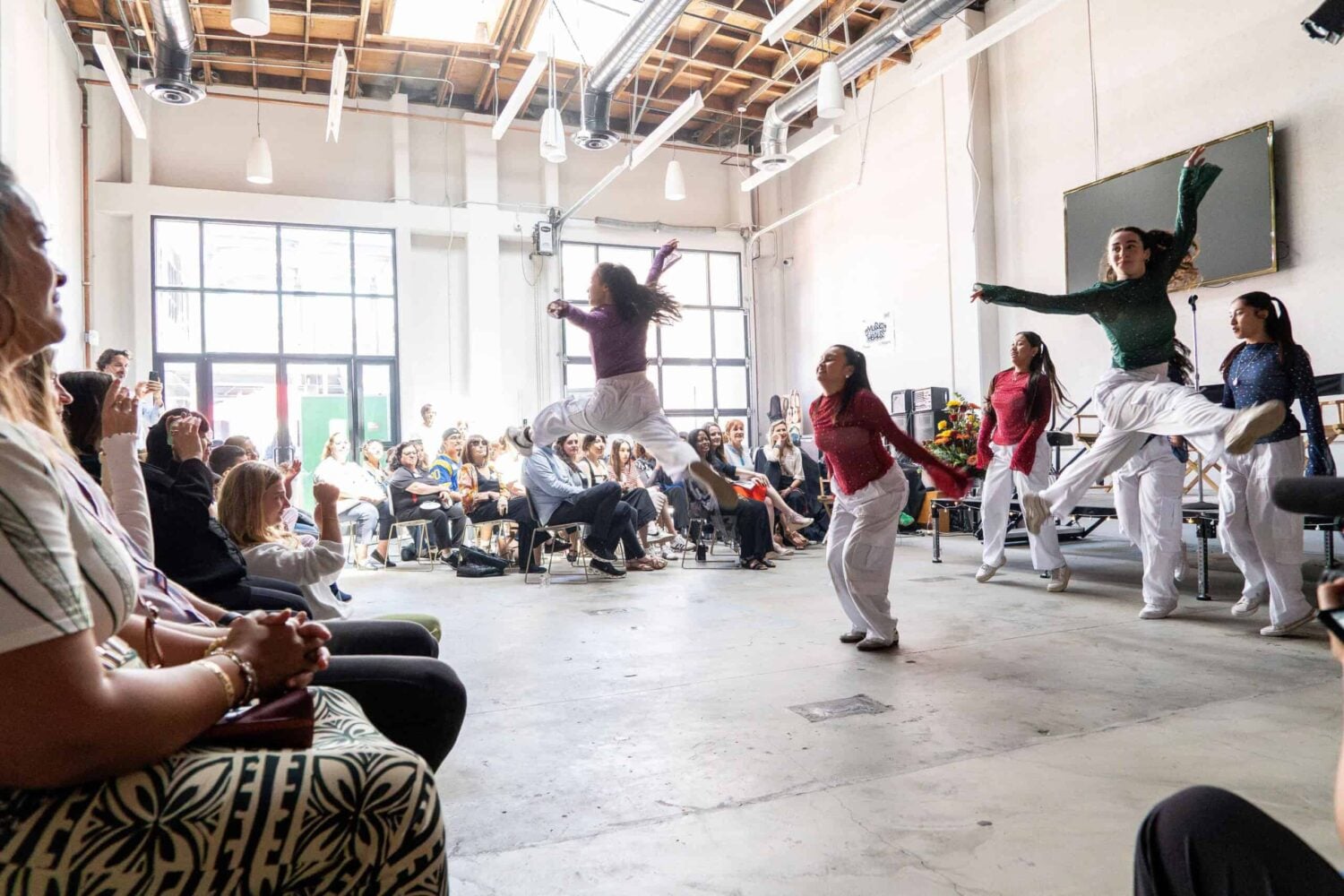

Dancers took to the stage during the event. Image: Justin L Stewart
The wider idea behind Students Rebuild is simple. Young people learn about a global issue, create a piece of work in response, then submit it online. For every piece of art submitted, or every young person engaged, Creative Visions donates $5 to selected partner organisations, up to an annual cap of $1m.
According to Students Rebuild, young people taking part in Unique & United have unlocked the full $1m after 114,445 participants submitted or helped create 90,720 pieces of creative work.Children simply participating in the programme triggers the funding, giving students a clear way to see that their ideas and creative work can have an effect beyond the classroom.
“Kids come to the Students Rebuild website, and they form teams that are usually led by an educator or an adult,” says Sarah Fanslau, Creative Visions’ director of programme impact and evaluation. “And then they go out and do what we call creative expression, which is really just a form of art. But that can be visual art, it can be STEM, it could be performance and dance. It can be whatever they care about in relation to the arts, as an expression of their thoughts or ideas or work through what they’ve learned about that theme.”
Previous Students Rebuild challenges have seen young people make life-sized board games that teach immigration history, create interactive quilts that tell personal stories when touched, assemble an orchestra of 80 young people in Nairobi, Kenya, to celebrate unity after a fractured year, and host school-wide culture nights sharing recipes, stories and traditions.
For Creative Visions, the programme is not only about where the money goes, but what participation does for young people themselves. Fanslau says the team measures “creative agency or creative self-efficacy”, meaning the belief that art and creativity can help make a difference.
“We’re also measuring those civic or collective self-efficacy and social responsibility,” she says. “Do young people think they can make a difference in the world? Does this programme help them realise their own efficacy or agency in changing the things that are going on around them?”
The programme also looks at social awareness and global issue awareness, asking whether participants come to see that the issues affecting them may also be affecting young people elsewhere. For educators, that can be one of the strongest arguments for taking part: it gives students a way to connect personal experience with a wider world, without reducing complex problems to a textbook exercise.
“We’re really hoping young people are gaining some of those key 21st century skills that we all know folks need for the workplace, including things like collaboration and communication skills,” says Fanslau.
114,445 participants submitted or helped create 90,720 pieces of creative work
Each team has an online dashboard showing how much funding their participation has generated, how many young people have taken part and how many creative works have been submitted. Teachers can share that with families, schools and communities, making the impact visible at a time when arts education is often squeezed.
“The reality is that teachers know the importance of the arts. And so that is why teachers are really our primary audience. And we see such an interest in this programme from educators because of the reduction in time and money towards arts education.”
In that sense, Students Rebuild is making two arguments at once. One is that art can help fund meaningful work in the world. The other is that young people need to believe their voices, ideas and imagination have somewhere to go.
Main image: Justin L Stewart
Be part of the solution
At Positive News, we’re not chasing clicks or profits for media moguls – we’re here to serve you and have a positive social impact. We can’t do this unless enough people like you choose to support our journalism.
Give once from just £1, or join 1,800+ others who contribute an average of £3 or more per month. Together, we can build a healthier form of media – one that focuses on solutions, progress and possibilities, and empowers people to create positive change.
You must be logged in to post a comment Login