Connect with us
DAPA Banner

NewsBeat

how technology can help you to notice nature in new ways

Published

on

how technology can help you to notice nature in new ways

On a chilly yet beautifully clear evening last November, I sat on a video call with colleagues and happened to mention the live feed from the International Space Station – a real-time broadcast from onboard cameras as the station orbits earth.

Several people hadn’t heard of it, and so I dug out the link and sent it over. We then turned to Nasa’s spot the station smartphone app, which shows you the ageing satellite’s orbital track and provides a countdown to when you can next see it. Again, I found the link and shared it on the chat.

I suddenly realised the station was going to pass directly overhead – in just a few minutes. Video beamed from the station as it advanced over the Atlantic, crossed the terminator (the line that separates day from night), and hurtled towards the southwestern tip of the UK, where I live.

Running outside, I took my phone and the live feed with me. And as I looked up at the bright, impossibly fast-moving smudge traversing the sky above, the feed showed the station’s birdseye view – and perhaps the view of the astronauts aboard – looking down on me, too.

Advertisement

Just 25 years ago, this kind of experience would have been hard to imagine. Yet as our lives have become increasingly interwoven with technology, so too have our encounters with the world around us. And nowhere is this more true than when it comes to viewing the night sky.

Smartphone apps now help us to identify planets, catch views of satellite clusters (for better and worse), and plan how to view supermoons. These experiences could be crucial in helping to reconnect people with the night sky and preserve a darkness that is increasingly under threat.

Simulations that allow people to view the Earth from afar, via apps or computer games, could even recreate a fascinating phenomenon reported by astronauts: the overview effect. Recently referred to by the Artemis II crew, the overview effect is described as a “a profound reaction to viewing the Earth from outside its atmosphere”. It represents a powerful form of awe and wonder and digital tools might help us unlock similar feelings from Earth too.

On May 11 2024, residents marvelled at the aurora borealis (northern lights) across parts of the UK including in southern England where they are rarely seen. The sightings made headlines across Europe, an excitement that was made possible by digital technology and heightened by digital shares and updates.

Advertisement

Public interest began with the National Oceanic and Atmospheric Administration’s Deep Space Climate satellite picking up particularly strong solar winds. This triggered an alert to users of Lancaster University’s Aurorawatch app. These stargazers started taking photos of the northern lights, which they promptly shared via social media.

The display happened close to midnight when most people in the UK were in bed – but still scrolling. And as real-time images of the aurora quickly circulated online, masses of people went outside to see it for themselves. But, as one witness reported, many people struggled to make out the display: “I could see nothing by eye, but it was there on the camera screen, and on my phone camera too.” And so images of the sky were captured through ultra-sensitive smartphones.

From webcams in bird boxes to big-budget nature documentaries, these digital connections have come to define modern interactions with the natural world. They are now interwoven into everyday routines.

Ten million people watched the first episode of BBC’s Planet Earth III in 2023 – the same number who visit the Peak District in a year. Nature-based “relaxation” videos have achieved viral status on YouTube, amassing hundreds of millions of views each. Spotify, Audible and Netflix have made nature content a core offering to their combined half a billion subscribers. Instagram is home to pictures of 346 million sunsets – and counting.

Advertisement

Online relationships

Being online can also have serious consequences for mental health, but when it comes to the natural world, digital connections could also provide exciting opportunities to bolster wellbeing. Growing research has shown that engaging with digital forms of nature can lead to improvements in emotion regulation, stress reduction and attention restoration – a pathway that is already being explored by apps hoping to boost wellbeing for people who spend large amounts of time online.

These digital encounters also have the potential to affect how people behave towards the environment.

Some academics are worried that these trends might be degrading our relationship with nature, but there is substantial nuance to be found here. The real value in these experiences may lie not in their ability to simulate natural worlds, but in their capacity to stimulate interest in nature.

Harnessing technology to “rewild” our digital lives could be especially relevant when it comes to an emerging generation of young people. Take for example, the perspectives of generation alpha, the first wave of which are entering their late teens, and who, after gen Z, represent the second cohort of digital natives – hyper-connected visual learners who have never known a world without smartphones, social media, instant access to information, and for some, artificial intelligence.

Advertisement

Perhaps, as some have suggested, modern and digital tools could even mean that young people’s opportunities to connect with nature are unprecedented.

And so, as with some other innovations, these technological connections might enhance human experience, understanding and capability.

It could be time to recognise and embrace digital tools as part of the dynamic, evolving, and exciting way we interact with the natural world – approaches that might bring us closer to nature at a time when its future hangs in the balance.

Advertisement

Source link

Continue Reading
Click to comment

You must be logged in to post a comment Login

Leave a Reply

NewsBeat

Trump signs order to speed review of psychedelics, including ibogaine

Published

on

Trump signs order to speed review of psychedelics, including ibogaine

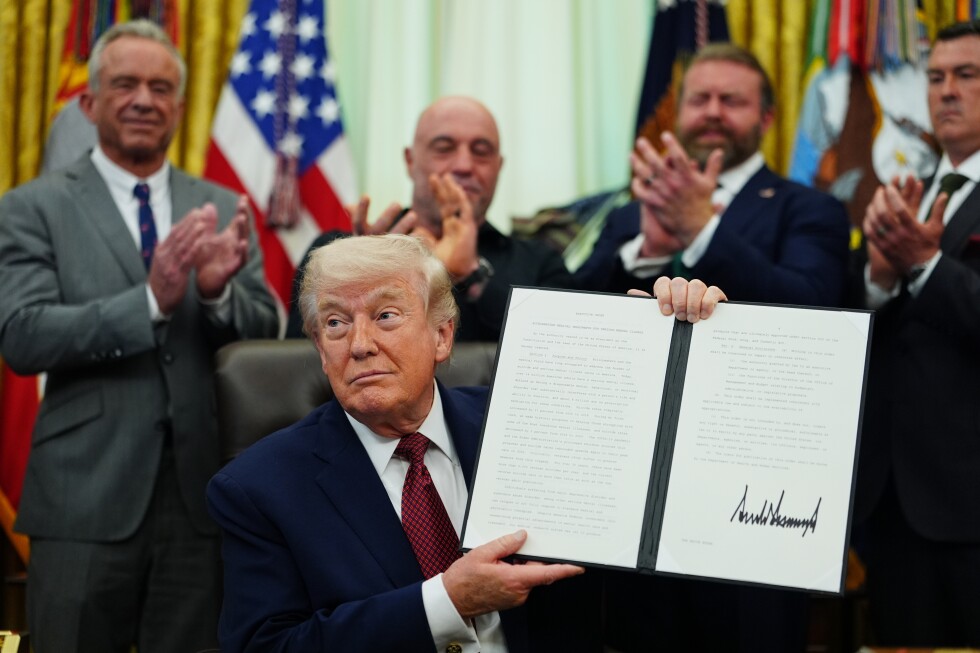
WASHINGTON (AP) — President Donald Trump on Saturday directed his administration to speed up reviews of certain psychedelic drugs, including ibogaine, which recently has been embraced by combat veterans and conservative lawmakers despite having serious safety risks.

Ibogaine and other psychedelics remain banned under the federal government’s most restrictive category for illegal, high-risk drugs. But the administration is taking steps to ease restrictions and spur research on using the drugs for medical purposes, including conditions like severe depression.

“Today’s order will ensure that people suffering from debilitating symptoms might finally have a chance to reclaim their lives and lead a happier life,” Trump said as he signed an executive order on the drugs. The Republican president said his directive will help “dramatically accelerate” access to potential treatments. “If these turn out to be as good as people are saying, it’s going to have a tremendous impact,” he said.

Veteran organizations and psychedelic advocates have long contended that ibogaine, which is made from a shrub native to West Africa, has great promise for hard-to-treat conditions such as post-traumatic stress disorder and opioid addiction.

Advertisement

Trump’s announcement follows pledges by Health Secretary Robert F. Kennedy Jr. and other administration officials to ease access to psychedelics for medical use, an issue that has won rare bipartisan support.

Joining Trump in the Oval Office were his top health officials, conservative podcaster Joe Rogan and Marcus Luttrell, the former Navy SEAL whose memoir about a deadly mission in Afghanistan was the basis of the film “Lone Survivor.” Rogan said he texted Trump information on ibogaine and the president responded: “Sounds great. Do you want FDA approval? Let’s do it.”

“You’re going to save a lot of lives through it,” Luttrell told Trump during the ceremony. “It absolutely changed my life for the better.”

The Food and Drug Administration next week will issue national priority vouchers for three psychedelics, which the agency’s commissioner, Marty Makary, said will allow certain drugs to be approved quickly “if they are in line with our national priorities.” The vouchers can cut review times from several months to a period of weeks. It is the first time the FDA has offered that fast-tracking to any psychedelics.

Advertisement

The FDA is also taking steps to clear the way for the first-ever human trials of ibogaine in the U.S.

Trump’s action surprised many longtime advocates and researchers in the psychedelic field, given that ibogaine is known to sometimes trigger potentially fatal heart problems. The National Institutes of Health briefly funded research on the drug in the 1990s, but discontinued the work due to ibogaine’s “cardiovascular toxicity.”

“It’s been incredibly difficult to study ibogaine in the U.S. because of its known cardiotoxicity,” said Frederick Barrett, director of the Johns Hopkins Center for Psychedelic and Consciousness Research. “If the executive order can pave the way for doing objective, scientific research with this compound, it would help us understand whether it is truly a better psychedelic therapy than others.”

No psychedelic has been approved in the United States, but a number of them are being studied in large trials for various mental health conditions, including psilocybin, MDMA and LSD. All those drugs remain illegal, classified as Schedule I substances alongside drugs such as heroin. Two states — Oregon and Colorado — have legalized psychedelic therapy with psilocybin.

Ibogaine was first used by members of the Bwiti religion in African nations like Gabon during their religious ceremonies.

In recent years, U.S. veterans have reported benefiting from the drug after traveling to clinics in Mexico that administer it.

Advertisement

Backing from veterans groups and former Texas Gov. Rick Perry led to a law last year providing $50 million for ibogaine research in that state. Perry, who co-founded a group called Americans for Ibogaine, recently appeared on Rogan’s podcast, making the case for reducing federal limits on the drug. It was his second time talking about ibogaine on the popular podcast in the past two years.

Trump’s order calls on the Department of Health and Human Services to direct at least $50 million to states that have enacted or are developing programs to advance psychedelic drugs for serious mental illness. It’s described as a federal-state partnership to provide funding, technical assistance and data sharing.

Ibogaine is known to cause irregular heart rhythms and has been linked to more than 30 deaths in the medical literature, according to the Multidisciplinary Association for Psychedelic Studies, a nonprofit that conducted some early studies in patients outside the U.S.

The group’s co-executive director, Ismail Lourido Ali, said Trump’s order might encourage other states to follow the Texas model.

Advertisement

“The stigma around Schedule I drugs is significant,” Ali said. “It feels like this would give pretty substantial cover for Republican governors and legislatures to step into the ring in terms of funding research programs at their universities.”

Owners of ibogaine clinics said the impact of the order will not be immediate.

“There will be no insurance coverage, it will still be considered unapproved and non-covered care,” said Tom Feegel of Beond Ibogaine, which operates a clinic in Cancun, Mexico. “But what it does mean is that ibogaine shifts from being fringe and underground to being federally acknowledged.”

Feegel says his clinic treated 2,000 people with ibogaine last year for between $15,000 and $20,000 per person. The company also gave free treatment to about 100 veterans.

Advertisement

Clinics that use the drug typically monitor patients’ heart readings and have emergency medical equipment on hand.

One of the only recent studies conducted by U.S. researchers found that veterans treated with ibogaine showed improvements in symptoms of traumatic brain injury, including PTSD, depression and anxiety. The Stanford University study was small — enrolling 30 veterans who received the drug in Mexico. It did not include a placebo group for comparison, an essential feature of rigorous medical research. Patients in the study received a combination of ibogaine mixed with magnesium intended to reduce heart risks.

___

The Associated Press Health and Science Department receives support from the Howard Hughes Medical Institute’s Department of Science Education and the Robert Wood Johnson Foundation. The AP is solely responsible for all content.

Advertisement

Source link

Advertisement
Continue Reading

NewsBeat

Wife of LA Clippers owner and billionaire Steve Ballmer steps in to save NPR with $80M

Published

on

Wife of LA Clippers owner and billionaire Steve Ballmer steps in to save NPR with $80M

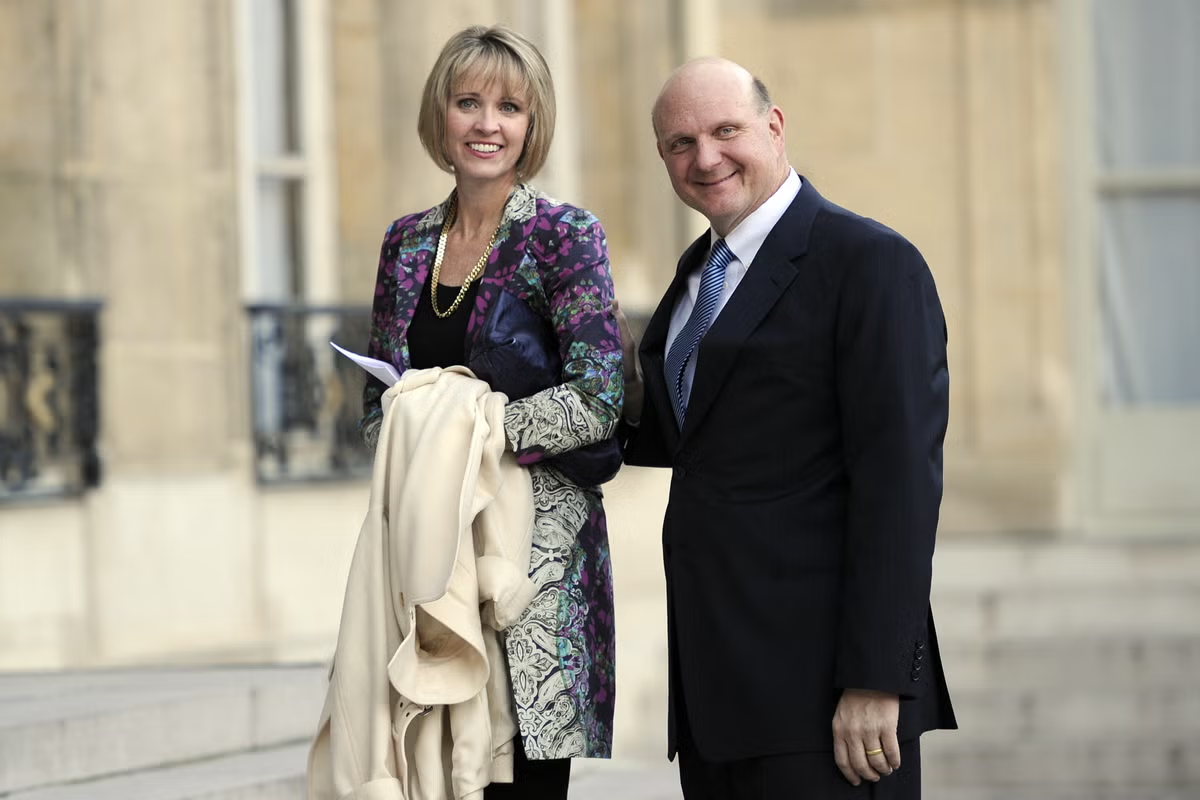
NPR received its largest-ever donation from a living donor this week when billionaire philanthropist Connie Ballmer gave $80 million to the media organization.

Ballmer — a former member of the NPR Foundation’s board — told the Wall Street Journal that she poured money into NPR because “we need fact-based journalism, and we need local journalism.”

She told the paper that she’s been a fan of the organization since her 20s and that she listens to it “when I walk, I listen in the car, I listen at home and at work.”

“I support NPR because an informed public is the bedrock of our society, and democracy requires strong, independent journalism,” Ballmer said in a statement on Wednesday. “My hope is that this commitment provides the stability and the spark NPR needs to innovate boldly and strengthen its national network.”

Advertisement
Discussing the donation, Connie Ballmer told the Wall Street Journal “we need fact-based journalism, and we need local journalism.”
Discussing the donation, Connie Ballmer told the Wall Street Journal “we need fact-based journalism, and we need local journalism.” (AFP/Getty)

Ballmer and her husband, LA Clippers owner and former Microsoft CEO Steve Ballmer, have donated more than $3 billion in recent years, according to an interview they gave in the Chronicle of Philanthropy.

Her donation comes at an important time for NPR. Last year, President Donald Trump signed an executive order ending federal funding for public TV and radio organizations.

Approximately 1 percent of NPR’s budget was funded through the Corporation for Public Broadcasting. However, the Corporation was responsible for up to half of the operating budgets of some smaller NPR member stations in rural areas, according to the broadcaster.

NPR pushed back and sued the Trump administration, arguing that the executive order broke federal law. The broadcaster earned a win in March after a judge ruled that the Trump administration could not use its power to slash funding for NPR.

Despite the court victory, Trump’s actions have left NPR to seek funding elsewhere.

Advertisement

“This is a tough time for independent journalism,” Katherine Maher, the CEO of NPR, told the Journal.

She told the paper that Ballmer’s gift would allow the company to become “more sustainable.”

Ballmer said that she understands the difficulties of running the network of some of the smaller networks from her time on NPR’s foundation board.

“Helping them modernize and take advantage of the digital age is a great role for philanthropic dollars and something I’m proud to support,” she told the Journal.

Advertisement

Ballmer wasn’t the only one dropping big money to keep NPR on the airwaves. The news organization also announced on Wednesday that it had received a $33 million donation from an anonymous donor.

In total, NPR received $113 million between the donations.

Maher said that the gifts would help the network and its member stations to prepare for the next 50 years, calling them “catalytic investments” in NPR’s future, according to the broadcaster.

Source link

Advertisement
Continue Reading

NewsBeat

‘Don’t start your car’ if you make crucial mistake at petrol station

Published

on

Wales Online

It can cause big problems and be very expensive

Surging fuel costs are top of mind for many drivers at the moment, but with online searches for “wrong fuel in car” increasing by 163% between January and March this year compared to the previous quarter, drivers could also be experiencing a costly mistake at the pumps. That’s according to experts at MoneySuperMarket.

Advertisement

Misfuelling is an expensive error that can cause serious engine damage if not caught immediately. Specialist fuel rescue services charge between £120 and £1,000 to drain and flush the fuel tank of the wrong fuel and without the right insurance, the cost falls on the driver.

Alicia Hempsted, car insurance expert at MoneySuperMarket, has explained what drivers should do the moment they realise they’ve put the wrong fuel in their car.

What to do if you put the wrong fuel in your car

Alice said the immediate thing to remember was not to start your car. After misfuelling, keep the engine off. If you’ve already started it, switch off the ignition immediately.

Move your vehicle to a safe place. Put the car in neutral and roll it away from other pumps so your breakdown provider can reach you safely.

Advertisement

Call your breakdown provider. It will have specialist equipment to drain and flush the tank. Don’t attempt to do this yourself.

Alicia said: “Misfuelling is a potentially expensive mistake that can catch drivers out all year around, although recently there has been an increase in online searches for information about what to do if you accidentally put the wrong fuel in your car.

“If it happens to you, it’s important to know how to respond, as misfuelling can seriously damage your car if not dealt with quickly. If possible, don’t start your car. Starting your engine after putting in the wrong fuel can increase repair costs by hundreds or even thousands of pounds.

“If you’ve already started it, switch off the ignition as soon as possible. Move your car to a safe place by putting into neutral and rolling the vehicle and call your breakdown provider or garage to drain and flush the tank.

Advertisement

“Misfuelling is not typically covered by car insurance, so it isn’t a mistake to take lightly. In most cases, you will need to add additional misfuelling insurance to your policy to include that protection, although some comprehensive policies may include misfuelling under accidental damage.

“Make sure you check your insurance cover to ensure you have the right protection in place should this happen to you.”

MoneySuperMarket said the Google search data used was correct as of April 2026.

Source link

Advertisement
Continue Reading

NewsBeat

Households with daffodils in their garden urged to do 10-second job in April

Published

on

Wales Online

If you want daffodils to come back year after year, daffodil care is key once they have finished flowering.

Daffodils are a reliable sign of spring and bring beautiful colour to gardens. What’s more, daffodil bulbs naturally deter squirrels and other rodents, making them an excellent option if you’ve previously had trouble with troublesome small animals treating your garden bulbs as a meal.

These bright flowers are incredibly straightforward to cultivate, naturalise effectively and return in increasing numbers each year, provided they receive proper care.

Advertisement

On his gardening TikTok account, @joesgarden, Joe revealed a “quick tip to keep daffodils flowering year after year”. All that’s required is some clean, sharp secateurs and 10 seconds of your time.

One challenge gardeners might encounter when growing daffodils that flowered the previous year is that they can emerge “blind” – producing foliage but no blooms.

Content cannot be displayed without consent

Prevent this by deadheading the faded flowers and allowing the foliage to die back naturally without tying it into a knot. This will usually need doing from mid to late April.

Joe explained the process. He said, “Once the heads die back, locate the seed pod, grab your snippers and just cut.

Advertisement

“Leave the foliage to die back to return the energy straight back into the bulb.”

Ensure you avoid tying up daffodil leaves or trimming them back while they’re still green, as this could diminish flowering next year.

Keep your plants watered and fed if they’ve been in the pot or the ground for some time, as they will be lacking nutrients.

Additionally, if the bulbs have been in the ground for several years, they may have become overcrowded. Should this be the case, dig them up and replant the larger, healthier bulbs, as smaller ones could take several years to reach flowering size.

Advertisement

Since daffodils finish flowering by mid-spring, they ought to be planted together with plants that flourish during summer, such as dahlias, geraniums and peonies.

Source link

Advertisement
Continue Reading

NewsBeat

Glenn Hoddle makes Liam Rosenior sack claim after Chelsea defeat to Man Utd | Football

Published

on

Glenn Hoddle makes Liam Rosenior sack claim after Chelsea defeat to Man Utd | Football
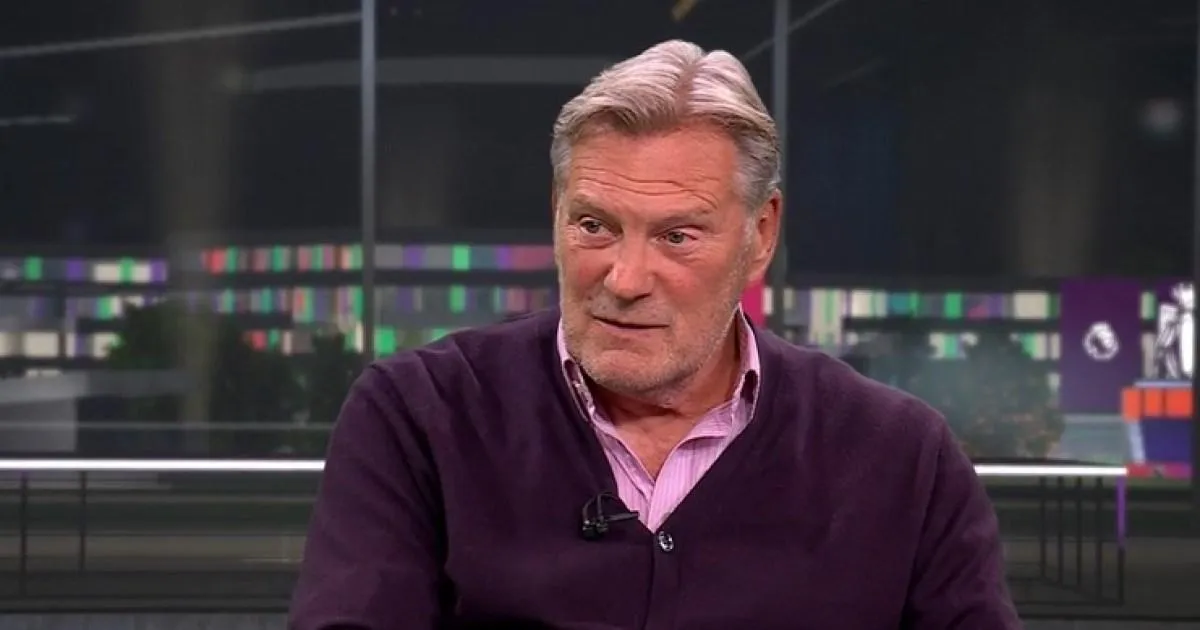
Glenn Hoddle feels Chelsea will stick with Liam Rosenior (Premier League)

Glenn Hoddle believes Chelsea will not sack Liam Rosenior and will keep him as manager for the start of next season.

Chelsea suffered their fourth Premier League defeat in a row on Saturday night as Manchester United sealed a 1-0 win at Stamford Bridge.

The result leaves Chelsea sixth in the Premier League and they will be seven points behind fifth-placed Liverpool if they beat Everton in the Merseyside derby on Sunday.

Rosenior replaced Enzo Maresca as manager in January but the 41-year-old is already facing calls from some Chelsea supporters to be sacked.

Advertisement

Hoddle, however, feels his former club will keep their faith in Rosenior over the summer but warns a change will be made if a poor start is made next season.

‘They’re in a really sticky position,’ Hoddle told Premier League Productions.

‘For me, for Liam to stay in that job now until the end of the season, I think they’ll give him that opportunity but he’s got to finish on a high note, he’s got to get some wins under his belt.

EDITORIAL USE ONLY No use with unauthorised audio, video, data, fixture lists, club/league logos or
Liam Rosenior is under pressure as Chelsea have suffered four Premier League defeats in a row (Shutterstock)

‘The reason they brought him in is he’s a young manager, he’s part of their project, if you like, if you want to use that word, and I think they’ll give him that chance.

‘But he’s going to have to start winning, even if he doesn’t get in the Champions League, they’re in the FA Cup semi-final so they could actually win a trophy still.

Advertisement

‘I think they’ll stay with him and give him a pre-season and I think they’ll start with him but he’s going to have to start next season in a positive way, if not, I think then he could be on a bit of dodgy ground.’

Speaking after Chelsea’s defeat, Rosenior admitted he was unsure about the consequences of missing out on Champions League football for next season.

‘The honest answer is I don’t know. The honest answer is we’re still fighting and we’ll address that situation at the end of the season, whatever the situation is,’ Rosenior said.

‘In terms of the game tonight, it’s a really, really difficult one to take because people don’t want to hear me say how well we played and didn’t win the game. We’re here to win.

Advertisement

‘There are many elements actually that the process of underlying things that we’re looking into that suggest that if you stay in this process we will win games of football. It doesn’t look like it at the moment but the reality is Manchester United have come in, had one shot, won a goal against 10 men and won a game 1-0 which should be pretty much impossible.’

For more stories like this, check our sport page.

Follow Metro Sport for the latest news on
FacebookTwitter and Instagram
.

Advertisement

Advertisement

Source link

Continue Reading

NewsBeat

Mystery of family missing since 1958 finally solved

Published

on

Mystery of family missing since 1958 finally solved

Police have identified the remains of a family that crashed into an Oregon river in 1958, putting an end to a decades-long hunt for answers about their disappearance.

The Oregon State Medical Examiner’s Office identified Kenneth Martin based on DNA recovered from remains found in the Columbia River, while other evidence found at the site helped identify his wife Barbara and their daughter Barbie.

“The Hood River County Sheriff’s Office has concluded its investigation, having found no evidence of a crime,” police wrote in a statement on Thursday.

The Martin family disappeared in December of 1958 during a visit to the Columbia River Gorge to collect greenery for Christmas decorations, police said.

Advertisement

The bodies of two of their children, Virginia, 13, and Susan, 11, were found downstream months later, but the other three family members on the trip remained missing.

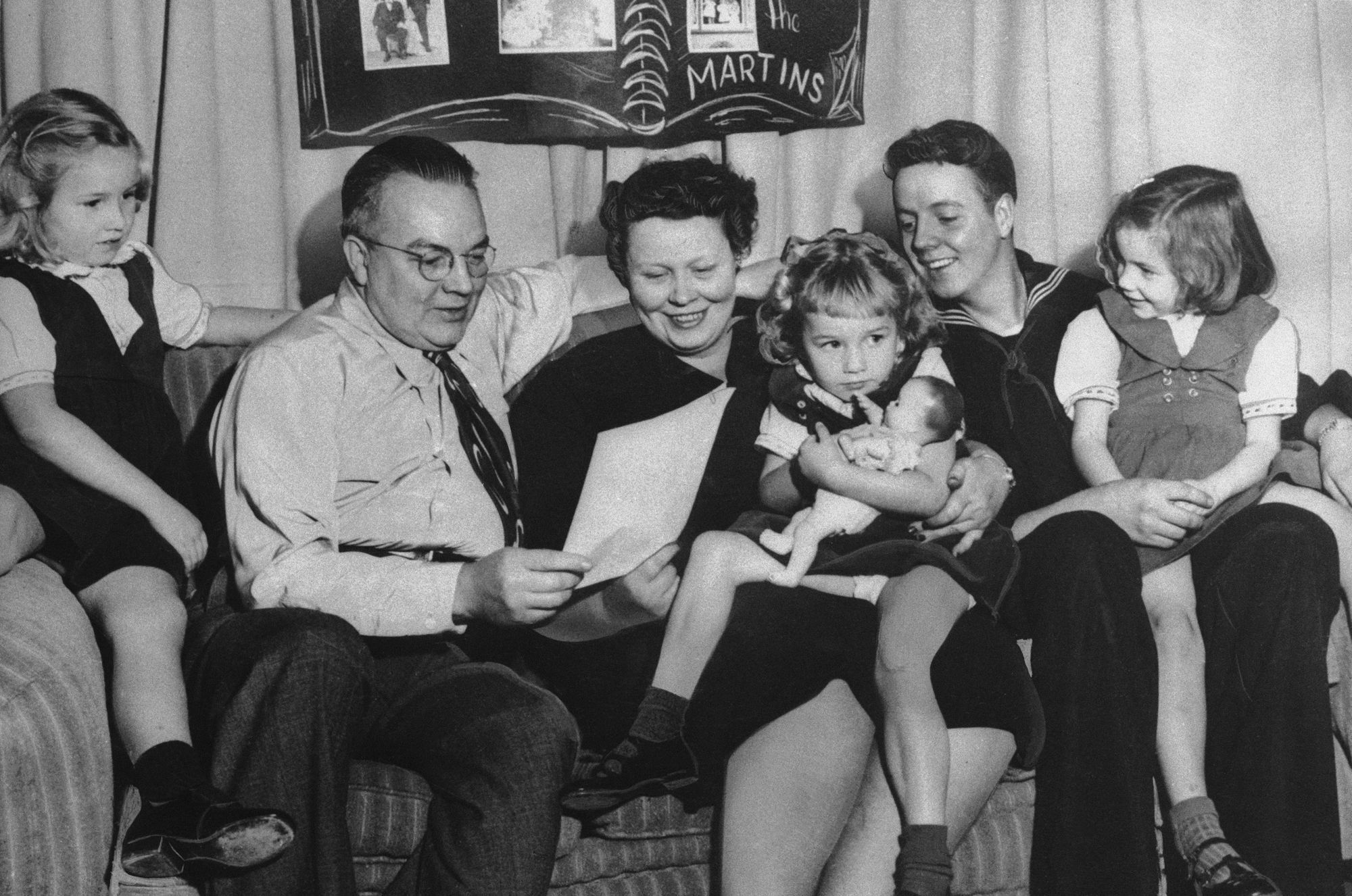
This Christmas photo provided by the Ken Martin family shows, from left, Barbara, Ken, Barbara, Sue, Donald and Virginia in December 1952 in Portland, Oregon.
This Christmas photo provided by the Ken Martin family shows, from left, Barbara, Ken, Barbara, Sue, Donald and Virginia in December 1952 in Portland, Oregon. (AP)

The case set off “one of the greatest manhunts in Oregon’s history,” the Associated Press reported the following year. A $1,000 reward was offered to aid in the search, which became a national news story.

Still, decades passed, and relatives were no closer to finding out what happened to the Martins.

“A gas receipt in Cascade Locks, and then there was a witness that said that they had seen them at a cafe in Hood River,” sheriff’s deputy Pete Hughes told Oregon Public Broadcasting of the status of the formerly cold case. “But there’s never been any real closure or anything.”

In 2024, diver Archer Mayo, who had taken an interest in the disappearance, found the family’s Ford station wagon submerged in 50 feet of water in a part of the river known as “the pit.”

Advertisement

“There was a big collapse in front of me, and it was completely dark, and I couldn’t see anything,” Mayo told KATU. “And when the water cleared slightly, I saw a tire, and I knew, you know, within a few minutes, I was able to figure out there was a balloon whitewall tire and that this matched it.”

That summer, he found human remains nearby.

“I really just ended up solving it with clues and theories, hypotheses, and eventually found them 10 feet under the bottom of the river, 50 feet from the surface,” he added in his interview with KATU. “So really, I came up with a theory of where they would be and started digging until I found them.”

An amateur diver found the family’s car and remains in 2024 buried in the Columbia River
An amateur diver found the family’s car and remains in 2024 buried in the Columbia River (Getty)

The following March, police used a crane to remove parts of the buried car.

“Due to the extent to which the vehicle had been encased in sediment, only the frame and some of the attached components were able to be pulled from the water,” the sheriff’s office said in its statement. “Analysis of those items along with other items retrieved by the diver allowed investigators to conclude that this was in fact the Martin car.”

Advertisement

A DNA sample retrieved at the site was compared with living relatives of the Martins, allowing investigators to identify Kenneth Martin’s body. The other DNA recovered from the remains was too degraded to make a match, though investigators said the “totality of the circumstances in which the remains were recovered, and the anthropological assessment of the remains” made them confident that officials had positively ID-ed Martin’s wife and daughter.

In the river, investigators also found remnants of a shoe, plus a camera case with Kenneth Martin’s name and address on it, as well as camera film, according to Colby Lasyone of Othram, the DNA lab that assisted police in the investigation.

“Maybe there’ll be pictures published one day of what that is, because that’s a pretty cool piece to a mystery,” he told KOIN.

Source link

Advertisement
Continue Reading

NewsBeat

Ryanair names 1 common mistake the average customer always makes

Published

on

Daily Mirror

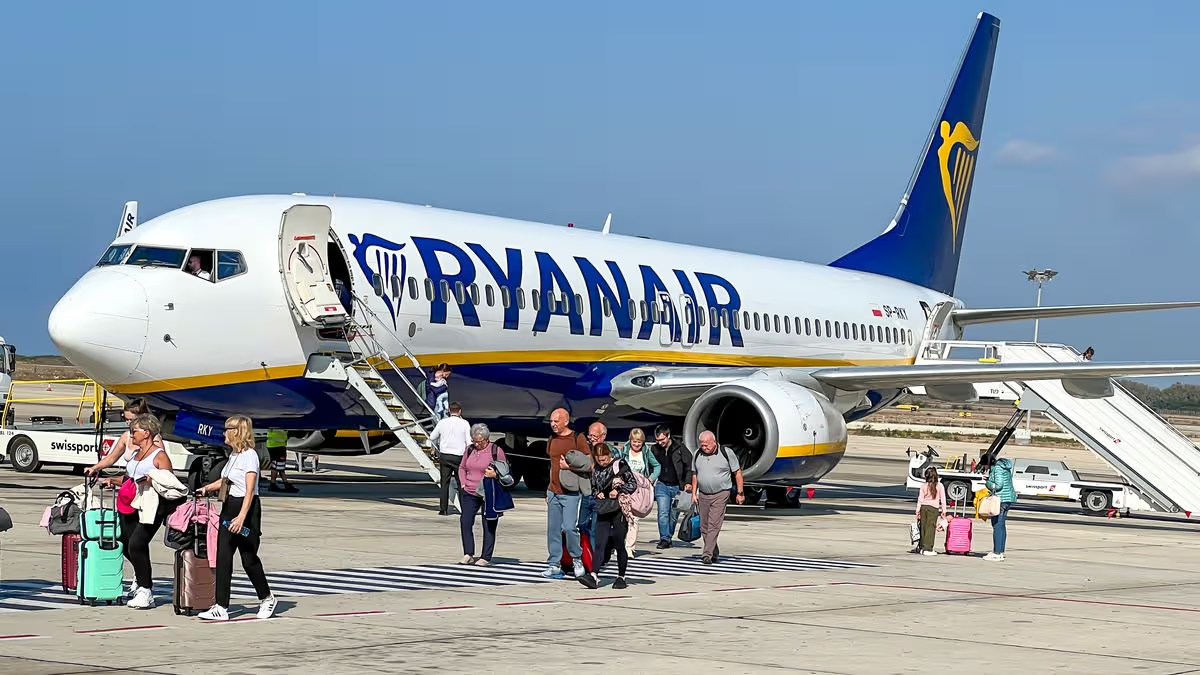
Ryanair was established in 1985 and has gone onto become one of the most popular airlines in the world, thanks to its budget-friendly flights. Now, the airline has shared the one mistake passengers always make

Ryanair has detailed the one mistake the average passenger continues to make and it’s caused quite a stir. The budget-friendly airline is famed for its reasonably priced flights, boldly declaring on its website that it offers “Europe’s lowest fares”.

Founded in 1985 by Irish aviation executive Christopher Ryan and Irish billionaire businessman and philanthropist Tony Ryan, the company was named after its founders. Today, it boasts a fleet of more than 600 planes.

Advertisement

It operates 3,500 short-haul flights per day and serves around 230 airports in more than 40 countries across Europe, as well as in Turkey, Jordan and Morocco.

Like many companies, Ryanair maintains a consistent presence on social media. In a recent video posted on TikTok, the airline humorously poked fun at a common travel blunder many people are guilty of making – packing suitcases which are too large.

All Ryanair fares “include one small personal bag (40cm x 30cm x 20cm) that must fit under the seat”, which may be a handbag or a laptop bag.

Ryanair’s baggage policy states: “Additional options include Priority boarding with a second 10kg cabin bag, checked bags of 10kg, 20kg (up to 3), or 23kg (1 allowed).

Advertisement

“Infants have no cabin allowance but may bring a 5kg baby bag and two baby equipment items free.”

But it seems some passengers fail to check the size of their bags. In the TikTok clip, an animated image of a man holding a comically oversized bag could be seen moving across the screen towards the check-in desk.

Text written over the top of the footage branded the man an “average Ryanair passenger”. In a voiceover, he is told: “Your bag is too big, sir.”

Content cannot be displayed without consent

The voiceover then detailed a string of excuses and responses Ryanair staff often hear, including “it fit at home”, “this is unfair”, “how could you do this?” and “I’m never flying Ryanair again”.

Advertisement

The lighthearted video has, so far, gained 245,900 views and hundreds of comments. One TikTok user said: “It is like their first time every time! Never ceases to amaze me. It is not as if you don’t get enough reminders either as to what you have booked and paid for…”

Another jokingly asked: “What bag should I bring then?????????” A third shared: “My uncle does that.” To which, Ryanair replied: “He will be charged.”

But someone else quipped: “Does paying extra at the gate magically make the bag smaller/lighter?”

One person said: “At the gate they say that you can carry 2 bags a person though.” Another quipped: “I’ll just travel by unicorn instead.”

Advertisement

The low-cost Irish airline is headquartered in Swords, County Dublin, Ireland. Based on the annual number of international passengers carried, the fleet size and the number of flights, Ryanair is the largest airline in the world. It’s the second-largest airline worldwide based on market capitalisation after Delta Air Lines.

It boasts a fleet of 613 planes, including 26 leased aircraft.

Approximately 95% of aircrafts used by Ryanair are single-aisle Boeing 737s. The 737-8-200 was designed by Boeing specifically for Ryanair in order to help the company carry more people at a lower cost per passenger.

Source link

Advertisement
Continue Reading

NewsBeat

Was Harry and Meghan’s Australia trip a success?

Published

on

Was Harry and Meghan's Australia trip a success?

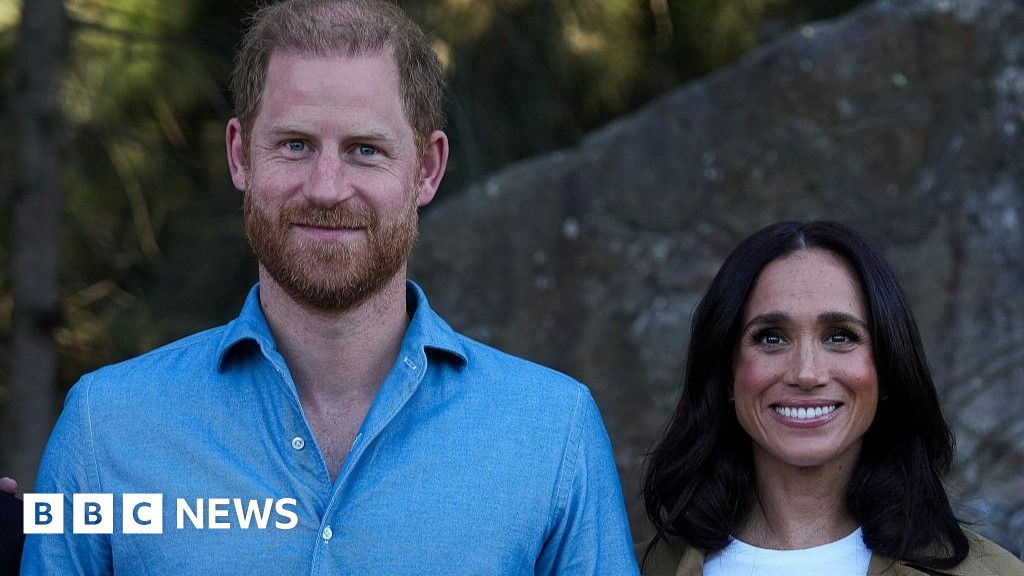
For the Sussexes, the only acknowledgement of the business side of the trip came at the bottom of a five-page pre-tour briefing. It said: “As with many visits of this nature, a small number of private engagements are included to support broader commercial, charitable, and community objectives.”

Source link

Continue Reading

NewsBeat

WWE WrestleMania 42: UK start time, live stream, confirmed match card and results tonight

Published

on

WWE WrestleMania 42: UK start time, live stream, confirmed match card and results today

WWE WrestleMania 42 continues today, hot on the heels of an unforgettable night of wrestling.

The first of a two-night extravaganza began with LA Knight and The Usos defeating Logan Paul, Austin Theory and IShowSpeed in a six-man tag team match and ended with Cody Rhodes successfully defending the Undisputed WWE championship against Randy Orton.

Furthermore, Liv Morgan and Becky Lynch captured gold, while Paige made a shocking return to WWE, replacing Nikki Bella to win the women’s tag team championships with Brie Bella.

In the other world title match, Jade Cargill faces the biggest challenge of her WWE career to date, defending the women’s championship against Rhea Ripley.

Advertisement

Source link

Advertisement
Continue Reading

NewsBeat

Is mouthwash bad for the heart? Here’s what the research actually says

Published

on

Is mouthwash bad for the heart? Here’s what the research actually says

Social media videos are claiming that mouthwash can raise risk of blood pressure – and potentially damage heart health.

According to some of these videos, this is caused by mouthwash wiping out “good” oral bacteria that are important for the cardiovascular system. While it’s a striking message, don’t throw your mouthwash away just yet. The reality is far more complex.

Our mouths contain a wide variety of bacteria. Together, these bacteria form a balanced and diverse microbiome which helps prevent the overgrowth of other bacteria linked to disease, supports normal metabolic functions and contributes to both good oral and overall health.

One of the important roles these oral bacteria have is converting the nitrate in our food (typically from sources such as leafy greens) into nitrite. When we swallow nitrite, the body turns it into nitric oxide. This happens via the nitrate-nitrite-nitric oxide pathway, also called the enterosalivary pathway. It’s one example of how bacteria contribute to keeping the body healthy.

Advertisement

Nitric oxide plays an essential part in regulating blood pressure and supporting brain function and muscle function.

But according to some online influencers, the reason mouthwash harms heart health is because it affects the “healthy” bacteria – the ones that produce nitric oxide.

Mouthwash and heart health link

Several small studies have actually found that giving people mouthwash can change the balance of bacteria in the mouth. This may reduce the bacteria’s ability to turn nitrate from vegetables into nitrite, which the body needs to make nitric oxide.

One study of 19 healthy volunteers found that the adults who used chlorhexidine mouthwash for seven days saw a small increase in blood pressure and reduced levels of nitrite.

Advertisement

An intervention study also reported that rinsing with 0.12% chlorhexidine gluconate mouthwash twice daily for one week significantly increased blood pressure in 27 healthy adults.

In another trial of 15 adults who already had high blood pressure, three days of chlorhexidine use further increased blood pressure.

The key detail that may be missed out of some of these online social media videos is the type of mouthwash used in these studies.

Many of the studies which have found a link between mouthwash use and blood pressure gave participants chlorhexidine. This is a strong, over-the-counter antiseptic mouthwash only recommended for short-term use in people with gum disease or after dental procedures where its antimicrobial effects are beneficial.

Advertisement
Mouthwash might disrupt important oral microbes.
sruilk/ Shutterstock

Chlorhexidine disrupts oral bacteria to help with infection control – including the bacteria that convert nitrate into nitrite. This makes it an ideal mouthwash to use for researchers wanting to study the nitrate-nitrite-nitric oxide pathway. However, it also means the findings may not reflect what happens with milder, everyday mouthwashes.

A trial with 12 healthy adults investigated the effect of three different mouthwashes (and gargling water, which acted as a control) on oral bacteria.

After drinking a nitrate-rich juice, researchers measured how much nitrate was converted to nitrite by oral bacteria. Water and the mild mouthwash (which didn’t contain harsh ingredients such as chlorhexidine) caused a typical response, where nitrate was converted into nitrite.

But the cetylpyridinium chloride mouthwash (which also has strong, anti-bacterial effects) partially blocked the conversion of nitrate to nitrite. The strongest chlorhexidine mouthwash almost completely stopped this process. This is consistent with their stronger antibacterial effects. The stronger types of mouthwash were also linked to higher systolic blood pressure.

Advertisement

Alcohol (ethanol) is another common ingredient in many mouthwashes, although formulations usually also include other active ingredients – such as essential oils. This makes it difficult to isolate the specific effects of alcohol.

As an antimicrobial, alcohol may influence the oral microbiome. Some studies have even suggested a possible association between mouthwashes containing alcohol and increased oral cancer risk. However, there are currently no studies that have specifically examined the effects of ethanol-only mouth rinses on the oral microbiome or cardiovascular health.

Overall, the body of evidence suggests that a mild, over-the-counter mouthwash, like the kind most people buy at stores, may be less likely to significantly interfere with nitrate-to-nitrite conversion or affect blood pressure.

In a long-term study of 354 adults, better routine oral hygiene, such as brushing and flossing, was linked to a lower risk of cardiovascular death over nearly 19 years. Regular mouthwash use did not appear to have any influence on heart health outcomes. This was true for milder mouthwashes containing flouride and alcohol, as well as stronger, anti-bacterial mouthwashes such as chlorhexidine and cetylpyridinium chloride.

Advertisement

The type of mouthwash matters

Together, these studies suggest that some types of mouthwash (such as chlorhexidine) disrupt beneficial oral bacteria and the nitrate-nitrite-nitric oxide pathway when used long term. But more research needs to be done to truly understand the long-term effects of other types of mouthwash on cardiovascular health – including mild everyday mouthwash brands and those containing alcohol.

Mouthwash comes in different types for different purposes, so it’s important to check the active ingredient on the back of the packaging. Alcohol-free and milder mouthwashes appear to have less effect on the heart-healthy bacteria than stronger types.

However, be aware to check the ingredients as even alcohol-free options can contain antibacterial agents such as cetylpyridinium chloride. As such, it’s best to choose one that fits your needs and use it in moderation. Strong mouthwashes containing chlorhexidine are best reserved for helping gum disease or oral infections.

It’s also worth noting that oral health and untreated infections can also contribute to heart disease more broadly. For example, a systematic review of 82 studies concluded that chronic oral disease and tooth loss was associated with risk of heart problems. This is why maintaining a healthy balance of mouth bacteria matters beyond your teeth.

Advertisement

Take care of your oral and overall health by keeping up with brushing, flossing, visiting your dentist and choosing a mouthwash that works for you.

Source link

Advertisement
Continue Reading

Trending

Copyright © 2025