Connect with us
DAPA Banner

NewsBeat

How the Great Strike tore through Durham like a tornado

Published

on

How the Great Strike tore through Durham like a tornado

“EVERY second shop in Newgate Street, the main street in Bishop Auckland, shuttered up and the shopkeeper ruined,” wrote the town’s prospective MP Hugh Dalton in his diary 100 years ago.

This was not the result of an out-of-town shopping centre. This was because of the General Strike which broke out a century ago this weekend and brought Britain to a standstill.

READ MORE: PICKETS IN PRIESTGATE AND FURY IN FERRYHILL: DAY-BY-DAY HOW THE GREAT STRIKE UNFOLDED IN THE NORTH-EAST

In Bishop Auckland, Dalton, leading member of the Labour Party, found “white-faced women who starved themselves to feed their children” and “men sitting silent in clubs too poor to buy either a drink or a smoke”.

Advertisement

Later, in December 1926, he made a single entry: “Miners hopelessly defeated”.

Digging for coal at Murton during the 1926 strike

Coal lay at the start and finish of the General Strike.

More than one million miners made coal the largest industry in Britain, and in 357 towns and villages of County Durham, it shaped the social geography.

Coal mining was the dirtiest, most dangerous (more than a thousand deaths annually) and dehumanising occupation in the country (80 per cent of coal was hewn by hand-pick). It gave rise to class conflict and the most appalling industrial relations.

Advertisement

A County Durham soup kitchen during the 1926 strike.

But after the First World War, there was a falling demand for coal, and the strike originated in an attempt by mine-owners to pass the problems of a declining industry down to their workers. Rather than amalgamate struggling pits, the owners tried to cut wages and increase hours.

The situation was aggravated by Chancellor Winston Churchill restoring Britain’s currency to the Gold Standard in 1925 in an attempt to regain the country’s financial prestige. This meant Britain’s currency was over-valued at a time when other countries were devaluing – therefore, cheap foreign coal came into Britain while British coal for export became 10 per cent dearer – and Durham coal was an exported commodity.

Miners resisted the owners’ changes – “not a penny off the pay, not a second on the day” – and appealed to the Trades Union Congress, which represented eight million workers, for support.

When lengthy negotiations failed as miners refused to accept inferior terms, they were “locked out” of their collieries on April 30. They reacted by going on strike on May 1.

Advertisement

Miner solidarity was total and was almost equalled by the 1.75 million workers called out by the TUC in support.

Yet on May 12, the strike – a “nine days wonder” – was over as the TUC capitulated.

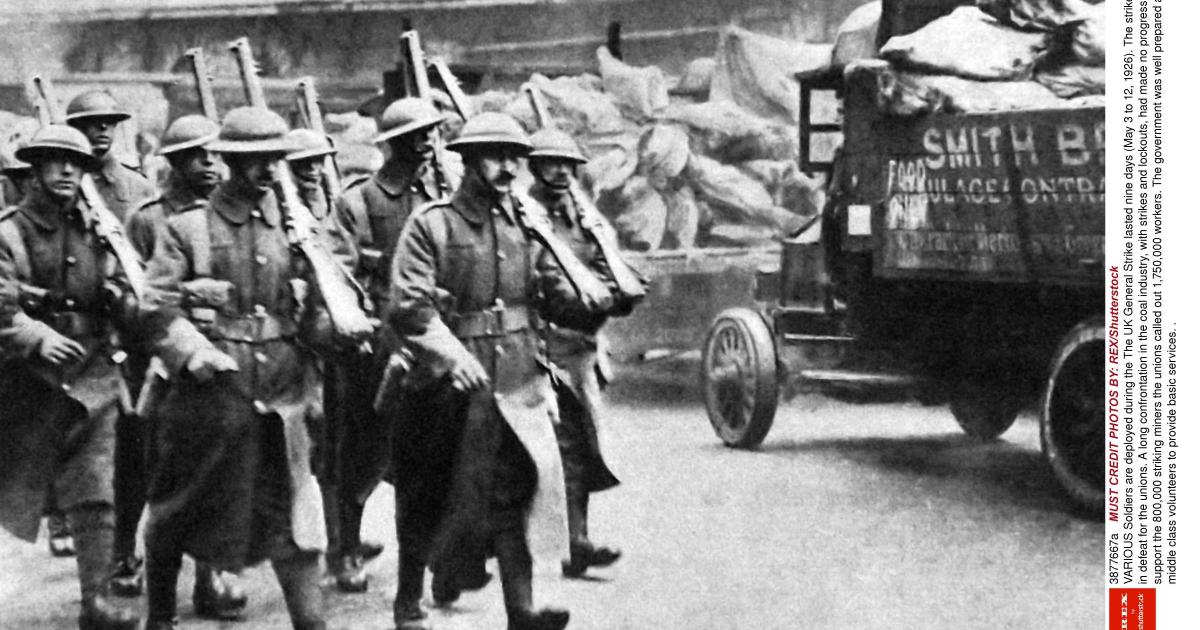
The troops are called in to deal with the strikers. Photo by Universal History Archive/REX/Shutterstock The troops are called in to deal with the strikers. Photo by Universal History Archive/REX/Shutterstock

Most miners continued to strike for six months until starvation and isolation – Dalton’s diary highlighting the appalling conditions on the ground in the coalfield – forced them to accept the owners’ harsh terms, and the lock-out ended.

Responsibility for this dire state of affairs can be shared between the four participants.

Advertisement

The TUC was anxious to protect its members’ wages but its leaders were divided and timid. They hoped not to paralyse the country but to pressure the government into forcing concessions from the owners. Afraid of “reds”, moderates like Ernest Bevin sought a Trumpian “exit ramp” from early days.

Righting a bus that was turned over in Glasgow by strikersRighting a bus that was turned over in Glasgow by strikers

The men’s leaders, like the Miners’ Federation of Great Britain (MFGB) secretary and gifted orator Arthur Cook, trusted neither the TUC nor a Conservative government. He stubbornly held to the rhetorical “not a penny off the pay, not a second on the day” long after May 12, until union funds of £4m were exhausted.

Colliery owners, at a time of right-wing government, adopted an intransigent stance. They remained deaf to calls for colliery improvement and felt they only had to wait the strike out. Even Tory hawk Lord Birkenhead called them the “stupidest men in England” and Prime Minister Stanley Baldwin found them “stupid and discourteous”.

During the 1926 Great Strike, unemployed miners formed fashionable jazz bands to wile away the hours. This is the No Place Nobblers, from near StanleyDuring the 1926 Great Strike, unemployed miners formed fashionable jazz bands to wile away the hours. This is the No Place Nobblers, from near Stanley

Baldwin shrewdly grasped that by trying to coerce him, the TUC had converted an industrial dispute into a political one. He was thus able to portray himself as a “man of peace” and to brand the strike as a threat to the constitution.

Advertisement

By contrast, Churchill denounced striking workers as “the enemy” trying to “hold up the nation”, words that could have been a rehearsal for the way the 1984 miners’ strike was presented by another Conservative government.

History suggests that, against these forces, the strike was doomed from the beginning.

Planning by the TUC was eleventh hour, improvised and fragmented. There were more than 500 Councils of Action acting virtually autonomously, such as the proactive and radical centre of Chopwell (“Little Moscow”), in Gateshead.

FIGHTING FOR COAL: Striking miners digging for coal at South Hetton during the 1926 strike

By contrast, government planning was timely and comprehensive. Coal and food were stockpiled and an emergency structure divided Britain into 10 districts. Each was under a Civil Commissioner empowered to recruit half-a-million (chiefly middle class) “patriotic volunteers” and to use the armed forces to ensure that food was smoothly delivered.

Advertisement

Warships also acted as an intimidating presence by turning their guns towards ports.

Leadership was exercised effectively by Baldwin and based on a clear strategy of protecting parliamentary democracy, while the supine TUC shrank from turning off the lights and fires and bringing industry to a halt.

Local leaders were more impressive. In Chopwell, Will Lawther – later the Labour MP for Barnard Castle – led the blocking of roads from Newcastle to Consett in order to undermine “volunteer” action, and he was imprisoned after the police baton-charged his supporters outside the Gateshead court.

The Flying Scotsman derailed near Cramlington when strikers removed a rail from the East Coast Main LineThe Flying Scotsman derailed near Cramlington when strikers removed a rail from the East Coast Main Line

In propaganda terms, Churchill orchestrated the government case in a nationally circulated newspaper called “The British Gazette”.

Advertisement

By contrast, the TUC deprived itself of favourable coverage by calling out the printers to strike! Their “British Worker” newspaper was hand-printed and circulation in Durham was limited to 16,000. In Blaydon, workers produced a publication called “The Northern Light” which was cyclostyled on equipment which was moved from house to house to avoid arrest.

The technically independent BBC focused on the political issue too and even blocked a broadcast of the Archbishop of Canterbury’s peace initiative. Its chairman was Darlington coal lord Jack Pease, Baron Gainford.

Road transport was at the centre of most of the trouble, but in general food and coal supplies were maintained. On Newcastle quayside, a submarine and two destroyers were moored beside a food-ship and convoys to Consett had police escorts.

It cost the United Bus Company £600 to repair damage to vehicles in Bishop Auckland.

Advertisement

Volunteers numbering 25,000, including university students, were available in the North East to drive private cars and lorries, and a further 12,000 acted as special constables. Of a national figure of 1,760 arrests for disorder, 396 were in the North East District.

Thankfully, no one was killed in the UK.

In the last analysis, the power of the state prevailed. The TUC had no stomach for the fight and the government spent £433m on winning it.

In working class Durham, there was little for strikers to do as support was solid and blacklegs practically unknown.

Advertisement

It was a hot summer and men at first enjoyed the natural warmth and light, and relief from toil.

But some families were turned out of their tied housing by the mine owners, and by July, with no benefits system for able men, food was running short. Perhaps in mining villages, some men could hunt and fish or “acquire” vegetables, but in towns there was more scavenging, notably of coal from heaps and railway lines, but also men had the possibility of casual work.

There was no paid work available for women and they can be seen to have been the real victims of the strike.

By November, only five per cent of Durham miners had returned to work, but by the end of that month, the privations their families and communities were suffering, forced the majority to accept severe, locally-dictated terms.

Advertisement

Nationally, the triumph of the owners meant there was no reorganisation and so nationalisation, universally popular with miners, did not come about until 1947.

In 1927, Baldwin introduced an Act of Parliament that outlawed sympathetic strikes. This, though, was seen by some as unnecessarily vindicative and contributed to his ousting in 1929, although it was not repealed until 1946.

The miners remained stoical and stubborn but recognised that a better future lay in supporting Labour politics rather than in industrial action. They were rewarded as early as 1929 with the formation of the second Labour government, with Will Lawther defeating the sitting Conservative MP Cuthbert Headlam in Barnard Castle.

Some miners and their supporters were victimized in 1926 but the strike was also a warning to employers that conciliation and collective bargaining were less risky than confrontation. And with non-militant men like Bevin leading the unions away from direct action, the result was relative industrial peace until the 1970s.

Advertisement

Sadly, 60 years after the General Strike, the lessons of under-preparation and taking on a strong government were not learned by a future miners’ leader who shared a first name with his role model Arthur Cook.

Glynn Wales at the Tommy statue in Seaham

  • Glynn Wales, of Bishop Auckland, began his career as a history teacher in 1969 at Ferryhill Grammar School, and he rose to become head of Ferryhill Comprehensive until he retired in 1997 to join Durham university and train the next generation of history teachers

Source link

Continue Reading
Click to comment

You must be logged in to post a comment Login

Leave a Reply

NewsBeat

World Snooker Championship 2026: Wu Yize in control of Crucible final against Shaun Murphy

Published

on

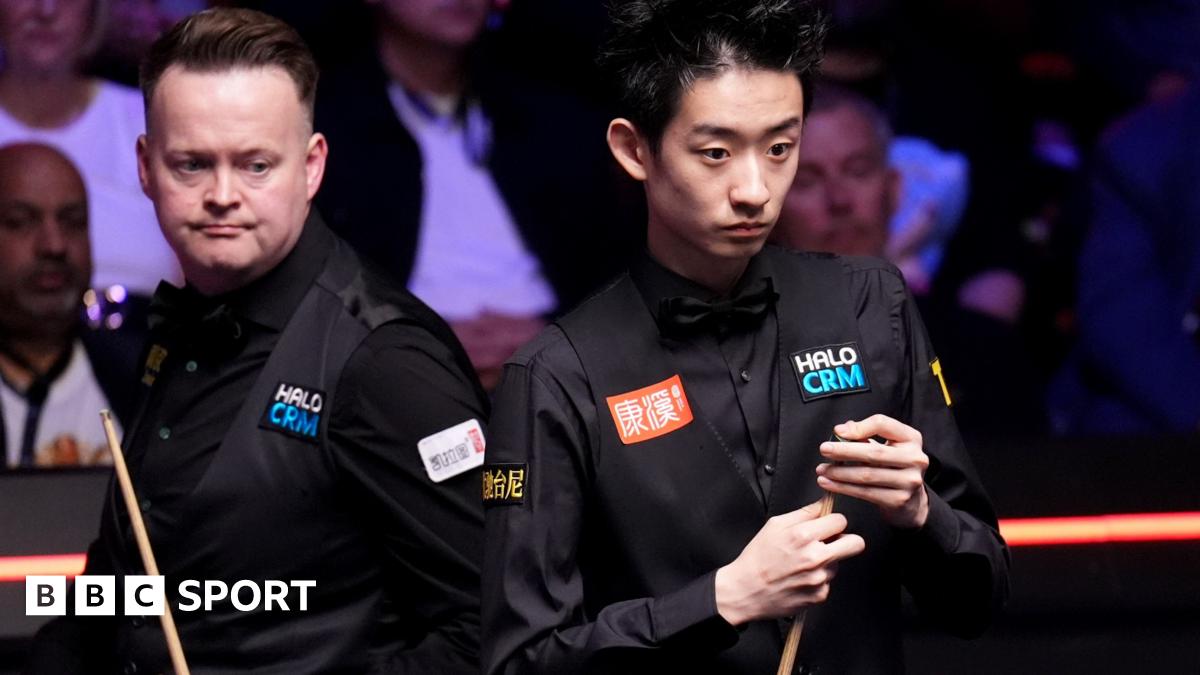
Shaun Murphy & Wu Yize pose with the trophy

Wu made a scintillating start to the evening, having resumed at 4-4 after an afternoon session that was briefly interrupted by a female spectator jumping over the front-row barrier before referee Rob Spencer and security intervened to remove her.

Breaks of 82 and 103 gave him a two-frame advantage and while Murphy, who had earlier recovered from 3-0 down, hit back with a 72 it appeared as though he was struggling to stem the flow of his opponent.

Murphy, 43, who is aiming to set a new record for the longest gap between first and second titles, openly admitted that Wu had blasted him off the table at the Masters in January – albeit in a best-of-11 contest.

And having never won a match on his two visits to the Crucible prior to this year, Wu has so far has answered every question posed of him in the longer format.

Advertisement

Source link

Continue Reading

NewsBeat

Drawing linked to Mary Anning found at Yorkshire Museum

Published

on

Drawing linked to Mary Anning found at Yorkshire Museum

New research has revealed a fresh connection to Mary Anning, the renowned 18th-century palaeontologist, through a drawing held in the archives of the Yorkshire Museum.

The unpublished illustration was uncovered during a study focused on Lyme Regis, Mary Anning, and the drawings and letters of Elizabeth Philpot.

The research team, led by Tom Sharpe, Hugh Torrens, and Dr Sarah King, traced the origins of the drawing to 1833, when Yorkshire woman Anne Wickham sent it to the museum’s keeper, John Phillips, along with a letter.

Dr King, curator of natural sciences at York Museums Trust, said: “The Yorkshire Museum has held Wickham’s drawing since 1833, but it has been unknown and unpublished for almost two centuries.

Advertisement

Anne Wickham’s Drawing of an Ichthyosaur Skull, 1833 (Image: York Museums Trust)

“Diligent research efforts have enabled us to track down the drawing and accompanying letter, which reveals more about the network of women interested in and writing about palaeontology in the eighteenth century.”

Wickham created the drawing using fossilised sepia ink, made from the ink sacs of fossilised cephalopods.

Her letter gives, for the first time, the recipe for reconstituting fossilised sepia for use as an ink, providing valuable insight into the other published drawings from Philpot’s collection.

The letter was found in the York Philosophical Society’s collection in the University of York’s Borthwick Archive.

Advertisement

Drawings in fossilised sepia ink have long been studied for their connection to Lyme Regis and subsequently Mary Anning.

The drawing and letter from Yorkshire confirm existing evidence about how this ink was obtained and provide new insight into the production of the sepia ink drawings.

Dr King said: “Research and exhibitions like this are a wonderful thing, celebrating women in science and recognising the importance of Anning to these practices of recording fossilised specimens.”

Mary Anning Rocks at the Yorkshire Museum (Image: Anthony Chappel Ross)

The Yorkshire Museum currently has an exhibition dedicated to Mary Anning and her pioneering efforts.

Advertisement

Tom Sharpe, a Mary Anning expert and a key figure in the research, added: “Working with different partners and institutions is always so exciting and rewarding, especially when a collective effort reveals something fascinating.

“Having worked with the Yorkshire Museum in the past on the Mary Anning Rocks! exhibition, it was a delight to discover more links to her and her livelihood within the Yorkshire Museum’s collection.

“Tracing the letter to the Borthwick Archives was also a special moment during the research process.

“The power of connections, museum archives and scientific networks has enabled this to come to light and solidify what we already know about the other sepia drawings and reveal more about the breadth of Anning’s influence on palaeontology.”

Advertisement

The full research paper is now available on the Yorkshire Museum’s website.

Source link

Advertisement
Continue Reading

NewsBeat

Three dead and British national in intensive care after virus outbreak on Atlantic cruise ship

Published

on

Three dead and British national in intensive care after virus outbreak on Atlantic cruise ship

Three people have died and five others have been taken unwell after a suspected virus outbreak on a cruise ship sailing in the Atlantic Ocean.

One case of hantavirus has been confirmed, while one British national, aged 69, is in intensive care in Johannesburg, South Africa.

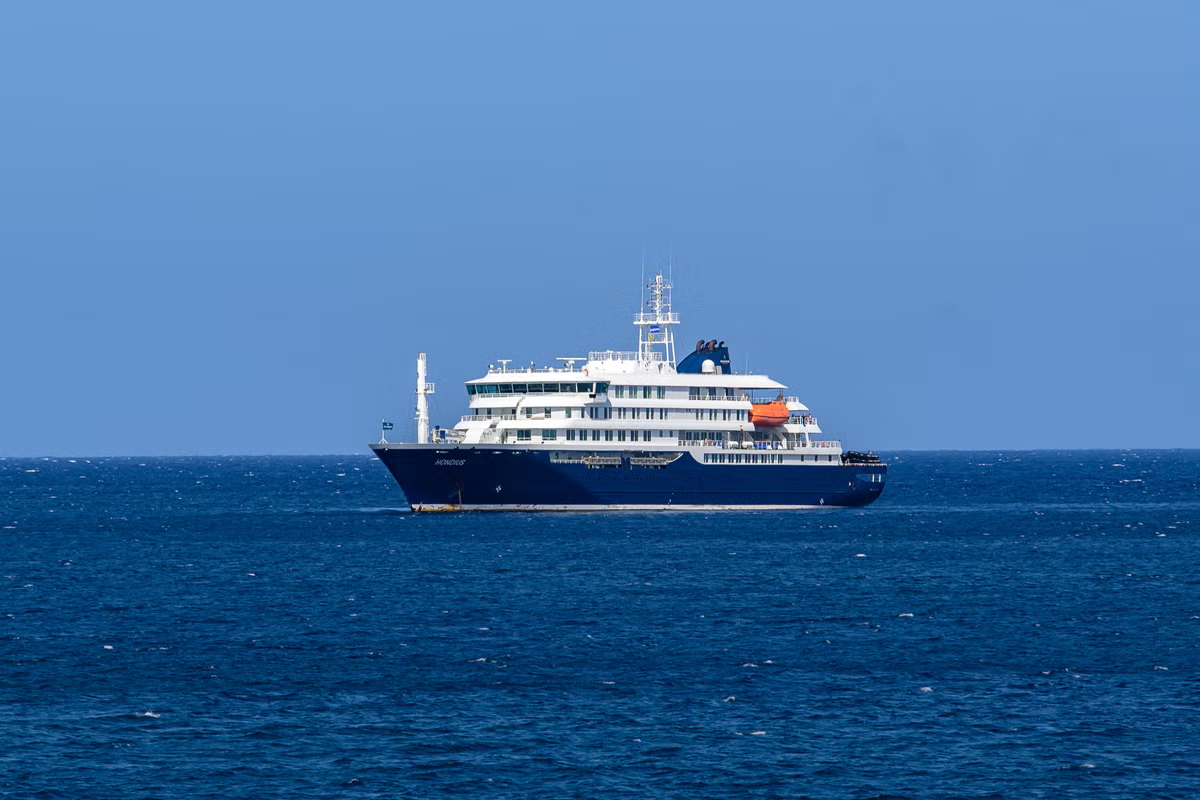
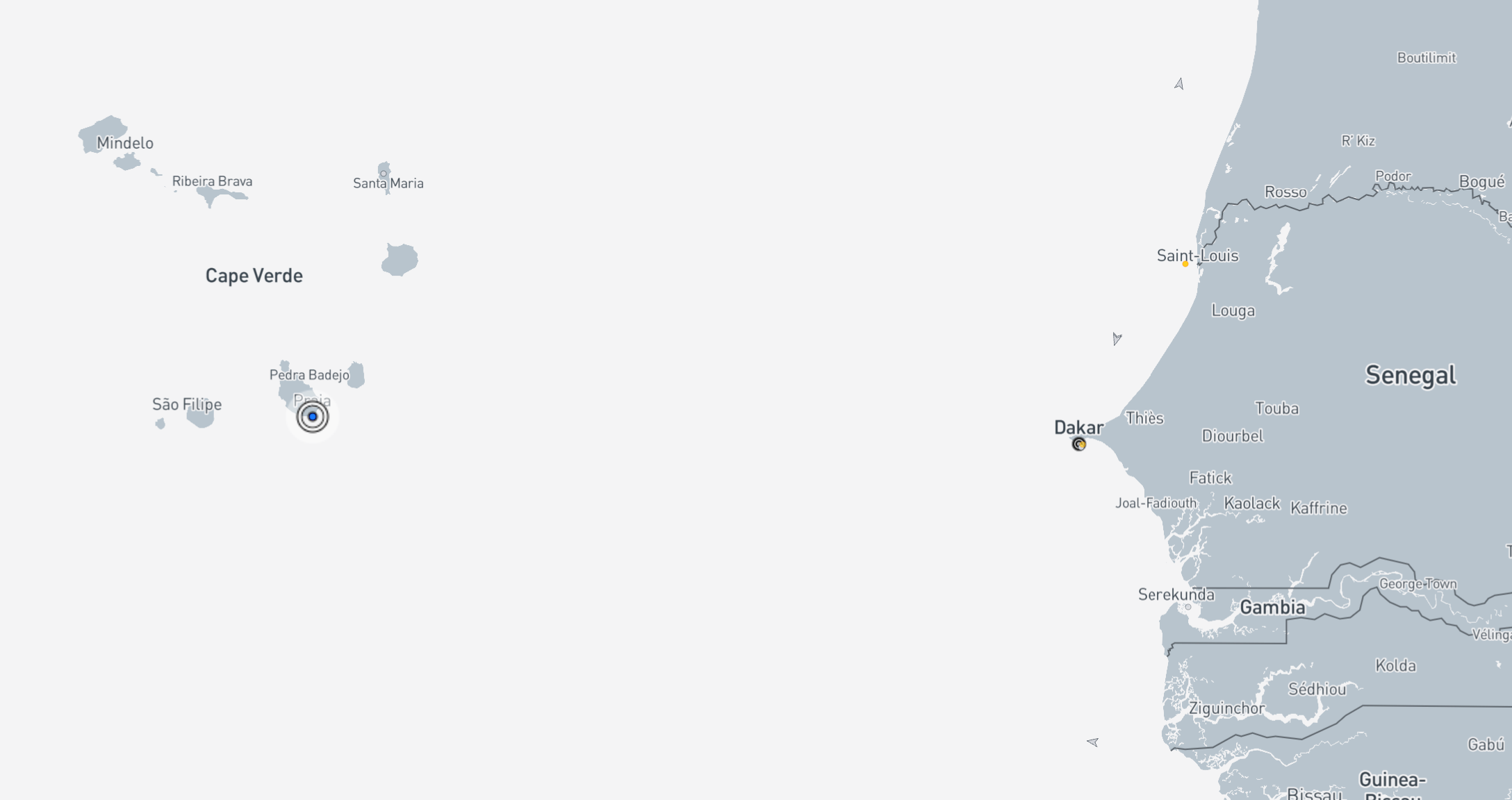
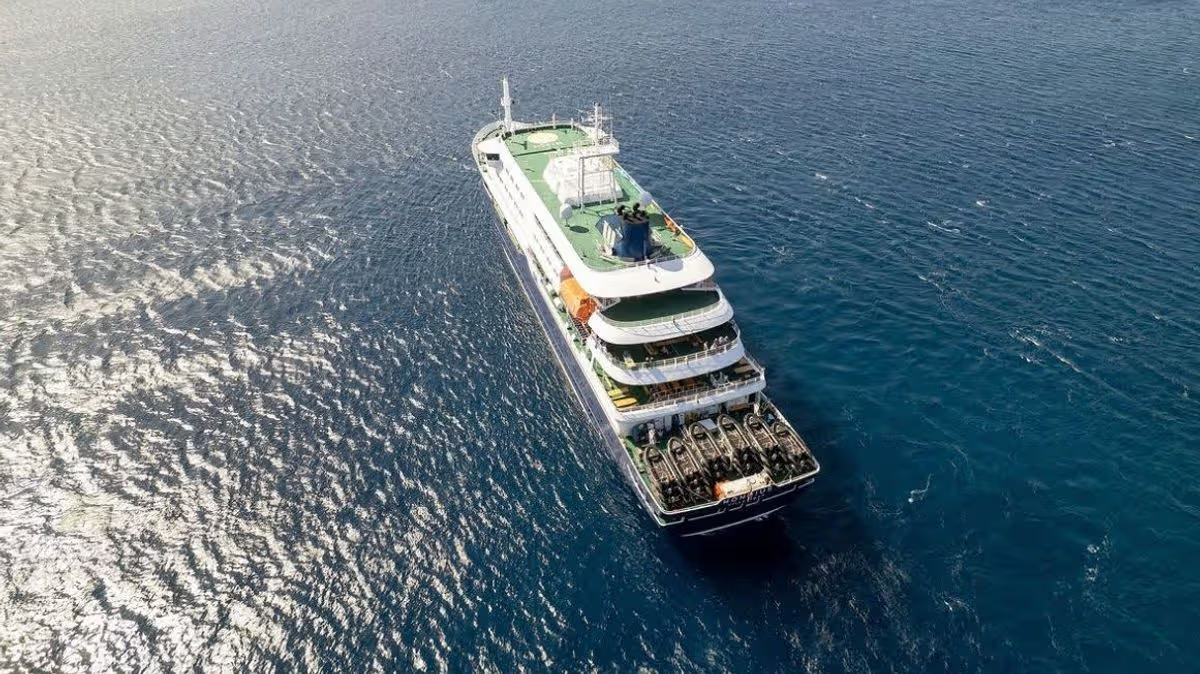
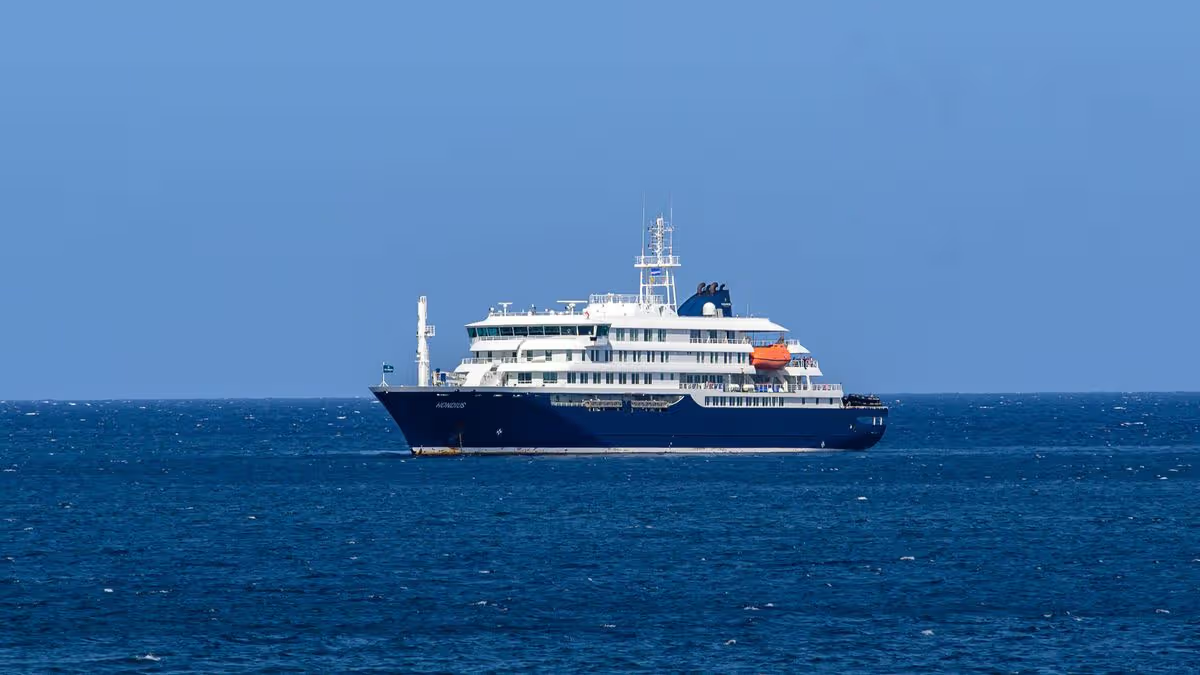
The outbreak was reported aboard the MV Hondius cruise ship, which was travelling from Argentina to Cape Verde.

The MarineTraffic global shipping website identified the vessel as a Dutch-flagged passenger cruise ship. It located it as docked in Praia, the capital of Cape Verde, on Sunday night.

Advertisement

South African authorities told the BBC the first person to show virus symptoms was a 70-year-old passenger who died on board. His body is now on the island of Saint Helena, a British territory in the South Atlantic.

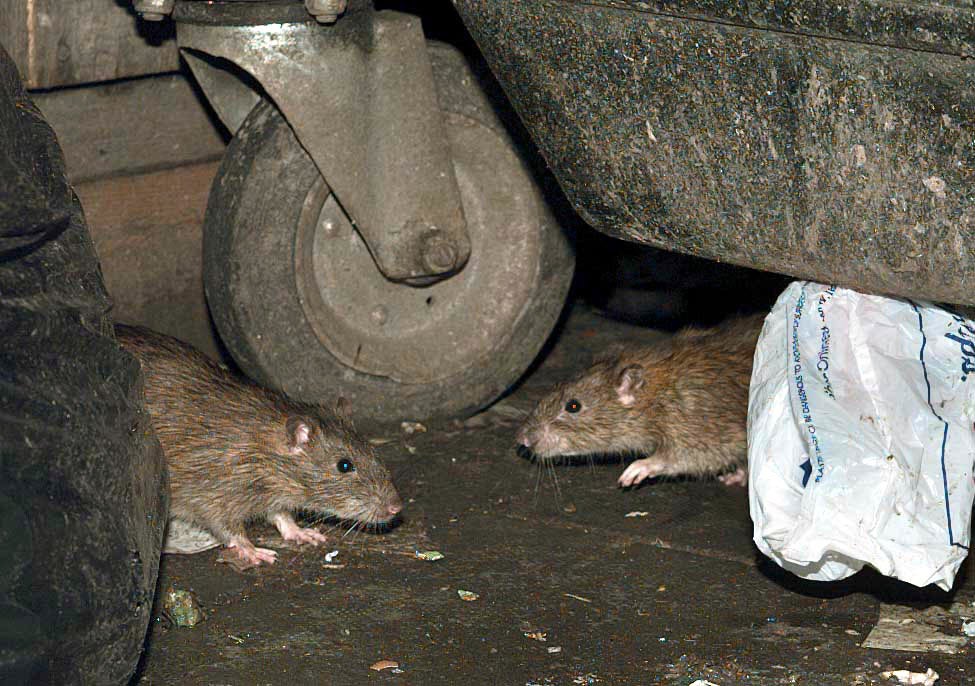
Hantavirus infections are typically linked to exposure to the faeces or urine of infected rodents
Hantavirus infections are typically linked to exposure to the faeces or urine of infected rodents (PA)

His 69-year-old wife also became ill on board and was evacuated to South Africa, where she died in a Johannesburg hospital.

The World Health Organisation said that it was working with authorities to evacuate two other passengers with symptoms from the ship.

Hantavirus infections are typically linked to exposure to the feces or urine of infected rodents, WHO said.

While rare, WHO said they can be spread between people and they can lead to severe respiratory illness. There is no specific treatment or cure, but early medical attention can increase the chance of survival.

Advertisement

In a statement, they said: “WHO is aware of and supporting a public health event involving a cruise vessel sailing in the Atlantic Ocean. To date, one case of hantavirus infection has been laboratory confirmed, and there are five additional suspected cases. Of the six affected individuals, three have died and one is currently in intensive care in South Africa.

The Hondius is currently docked off Cape Verde
The Hondius is currently docked off Cape Verde (Marine Traffic)

“Detailed investigations are ongoing, including further laboratory testing, and epidemiological investigations. Medical care and support are being provided to passengers and crew. Sequencing of the virus is also ongoing.

“Hantavirus infections are typically linked to environmental exposure (exposure to infected rodents’ urine or faeces). While rare, hantavirus may spread between people, and can lead to severe respiratory illness and requires careful patient monitoring, support and response.”

Hantavirus was in the news after the late actor Gene Hackman’s wife, Betsy Arakawa, died from hantavirus infection in New Mexico last year. Hackman died a week later at their home.

The m/v Hondius is run by tour company Oceanwide Expeditions, described as the “first-registered Polar Class 6 vessel in the world, meeting the latest and highest Lloyd’s Register standards for ice-strengthened cruise ships.”

Advertisement

A FCDO spokesperson said: “We are closely monitoring reports of a potential hantavirus outbreak on the cruise ship Hondius and stand ready to support British nationals if needed. We are in touch with the cruise company and local authorities.”

The Independent has contacted Oceanwide Expeditions for comment.

Source link

Advertisement
Continue Reading

NewsBeat

Iran says US has responded to its latest peace proposal

Published

on

Iran says US has responded to its latest peace proposal

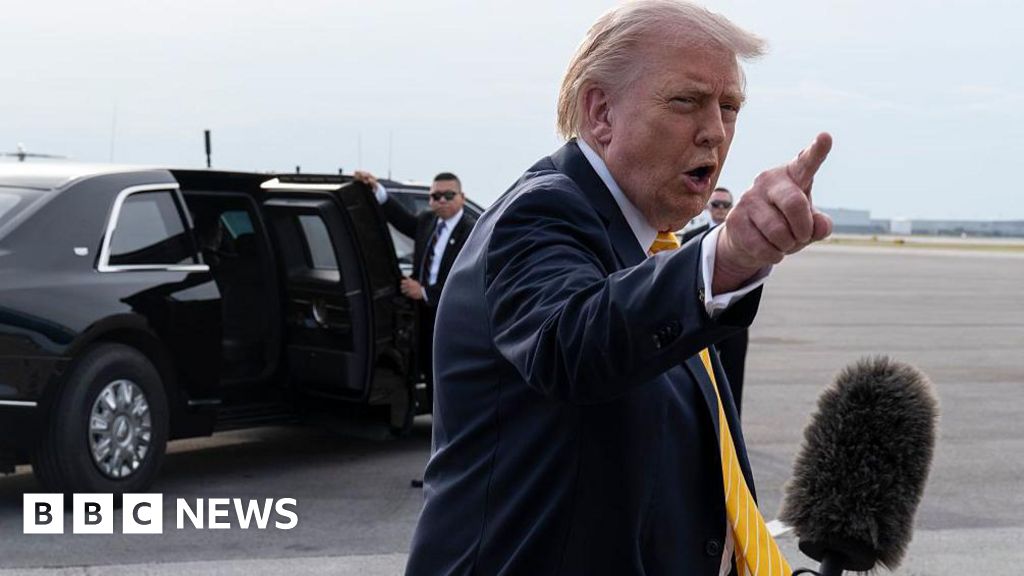
In a brief post on Truth Social, the US president wrote: “I will soon be reviewing the plan that Iran has just sent to us, but can’t imagine that it would be acceptable in that they have not yet paid a big enough price for what they have done to Humanity, and the World, over the last 47 years.”

Source link

Continue Reading

NewsBeat

‘Let’s see’: Michael Carrick coy on Manchester United future after confirming Champions League return

Published

on

'Let's see': Michael Carrick coy on Manchester United future after confirming Champions League return

It is not yet confirmed, though, whether he will remain in the post next season. Questions have been raised as to whether Carrick is experienced enough for the role despite his remarkable impact this season, with more experienced managers in Andoni Iraola and Oliver Glasner both available as free agents.

Source link

Continue Reading

NewsBeat

Kobbie Mainoo delivers perfect response to Roy Keane and Gary Neville with stunning Man Utd winner

Published

on

Manchester Evening News

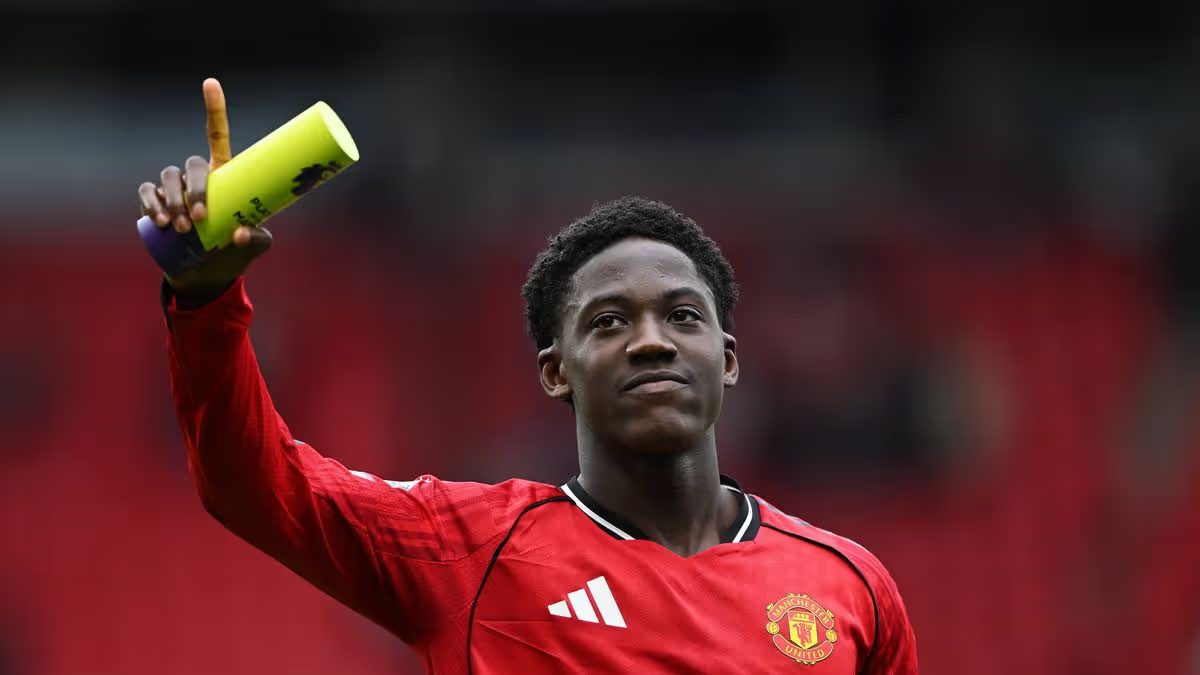
Kobbie Mainoo struck a late winner against Liverpool to secure Manchester United a place in next season’s Champions League after Gary Neville and Roy Keane expressed pre-match doubts

Kobbie Mainoo marked his new Manchester United contract in spectacular fashion against Liverpool while simultaneously silencing Gary Neville and Roy Keane.

Advertisement

Earlier in the week, Mainoo pledged his long-term future to United by putting pen to paper on a fresh deal that ties him to Old Trafford until 2031. United then made a dream start against Arne Slot’s outfit on Sunday when Matheus Cunha and Benjamin Sesko found the net within the opening 14 minutes.

Nevertheless, a sluggish beginning to the second period allowed the reigning Premier League champions to mount a comeback. Dominik Szoboszlai capitalised on Amad’s wayward pass to pull one back before Cody Gakpo restored parity following a Senne Lammens error.

Get MEN Premium now for just £1 HERE – or get involved in our United WhatsApp group by clicking HERE. You can also join our United Facebook page by clicking HERE and don’t miss out on our brilliant selection of newsletters HERE.

Yet with 13 minutes of regulation time left on the clock, Mainoo fired home from the edge of the area after Liverpool failed to clear a delivery into the penalty area. His strike also guaranteed United a spot in next season’s Champions League.

Advertisement

It arrived after Roy Keane had expressed pre-match reservations about the England international. He said: “Mainoo has given them some energy; he’s helped Casemiro.

“But I have my worries about them – the centre-backs and the centre-midfielders, you can get at them.” It was not only former United captain Keane who voiced his concerns about the midfielder.

Neville commented during the first half: “The one message that Michael Carrick will want to get to his players at half-time is that there’s a bit of a gap between the midfield and his defence.”

“Liverpool are getting players into that area. They are going to have to tighten up a little bit. Liverpool could score from around 20 yards.”

Advertisement

Following Mainoo’s goal, Neville remarked: “It’s been a tough second half for Man Utd and Mainoo, but he could have just cancelled out all of that worry.” Neville, however, still pushed for a personnel change again shortly after that strike.

Sky Sports, HBO Max, Netflix and Disney+ with Ultimate TV package

This article contains affiliate links, we will receive a commission on any sales we generate from it. Learn more
Content Image

Sky has upgraded its Ultimate TV and Sky Sports bundle to now include HBO Max, Netflix, Disney+, discovery+ and Hayu, as well as 135 channels and full Sky coverage of the Premier League and EFL.

Sky broadcasts more than 1,400 live matches across the Premier League, EFL and more with at least 215 live from the top flight alongside Formula 1, darts and golf.

“I’m sure they’re thinking about how to get more strength in the middle of midfield, where Liverpool are dominating. It would be dangerous to leave Mainoo and Casemiro in the midfield alone right now.”

Advertisement

However, speaking after the final whistle, Keane appeared to temper his earlier criticism, saying: “It’s a great moment for him. He’s had his challenges over the last few months. That’s the journey of any young player. He’s taken his opportunity. To score the winning goal for any local kid, it’s fantastic.”

Mainoo’s future at United had appeared uncertain, having dropped down the pecking order under former manager Ruben Amorim, with a loan request in August rejected before transfer speculation intensified in January. However, Carrick’s arrival proved to be a turning point for the England international, who has since established himself as a key figure at United.

Content cannot be displayed without consent

Source link

Advertisement
Continue Reading

NewsBeat

Three passengers dead and one fighting for life after virus outbreak on cruise ship

Published

on

Manchester Evening News

Officials say three people have lost their lives following a Hantavirus outbreak

Three people on a cruise ship have died after a suspected outbreak of Hantavirus caused by rodent droppings.

The victims were passengers of the MV Hondius which was travelling from Argentina to Cape Verde, according to the World Health Organisation (WHO).

Reports state that another person, who is a British national, is currently in intensive care. The disease is known as Hantavirus, and typically comes about following contact with urine or faeces from infected rodents.

Advertisement

In some cases, the virus can spread between people and lead to a dangerous respiratory illness.

Foster Mohale, a spokesperson for South Africa’s health ministry, told the BBC that at least two people had died. The vessel is operated by Dutch tour company Oceanwide Expeditions.

South African authorities report the first person to show symptoms was a 70-year-old passenger who died on board. His body has since been transferred to the island of Saint Helena.

His 69-year-old wife also became ill during the voyage and was evacuated to South Africa, where she later died in a Johannesburg hospital. A 69-year-old British man was also evacuated to Johannesburg and is currently receiving treatment in intensive care.

Advertisement

The WHO said it is assisting with coordination between member states and the ship’s operator, including the medical evacuation of two symptomatic passengers, a full public health risk assessment, and support for those still on board.

Their full statement reads: “WHO is aware of and supporting a public health event involving a cruise vessel sailing in the Atlantic Ocean. To date, one case of hantavirus infection has been laboratory confirmed, and there are five additional suspected cases.

“Of the six affected individuals, three have died and one is currently in intensive care in South Africa.

“Detailed investigations are ongoing, including further laboratory testing, and epidemiological investigations. Medical care and support are being provided to passengers and crew. Sequencing of the virus is also ongoing.

Advertisement

“Hantavirus infections are typically linked to environmental exposure (exposure to infected rodents’ urine or faeces). While rare, hantavirus may spread between people, and can lead to severe respiratory illness and requires careful patient monitoring, support and response.

“WHO is facilitating coordination between member states and the ship’s operators for medical evacuation of two symptomatic passengers, as well as full public health risk assessment and support to the remaining passengers on board.

“WHO is grateful for the rapid actions and coordination amongst all involved.”

Source link

Advertisement
Continue Reading

NewsBeat

Cruise ship virus outbreak leaves three dead as Brit fights for life in South Africa

Published

on

Daily Record

Hantavirus is most commonly contracted through contact with the urine or faeces of infected rodents

Three passengers have died aboard a cruise ship after a suspected outbreak of hantavirus, thought to have been triggered by rodent droppings.

Advertisement

Health officials have confirmed one case of the rare virus and are investigating five more, while a British traveller is reported to be in intensive care. The infections were detected on the MV Hondius, which was sailing from Argentina to Cape Verde, according to the World Health Organisation.

Hantavirus is most commonly contracted through contact with the urine or faeces of infected rodents, though it can, in exceptional circumstances, spread between people and cause severe respiratory illness., the Mirror reports.

Foster Mohale, a spokesperson for South Africa’s health ministry, confirmed at least two people had died onboard the vessel, which the Dutch tour company Oceanwide Expeditions operates.

Advertisement

The ship departed Ushuaia, Argentina, on March 20, according to the company’s published itinerary, due to arrive in Cape Verde on Monday (May 4).

A 69-year-old British man was evacuated to Johannesburg during the trip as passengers showed signs of the virus, and is currently receiving treatment in intensive care.

Ensure our latest stories always appear at the top of your Google Search by making us a Preferred Source. Click here to activate or add us as your Preferred Source in your Google search settings.

South African authorities confirmed the first person to show symptoms was a 70-year-old passenger who died on board. His body has since been transferred to the island of Saint Helena.

Advertisement

The man’s 69-year-old wife also became ill during the journey and was evacuated to South Africa, where she later died in a Johannesburg hospital.

The ship measures 107.6m (353ft) in length and can carry up to 170 passengers across 80 cabins, according to Oceanwide Expeditions

The WHO said it is assisting with coordination between member states and the ship’s operator, including the medical evacuation of two symptomatic passengers, a full public health risk assessment, and support for those still on board.

Source link

Advertisement
Continue Reading

NewsBeat

Premier League relegation permutations and what Tottenham need after Aston Villa win

Published

on

Daily Mirror
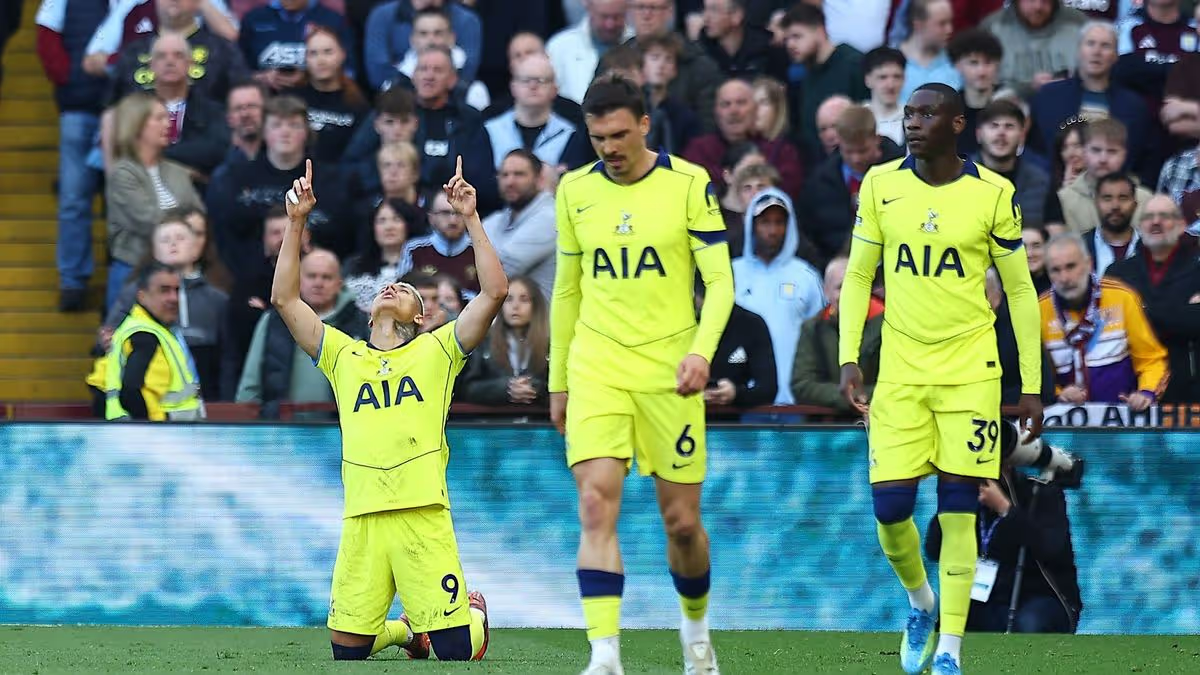
Premier League relegation permutations and what Tottenham need after Aston Villa win – The Mirror

Advertisement
reach logo

At Reach and across our entities we and our partners use information collected through cookies and other identifiers from your device to improve experience on our site, analyse how it is used and to show personalised advertising. You can opt out of the sale or sharing of your data, at any time clicking the “Do Not Sell or Share my Data” button at the bottom of the webpage. Please note that your preferences are browser specific. Use of our website and any of our services represents your acceptance of the use of cookies and consent to the practices described in our Privacy Notice and Terms and Conditions.

Source link

Continue Reading

NewsBeat

Coronation Street boss reveals when we discover Theo’s killer and Todd twists | Soaps

Published

on

Coronation Street boss reveals when we discover Theo's killer and Todd twists | Soaps
A long road lies ahead (Picture: ITV/Metro)

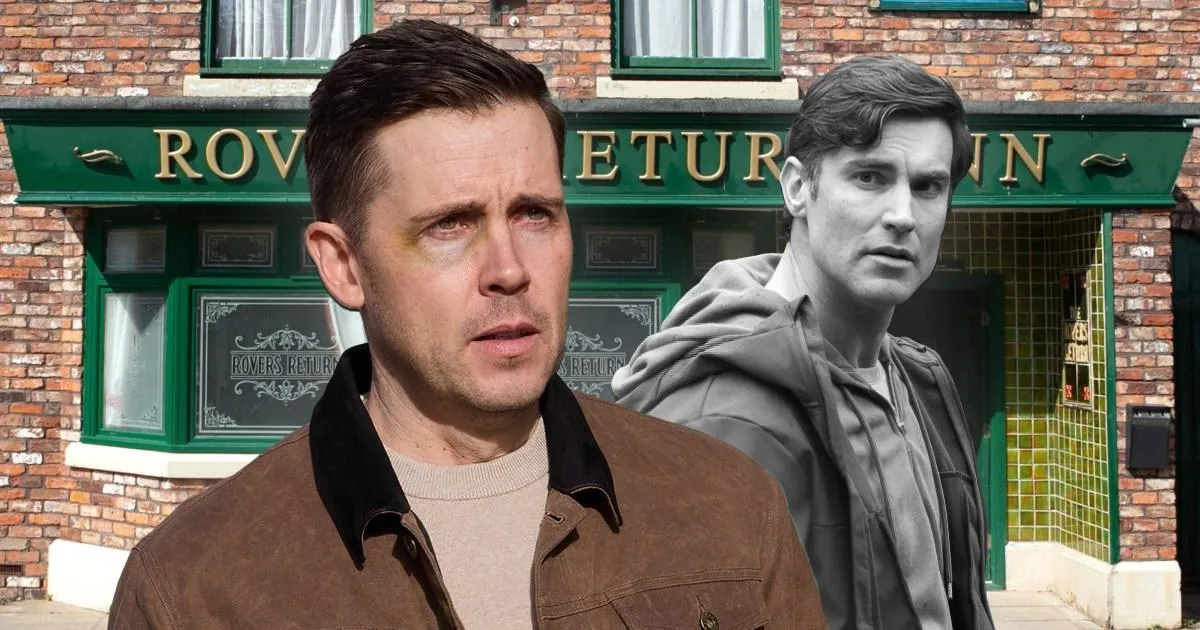
Theo Silverton (James Cartwright) has been confirmed as the murder victim in Coronation Street.

After a week of dramatic episodes, Friday’s instalment saw us learn that Theo, who abused Todd Grimshaw (Gareth Pierce) for months, has now lost his life.

As the aftermath kicks off next week, detectives Lisa Connor-Swain (Vicky Myers) and Kit Green (Jacob Roberts) begin their rounds of questioning.

Of course, a number of people are in the frame for Theo’s death. There’s Todd himself, George Shuttleworth (Tony Maudsley), and also Summer Spellman (Harriet Bibby).

Advertisement

Don’t forget about Carl Webster (Jonathan Howard), who went up against Theo after telling Summer that he could prove he murdered Billy Mayhew (Daniel Brocklebank).

With gossip spreading in Weatherfield, you’re probably reading this wondering when exactly we will find out who killed Theo, and how long the investigation is going to go on for.

To view this video please enable JavaScript, and consider upgrading to a web
browser that
supports HTML5
video

Advertisement

Fortunately, producer of the show Kate Brooks has the answer.

‘It’s later in the summer. We reveal to the audience who it is during late June, July. There’s lots of people you definitely think it could be. It’s a massive story, there’s so many different twists, and there’s so many different offshoots to the story as well’, she revealed.

‘You think you’re watching one thing, and then it diverts into a completely new kind of story territory. It’ll definitely keep people guessing.’

Advertisement

Detailing what lies ahead for Todd, who is now recovering from the abuse in the middle of this whodunnit story, Kate said: ‘It’s Todd rebuilding his life – this is a guy who’s been subjected to the most horrific abuse, who is traumatised, who was grieving.

Theo Silverton berating Todd Grimshaw in their flat in Coronation Street.
Theo abused Todd for months (Picture: ITV)
Theo Silverton holding a phone in Coronation Street
Plenty of people wanted to see the back of Theo (Picture: ITV)

‘And it’s how he kind of tried to rebuild his life while still kind of struggling to comprehend the fact that this man’s been murdered by potentially somebody he knows or maybe even him.

Don’t miss a Soaps scoop! Add us as a Preferred Source

As a loyal Metro Soaps reader, we want to make sure you never miss our articles when searching for stories. We have all the latest soaps news, spoilers, videos, and interviews, with a vibrant community of highly engaged readers.

Click the button below and tick Metro.co.uk to ensure you see stories from us first in Google Search.

Add us as a Preferred Source

Advertisement
Soaps authors collage Fact box image only Picture: Metro
Now you can ensure you never miss a story from the Soaps team

She added: ‘It’s an interesting mix of ‘whodunnit’ thriller story, but also about Todd’s family and friends, George, Christina, Summer, Sarah, all rallying around Todd to make sure that he’s okay, to try and build them and repeat them back together.

‘What he’s been through at the hands of Theo has been such an ordeal for him, and to get that love and to get that trust in people again, it was very important to show that with Todd.’

Advertisement

Source link

Advertisement
Continue Reading

Trending

Copyright © 2025