And with 2026 being the route’s 100th birthday, this year is the perfect time to discover what is now a cultural icon.
Here, we reveal how to do it well, with a guide that steers you towards an authentic Route 66 experience.
We explain how the road acquired legendary status, the diner in Chicago you should have breakfast at before setting off and the dangers of over-reliance on Google Maps for the journey.
Advertisement
Route 66 isn’t a race, and in the following section, we break down how much time to allow for the journey.
From there, it’s the not-to-be-missed sights that help make the trip so wonderfully eccentric, and some of the best motels to book into for a “good old days” vibe.
The finish comes at Santa Monica Pier, where there are a handful of rituals to undertake to mark the end of a road trip of a lifetime.
The birth of a legend
Advertisement
Route 66’s legendary status is partly thanks to the great American novelist John Steinbeck describing it as the ‘Mother Road’ (Getty Images)
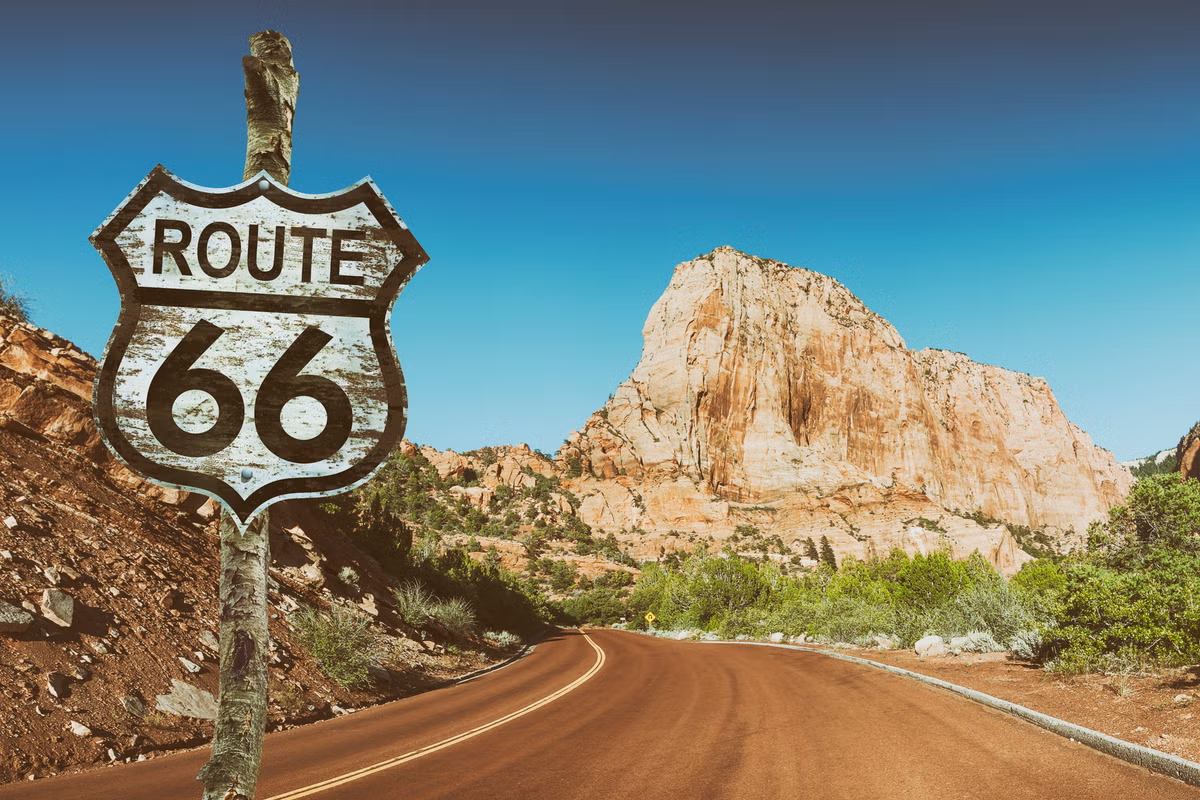
Route 66 was commissioned in 1926 and by the time it was finished and fully paved in the late 1930s, it stretched 2,448 miles across Illinois, Missouri, Kansas, Oklahoma, Texas, New Mexico, Arizona, and California, from Chicago to Santa Monica — and it quickly attained legendary status, despite not even being the first long-distance highway, or the busiest.
The route’s journey to cultural icon began with hundreds of thousands of farmers from Oklahoma, Texas, Arkansas and Missouri using it to reach California in search of work, a plight immortalized in the great John Steinbeck’s powerful 1939 novel The Grapes of Wrath, in which he dubs Route 66 the “Mother Road.”
When car ownership exploded after the Second World War, Americans discovered en masse that this road of opportunity was also a journey of adventure that took them through bewitching desert landscapes and past neon-lit motels and diners that would come to symbolize classic road trip culture.
Advertisement
By the time the road was decommissioned in 1985 and replaced by the Interstate Highway System, it was ingrained in popular culture, featuring in songs such as Bobby Troup’s (Get Your Kicks on) Route 66, recorded by artists from Nat King Cole to the Rolling Stones, and making appearances in countless road trip movies.
Ironically, its death made it even more famous, with preservation movements emerging to maintain and restore motels, diners and roadside attractions that were now bypassed — today Route 66 is a patchwork of historic sections.
For many, the Route 66 road trip begins in Chicago with breakfast at Lou Mitchell’s restaurant and bakery on W. Jackson Boulevard, located near the official start of the route on Adam Street, close to the Art Institute of Chicago (Getty Images)
Chicago is the traditional launchpad — it’s the historic gateway to the west, and you’ll mostly have the sun behind you — and the ceremonial starting point is amid the skyscrapers of the Windy City’s downtown district, on Adams Street, near the Art Institute of Chicago.
There, you’ll find a modest brown-and-white “Begin Route 66” sign. However, before you drive past it, tradition dictates that you head to nearby Lou Mitchell’s restaurant and bakery on W. Jackson Boulevard, which has been serving breakfast to westbound road-trippers since 1923.
The menu is classic diner fare, from coffee and pancakes to omelets and corned beef hash. And while you wait for a table, the serving staff hand out complimentary donut holes and Milk Duds.
Advertisement
Once you set off, you’ll find yourself in another world in little more than an hour.
Great place to stay:Silversmith Hotel Chicago Downtown is just a three minute walk from the Route 66 and features rooms with mini-refrigerators, coffee makers and wifi.
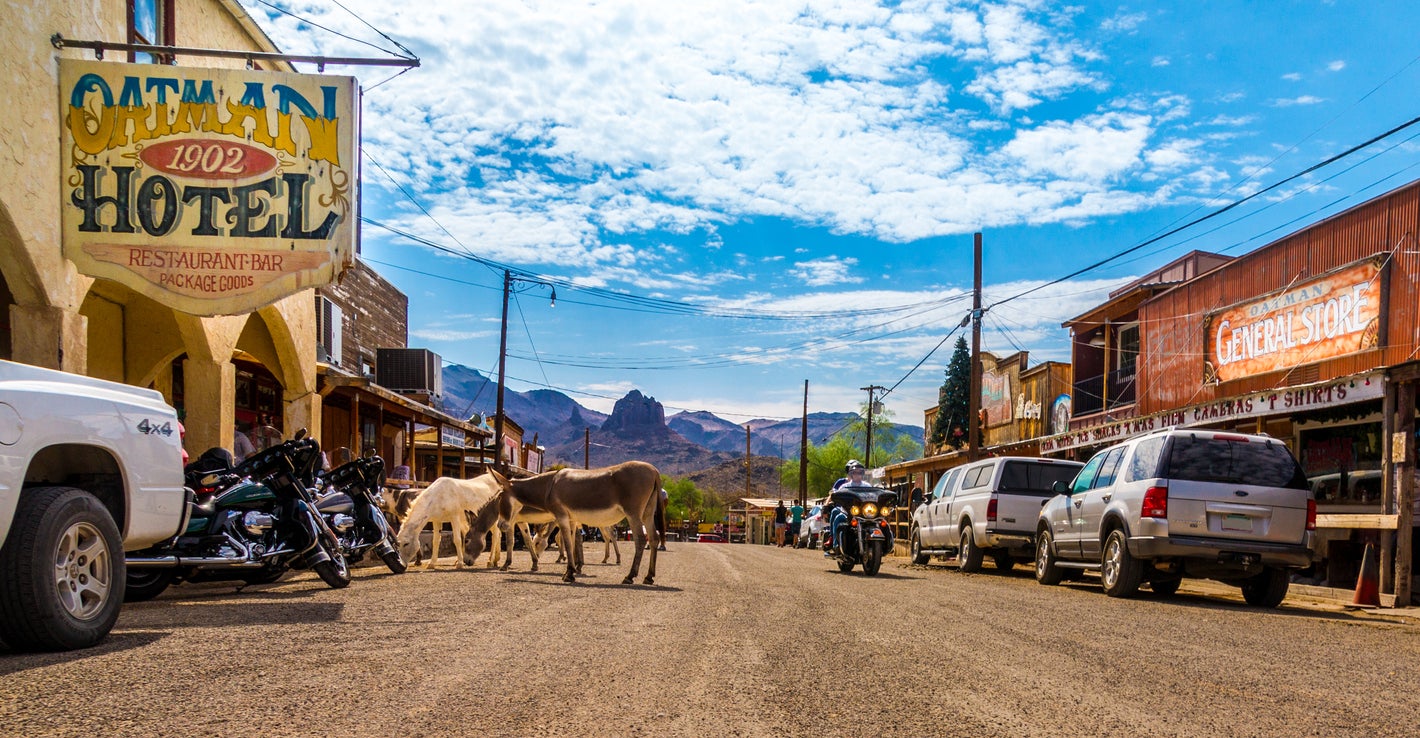
The original Route 66 passes through the former gold mining town of Oatman in Arizona. You’ll be led to fascinating spots like this by following the ‘Historic Route 66’ signs (Getty Images)
Navigation-wise, it would be tempting to type “Route 66” into Google Maps and take it from there.
But that would be a major mistake. It’s worth laboring the point that Route 66 is no longer one long continuous highway, but a mishmash of surviving segments jammed in among newer highways. Some original sections are quite long and scenic, others last for just a few miles before disappearing (and sometimes making a comeback a bit further along).
Ask Google Maps for the route and you’ll likely end up driving along interstates 40, 44 and 55, which replaced large sections of Route 66, and miss some of the most fascinating roadside attractions.
Advertisement
The key is to follow the “Historic Route 66” signs, which will lead you to some of the most compelling sights and scenery.
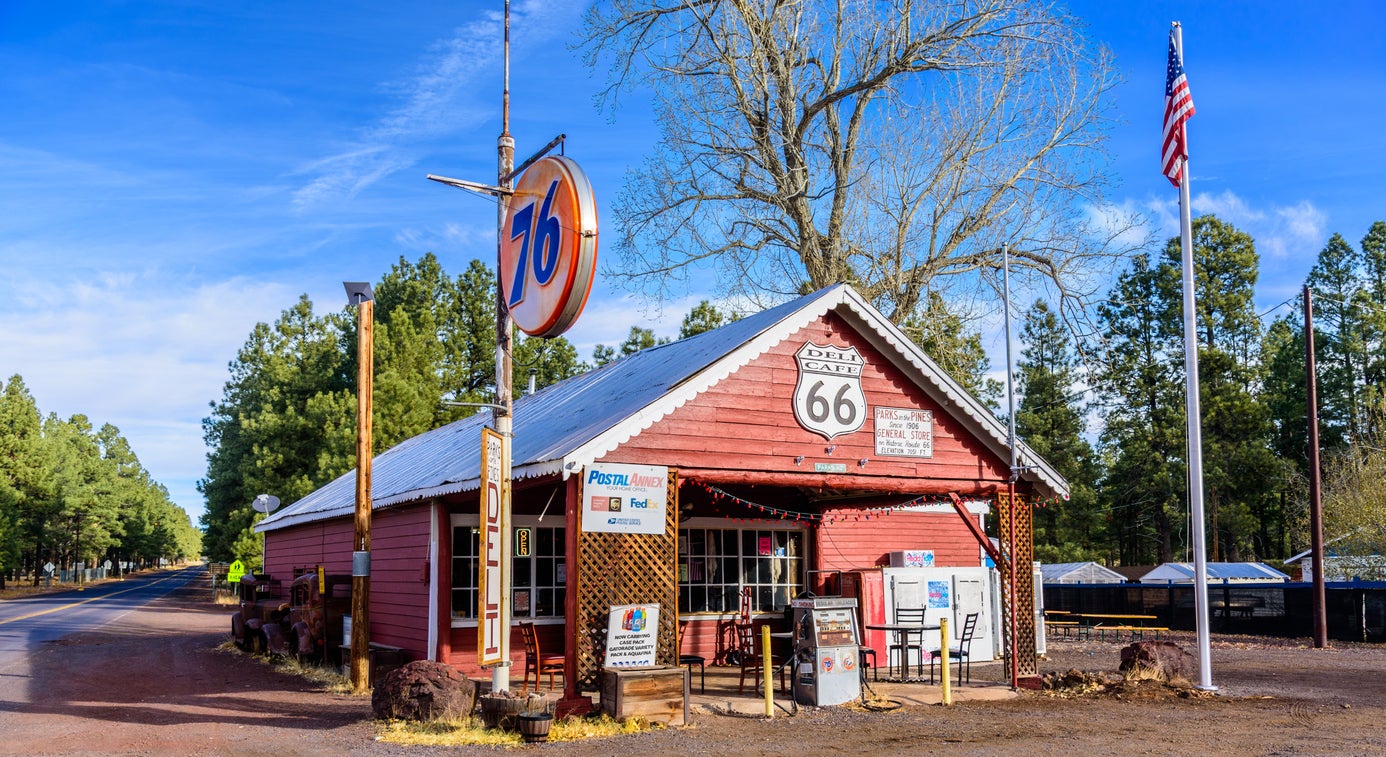
The Parks in the Pines General Store and Deli stands along a quiet stretch of Route 66 between Williams and Flagstaff, its vintage 76 sign and weathered red storefront preserving the classic character of mid-century roadside travel in Northern Arizona (Getty Images)
Ideal: 14 days
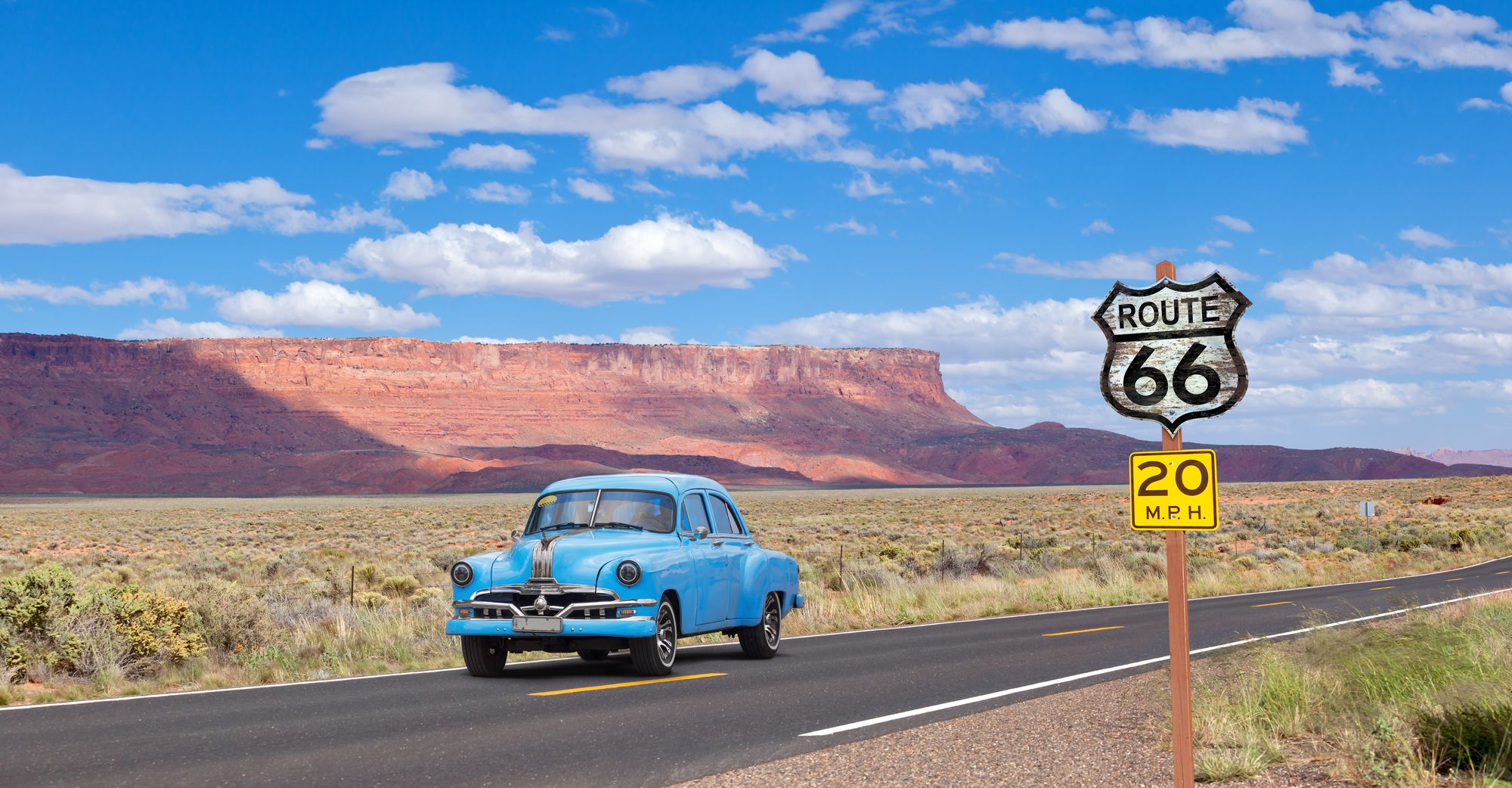
Today, Route 66 isn’t a means to an economic end — it’s the main attraction, and driving at your leisure will mean you can fully savor its delights. The Goldilocks time frame? Two weeks, or 150-200 miles a day, if you’re committed to the entire Route 66 Chicago-Santa Monica pilgrimage.
A longer journey means ample time to explore roadside attractions, enjoy vintage motels, and have an extra round of pancakes at a classic diner.
Fair: 10 days
Advertisement
Ten days is a relatively popular timeframe, meaning a pace of around 240 miles a day.
However, some sightseeing will need to be sacrificed. One strategy could be to pick up the pace in the eastern section, then slow down and zero in on the more dramatic scenery offered by New Mexico, Arizona and California in the west.
Doable, but rushed: Seven days
A seven-day trip would mean a slow-fast-slow approach, with sections of interstate used to link the most compelling sights. Stops would need to be picked fairly carefully in advance.
Advertisement
Avoid: Four days or less
Shrinking the journey time to four days or less would reduce the drive to a grueling interstate highway marathon. If simply reaching the finish line is the objective, then note that the drive time is about 40 hours.
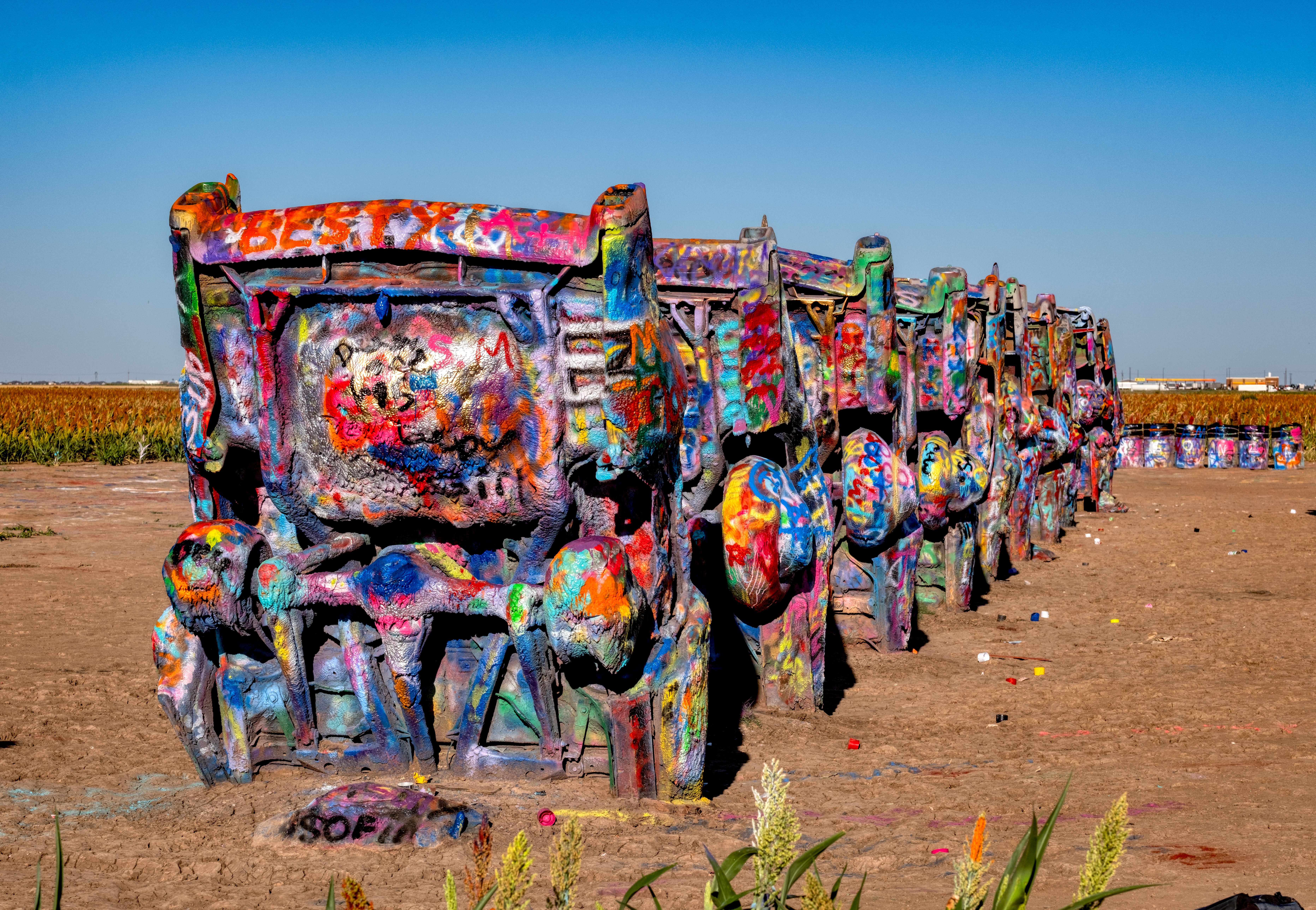
Cadillac Ranch, created in 1974 by the art group Ant Farm, features 10 classic Cadillacs buried nose-first in the ground. It’s a Route 66 must-visit (cadillac ranch texas)
Route 66’s irresistibly eccentric roadside culture doesn’t take long to emerge after leaving Chicago.
Around 90 minutes away is the town of Wilmington, home to the Gemini Giant, a 30-foot fiberglass astronaut holding a rocket, a variation of the “Muffler Man” figures used to advertise roadside businesses across America.
In the small town of Dwight, around 75 miles from Chicago is the beautifully preserved house-and-canopy-style Ambler’s Texaco Gas Station, which dates back to the 1930s.
Advertisement
Cadillac Ranch, just west of Amarillo in Texas, is mandatory. Created in 1974 by the art group Ant Farm, it features 10 classic Cadillacs buried nose-first in the ground at the same angle as the Great Pyramid of Giza. They’re covered in graffiti, and visitors are encouraged to leave their own spray-painted mark.
In Oklahoma, there’s the cheerful Blue Whale of Catoosa, an 80-foot-long bright blue concrete cetacean with a winning smile; and in Arizona you can pull up in the ghost town of Oatman, where burros wander the streets and “gunmen” stage Wild West shootouts.
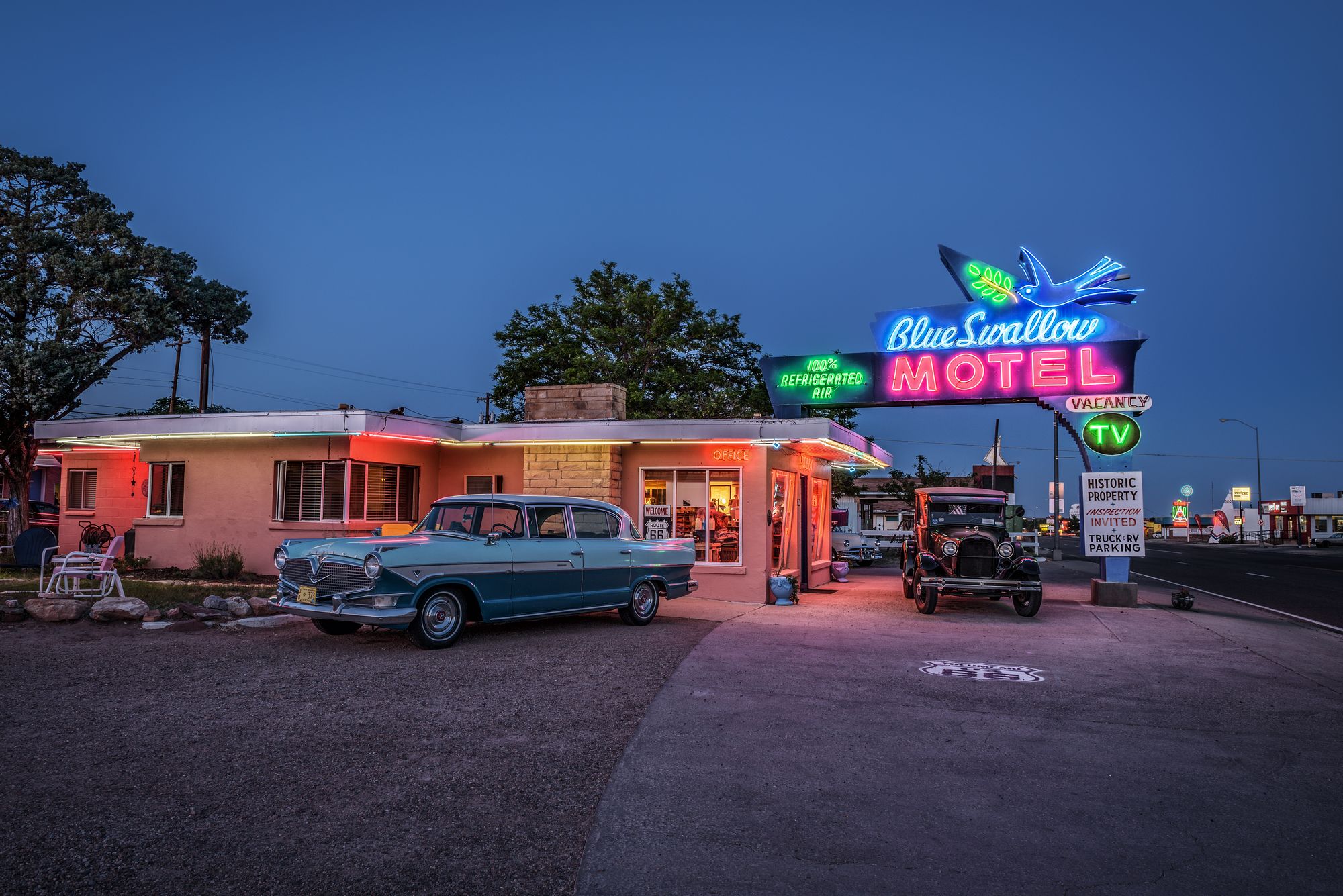
Blue Swallow Motel, Tucumcari, New Mexico still retains a 1940s atmosphere, including a neon sign advertising ‘100% refrigerated air’ (Getty Images)
Skip the chains and book into independent motels to be rewarded with a much more authentic Route 66 experience. Family run motels sprung up in huge numbers during the road trip boom of the 1940s and 1950s and there are still a few beautifully preserved examples you can stay in for a taste of the “good old days.” Here are three of the most celebrated options:
Blue Swallow Motel, Tucumcari, New Mexico
The Blue Swallow Motel has been giving Mother Road travelers a comfortable place to rest since 1939, and its yesteryear charms have been beautifully preserved: the neon sign advertising “100% refrigerated air” still glows above it and the rooms contain 1940s-era rotary dial phones and vintage lamps. Rooms from $120.
Advertisement
Wigwam Motel, Holbrook, Arizona
Guests have been staying in the Wigwam Motel’s distinctive concrete teepees since the 1950s — and while the 15 units include mod cons such as wifi and satellite TV, the original handmade hickory furniture has been retained. Rooms from $105.
Boots Court Motel, Carthage, Missouri
When Boots Court Motel opened in 1939, guests paid $2.50 to stay in one of eight rooms completed in the “streamline moderne” architectural style. Each room came with a carport and the property proudly advertised a “radio in every room.” Today, there are 13 renovated rooms for Route 66-ers to stay in and a visitors center housed in the former gas station. Rooms from $79.
At Santa Monica Pier there is a sign marking the end of Route 66 (Getty Images)
Eight states and nearly 2,500 miles of tarmac later, you’ll arrive at Santa Monica Pier where you’ll find a sign that simply says “End of the Trail.”
Advertisement
It’s not the most celebratory piece of signage, but the exuberant surroundings, from street performers to the pier’s amusement park, make the occasion a fittingly jubilant one.
A popular ritual among road trippers is to take a selfie at the sign, then walk to the end of the pier and look back, inland, at the land mass that’s been tamed, before a dip of the toes in the Pacific Ocean.
Great place to stay:The Shore Hotel (rooms from $235) is directly across the road from the pier and offers rooms with balconies overlooking the beach.
Good to know: Parking around the pier is congested, and while there is a parking deck beneath the pier, it’s recommended to leave your car at the hotel and walk to the finish line.
DUBAI, United Arab Emirates (AP) — Iran and Russia both allege a projectile struck the grounds of the Bushehr nuclear power plant in the Islamic Republic, raising the specter of a radiological incident as Tehran’s war with Israel and the United States rages.
Neither Iran nor Russia say there was any release of nuclear material in the incident on Tuesday evening, but it again underlines a longtime worry of Iran’s neighbors — that the power plant on the shores of the Persian Gulf could be hit by either an attack or an earthquake.
Here’s what to know about the incident, the plant itself and Iran’s wider nuclear program, which remains a reason U.S. President Donald Trump points to for starting the war alongside Israel against Iran on Feb. 28.
Reports of a projectile striking there
Russia’s state-run Tass news agency quoted Rosatom CEO Alexey Likhachev late Tuesday as claiming “a strike hit the area adjacent to the metrology service building located at the Bushehr Nuclear Power Plant site, in close proximity to the operating power unit.” Russian technicians from Rosatom operate the plant, using Russian-made, low-enriched uranium.
Advertisement
“There were no casualties among Rosatom State Corporation personnel,” Likhachev said. “The radiation situation at the site is normal.”
About 480 Russian nationals remain at the plant, Likhachev said, and authorities are preparing for another round of evacuations from there.
The Atomic Energy Organization of Iran later issued a statement saying “no financial, technical, or human damage occurred and no part of the plant was harmed.” Iran blamed the incident on the United States and Israel, Tass later reported.
“The IAEA has been informed by Iran that a projectile hit the premises of the Bushehr NPP on Tuesday evening,” the United Nations agency said, using an acronym for nuclear power plant. “No damage to the plant or injuries to staff reported.”
No other independent expert has seen the damage. Neither Iran nor Russia published images of the damage. Moscow has made claims about nuclear sites during its war on Ukraine that turned out not to be true, while Iran has been trying to use both force and coercive diplomacy to pressure its neighbors to in turn push the U.S. to halt the war.
It remains unclear what the “projectile” that hit the complex was. The U.S. military’s Central Command, which is in charge of forces launching airstrikes across southern Iran, did not immediately respond to a request for comment.
Shrapnel from missile interceptions and other air defense fire also have caused damage in the region since the war started. Bushehr, some 750 kilometers (465 miles) south of Iran’s capital, Tehran, is home to an Iranian navy base and a dual-use, civilian-military airport with air defense systems protecting the area.
Advertisement
Bushehr a long sought project by Iran
Iran’s Shah Mohammad Reza Pahlavi announced plans in the 1970s to build 23 nuclear reactors while also having full control of the nuclear fuel cycle — opening the door to being able to build atomic weapons. That rattled U.S. officials, who imposed limits on American companies from selling to Iran. German firm Kraftwerk Union began construction of the Bushehr plant in 1975 as part of $4.8 billion deal for four reactors.
But the 1979 Islamic Revolution halted the project. Iraq repeatedly bombed the site during its eight-year war with Iran in the 1980s, seeking to stop Tehran’s program.
Russia ultimately signed onto the project, which saw the power plant connected to the Iranian grid in 2011, running a pressurized-water reactor that generates up to 1,000 megawatts of electricity, which can power hundreds of thousands of homes and other businesses and industries. But it contributes only 1% to 2% of Iran’s power.
Iran has been trying to expand Bushehr to multiple reactors. In 2019, it began a project that ultimately plans to add two additional reactors to the site, each adding another 1,000 megawatts apiece. A satellite image from December from Planet Labs PBC showed the construction still ongoing at the site, with cranes over both sites.
Advertisement
The reactor currently running at Bushehr uses uranium from Russia enriched to 4.5%, a low level needed for power generation in such plants.
Bushehr was untouched in 12-day war in June
Bushehr, as a running, civilian nuclear power plant, was left untouched during the 12-day war in June between Israel and Iran. During that war, the U.S. bombed three Iranian nuclear enrichment sites, destroying centrifuges and likely trapping Tehran’s stockpile of highly enriched, 60% uranium underground. In the time since, Iran has blocked IAEA inspectors from visit those sites.
Such a leak into the Persian Gulf would be an existential crisis for the Gulf Arab states, which rely on desalination plants on the gulf for their water supplies.
WASHINGTON (AP) — Top Trump administration national security officials facing back-to-back congressional hearings starting Wednesday are expected to be pressed on the war in Iran, including a deadly strike on a school, as well as the FBI’s capacity to prevent terror attacks inside the United States.
Watch live the U.S. Senate Intelligence Committee hearing on worldwide threats.
Advertisement
The annual worldwide threats hearings involving the government’s senior-most intelligence officials are taking place at a time of scrutiny over the U.S. military campaign in the Middle East and heightened concerns about terrorism in the homeland following recent attacks at a Michigan synagogue and Virginia university.
Advertisement
The testimony before the House and Senate intelligence committees is expected to center on the war and in particular the revelation that outdated intelligence likely led to the U.S. firing a missile that hit an elementary school in Iran and killed over 165 people. The outdated targeting data was reported to have come from the Defense Intelligence Agency, whose director, Lt. Gen. James H. Adams, is among those set to testify. The White House says the strike is still under investigation.
The hearings, which begin Wednesday in the Senate and continue Thursday in the House, are also likely to delve into internal administration debate over the war given the resignation this week of Joe Kent as director of the National Counterterrorism Center. Kent said Tuesday that he could not “in good conscience” back the Trump administration’s war and that he did not agree that Iran posed an imminent threat to the U.S.
Hours later, Director of National Intelligence Tulsi Gabbard, whose office oversaw Kent’s work and who is expected at the hearings this week, wrote in a carefully worded social media post that it was up to Trump to decide whether Iran posed a threat. She did not mention her own views of the strikes.
Gabbard and CIA Director John Ratcliffe may also be questioned over recent intelligence assessments about Iran, including one that showed U.S. strikes are unlikely to result in a regime change in Tehran, and another that cast doubt on claims Iran was preparing to strike first.
Advertisement
The hearings are also likely to focus on Kash Patel’s leadership of the FBI. It will be his first public appearance on Capitol Hill since video surfaced last month showing him partying with members of the U.S. men’s hockey team following their gold medal win at the Winter Olympics.
He has fired dozens of agents in his first year on the job, raising concerns about an exodus of national security experience at a time when the U.S. is confronting an elevated terrorism threat.
Celtic goalkeeper Kasper Schmeichel may have played his “last football game” with surgery required on his shoulder but he is eager to “fight” to regain fitness.
The Denmark international, 39, last played on 22 February and will have the first of two operations later this month. He will miss his country’s World Cup play-off semi-final against North Macedonia on 26 March.
The former Leicester City keeper is out of contract at the end of the season and faces up to a year of recovery.
“I could’ve potentially played my last football game,” Schmeichel told CBS Sports Golazo.
Advertisement
“I’ve been a footballer since the day I was born. It’s devastating. It’s very, very hard to wrap my head around at the moment.
“I got the message [on Tuesday] that it could potentially be the end of my career. By the time I could get back fit I could be plus 40.
“I’m going to give it everything I can to see if I can get back. It would be probably one of the greatest feats of my career if I could ever get back from an injury like this. I’m going to fight, I’m going to try everything I can. I’m going to do the rehab.”
On a sweltering summer day in 2011, Maya Silver was hiking through Colorado’s remote Unaweep Canyon when her then-boyfriend started to grow frustrated with her pace. The sun was blazing overhead, the terrain was difficult, and she couldn’t keep up. Without a word, he stormed ahead — and then vanished from sight. Silver, an inexperienced hiker at the time, spent the next two hours alone, lost and spiraling with fears of rattlesnake bites, heatstroke, and the suffocating isolation of the canyon.
“After one hour, you start spiralling in your head,” she says. “I worried that I might never get off the trail and find him, that he had left me completely, or I would take a wrong turn and trip and fall.”
Silver experienced what has more recently been dubbed “alpine divorce,” a new dating term that describes the physical abandonment of a significant other, intentionally or unintentionally, in the mountains. Online, women have recounted experiences like Silver’s: being guided by a more experienced male partner on hikes, only to be left stranded — and with the unsettling sense that their partner does not have their best interests at heart. Some women say in their online testimonies that their experience of alpine divorce was an early sign of their partner’s emotional or physical abuse. While there are no statistics available to illustrate its scale yet, the uproar online suggests it is surprisingly common: one Reddit post on the topic has more than 1000 comments from women sharing similar experiences.
The term “alpine divorce” dates back to a 1893 short story by Scottish-Canadian author Robert Barr, in which a man plots to push his wife off a mountain. While fictional, the story taps into a long-standing fear of betrayal in remote, high-risk environments. The term went mainstream last month, after Austrian climber Thomas Plamberger was found guilty of gross negligent manslaughter for leaving his girlfriend to freeze to death during a hike on Grossglockner, Austria’s highest mountain at 14,461ft (3,798 meters), in 2025. The judge ruled that Plamberger was responsible for Gurtner, noting that his mountaineering skills were “galaxies” beyond hers and criticizing him for failing to assess her abilities. (Plamberger has denied criminal wrongdoing and is appealing.) During the trial, his ex-girlfriend Andrea Bergener testified that he had left her alone on a night hike on Grossglockner years earlier — though, in her case, she had fortunately managed to descend the mountain safely on her own.
Advertisement
‘Alpine divorce’ has been likened to ghosting, the act of suddenly cutting off all communication from someone with no explanation (Getty Images)
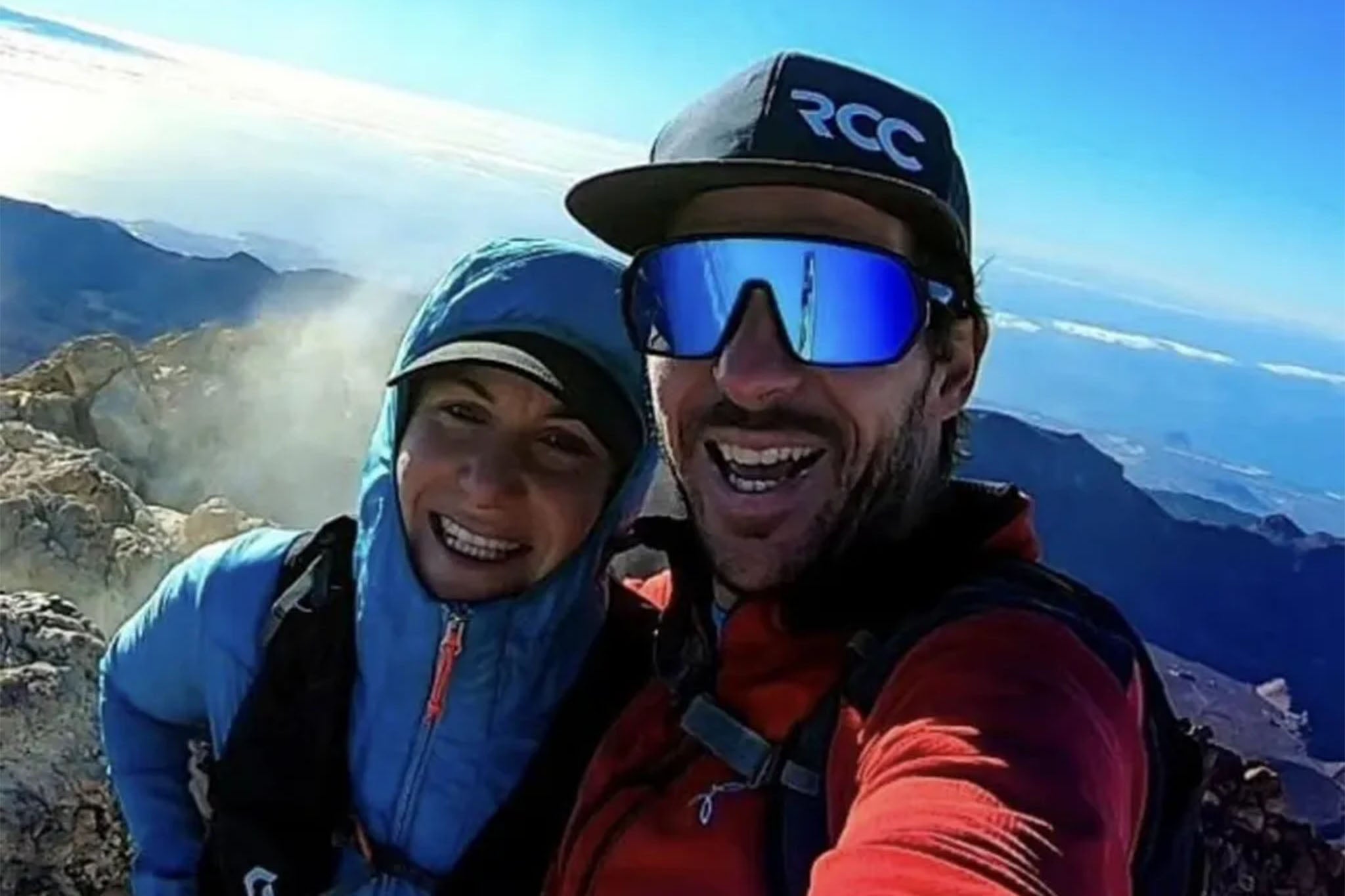
Austrian climber Thomas Plamberger was found guilty of gross negligent manslaughter for leaving his girlfriend during a hike on Grossglockner, Austria’s highest mountain (Facebook)
Silver, now an experienced climber and editor of Climbing Magazine, was later reunited with her boyfriend after her two arduous hours of survival and was furious with him. They broke up a few months later. But Silver still wonders what could have happened if she had not safely found her way back. “Things could have gone south,” she tells me. “You can see so many instances where this could have become a really big search and rescue situation, or it could have been fatal.”
The most common — and less extreme — form of alpine divorce occurs when one partner walks ahead during a hike, leaving the other alone after a minor argument. Minaa B, a New York-based social worker and relationship expert, describes it as a form of abandonment trauma. Being left behind on a hike can trigger a powerful fight-or-flight response, flooding the nervous system with fear and leaving a person disoriented and panicked. “It can be very dysregulating to the nervous system for somebody to be abandoned in either an unfamiliar environment or even an unsafe environment,” says Minaa B. Not having access to resources, like a working cell phone or a blanket, can add to the severity of the situation, too. “You might feel fear. You might feel extreme stress in that moment,” she says. “There’s a threat to your safety that’s happening.”
Advertisement
The relationship expert compares alpine divorce to ghosting — the sudden, unexplained cutoff of communication in a romantic relationship, often used to avoid confrontation. “People who struggle with emotional maturity and direct communication can find it easier to abandon someone versus having a very clear conversation about wanting to end the relationship,” says Minaa B. “This is an extreme form of ghosting, except it’s not happening in the digital space. It’s happening in real life to people.”
Stories of alpine divorce range from mid-hike couples’ spats to much darker circumstances (Getty Images)
Alpine divorces are usually the result of a communication breakdown, says Dr. Jessica Carbino, a relationship expert and former sociologist for Bumble and Tinder. “It represents someone’s capacity to control their impulses,” she explains. “People who would engage in this type of behavior are having a challenge regulating their stress and becoming panicked or very anxious. And they then engage in these incredibly impulsive behaviors, like leaving somebody on a mountain, abandoning them and walking away.”
Power dynamics play a big role, too. The image of a man abandoning a woman, leaving her vulnerable, taps into traditional gender roles that assume the man leads and the woman follows. “Men historically have the power to determine the grounds for all interactions,” says Carbino. “By walking away from a conversation, you are taking the power back. You are denying the opportunity for interaction, and that certainly has a gender element to it.”
Advertisement
When a partner abandons you in a remote setting, it’s a profound breach of trust that’s hard to repair. According to Minaa B, it may signal that your needs aren’t a priority — and could be a sign it’s time to walk away. “That experience can trickle into how you perceive the relationship, the fact that your partner did abandon you in this way,” she adds. “And I think the question for that person experiencing that is, ‘What does this mean about trust?’”
As a regular alpinist with nearly 20 years of experience, Silver now knows what it takes to be prepared for a difficult hike. She hopes that less-experienced climbers, and women in particular, are not put off by these stories circulating online, but that they take extra caution when embarking on dates in more isolated locations.
“If you have any apprehension or lack of experience, do the research, ask the hard questions, don’t accept the answers point-blank [from your partner or date],” says Silver. If in doubt, pick somewhere familiar, busy and within cell reception service. “If you have any inkling that something isn’t right, suggest something much more mellow, go to the climbing gym instead. Or, choose a hiking route that you’ve done before.” It’s a sad reality, but one that all women should be aware of.
The national domestic abuse helpline offers support for women on 0808 2000 247, or you can visit the Refuge website. There is a dedicated men’s advice line on 0808 8010 327. Those in the US can call the domestic violence hotline on 1-800-799-SAFE (7233). Other international helplines can be found via www.befrienders.org
Members of North Yorkshire Council’s executive voted on Tuesday (March 17) to adopt a masterplan framework for Maltkiln, which would be built around Cattal railway station, near Harrogate.
The framework will be used to shape the development of the new community, which, as well as housing, includes primary schools, shops, and health and sports facilities.
Councillor Mark Crane, executive member for open to business, told the committee that work was progressing on the scheme.
“This is a high-level document that’s in front of us today. A lot more work needs doing on it, but we are getting towards the stage where hopefully in the next year or two we’ll see spades in the ground and the start of a new settlement which will be very accessible because of the train line, with the bus service we’re hoping will be there as well.
Advertisement
“(It will have) buildings that are of a high standard and require a lot less heating than older buildings would do. It’s a positive story, although what you will always find is everybody supports new settlements as long as they’re nowhere near them.”
A map of the proposed development
Councillor Carl Les, leader of the authority, added: “We’ve been talking about this for a long, long time since we inherited it from Harrogate (Borough Council).
“I think the really worrying thing is that to meet our housing targets, we need a Maltkiln every year.”
The framework was approved despite concerns from some local councillors.
Advertisement
Ahead of the meeting, Councillor Arnold Warneken, member for the Ouseburn division, urged the executive to delay adopting the framework until further consultation work had taken place with local communities.
Arthritis is often associated with older age, but it also affects children. One of the most common forms is juvenile idiopathic arthritis (JIA), an inflammatory condition that causes persistent joint swelling and pain.
For reasons that remain unclear, between 10% and 30% of children with JIA also develop uveitis, an inflammatory disease of the eye. In some cases, this eye inflammation does not respond to treatment and can lead to sight loss.
A recent study from our laboratory shows that immune cells called B cells, best known for producing antibodies, play a previously underappreciated role in driving this process and may point to new treatment approaches.
JIA is diagnosed when a child or young person under 16 develops inflammation in at least one joint for more than six weeks with no clear cause. Around one in 1,000 children in the UK are affected. The condition includes several subtypes, most of which are autoimmune, meaning the immune system mistakenly attacks the body’s own tissues.
Advertisement
Outcomes vary. With treatment, some children experience long periods of remission and may outgrow the condition. For others, inflammation persists into adulthood and can cause joint damage and disability. JIA can also affect organs beyond the joints, including the skin, gut and eyes. When it involves the eye, the condition is known as JIA-associated uveitis.
Much remains unknown about why some children with JIA develop eye inflammation while others do not. It is unclear whether the same immune pathways drive disease in both joints and eyes, or why inflammation most often affects the front of the eye, known as anterior uveitis. In many cases, the condition is silent and painless, allowing damage to accumulate unnoticed. Regular eye screening is therefore essential.
Several risk factors are well established. Girls and children who develop JIA early in life, particularly before the age of six, are more likely to develop uveitis. Children who test positive for antinuclear antibodies are also at increased risk.
Advertisement
Even so, the biological mechanisms linking arthritis and eye disease remain poorly understood, and the role of antibody-producing B cells has received relatively little attention.
To investigate this, our study analysed blood samples from more than 150 children with arthritis. Certain types of B cells were more abundant in those who had developed uveitis than in children with arthritis alone. A distinctive aspect of the research was the opportunity to examine samples taken directly from affected eyes.
In some children, uveitis can lead to cataracts or glaucoma, making surgery necessary to preserve vision. During these procedures, small amounts of biological material that would normally be discarded can be collected for research. Using these samples, we found that activated B cells had migrated into the eyes of children with JIA-associated uveitis.
Laboratory experiments showed that blocking communication between B cells and another type of immune cell, known as T cells, significantly reduced inflammation. The drug used to achieve this is already being tested in clinical trials for multiple sclerosis and lupus, raising the possibility of repurposing it for children with treatment-resistant disease.
Advertisement
The need for new approaches is clear. Currently, one in four children with JIA-associated uveitis do not respond to the only approved biologic therapy, and by age 18 nearly a third have lost some vision in at least one eye.
These findings point to a potential new treatment pathway and highlight a broader issue in medical research. There is often a delay of many years before therapies developed for adults are tested in children, even when the underlying inflammatory mechanisms are similar.
Improving how discoveries are translated into paediatric care could significantly change outcomes for children with arthritis and uveitis. Earlier intervention, targeted therapies and faster access to treatments already being explored in adult disease may help prevent vision loss, and reduce the long-term burden on children and their families.
This year marks the 25th anniversary of Moulin Rouge!, Baz Luhrmann’s reinvention of the movie musical. There is little doubt the movie musical was on the decline in the 1980s and 90s. The only real contender during that period was Disney (who released Beauty and the Beast in 1991 and The Lion King in 1994).
The musical was slowly being replaced by what contemporary critics called the “musically oriented film”, starting with 1977’s Saturday Night Fever, then Fame (1981), Flashdance (1983) and Footloose (1984). This trend extended to films whose soundtracks proved irresistible. Think Top Gun (1983), Quentin Tarantino’s bold soundtracks (Pulp Fiction in 1994 and Jackie Brown in 1997), alongside Nora Ephron’s nostalgic throwbacks in Sleepless in Seattle (1989) and You’ve Got Mail (1998).
These poppy soundtracks – full of songs you know but haven’t heard in a while – provided the perfect platform for Luhrmann to introduce a new kind of jukebox musical.
Not only did Moulin Rouge! pack an extraordinary number of songs into its duration – over 20, when a classic musical such as 1934’s Top Hat might contain as few as five tunes – it did so in a way that no musical had ever done before.
Advertisement
The trailer for Moulin Rouge!
Traditional musicals tended to construct their song and dance sequences via long takes while also maintaining a good distance from performers. This was in order to preserve the integrity of the number. It was thought important to capture a dancer’s full body so as to appreciate the athleticism and wholeness of a performance. This was central for Fred Astaire (say in Swing Time, 1936), Gene Kelly (in Singin’ in the Rain, 1952) and even Marylin Monroe (in Gentlemen Prefer Blondes, 1953). The integrity of the performance was everything. Not so for Luhrmann, who introduced cut-up, super-edited song and dance numbers at breakneck speed.
The average shot length in Moulin Rouge! is under two seconds: a very fast pace for the time. While acceptable for an action movie, nothing like this had ever been done in a musical. It is likely that Luhrmann gained inspiration from pop music video culture — the “MTV aesthetic” — that had been de rigueur on TV screens for a good ten to 15 years. He had already borrowed from it in his previous films, Strictly Ballroom (1992) and William Shakespeare’s Romeo + Juliet (1996).
From one world to another
Moulin Rouge! nevertheless borrows one of the main traits of movie musicals. The story of Moulin Rouge! is the story of the attempts of its main characters to go from one world to another.
Advertisement
We find this in many classic musicals. It’s in Dorothy’s dream of leaving Kansas and journeying to Oz, and then in her desire to return home again in The Wizard of Oz (1939). It’s in Maria’s desire to leave the convent in The Sound of Music (1965). Or most emphatically in Tommy’s desire to leave Manhattan and live the rest of his days in a fantasy world in Brigadoon (1954).
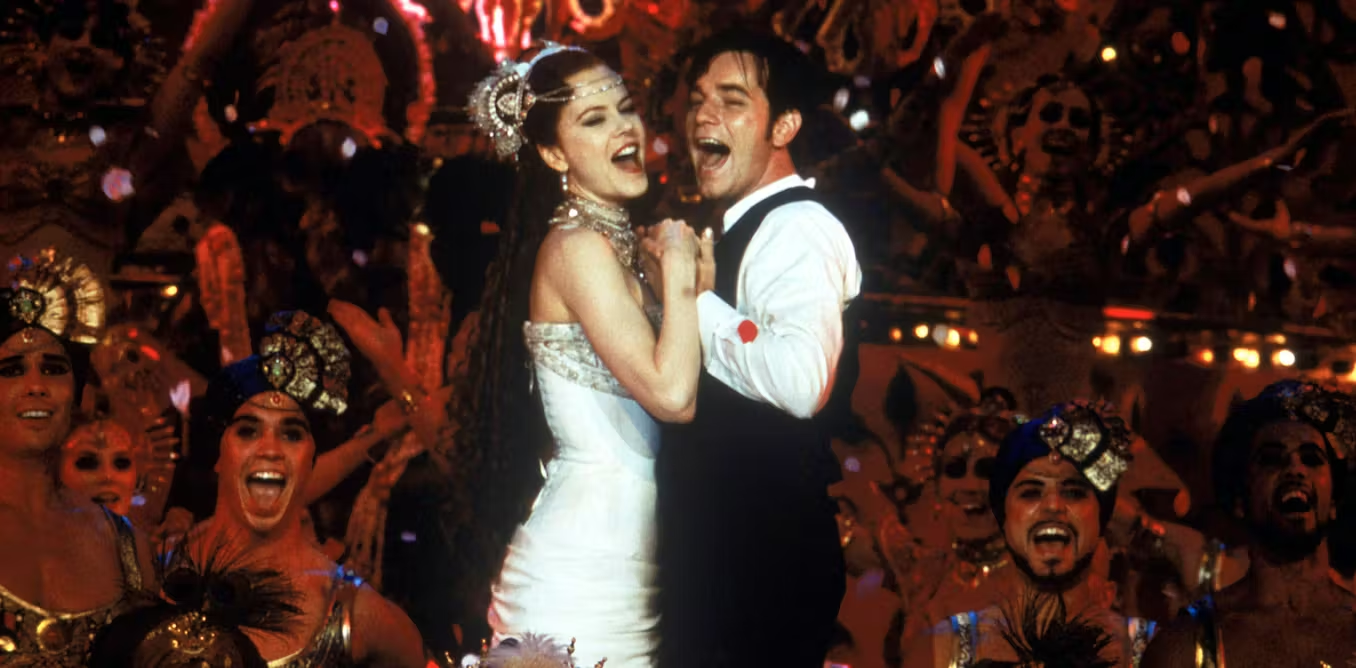
In Moulin Rouge!, Christian (Ewan McGregor) wants to leave his current world behind and enter a world in which he is a great writer. Satine (Nicole Kidman), too, desires to leave the world in which she is a dancer at the Moulin Rouge and enter a new world in which she will be a “real” actress on stage in the legitimate theatre.
Your Song from Moulin Rouge!
As happens so often in the musical genre, our characters try to get to a new world by way of song and dance. That is, by putting on a show – what is generally termed a “backstage musical”. When Christian sings Your Song, he is intimating that Satine has opened up a new world for him (“How wonderful life is now you’re in the world”). Satine herself is even more emphatic in singing One Day I’ll Fly Away – and that may be her best way of getting from one world to another.
Advertisement
Do our characters make it to their new worlds? Indeed, Christian does: he becomes a writer and the film we see is his version of the story. But this is not so for Satine – she dies. There certainly are musicals that do not have happy endings, such as West Side Story (1961), Funny Girl (1968) and All that Jazz (1979). But it was was an extraordinarily bold move to chart the demise of the film’s most glamorous performer and biggest star. In this way Luhrmann’s debt may be more akin to opera, such as Puccini’s La Boheme (1869) or Verdi’s La Traviata (1853).
In the end, Moulin Rouge! grounds its stylistic excess in a simple credo: “The greatest thing you’ll ever learn is just to love and be loved in return.” As Satine does not survive to enter the future she imagines, love crosses a different boundary – death itself. Christian’s private grief becomes public art, and the romance endures as story and song. Love does not avert tragedy, but it grants it form, and in doing so allows it to last.
“It’s actually so sad to see that the tournament directors and the tournaments not protecting us as players. They just care about their [sales], about their tournament and that’s it.
“I’m not sure if I ever want to go there after his comment. For me it’s too much.”
Sabalenka won the Indian Wells title on Sunday, her first tournament since losing the final of the Australian Open in January.
“Going into this season, we decided… to prioritise my health and make sure we have these little gaps in the schedule where I can reset, recharge, work and be better prepared for bigger tournaments,” said Sabalenka, who will attempt to defend her Miami Open title this week.
Advertisement
“I feel like the scheduling is going crazy and that’s why you see so many players injured, always taped and not delivering the best quality matches because it’s almost impossible.”
American two-time Grand Slam champion Coco Gauff said: “Iga and Aryna have played that tournament so many times and it wasn’t anything personal to it.
“It’s tough. We’re trying our best to play the calendar. I completely understand why she would feel like that because the comments were unnecessary.”
Players have regularly voiced concerns about the congested tennis calendar, which stretches across 11 months of the year for the top players.
The new study found that a Mediterranean diet rich in vegetables, berries, nuts and olive oil could also reduce the risk of dementia.
People whose diet contained lots of vegetables, fruit, nuts, fish, beans, olive oil and poultry plus a “moderate intake” of wine, while limiting red meat, fried foods and sweets, were analysed.
The diet was linked to less brain tissue loss over time, especially grey matter, and less “ventricular enlargement”, which is a marker of brain ageing.
Advertisement
The researchers wrote that “grey matter atrophy and ventricle volume enlargement are well-established markers of brain ageing”, adding that grey matter “plays a key role in memory, learning and decision making” while ventricular enlargement reflects tissue loss.
They concluded that “foods rich in antioxidants, such as berries, and high-quality protein sources like poultry, may reduce oxidative stress and mitigate neuronal damage”.
“Conversely, fast fried foods, often high in unhealthy fats, trans fats and advanced glycation end-products, may contribute to inflammation and vascular damage,” they wrote.
Writing in the Journal of Neurology, Neurosurgery and Psychiatry, experts analysed data from 1,647 people with an average age of 60.
Advertisement
They looked at their adherence to the “Mind” diet, which stands for the Mediterranean-Dash Intervention for Neurodegenerative Delay.
It is designed to support brain health and reduce the risk of Alzheimer’s disease, and includes many plant-based, antioxidant-rich foods while limiting saturated fats and added sugars.
All people in the study completed food frequency questionnaires and had at least two brain MRI scan assessments.
Advertisement
During an average monitoring period of 12 years, as people got older, they displayed loss of brain matter alongside other markers of brain loss.
But those who stuck to the diet most closely had slower grey matter shrinkage and loss.
Each three-point increase in adherence to the diet was linked with slower loss, equivalent to 20% less age-related decline and two-and-a-half years of delayed brain ageing, the study found.
Advertisement
Similarly, each three-point increase was associated with slower expansion of total ventricular volume, equivalent to 8% less tissue loss and one year of delayed brain ageing.
The findings also suggested that benefits were greater in older people and those who were active and not overweight, suggesting that combined lifestyle approaches may have a significant effect.
Reacting to the study, Dr Jacqui Hanley, head of research at Alzheimer’s Research UK, said: “Taken together with earlier evidence, the findings add to growing indications that eating a balanced diet, staying active and taking other healthy steps may support our brain health as we age.
“More long‑term studies in diverse groups are still needed to untangle the role of diet, genetics and other factors.”
Professor Catey Bunce, statistical ambassador at the Royal Statistical Society, said: “As with many observational studies, the results are interesting and may point to possible associations, but they should not be interpreted as definitive evidence that the diet directly prevents brain ageing.”
Michelle Dyson, chief executive of the Alzheimer’s Society, said: “The Lancet Commission, which was part funded by Alzheimer’s Society, found nearly half of dementia cases globally are linked to modifiable risk factors – things that can be changed either on an individual or societal level – and could potentially be prevented or delayed.
“Continuing to grow our understanding of risk, and encouraging people to quit smoking, keep physically active, eat a healthy balanced diet, control blood pressure and drink less alcohol can all help reduce the risk of dementia.”
The cafe was an off-shoot of a takeaway loved by Michelin, 6,000 miles away in Hong Kong
09:46, 18 Mar 2026Updated 09:50, 18 Mar 2026
A popular Bury café is saying farewell to Greater Manchester after two years of calling it home. Nestled in a row of terraced houses, LOJO Mate came to prominence early last year as an inconspicuous dining spot serving up dishes from thousands of miles away.
Established in 2024, it was an off-shoot of highly rated takeaway called Sai Kwan Lo Jo, which was established over 6,000 miles away in Hong Kong. Operating for several years, the original spot specialised in food from China’s Guangdong’s Xiguan region, such as hand-made lai fun noodles and sticky rice dumplings.
For three years it consistently made it onto the Michelin Guide’s prestigious Bib Gourmand list. But then it suddenly closed with its owners called it quits on its takeaway citing the pandemic, closures happening around them and a period of low earnings.
Advertisement
Get MEN Premium now for just £1 HERE – or get involved in our WhatsApp group by clicking HERE. And don’t miss out on our brilliant selection of newsletters HERE.
However, one of its founders decided to up sticks and move to the UK, landing in Bury, where he established LOJO Mate with a focus on Hong Kong-inspired dishes. Run only by Alex, the café situated on Tottington Road seated no more than 12 people and had a WhatsApp reservation system, served up amazing bowls of char siu – otherwise known as ‘Sorrowful Rice of Ecstasy’.
Over the weekend though, Alex confirmed to customers via a social media post that he was bidding farewell to Manchester. “Two years in Manchester. Time for the next chapter. Thank you to all our char siu lovers. See you soon…in another city,” he wrote on Instagram over the weekend.
Many of the cafes dishes were made to order, and its menu spanned classics from its original Sai Kwan including noodles, rice dumplings and cheesy rice pops, to Lo Jo special rice bowls featuring an array of ingredients such as SPAM sticks, pork chop and scrambled egg.
Illustrating the British crossover, he also served up traditional Hong Kong Breakfast with soup-based pasta and ham, a all-day meal with noodles, eggs, butter and toast as well an English fry up. Snacks included sandwiches, French fries, deep-fried chicken leg, Hong Kong French toast, as well as the much-loved char siu.
Reacting to the post that Lo Jo Mate was no more in Bury, one customer wrote: “I travelled there from London and really loved your place. All the best with your next project.”
Advertisement
Another wrote: “Never even got the chance to try in Manchester! Long shot, but please move to Glasgow.”
While a number of customers shared where they think Alex should head to next, including Leeds, London and Bristol, the café owner is remaining tight-lipped about the future of Lo Jo Mate, though he confirmed to the Manchester Evening News that it will reopen in a new location, which will be confirmed soon.






















































You must be logged in to post a comment Login