
Connect with us

NewsBeat

How to watch India vs Pakistan: TV channel and live stream for T20 World Cup match

Published

on

How to watch India vs Pakistan: TV channel and live stream for T20 World Cup match

The 2026 World Cup, taking place from 7 February to 8 March, is co-hosted by Sri Lanka and defending champions India, but controversy began before the tournament when Bangladesh were removed from the competition after refusing to tour India due to political tensions and security concerns.

Scotland were called up to replace them, but then Pakistan considered a boycott of the tournament in support of Bangladesh before settling on a boycott of their match against India alone under direction from their government.

However, after Bangladesh insisted that Pakistan end the boycott for “the benefit of the entire cricket ecosystem”, the country’s government confirmed this week that it had reversed its decision, meaning the Pakistan team will take to the field on Sunday as scheduled.

Advertisement

Both countries are unbeaten in the tournament so far, with Pakistan trumping the Netherlands and then the United States while India beat the US in their opener followed by Namibia on Thursday.

It means that at present the pair are level on four points, with India top of Group A due to their superior net run rate of +3.050 to Pakistan’s +0.932.

The nations’ matches must be played on neutral ground due to geopolitical tensions. They will therefore meet on Sunday in the Sri Lankan capital of Colombo, with the R Premadasa Stadium the setting for the latest instalment in this heated rivalry.

It remains arguably cricket’s fiercest rivalry and one of the sport’s most-watched contests, despite India winning 13 of the 16 T20 internationals between the countries.

Advertisement

On Wednesday, India – skippered by Suryakumar Yadav – then take on the Netherlands in Ahmedabad after Pakistan, led by captain Salman Ali Agha, face Namibia in Colombo.

Those games will conclude the group stage, with both India and Pakistan among the favourites to advance to the Super 8 round, which commences on February 21.

Source link

Advertisement
Continue Reading
Click to comment

Leave a Reply

Your email address will not be published. Required fields are marked *

NewsBeat

Who has been unmasked on The Masked Singer 2026? Full list

Published

on

Who has been unmasked on The Masked Singer 2026? Full list

ITV’s beloved gameshow returned for its seventh series in 2026, and there was plenty of guessing to be done before Moth was crowned the winner.

Presented by Joel Dommett, viewers across the nation tuned in over the last month or so to see if they could figure out who was behind the latest batch of masked characters.

From Can of Worms to Red Panda, there were 12 characters taking part in this series, with all now revealed.

Advertisement

Along with judges Jonathan Ross, Davina McCall, Mo Gilligan and Maya Jama, the studio audience and those at home have been guessing who was behind the masks for weeks.

Here is everyone who has been revealed in the latest series of The Masked Singer, including the new champion – did you guess any correctly?

Who has been unmasked on The Masked Singer 2026? Full list

Warning: If you haven’t seen the most recent episodes, including tonight’s (February 14) final, spoilers are ahead.

During the series, as well as the famous faces taking part, there have also been some separate unmaskings for celebrity guest panellists.

To avoid confusion, here are the celebrities behind the main 12 characters that have been unmasked on The Masked Singer 2026:

Advertisement
  • Disc Jockey – Alex Jones – TV presenter on BBC’s The One Show (episode 1)
  • Teabag – Professor Green – Rapper, singer and songwriter (episode 2)
  • Yak – John Lydon – Sex Pistols frontman (episode 3)
  • Gargoyle – Marcella Detroit – singer from Shakespears Sister (episode 4)
  • Monkey Business – Kate Nash – singer and actor (episode 5)
  • Artic Fox – Anton Du Beke – Strictly Come Dancing judge (episode 5)
  • Red Panda – Harry Hill – comedian (episode 6)
  • Sloth – Ben Fogle – TV host (semi-finals)
  • Can of Worms – Marvin Humes – Radio host and singer (semi-finals)
  • Toastie – Mica Paris – singer and presenter (final)
  • Conkers – Ben Shephard – This Morning host (final)

Who won The Masked Singer UK 2026?

In the end, it was Moth who claimed victory against Conkers and Toastie, after performing I Wanna Know What Love Is by Mariah Carey and duetting with Lionfish (Will Young) to Die With A Smile by Lady Gaga and Bruno Mars.


Recommended reading:


Moth was unmasked as the one and only Keisha Buchanan from the Sugarbabes, much to Maya’s delight after week’s of guessing the singer correctly.

The new winner of The Masked Singer UK said: “Honestly I’ve had the best time, I’m more of an introvert than an extrovert, and without the girls by my side it’s really brought me out my shell.”

Who was your favourite on The Masked Singer this year? Let us know in the comments below.

Advertisement

Source link

Continue Reading

NewsBeat

Britain’s relentless rain shows climate predictions playing out as expected

Published

on

Britain’s relentless rain shows climate predictions playing out as expected

Large parts of the UK are experiencing relentless rainfall, with some places seeing rain for 41 consecutive days and counting. In Reading, in the south east of England, our university’s official rain gauge has recorded precipitation on 31 consecutive days – unprecedented in records stretching all the way back to 1908.

The pattern has not just made 2026 a bit dreary. It also reveals one way in which climate change is making the already naturally variable (some would say gloriously variable) British weather increasingly extreme.

In those 31 days, Reading has received 141mm of rain, compared to the 30-year average over that period of just 58mm – well over twice what we would expect at the time of year.

Higher than average rainfall totals are expected, well, half of the time. This is just how mean averages work. But it’s the nature of this current weather pattern that is so unusual, and is in keeping with the type of wetter winter situation for UK weather that climate scientists have been warning us to expect – even if we are still only just learning why exactly this is happening on a regional level.

Advertisement

Over the full breadth of a British year, the bigger picture is even more revealing. Last year, the UK was grappling with one of the hottest and driest summers on record. A succession of hot spells, combined with long periods that saw less than average rainfall, meant water supplies dwindled and widespread hosepipe bans were put in place.

As a whole, 2025 from spring onwards was exceptionally dry. Fast forward to the new year, and we’re facing the opposite – weeks of rainfall and flooding. These extremes are what we expect to see in this part of the world, as heat builds up in the global atmosphere and oceans. For British people, this is what climate change right now feels like.

Plonkers wine bar in York was submerged by the River Ouse in January 2026.
Danny Lawson / Alamy

More rain, more intense rain

What is causing this link between a warmer planet and wetter British winters? One fundamental link is in basic physics of the atmosphere as temperatures rise. Warmer air can hold more moisture – about 7% more for every one degree celsius of warming. This means that when it rains, on average it rains harder. Bigger, heavier downpours become more common.

Advertisement

Climate change is also disrupting the patterns of currents and cycles within the atmosphere and oceans that bring the UK much of its weather. As an island archipelago on the edge of three competing climate masses – the wet, mild Atlantic, the cold, dry Arctic, and the wildly variable temperatures of the Eurasian landmass – it is used to variability.

But one constant feature plays an oversized role in the type of weather we get: the jet stream – a ribbon of fast-flowing air high in the atmosphere. The position of the jet stream makes a big difference. Sometimes it flows to the north of Scotland, sometimes it is hundreds of miles further south towards Spain. This location matters, because the jet stream helps to blow whole weather systems – think of a big “bubble” of air carrying its own weather with it – from the Atlantic towards the UK.

Currently, the jet stream is positioned further south than typical for the time of year, steering consecutive wet and often windy weather systems directly towards the UK. At the same time, a high pressure system is sitting over parts of northern Europe, blocking the wet weather from moving further east.

The impact of climate change on the jet stream is complex, because this river of air circling the north pole from west to east is influenced by a lot of different factors. One thing we do know: the Arctic, at surface level, is warming faster than other parts of the planet. This means that the temperature difference between the poles and the equator, for air at lower levels at least, is not as big as it used to be. This may be influencing the jet stream to weaken and meander.

Advertisement

With less energy to push them along, these weather patterns can get stuck in one location, meaning that the systems of low air pressure associated with rainfall and storms can slow down or get stuck. When a system bringing rain parks itself over the UK for days on end, only to be followed by another system, and another, the result is relentless rainfall.

To complicate things further, high up in the atmosphere where the jet stream blows, climate change is actually making the temperature difference between equator and poles increase. This may be strengthening the speed and turbulence within the jet stream itself, and just adds to a complex picture of varying influence on UK rainfall.

The challenge of managing extremes

These rapid swings between drought and deluge pose serious practical challenges for everyone in the UK. Water companies must plan for both droughts and floods, even within the same year. Farmers face uncertain growing conditions, with crops rotting in the wet soil one month, and drying out in droughts a few months later. Infrastructure designed for the climate of the past may not cope with the extremes of the future.

Understanding these changes isn’t just an academic exercise. It’s essential for helping communities, businesses and governments prepare for what’s coming. As Britain experiences these climate extremes at first-hand, it is crucial to build resilience into plans for hotter and drier summers, and warmer wetter winters.

Advertisement

Source link

Continue Reading

NewsBeat

Aston Villa 1-3 Newcastle: An advert for VAR? How many big decisions were wrong in FA Cup tie?

Published

on

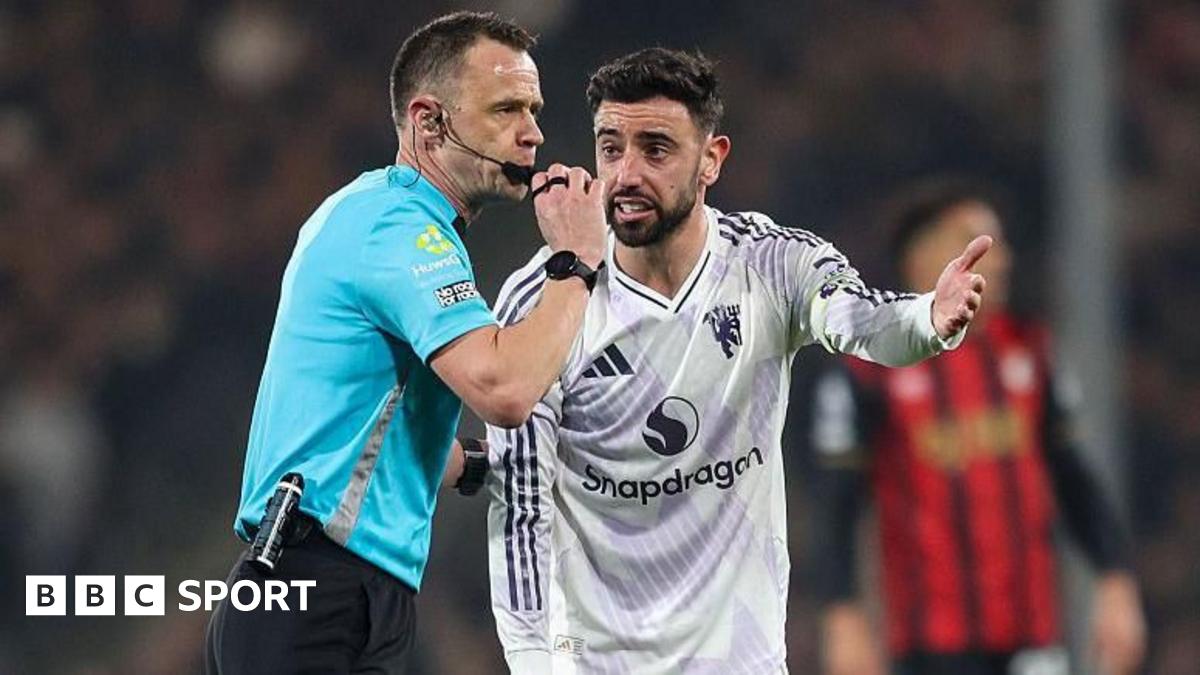
Newcastle complain to referee Chris Kavanagh

Has there ever been a better advert for the video assistant referee?

Newcastle’s 3-1 FA Cup fourth-round win at Aston Villa was full of controversy with the video assistant referee (VAR) once again the big talking point – even though it wasn’t even in use.

For this season and the previous FA Cup campaign, it has not been used until the fifth round, with many fans looking forward to a return to football without interruptions from technology.

But referee Chris Kavanagh will have been wishing he had VAR to fall back on at Villa Park after an offside opener for the hosts, a blatant penalty for the visitors not awarded, plus at least three other controversial decisions that could have affected the outcome.

Advertisement

Ultimately, Newcastle – who were on the wrong end of the majority of the calls – progressed into the last 16, but manager Eddie Howe couldn’t hide his disappointment with the officials.

Tammy Abraham’s opener for Villa was offside, Lucas Digne’s second-half handball should have been given as a penalty rather than a free-kick outside the box, while the French full-back was also fortunate to escape a red card for a reckless challenge on Jacob Murphy.

Howe said: “I’m so torn because the game is better without VAR in terms of excitement and the spectacle for the supporters and us when we’re living a moment live.

“But it does give accurate results. It does make the game more precise in terms of decision-making. You have to respect those moments. They’re worth their weight in gold.

Advertisement

“When VAR is there, there is a tendency to think, ‘oh well I won’t give that because VAR is there to check it’. Then your decision-making isn’t as sharp as it would normally have to be. Maybe there is a difference there.

“I’m always torn on VAR because I love the raw emotion when a goal goes in and you don’t see a flag or hear a whistle and you know the goal is going to stand and nobody can take it away from you. But, on the other side of that, I was wishing there was VAR for the goal they scored against us – and probably throughout the entire game.”

Villa, themselves, will be reflecting on a straight red card for goalkeeper Marco Bizot in first-half added time when they were leading 1-0, and could argue Dan Burn was offside for the visitors’ equaliser through Sandro Tonali.

Boss Unai Emery, added: “Today it makes sense understanding that VAR is necessary. It’s necessary to help the referees.”

Advertisement

After a season so far, which has seen VAR the talking point on a weekly basis, has a weekend without it shown the potential problems?

Ex-England striker Alan Shearer told BBC Match of the Day: “For five or six months, they have been relying on VAR and they come into this situation and it all changes.

“In their defence, which is hard for me, they have VAR for five to six months, then come into a huge game without it, so it is difficult for them.

“I would like the officials to do their job properly. It is not too much to ask, is it.

Advertisement

“If you ever needed any evidence of the damage that VAR has done to referees, I think today is a great example of that. These guys look petrified to make a decision today because they didn’t have a comfort blanket.”

Source link

Continue Reading

NewsBeat

What is dart frog toxin, the poison linked to Alexei Navalny’s death?

Published

on

What is dart frog toxin, the poison linked to Alexei Navalny’s death?

Epibatidine, the highly potent toxin Britain has linked to the death of Alexei Navalny, is reportedly 100 times more powerful than morphine.

This extremely toxic, nicotine-like compound originates from the Epipedobates genus of poison dart frogs, found exclusively in northern South America. Crucially, these amphibians are not indigenous to Russia.

Species such as the brightly coloured Anthony’s poison arrow frog and the Phantasmal poison frog secrete this substance onto their skin. Researchers theorise that the frogs acquire the toxin through their diet, as captive-bred animals lack it, and wild populations exhibit varying levels depending on their habitat.

Yulia Navalnaya, human rights activist and wife of Alexei Navalny, gives a press statement on the death and circumstances of her husband's death.
Yulia Navalnaya, human rights activist and wife of Alexei Navalny, gives a press statement on the death and circumstances of her husband’s death. (Kay Nietfeld/dpa via APAP)

Epibatidine has been investigated as a pain killer and for relief from painful inflammatory conditions of the lung such as asthma and pulmonary fibrosis.

However, it is about a hundred times more potent than morphine and because of its toxicity is not used clinically.

Advertisement

Professor Alastair Hay said Epibatidine acts to inhibit nerve action by blocking nicotinic receptors in the central and peripheral nervous systems.

The Professor (Emeritus) of Environmental Toxicology at the University of Leeds added: “The effect of blocking these receptors is muscle paralysis and paralysis of the respiratory system.

“So, breathing is blocked, and any person poisoned dies from suffocation.”

Professor Hay said the presence of the toxin in a person’s blood “suggests deliberate administration”.

Advertisement

He added: “Epibatidine toxicity can even be increased by co-administration of certain other drugs and these combinations have been researched.

“If epibatidine, a toxin, was indeed used to poison Alexei Navalny, this is in violation of the 1972 Biological and Toxin Weapons Convention (BTWC) and the 1993 Chemical Weapons Convention (CWC).

“The Soviet Union was a co-sponsor of the BTWC. Russia is a signatory of both the BTWC and CWC.

“If Russia used Epibatidine to poison Mr Navalny it has violated two treaties it has sworn to uphold.”

Advertisement

Epibatidine can be detected using a combination of gas chromatography and mass spectrometry.

Gas chromatography helps separate out compounds of interest and mass spectrometry breaks up chemicals into particular fragments to create a unique fingerprint of the substance which can then be identified.

Source link

Advertisement
Continue Reading

NewsBeat

Steve Borthwick rues Henry Arundell dismissal as England fall at Murrayfield again

Published

on

Steve Borthwick rues Henry Arundell dismissal as England fall at Murrayfield again

England saw Henry Arundell sin-binned for not releasing after a tackle during a tumultuous opening period, with the Bath winger receiving a second yellow card and 20-minute red for taking out Kyle Steyn in the air before the break, having got England off the mark with his fourth try in two matches after returning from a first caution.

Source link

Continue Reading

NewsBeat

Arsenal FC vs Wigan: Prediction, kick-off time, TV, live stream, team news, h2h results, odds

Published

on

Arsenal FC vs Wigan: Prediction, kick-off time, TV, live stream, team news, h2h results, odds

Arsenal have the opportunity to book their place in the fifth round of the FA Cup this weekend as they face Wigan Athletic.

The Gunners are in need of a confidence boost as their Premier League title charge seems to be faltering, with a midweek draw at Brentford trimming their advantage to just four points.

Plenty of opportunities remain for them to win silverware this season, with FA Cup, Champions League and Carabao Cup campaigns all very much alive, and Mikel Arteta’s side can take another step closer to booking tickets to Wembley as they face the Latics.

Wigan are in the midst of a challenging season. They sit 22nd in League One, only one point adrift of safety, but relieved manager Ryan Lowe of his duties last week. Glenn Whelan will take to the dugout at the Emirates, then.

Advertisement

The Latics are on a miserable run, too, taking five losses and one draw from their last six outings. Their most recent win came in the cup, though, as they edged past north-west rivals Preston North End 1-0.

Arsenal have not faced Wigan since knocking them out in the semi-finals of this tournament in 2014, when Mikel Arteta scored from the spot in a penalty shootout.

Noni Madueke scored Arsenal’s only goal as they drew 1-1 with Brentford on Wednesday night

Arsenal FC via Getty Images

Date, kick-off time and venue

Advertisement

Arsenal vs Wigan is scheduled for a 4.30pm GMT kick-off on Sunday, February 15, 2026.

The match will take place at the Emirates Stadium in north London.

Where to watch Arsenal vs Wigan

TV channel: In the UK, the game will be televised live on TNT Sports 1, with coverage starting at 4pm ahead of a 4.30pm kick-off.

Advertisement

Live stream: TNT Sports subscribers can also catch the contest live online via the Discovery+ app and website.

Live blog: You can follow all the action on matchday via Standard Sport’s live blog, with expert analysis from Matt Verri at the ground.

Arsenal vs Wigan team news

Source link

Continue Reading

NewsBeat

The beautiful Cambs restaurant in a historic building with an ever-changing menu

Published

on

Cambridgeshire Live

Adebola Adeshina says the restaurant provides guests with a “calmness” that is “away from everything”

If you are looking for a beautiful restaurant to enjoy an evening meal or to escape from daily life at lunchtime, you might want to take a trip to the Chubby Castor. Found in the quaint village of Castor, the restaurant is inside a Grade II list building and is run by Adebola Adeshina, who has worked under many famous chefs.

Advertisement

Mr Adeshina decided to open the Chubby Castor at the Fitzwilliam Arms after falling in love with the historic building. He said: “I’ve always been looking for the right place to come up. Then my agent called me up and said there’s a new site in Peterborough. I thought I’m not interested in Peterborough but they convinced me to have a look.

“I met the landlords and they really wanted somebody in there and I just kind of fell for it. The building is beautiful and had so much potential. The landlords gave us their backing and have been supporting us all of the way.”

Mr Adeshina started his career by training at Westminster Kingsway College and went on to work under a range of top chefs including the Galvin Brothers and Gordon Ramsey in Michelin Star restaurants. At a young age, Mr Adeshina opened his own restaurant with a business partner based in Tottenham that closed after five years because they were “ahead of their time”.

After learning more about running a business while working at the Petersham Hotel in Richmond, Mr Adeshina decided he wanted to try opening his own spot again and ended up with the Chubby Castor. The restaurant has a seasonal menu that has recently switched from being a set menu to individually priced dishes.

Mr Adeshina said: “We realise not everybody wants a three course meal so we thought, let’s just take everything back to basics. If somebody just wants to come for a main course or even just a dessert, we let them. That has been going really well.”

The restaurant serves a range of dishes from lobster and scallops to monkfish and coq au vin. When asked about his favourite dishes from the Chubby Castor, Mr Adeshina had a couple of recommendations for first-time visitors.

He said: “I think one of my favourites is the tomato tart with the yogurt sorbet. We grow our own tomatoes at the back and that’s what we use. For things coming onto the menu, we’ve got the salmon mosaic served with horseradish sauce. That has been one of my favourites that has been on since we’ve opened.

Advertisement

“The beef fillet is always on there but changes depending on the season. Sometimes we serve it with foie gras in the winter. At the moment, it comes with braised ox cheek, bone marrow, and truffle. That’s one of the dishes that people love when they come in. On top of that we do the tasting menu, which includes starters, mains, and desserts.”

Mr Adeshina believes the ambience, service, and food helps the Chubby Castor to stand out. The restaurant’s location means guests are “away from everything” and can enjoy the “calmness” of the area.

The Chubby Castor gets “a lot of support” from regular customers. The restaurant works hard to “cater to them” and will often offer “something special” if they are looking for something different to try.

Advertisement

Mr Adeshina added: “I think for our customers, the most important thing is to keep them engaged, keep them excited, and just give them the service they want. We don’t want to be in their face too much but also give them excellent service.”

In the restaurant’s garden, you can also find the Yard, which is a seasonal food spot and described as being “more relaxed and less expensive”. The Yard provides visitors with a “real countryside environment” where they can birdwatch and see squirrels while enjoying a wood fired pizza.

The Chubby Castor can be found in the Fitzwilliam Arms at 34 Peterborough Road. The restaurant is open for lunch from 12.30pm to 2.30pm and for dinner from 5.30pm to 9.30pm from Wednesday to Saturday and from 12pm to 3pm on Sundays.

Source link

Advertisement
Continue Reading

NewsBeat

Aston Villa 1-3 Newcastle: Alan Shearer and Wayne Rooney criticise Lucas Digne handball decision

Published

on

Wayne Rooney

BBC Sport pundits Wayne Rooney and Alan Shearer believe referees are “petrified” of making decisions without the “safety net of VAR”, after the officials award a free-kick instead of a penalty despite Aston Villa’s Lucas Digne handling the ball in the box.

READ MORE: ‘The officials looked petrified’ – was Villa Park chaos advert for VAR?

Available to UK users only.

Source link

Advertisement
Continue Reading

NewsBeat

Why Sigmund Freud is making a comeback in the age of authoritarianism and AI

Published

on

Why Sigmund Freud is making a comeback in the age of authoritarianism and AI

Psychoanalysis is having a moment. Instagram accounts dedicated to Freudian theory have amassed nearly 1.5 million followers. Television shows like Orna Guralnik’s Couples Therapy have become compulsive viewing. Think pieces in The New York Times, The London Review of Books, Harper’s, New Statesman, the Guardian and Vulture are declaring psychoanalysis’s resurrection. As Joseph Bernstein of the New York Times put it: “Sigmund Freud is enjoying something of a comeback.”

For many, this revival comes as a surprise. Over the past half century, psychoanalysis – the intellectual movement and therapeutic practice founded by Sigmund Freud in 1900 Vienna – has been shunned and belittled in many scientific circles. Particularly in the English-speaking world, the rise of behavioural psychology and a ballooning pharmaceutical industry pushed long-form talking therapies like psychoanalysis to the margins.

But there’s a more complex global story to tell. In Freud’s own lifetime (1856-1939), 15 psychoanalytic institutes were established worldwide, including in Norway, Palestine, South Africa and Japan. And around the world – from Paris to Buenos Aires, from São Paulo to Tel Aviv – psychoanalysis often flourished throughout the 20th century.

Across South America, psychoanalysis continues to wield huge clinical and cultural influence. It remains so popular in Argentina that people joke you can’t board a flight to Buenos Aires without having at least one analyst on board.

Advertisement

There are several reasons why psychoanalysis became popular in some countries but not others. One relates to the 20th-century history of Jewish diaspora. As the Third Reich expanded, many Jewish psychoanalysts and intellectuals fled central Europe before the Holocaust. Cities like London, which received Freud and his entire family, were culturally reshaped by this refugee crisis.

But another, perhaps less obvious reason concerns the rise of authoritarianism. Psychoanalysis may have been created and spread in the crucibles of wartime Europe, but its popularity has often surged alongside political crisis.

Take Argentina. As left-wing authoritarian Peronism gave way to a US-sponsored “dirty war”, paramilitary death squads abducted, killed or otherwise “disappeared” roughly 30,000 activists, journalists, union organisers and political dissidents. Loss, silence and fear enveloped the emotional worlds of many.

Yet at the same time, psychoanalysis – with its interest in trauma, repression, mourning and unconscious truth – became a meaningful way of grappling with this oppression. Therapeutic environments for talking about trauma and loss became a technique for responding to, and perhaps even resisting, this political disaster. In a culture of state lies and enforced silence, simply speaking truth was a radical exercise.

Advertisement

Many of Freud’s original followers used psychoanalysis in a similar way. Surrounded by the inexplicable horrors of European fascism, figures like Wilhelm Reich, Otto Fenichel, Theodor Adorno and Erich Fromm saw psychoanalysis, typically combined with classical Marxism, as an essential tool for understanding how we develop and desire authoritarian personalities.

Frantz Fanon relied on psychoanalysis to critique French colonial oppression.
GL Archive/Alamy

Half a world away in Algeria, the psychiatrist and anti-colonial activist Frantz Fanon relied heavily on psychoanalysis to protest the oppressive racial regimes of French colonialism. For all these doctors and philosophers, psychoanalysis was essential to political resistance.

Something similar appears to be happening today. As new forms of multinational autocracy rise, as immigrants are demonised and detained, and genocide is live-streamed, psychoanalysis is thriving once more.

A tool for making sense of the senseless

For some, neuropsychoanalysts like Mark Solms have provided the necessary links to take psychoanalysis up again. In his new book, The Only Cure: Freud and the Neuroscience of Mental Healing, Solms uses neuroscientific expertise – specifically his work on dreaming – to argue that Freud’s theory of the unconscious was right all along.

Advertisement

According to Solms, while drugs may be temporarily effective, they offer only short-term solutions. Only psychoanalytic treatments, he argues, provide any long-term curative effect.

But Solms is just one among many such resurgent figures – a growing cadre of clinician-intellectuals whose work has returned psychoanalysis to cultural esteem. Where Solms veers towards neurology, others including Jamieson Webster, Patricia Gherovici, Avgi Saketopoulou and Lara Sheehi return us to psychoanalysis’s political urgency.

Their work shows how psychoanalysis’s core concepts – the unconscious, the “death drive”, universal bisexuality, narcissism, the ego and repression – help make sense of our contemporary moment where other theories fall short.

Advertisement
Freud explained.

In a world of increasing commodification, psychoanalysis resists commercialised definitions of value. It emphasises deep time in a climate of shortening attention spans and insists on the value of human creativity and connection in a landscape of artificial intelligence overwhelm. It challenges conventional conceptions of gender and sexual identity, and prioritises individual experiences of suffering and desire.

The reasons for psychoanalysis’s contemporary resurgence mirror those that drove its earlier waves of popularity. In times of political upheaval, state-sponsored violence and collective trauma, psychoanalysis offers tools for making sense of the seemingly senseless. It provides a framework for understanding how authoritarian impulses take root in individual psyches and spread through societies.

More still, in an era where quick fixes and pharmaceutical interventions dominate mental health care, psychoanalysis insists on the value of sustained attention to human complexity. It refuses to reduce psychological distress to chemical imbalances in the brain or symptoms to be managed. Instead, it treats each person’s inner world as worthy of deep exploration.

The collective resurgence of interest in psychoanalysis is also challenging the field itself to transform. Old assumptions – like the idea that therapists should be neutral or that heterosexuality is the norm – are being challenged. And psychoanalytic practice is being reimagined alongside many social justice and solidarity movements. This is a moment in which many are coming together to reimagine what psychoanalysis can be.

Advertisement

Whether this renaissance will endure remains to be seen. But for now, as political crises mount and traditional therapeutic approaches seem insufficient, Freud’s insights into the human psyche are finding new audiences eager to understand the darkness of our times.

Source link

Advertisement
Continue Reading

NewsBeat

How Epstein used former head of Nobel Prize committee to entice global elites | News US

Published

on

How Epstein used former head of Nobel Prize committee to entice global elites | News US
Entrepreneur Richard Branson was among the elite roped into Epstein’s web of contacts (Picture: US Department of Justice)

The Epstein files have painted a chilling picture of how the convicted paedophile billionaire built up an unparalleled network of influence by trading access to the rich, famous and powerful.

Among high profile figures caught up his social Ponzi scheme was Thorbjørn Jagland, the head of the Nobel Prize committee from 2009 to 2015.

Jagland, who is mentioned hundreds of times in the latest tranche of documents, was Epstein’s key to reeling in countless members of the global elite, from Richard Branson to Donald Trump.

An investigation prompted by the release of the files has seen the former Norwegian Nobel Committee chief charged with ‘aggravated corruption’.

Advertisement

The crime unit of the Norwegian police force, Økokrim, is probing whether loans or gifts were exchanged through Jagland’s influence.

Authorities have searched Jagland’s homes in Oslo, southern coastal town Risør and Rauland in the west.

None of the documents released so far contain evidence of explicit lobbying for the coveted Nobel Peace Prize.

Lawyers on behalf of Jagland say he denies charges against him and confirmed he had been questioned by police on Thursday.

Advertisement

Epstein met Jagland through the Norwegian diplomat Terje Rød Larsen, one of the main architects of the Oslo Peace Accords between Israel and Palestine.

FILE - Chairman of the Norwegian Nobel Committee Thorbjorn Jagland announces the winner of the Nobel Peace Prize, at the Nobel Institute in Oslo, Friday Oct. 11, 2013. (Heiko Junge/NTB Scanpix via AP, File)
Epstein used Nobel Prize committee chief Thorbjørn Jagland (pictured) to further his sphere of influence (Picture: AP)

Larsen and his wife are also being investigated due to their connection with Epstein.

Jagland’s presence at Epstein’s homes in Paris and New York was much played up by the convicted financier.

Trump has long aspired to win the world’s premier trophy for peacemakers, publicly blasting the Nobel committee after it selected Venezuelan opposition leader Maria Machado last year rather than himself.

Advertisement

And in another snapshot of Epstein peddling his contacts, the sex offender wrote to MAGA figure Steve Bannon in 2018 suggesting the president’s head would ‘explode’ if he connected Bannon with Jagland.

His email read: ‘Donalds head would explode if he knew you were now buds with the guy who on monday will decide the nobel peace prize.

‘I told him next year it should be you when we settle china.’

In 2013, Epstein wrote to Virgin founder Richard Branson to tell him Jagland would be staying with him, inviting the British entrepreneur to join them, saying the Nobel committee head would be ‘interesting’ to get to know.

Advertisement

Two years later Epstein invited Kathy Ruemmler, White House counsel to Barack Obama, to meet Jagland.

Bill Gates - Jeffrey Epstein Estate PHOTOS RELEASED BY US House Oversight Committee - December 18, 2025 - https://www.dropbox.com/scl/fo/cl62lochkdzdalbzzqgq8/ADJIDEfLD1oQZrKmNeae2So?rlkey=y7529bx9tl7db6zf279jp3cyu&e=1&st=mxn6k82e&dl=0
Bill Gates pictured in the Epstein files with an unidentified woman (Picture: House Oversight Committee)

The sex offender also offered the same to Larry Summers, the former president of Harvard university in 2012, according to the emails released by the US justice department 

Epstein told Summers that while Jagland was ‘not bright’ , he was someone with a ‘unique perspective’.

The paedophile also discussed Jagland with Microsoft co-founder Bill Gates in 2014, explaining the Nobel chief had been re-elected as head of the Council of Europe.

Gates replied that was ‘good’, adding: ‘I guess his peace prize committee job is also up in the air?’

Advertisement

Get in touch with our news team by emailing us at webnews@metro.co.uk.

For more stories like this, check our news page.

Advertisement

Source link

Continue Reading

Trending

Copyright © 2025