

Connect with us
DAPA Banner

NewsBeat

Hunt for capybara named Samba running wild after escaping Marwell Zoo in Hampshire | News UK

Published

on

Hunt for capybara named Samba running wild after escaping Marwell Zoo in Hampshire | News UK
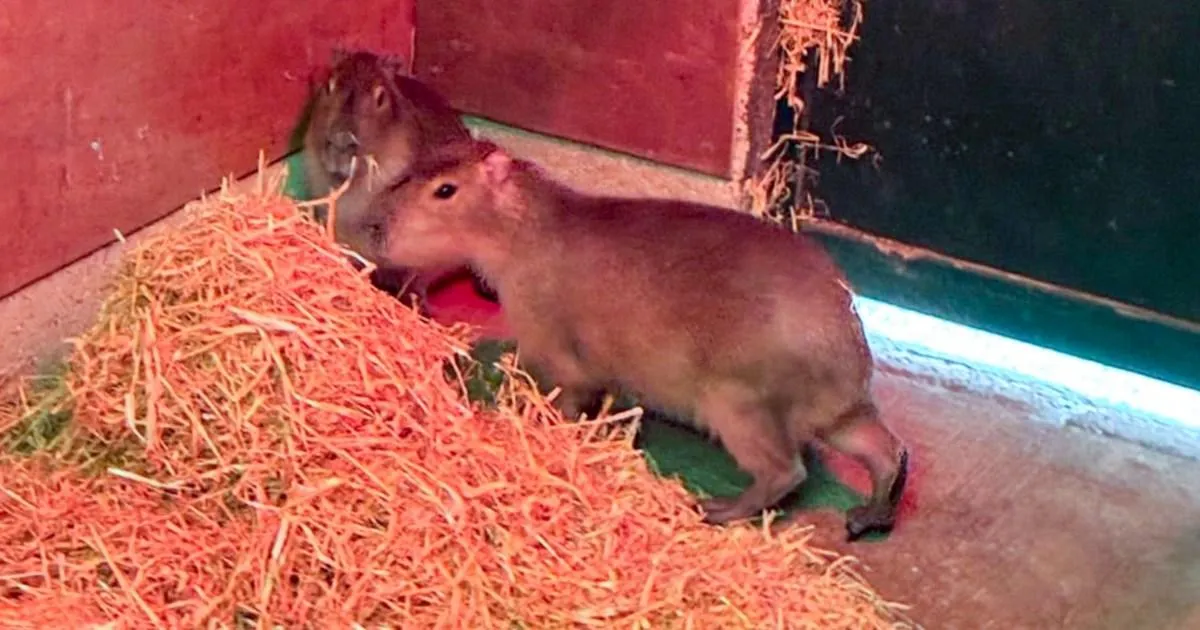
Samba bust out of her temporary enclosure just a day after being taken to Marwell Zoo (Picture: Marwell Zoo/Solent News)

One of the world’s largest rodents could be running around your feet as you read this.

Capybara Samba and Tango were moved to Marwell Zoo in Hampshire from Jimmy’s Farm & Wildlife Park on Monday.

But just a day later, the pair escaped their temporary home – despite having a pond ‘made for capybara life’ in their future enclosure.

While her escape partner, fellow capybara Tango, was found rummaging around nearby bushes, Samba remains on the lam.

Advertisement

The furry fugitive was spotted on Wednesday night in Owlslebury, a village two miles north of the zoo.

Sign up for all of the latest stories

Start your day informed with Metro’s News Updates newsletter or get Breaking News alerts the moment it happens.

Advertisement

A missing capybara poster shared by the zoo says Samba is ‘not dangerous but could be stressed’.

tapir and a capybara that had developed a strong bond were put to sleep on the same day so neither would be lonely
Capybaras are roughly the same size as some dogs (Picture: Newquay Zoo)
tapir and a capybara that had developed a strong bond were put to sleep on the same day so neither would be lonely
The giant rodents (centre) are known for their laid-back nature (Picture: Newquay Zoo)

Marwell Wildlife, which runs the zoo, has asked people to call if they spot the escaped capybara and to send her location.

Police are aware of Samba’s grand escape, it added.

The charity said on Facebook: ‘As always, animal welfare is our highest priority, and our team are working hard to bring Samba back as quickly and safely as possible.

‘Capybaras are intelligent, gentle animals, with a taste for adventure. They do not pose a risk to the public, we strongly advise against approaching Samba or disturbing any area she may be hiding, to prevent causing her stress.

Advertisement

‘Under no circumstances should a member of the public try to capture her by themselves.’

Marwell Wildlife added yesterday that teams are combing the area overnight for Samba, but have yet to post an update.

Capybaras are plump, mellow, dog-sized rodents native to South America.

These cuddly rodents spend their days munching on grass and water plants growing around bodies of water. They can grow up to four feet long.

Advertisement

Capybaras have become internet stars in recent years for their cuteness – there are even cafes in Japan where people pay to feed them carrots.

Marwell Wildlife said on Monday that the two female capybara would live in a private habitat area while they ‘complete their quarantine and get used to their new surroundings’

‘Once they’ve settled in, they’ll move into their new habitat – which we’re currently finishing, including a pond for them to enjoy.’

Get in touch with our news team by emailing us at webnews@metro.co.uk.

Advertisement

For more stories like this, check our news page.

Advertisement
Advertisement

Source link

Continue Reading
Click to comment

You must be logged in to post a comment Login

Leave a Reply

NewsBeat

Magnetic fluid injected into the heart could stop strokes before they start

Published

on

Magnetic fluid injected into the heart could stop strokes before they start

Millions of people have a heart rhythm disorder called atrial fibrillation, which causes the heart’s upper chambers or atria to beat chaotically rather than in a smooth, coordinated rhythm. For many, the symptoms can be mild with palpitations, fatigue or breathlessness, but the greatest danger is something far more serious – a stroke.

Tucked inside the heart is a tiny pouch called the left atrial appendage. When the heart beats erratically, blood can pool and sit still in this pouch instead of flowing normally – and still blood tends to clot. If one of those clots breaks free and travels to the brain, it can block bloodflow and cause a stroke. Atrial fibrillation makes you about five times more likely to have a stroke. The question for researchers, then, has been whether that pouch could simply be taken out of the equation.

Researchers recently revealed one possible answer – a new technique, so far tested only in animals, in which a magnetically guided liquid is injected into the heart, hardening to permanently seal the pouch from the inside. Early tests in rats and pigs suggest that this method could one day lower the risk of stroke in people with atrial fibrillation.

Current treatments are effective but imperfect. Today, most patients are prescribed blood-thinning drugs, such as anticoagulants. These drugs reduce the ability of blood to clot and significantly lower the risk of having a stroke.

Advertisement

However, anticoagulants come with trade-offs. They increase bleeding risk, which can be dangerous for some patients – particularly older adults or those with other medical conditions such as stomach ulcers, hypertension, liver or kidney disease and cancer. Some people cannot tolerate them or must stop treatment because of bleeding complications.

Another option is a procedure called left atrial appendage occlusion, in which doctors implant a small device to plug the appendage. The most widely known devices are delivered using a catheter and expand like a small metal umbrella to seal the opening.

Atrial fibrillation makes you five times more likely to have a stroke.
PeopleImages/Shutterstock.com

These devices can be effective, but they are not perfect. Because the appendage varies widely in shape and size between patients, rigid implants may not always create a complete seal. Sometimes a little blood can leak around the edges, and small clots can form on the surface of the device. The parts that hold the device in place can also damage the heart tissue.

The newly reported approach takes a radically different path. Instead of inserting a rigid implant, researchers inject a magnetically responsive liquid, sometimes called a magnetofluid, directly into the left atrial appendage through a catheter.

Advertisement

Once inside the cavity, an external magnetic field helps guide and hold the fluid in place, so it fills the entire appendage, even against the force of circulating blood. Within minutes, the liquid reacts with water in the blood and transforms into a soft “magnetogel” that seals off the cavity.

Because the material begins as a liquid, it can adapt precisely to the highly irregular shape of each patient’s left atrial appendage. In theory, this allows it to create a more complete seal than conventional rigid devices. The gel also appears capable of integrating with the heart’s inner lining, forming a smooth surface that may reduce the chance of a clot forming.

Encouraging early results

So far, the technique has only been tested in animals. Researchers first evaluated the concept in rats and then progressed to experiments in pigs, an important milestone in cardiovascular research.

In the pig study, the magnetogel remained stable inside the appendage for 10 months with no evidence of a clot or leakage. The heart’s inner lining grew over the surface of the gel, creating a continuous, apparently healthy layer.

Advertisement

When compared with conventional metal occlusion devices in pigs, the magnetogel produced a smoother lining and avoided the tissue damage associated with anchoring barbs. Equally important, the researchers did not observe harmful biological effects in the animals.

Pigs are widely used in cardiovascular research because their hearts closely resemble human hearts, being similar in size, structure and function. Showing that the magnetofluid works safely in a pig heart therefore provides a valuable proof-of-concept. But it does not yet guarantee that the technology will be safe or effective in people.

Muddy pigs on a farm.
Of all mammals, pigs’ hearts most closely resemble human’s hearts.
Angela Buser/Shutterstock.com

Despite the promising results, the technique remains firmly in the experimental stage. Before human trials can begin, researchers must demonstrate long-term safety, refine how the material is delivered and ensure it behaves predictably in larger animal studies.

There are also some practical problems to fix. For example, the magnetic material can affect MRI heart scans, making parts of the heart harder to see. Problems like this need to be solved before it can be used in patients. Also, medical devices have to go through a lot of testing, so it will probably take many years before it can be used in real treatments.

If the technology ultimately proves safe and effective in humans, it could offer a new way to protect people with atrial fibrillation from stroke. A catheter-delivered liquid seal might provide an alternative for patients who cannot tolerate anticoagulant drugs and could overcome some of the limitations of existing occlusion devices.

Advertisement

Given that atrial fibrillation affects tens of millions of people worldwide, even modest improvements in stroke prevention could have a substantial impact on global health.

For now, the magnetic gel remains a laboratory innovation rather than a clinical therapy. But it highlights how advances in materials science and biomedical engineering are opening new possibilities for tackling one of cardiology’s most persistent challenges.

Source link

Advertisement
Continue Reading

NewsBeat

Denmark sent explosives to blow up Greenland runways amid Trump invasion threat | World News

Published

on

Denmark sent explosives to blow up Greenland runways amid Trump invasion threat | World News

Denmark sent soldiers and explosives to Greenland in January so that it could blow up runways in the event of a US invasion, the country’s public broadcaster has said. 

Landing strips in Nuuk and Kangerlussuaq could have been targeted to prevent US military aircraft from landing soldiers and equipment if President Trump had followed through on threats to invade, DR reported.

Military aircraft also transported blood from Denmark to help treat the wounded in case of battle.

Image:
A Royal Danish Air Force plane carrying soldiers lands at Nuuk airport Greenland in January. Pics: Reuters

The emergency moves were allegedly made in the immediate aftermath of the US capture of Venezuela’s President Maduro, which demonstrated Mr Trump’s willingness to use US military might.

Advertisement

Mr Trump has long advocated for the mineral-rich island of Greenland – a self-governing Danish territory – to become part of the United States.

In the past, he has refused to rule out using military force to take the territory.

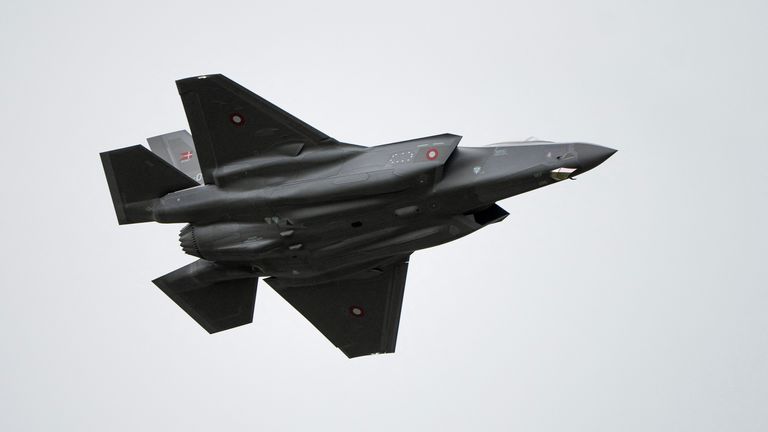
A Danish F-35. Pic: Reuters
Image:
A Danish F-35. Pic: Reuters

Denmark doubles down

The new report, based upon the testimonies of 12 main sources at the top of Denmark’s government and military, appears to show Copenhagen’s willingness to use force to raise the cost of any US action.

Denmark is said to have sought confidential talks with European allies after the re-election of Mr Trump in 2025 to shore up support against any annexation attempt.

Advertisement
Military bases in Greenland
Image:
Military bases in Greenland

A French official is quoted as saying that Denmark had decided to “play the game”.

Danish and European allies formed plans to send soldiers and military hardware to Greenland later in 2026, to show the US how seriously Europe took the defence of the island.

However, sources who spoke to DR claimed that US military action in Venezuela on 3 January of this year changed everything.

France's President Macron answered pleas for aid from Denmark's Prime Minister Frederiksen. Pic: Reuters
Image:
France’s President Macron answered pleas for aid from Denmark’s Prime Minister Frederiksen. Pic: Reuters

In the days after that military action, the US president repeated that the US “needs Greenland for national security,” going on to say he was “very serious” about it.

A more rapid European response now began, with an advance command of Danish, French, German, Norwegian and Swedish soldiers flying to the territory.

Danish military forces participate in an exercise with hundreds of troops from several European NATO members in Greenland. Pic: AP
Image:
Danish military forces participate in an exercise with hundreds of troops from several European NATO members in Greenland. Pic: AP

A larger, well publicised and announced, main force followed, as well as Danish fighter jets and a French naval vessel.

The deployment was presented as part of Danish-led joint military exercises called Operation Arctic Endurance, but the real reason was to prepare for and deter a possible US invasion, DR claims.

Advertisement
Danish warships participate in a military exercises in the Artic. Pic: AP
Image:
Danish warships participate in a military exercises in the Artic. Pic: AP

Denmark hoped that having soldiers with as many different flags on their arms as possible would deter US action.

Read more from Sky News:
Iran war set to drive up household bills

EU loan for Ukraine war effort blocked

Advertisement

Sky’s Yalda Hakim unpacking in January what happened in Davos

Instead of just confronting Danish troops, Washington would have had to commit to major hostile action against multiple fellow NATO allies.

While it’s not clear if forces from other European countries would have fought against the US, Danish soldiers were reportedly given live ammunition and permission to engage.

Advertisement

The public nature of Operation Arctic Endurance and intense diplomacy by European leaders, including by the British prime minister, appeared to have worked.

Speaking in Davos at the World Economic Forum on 21 January, Mr Trump said the US “won’t use force” to take Greenland, though he reiterated that the US was “unstoppable”.

Denmark is due to head to the polls on 24 March after the country’s Prime Minister Mette Frederiksen called snap elections.

Opinion polls suggest Ms Frederiksen has received a much-needed popularity boost over her handling of the Greenland-US crisis, after public dissatisfaction over rising living costs and welfare pressures.

Advertisement

Source link

Continue Reading

NewsBeat

John Lithgow Considered Quitting Harry Potter TV Series Over JK Rowling Backlash

Published

on

John Lithgow Considered Quitting Harry Potter TV Series Over JK Rowling Backlash

John Lithgow has claimed that he contemplated pulling out of the upcoming TV adaptation of Harry Potter after he began facing backlash over his involvement in the series.

Around a year ago, it was confirmed that Lithgow would play Hogwarts headmaster Albus Dumbledore in an upcoming TV show based on JK Rowling’s popular children’s novels, with one season dedicated to each of the books.

Immediately after this was announced, he and his new co-stars began facing criticism for accepting a role in the project, on which Rowling also serves as an executive producer.

Rowling has become a divisive figure in the last few years due to her commentary about issues relating to transgender people.

Advertisement

This includes repeatedly and deliberately misgendering trans public figures, and donating tens of thousands of pounds to the campaign group which raised the initial legal challenge that led to the UK Supreme Court’s ruling last year that the legal definition of a woman should include only those who were assigned female at birth.

During a new interview with The New York Times, Lithgow reiterated that he and Rowling have differing views on the trans community, and accepted the offer to play Dumbledore as he believes the Harry Potter stories are “clearly on the side of the angels, against intolerance and bigotry”.

In light of the social media reaction to his casting, Lithgow told the US outlet that he considered quitting the series altogether, but decided to stay.

Earlier in the piece, he also said that he hoped his past work in queer-adjacent work like the films Garp, Jimpa and Love Is Strange should show his allyship to the LGBTQ+ community.

Advertisement

Shortly after his casting was announced last year, Lithgow admitted he was “absolutely not” expecting the backlash he received for accepting the role of Dumbledore.

“I wonder how JK Rowling has absorbed it,” he said at the time. “I suppose at a certain point I’ll meet her and I’m curious to talk to her.”

More recently, the two-time Oscar nominee said of the controversy: “I take the subject and the issue extremely seriously.

“JK Rowling has created this amazing canon for young people, young kids’ literature that has jumped into the consciousness of society. Young and old people love Harry Potter and the Harry Potter stories. It’s so much about acceptance. It’s about good versus evil. It’s about kindness versus cruelty. It’s deeply felt.”

Advertisement

He added that, because of this, he found Rowling expressing “such views” on transgender people both “ironic and somewhat inexplicable”.

In his New York Times interview, Lithgow expressed that he has still not met Rowling, but predicted that he would be asked about her in “every interview I will ever do for the rest of my life”.

Source link

Advertisement
Continue Reading

NewsBeat

York Handmade Brick pivotal role in Manchester Circle Square

Published

on

York Handmade Brick pivotal role in Manchester Circle Square

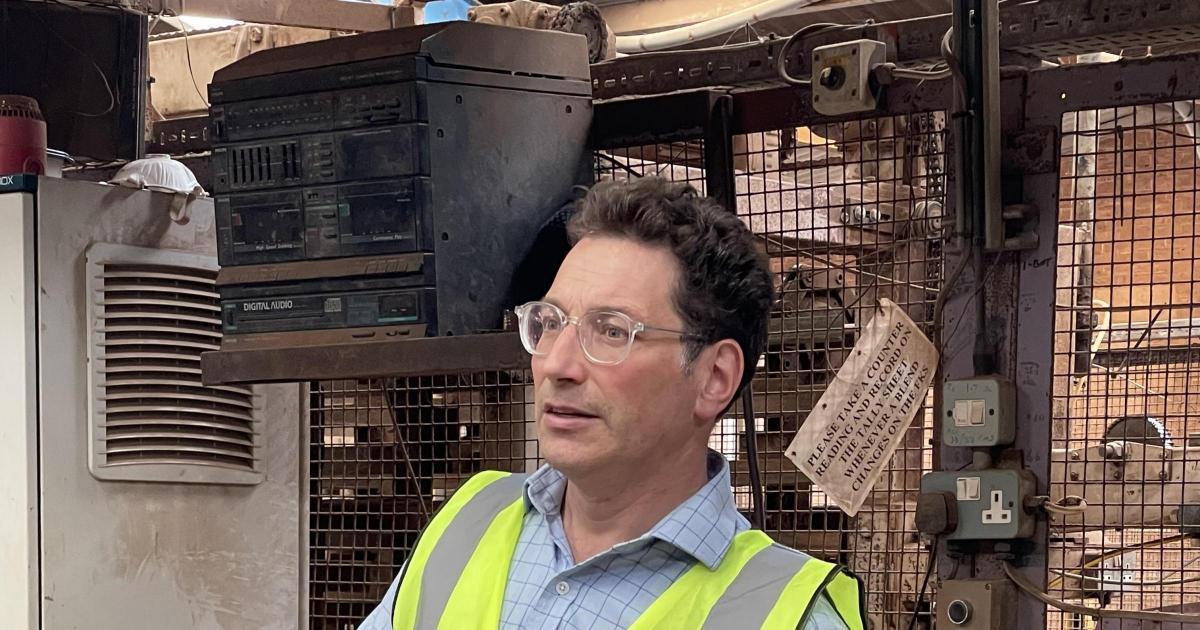
As The Press reprted in December, 4D Capital Partners LLP (“4D”) announced the acquisition of York Handmade Brick Company, which is based at Alne, near Easingwold, the multiple award-winning manufacturer of bespoke and premium handmade bricks.


Recommended reading:


As The Press previously reported, the firm won the Sustainability category in the prestigious 2025 Brick Awards for its brickwork at York Racecourse.

Advertisement

York Handmade’s winning entry featured work at the new Bustardthorpe Stand and Roberto Pavilion at York Racecourse.

Now 3 Circle Square, in the heart of Manchester’s innovation district, has been named the best new building in the annual Manchester Chamber of Commerce awards.

York Handmade supplied 385,000 specially manufactured bricks for 3 Circle Square in one of the most significant contracts in its 37-year history.

The contract was worth £580,000 and was a resounding endorsement of York Handmade’s decision to invest £1.5m in brand-new machinery.

Advertisement

3 Circle Square, which was master-minded by leading Manchester-based developer Bruntwood, is a stand-alone brick-built building, close to Oxford Road.

Designed by Bridge Architects of Manchester, it offers flexible office space and bespoke programmes of business support, helping creative, digital and technology businesses to form, scale and grow. It was completed last year.

Russell Bridge of Bridge Architects said: “The brick choice for 3 Circle Square was critical to the facade design’s success, which incorporated both standard and long format bricks.

“York Handmade’s Thirkleby Blend was selected to achieve the desired detailing. The regular brick faces facilitated a consistent appearance in relation to deep opening reveals, mortar jointing, soldier course and arch detailing, and the formation of perforated brick ventilation panels.

Advertisement

“Aesthetically the red multi-toned brick complements the wider site context, while the distressed water struck texture adds character and visual interest when viewed up close.”

Guy Armitage, the managing director of York Handmade, said: “We are absolutely delighted that 3 Circle Square has won such a prestigious award. It is a magnificent building and are so proud to have played a part in its success.

“This was a massive project for us, especially in the context of these challenging economic times. It has been a tremendous boost for our factory and a great honour to contribute to a pioneering and innovative development which has redefined Manchester’s cityscape for the 21st century.

“Significantly, the non-standard bricks we supplied are for 3 Circle Square are Water Struck Thirkleby Blend, part of our Viking range and a stunning example of what we are able to manufacture with our new plant, commissioned in 2023.”

Advertisement

Source link

Continue Reading

NewsBeat

Borrowing extra on mortgage for renovations

Published

on

Couple renovating their home using money from equity release lifetime mortgage

2. Releasing equity for home improvements

If you’re a UK homeowner aged over 55 and exploring ways to fund home improvements, you could also consider a lifetime mortgage – the most widely used form of equity release. It’s still a mortgage secured against your home, but it works differently from traditional borrowing, allowing you to release a portion of your property’s value as tax-free cash.

With a lifetime mortgage, you can choose whether or not to make monthly repayments. In this case, interest will roll up over time and is added to the loan, meaning the total amount owed increases over time. The full balance is typically repaid when the last homeowner passes away or moves into long-term care and is usually achieved through the sale of the property.

Interest roll-up means unpaid interest is added to your loan, and future interest is then calculated on this higher amount. This is known as compound interest.

Advertisement

The Equity Release Council, the industry body that sets consumer-protection standards for equity release products, requires all providers who follow its rules to allow customers to make voluntary partial repayments each year without incurring early repayment charges. The exact amount you can repay is set by your mortgage lender.

It is important to know that by releasing equity from your home today, you will reduce the value of your estate. If you qualify for means-tested benefits, then releasing equity could also affect your current entitlement.

Thinking about funding your renovations with equity release? The Telegraph Media Group Equity Release Service, provided by Royal London Equity Release Advisers, could help.

  • Use their free calculator to see how much tax-free cash you could release.
  • Request a free guide by post or email.
  • Speak to their Information Team and book a no-obligation appointment with a qualified adviser.

Equity release is a significant financial decision, and it’s a requirement to get professional advice so you can understand how it works, whether it suits your circumstances, and what it could mean over the long term.

The Information Team at Royal London Equity Release Advisers will be able to answer any general questions you may have but can’t give advice. Instead, they will help to book a no-obligation advice appointment with an adviser to speak with someone about your specific needs and circumstances.

Advertisement

Source link

Continue Reading

NewsBeat

Marathon’s most important new update has some truly bizarre restrictions

Published

on

Marathon's most important new update has some truly bizarre restrictions
Gear up for the archive (Bungie)

Bungie has announced Marathon’s raid-like Cryo Archive will only be playable at specific times, as it details the level requirements.

Live service game Marathon officially launched earlier this month but developer Bungie has held back several modes, as players acclimatise to the extraction shooter.

One of these is ranked play, but the other, more exciting, mode is the Cryo Archive. This was pitched as Marathon’s equivalent to Destiny style raids, which add puzzle-solving elements into the scramble for loot.

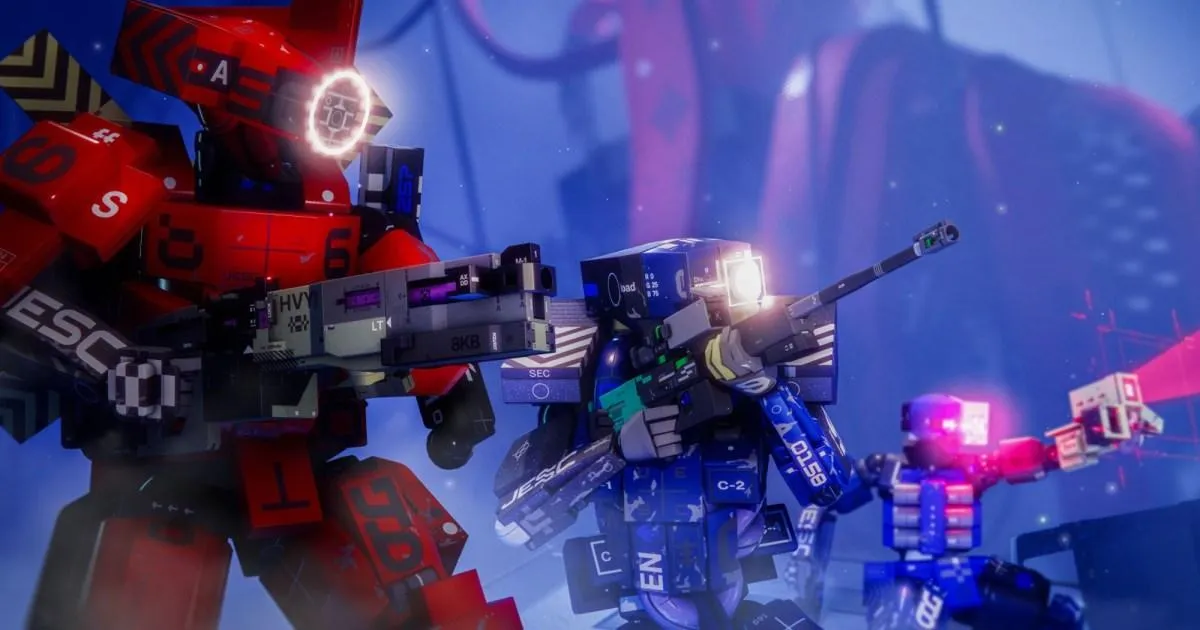
Bungie kicked off its rollout of the Cryo Archive earlier this week, tasking players with collectively taking down 500 million UESC robots, in a similar manner to Helldivers 2, to gain access. Now, with that stage completed, the Cryo Archive has officially opened for business… sort of.

Advertisement

As outlined in a blog post from Bungie, there are some very odd caveats. The biggest is that the Cryo Archive, which opens from today (March 20) at 5pm GMT, will only be playable on weekends.

Incredibly, though, they haven’t bothered to say when access to the mode will end, so it’s currently unclear when the ‘weekend’ is over, from the game’s point of view.

Expert, exclusive gaming analysis

Sign up to the GameCentral newsletter for a unique take on the week in gaming, alongside the latest reviews and more. Delivered to your inbox every Saturday morning.

Advertisement

This same logic is being applied to the ranked mode, which will go live from Saturday, March 21 at 5pm GMT. Although for some reason it does have a confirmed end time, at Tuesday March 24 at 5pm GMT.

Bungie has described ranked play as being in ‘beta’, but for the foreseeable future at least, it will also only run on weekends, with each weekend taking place on a different planet-side zone.

For this weekend, ranked play will take place in the beginner area Perimeter. There will be two queue options with different matchmaking pools – Low Stakes and High Stakes – but for the first weekend, only Low Stakes will be available ‘to give people a chance to start climbing the ladder and prepare for High Stakes’.

Advertisement

It’s unclear why Bungie is restricting access to these modes to weekends, but it means if you haven’t already met the entry requirements, or don’t have time to spare this weekend, you’ll likely have to wait until the following weekend to give it a shot.

What are the entry requirements for Marathon’s Cryo Archive and ranked play?

To access the Cryo Archive, players will need a minimum Runner level of 25, all six factions unlocked (with liason contracts completed), and a minimum loadout value of 5,000 credits. The latter is the value of your equipped gear, and not the credits you have stored up.

If you meet these requirements, you’ll be able to obtain a one-time Cryo Archive Sponsored Kit from the Armory. This contains blue tier gear and is designed so you can run through the Cryo Archive without having to risk your favourite weapons on the first attempt.

Advertisement

It’s also worth noting you can’t play Cryo Archive solo, so you’ll need to either team up with friends, or be matched with random players online in the solo queue, in order to participate.

For those looking to try out ranked play this weekend, the only prerequisite is that you’re level 25.

As for what you can expect in the Cryo Archive, Bungie describes it as a ‘labyrinthian layout’ with six interconnected wings and a central hub, with frozen Vaults that contain ‘powerful loot and dark secrets’.

Screenshot from Cryo Archive in Marathon
A weekend Marathon (Bungie)

Email gamecentral@metro.co.uk, leave a comment below, follow us on Twitter.

To submit Inbox letters and Reader’s Features more easily, without the need to send an email, just use our Submit Stuff page here.

Advertisement

For more stories like this, check our Gaming page.

Advertisement
Advertisement

Source link

Continue Reading

NewsBeat

Gogglebox’s Amy Tapper shows off eight-stone weight loss after using Mounjaro

Published

on

Gogglebox’s Amy Tapper shows off eight-stone weight loss after using Mounjaro

Tapper, who has gradually worked up to a 15mg weekly dose, first celebrated reaching the six-stone mark in April last year, posting a tearful video of herself cheering on the scales. “Wow wow wow – six stone down! I cannot believe it,” she wrote. “Here’s to the next stone and more.”

Source link

Continue Reading

NewsBeat

Landmark trial against Meta highlights mental health risks for children

Published

on

Landmark trial against Meta highlights mental health risks for children

SANTA FE, N.M. (AP) — A daunting stream of testimony and evidence has been presented in a New Mexico case that explores what social media conglomerate Meta knew about the effects of its platforms on children.

State prosecutors allege Meta failed to disclose the risks that its platforms pose for children, including mental health problems and sexual exploitation. Meta’s attorneys have said the company has built-in protections for teenagers and weeds out harmful content but acknowledged some dangerous content gets past its safety nets.

The trial is approaching its seventh week. Jurors aren’t deliberating yet. But if they find that Meta — which owns Instagram, Facebook and WhatsApp — violated New Mexico’s consumer protection laws, prosecutors say sanctions could add up to billions of dollars. Meta, however, says it would seek a different calculation.

The trial that started Feb. 9. is one of the first in a torrent of lawsuits against Meta and comes as school districts and legislators want more restrictions on the use of smartphones in classrooms.

Advertisement

A slated second phase of the trial, possibly in May before a judge with no jury, would determine whether Meta created a public nuisance with its social media platforms and should pay for public programs to fix matters.

Here’s what to know about the possible outcomes of the trial:

A reckoning in courts for social media platforms

Meta is confronting three counts of violating the New Mexico Unfair Trade Practices Act that protects consumers from deceptive or predatory business practices.

After closing arguments, jurors will weigh whether Meta knowingly misrepresented the risks on its platforms — by omission or active concealment at the least.

Advertisement

The case could sidestep or challenge immunity provisions that protect tech companies from liability for material posted on their social media platforms under Section 230, a 30-year-old provision of the U.S. Communications Decency Act, as well as a First Amendment shield.

In California, a jury already is sequestered in deliberations on whether social media companies should be liable for harms caused to children using their platforms, in one of three bellwether court cases that could set the course for thousands of similar lawsuits.

New Mexico’s case is built on a different foundation — including a state undercover investigation where agents created social media accounts posing as children to document sexual solicitations and the response from Meta.

The lawsuit, filed in 2023 by New Mexico Attorney General Raúl Torrez, also says the dangers of addiction to social media haven’t been fully disclosed or addressed by Meta. Meta hasn’t agreed that social media addiction exists, but executives acknowledge “problematic use” and say they want people to feel good about the time they spend on Meta’s platforms.

Advertisement

Among thousands of pages of documents, the New Mexico trial examines a raft of internal Meta documents and communications. Jurors also heard testimony from Meta executives, platform engineers, whistleblowers who left the company, psychiatric experts and tech-safety consultants.

The jury also may be influenced by testimony from local public school educators who have struggled with disruptions linked to social media, including the exchange of violent and sexually explicit images, along with sextortion schemes targeting children in New Mexico.

Questions of unconscionable and willful conduct

The two additional counts of consumer protection violations allege that Meta engaged in “unconscionable” trade practices that were grossly unfair.

In opening statements, prosecution attorney Donald Migliori emphasized accusations that Meta targeted social media engagement with children in an unconscionable way as a source of long-term profit while knowing children were at risk of sexual exploitation on social media. Meta disputes that argument by highlighting platform safety features and content filters for teenagers, who are seen by Meta as trendsetters with limited purchasing power to satisfy advertisers.

Advertisement

The jury would decide whether the conduct was “willful” and merits civil penalties of up to $5,000 per violation, and may help calculate the number of violations.

Torrez says those penalties could add up, given the number of people in New Mexico using Meta’s platforms. Meta, however, has asked to cap those sanctions at one penalty per misleading statement or fair-trade violation — and not the number of social media views or users.

Nuisance allegations to be decided by judge

State District Judge Bryan Biedscheid is overseeing both phases of the trial. He would decide nuisance allegations as the case advances — and whether the company is on the hook financially to repair damage.

Prosecutors have accused Meta of carelessly creating a marketplace and “breeding ground” for predators who target children for sexual exploitation. They allege Meta’s platforms also undermine the mental health of teenagers in a variety of ways — from sleep deprivation and depression to self-harm.

Advertisement

Attorneys for Meta accuse prosecutors of cherry-picking evidence as well as shoddy investigative work that may have made matters worse.

At trial, Meta executives described robust systems for detecting child sexual abuse material on its platforms and notifying law enforcement — but said the company also cautions users that its enforcement isn’t flawless.

“We believe it’s important to disclose the risks, but to do so in a consistent and rigorous way,” Instagram head Adam Mosseri said, describing a philosophy that extends to blog posts, service agreements and more.

In a video deposition played at trial, Meta CEO Mark Zuckerberg said that “safety is extremely important for the service and having it be something that people trust and want to use over time.” He said Meta in 2017 stopped linking business performance goals directly to the extended amount of time users spend on its platforms.

Advertisement

Torrez says he will request court-ordered relief to make Meta change the way it does business and remedy the harm to children from social media.

“We’re going to have meaningful investments in targeted strategic programming around how you use the internet and how you use social media in ways that are responsible and healthy,” he said on the opening day of the trial.

Advertisement

Source link

Continue Reading

NewsBeat

Iranian Kurds in Iraq hope US-Israeli war weakens Iran’s theocracy

Published

on

Iranian Kurds in Iraq hope US-Israeli war weakens Iran's theocracy

QUSHTAPA, Iraq (AP) — They fled Iran as children and now, living in Iraq as adults, they express guarded hope that the U.S.–Israeli war with Iran will weaken the theocracy that forced them into exile decades ago.

Behind that hope is the longing of Iranian Kurds in Iraq that they can someday return to homes they only remember through paintings on their walls and faded photographs.

But the thousands of Kurds know their aspirations for political autonomy and their historical opposition to Iran’s clerical rule have made that unlikely. They say they will only go back if a new Iranian government is installed, guarantees their safety and supports their goals.

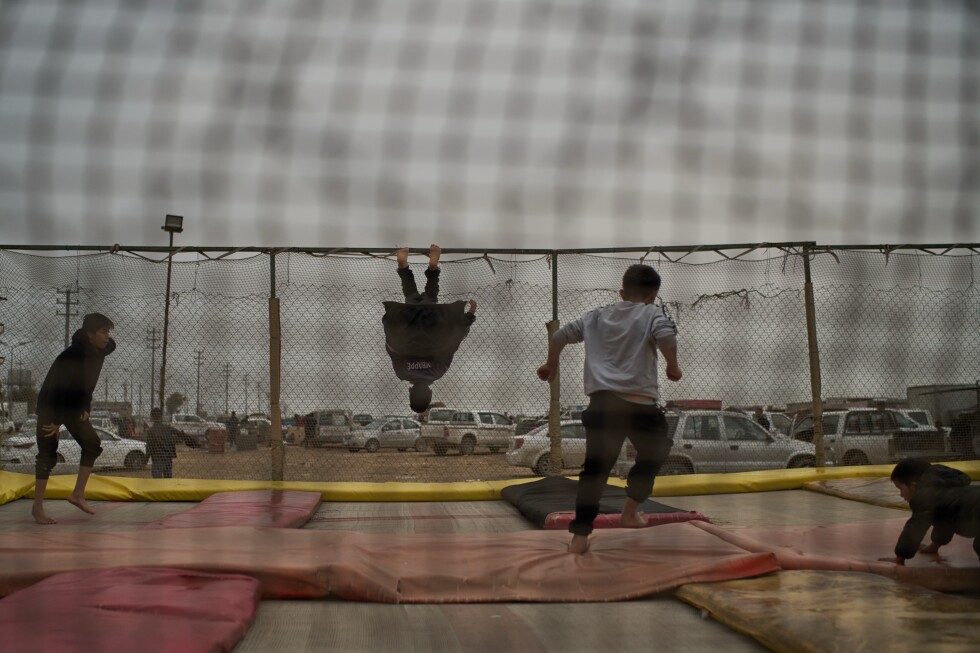
Among them are more than 300 families of Kawa Camp in Irbil’s Qushtapa district in northern Iraq’s autonomous Kurdish region. They were displaced after Iran’s 1979 Islamic Revolution, which sparked a decades-long conflict with Kurdish separatists.

Advertisement

Many are descendants of those fighters. They fled as children with their families from the northern Iranian province of Kermanshah. Some joined the resistance in exile, carrying out attacks against security forces inside Iran. Most eke out a living on the margins of the Iraqi Kurdish society, where they lack citizenship and don’t have full civil rights, access to services or the ability to own property.

In Kawa Camp, their hope of returning is tempered by deep mistrust of foreign powers that have long exploited their cause for geopolitical ends. Many viewed recent reports that the Trump administration considered calling on them to support ground operations in Iran as the latest example.

“From 1979 until now, this has been our only hope — that the regime will fall. I’m watching the clock; if it falls now, I’ll return home the next second,” said a 57-year-old member of the Iranian Kurdish opposition party living in Kawa, who fled Iran at age 11.

The person, like most of those interviewed for this article, spoke on condition of anonymity, citing fear of reprisal from Iran-backed Iraqi militias that have stepped up attacks on Iranian Kurdish bases. They also cite surveillance by Iranian intelligence, since many still have relatives in Iran.

Advertisement

A life of displacement for Iranian Kurds in Iraq

Iraqi Kurds govern a semiautonomous area in northern Iraq. Many have waged insurgency campaigns seeking to establish their own state, which they call Kurdistan. Iranian Kurds have a long history of grievances against the Islamic Republic and also the monarchy that preceded it.

In the Kawa home of community leader Jehangir Ahmadi hangs a painting of an alley in his native village in Iran’s Kurdish-majority Kermanshah province, which borders Iraq. He hasn’t seen the alley in nearly 50 years, and his childhood reels like an old film: He played among those sandy walls while village elders would chat beneath the poplars.

Ahmadi remembers the mad dash to leave home and the days spent waiting to cross the border. The family first lived in a camp close to the border before being moved to another, in the deserts of western Anbar province. Security rapidly deteriorated after the fall of Saddam Hussein following the 2003 U.S.-led invasion, prompting the United Nations to rehouse them.

Over the years, tents gave way to permanent homes, markets sprang up, and the Iranian Kurds obtained the right to work, many as merchants, taxi drivers and factory workers. But buying a house or a car requires finding an Iraqi sponsor who must assume legal responsibility for them, effectively tying their fate to that sponsor, Ahmadi said.

Advertisement

“For all our lives in Iraq we were paying the price of leaving. Until now people look at us like we are slaves,” Ahmadi said. “Until now we don’t have good work, no good place to live.”

In his view, Kurds, and especially Iran’s Kurds, have historically been victims. There was the short-lived self-governing Republic of Mahabad in northwestern Iran, backed briefly by the Soviet Union before its fall in 1976; Iran withdrawing support in 1975 for a failed Kurdish uprising against Iraq; Iraq’s use of chemical weapons against the Kurds in 1988; territorial losses in northeast Syria after the fall of President Bashar Assad in December 2024.

So Ahmadi says he was skeptical of the reported U.S. request to back an Iranian Kurdish force in the current war.

“We didn’t trust that they will support us because we are wounded nation, we have been betrayed many times,” he said.

Advertisement

Kurdish groups have come under attack from Iran’s proxies

Armed Iranian Kurdish opposition groups based in Iraq have come under attack from Iran’s proxies in Iraq since the Iran war started.

Commanders and Iraqi Kurdish political leaders say they lack the capacity to mount a genuine ground offensive without U.S. air cover, and that the idea floated by the United States was never seriously discussed with Washington.

A senior Iraqi Kurdish official said that some Iranian Kurdish groups initially hoped for a swift collapse of Iran’s theocracy and envisioned storming into Iranian Kurdish territory to declare victory. Other Iraqi Kurdish leaders, seeing the administration in Tehran as more resilient, warned them bluntly: “You will be massacred,” according to the official.

Unit commander Rebaz Sharifi hid in a mountainside crevice when a drone launched by Iran-backed militias struck a base of the Kurdistan Freedom Party, waiting for further strikes to pass. The party is an Iranian-Kurdish nationalist separatist group known by the local abbreviation PAK.

Advertisement

Sharifi said there are roughly 8,000 to 10,000 Iranian Kurdish fighters — a figure corroborated by two other Iraqi Kurdish officials. Beyond basic assault rifles, they lack sophisticated modern weaponry and do not possess drones, a crucial capability in modern warfare.

He said Iranian-Kurdish groups are asking for security guarantees, especially air cover, to counter Iranian missiles and drones.

“We don’t want to go now because we know we will die because of (Iranian) airstrikes and missiles,” he said. “It’s not the right time for this because Iranian forces still have power to control the skies.”

At the mere possibility that the groups might be mobilizing for deployment, Iran-backed groups in Iraq launched a near-daily volley of air attacks.

Advertisement

“So, imagine what they will do if we move there now,” Sharifi said.

Kawa Camp residents face threats from all sides

The threat of continued attacks drove Kurdish fighters to move their families out of military camps and into nearby communities seeking safety.

In Kawa, a local resident affiliated with the Democratic Party of Iranian Kurdistan is sheltering the wife and children of a fighter from the party’s armed wing. They moved from the party’s camp in Koya, near the border, because of constant attacks in the first days of the war.

The militia drone attacks haven’t targeted civilian communities so far, but the party member fears that might change as the war progresses.

Advertisement

“Every day we are afraid of the militias,” he said. “We are nervous at night because we think they might hit here also.”

And he fears Iran’s intelligence working in the area.

“My relatives in Iran told me that they know where I work, what I do, and where I live,” he said.

Advertisement

Source link

Continue Reading

NewsBeat

Hazelgrove Court Care Home Saltburn pensioners pen book

Published

on

Hazelgrove Court Care Home Saltburn pensioners pen book

The residents from Hazelgrove Court Care Home in Saltburn, have taken part in an intergenerational project as part of The Together Project’s Crafting Connections.

As part of the scheme, residents were encouraged to write short stories for their young Crafting Connections friends.

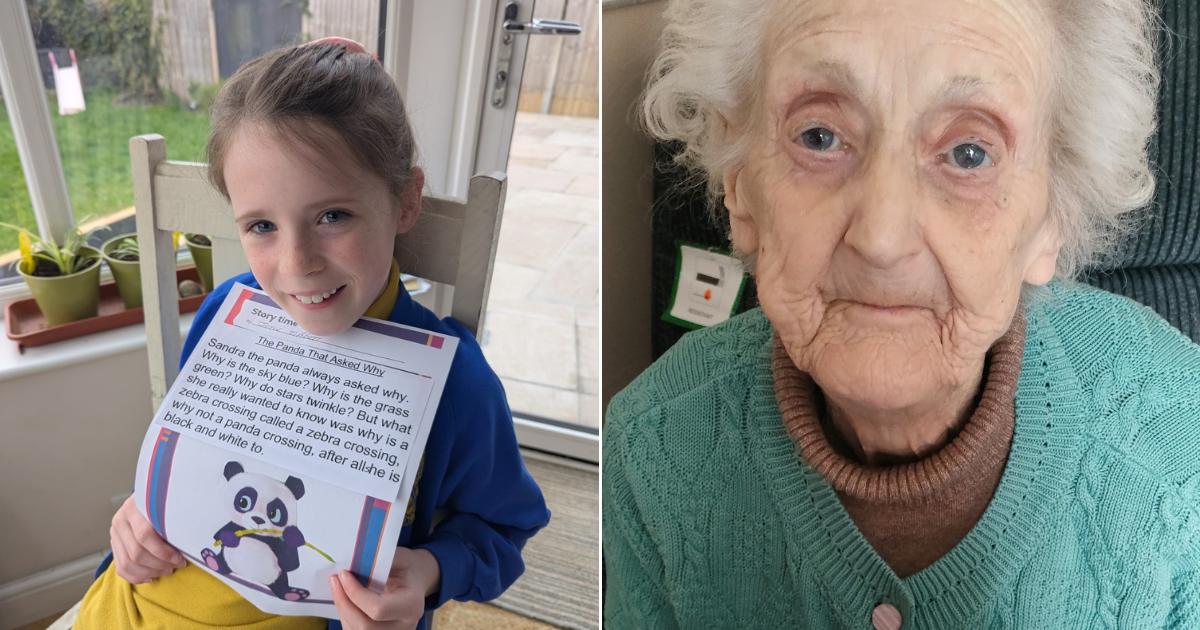
Eight-year-old Iris Sutherland with a story written by her Crafting Connections friend Joyce Tibbett, 92, a resident at Hazelgrove Court Care Home (Image: Supplied)

Sharon Lewis, the care home’s activities co-ordinator, said: “Our residents came up with some amazing stories, so we decided to have them made into a book.

“They are very excited about seeing their stories in print and we are going to send a copy to each one of their Crafting Connections friends as a gift.”

Advertisement

The stories were so well received that Ms Lewis arranged to have them printed as a professionally bound book titled “Our Stories for our Crafting Connections Friends.”

Sheila O’Neill, 85, with the book of children’s stories written by residents at Hazelgrove Court Care Home. (Image: Supplied)

Among them is The Panda That Asked Why, written by 92-year-old Joyce Tibbett.

Mrs Tibbett said: “I wanted to write a story about a panda as I know this is Iris, my Crafting Connections friend’s, favourite animal.”

Ninety-five-year-old Joyce Baxtrem based her story on her young partner.

Advertisement

Joyce Tibbett, 92, a resident at Hazelgrove Court Care Home. (Image: Supplied)

She said: “Sam has been my friend for a long time, and he is like a superhero to me, cheering me up every month, so I wrote about a superhero called Sam.”

Other stories include The Frog Who Wanted To Sing, written by 94-year-old Ellen Else.

She said: “I love to sing, so wanted to write a story about singing, so wrote the frog who wanted to sing.”

– Ellen Else, 94, showing her story, The Frog Who Wanted To Sing, published in a book of children’s tales written by residents at Hazelgrove Court Care Home. (Image: Supplied)

One of those friends is eight-year-old Iris Sutherland, who received Joyce Tibbett’s panda story.

Advertisement

She said: “I really like the story that Joyce sent me because my favourite animal is a panda and it keeps asking questions – it was a funny story.”

Iris’ mum, Alex Sutherland, who works for The Together Project, said: “The thing they loved about the story was that the panda was just like Iris – always asking questions and looking at the world in a funny way.”

Hazelgrove Court Care Home plans to continue taking part in Crafting Connections, with residents already discussing ideas for future projects.

Advertisement

Source link

Continue Reading

Trending

Copyright © 2025