Virginia Sibanda worries that her 17-year-old daughter will be forced to elope with one of the well-off local men or one of the many gold-panners that have descended on the nearby Runde River in Zimbabwe’s parched Mwenezi district.
“Everyday I worry and fear that my daughter will fall pregnant for one of these gold-panners who often come to flash money in the community or that she might be enticed into having sex with one of the elderly men that are better off,” Sibanda says.
“Those who are panning for gold are able to get some money and they are using that money to entice young girls into sex, with several young girls in the community falling pregnant. I fear that my daughter will fall for this because of our situation,” she adds.
Advertisement
International development and humanitarian financing from the United States – under the United States Agency for International Development (USAID) – and from other western countries had been pivotal in providing food aid and in supporting income generating projects in Zimbabwe. With the impacts of the climate crisis becoming more frequent and disruptive, international aid has been a key intervention in resilience and adaptation.
However after the Trump administration essentially shut down USAID last year, communities in the region have been hammered hard and families left struggling and desperate.
Sibanda’s daughter dropped out of school after the USAID agricultural support and food assistance that was sustaining her family was abruptly cut. The little money that Sibanda could spare for school fees when USAID was helping to provide food aid is now being channeled towards survival, with the family living on only one meal a day.
Advertisement
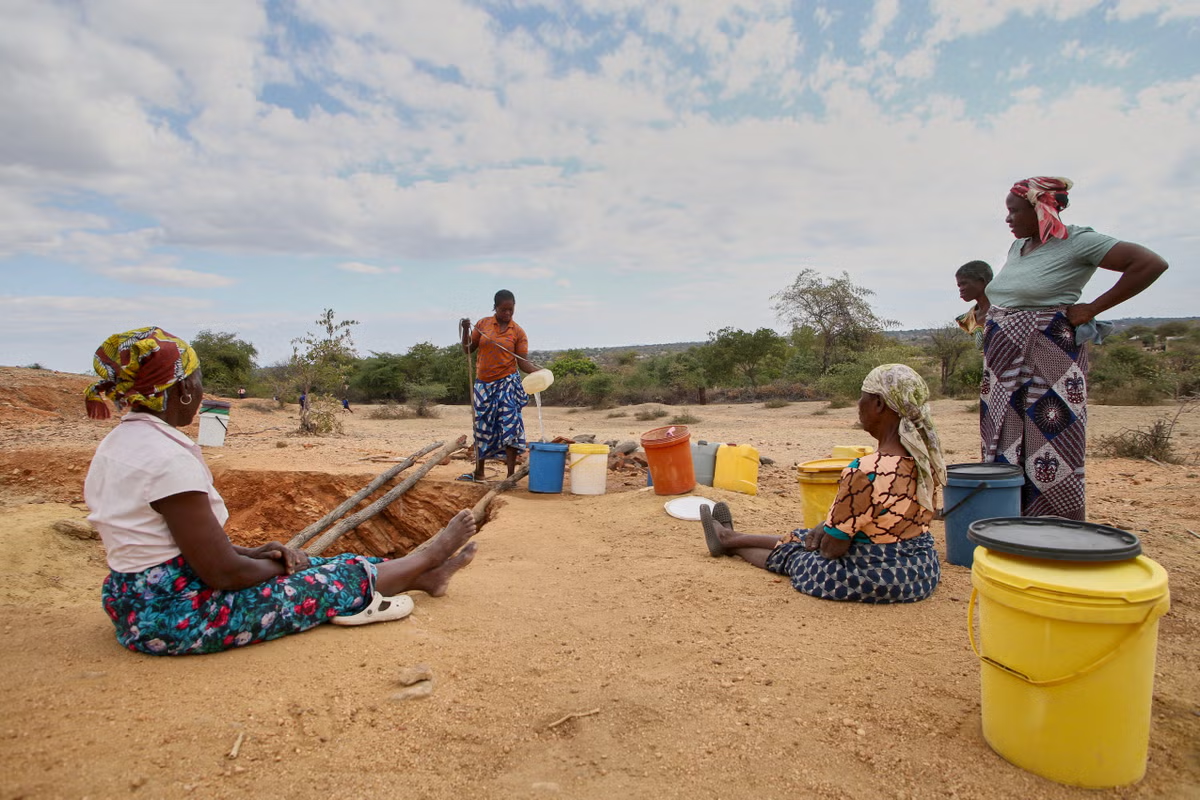
Families have been left struggling thanks to drought (AFP via Getty Images)
Dropping her daughter, and another of her children, out of school was a painful but necessary decision for the family. Sometimes Sibanda stays awake at night, pondering over the future of her children tears welling up in her eyes as she describes the family’s plight and her fears over her daughter’s prospects with life. “There are no jobs; there is nothing to talk about regarding employment prospects,” she says.
An outbreak of January Disease – a tick-borne disease prevalent during the rainy-season from December to March – has decimated family cattle herds in that people in Mwenezi often sell-off to sustain livelihoods or pay for school feeds.
Earlier rains for the current cropping season brought hopes of bumper harvests but that too is quickly turning to despair as the current and lengthier dry spell in several of the country’s provinces has dented expectations of meaningful yields of the staple maize crop.
The UN’s WFP and Food and Agriculture Organisation have been providing food assistance in other parts of Mwenezi and Zimbabwe but not in Sibanda’s area this year.
Advertisement
The WFP says it is stretched for resources; where it was planning to assist 538,000 people with food assistance during the current season, it will only manage to provide food aid to fewer than 200,000 people in four of Zimbabwe’s 10 provinces.
‘A high increase in poverty’
Yet it’s not just in Zimbabwe where communities that counted on international aid funding for livelihood and food programs are now struggling to move on with life after the shutdown of USAID.
Advertisement
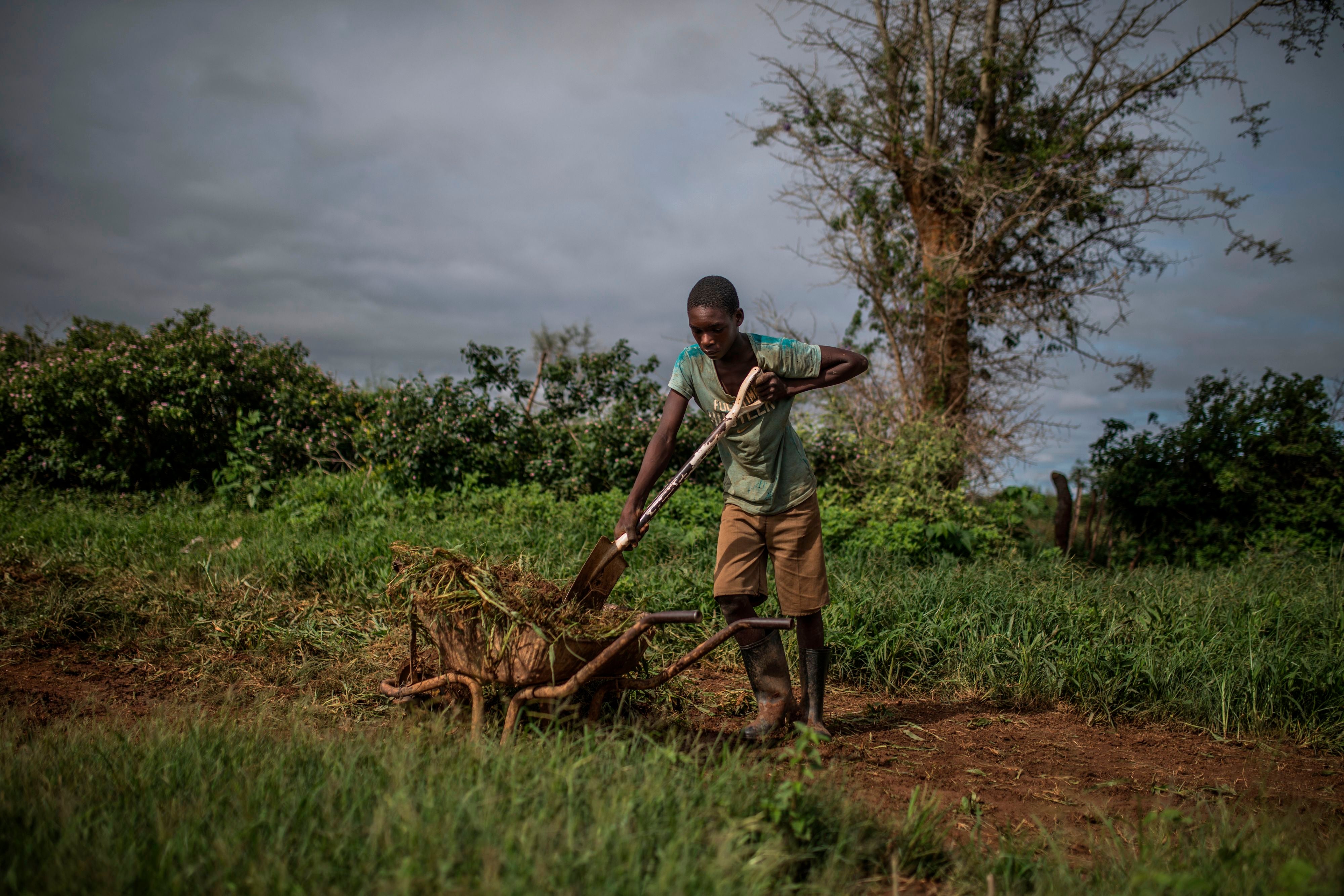
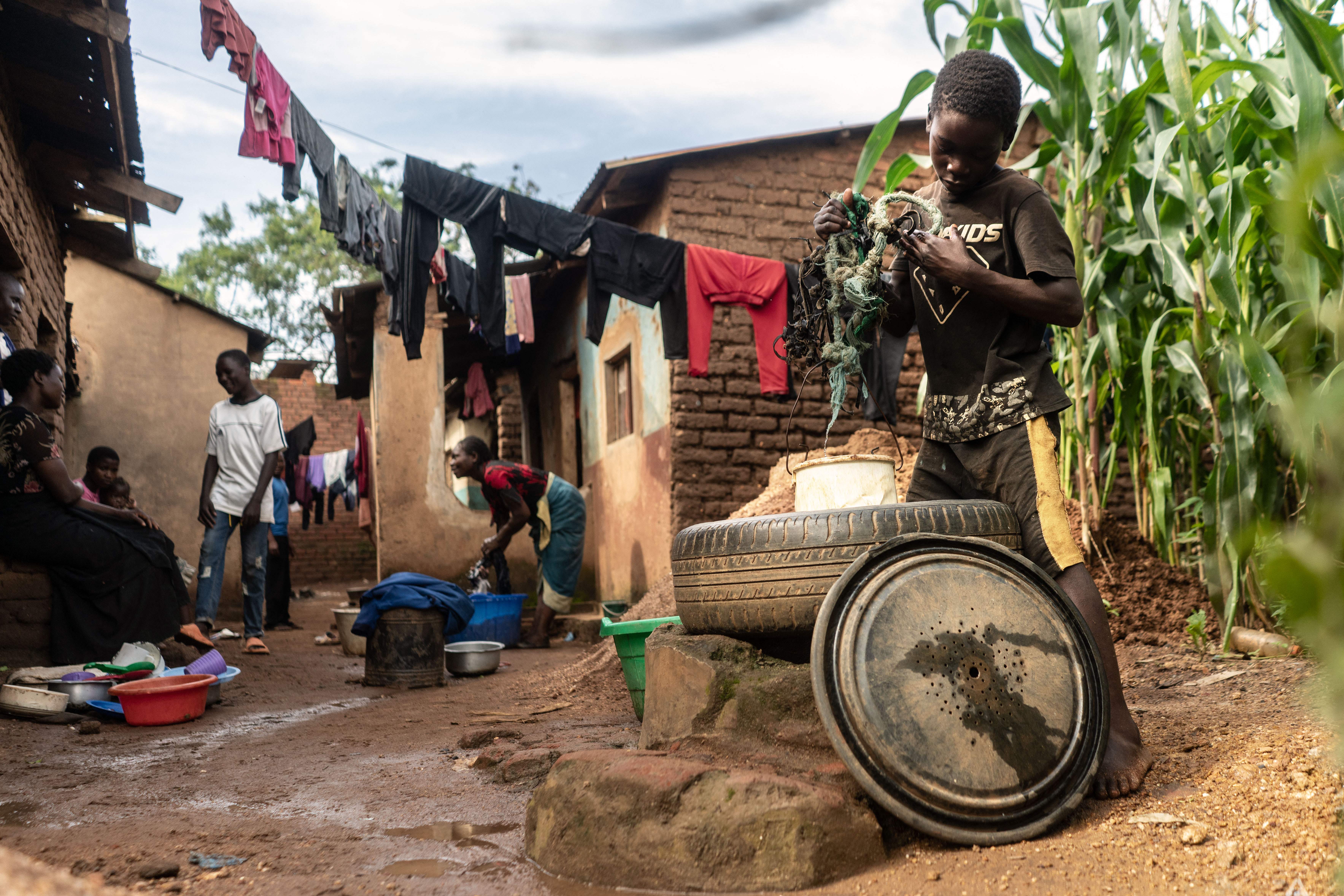
Malawi has also been hit hard by Donald Trump’s aid cuts (AFP via Getty Images)
In neighbouring Malawi, the level of vulnerability and poverty has intensified since Trump slashed aid funding, Sekai Mudonhi, Malawi country representative for Catholic Relief Services (CRS), tells The Independent.
“Agriculture programmes… have been affected by the aid funding cuts and once agriculture is affected you will have a high increase in food insecurity and the poverty and level of vulnerability just increases,” she says.
Funded by USAID and other donors, CRS and other Catholic charities such as CAFOD taught farmers in Southern Africa new agriculture techniques to adapt to climate change impacts, helping to reduce these issues.
They also helped to drill boreholes in dry areas, bringing to life gardens that also acted as income generating projects for communities and individual rural farmers.
Advertisement
One of the projects that CRS ran in Malawi involved the disbursement of cash transfers to communities which assisted with buying of food after climate shock events such as cyclones, flooding and droughts.
“They [communities] were banking on that support,” says Mudonhi, adding that she and her team – most of whom have also had to be laid off – “had to go back to the communities and tell them that that support will no longer be coming” due to the new policy under Trump.
‘I can’t imagine what they are going through’
In Zimbabwe, Amos Batisayi has also witnessed first-hand the impact of the withdrawal of US and other international funding. He worked with the Mwenezi District Training Center (MDTC), a local NGO that utilised USAID funding for community development and humanitarian programs in the Masvingo province.
Advertisement
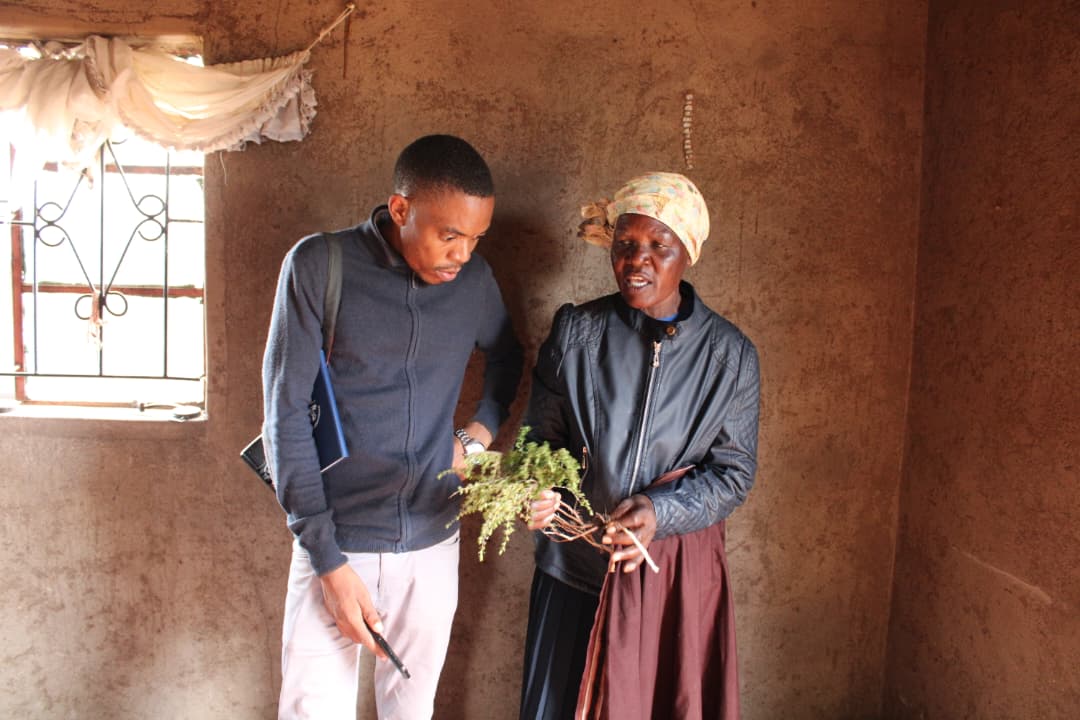
Amos Batisayi speaks to one of the female beneficiaries of Mwenezi District Center for Training (MDTC) in Zimbabwe. US funding for most of these programmes was cut by the Trump administration in 2025 (Mwenezi District Center for Training (MDTC))
He says that the organisation was targeting dry areas with boreholes for water access for agriculture and community water drinking in remote areas. MDTC, using USAID funding, also ran vocational training programmes for unemployed youths and provided support for income generating projects in remote areas such as Chiredzi.
With USAID shut down, irrigation schemes and gardens that had been brought to life through rehabilitation and drilling of new boreholes are now in trouble. This means that communities in remote and hard to reach areas such as Chiredzi where villagers walk up to three miles (five kilometres) to get to the nearest water source are now struggling.
“Now all these programmes have all stopped and this means that our communities, villagers and farmers are no longer able to generate an income, making their lives all the more difficult; I cant imagine what they are going through,” Batisayi says.
Advertisement
One such beneficiary of the USAID-funded programs under MDTC was Silence Ncube from Ramadhaka Village in Chiredzi South, some 270 miles from the capital Harare.
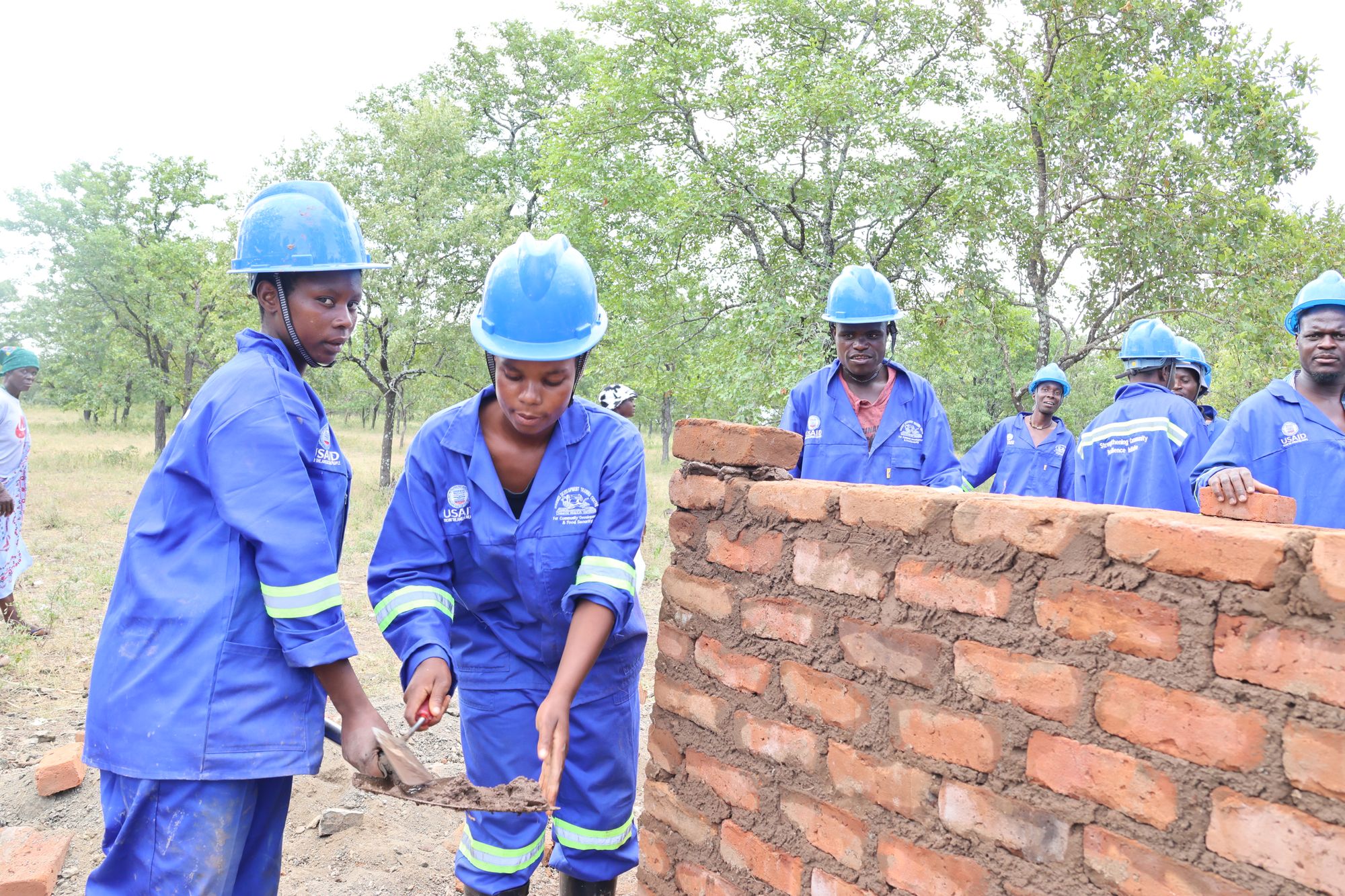
Ncube enrolled for vocational training as a bricklayer through financial assistance from USAID while others in her community were given the ability to start raising chickens and begin vegetable gardening.
This, she says, provided valuable skills, income opportunities and access to clean water. But when the stop orders for financing of such initiatives under USAID were issued by the Trump administration last year, Ncube and her community were hit.
Advertisement
Silence Ncube and Meriyini Baloyi constructing pit latrine toilet at Ramadhaka community Borehole in Chiredzi. USAID supported vocational training for community members (Mwenezi District Center for Training (MDTC))
Their lives and sources of livelihoods ground to a halt and hopes for the future turned bleak. Today, they are “struggling to move on with life”, she says.
‘The energy to go panning’
The challenges of the severe drop in US funding have prompted NGOs – previously focused more on competition to secure funding – to increasingly focus on collaboration and sharing of resources, skills and data.
It is a shift that is fuelling a broader rethink regarding international aid, according to Matthias Spaeth, Zimbabwe country director for Welt Hunger Hilfe. He says that the problem of international aid funding cuts is bigger than USAID, as countries like the UK also cut funding.
Advertisement
He adds that his biggest fear regarding the impact of cuts to development aid is that “nothing changes” in the future and the cuts come coming at a time when communities are in dire need.
Back in Mwenezi, Sibanda hopes that one day soon donors such as the UN agencies that will return assist with food rations so that she can be able to go and pan for gold – the price of which has skyrocketed on international markets.
“If we can get donors who can assist us with food then we can have the energy to go panning for gold or if we are lucky we can get some money for income generating programmes such as farming,” she says.
This article has been produced as part of The Independent’s Rethinking Global Aid project
Speaking on TalkTV this week, Lownie told host Mark Dolan that the King must take a “very clear” and decisive approach as scrutiny surrounding the issue continues. During the live broadcast, Lownie stressed that the monarch has a responsibility to ensure full cooperation with any police inquiries.
He said: “I do think that King Charles needs to be very clear that he will cooperate and allow his staff to give statements to the police and provide all the internal correspondence, all the complaints that were made about Andrew, all the material the police need to mount a proper investigation.”
Advertisement
Get more Daily Record exclusives by signing up for free to Google’s preferred sources. Click HERE.
Lownie’s comments came as Dolan pressed him on the potential consequences for the monarchy if further evidence were to surface, the Express reports. The presenter asked: “If Andrew is not prosecuted but further evidence of a royal cover-up at the palace emerged, what is the threat to the monarchy under those circumstances?”
In response Lownie suggested the situation could quickly escalate into a constitutional crisis. He replied: “Well I think it’s very serious. I think then people will be calling for a clean sweep.”
He went on to draw a distinction between senior royals, adding: “I don’t think William is in any way implicated in this scandal and I think there will be growing calls for the King to step down.”
Advertisement
The royal biographer’s comments suggest that while the Prince of Wales could remain insulated from the controversy, the monarch himself may face increasing pressure if the situation escalates. And now with Andrew having been arrested all eye will be on the King.
Viewers were divided in the comment section, with the debate continuing to rage in the comments section as people voice their different opinions on the issue.
One user warned that any suggestion of wrongdoing could have far-reaching consequences, writing: “A cover up will see growing calls for the abolition of monarchy. William was involved in the cover up. Are royal fans now going to demand that George is put on the throne?”
Advertisement
“Didn’t this happen when KC was the Prince of Wales and the monarchy was under QEII? Why should Charles take the blame?” another questioned.
While others argued that calls for abdication were unrealistic. One comment read: “There is no cover up. Leave the dutiful innocent king along. Vultures.”
While another else added: “The King will be the King until he stops breathing. William would want that and it’s not like this forever.”
The global giant will be openings the doors of the new café at 6am in the former Bay Horse in Main Street, Fulford.
The opening follows a development company Manchester-based Arborfield Estates winning a planning appeal against City of York Council in August 2024.
The pub was closed in early 2023 by its former owners, the Red Cat Company, after reporting a period of ‘poor trading.’
RECOMMENDED READING:
Advertisement
Fulford Parish Council, York CAMRA and others opposed the change of use for three flats and a coffee shop.
However, the planning inspector ruled there was no realistic prospect of a pub reopening in the 200 year-old building.
The former Bay Horse is now a Starbucks (Image: NQ)
Furthermore, there were also two pubs nearby, The Plough and The Saddle Inn, which also offered dining services and outdoor seating as the Bay Horse had.
The inspector added there were no coffee shops in the immediate area and the plans would see the ground floor of the empty building put back into use for the public.
Advertisement
A Starbucks spokesperson told the Press: “We’re so excited to bring the Starbucks experience to Fulford and create 13 new jobs.
“We’re looking forward to welcoming the local community from Friday 20th February, with the first 100 customers getting a free reusable cup which they can use to get 25p off future beverage purchases.
“The store will also be partnering with York Mind through fundraising and in-store events, including cutting the ribbon on opening day at 10am and taking donations”
The Bay Horse location in Fulford is not the only pub in the area used as a Starbucks.
Advertisement
The Four Halls on the A64 Malton Road at Stockton on the Forest also re-opened recently as a Starbucks.
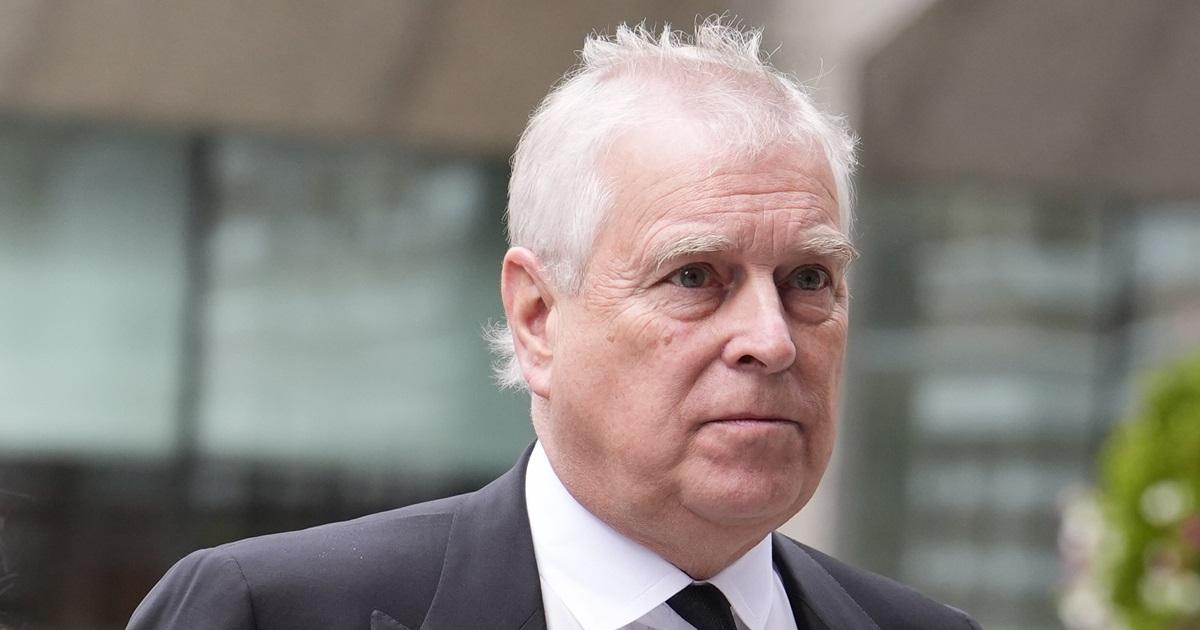
The former Prince was arrested today, February 19, on suspicion of misconduct in public office.
Police have arrived at Andrew’s home on the Sandringham Estate.
Pictures circulating online appear to show unmarked police cars attending Wood Farm in Norfolk on Thursday, with plain-clothes officers gathered outside the property.
Advertisement
What is misconduct in public office?
Misconduct in public office (MiPO) is an offence in abuse or neglect of power or responsibilities by someone holding public office, according to Institure for Government.
The law applies to o people in roles across government and public services, including elected officials, civil servants, the police and the judiciary.
Thames Valley Police have opened an investigation into an offence of misconduct in public office.
A man in his sixties from Norfolk has been arrested and remains in police custody. As per national guidance we will not name the arrested man.
The law offence carries a maximum sentence of life imprisonment.
The 2020 Law Commission states that MiPO “is one of the most notoriously difficult offences to define in England and Wales”.
MiPO is committed when a public officer wilfully neglects to perform their duty and/ or wilfully misconducts themselves, to such a degree as to amount to an abuse of the public’s trust in the office holder.
Advertisement
Thames Valley police in full as Andrew Mountbatten-Windsor arrest
A statement from Thames Valley police, which said: “As part of the investigation, we have today (19/2) arrested a man in his sixties from Norfolk on suspicion of misconduct in public office and are carrying out searches at addresses in Berkshire and Norfolk.
“The man remains in police custody at this time.
“We will not be naming the arrested man, as per national guidance. Please also remember that this case is now active, so care should be taken with any publication to avoid being in contempt of court.”
Assistant Chief Constable Oliver Wright said: “Following a thorough assessment, we have now opened an investigation into this allegation of misconduct in public office.
Advertisement
“It is important that we protect the integrity and objectivity of our investigation as we work with our partners to investigate this alleged offence.
“We understand the significant public interest in this case, and we will provide updates at the appropriate time.”
The man entered a premises on Baillie Street in Whitburn on Wednesday morning at around 5.05am.
A West Lothian man entered a shop in Whitburn and threatened a staff member before making off with a three-figure sum.
Advertisement
The man entered a premises on Baillie Street on Wednesday morning at around 5.05am.
He threatened the worker with a bladed weapon. Police are now appealing for information.
The male staff member was not injured. The suspect is described as white, of slim build and was wearing blue joggers, a blue and orange jacket and trainers.
Detective Constable Chris Watson said: “This was a frightening incident for the staff member involved, and it is vital we trace the man responsible.
“I am appealing to anyone who was in the area at the time and saw a man of that description, or knows who it may be, to contact officers.
“I’d also appeal to those in the area who have dash-cam footage or private CCTV to review this to see if it has captured anything of significance.”
Anyone with information is asked to contact Police Scotland on 101, quoting incident number 0444 of 18 February, 2026. Alternatively, information can be passed anonymously to Crimestoppers on 0800 555 111.
A weekslong “snow drought” in Northern California’s Sierra Nevada helped set the stage for Tuesday’s deadly avalanche, after several feet of new snow fell on an earlier layer that had hardened, making it unstable and easily triggered, experts said.
The new snow did not have time to bond to the earlier layer before the avalanche near Lake Tahoe killed at least eight backcountry skiers, said Craig Clements, a meteorology professor at San Jose State University, who has conducted avalanche research. Six skiers survived and rescuers were still searching for another one who was still missing on Wednesday.
The group was on a three-day backcountry trek in the Sierra Nevada on Tuesday morning when they were trapped by the avalanche as a winter storm pummeled the West Coast.
The dangers generally are highest in the first 24 to 48 hours after a very large snowfall, Clements said, and authorities had issued avalanche warnings.
Advertisement
Here’s what to know.
What made conditions so dangerous?
When weather is dry and clear, as it had been in the Sierra Nevada since January, snow crystals change and can become angular or round over time, Clements said.
If heavy new snow falls on the crystals, the layers often can’t bond and the new snow forms what is called a storm slab over a weaker layer.
“Because it’s on a mountain, it will slide,” when it’s triggered by any change in the tension above or below, sometimes naturally but also because of people traversing the area, Clements said.
Advertisement
Authorities have not said what triggered Tuesday’s avalanche.
If there had been more consistent snowfall throughout the winter, different layers could have bonded more easily, Clements said. But even when a snow slab forms, the danger often only lasts a couple of days until the new snow stabilizes, he said.
Was climate change a factor?
Although climate change can lead to weather extremes that include both drought and heavier precipitation, it’s difficult to say how and whether it will affect avalanches or where they occur, scientists say.
Clements said this week’s avalanche is fairly typical for California’s Sierra Nevada and he doesn’t believe it can be linked to climate change.
Advertisement
Avalanches are a mechanism of how much snow falls on weak or stable layers, and this one was “a meteorological phenomenon, not a climate phenomenon,” he said.
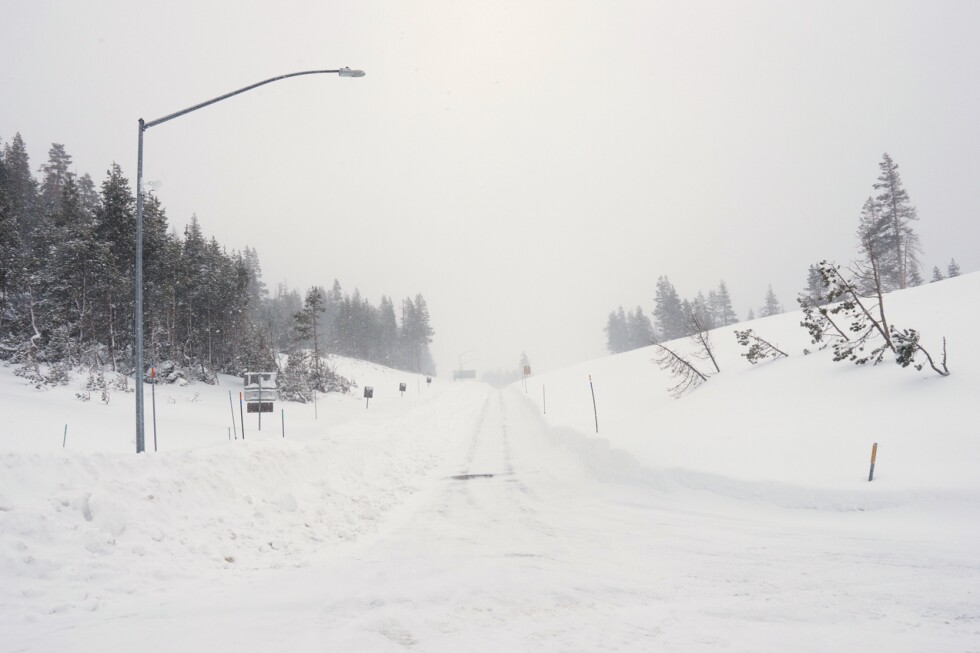
About 3 feet to 6 feet of snow has fallen since Sunday, when the group started its trip. The area was also hit by subfreezing temperatures and gale force winds. The Sierra Avalanche Center said the threat of more avalanches remained Wednesday and left the snowpack unstable and unpredictable.
What’s happening now?
Crews found the bodies of eight backcountry skiers near California’s Lake Tahoe and were searching for one more following Tuesday’s avalanche, which authorities say was the nation’s deadliest in nearly half a century.
Six from the guided tour were rescued six hours after the avalanche.
Advertisement
Nevada County Sheriff Shannan Moon said Wednesday that investigators would look into the decision to proceed with the trip despite the storm forecast.
The skiers traveled Sunday to remote huts at 7,600 feet (3,415 meters) in Tahoe National Forest, carrying their own food and supplies. At 6:49 that morning, the Sierra Avalanche Center issued an avalanche watch for the area, indicating that large slides were likely in the next 24 to 48 hours.
___
The Associated Press’ climate and environmental coverage receives financial support from multiple private foundations. AP is solely responsible for all content. Find AP’s standards for working with philanthropies, a list of supporters and funded coverage areas at AP.org.
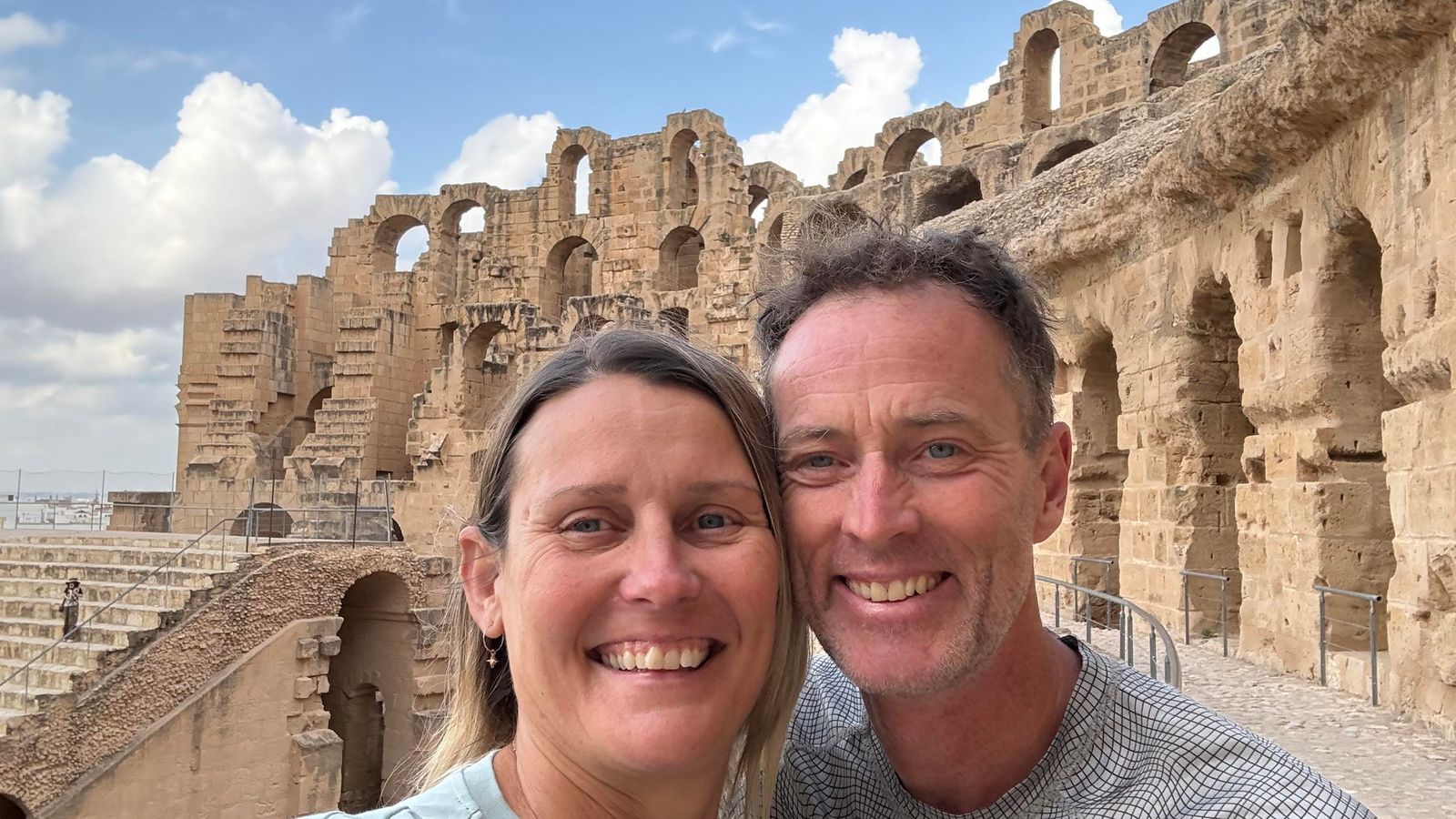
British nationals Lindsay and Craig Foreman have been sentenced to 10 years
in prison over allegations of espionage in Iran.
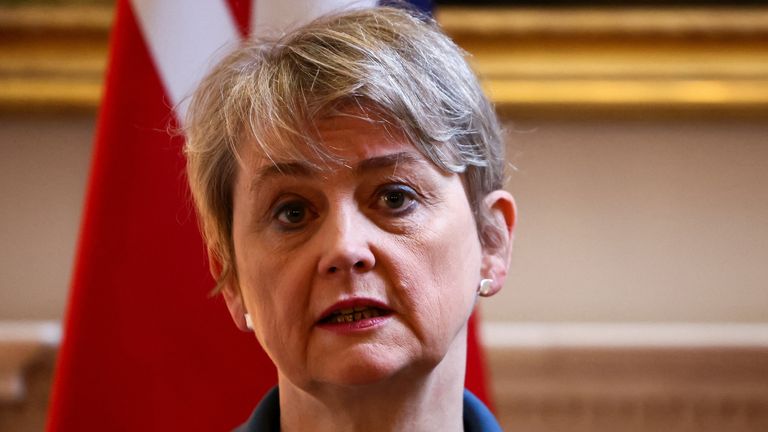
Foreign Secretary Yvette Cooper has condemned their sentence as “completely appalling and totally unjustifiable”.
“We will pursue this case relentlessly with the Iranian government until we see Craig and Lindsay Foreman safely returned to the UK and reunited with their family,” she said.
The couple were arrested in January 2025 while travelling through the country on an around-the-world motorcycle journey and detained on charges of espionage.
Advertisement
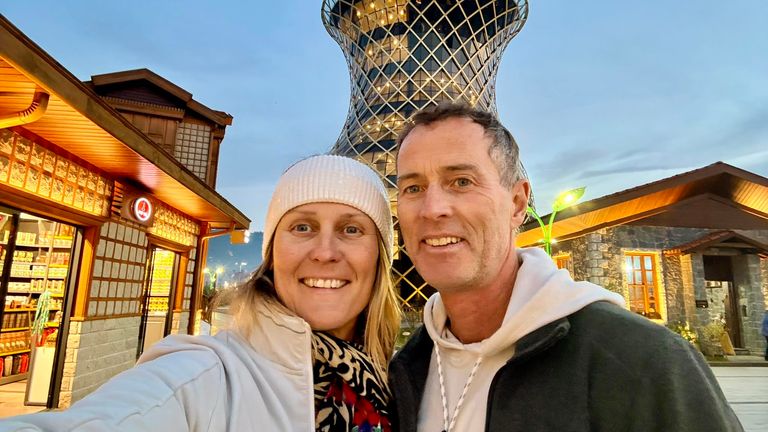
Image: Lindsay and Craig Foreman. Pic: Family handout
The Foremans, from East Sussex, who are being held in Tehran’s Evin prison, deny the allegations.
The couple’s family says the sentence places the case “in line with the most severe politically motivated detentions of UK nationals in Iran”.
Joe Bennett, Lindsay Foreman’s son, said that the couple has been “sentenced to 10 years following a trial that lasted just three hours and in which they were not allowed to present a defence”.
“They have consistently denied the allegations. We have seen no evidence to support the charge of espionage,” he added.
Advertisement
The sentence follows a court appearance on 27 October 2025 before Judge Abolghasem Salavati at Branch 15 of the Islamic Revolutionary Court in Tehran.
Judge Salavati has previously been sanctioned by the UK, US and EU in connection with human rights violations and the conduct of trials criticised internationally for lack of due process.
Advertisement
Ahead of his sentencing, Mr Foreman described being held in an “eight-foot cell with a hole in the floor and a sink” and described the effects of 57 days in solitary confinement, saying: “Emotionally and physically, it broke me to pieces”.
He said once a month meetings with his wife are what sustain him.
Mr Bennett said the couple had “already spent more than thirteen months in detention”. “We are deeply concerned about their welfare and about the lack of transparency in the judicial process,” he added.
He called on the UK Government to “act decisively and use every available avenue to secure their release”.
Advertisement
The Foreign Office is currently warning people not to travel to Iran, because of “the significant risk of arrest questioning or detention”. It warns that: “The UK government will not be able to help you if you get into difficulty in Iran.”
Iran has arrested dozens of foreign visitors and dual nationals in recent years, mostly on espionage and security-related charges.
Image: Yvette Cooper Yvette Cooper said the sentence was ‘completely appalling and totally unjustifiable’. Pic: PA
Human rights groups and some Western countries have accused Iran of trying to win concessions from other nations through arrests on trumped up charges.
British-Iranian dual nationals like Nazanin Zaghari-Ratcliffe and Anoosheh Ashoori are among those who have spent years behind bars in Iran before diplomatic negotiations helped secure their release.
The sentencing of the Foremans comes amid heightened tensions in the region following a deadly crackdown on a wave of demonstrations in Iran.
Advertisement
Donald Trump last month urged Iranian protesters – thousands of whom have been killed by the regime’s forces – to keep demonstrating and promised that “help is on the way”.
A powerful US military force continues to assemble within striking distance of Iran.
The former prince, who had his titles stripped last year, has been living at the Sandringham Estate in Norfolk after moving out of his Royal Lodge in Windsor.
Andrew was stripped of his remaining royal titles, including “His Royal Highness” (HRH) and “Prince,” in October.
It followed a previous announcement that he would stop using his titles, including the Duke of York, amid pressure regarding his connections to Jeffrey Epstein.
Advertisement
According to the BBC, Andrew has today been arrested on suspicion of misconduct in public office.
Police have arrived Andrew’s home on the Sandringham Estate.
Pictures circulating online appear to show unmarked police cars attending Wood Farm in Norfolk on Thursday, with plain-clothed officers appearing to gather outside the property.
Thames Valley Police previously said the force is reviewing allegations that a woman was trafficked to the UK by Jeffrey Epstein to have a sexual encounter with Andrew, and claims he shared sensitive information with the paedophile while serving as the UK’s trade envoy.
Advertisement
Andrew, who marks his 66th birthday today ( February 19), has denied any wrongdoing
The arrest comes after Thames Valley Police said previously that they were assessing a complaint over the alleged sharing of confidential material by the former prince with late sex offender Jeffrey Epstein.
A statement from Thames Valley police, which said: “As part of the investigation, we have today (19/2) arrested a man in his sixties from Norfolk on suspicion of misconduct in public office and are carrying out searches at addresses in Berkshire and Norfolk.
“The man remains in police custody at this time.
Advertisement
“We will not be naming the arrested man, as per national guidance. Please also remember that this case is now active so care should be taken with any publication to avoid being in contempt of court.”
Assistant Chief Constable Oliver Wright said: “Following a thorough assessment, we have now opened an investigation into this allegation of misconduct in public office.
“It is important that we protect the integrity and objectivity of our investigation as we work with our partners to investigate this alleged offence.
“We understand the significant public interest in this case, and we will provide updates at the appropriate time.”
Advertisement
Who is Andrew Mountbatten-Windsor?
Andrew Albert Christian Edward Mountbatten-Windsor, born 19 February 1960, formerly Duke of York, is the third child and second son of Elizabeth II and Prince Philip, and the younger brother of Charles III.
At the time of his birth, he was second in line to the British throne.
Andrew served in the Royal Navy from 1979 until 2001. During the Falklands War, he flew helicopters on active service. He later qualified as a helicopter instructor and went on to command a warship.
In 1986, he married Sarah Ferguson and was created Duke of York on his wedding day. The couple had two daughters, Princess Beatrice and Princess Eugenie, before separating in 1992 and divorcing in 1996.
Advertisement
From 2001 to 2011, Andrew served as the UK’s Special Representative for International Trade and Investment.
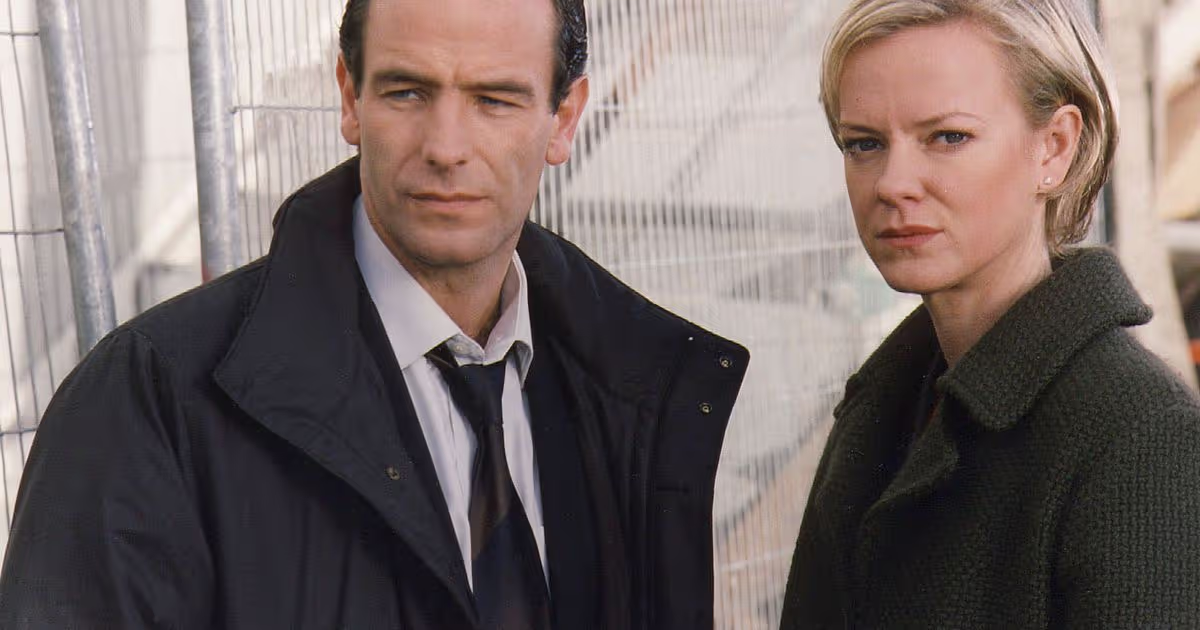
However, there’s good news for fans of the crime drama as they can see the star in a completely different role in another detective series, which is available to stream for free on ITVX.
Wire in the Blood first aired back in 2002 and ran for six years before ending in 2008.
Robson assumes the role of psychologist Dr Tony Hill, who assists the police in solving intricate murders in the fictional town of Bradfield, reports the Mirror.
Based on the novels by Val McDermid, Wire in the Blood features Dr Hill being recruited as a criminal profiler as he utilises his understanding of the criminal mind to track down serial killers.
Advertisement
Also starring in the show is actress Hermione Norris, who portrays DI Carol Jordan.
For the latest showbiz, TV, movie and streaming news, go to the new **Everything Gossip** website.
A synopsis for the series reads: “Gripping psychological thriller starring Robson Green. Oddball psychologist Tony Hill delves inside the twisted minds of murderers to help the police, but at what cost to himself?”
Advertisement
Over the years, fans have showered the show with praise, with many commending Robson’s performance.
One viewer said: “Robson Green is incredibly impressive (and maybe a little bit scary) as eccentric psychological profiler Dr Tony Hill, and Hermione Morris does a great job as tough DI Carol Jordan, a woman in what is still very much a man’s world. All the characters have distinct and believable personalities. All in all, this series is great fun.”
Another wrote: “One of the best Crime drama/ Mystery Thriller TV shows ever made” Someone else commented: “Just can’t stop watching. I absolutely love this program so so much! I just want to watch it over and over again without stopping.”
Advertisement
One fan added: “This is one of the best crime series, if not the best crime series, I’ve ever seen. Praying they will do another series. Robson Green is amazing in it.”
As another shared: “This is one of those bingeable shows that, as soon as the episode finishes, you want to go straight onto the next one without skipping a beat. And there are 6 seasons. You have been warned.”
Wire in the Blood is available to watch on ITVX.
Ensure our latest headlines always appear at the top of your Google Search by making us a Preferred Source.** Click here to activate**** or add us as your Preferred Source in your Google search settings.**
Police recieved reports a man pushed a woman into a vehicle
A woman was pushed in front of a vehicle in what police are describing as a “suspicious incident”. It happend on Wednesday (February 18) at around 5pm in Fengate, Peterborough.
Advertisement
Officers received reports that a man pushed a woman into a vehicle. The vehicle is described as a black saloon car.
A police spokesperson said: “We’re investigating a suspicious incident involving a man pushing a woman into a vehicle in Fengate at about 5pm today. The vehicle has been described as a black saloon car.”
Anyone with information should call Cambridgeshire Police on 101 and quote incident 380 of February 18. Alternatively, people can contact police online.
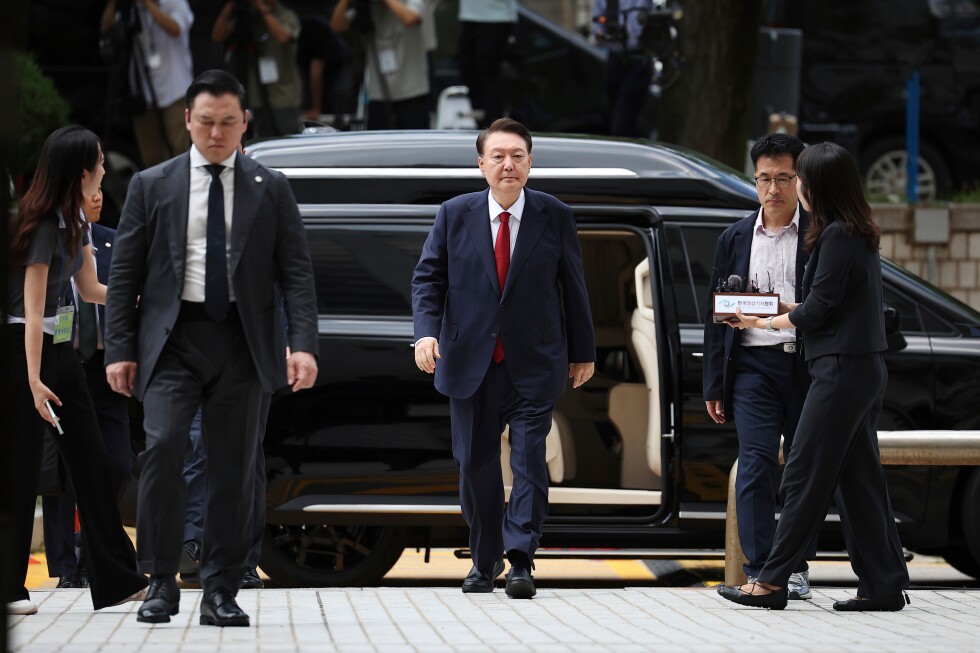
SEOUL, South Korea (AP) — Former South Korean President Yoon Suk Yeol was sentenced to life in prison for his brief imposition of martial law in a dramatic culmination to the country’s biggest political crisis in decades.
Yoon was ousted from office after a baffling attempt to overcome an opposition-controlled legislature by declaring martial law and sending troops to surround the National Assembly on Dec. 3, 2024.
Judge Jee Kui-youn of the Seoul Central District Court said he found Yoon guilty of rebellion for mobilizing military and police forces in an illegal attempt to seize the liberal-led Assembly, arrest politicians and establish unchecked power for a “considerable” time.
Martial law crisis recalled dictatorial past
Yoon’s martial law imposition, the first of its kind in more than four decades, harkened back to South Korea’s past military-backed governments when authorities occasionally proclaimed emergency decrees that allowed them to station soldiers, tanks and armored vehicles on streets or at public places such as schools to prevent anti-government demonstrations.
Advertisement
As lawmakers rushed to the National Assembly, Yoon’s martial law command issued a proclamation declaring sweeping powers, including suspending political activities, controlling the media and publications, and allowing arrests without warrants.
The decree lasted about six hours before being lifted after a quorum of lawmakers managed to break through a military blockade and unanimously voted to lift the measure.
Yoon was suspended from office on Dec. 14, 2024, after being impeached by lawmakers and was formally removed by the Constitutional Court in April 2025. He has been under arrest since last July while facing multiple criminal trials, with the rebellion charge carrying the most severe punishment.
Yoon’s lawyers reject conviction
Yoon Kap-keun, one of the former president’s lawyers, accused Jee of issuing a “predetermined verdict” based solely on prosecutors’ arguments and said the “rule of law” had collapsed. He said he would discuss whether to appeal with his client and the rest of the legal team.
Advertisement
Yoon Suk Yeol told the court the martial law decree was only meant to raise public awareness of how the liberals were paralyzing state affairs, and that he was prepared to respect lawmakers if they voted against the measure.
Prosecutors said it was clear Yoon was attempting to disable the legislature and prevent lawmakers from lifting the measure through voting, actions that exceeded his constitutional authority even under martial law.
In announcing Yoon and Kim’s verdicts, Jee said the decision to send troops to the National Assembly was key to his determination that the imposition of martial law amounted to rebellion.
“This court finds that the purpose of (Yoon’s) actions was to send troops to the National Assembly, block the Assembly building and arrest key figures, including the National Assembly speaker and the leaders of both the ruling and opposition parties, in order to prevent lawmakers from gathering to deliberate or vote,” Jee said. “It’s sufficiently established that he intended to obstruct or paralyze the Assembly’s activities so that it would be unable to properly perform its functions for a considerable period of time.”
Advertisement
Protesters rally outside court
As Yoon arrived in court, hundreds of police officers watched closely as Yoon supporters rallied outside a judicial complex, their cries rising as the prison bus transporting him drove past. Yoon’s critics gathered nearby, demanding the death penalty.
There were no immediate reports of major clashes following the verdict.
A special prosecutor had demanded the death penalty for Yoon Suk Yeol, saying his actions posed a threat to the country’s democracy and deserved the most serious punishment available, but most analysts expected a life sentence since the poorly-planned power grab did not result in casualties.
South Korea has not executed a death row inmate since 1997, in what is widely seen as a de facto moratorium on capital punishment amid calls for its abolition.
Advertisement
Other officials sentenced for enforcing martial law
The court also convicted and sentenced several former military and police officials involved in enforcing Yoon’s martial law decree, including ex-Defense Minister Kim Yong Hyun, who received a 30-year jail term for his central role in planning the measure and mobilizing the military.
Last month, Yoon was sentenced to five years in prison for resisting arrest, fabricating the martial law proclamation and sidestepping a legally mandated full Cabinet meeting before declaring the measure.
The Seoul Central Court has also convicted two members of Yoon’s Cabinet in other cases. That includes Prime Minister Han Duck-soo, who received a 23-year prison sentence for attempting to legitimize the decree by forcing it through a Cabinet Council meeting, falsifying records and lying under oath. Han has appealed the verdict.
Yoon is the first former South Korean president to receive a life sentence since former military dictator Chun Doo-hwan, who was sentenced to death in 1996 for his 1979 coup, a bloody 1980 crackdown on pro-democracy protesters in Gwangju that left more than 200 people dead or missing, and corruption.
Advertisement
The Supreme Court later reduced his sentence to life imprisonment, and he was released in late 1997 under a special presidential pardon. He died in 2021.