Connect with us
DAPA Banner
DAPA Coin
DAPA
COIN PAYMENT ASSET
PRIVACY · BLOCKDAG · HOMOMORPHIC ENCRYPTION · RUST
ElGamal Encrypted MINE DAPA
🚫 GENESIS SOLD OUT
DAPAPAY COMING

NewsBeat

Ibuprofen and paracetamol warning for anyone with a dog or cat

Published

on

Wales Online

People have been issued a ‘toxic or life-threatening’ alert

A leading vet charity has urged pet owners to double-check veterinary advice found on TikTok and social media platforms. The People’s Dispensary for Sick Animals (PDSA) has warned that online “hacks” and home treatments could be putting pets’ lives at risk.

The PDSA has seen viral clips online where owners are encouraged to give dogs ibuprofen for injuries despite the drug being toxic to pets. Cat Henstridge, a veterinary surgeon who shares pet care advice to over 400,000 followers on social media, said the golden rule is to always “run it past your vet first”.

Advertisement

Henstridge, who runs the account @cat_the_vet, told the Press Association: “Ibuprofen is 100% off the menu for all pets and paracetamol is very toxic for cats.” Whilst stressing that some general advice from social media for pets can be good, Ms Henstridge said “when it comes to medicines, it has to be the veterinary profession that is the first port of call”.

The 45-year-old from Sheffield added: “A lot of home and herbal holistic remedies are at best ineffective and, at worse, potentially dangerous.”

Catherine Burke, a PDSA vet, said: “Animals process medications very differently from humans. Something safe for people can be toxic or even life-threatening for pets.”

Ms Burke said she can understand that social media offers pet owners “quick help” but this comes with a risk as these viral clips often “make medical guidance appear far simpler and safer than it really is”.

Advertisement

The PDSA is concerned how quickly “misinformation spreads online” and has encouraged pet lovers not “to try home treatments seen online without first checking with their vet”. It added: “What works for one animal in a short video may not be safe for another, and similar symptoms can have very different underlying causes.”

The charity is urging owners to contact their vet directly if they are concerned about their pet’s health, rather than using social media trends or often unverified online tips. Ms Burke added: “Following these viral tips can delay pet owners from seeking proper veterinary care, where early treatment can make a significant difference to health and wellbeing.”

The PDSA is the UK’s leading veterinary charity, with 49 pet hospitals across the UK. The charity has a dedicated Pet Health Hub where expert advice can be found.

Source link

Advertisement
Continue Reading
Click to comment

You must be logged in to post a comment Login

Leave a Reply

NewsBeat

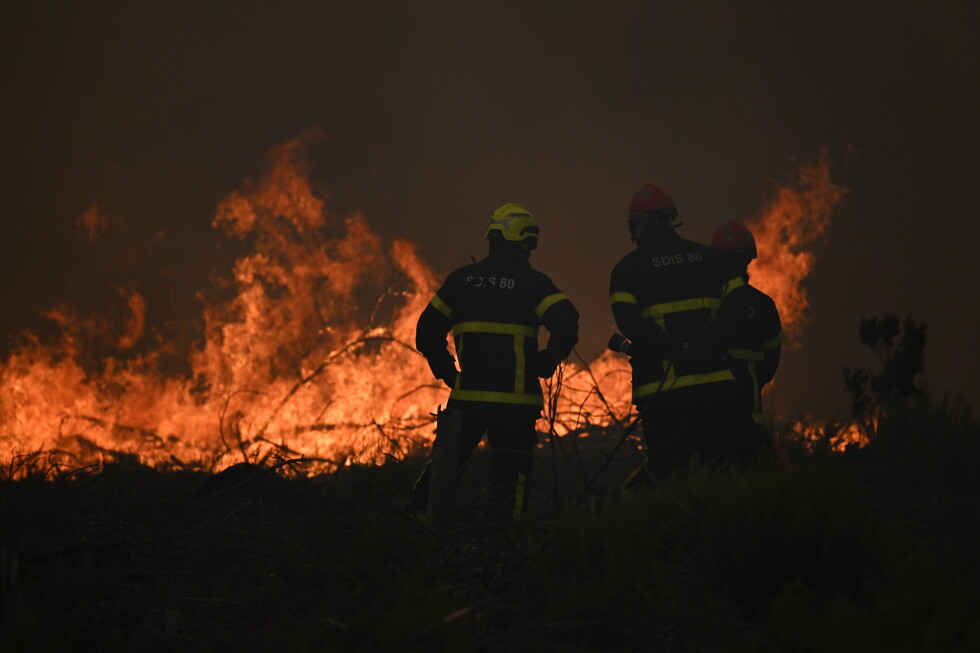
Wildfire forces 55,000 more people to evacuate in southwest France

Published

on

Wildfire forces 55,000 more people to evacuate in southwest France

LEGE-CAP FERRET, France (AP) — A raging wildfire in southwest France forced the evacuation of 55,000 people overnight Sunday, taking the total forced out of their homes to 220,000 in one region alone as the flames have crept ever closer to the wine region city of Bordeaux.

Authorities in the Gironde region, where Bordeaux is located, issued overnight evacuation orders for five more localities southwest of the historic city.

Gusting winds fed the flames overnight, accelerating the spread of the fire that has been burning out of control since midweek, the authorities’ statement said.

The Gironde prefect also ordered the partial closure of a major highway heading southwest from Bordeaux.

Advertisement

The city’s mayor said the fire “is still at the gates of the metropolitan area,” having advanced to about 15 kilometers (9 miles) from Bordeaux at its closest point.

A second fire burning further south in the Landes region has also forced the evacuation of 30,000 people this week, taking the total driven out of their homes by the blazes to more than 250,000.

In neighboring Spain, authorities have evacuated 70,000 people this week because of fires west of Madrid.

Advertisement

Source link

Continue Reading

NewsBeat

Iran-US war latest: Tehran summons Ukraine diplomats over Caspian Sea attack as Trump threatens to resume war

Published

on

Iran-US war latest: Tehran summons Ukraine diplomats over Caspian Sea attack as Trump threatens to resume war

Oman-Iran talks over Strait of Hormuz were ‘productive’, says Tehran

Iran’s foreign ministry spokesperson has said that Tehran has discussed operation of the Strait of Hormuz with Oman this weekend and that the talks were “productive”.

They added that “technical and political consultations between the two sides are ongoing”.

Advertisement

Maira Butt26 July 2026 07:45

CNN says Vance, Caine raised concerns about escalating war in Iran

US vice president JD Vance and Chairman of Joint Chiefs of Staff, Gen Dan Caine, both raised concerns about escalating the war in Iran during a White House meeting on Friday, the CNN reported, quoting a source familiar with the matter and a US official.

Gen Caine raised concerns about the US munitions stockpile and other potential negative implications, according to CNN.

Advertisement

Namita Singh26 July 2026 07:30

War threatens to spread to Yemen

Houthi military spokesperson Yahya Saree said the group struck sites belonging to Saudi state oil company Aramco in the cities of Jizan and Yanbu on Saturday.

A large column of smoke rose from the direction of the Aramco refinery in Jizan, near the Yemeni border, video on social media verified by Reuters showed.

Advertisement

The refinery can process up to 400,000 barrels of crude oil daily. Two Asia-based trading sources said they had been informed of potential damage to fuel and oil storage sites at Jizan. Aramco did not respond to requests for comment.

People sit in a fishing boat sailing the Bab el-Mandeb Strait off of Yemen’s southern Taiz province on 25 July 2026 (AFP/Getty)

In Yanbu, two missiles aimed at oil installations were intercepted. Yanbu, Saudi Arabia’s main Red Sea oil port, has become a key route for Saudi oil skirting the Strait of Hormuz, which Iran has blockaded.

In Yemen, officials said the air ​force of the Saudi-backed, internationally recognised government, which has opposed the Houthis for more than a decade, struck Houthi sites in the ‌Marib and al-Jawf provinces.

The officials said both sides in Yemen’s civil war were mobilising forces along the front. Saudi Arabia has led an Arab coalition battling the Houthis since the Iran-aligned fighters captured Yemen’s capital, ⁠Sanaa.

Advertisement

Namita Singh26 July 2026 06:45

Iran accuses Ukraine of attacking its commercial vessel in Caspian Sea

Iran’s foreign ministry accused Ukraine of attacking an Iranian commercial vessel in the Caspian Sea, saying one sailor was killed and another injured.

The ministry summoned Ukraine’s chargé d’affaires in Tehran to protest over an attack it described as “hostile and criminal”, state news agency IRNA said.

Advertisement
File: Navy ships of Iran and Azerbaijan move during an exercise between Iran and Azerbaijan in the Caspian Sea, Iran, in this picture obtained on 4 November 2024
File: Navy ships of Iran and Azerbaijan move during an exercise between Iran and Azerbaijan in the Caspian Sea, Iran, in this picture obtained on 4 November 2024 (Reuters)

The Iranian denunciation coincided with comments by Ukrainian President Volodymyr Zelensky that Kyiv had noted Russia was passing on to Iran its satellite observations in ‘the Middle East, to enable it to direct strikes in the region.

Namita Singh26 July 2026 06:00

Iran war spreads to Red Sea and Caspian but Gulf quiet as US forgoes strikes

The Iran war broadened over the weekend despite a pause in US strikes, as Yemen’s Iran-aligned Houthis attacked Saudi oil installations along the Red Sea coast and Iran accused Ukraine of targeting one of ⁠its vessels in the Caspian Sea.

The US military said its naval blockade against Iran “remains in full effect” but did not explain why it halted a streak of 13 nights of escalating strikes.

Advertisement

There were also no weekend reports of attacks by Iran on neighbours, similar to its daily rejoinders to the US attacks.

Asked about the pause, a senior official in president Donald Trump’s administration said Trump “has always been clear that his preference is diplomacy, but he has shown Iran what will happen if they fail to come to the table in a serious way”.

Trump has decided, for ​now, ⁠to back away from plans to ramp up attacks on Iran, the New York Times said on Saturday, citing two people briefed on the discussion.

Namita Singh26 July 2026 05:15

Advertisement

Trump went on expletive-laden rant against ‘scumbags’ in Iran as his frustration with war mounts: report

President Donald Trump unleashed an expletive-filled rant against Iran’s leaders as he appears to be increasingly frustrated with the lack of progress in the war he started earlier this year, according to a report.

During a recent Oval Office meeting, the president called the Iranian leaders “scumbags” and “lunatics,” a person who overheard the remarks told The Wall Street Journal.

Roughly five months into the U.S.-Iran conflict, there has been limited progress on a peace deal, which has seen lengthy negotiations between the two sides.

Advertisement

Rebecca Whittaker26 July 2026 03:00

Watch: Trump inflates Vietnam war dead number by 142,000 as he defends Iran deaths

Trump inflates Vietnam war dead number by 142,000 as he defends Iran deaths

Rebecca Whittaker26 July 2026 02:00

Advertisement

Experts warn the real pinch from the Iran war is about to strike

US gas prices will continue climbing for weeks — and maybe months — due to the resumption of President Donald Trump’s war against Iran, experts warn.

Patrick DeHaan, petroleum analyst for GasBuddy, said Friday on social media that while oil prices were “taking a breather for today” after recently surging by $20 a barrel, he’s still expecting the national average cost of a gallon of gas to soon reach $4.20 to $4.30.

Rebecca Whittaker26 July 2026 01:00

Advertisement

Watch: Trump says Iran war ‘going extremely well’ but warns regime has ‘evil intentions’

Trump says Iran war ‘going extremely well’ but warns regime has ‘evil intentions’

Rebecca Whittaker26 July 2026 00:00

Pictured: Protesters in Seoul denouncing the US attacks on Iran

Members of the People in Solidarity with Palestinians march during a rally denouncing the US attacks on Iran in Seoul, South Korea
Members of the People in Solidarity with Palestinians march during a rally denouncing the US attacks on Iran in Seoul, South Korea (AP)
Members of the People in Solidarity with Palestinians stage a rally denouncing the U.S. attacks on Iran in Seoul
Members of the People in Solidarity with Palestinians stage a rally denouncing the U.S. attacks on Iran in Seoul (AP)

Rebecca Whittaker25 July 2026 23:00

Source link

Advertisement
Continue Reading

NewsBeat

Are A Few Long Walks Better For You Than Many Short Ones?

Published

on

Are A Few Long Walks Better For You Than Many Short Ones?

Sure, it’s not as intense as a sprint. But walking definitely counts as a workout – and if you ask doctors, it’s a pretty good one.

Getting your steps in (7,000 a day seems to be the sweet spot) has been linked to a 47% lower risk of early death, as well as a reduced likelihood of cardiovascular disease, cancer, type 2 diabetes, dementia, depression, and falls, compared to 2,000 steps a day.

But does how, and when, we walk matter?

After all, some research suggests that “weekend warriors” (those who don’t work out much throughout the week, but hit the gym or finish a long run on their days off) see just as many benefits as those who chip away at their goals on a daily basis.

Advertisement

Are fewer long walks better than lots of shorter walks for health?

A 2025 study looked at data from 33,560 adults in the UK Biobank (a program in which people agree to make their health information available to researchers).

All participants averaged 8,000 steps or fewer per day (median: 5,165 steps). That didn’t mean they all walked the same amount daily, though: this is just how it evened out over a week

They asked people involved (whose average age was 62) whether their typical walks lasted:

Advertisement
  • less than five minutes,
  • five to 10 minutes,
  • 10-15 minutes,
  • 15+ minutes.

Almost half of them (43%) walked in short bursts that lasted less than five minutes, while only 8% said their strolling sessions lasted more than a quarter of an hour.

Over an average follow-up period of 7.9 years, the risk of death seemed to lower for people whose walking periods were longer.

The sub-five-minute walkers saw a 4.36% likelihood of early death. Those who usually walked five to 10 minutes at a time had a 1.83% risk; and the 10-15-minute group, meanwhile, had a 0.84% likelihood.

But the risk of early mortality was especially low among those who regularly walked 15 minutes or more (0.8%).

Longer walks appear to be linked to better heart health outcomes

Advertisement

The numbers took a similar pattern for heart disease, too.

Those who tended to take the shortest walks had a cardiovascular disease risk of 13.03% after eight years.

But the people who walked 15 minutes or more had the lowest risk of all at 4.39%.

Therefore, they concluded, adults who weren’t hitting recommended fitness goals but “accumulated most of their daily steps in longer bouts had lower mortality and [cardiovascular disease] risk than those who accumulated most daily steps in shorter bouts”.

Advertisement

Of course, the World Health Organisation’s guidelines, which advise 75 minutes of high-intensity activity, or 150 minutes of moderate-intensity movement (like walking) per week, is still the best advice to follow.

Source link

Advertisement
Continue Reading

NewsBeat

Pictured: ‘Islamist’ suspect, 21, in Berlin Pride attack identified by police – as manhunt continues after at least one dead and 16 injured

Published

on

Police and prosecutors on Sunday issued a wanted notice for 21-year-old Abdul B, asking for the public's help in tracing him

German authorities have identified the suspect wanted over the van ramming near Berlin’s Pride festival that killed one person and injured at least 16 others, as a major manhunt continues.

Police identified the suspect as 21-year-old Abdul B, who is described as slim, approximately 1.90m (6ft 3in) tall, with black hair. 

He was last seen wearing a black hoodie and white bottoms. The public has been warned not to approach him as he may be armed and dangerous.

Police and prosecutors said the suspect is believed to have injured several people with a moving vehicle before one or more people left the vehicle. 

Advertisement

Several people were also apparently stabbed, they added.

Police had said earlier that they had identified a suspect who has ties to Islamic groups in the German capital.

‘The suspect is known to police. He is known to us as a member of Islamic circles here in Berlin, and our search for this person is proceeding at full speed,’ police spokesperson Florian Nath said.

Chancellor Friedrich Merz described the incident late Saturday evening as ‘an attack on our society.’

Advertisement

The attack unfolded near the city’s annual Pride celebrations on Saturday evening, triggering a major emergency response and prompting authorities to launch a large-scale manhunt.

Police and prosecutors on Sunday issued a wanted notice for 21-year-old Abdul B, asking for the public’s help in tracing him

Pictured: Police walk next to a vehicle which crashed into a crowd near Berlin's annual Christopher Street Day Pride parade on Saturday

Pictured: Police walk next to a vehicle which crashed into a crowd near Berlin’s annual Christopher Street Day Pride parade on Saturday

Advertisement


Pictured: Police and security personnel work near the scene where several people were injured on the sideline of the Christopher Street Day (CSD) parade

Pictured: Police and security personnel work near the scene where several people were injured on the sideline of the Christopher Street Day (CSD) parade

Police have not yet disclosed a motive but are investigating the incident as a suspected extremist attack.

Authorities continue to appeal for witnesses and are urging anyone with information about the suspect’s whereabouts to contact police immediately while avoiding any direct confrontation.

Advertisement

Nath added that investigators had no information on ‘his specific motives.’

According to police, a white van drove into the Tiergarten park around 10 p.m. and hit several people before colliding with a tree. 

The closing party at the Pride festival, known as Christopher Street Day, was ongoing nearby at the time, following a parade with some 80 trucks that had made its way through downtown Berlin earlier in the day.

Police said a woman was killed. Berlin’s fire service said that three people sustained life-threatening injuries, another eight were seriously injured and five had slight injuries.

Advertisement

Firefighters, ambulances, as well as other emergency services were at the park attending to victims. A helicopter landing pad was situated near the Reichstag.

Julian Miethig, who had attended the LGBTQ+ party, said he had just wanted to go to an afterparty when he heard from a friend that ‘something bad happened’.

He said he went to Tiergarten and was shocked that something like this could have happened at Berlin’s Pride celebrations. ‘It’s a dark day for the community,’ he said.

Meanwhile, Christian Gaebler, Berlin’s Senator for Urban Development, has warned against speculating about the incident.

Advertisement

He insisted it was too early to say if there was a motive behind the crash. ‘It didn’t even happen at the event itself, but actually in the Tiergarten,’ he said.

People wrapped in security blankets hug each other near the scene where several people were injured on the sideline of the Christopher Street Day (CSD) parade in Berlin

People wrapped in security blankets hug each other near the scene where several people were injured on the sideline of the Christopher Street Day (CSD) parade in Berlin

The driver of the van ploughed into a crowd of people near Berlin's Pride celebrations on Saturday evening in a 'brutal attack'

The driver of the van ploughed into a crowd of people near Berlin’s Pride celebrations on Saturday evening in a ‘brutal attack’

Pictured: The wrecked vehicle used in the crime as the area has been cordoned off

Pictured: The wrecked vehicle used in the crime as the area has been cordoned off

Advertisement
Pictured: Police officers work on the site, after the annual Berlin's Christopher Street Day Pride parade was called off

Pictured: Police officers work on the site, after the annual Berlin’s Christopher Street Day Pride parade was called off

The Pride event next to the Brandenburg Gate was called off around 10:15 p.m. and a band’s performance on stage was interrupted. 

‘What an abhorrent act in Berlin,’ Merz wrote in a post on X. He added that Germany loves freedom, ‘and we will preserve and defend that.’

Hundreds of thousands of people had come to Berlin to celebrate on Saturday, though it’s unclear how many were still at the festival by late evening. 

Advertisement

It’s one of Europe’s largest LGBTQ+ celebrations.

The word ‘Evacuation’ was displayed in bright colours on a large screen near the Brandenburg Gate.

People were urged to go home and to avoid taking the route through the Tiergarten park, with an Instagram post instructing them to leave in an ‘orderly manner’.

‘Please avoid the Victory Column and the Tiergarten. Leave the area in the direction of the main train station,’ the post read.

Advertisement

Before the incident, people had celebrated peacefully, marching through the city, dancing, and cheering as around 80 floats participated in the parade.

Timeline: How the Berlin Pride attack unfolded

12pm – Berlin’s annual Christopher Street Day (CSD) Pride parade gets under way, with hundreds of thousands of people taking part. Around 80 floats travel through the city before celebrations continue into the evening with a closing event near the Brandenburg Gate.

10pm – Police say a white van drives into a crowd near the Pride celebrations in Tiergarten park, leaving several people critically injured before crashing into a tree. A major emergency response is launched and an extensive manhunt begins.

Advertisement

10.15pm – The closing Pride event is called off and revellers are told to leave the area as police cordon off Tiergarten park.

1am – Police confirm one person has died and at least 16 others have been injured. Officers also say the suspected vehicle has been found abandoned in Tiergarten park.

3am – The search area is expanded across Berlin as thousands of officers continue the hunt for the suspect.

3.30am – Police announce they have identified a suspect with ties to Islamist groups in Berlin. No arrest has been made and investigators say they have no information on a specific motive.

Advertisement

6.30am – Police name the suspect as 21-year-old Abdul B and issue a wanted notice. He is described as slim, around 1.90m (6ft 3in) tall, with black hair, and was last seen wearing a black hoodie and white bottoms. The public is warned not to approach him as he may be armed and dangerous.

Source link

Advertisement
Continue Reading

NewsBeat

Only sound money will save us under the new Chancellor, says HAMISH MCRARE

Published

on

Challenges: The new Chancellor has to hold down the cost of funding the national debt

Does our new Chancellor mean what he says? In a speech to Treasury staff on Tuesday, John Healey said his priority was fiscal discipline, adding: ‘Because fiscal credibility is the bedrock of economic stability and national security.’

Well, let’s hope so and for three powerful reasons: the first two obvious, the third less so.

First, he has to hold down the cost of funding the national debt. Interest payments this year will be at least £110billion, making it the Government’s third-largest outgoing after social services (including pensions) and the NHS. 

The yield on ten-year gilts – Government bonds – is now over 5 per cent, which aside from a brief period in November last year is the highest since 2008.

Advertisement

That’s partly a reaction to global factors, in particular pressure on inflation after the latest surge in oil and gas prices – US rates have gone up too. 

But that’s small comfort to British taxpayers who one way or another will have to foot the extra interest bill, or indeed to homebuyers who will see mortgage costs climbing again.

Challenges: The new Chancellor has to hold down the cost of funding the national debt

Advertisement

Join the discussion

Should foreign investors be allowed to snap up so many iconic British companies at bargain prices?

Second, he has to maintain confidence in sterling as a stronger pound holds down the cost of imports, including oil and gas, and that in turn pushes down inflation. The pound is trading at $1.33. 

It ought to be around $1.50 if prices here were to be similar to those in the US. That is the so-called purchasing-power-parity rate calculated by the International Monetary Fund.

Advertisement

So if there was a bit more confidence among international investors, who by the way hold nearly a third of the national debt, not only could we cut the cost of borrowing; we could cut inflation too. 

That’s why ‘fiscal credibility’ matters and why Healey was right to go upfront on the subject.

There is, however, a third reason to hope the new Chancellor will be better than his predecessor. This is all to do with who owns British quoted companies.

We are a bargain-basement at the moment for canny overseas investors who can spot real value. Our Government has been pretty useless; our firms, or at least many of them, are pretty good.

Advertisement

The combination of having low share prices – the FTSE 100 is on a prospective price/earnings ratio of about 13 versus 21 for America’s S&P 500 – and an undervalued pound means investors can buy British companies for between half and two-thirds of the price of a similar US one.

So, surprise, surprise, there has been a tidal wave of bids for some of our best enterprises.

This year we have seen three Footsie companies taken over – insurer Beazley, wealth manager Schroders and quality assurance service Intertek – and there are bids for London-quoted energy distributor DCC and warehouse operator Segro. 

Former Footsie members Tate & Lyle and easyJet have received offers too and both look like they are going.

Advertisement

And there are lots more smaller companies that have gone, usually for huge premiums over their market value.

This is a disaster on several levels. One is that the pool of companies easily available for the bulk of UK investors to hold is shrinking. 

So most of us are denied a share in the growing wealth of our most vibrant enterprises, for only sophisticated investors can find some way of maintaining an interest, and often not even that.

A second is that decision-making is moved offshore. The buyers may go through the motions of saying they will protect jobs here, or that the UK management team will have a key voice in the wider enterprise, or similar guff.

Advertisement

But we all know the reality. If they need to save money it’s the UK factories that get the chop.

A third is that there is a huge incentive for entrepreneurs to start their business abroad where capital is cheaper and more available. 

This isn’t the place to get into the reasons for the decline of share trading in London – we’ve had 30 years of crass and at times wilfully destructive policies.

But one measure of the success or otherwise of this new Chancellor will be whether he can rebuild global confidence in UK plc.

Advertisement

There’s a lot to be done and I doubt this Government has any idea of how to go about it. But to put the nation’s finances on a sound basis would be a start.

DIY INVESTING PLATFORMS

Easy investing and ready-made portfolios

AJ Bell

Easy investing and ready-made portfolios

AJ Bell

Easy investing and ready-made portfolios

Free fund dealing and investment ideas

Hargreaves Lansdown

Free fund dealing and investment ideas

Hargreaves Lansdown

Free fund dealing and investment ideas

Advertisement
Flat-fee investing from £4.99 per month

interactive investor

Flat-fee investing from £4.99 per month

interactive investor

Flat-fee investing from £4.99 per month

Investing Isa now free on basic plan

Freetrade

Investing Isa now free on basic plan

Freetrade

Investing Isa now free on basic plan

Free share dealing and no account fee

Trading 212

Free share dealing and no account fee

Trading 212

Free share dealing and no account fee

Affiliate links: If you take out a product This is Money may earn a commission. These deals are chosen by our editorial team, as we think they are worth highlighting. This does not affect our editorial independence.

Advertisement

Compare the best investing account for you

Source link

Continue Reading

NewsBeat

Frailty Can Signal Dementia Before Any Other Symptoms

Published

on

Frailty Can Signal Dementia Before Any Other Symptoms

Most dementia is diagnosed late – about 3.5 years after symptoms begin.

That can pose problems for the patient, because the sooner dementia is diagnosed and addressed, the better outcomes tend to be.

One of the hurdles here, however, is that there’s no single test that confirms dementia.

And we usually only treat it once symptoms like significant memory loss begin, by which point the processes involved in the development of the condition are already well underway.

Advertisement

But a new paper suggests that a physical sign – frailty – could be key to early diagnosis.

What does frailty have to do with dementia?

A paper published in the Journal of Neurology, Neurosurgery and Psychiatry looked at 24 years’ worth of data from 1,600 participants involved in America’s Memory and Ageing Project.

Researchers found that the link between frailty and the later development of dementia was consistent among the group, and seemed especially among men.

Advertisement

Dr David Ward, who co-wrote the study, said: “Frailty has traditionally been linked to neurodegenerative conditions like dementia, but instead of just being a consequence of ageing or declining health, it appears to play its own role in shaping how dementia develops and is diagnosed.

“Our findings show older adults living with frailty are diagnosed with dementia two to three years earlier than those who are less frail.”

Significantly, their data show that those who were frail but had no brain-based signs of dementia developed the condition five to six years earlier.

That’s unexpected – you’d think people with fewer brain symptoms would get the condition later.

Advertisement

Not so in the case of those considered frail, though, this research suggests.

And interestingly, those who carried the gene APOE ε4, which is linked to higher dementia risk, seemed to experience the same early frailty-related dementia onset as those without it.

Does that mean preventing or slowing frailty can delay dementia?

Maybe, Dr Ward suggested.

Advertisement

“The encouraging message is that frailty is often preventable and treatable.

“Regular exercise – especially strength training – can delay, reduce, and in some cases improve frailty, particularly when combined with good nutrition and social engagement.”

He added that if medical experts monitor and track frailty, there “may be opportunities to delay dementia progression and improve outcomes”.

However, this wasn’t proven in the study: it just found a link.

Advertisement

Source link

Continue Reading

NewsBeat

Moment Berlin Pride evacuated after car crashes into crowd | News

Published

on

Video Player Placeholder

This is the moment Berlin Pride was evacuated after a vehicle drove into the crowd, killing one person and injuring at least 17 others on Saturday evening (25 July).

An eyewitness filmed the evacuation after attendees were ordered to leave the area, with a number of emergency services vehicles already at the scene.

Hundreds of thousands of people had gathered peacefully in the German capital for the annual Christopher Street Day celebrations, one of Europe’s largest LGBTQ events, before the attack brought it to an abrupt end.

Advertisement

A suspect in the Berlin attack was identified in the early hours of Sunday morning as a member of the city’s “Islamist scene”, according to police. Police and prosecutors asked for help in finding the 21-year-old, whom they identified as Abdul B.

Source link

Continue Reading

NewsBeat

Free Bolton SEND Stay and Play sessions at Tonge Family Hub

Published

on

Free Bolton SEND Stay and Play sessions at Tonge Family Hub

The sessions, organised by Moo Music, will take place every Thursday from 10am to 11.30am at Tonge Family Hub on Starkie Road.

No diagnosis is required for children to attend and there is no need to book in advance.

The first session which took place this week had a “Busy Builders” theme, with a range of sensory activities including sand, water and paint play.

Advertisement

Families can also enjoy an interactive music session featuring instruments, parachute games, bubbles and more.

The programme is aimed at children aged 0-5 years and offers a welcoming environment for families looking for inclusive activities during the school holidays.

Further sessions will be held on 30 July, and 6, 13 and 20 August – simply turn up on the day and join in with the fun.

Advertisement

Source link

Continue Reading

NewsBeat

New large-scale aquapark with giant slide and obstacles launched for summer holidays

Published

on

Cambridgeshire Live

The demand for the aquapark is expected ‘to be high throughout the summer season’

A brand new inflatable aquapark has officially opened at a popular Cambridgeshire country park in time for the summer holidays. Riveting for families and thrill seekers alike, this “exciting new outdoor attraction”, is the latest addition to Hinchingbrooke Country Park.

Advertisement

The attraction launched on Saturday, July 18, and features a large inflatable course including slides, climbing walls, balance beams and splash zones. The aquapark is for children aged six and above as well as for families and groups.

The inflatable waterpark, offering children a thrilling day out in perfect time for the summer holidays, costs £19 per person per ticket.

The price includes entry, as well as a buoyancy aid, helmet and wetsuit hire. Helmets and optional as well as the wetsuits when the temperature is above 14 degrees. However, participants must wear a buoyancy aid regardless of swimming ability.

Waterpark goers can visit the park anytime between 10am to 5pm, with each session lasting an hour. It is part of a longer ongoing investment into Hinchingbrooke Country Park to attract more visitor’s to the park’s beautiful surroundings.

Advertisement

Announcing the launch before its opening, Cllr Julie Kerr, Executive Member for Parks and Countryside, Waste and Street Scene, said: “We’re thrilled to be bringing this exciting new attraction to Hinchingbrooke Country Park. It’s a fantastic addition for residents and visitors alike, and part of our ongoing commitment to improving, and evolving the park to enhance leisure and outdoor opportunities the park for users now and in the future.”

Huntingdonshire District Council expects demand for the aquapark “to be high throughout the summer season”. Hinchingbrooke Country Park offers walkers, families and friends 150-acres of open grassland, woodland and lakes to trek and explore.

A review about Hinchingbrooke Country Park on Google said it was a “beautiful place to spend alone, on a date or with your family”.

Source link

Advertisement
Continue Reading

NewsBeat

How the cruel TikTok craze for exotic pets is a danger to people AND animals: after Oyster the marmoset was left on a bus, JANE FRYER reveals how evil owners are flushing their pets down the TOILET

Published

on

Last Friday, there was a commotion on the 302 bus at Kensal Rise, north-west London

Oyster the marmoset caused quite a stir last week. It all started last Friday, when there was a commotion on the 302 bus at Kensal Rise, north-west London.

The aisle was blocked by a laundry bag sticking out from the luggage rack. Inside the bag was a cage. And inside the cage was a teeny monkey. Dehydrated, distressed, ‘chirping and jumping’ about, quivering in fear and clearly dumped there deliberately by her owner.

Most of us have heard now how the thoughtful driver took the monkey back to the Metroline Bus Depot at Willesden station and alerted the RSPCA. And how staff named her Oyster, after the travel card.

And how, by a happy twist of fate, while she didn’t quite make it back to her family and her natural habitat in the Brazilian rainforest, she did head off to a specialist sanctuary which, by chance, had been looking for a female companion for its own lone male marmoset. So it seemed like a happy ending to warm our hearts.

Advertisement

But it turns out that Oyster is just one of dozens of miniature marmosets being dumped by their owners over recent months. And, according to rescue experts, she was very much one of the lucky ones.

‘Some are driven out and left in the countryside, or thrown out of car windows. Others are just flushed down the toilet – yes they’re small enough to flush,’ says Lindsay McKenna, founder of Wildside Exotic Rescue in Herefordshire.

‘People don’t know how to keep them. They like the idea of having a pet monkey, they’ve seen them on TikTok or Instagram, but they don’t really have a clue, and now with all the recent changes…’

In April, much needed new legislation was brought in requiring primate owners to apply for a licence to keep their animal and, according to the authorities, the take up rate has been worryingly low.

Advertisement

Last Friday, there was a commotion on the 302 bus at Kensal Rise, north-west London

The aisle was blocked by a laundry bag sticking out from the luggage rack. Inside the bag was a cage. And inside the cage was a teeny monkey

The aisle was blocked by a laundry bag sticking out from the luggage rack. Inside the bag was a cage. And inside the cage was a teeny monkey

Oyster the marmoset headed off to a specialist sanctuary which, by chance, had been looking for a female companion for its own lone male marmoset

Oyster the marmoset headed off to a specialist sanctuary which, by chance, had been looking for a female companion for its own lone male marmoset

Advertisement

While tighter controls are clearly a good thing, Lindsay worries that there is no amnesty and no safety net. Owners who had not really thought through their pet monkey – its care, diet, environment, longevity (they can live up to 15 years) – are simply panicking about acquiring a specialist licence and offloading their pets.

‘If we’re not careful, a whole generation of exotic pets will be flushed down loos or thrown out of cars,’ she says.

And it’s not just primates who are unwanted. Over recent years – thanks partly to social media trends and easier access to wild animals on the internet – the UK has become awash with exotic ‘pets’ better suited to the wilds of Africa, the tropical rainforest of the Amazon basin or steppe grasslands than a terrace in Chesterfield or bungalow in Bristol.

Which is alarming for many reasons, not least animal welfare, disease and biosecurity. But also because a lot of them are downright dangerous.

Advertisement

According to research by international wildlife charity Born Free, more than 2,200 dangerous wild animals, ranging from venomous snakes to big cats, crocodiles and primates, are currently being kept legally across Britain under the 50-year-old Dangerous Wild Animals Act (DWAA).

Campaigners, including Born Free’s founder patron Dame Joanna Lumley, have been clamouring for a change in the law. They want to outlaw the keeping of cobras and rattlesnakes in our bedrooms, monkeys in our sitting rooms and, yes, in some cases, alligators in our garden ponds.

‘Wild animals should never ever be kept as pets, no matter how much we feel we could give them a wonderful home,’ said Lumley.

‘It is shocking that so many are still being legally kept in private hands, propping up a cruel and ghastly trade.’ While some of these animals are located in educational facilities and conservation sanctuaries, a worrying number are in domestic homes around the country – in bedrooms, sitting rooms and garden sheds.

Advertisement
Over recent years, the UK has become awash with exotic ¿pets¿ better suited to the wilds of Africa than a bungalow in Bristol (Chris Hector from Essex Jungle with Hector the monitor lizard)

Over recent years, the UK has become awash with exotic ‘pets’ better suited to the wilds of Africa than a bungalow in Bristol (Chris Hector from Essex Jungle with Hector the monitor lizard)

According to research by Born Free, more than 2,200 dangerous wild animals are currently being kept legally across Britain (pictured: Lindsay McKenna, founder of WildSide Exotic Rescue CIC; Kirsty Gallacher, Born Free patron; Chris Lewis, Born Free research manager)

According to research by Born Free, more than 2,200 dangerous wild animals are currently being kept legally across Britain (pictured: Lindsay McKenna, founder of WildSide Exotic Rescue CIC; Kirsty Gallacher, Born Free patron; Chris Lewis, Born Free research manager)

That includes the world’s deadliest snake, the saw-scaled viper, one of which is currently licensed to be kept in Greater London, for goodness’ sake.

All of which sparks countless questions. About animal cruelty and our safety. About why anyone would want to keep a crocodile or a giant lizard in their back garden in Kent. And why the DWAA – which traditionally was all about keeping humans safe from wild animals rather than focusing on the impact of incarceration on the animal – has not been updated for 50 years. Which seems utterly shameful in this day and age.

Advertisement

People like Lindsay and Paula Stewart, another exotic animal rescuer, and Simon Marsh of Wild Welfare pick up the pieces.

‘We call wild animals exotic pets, but they’re still wild animals with all the behavioural traits of wild animals, even if bred in captivity,’ says Lindsay, who left her corporate job 17 years ago to rescue these animals and currently, with her team, looks after 43 different species including mountain lions, lynx, bobcats, skunks, wallabies, silver foxes and a zebra.

Most came from domestic premises, including four of the mountain lions, which were living in back gardens and can be highly dangerous if they escape.

‘A domesticated wild animal is probably the most dangerous, because they are not afraid of humans,’ says Lindsay. ‘So yes, if they were hungry, they would attack.’ Many of the rescued animals are in a terrible state. Both psychological – pacing, spinning, head turning, self-mutilating – and physical, often suffering from metabolic bone disease and rickets thanks to appalling nutrition and lack of sunlight.

Advertisement

She tells of the poor marmoset who’d lived on marshmallows and dried bananas for the first year of her life and had no sunlight.

‘She looked different structurally to the others and had terrible bone issues,’ she says.

‘How can it be OK to keep a wild animal like that inside a centrally heated house in a hamster cage on its own?’

Lindsay found one young alpaca who was in such a state it had to be euthanised, and mountain lions who have been kept in tiny concrete enclosures.

Advertisement

Paula Stewart, who runs The Animal Talent Agency, started rescuing ten years ago after stumbling across a neglected raccoon – on the banned list in the UK as an invasive species – in a garage in Cardiff.

‘It was a Christmas present for the daughter, was no longer wanted and had become very aggressive and was kept in a crate in the dark,’ she says.

Paula’s corn snake, Candy, was rescued from a domestic house fire. And her beloved bearded dragon, George, was found in an empty flat in Cheshire after the tenants moved out.

‘There was no heating, lighting, food or water. He was just left in a tank abandoned.’

Advertisement

All of which drastically affected his health. He has metabolic bone disease from getting too cold. A crooked tail where it was broken. An underbite on his jaw where it wasn’t properly formed.

Both Lindsay and Paula have noticed a surge in numbers lately and blame social media influencers for encouraging the craze in exotic pets. ‘It’s showing off. It gives them more followers on social media,’ says Lindsay.

Across Instagram and Facebook, videos showing small marmosets sharing strawberry yogurts, sitting on their owners’ heads or being groomed with a toothbrush, garner thousands of comments.

Meanwhile, horrible TikTok videos of men throwing dead rabbits to their gigantic pythons in their sitting rooms gain millions of views. ‘It’s the shock factor that excites people. They’re using wild animals as entertainment. It’s not right and it’s fuelling the market’ says Paula.

Advertisement

Given the horrors they all mop up every week, the animal rescuers are surprisingly generous about the owners. ‘Many really love their pets, but they don’t understand their highly complex needs,’ says Simon Marsh of Wild Welfare. ‘It’s often ignorance as much as neglect.’

Lindsay agrees: ‘The majority never intended harm. They were just swept up in the fascination of it and misled by breeders.’

Many might not know that a marmoset like Oyster is a highly intelligent, sociable, sentient creature, which would naturally live in a linked family group in the wild where they eat fruit, vegetables and insects, rather than on its own in a hamster cage next to the TV.

‘Owners treat them like miniature babies or humans and expect far too much of them. They are wild animals,’ says Paula.

Advertisement

New cobra or ball python owners need to understand that keeping the intelligent snakes in a tank in your bedroom is not meeting their welfare needs.

And that bigger snakes eat entire rabbits and guinea pigs – skin, fur and all – that come frozen in packs of 20 (it is illegal to feed snakes live animals in the UK) and will clog up your freezer for decades.

Those purchasing a pet alligator will need a lot more than a garden pond and a couple of steaks a week; in fact the reptiles need a constantly monitored environment complete with UV lights, humidity controls and water temperature and quality checks.

A big part of the problem is that the new type of exotic pet suppliers are no longer experienced pet shop owners who have the opportunity to vet buyers, and advise and educate them. Now the market is flooded with dodgy breeders who advertise on the internet and sell to anyone happy to pay between £1,000-£4,000 for a baby marmoset, or £30-£300 for a ball python.

Advertisement

Which means that ownership comes with a lot of unwelcome surprises. For starters, how long all these animals live.

Forget the usual four years for a guinea pig, or three for a hamster – a snake can live for 30 years, a lizard between 15 and 20. And up to 80 years for a tortoise or parrot. Even a marmoset will live 14 or 15 years – a lot longer than any social media craze.

Animals, too, can escape.

Every week there are stories of missing exotic – and often dangerous – pets. Nine days ago Stella, a 3ft ball python, was found in a neighbour’s garden in Southborough, Kent, having given her owners the slip for a fortnight.

Advertisement

And for days recently, residents of the village of Bramerton, Norfolk, were on red alert after a large cat, likened to ‘a small leopard’ was spotted roaming the countryside and had been reported to the RSPCA.

Nine days ago Stella, a 3ft ball python, was found in a neighbour¿s garden in Southborough, Kent

Nine days ago Stella, a 3ft ball python, was found in a neighbour’s garden in Southborough, Kent

Blaze, a Savannah cat, was found sunning itself in a plant pot in a family's back garden

Blaze, a Savannah cat, was found sunning itself in a plant pot in a family’s back garden

It turned out to be Blaze, a Savannah cat – a crossbreed of an African wild serval and a domestic cat – which had escaped from a nearby enclosure. Savannahs are a hot favourite on social media.

Advertisement

‘It’s a trophy pet thing,’ says Rick Minter, a big cat specialist. ‘But they are tricky and can be highly aggressive and predatory, so it’s a big commitment.

‘These are not cuddly cats, they can be very fierce and have been known to attack small dogs.’

They are also brilliant escape artists. And many inexperienced owners are just so relieved to see them go that they don’t bother to alert the authorities.

And is not helped by the fact that the law, as it stands, seems mad.

Advertisement

As Chris Lewis, Born Free’s captivity research and policy manager put it last week: ‘The Dangerous Wild Animals Act 1976 was intended to make the keeping of wild animals categorised as “dangerous” a wholly exceptional circumstance.

‘Yet 50 years on, we find ourselves in a situation where nearly ten times more venomous snakes are kept in British homes than British zoos, servals continue to be unnecessarily and cruelly crossbred with domestic cats to produce “fashionable” hybrids, and primates continue to be confined despite the Government acknowledging they are unsuited to being kept as pets.’

And, as a result, they are in grave danger. And their inept and misguided owners are putting the public in danger, too.

Source link

Advertisement
Continue Reading

Trending

Copyright © 2025