




Brocklands Adventure Park in Cornwall had attractions including a bowling alley, bumper boats, crazy golf and animals. But it closed in 2007 and has been left abandoned
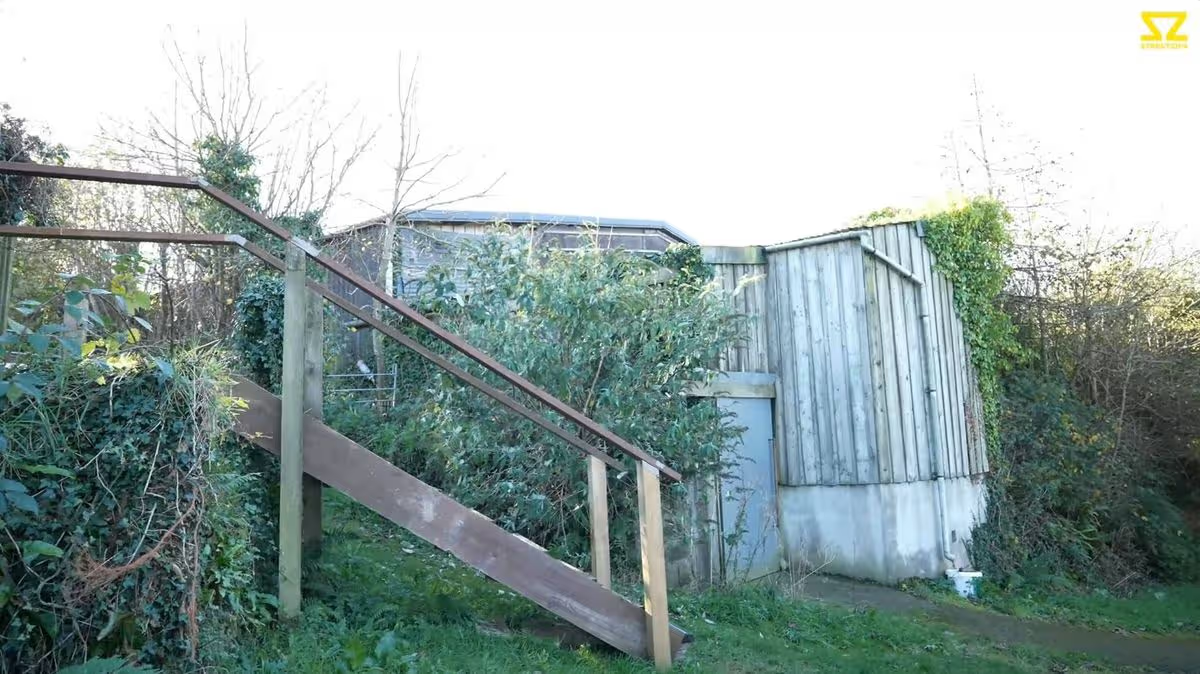
A once-thriving and vibrant adventure park teeming with wildlife and laughing youngsters now stands eerily abandoned, left to decay.
Brocklands Adventure Park was a beloved attraction in Kilkhampton. The venue welcomed guests from 1977 until it shut down in 2007.
The park garnered multiple accolades after being established by Dennis and Sue Vanstone. During its heyday, it attracted 50,000 visitors each season, having evolved from a modest tea room and shop into a comprehensive leisure destination.
It grew into an expansive complex featuring playgrounds, attractions, animal enclosures and wildlife programmes.
In 1987 it rebranded as Pixieland Funpark. By 1990 the venue had added a 15-inch gauge miniature railway, pony rides, trampolines, and an all-weather playground.
In March 1997, further expansion saw the launch of Pip’s Place, a new restaurant accommodating 200 diners, reports Cornwall Live.
Subsequently there were additional features including a ten-pin bowling alley, archery centre, crazy golf, quad biking, bumper boats, and a mega tube slide.
Creatures from across the animal kingdom called it home. Visitors could encounter rabbits, ducks, iguanas, snakes, parrots, and a raccoon.
In 2000, the park was rechristened Brocklands Adventure Park, signalling its evolution into theme-park territory.
Despite its popularity, the park tragically shut its doors in 2007 when the owners retired. Today, vegetation and undergrowth have overrun the formerly bustling structures.
Wandering through the deserted park and stumbling upon an old archery range, the Youtube channel Street Zips said: “There are soap dispensers, we found a bow and arrow in here.
“There’re drawers here, we’ve got plugs and fuses – and smart plugs – one of the things that go on your wrist to stop you getting whacked by the bow.
“Listen-listen – can you hear it? Yeah like a rat is it – I heard a squeak. The rustiness of the drawers are really cool as well. You would pay a fortune for that for a movie set piece. “
They also discovered boxes for trapping rats, saying: “They’ve obviously got an infestation of something here. That’s a serious trap isn’t it. There’s some spring on that.”
The urban adventurers came across a kiwi tree still bearing fruit. Peering into what they believed was an old animal enclosure, they discovered posters of creatures to look out for in the taxidermy exhibition made “only of roadkill.”
They even spotted old pheasant feathers scattered across the floor.
Fast forward to 2021, a planning proposal was submitted to convert a key building into a two-bedroom home, and by 2023, planning permission was granted to construct five homes on the site.
The steel structure will be repurposed into a two-bedroom dwelling. The planning application reads: “The site comprises part of the former visitor attraction known as Brocklands Adventure Park, which closed in 2007 and contained a range of attractions split across two sites (separated by West Street).
“These attractions included 15in gauge railway, ponds, slides, pony ride track, trampolines, quad biking, bouncy castle, bumper boats, bowling alley, indoor multi-activity centre and refreshment facilities.
“The proposal involves converting the existing steel frame building to form a two-bedroom dwelling.”






































You must be logged in to post a comment Login