NewsBeat
Inside France’s first LGBTQIA+ senior living residence

France’s first social housing project designed for LGBTQIA+ seniors has opened in Lyon. For many residents, it’s not just a roof over their heads – it’s the start of a new chapter of safety, solidarity and love
Much of the building may still be devoid of furniture, and the garden little more than wood chippings, but there’s colour everywhere – on rainbow doormats, the rainbow tape cordoning off the veg patch-to-be, and kaleidoscopic posters emblazoned with wordplays like pépé, pédé et pro du potager (grandpa, faggot and gardening pro).
The residents at La Maison de la Diversité have heard such insults time and again, but now they’re reclaiming them. It’s moving-in day at France’s first senior living residence for the LGBTQIA+ community and allies, and it’s a hive of activity.
“I cried when they told me I had a place,” says Alice*, 58. After living most of her adult life as gay, she came out as trans five years ago. Having been attacked three times in just five years in Mâcon – a city in Bourgogne, north of Lyon, which she describes as having a “small-town mentality” – moving into La Maison de la Diversité means safety and security.
This is the first co-living project from Les Audacieuses & Les Audacieux, an organisation fighting isolation and promoting social inclusion within the LGBTQIA+ community and its allies.
The team behind La Maison de la Diversité– Stéphane Sauvé, Christophe Dercamp and Marie Gaffet – took inspiration from a similar multigenerational living project, Lebensort Vielfalt, which opened in Berlin in 2012. But as it was a completely new concept in France, it took years to get off the ground. Originally planned for Paris, they finally opened a 16-apartment residence in Lyon in October 2025, with 14 flats for over-55s, one for a young person aged 18-30, and another for guests.
Loneliness and depression are chronic problems among the elderly in much of the western world, but they’re even more pronounced in the LGBTQIA+ community. Of the 17.8m over-60s in France, 28% of 65 to 79-year-olds and 49% of those over 80 live alone. Among LGBTQIA+ seniors – estimated at more than a million people – that figure rises to 65%, and suicide rates are between two and seven times higher than among their heterosexual and cisgender peers.
Gisèle*, 63, experienced profound isolation and suicidal thoughts before moving to La Maison de la Diversité. Having grown up in a rural area of the Loire department, she first fell in love with a woman as a teenager but never acted on her feelings. “Having a relationship or a life with a woman wasn’t something I could imagine,” she says. “I was in love with girls when I was just 15 – Florence, Christine – I can still remember their faces. But my world was traditional and conventional.”
Instead, she married a man, moved to Beaujolais’s Villefranche-sur-Saône, and had children. Her husband was reclusive, and they lived isolated lives. In 2016, Gisèle divorced her husband and came out as gay. But after 30 years without being part of a community, she was profoundly lonely.
“I felt either I’d end up turning to drink or throwing myself in front of a train,” she says. “I’ve arrived here in a vulnerable state – I’m terrified of rejection – but a voice inside me tells me that this is the right decision for me, at the right time.”
Similar projects exist elsewhere in the world. There are retirement communities in San Francisco, Palm Springs and other US towns that cater specifically to LGBTQIA+ residents and allies. The first in the UK, Tonic@Bankhouse, opened in 2024 in London’s Lambeth. What makes La Maison de la Diversité different is its fusion of LGBTQIA+ housing with multigenerational living.
I’ve always hidden who I was to protect myself from others. There’s a certain freedom that comes with being here
“Being part of the queer community unites us and makes our age differences seem much less significant,” says E*, 25, who has moved into the youth flat. “We all signed a solidarity contract when we moved in, essentially pledging that we’d help out.”
The youngest resident by more than 30 years, E pays a reduced rent. While there’s no obligation to help with additional chores, they see the residence as operating like a flatshare – only better. “My mum and I used to tour festivals in our van, so I know what it’s like to live in a community,” says E. “I couldn’t live in a flatshare, but I’m delighted to be in co-housing.”
Each apartment has modest cooking facilities and ensuite bathrooms, and ranges in size from 24 to 42 square metres. There’s also a large shared kitchen and living area, a bike shed and a communal garden. Most residents lived alone before moving here, including Thierry*, 73, who relocated from just three miles away.
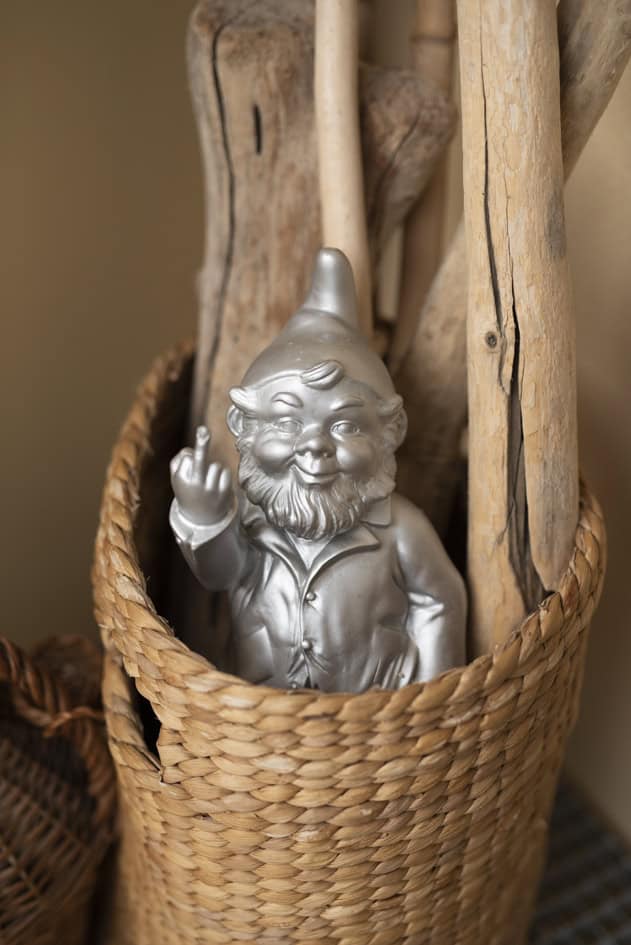
“I’ve always hidden who I was to protect myself from others,” says Thierry. “I’ve been arrested just for being gay, just because I was going to a club. We were stigmatised. There’s definitely a certain freedom that comes with being here, but outside these walls it’s still complicated.”
Security and a sense of community are the main reasons most residents have chosen La Maison de la Diversité. But the chance to live as their most authentic selves opens up another possibility – a fresh chance at love. As I chat to them, there’s a resounding sense of optimism that the best is yet to come.
“Being over-50 and trans is like having a double expiry date,” says Alice, “but there’ll be so much more scope for dating here than there was in Mâcon. Now I can be myself all the time, and no one is going to judge, laugh or comment.”
“The cherry on the cake would be finding what I’ve never experienced – a loving, intimate relationship,” says Gisèle.
*Guests have asked that only their first names be published.
Photography by Juliette Treillet
Be part of the solution
At Positive News, we’re not chasing clicks or profits for media moguls – we’re here to serve you and have a positive social impact. We can’t do this unless enough people like you choose to support our journalism.
Give once from just £1, or join 1,800+ others who contribute an average of £3 or more per month. Together, we can build a healthier form of media – one that focuses on solutions, progress and possibilities, and empowers people to create positive change.