Connect with us
DAPA Banner
DAPA Coin
DAPA
COIN PAYMENT ASSET
PRIVACY · BLOCKDAG · HOMOMORPHIC ENCRYPTION · RUST
ElGamal Encrypted MINE DAPA
🚫 GENESIS SOLD OUT
DAPAPAY COMING

NewsBeat

Iran war has become a lesson in how power really works

Published

on

Iran war has become a lesson in how power really works

For months, the Iran war was framed through the language of military success. This was shaped in part by longstanding orientalist assumptions reflected in the rhetoric of leaders such as Donald Trump and Benjamin Netanyahu about the relative weakness and fragility of states such as Iran.

Encouraged by Israeli intelligence capabilities, precision strikes and overwhelming American military superiority, many policymakers appeared to assume Tehran would eventually collapse under pressure. Iran, in this view, was too isolated, internally divided and economically weakened to withstand sustained US-Israeli escalation. Some even suggested American troops would be welcomed by sections of a population frustrated with the regime.

But this hasn’t been the reality of the past two months. The Trump administration now appears to be groping for any settlement it can sell as a “win”. This may be hard if, as has been reported, the US military campaign ends without Iran being forced to make any meaningful concessions over its nuclear programme.

If that transpires, it will suggest that the German chancellor, Friedrich Merz, was right when he said that the US has been humiliated by Iran in a lesson about how power really works.

Advertisement

The problem was not simply military miscalculation. It was strategic incoherence rooted in assumption that Iran could not meaningfully endure prolonged confrontation. As the war progressed, the fantasy of decisive victory collapsed under the weight of economic, political and strategic reality.

No clear objective

At the same time, at least in public, America’s leadership appeared regularly to change its mind about what would represent a “win”. Was it destroying Iran’s nuclear and ballistic missile programmes, neutralising its armed forces, forcing regime change, or ending Tehran’s regional influence? Throughout the conflict, the objectives shifted constantly. That ambiguity was not a minor flaw in strategy. It was the strategy’s central weakness.

Modern wars require a clear objective and a realistic path to achieving it. Throughout this conflict, the US and Israel never convincingly defined either.

If the aim was regime change, there was never serious appetite for the kind of occupation and state reconstruction that had in Iraq and Afghanistan already proved disastrously costly.

Advertisement

If the aim was simply degrading Iran’s military capabilities, that was always going to be a temporary fix – Iran has spent decades building a system designed around resilience, decentralisation and survival under pressure.

And if the aim was to end Iran’s role as a regional power, that has clearly failed. Iran remains intact. Its institutions survived and were able to install a new generation of leadership. And, as we’ve seen over Tehran’s ability to control the Strait of Hormuz, Iran’s strategic relevance survived.

This was never going to be a conventional war about controlling territory. It was a clash between two very different understandings of victory. The US and Israel wanted a decisive and demonstrable victory. Iran wanted to endure. That distinction changed the entire war and handed the strategic advantage to Tehran.

Iran understood something many policymakers in Washington continue to underestimate: weaker states do not necessarily need to defeat stronger powers militarily in order to succeed. They simply need to avoid collapse while imposing sufficient economic, political and strategic costs that the stronger actor eventually recalculates.

Advertisement

This is not a new lesson. It runs through modern history, from Vietnam to Afghanistan. Superior military power does not automatically produce political victory. But more importantly, the conflict also revealed the increasing cost of escalation in an interconnected global economy.

Global battlefield

The war’s consequences spread across the global economy as oil prices surged, shipping routes faced disruption and already fragile supply chains came under renewed pressure. The closure of the Strait of Hormuz – through which roughly one-fifth of the world’s seaborne oil supply passes – was enough to trigger market anxiety. Iran does not need to fully close the strait to create economic shockwaves. In the modern global economy, uncertainty itself is a weapon.

Iran is well aware of the leverage that control of the Strait of Hormuz has brought it.
EPA/Abedin Taherkenareh

The longer the war continued, the harder it was to remain politically sustainable – not just regionally, but globally. That is why, despite aggressive rhetoric, neither side now appears eager to return to full-scale war.

There is a broader lesson here that western powers repeatedly struggle to absorb: military power can destroy infrastructure and impose suffering, but it cannot easily manufacture legitimacy, political order or strategic clarity. That is why “winning” modern wars has become increasingly elusive even for the most powerful states on earth. Wars without realistic theories of victory tend to end the same way: through exhaustion, recalculation and negotiation. That increasingly appears to be where this conflict is heading.

Advertisement

The limits of power

Perhaps the greatest irony of the Iran war is that all sides now appear to recognise what should have been obvious from the beginning: total victory was never truly achievable. The war became a demonstration – not of the absence of power, but of its limits.

That matters in an increasingly fragmented global order where wars are becoming less about decisive triumph and more about endurance. States shaped by sanctions and prolonged isolation often develop a capacity to absorb pressure beyond what outside powers anticipate. Iran’s resilience was not created during this war. It was built over decades.

Military superiority still matters enormously. But the ability to endure politically, economically and socially matter just as much. Iran is a state with a complex, resilient structure, and depth of legitimacy especially when it comes to conflicts with the US and Israel. Iran understood that from the beginning.

It has taken Iran’s opponents too long to grasp the same facts. But they have now been educated by experience.


Advertisement

Source link

Continue Reading
Click to comment

You must be logged in to post a comment Login

Leave a Reply

NewsBeat

CPR instructor has real life heart attack while pretending to have one | News World

Published

on

CPR instructor has real life heart attack while pretending to have one | News World

To view this video please enable JavaScript, and consider upgrading to a web
browser that
supports HTML5
video

A CPR trainer suffered a real heart attack while demonstrating the signs of a cardiac arrest in Canada.

Advertisement

Karl Arps and his students had the fright of their lives when the 72-year-old first aid instructor went into a cardiac arrest during a training session.

Arps was showing his students how to spot the symptoms of one when he suffered a medical emergency in March.

He ended up being rushed to the hospital for an emergency triple bypass surgery following the incident.

CPR trainer Karl Arps spoke at a special recognition held for the six students who saved his life with first aid when he suffered a heart attack (Picture: Spectrum News 1/Rhonda Foxx)

Students said they first thought he was pretending before realising it was real.

Advertisement

Sign up for all of the latest stories

Start your day informed with Metro’s News Updates newsletter or get Breaking News alerts the moment it happens.

Arps was feeling dizzy in the moments before the attack, while hearing his students around him saying he didn’t look well.

Advertisement

Next time he came around was in the back of an ambulance.

He told As It Happens: ‘From what I was told, they did everything like we told them to do in CPR class.

‘Thank you does not seem enough. They saved my life, period.’

The students jumped into action when Arp’s hands curled outward, his face contorted and he started to snore, Logan Lehrer, a firefighter learning first aid at the Fox Valley Technical College in Appleton, said.

Advertisement

Another instructor tried to wake up Arps before realising he wasn’t fooling around.

He told CBC: ‘That’s immediately when we started responding to the situation.’

Lehrer alerted the emergency services, while five other students performed CPR and used a defibrillator on the 72-year-old.

Arps said after his bypass surgery that he is lucky to be alive as many heart attack cases he has been involved with end up passing away even after successful CPR.

Advertisement

He CBC: ‘I’ve been in practice for a quarter of a century, and I can count the number of CPR saves that I’ve had on one hand.

‘[Sometimes] we get a pulse back in the ambulance or on scene, but the person ends up passing away two or three days later in the hospital.’

An ambulance chief, Nick Romenesko, said the students’ early recognition and the immediate actions ‘directly contributed to Mr Arp’s positive outcome.’

Get in touch with our news team by emailing us at webnews@metro.co.uk.

Advertisement

For more stories like this, check our news page.

Advertisement
Advertisement

Source link

Continue Reading

NewsBeat

Graham Norton’s warning comments before The Neighbourhood pulled from prime time

Published

on

Daily Mirror

Graham Norton almost said no to The Neighbourhood, which has proven to be a bit of a miss in terms of viewing figures, before ITV’s brand new game series went to air

Graham Norton almost said no to The Neighbourhood before the series went to air. The presenter, 63, is front and centre on the broadcaster’s new gameshow format in which real-life households have gathered in a purpose-built neighbourhood to be in with a chance of winning a £250,000 cash prize.

Advertisement

There were clearly high hopes for the series as it premiered in between both segments of the explosive I’m A Celebrity…South Africa final on April 24, and has been airing at 9pm on Thursdays and Fridays ever since, where it has managed to pull in just half a million viewers.

Just hours after the sudden schedule change was confirmed, comments made by the talk show host have emerged, where he admitted that he can be “very lazy” with work and only agreed to fully commit to the project once he heard producers explain it in depth to him.

READ MORE: Why has Graham Norton’s show been pulled from ITV primetime slot?READ MORE: Graham Norton’s big budget ITV show The Neighbourhood pulled from prime time and replaced

Speaking before the series launched, Graham told an audience in the Lake District, where the show is filmed: “You are the first people in the world to get a sneak peek at The Neighbourhood, and it’s a show that I’m really excited to be at the helm.

“Anyone that knows me will know that as much as I enjoy my job, I’m also very lazy, so when the brilliant teams from Lifted Entertainment and The Garden asked me in for the pitch, I thought, well I’ll do that but then I’ll say no. And then as I was sitting there, I thought, ‘Oh, this is really good. I have to say yes to this,’ so here I am!”

Despite Graham’s optimistic outlook on the whole thing from the start, the programme will now air at 10.45pm which takes it away from the coveted slot it was initially given, implying that it has not lived up to expectations in terms of viewing figures.

This Thursday, viewers tuning in at 9pm will instead see a repeat of Davina McCall’s Long Lost Family, and an episode of Beat The Chasers: Celebrity Special, which was initially aired in 2021, will be shown instead. A spokesperson for ITV confirmed the schedule shift as they said said: “The full box set of The Neighbourhood is now available to stream on ITVX. Additionally, the show will continue to air in an evening slot on ITV.”

Advertisement

But sources have claimed that whilst the broadcaster pulled out all the stops to make the programme into a hit, it just hasn’t gone that way in the end. An insider told The Sun : “They threw everything at The Neighbourhood to make it a big success, but it’s ended up a bit of a damp squib.”

The six households competing are The Bradons, The Kandolas & Samra, The Lozman-Sturrocks, The Pescuds, The Scouse Haus and The Uni Boys. Challenges put every neighbour to the limit as they try and eliminate one another without becoming unpopular enough to get the axe themselves.

Opening up on his first reaction when he saw the entirety of the set, Graham said: “Arriving in Derbyshire and seeing the set, I’d seen pictures but I didn’t quite understand the scale of it. It really is like being on a movie set, except it’s 360 – everywhere you look, it’s real.

Advertisement

“The art department did an extraordinary job of building up that town square where we do the removals, the pub, the cafe, the interiors of the houses. It really took my breath away!

The Neighbourhood is available to watch on ITVX. Follow Mirror Celebs and TV on TikTok , Snapchat , Instagram , Twitter , Facebook , YouTube and Threads

Source link

Advertisement
Continue Reading

NewsBeat

now academic papers can be fully automated, what does this mean for the future of research?

Published

on

now academic papers can be fully automated, what does this mean for the future of research?

Until recently, AI’s role in research felt like having a useful assistant. It could summarise a paper, clean up a dataset or draft an abstract. Researchers were still in charge of the thinking.

That changed in late 2025 when cutting-edge “frontier” AI models became capable of reasoning and planning reliably by themselves. A key feature of these models is “tool calling” – the ability to interact with external tools in order to act on the world, not just describe it.

This marks the rise of agentic AI: systems that do not just respond to instructions but can independently plan, execute and iterate. In science as in other fields, chatbots have become coworkers that can autonomously complete real work, end to end.

An example of this is Tokyo-based Sakana AI’s The AI Scientist. Unveiled in mid-2025 and now in its second iteration, the Japanese tech company bills this as “the first comprehensive system for fully automatic scientific discovery”.

Advertisement

The AI Scientist scans existing literature, generates hypotheses, writes and executes code, analyses results and produces a full research paper – largely without human involvement. It reasons, fails and revises, just as a junior scientist would.

The proof? An AI Scientist academic paper describing “a pipeline for automating the entire scientific process end to end” was accepted by the International Conference on Learning Representations and published in the scientific journal Nature in March 2026, following peer review.

This represents something genuinely new: an autonomous AI system passing a milder version of the Turing test by demonstrating scientific quality, if not (yet) machine intelligence.

Advertisement
The AI Scientist’s peer-reviewed paper explained. Video: Matthew Berman.

Other significant achievements include Singapore-based startup Analemma carrying out a live demonstration of its Fully Automated Research System (Fars) in February. It produced 166 complete machine-learning research papers in roughly 417 hours for around US$1,100 (£810). That’s one academic paper every 2.5 hours at a cost that would sustain a research assistant for a couple of weeks.

And Google Cloud AI Research recently unveiled PaperOrchestra, which takes a researcher’s raw experimental logs and rough notes and converts them into a submission-ready manuscript, with figures and verified citations. In blind evaluations by 11 AI researchers, it easily outperformed existing autonomous systems in this area.

Having spent two decades researching disruptive technological innovations, I believe a significant threshold has been crossed. While there is a way to go before AI systems match the very best human-produced work, the era of fully automated research has arrived.

Implications for academia

The arrival of autonomous research systems lands on an academic system under severe strain in many countries. Over the last decade, the number of papers submitted to academic journals has grown much faster than the pool of qualified peer reviewers, leading to suggestions that the science publication system is being “overwhelmed”.

Advertisement

If systems like Fars can produce thousands of papers per year, the publication infrastructure of science faces a volume it was never designed to handle. Some academic reviews have already been identified as using AI-generated content. As submission numbers continue to rise, this may alter the role of a published academic paper as a definitive signal of the quality and skills of human researchers.

An optimistic take is that AI may shift academia away from its strong reliance on quantity-based metrics, in favour of how influential or innovative publications are. This is a reform critics of the current system have long called for.

Less optimistically, as AI research scales up, an academic system designed for coherent, methodologically defensible contributions may inflate the proportion of incremental, rather than radically novel, scientific contributions. Both the quality and originality of research could suffer as a result.

Science has always needed its heretics to advance. Italian astronomer Galileo, the “father of modern science”, was forced to recant his defence of heliocentrism before the Catholic Church’s Inquisition. Hungarian physician Ignaz Semmelweis died in a psychiatric institution having failed to convince his colleagues that handwashing could save lives.

Advertisement

Yet historically, the ability of scientific institutions to encourage radical approaches has also been a mainstaple of how science has progressed. To sustain this, AI systems will need to be trained to maximise novelty and transformation, rather than plausibility and incremental progress.

AI’s impact on creative industries

The transformative effects of this new breeed of AI extend well beyond scientific research. A striking example is The Epstein Files. This fully AI-generated podcast reached number one the UK Apple Podcasts and Spotify charts in early 2026, drawing 700,000 downloads in its first week.

Music is further along and more conflicted. By mid-2025, the fully AI-generated band The Velvet Sundown had amassed over a million monthly Spotify listeners. In 2026, the platform was forced to introduce artist-protection features after AI tracks began displacing human music on popular playlists, while Deezer, facing roughly 50,000 AI-generated uploads daily, began excluding them from curated lists.

Ownership remains the elephant in the room. US courts have ruled that AI-generated works cannot be copyrighted, since human authorship remains a legal requirement. AI can produce at industrial scale, but no one can own the output legally.

Advertisement

This matters far beyond intellectual property law. In creative industries, it threatens the royalty streams, licensing deals and catalogue valuations on which artists, labels and publishers have built their entire business models for generations.

In science, meanwhile, it is destabilising the entire incentive architecture, which rests on the foundational assumption that knowledge is both generated and owned by humans. When that assumption dissolves, so does much of the institutional logic that has governed how we produce, reward and trust expertise.

The question, across all these fields, is no longer whether AI can produce the work. Rather, it is whether sufficient thought has gone into what we will gain and lose when it does.

Advertisement

Source link

Continue Reading

NewsBeat

Wardley vs Dubois: Date, fight time, undercard, prediction, ring walks and odds

Published

on

Wardley vs Dubois: Date, fight time, undercard, prediction, ring walks and odds

Manchester plays host to only the seventh-ever all-British world heavyweight title showdown in boxing as Wardley defends his WBO belt for the very first time in front of a sold-out crowd.

The unbeaten former English, British, European, Commonwealth and Continental titlist had a second reign as an interim champion after stopping Joseph Parker in the 11th round in an upset at the O2 Arena back in October, then was upgraded to full champion a few weeks later after the title was relinquished by Oleksandr Usyk, who also gave up his undisputed status.

Source link

Advertisement
Continue Reading

NewsBeat

100-home development accused of being ‘too big’ for village approved on appeal

Published

on

Cambridgeshire Live

The developer argued there was a need for affordable housing across East Cambridgeshire

A development of 100 affordable homes which was refused for being “too big” for a village will now go ahead following a successful appeal.

Advertisement

A proposal for 83 homes had already been approved on the land at the edge of Stretham, off the A10 near Ely, but permission was sought for a further 43. East Cambridgeshire District Council refused the application for 126 homes which they said went far above the affordable housing need in Stretham and nearby Little Thetford.

Long Term Land Limited appealed the decision and said there is “an ongoing and acute need for more affordable housing” in both East Cambridgeshire and Stretham. They said half of the homes will be affordable rental properties and the other half will be sold for affordable home ownership.

A range of road improvements are also proposed including street lighting, a puffin crossing, footpath improvements and measures to reduce vehicle speeds.

‘History’ of affordable housing schemes

A hearing was held by the Planning Inspectorate on March 4 and 5 with inspector T Burnham visiting the site on the second day. They noted “a history” of affordable housing schemes being granted outline planning permission on the land.

Advertisement

Initially refused by the council, permission for up to 19 homes was granted on appeal in 2023 and up to 38 were allowed by the council later that year. The need for affordable housing in the area was said to be between 44 and 72 homes, which the council said was “appropriately met” by the approved 83 homes.

The inspector agreed, but said Stretham is linked by buses to Ely and Cambridge which both have a “wide range of services” and “railway stations served by multiple routes”. They added that the “harm and implications” from building too many affordable homes “has not been clearly made out to me”.

Inspector Burnham said the benefits of the homes “should be afforded substantial weight” and approved the appeal.

Source link

Advertisement
Continue Reading

NewsBeat

West Lothian scheme to slow traffic through town backed despite nearly 200 objections

Published

on

Daily Record

An initial request for ways to slow traffic through the village has been met with a comprehensive redraw of the centre including widened pavements, road realignment and regimented parking.

Controversial plans to change the centre of Winchburgh have been backed by West Lothian Council.

Advertisement

Almost 200 people objected to a scheme to slow traffic through the rapidly growing village.

And community groups have turned their backs on plans drawn up by the charity Sustrans, now known as Walk Wheel Cycle Trust (WWCT).

A major redraw of proposals resulted in only four of the 196 objections being withdrawn.

READ MORE: The Centre, Livingston host Meet the Stylist event alongside Style Squad

Advertisement

And despite calls by councillors for further refinements, and promises by the trust to engage more with local people, few in the village seem to want the package.

An initial request for ways to slow traffic through the village has been met with a comprehensive redraw of the centre including widened pavements, road realignment and regimented parking.

Debate at the Development Management Committee this week only produced tweaks including the removal of a planned bus shelter outside of one villager’s house and the promise to look at the relocation of another.

In papers to the DMC, planners explained: “The application site extends from the bridge over the Union Canal to the west of Bennet Wood Terrace, where a traffic calming pinch point is proposed at the access to Fernlea, Nirvana and Easter Cottage.”

Advertisement

Winchburgh Community Development Trust, in partnership with West Lothian Council and Winchburgh Developments Ltd, applied to WWCT for Scotland’s Street Design Programme in 2018. This project is intended to form part of a wider vision for the regeneration of Winchburgh as a whole.

READ MORE: West Lothian industrial estate hotel plans knocked back

Planning officer Gillian Cyphus told the meeting: “There remains a significant body of objections from the residents. Residents are concerned about the impact of work on businesses and on residential amenities.”

She added: “The key issues for determination are the impact on road and pedestrian safety and the impact on amenity.”

Advertisement

Mrs Cyphus told the meeting that controversial proposals for the bus shelters had been changed in planning conditions and plans for bench seats had also been removed as part of conditions because of concerns about householder privacy .

While plans have been formulated since 2023 revision was demanded earlier this year.

The Community Council appeared at the DMC meeting to say that it could not support the revised proposals.

READ MORE: West Lothian youths target wildlife in ‘terrible’ incident as injured duck euthanised

Advertisement

One Main Street resident Sylvia White told the meeting: “I am not opposed in principle but concerned whether the layout choices are correct and proportionate.”

Ms White said proposed changes in the siting of lights and crossings would mean “more stop-start traffic” along the street.

Lars Cook pointed out that 70 to 90 buses stopped outside his house each day. He and his family had to put up with foul language and people urinating against his home as well as general disruption from the existing bus stop. The building of a bus shelter would only exacerbate the disruption and invasion of his family’s privacy.

Jordan Wright who owns a pet supplies shop in the Main Street said that parking changes could take customers away from his shop and surrounding businesses.

Advertisement

Graham Campbell, the chair of Winchburgh Community Council said: “There are matters that are still up in the air for both businesses and residents. This was a community led project until a year ago when the cycle trust took on the community feedback and provided something that was really not what had been asked for.”

READ MORE: Livingston charity secures funding boost from Scotmid

In its defence the engineering firm ARUP which had provided detailed design for the WWCT said: “The proposal creates a more accessible Main Street which prioritises people with additional access needs, including through the provision of additional parking bays (and disabled parking bays in particular) interlinked with improved footways for wheeling.”

Representatives from the charity and Arup said they were prepared to continue discussions with residents over issues raised and make changes where possible.

Advertisement

Details were debated over two hours before councillors reconvened to make a decision.

Councillor Willie Boyle said: “I am delighted at the dialogue this morning. I have to say in some ways I envy Winchburgh. What’s being proposed is positive.”

He pointed to the council’s own plans for decriminalised parking enforcement and 20mph zones coming into communities as part of national road policy changes. “These schemes in themselves are not enough, they can be ignored and can be difficult to enforce but engineering our streets to be safer I think is very positive.”

READ MORE: Supermarket giant calls on West Lothian shoppers to take on Supermarket Sweep

Advertisement

“I think this is the way forward. It has been unfortunate about the issues of communication but I think we have an opportunity to salvage this.”

He said a decision by the council would allow further conversations to take place.

Local ward councillor Tony Boyle said: “I think the best thing today would be take this plan back and get back into a discussion with the communities and come back in with a fully refined plan, But I know because of funding constraints that’s not going to happen. I would support this plan if conditions could be attached regarding the siting of the bus stops”.

Councillor Boyle suggested that the bus stop also be moved from outside Mr Cook’s house but planners suggested this would be difficult to condition as part of the proposals before the committee. It is something which can be considered by another committee.

Advertisement

The committee passed the proposals.

READ MORE: West Lothian town may soon have its own dental practice

Don’t miss the latest news from the West Lothian Courier. Sign up to our free newsletter

Source link

Advertisement
Continue Reading

NewsBeat

new undercover drama explores tense clash between state loyalty and criminal credibility

Published

on

new undercover drama explores tense clash between state loyalty and criminal credibility

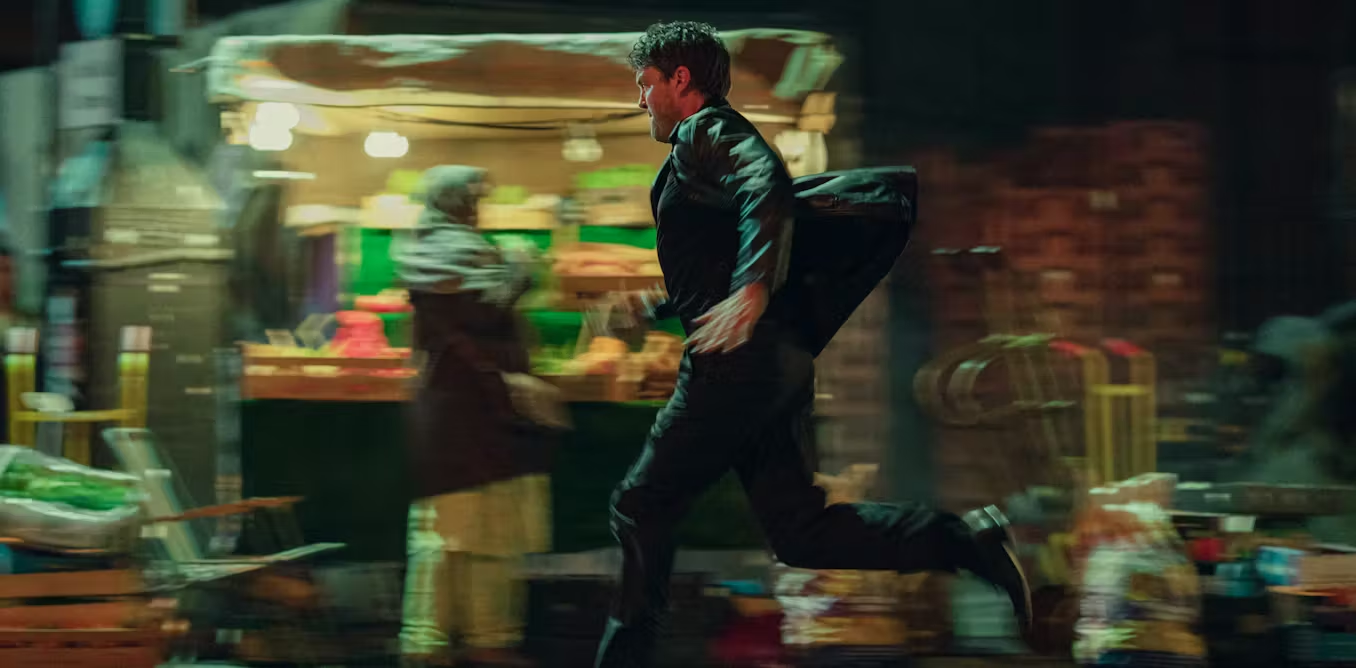
Netflix’s latest drama Legends offers a compelling window into the criminology of undercover policing, covert surveillance and organised crime.

Inspired by a real UK customs investigation, the six-part drama follows ordinary British customs officers sent deep undercover to infiltrate drug trafficking gangs.

Written by Neil Forsyth (also creator of Brink’s-Mat robbery drama The Gold), Legends balances tension and realism with a measured, slow-burn pace that prioritises character over spectacle. Steve Coogan plays Don, a former undercover police officer tasked with recruiting customs officers to go undercover themselves to infiltrate drug gangs.

Much of its strength rests on the central performance of Tom Burke, whose portrayal of the lead undercover officer, Guy, anchors the series emotionally. Burke brings a quiet intensity to the role, capturing the unease, vulnerability, and moral ambiguity of someone living between identities.

Advertisement

The supporting cast also does an exceptional job, reinforcing the drama’s grounded and realistic tone, capturing the collective pressure, uncertainty and emotional toll of undercover work.

Becoming a legend

Unlike elite operatives, these are everyday officials thrust into extraordinary criminal worlds, making the series not just gripping television, but a sharp exploration of how undercover work reshapes identity, morality and survival.

The title itself is significant. In undercover policing, a “legend” is the carefully constructed false identity, complete with backstory, relationships, habits and a believable past. These identities must withstand intense scrutiny from criminals, meaning success depends on absolute credibility.

Advertisement

In Legends, officers must abandon their real selves and convincingly live as criminals to gain trust. This demands constant performance, producing intense psychological strain as loyalty to the state clashes with the need to belong within a criminal world.

In criminology, this reflects the concept of identity conflict. Undercover officers must operate simultaneously as agents of the law and participants in deviance. Howard Becker’s labelling theory is particularly relevant here: labels do not simply describe behaviour – they shape it.

To be effective, officers must adopt the identity of the “criminal,” often participating in minor illegality or forming close ties with offenders. As former undercover cop Don explains, “Your legend has to come from you, or it won’t work,” emphasising that a convincing undercover identity cannot simply be performed, it must feel authentic and internally lived to be believable.

Psychological unravelling

The result is moral ambiguity, where the line between observation and complicity becomes increasingly unstable. As seen in Donnie Brasco (1997) and The Departed, (2006) prolonged immersion can erode the boundary between professional duty and personal identity, leading not to control, but fragmentation.

Advertisement

Legends appears to centre on this psychological unravelling. These are not distant professionals but ordinary individuals removed from everyday life, required to deceive family and colleagues while facing the constant threat of exposure. This is particularly evident with Guy, who appears increasingly weighed down by the demands of sustaining his legend.

Even in controlled situations, there is a sense of constant vigilance in his interactions – carefully measured responses, restrained body language, and an underlying tension that suggests the effort required to remain convincing. At the same time, brief glimpses of his life beyond the operation hint at growing emotional distance, reinforcing how the undercover role begins to dominate his identity.

Criminologists describe this as role contamination, where it stops being a performance and begins to reshape the real self. The deeper the infiltration, the harder it becomes to return.

The criminal world they enter is equally significant. The series focuses on drug gangs, which links directly to organised crime theory. Drug trafficking organisations are not chaotic groups of offenders, but structured systems with hierarchies, codes of loyalty and mechanisms of control. Trust is currency; betrayal is often fatal.

Advertisement

For undercover officers, success depends on understanding not just who controls the drugs, but who controls fear, respect and power. This aligns with criminal enterprise theory, which argues that organised crime emerges in response to market demand.

Drug trafficking persists because prohibition generates profitable black markets, and criminal groups operate much like businesses within them. In this sense, Legends is not simply about crime, but about parallel economies embedded within society – where criminals may wield more immediate authority than the state.

Legends raises pressing ethical questions about the way undercover policing is conducted.
Netflix

In many communities, organised crime groups provide forms of protection, employment and dispute resolution where trust in formal institutions is weak. Drug gangs can become alternative authorities. For undercover officers, this makes infiltration even more complex because they must navigate a world where legitimacy is not automatically attached to the police or the government.

Instead, loyalty may belong to the gang leader who provides security or income. As it goes on, Legends is likely to show how dangerous this balance becomes when officers must earn trust in a system built on suspicion.

Advertisement

Legends also raises pressing ethical questions. Undercover policing relies on deception, manipulation and at times emotional exploitation. Officers may form relationships with people who are unaware they are being investigated, blurring the boundaries of acceptable state power.

If the law depends on deception to enforce itself, where should the limits lie? As films like Sicario (2015) suggest, the pursuit of justice can itself become morally compromised. Legends will probably explore this moral uncertainty, showing that successful infiltration often comes at a personal and ethical cost.

Ultimately, Legends is far more than a crime drama about drug gangs. It is a study of how states confront organised crime by constructing false identities and sending ordinary people into extraordinary danger.

This makes Legends not only compelling television, but also a valuable exploration of policing, identity, organised crime, and the hidden moral costs of state power.

Advertisement

Source link

Continue Reading

NewsBeat

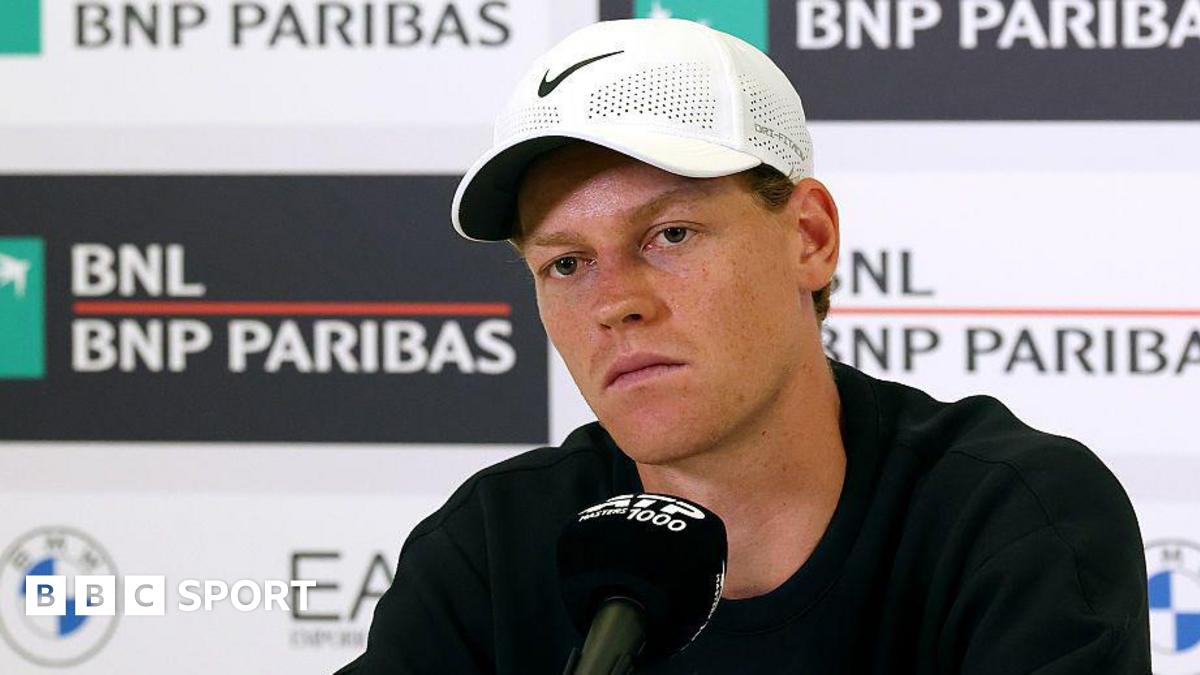
Jannik Sinner: ATP world no.1 says players not getting respect they deserve amid Grand Slam boycott calls

Published

on

World number one Jannik Sinner

Meetings have taken place between players and Grand Slam representatives. The players have made no progress in their request for benefit contributions, and rejected discussions about the formation of a Grand Slam player council.

Sinner expressed his disappointment at the 9.5% prize money offered by this month’s French Open – as players believe the total sum is still some way below the 22% of tournament revenue they feel entitled to.

The financial pot at last year’s US Open rose by 20%, with the figure for January’s Australian Open nearly 16% higher year on year.

“I think in the next couple of weeks we know also the prize money we’re going to have in Wimbledon,” Sinner said.

Advertisement

“We truly hope that it’s going to be better. Then, of course, US Open. So I do understand players talking about boycott because it’s somewhere we also need to start. It has been a very long time with this.”

Sinner stopped short of committing himself to boycotting one of the Slams.

“Of course, it’s tough to say. I cannot predict the future in a way,” he said.

“It’s the first time that I feel like the players are all in the same scenario and in the same point of view.

Advertisement

“I think it’s also right because without the players, they are not going to happen, any tournaments. In the same time we also know and we respect the tournaments because they make us bigger as athletes.

“Let’s see in the future.”

Source link

Advertisement
Continue Reading

NewsBeat

Man United worry as Marcus Rashford’s Barcelona career could be ended by England team-mate

Published

on

Manchester Evening News

Marcus Rashford faces an uncertain future as the Manchester United loanee’s stint at Barcelona nears it’s conclusion

Manchester United have been handed fresh concerns that a deal with Barcelona for Marcus Rashford may not be possible due to the La Liga club looking at alternative options. Rashford’s future remains increasingly uncertain as the end of his loan spell at the Camp Nou approaches.

United loaned Rashford to Barcelona after the England international expressed a desire to leave Old Trafford.

There has since been the expectation that Rashford would leave United on a permanent basis this summer, with Barcelona the likely destination. The Spanish giants hold the option of signing Rashford on a permanent deal for £26million, but there have been reports that Barca are yet to hold any talks about a long-term move for the United star.

Advertisement

Get MEN Premium now for just £1 HERE – or get involved in our United WhatsApp group by clicking HERE. You can also join our United Facebook page by clicking HERE and don’t miss out on our brilliant selection of newsletters HERE.

Now, a report from Spanish news outlet Mundo Deportivo has claimed that Barcelona are exploring the left wing market for potential alternatives to Rashford this summer.

READ MORE: Amad praises the unsung hero at Manchester United – ‘Don’t forget’ READ MORE: Man United hero Casemiro shuts down Jamie Carragher with ‘bitterness’ comment

One player mentioned as a possible target for Barcelona is Newcastle United star Anthony Gordon, who was recently in the England squad with Rashford and could be international teammates once again at this summer’s World Cup.

Advertisement

The report claims, though, that Newcastle’s asking price of €85million (£73.5million) could prove to be a problem for Barcelona in their hopes of signing the forward Everton star.

Rashford has enjoyed an impressive loan spell at Barcelona this season, scoring 13 goals and providing 14 assists across all competitions.

Barcelona are not the only club to be linked with signing the 28-year-old on a permanent deal this summer, with the likes of Arsenal, Tottenham Hotspur and Aston Villa all mentioned as potential destinations in the Premier League, while Bayern Munich have also seen their name mentioned on the rumour mill.

Sky Sports, HBO Max, Netflix and Disney+ with Ultimate TV package

Advertisement
This article contains affiliate links, we will receive a commission on any sales we generate from it. Learn more
Content Image

Sky has upgraded its Ultimate TV and Sky Sports bundle to now include HBO Max, Netflix, Disney+, discovery+ and Hayu, as well as 135 channels and full Sky coverage of the Premier League and EFL.

Sky broadcasts more than 1,400 live matches across the Premier League, EFL and more with at least 215 live from the top flight alongside Formula 1, darts and golf.

It remains to be seen what the future holds for Rashford, who will return to United this summer following the conclusion of his loan deal.

Earlier this year, Barcelona president Joan Laporta made it clear that he and the club want Rashford to remain at the Camp Nou on a long-term basis.

“We will try, in Barca’s interest, to ensure that Marcus Rashford can continue with us beyond this season,” Laporta said in March.

Advertisement

“Marcus is performing very well with assists and goals, we’re happy. We could extend the loan further. It depends on what Deco wants

“There are formulas, such as paying part of the buy option to Manchester United and figuring out the rest later.”

Source link

Advertisement
Continue Reading

NewsBeat

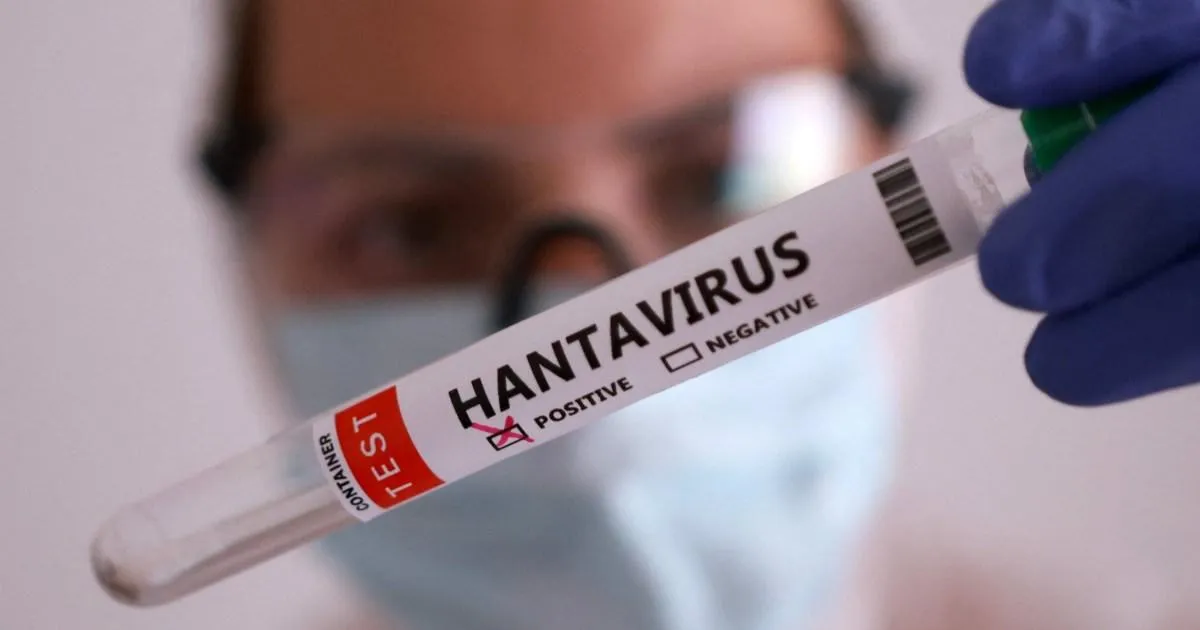
Could deadly hantavirus become the next global pandemic? | News World

Published

on

Could deadly hantavirus become the next global pandemic? | News World
The number of hantavirus cases are rising, so could it be the next pandemic? (Credits: REUTERS)

After a luxury cruise ship has been hit by an outbreak of the hantavirus, many are wondering whether this could be the next pandemic.

A total of eight cases have so far been reported; five of which have been confirmed while the other three remain suspected.

At least six people are in hospital, including three Brits, after possible contact with the virus. Three people have died, including a Dutch couple and a German citizen.

Authorities are also searching for seven British nationals who disembarked the hantavirus-hit cruise ship.

Advertisement
@metrouk

Authorities are urgently tracing passengers and crew from a flight between Saint Helena and Johannesburg after a woman on board later died of hantavirus. There were 82 passengers and six crew members on the April 25 flight, and concerns raised by the World Health Organisation about possible human-to-human transmission have increased the urgency of locating them. They said the overall threat still remains low, but concerns about potential transmission are growing. #virus #hantavirus #worldhealthorganization

♬ Scary Tense – Steve Ralph

Some 30 people left the ship at St Helena after the first victim died on MV Hondius, including a woman who also died a few days later in Johannesburg after contracting the virus.

Sign up for all of the latest stories

Start your day informed with Metro’s News Updates newsletter or get Breaking News alerts the moment it happens.

Advertisement

During a briefing earlier today, the World Health Organisation (WHO) said cases of hantavirus are expected to rise, so could it be the ‘next pandemic’?

What is hantavirus?

Hantaviruses are a family of rodent-bourne viruses, with each strain tied to a specific host species.

It’s spread when people come into contact with infected droppings, saliva, urine or nesting materials, but is extremely rare, and rarely passed from person to person.

Advertisement

If caught, hantavirus can lead to two main illnesses, one of which affects the lungs (Hantavirus Pulmonary Syndrome or HPS) and the other which affects the kidneys (Hemorrhagic fever with renal syndrome or HFRS).

A graph showing how hantavirus is spread.
Hantavirus is avirus transmitted by infected rodents causing severe respiratory and hemorrhagic diseases in humans. (Credits: Getty Images)

The incubation period for this illness is generally two to four weeks, according to the government, but can range from as little as two days to as long as eight weeks.

The Andes strain of hantavirus has been spreading across MV Hondius, and it’s been responsible for human-to-human transmission in the past in parts of South America.

What are the symptoms of hantavirus?

Early symptoms of hantavirus are similar to the flu, and include headaches, dizziness, chills as well as abdominal problems like diarrhoea, vomiting and nausea.

If it progresses into Hantavirus Pulmonary Syndrome, patients can experience headaches, dizziness, chills and abdominal problems like nausea, vomiting, and diarrhoea.

Advertisement

If you develop Hemorrhagic Fever with Renal Syndrome, initial symptoms will include intense headaches, back and abdominal pain, fever or chills, nausea, and blurred vision.

If the disease progresses, later symptoms include low blood pressure, acute shock (lack of blood flow), internal bleeding, and acute kidney failure, according to the CDC.

Hantavirus can be fatal, so it’s important to keep an eye on symptoms if you believe you’ve been exposed. There is currently no cure for the disease.

Advertisement

Should we be worried?

While the current outbreak and the rise in cases may be frightening, health officials do not expect the outbreak to be an epidemic.

During a briefing today, WHO Chief Dr Tedros Ghebreyesus said that the organisation is aware of reports of other people with symptoms who may have had contact with passengers from the MV Hondius cruise ship.

More cases may be reported, he said, but WHO stresses that it has assessed the public health risk ‘as low’.

Advertisement
Director-General of the World Health Organisation (WHO) Dr. Tedros Adhanom Ghebreyesus attends an ACANU briefing in Geneva, Switzerland, April 29, 2026. REUTERS/Denis Balibouse
WHO has stressed that the hantavirus outbreak is not similar to coronavirus (Credits: REUTERS)

Meanwhile, infectious disease epidemiologist Maria van Kerkhove stressed during the WHO briefing that the hantavirus outbreak is ‘not the start of a Covid pandemic’ as the virus doesn’t spread in the same way as coronavirus.

Confirming that while the number of cases are on the rise, she added ‘This is not Covid, this is not influenza, it spreads very differently.’

Dr Abdirahman Mahamud, director at the alert and response co-ordination department of the World Health Organisation’s Emergencies Health Programme, highlighted a similar outbreak in Argentina between 2018 and 2019, which led to a total of 34 cases.

Dr Mahamud added: ‘We don’t anticipate a large epidemic. With experience our member states have, and the actions they have taken, we believe that this will not lead to subsequent chain of transmission.’

Follow Metro across our social channels, on Facebook, Twitter and Instagram

Advertisement

Share your views in the comments below

Advertisement
Advertisement

Source link

Continue Reading

Trending

Copyright © 2025