

Connect with us
DAPA Banner

NewsBeat

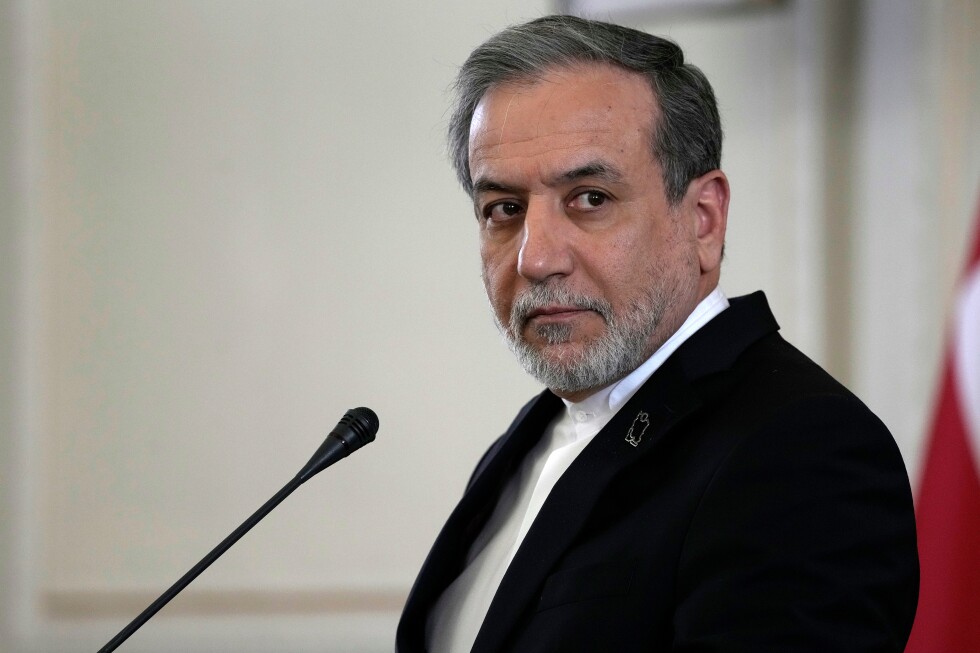
Iran’s top diplomat strikes hard line on US talks

Published

on

Iran's top diplomat strikes hard line on US talks

DUBAI, United Arab Emirates (AP) — Iran’s top diplomat insisted Sunday that Tehran’s strength came from its ability to “say no to the great powers,” striking a maximalist position just after negotiations with the United States over its nuclear program and in the wake of nationwide protests.

Foreign Minister Abbas Araghchi, speaking to diplomats at a summit in Tehran, signaled that Iran would stick to its position that it must be able to enrich uranium — a major point of contention with President Donald Trump, who bombed Iranian atomic sites in June during the 12-day Iran-Israel war.

While Iranian President Masoud Pezeshkian praised the talks Friday in Oman with the Americans as “a step forward,” Araghchi’s remarks show the challenge ahead. Already, the U.S. moved the aircraft carrier USS Abraham Lincoln, ships and warplanes to the Middle East to pressure Iran into an agreement and have the firepower necessary to strike the Islamic Republic should Trump choose to do so.

“I believe the secret of the Islamic Republic of Iran’s power lies in its ability to stand against bullying, domination and pressures from others,” Araghchi said. “They fear our atomic bomb, while we are not pursuing an atomic bomb. Our atomic bomb is the power to say no to the great powers. The secret of the Islamic Republic’s power is in the power to say no to the powers.”

Advertisement

‘Atomic bomb’ as rhetorical device

Araghchi’s choice to explicitly use an “atomic bomb” as a rhetorical device likely wasn’t accidental. While Iran has long maintained its nuclear program is peaceful, the West and the International Atomic Energy Agency say Tehran had an organized military program to seek the bomb up until 2003.

Iran had been enriching uranium up to 60% purity, a short, technical step to weapons-grade levels of 90%, the only non-weapons state to do so. Iranian officials in recent years had also been increasingly threatening that the Islamic Republic could seek the bomb, even while its diplomats have pointed to Iranian Supreme Leader Ayatollah Ali Khamenei’s preachings as a binding fatwa, or religious edict, that Iran wouldn’t build one.

Pezeshkian, who ordered Araghchi to pursue talks with the Americans after likely getting Khamenei’s blessing, also wrote on X on Sunday about the talks.

“The Iran-U.S. talks, held through the follow-up efforts of friendly governments in the region, were a step forward,” the president wrote. “Dialogue has always been our strategy for peaceful resolution. … The Iranian nation has always responded to respect with respect, but it does not tolerate the language of force.”

Advertisement

It remains unclear when and where, or if, there will be a second round of talks. Trump, after the talks Friday, offered few details but said: “Iran looks like they want to make a deal very badly — as they should.”

Aircraft carrier in the Arabian Sea

During Friday’s talks, U.S. Navy Adm. Brad Cooper, the head of the American military’s Central Command, was in Oman. Cooper’s presence was likely an intentional reminder to Iran about the U.S. military presence in the region. Cooper later accompanied U.S. special envoy Steve Witkoff and Jared Kushner, Trump’s son-in-law, to the Lincoln out in the Arabian Sea after the indirect negotiations.

Araghchi appeared to be taking the threat of an American military strike seriously, as many worried Iranians have in recent weeks. He noted that after multiple rounds of talks last year, the U.S. “attacked us in the midst of negotiations.”

“If you take a step back (in negotiations), it is not clear up to where it will go,” Araghchi said.

Advertisement

Source link

Advertisement
Continue Reading
Click to comment

You must be logged in to post a comment Login

Leave a Reply

NewsBeat

Global markets mixed, Wall Street gains as oil prices soar

Published

on

Global markets mixed, Wall Street gains as oil prices soar

Wall Street was poised to open the week with gains on Monday as oil prices continued their climb and prospects for an end to the Iran war remained uncertain.

Futures for the S&P 500, Dow Jones Industrial Average and Nasdaq all climbed 0.6% before the opening bell. Wall Street closed on Friday with its fifth straight losing week, its longest such streak in nearly four years.

Benchmark U.S. crude jumped $1.20 to $100.84 a barrel. Futures for Brent crude, the international standard, climbed 2.1% to $107.54 a barrel. Before the war, Brent had been priced at about $70 a barrel.

U.S. President Donald Trump on Monday threatened widespread destruction of Iran’s energy resources and other vital infrastructure if a deal to end the war with Tehran is not reached soon.

Advertisement

In a social media post, Trump said “great progress is being made” in talks with Iran to end military operations but bristled that if a deal is not reached and if the strategic Hormuz Strait is not immediately reopened, the U.S. would broaden its offensive by “completely obliterating all of their Electric Generating Plants, Oil Wells and Kharg Island (and possibly all desalinization plants!).”

About one-fifth of the world’s oil passes through the Hormuz Strait.

On the ground, the war showed no sign of letting up: Tehran struck a key water and electrical plant in Kuwait, and an oil refinery in Israel came under attack. Israel and the U.S. launched a new wave of strikes on Iran.

There was little corporate news to trade on early Monday, though shares of Sysco tumbled 5.7% after the nation’s largest food distributor said it would acquire supplier Restaurant Depot in a deal worth more than $29 billion.

Advertisement

The acquisition would create a closer link between Sysco and customers that rely on Restaurant Depot for supplies needed quickly in an industry segment known as “cash-and-carry wholesale.”

Restaurant Depot shareholders will receive $21.6 billion in cash and 91.5 million Sysco shares.

Markets in Asia closed broadly lower Monday as worries continued about soaring oil prices and the potential for further escalation in war with Iran, but shares rose moderately in Europe.

France’s CAC 40 rose 0.4% at midday, while Germany’s DAX added 0.3%. Britain’s FTSE 100 gained 0.9%.

Advertisement

Japan’s benchmark Nikkei 225 slipped 2.8% to finish at 51,885.85. Australia’s S&P/ASX 200 lost 0.7% to 8,461.00. South Korea’s Kospi dove 3.0% to 5,277.30. Hong Kong’s Hang Seng lost 0.8% to 24,750.79, while the Shanghai Composite reversed course in the afternoon and was up 0.2% at 3,923.29.

In Japan and the rest of Asia worries continue to grow about the effective lack of access to the Strait of Hormuz as the region relies greatly on such access for oil shipments.

Investors are now bracing for the war to last for some time, which would likely set off inflation in global markets, and eventually may stunt Asia’s economic growth.

“Although we do not expect the conflict to be protracted, we anticipate heightened volatility in the near term,” said Xavier Lee, senior equity analyst at Morningstar Research.

Advertisement

Alarm has been resounding in Japan about the declining value of the yen. In currency trading, the U.S. dollar inched down to 159.51 Japanese yen from 160.32 yen. The euro cost $1.1482, down from $1.1510.

“In addition to the crude oil futures market, speculative activity is also said to be increasing in the foreign exchange market,” Vice Finance Minister Atsushi Mimura said.

“As we have already stated, we will respond on all fronts, and our focus is spread in all directions,” he told reporters, without giving specifics on the possible action.

___

Advertisement

AP journalist Ayaka McGill contributed to this report.

Source link

Advertisement
Continue Reading

NewsBeat

BBC Radio bosses almost sacked Scott Mills before replacing Zoe Ball

Published

on

Daily Mirror

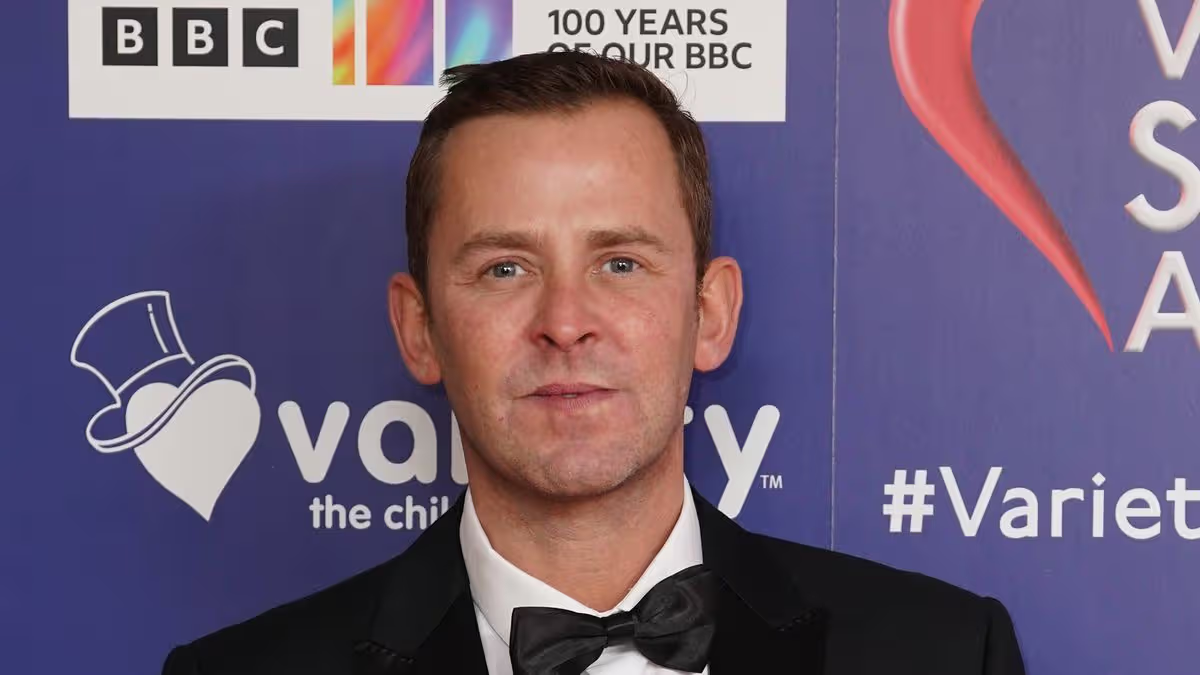
BBC radio presenter Scott Mills has revealed how close he was to losing his job before he was named as Zoe Ball’s replacement on the BBC Radio 2 Breakfast Show

Scott Mills admitted he very nearly didn’t land his dream role on the Radio 2 Breakfast Show after replacing Zoe Ball on her morning show on the airwaves. However, despite being with the organisation since 1998, he has confessed his time was almost cut short by furious bosses long before his axing this week.

Scott was talking to Dermot O’Leary when he revealed how his boozy antics almost cost him his job years before news of his sacking. He opened up on the altercation that had followed a night out after the Brit Awards. after Dermot played a clip of Scott slurring his words on his early morning Radio 1 show in 2001.

He confessed that was the moment he was almost removed from his role by bosses, admitting: “That’s called how to really nearly lose your job at BBC. I had got carried away so much at the Brit Awards, because I had never been there before, and time just fast-forwarded, and somebody went, what time are you on air?

Advertisement

READ MORE: Scott Mills sacked: Bombshell letter BBC boss sent to staff over ‘sudden’ sackingREAD MORE: Scott Mills’ husband and life off radio as he is sacked by the BBC over personal conduct

Ensure our latest headlines always appear at the top of your Google Search by making us a Preferred Source. Click here to activate or add us as your Preferred Source in your Google search settings.

“And I said, ‘Four?’ and they went, ‘Well, it’s two now’. Oh no! It was horrendous.” Scott claimed his actions were “naive and stupid”, explaining how his bosses were “quite rightly” furious. “And also, there was a thing, at Radio 1 then, called the den,” he went on.

Advertisement

“This probably wasn’t allowed, but why go home when you can have a couple hours of sleep in the den? I mean, I was young, I’m in my 20s, right?”

Scott’s admission comes as it was revealed he is no longer contracted by the BBC. The BBC said today (Monday): “While we do not comment on matters relating to individuals, we can confirm Scott Mills is no longer contracted to work with the BBC.”

Lorna Clarke, Director of Music, released a statement to staff too, reading: “I wanted to personally let you know that Scott Mills has left the Breakfast show, and the BBC. I know that this news will be sudden and unexpected and therefore must come as a shock.”

Scott’s previous roles saw him presenting the 2-4pm slot on BBC Radio 2 as well as the early start on Radio 1. After the announcement he was replacing Zoe Ball, who had presented the breakfast slot for six years, Scott revealed how she had helped him 20 years ago.

Advertisement

He opened opened up on a small mistake Zoe made years ago, which, in an unexpected turn of events, helped propel his career forward. He explained to her: “I will never forget how you really took me under your wing and you really looked after me because I didn’t know one person there.”

He continued to tell how Zoe overslept into her early morning show leading to him filling in as her substitute. He described the mishap as the “biggest favour” of his career since it gave him the opportunity to hold down the fort for a day.

“Because of that I then covered that breakfast show,” he gushed. “Whether it was in for you or for Sara (Cox), or then for Grimmie (Nick Grimshaw) or Chris Moyles, I did it for well over 20 years, all because you overslept.”

Like this story? For more of the latest showbiz news and gossip, follow Mirror Celebs on TikTok , Snapchat , Instagram , Twitter , Facebook , YouTube and Threads .

Advertisement

Source link

Continue Reading

NewsBeat

Dua Lipa to curate London Literature Festival 2026

Published

on

Dua Lipa to curate London Literature Festival 2026

The Southbank Centre’s 75th anniversary programme will also include You Are Here – a spectacular takeover of the site created, directed and designed by Danny Boyle, Paulette Randall, Gareth Pugh and Carson McColl (3 May)- as well as Harry Styles’ Meltdown (11 – 21 June), Goalhanger: The Rest Is Fest (4- 6 September) and Anish Kapoor returning to the Hayward Gallery (16 June – 18 October).

Source link

Continue Reading

NewsBeat

Latin Patriarch will have access to Jerusalem holy site after police stopped entry

Published

on

Latin Patriarch will have access to Jerusalem holy site after police stopped entry

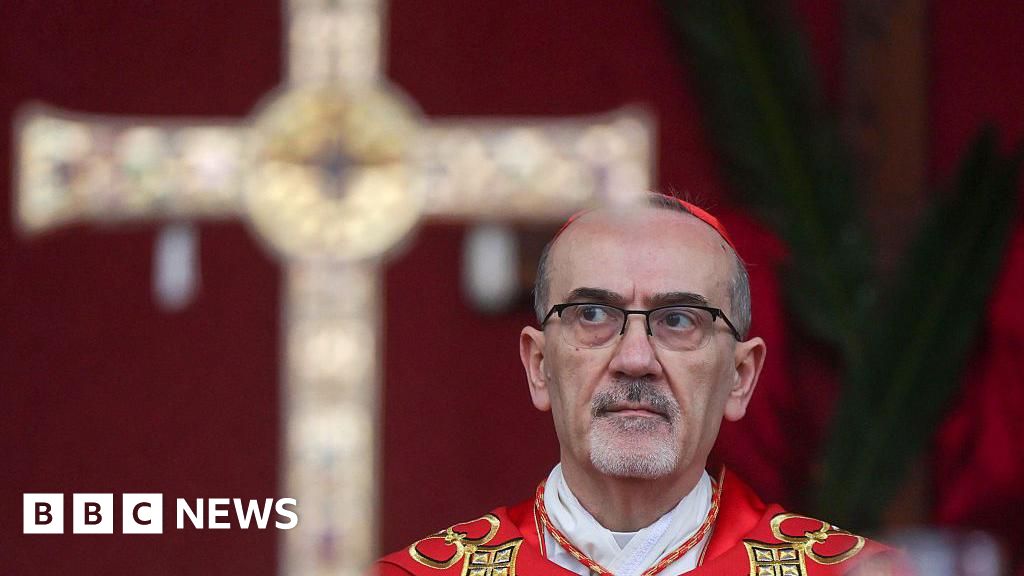
Before the decision was made to allow Cardinal Pizzaballa full access to the church, Netanyahu said worshippers of “all faiths” had been asked not to visit sites in Jerusalem’s Old City, which had been subject to strikes from Iran, and that police had acted out of “special” safety concerns in this instance.

Source link

Continue Reading

NewsBeat

Scott Mills sacked by BBC over ‘personal conduct’ allegation

Published

on

Scott Mills sacked by BBC over 'personal conduct' allegation

The 53-year-old replaced Zoe Ball as the presenter of Radio 2’s breakfast show in January 2025 after a long career at the broadcaster.

The Eastleigh-born DJ was taken off air on his Radio 2 show last Tuesday (March 23) while the BBC assessed the information.

The Mirror reports that his contract was terminated over the weekend.

Advertisement

In a statement, the BBC said: “While we do not comment on matters relating to individuals we can confirm Scott Mills is no longer contracted and has left the BBC”.

The career of Scott Mills

Mills began his career at the age of 16 as a DJ on his local Hampshire commercial radio station, Power FM.

Advertisement

He was given an opportunity to present a week’s worth of shows, and based on the success of this, he was offered the ‘graveyard’ slot of 1am to 6am.

This made him the youngest permanent presenter on mainstream commercial radio.

He moved from Power FM to GWR FM Bristol and then Piccadilly Key 103 in Manchester on the late-night slot.

Mills moved onto the mid-morning show there before working for new London station Heart 106.2 in 1995.

Advertisement

He then joined BBC Radio 1 in October 1998 to present the early breakfast show which was broadcast between 4am and 7am.

In January 2004, Mills moved to a weekend afternoon slot, which was followed by a further move later that year to the weekday early-evening slot, which was vacant due to Sara Cox’s maternity leave.

Cox did not return , and Mills became a permanent presenter of the early evening programme, which was renamed The Scott Mills Show.

The programme moved to an afternoon slot in April 2012 when Mills swapped presenting duties with Greg James.

Advertisement

Recommended reading :


Whilst at Radio 1, Mills also provided holiday cover for other presenters as well as hosting The Official Chart between June 2018 and August 2022.

Mills joined Radio 2’s weekday schedule in 2022 when he replaced Steve Wright as the host of the afternoon slot.

Prior to that, he worked on Radio 1 and hosted a weekend show on BBC Radio 5 Live.

Advertisement

Source link

Continue Reading

NewsBeat

Russia kicks out British diplomat Moscow accused of spying | World News

Published

on

File pic: Reuters

Russia has kicked out a British diplomat that Moscow has accused of spying.

The diplomat had his accreditation revoked and was told to leave the country within two weeks.

The FSB, Russia’s security service, claimed the British diplomat “provided false information about himself”.

Advertisement

Moscow also accused him of attempting to gather information about the Russian economy during informal meetings.

The FSB, the main successor to the Soviet-era KGB, said it had detected an “undeclared intelligence presence”.

It added the diplomat was “carrying out intelligence and subversive activities that threaten the security of the Russian Federation”, according to Russian media reports.

In a statement, the Russian Ministry of Affairs said Danae Dholakia, the British Chargé d’Affaires in Russia, was summoned over the claims that a diplomat had “knowingly provided false information about himself when applying for entry into our country”.

Advertisement

The statement read: “Russian authorities also received information indicating that this employee belonged to the British intelligence services and identified evidence of his involvement in subversive intelligence work in our country.”

It continued: “The British side was informed that previously uncovered instances of some British diplomats deliberately providing false information about themselves had already prompted our harsh response.

“They were also urged to convey to London a strong recommendation that British citizens, especially embassy staff, provide only accurate information about their past when applying for visas.

“It was particularly emphasized that Moscow will not tolerate the activities of undeclared British intelligence officers in Russia, and our uncompromising position on this issue will continue to be formulated in accordance with national security interests.

Advertisement

“Furthermore, a warning was issued that if London escalates the situation, the Russian side will immediately respond accordingly.”

Russian state media published a photograph of the diplomat accused of attempting to obtain information.

“In order to avoid negative consequences, including criminal liability, the FSB of Russia recommends that compatriots refrain from holding meetings with British diplomats,” the FSB said.

Britain dismissed the claims as “complete nonsense” and accused Russia of an “aggressive and co-ordinated campaign of harassment”.

Advertisement

A Foreign Office spokesman said: “The accusations made today by Russia against our diplomats are complete nonsense.

“Russia has pursued an increasingly aggressive and co-ordinated campaign of harassment against British diplomats, pumping out malicious and completely baseless accusations about their work.

“The UK does not stand for intimidation of British embassy staff and their families.”

Read more from Sky News:
Trump says he wants Iran’s oil and could seize key island
Fugitive accused of killing two police officers ‘shot dead’

Advertisement

When a British diplomat was expelled in January for spying, London branded the claims “baseless accusations”.

Western diplomats in Moscow say intrusive surveillance and harassment are frequent, and a guide known as “Moscow Rules”, developed by Western spies in the Soviet era to guard against complacency, has been updated for modern Russia.

Russia has imposed Soviet-style restrictions on most British diplomats, requiring them to give notice of plans to travel beyond a 75-mile radius.

Advertisement

Source link

Continue Reading

NewsBeat

Iran’s allies could close second crucial sea route, with ‘clear and significant’ impact on UK | World News

Published

on

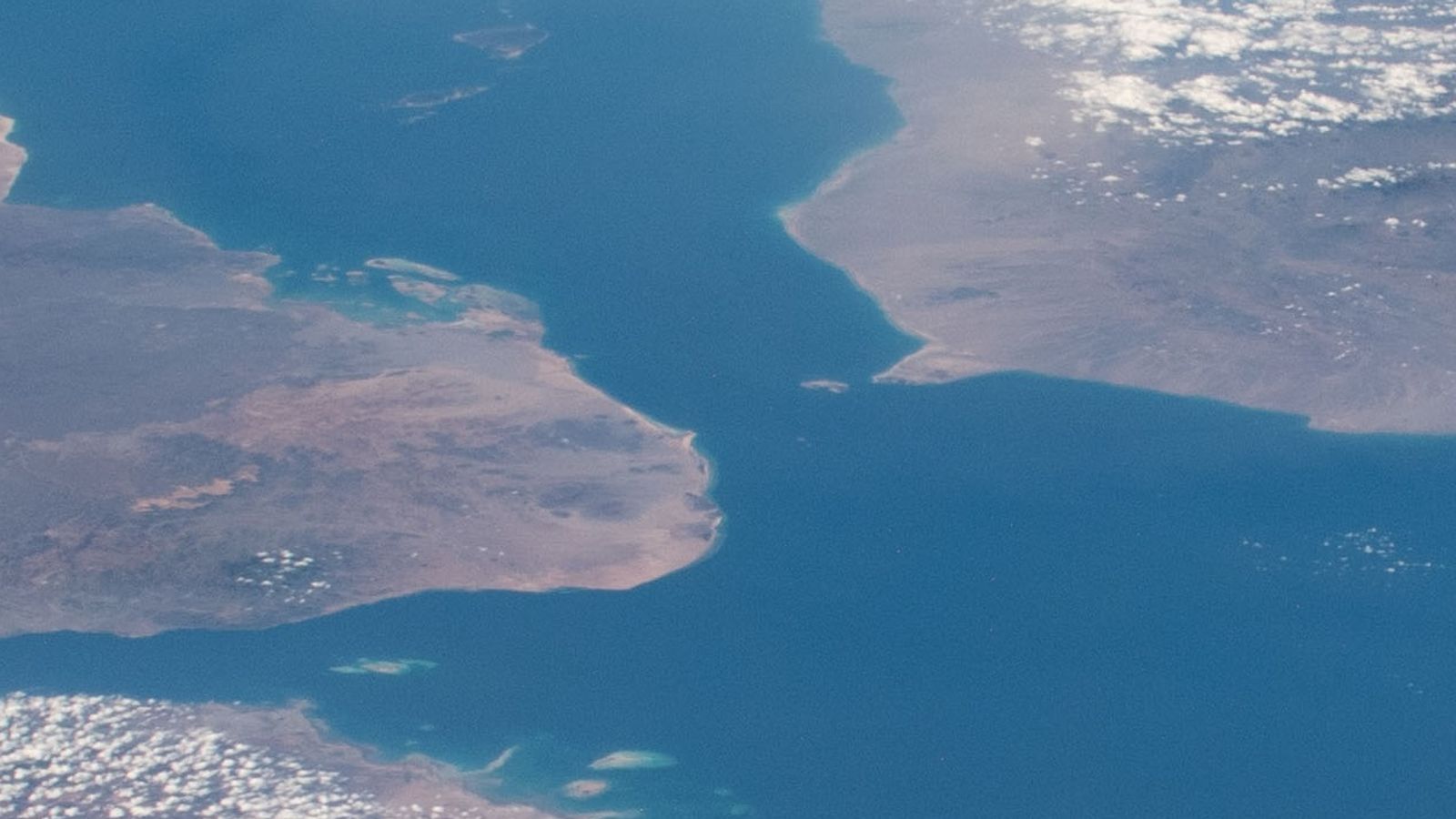
The Bab el Mandeb Strait seen from space. Pic: NASA

The entry of Yemen’s Houthi rebels into the war on the side of Iran has stoked fears that the oil crisis affecting global trade could get worse.

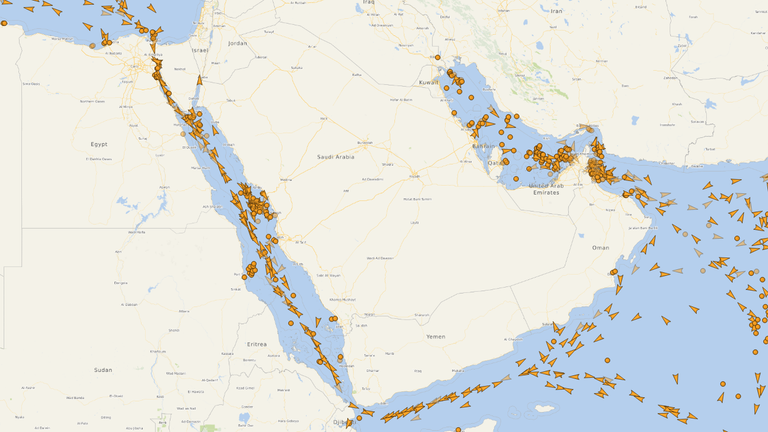
Threats of Iranian mines and missiles have kept the crucial Strait of Hormuz largely closed, with oil tankers held up leaving the Gulf and sending the price of a barrel skyrocketing.

Saudi Arabia, one of the biggest exporters of oil in the world, has instead been sending millions of barrels of crude oil a day through Bab el Mandeb, another narrow waterway on the other side of the country.

This avoids Hormuz and takes ships further away from Iran.

Advertisement

However they still pass close to Yemen, where the Iranian-backed Houthi rebels have stocks of missiles and drones that can be used to harass shipping – as they did between 2023 and 2025.

If shipping through the Bab el Mandeb Strait – which connects to the Red Sea and the Suez Canal – is disrupted, it could exacerbate the already fraught economic situation caused by issues with the Strait of Hormuz.


Oil price at near four-year high

Advertisement

What have the Houthis done before?

Between November 2023 and January 2025, the Houthis attacked more than 100 merchant vessels with missiles and drones.

Two vessels were sunk and four sailors killed during the campaign.

Advertisement

Military ships were deployed to the area to try and safeguard commercial shipping, including the UK’s HMS Diamond Type 45 destroyer.

While there, it shot down Houthi drones, including one notable operation where it shot down seven.

Closure of Bab el Mandeb strait could have ‘clear and significant’ economic effects


Sara Taaffe-Maguire
Sarah Taaffe-Maguire
Advertisement

Business and economics reporter

@taaffems

A full or even partial shutdown of shipping through the Red Sea would have clear and significant economic effects globally and here in the UK.

Advertisement

Even renewed attacks, without the militant group taking over the key shipping route, would have major impacts.

We don’t even have to imagine what they may be; we need only look back a few years.

Houthi attacks around Christmas 2023 resulted in more dangerous conditions, which led insurance costs to spike.

Adding to this cost pressure was the fact ships were routed around Africa via the Cape of Good Hope, adding between 10 and 14 days to a journey.

Advertisement

As a result, booking a slot to ship goods shot up in price.

Longer journey times and changed routes also led to supply chain disruption, with businesses scrambling to get items on ships and onto shelves in time.

Supply chain woes also resulted from the Ever Given container ship blocking a vital entry point to the Red Sea, the Suez Canal.

It was this blockage that formed part of the initial surge in price rises in 2021 and 2022 that gave rise to the cost of living crisis.

Advertisement

Major container carriers rerouting to avoid Red Sea

Africa’s largest container port – Tanger Med in Morocco – said on Monday that it is preparing for increased calls by ships as tensions in the Middle East continue.

It comes as major ​container carriers including Maersk, Hapag-Lloyd and CMA CGM said they are rerouting vessels around the Cape ​of Good Hope in South Africa, avoiding the Bab el Mandeb Strait and the Red Sea.

Advertisement
Oil tanker traffic in the region. Pic: Vesselfinder
Image:
Oil tanker traffic in the region. Pic: Vesselfinder

Idriss Aarabi, managing director of Tanger Med, said higher fuel costs have added further pressure on freight rates due to the longer voyages.

He said carriers have introduced war-risk, emergency conflict and deviation surcharges of between $1,500 (£1,133) and $3,300 (£2,493) per standard container.

Bab el Mandeb: In numbers

20: That’s how many miles wide the strait is.

25%: Around a quarter of global container trade passes through the strait on its way to and from the Suez Canal.

Advertisement

12%: How much of the world’s total trade typically passes through the Suez Canal.

Source link

Advertisement
Continue Reading

NewsBeat

Woman fights for life after M61 incident near Farnworth

Published

on

Woman fights for life after M61 incident near Farnworth

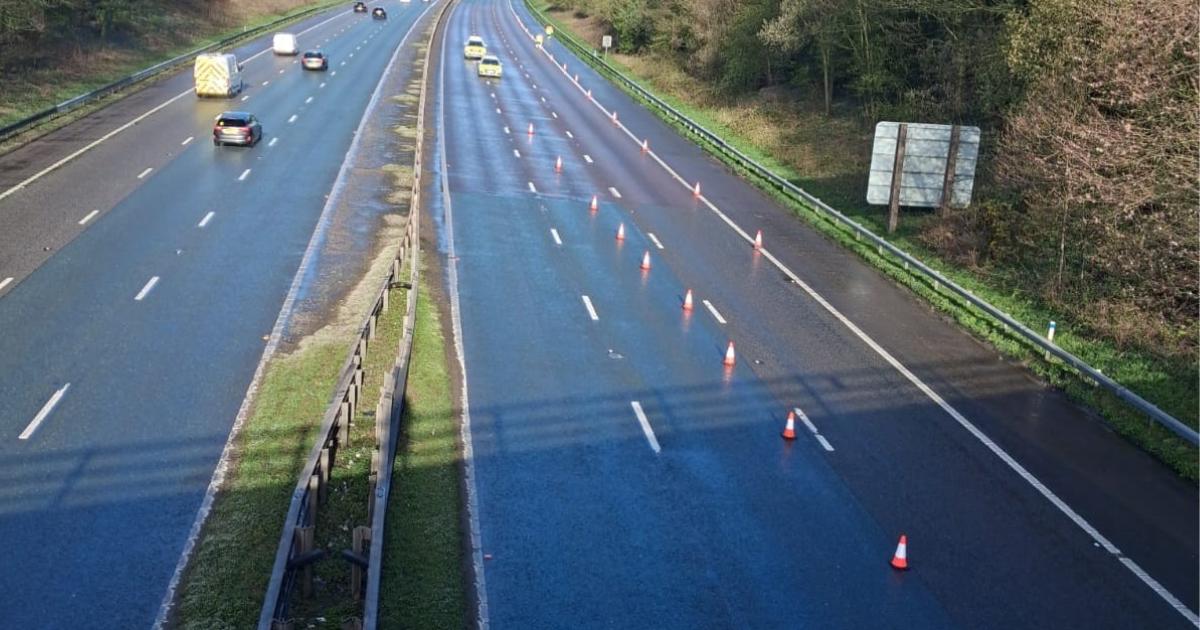
The southbound carriageway was closed between junction 5 for Westhoughton and junction 4 for Farnworth after a police incident was reported at 7.35am.

Police confirmed the woman was injured following reports of a concern for welfare.

The road closure caused severe delays throughout the morning, with all traffic temporarily held in both directions.

Advertisement

A spokesman for National Highways said: “The M61 in Greater Manchester is closed southbound between J5 (Westhoughton/ Bolton) & J4 (A6) due to a police led incident.

“Traffic is stopped northbound between J4 & J5. Emergency services are in attendance.”

Traffic monitoring service Inrix also reported “severe delays” and a full closure on the southbound side from J5 to J4 during the incident.

Northbound traffic was released shortly before 9am, but southbound lanes remained closed until just before 10.25am.

Advertisement

A diversion route was put in place during the closure, directing motorists off the M61 at J5 onto the A58 eastbound, then south onto the A6, before rejoining the motorway at J4 via Watergate Lane.

The M61 southbound has now re-opened, and traffic has returned to normal.

No further updates on the woman’s condition have been released.

Advertisement

Source link

Continue Reading

NewsBeat

The challenge of delivering evidence-based medicine in children’s care

Published

on

The challenge of delivering evidence-based medicine in children’s care

It is easy to overlook the fact that over 90% of medical treatments are not backed by strong evidence. People can find it frustrating – even infuriating – when a review concludes that the evidence for a treatment is too weak to say whether it helps or harms.

This has been the case with the NHS England’s recent decision to restrict new prescriptions of cross-sex hormones for 16- and 17-year-olds.

The struggle to base clinical decisions on solid evidence is not new, nor is it unique to gender medicine. Archie Cochrane, a pioneering Scottish researcher, awarded obstetrics and gynaecology a wooden spoon in 1979 for the worst use of scientific evidence in clinical practice – a damning verdict that prompted the field to overhaul how it evaluated and applied research. It led to the first evidence-based textbook, a global movement and an online library.

Other medical fields have also struggled to meet this challenge, often through no fault of their own. Paediatrics, for example, faces a difficult balancing act when trying to produce clear, reliable studies.

Advertisement

To understand the complexities involved, look no further than your medicine cabinet. Paracetamol (acetaminophen) is considered the pain relief and antifever medicine of choice for infants and children. Weight-adjusted doses are scaled down safely from adult quantities, making it a versatile and trusted option across all age groups.

Aspirin, by contrast, occupies a more cautionary position. Its use in children and adolescents – particularly for viral illness, such as influenza or chickenpox – carries a well-documented risk of Reye’s syndrome – a rare but potentially fatal condition. Authorities actively advise against prescribing aspirin to anyone under 16, unless there is a specific clinical reason to do so.

These differences show that doctors cannot treat children as if they are just small adults. Evidence in children’s medicine is built up slowly. It includes treatments that work for all ages, some just for children, some with weak evidence, and some that cannot be fully studied for ethical or legal reasons.

Ninety per cent of medical treatments are veiled in uncertainty.
Patrick Thomas/Shutterstock.com

In 2023, my colleagues and I at the University of Sheffield synthesised evidence on child and adolescent obesity to inform World Health Organization guidelines. While evidence on obesity treatments is generally plentiful, we faced challenges identifying published experiences of children regarding medical treatments.

Advertisement

Data for adolescents was limited and the experience of children of ten or under was entirely lacking. Without evidence, policymakers avoid “risky” options. But without policy support, researchers have little reason to study them.

How a verdict is reached

Looking beyond the complete absence of evidence, how does a health organisation decide evidence is “too weak”? Rather than a snap judgment, their verdict usually factors in four related concerns, each one lowering confidence a little further.

The first, most obvious reason is that studies may not have been designed or carried out very well. If parents know which children received the real medicine and which received the dummy version during a cough syrup trial, they may consciously or unconsciously report that the treatment looked better — or worse — than it really was. This design flaw makes it difficult to trust its conclusions.

Much of what medicine thinks it knows about treatments in children comes from observational data — records of what happened to patients in real-world clinical settings. Although valuable, these studies carry a trap. Children who receive a particular treatment are rarely typical. A rule of thumb is to ask whether a comparison is fair: were children who received the treatment genuinely similar to those who didn’t? If that question can’t be answered clearly, the finding deserves healthy scepticism.

Advertisement

A second concern arises when different studies asking the same question arrive at different conclusions. It is not enough to trust the majority verdict or the larger studies. It takes time to build a picture for each age group one study at a time — gathering enough to answer the question for an “average” child, if such a child ever exists.

Third, evidence may not match the question being asked. In the early 2000s, antidepressants were prescribed to children and teenagers with depression, largely based on evidence from adult studies. Close examination revealed that children taking some antidepressants showed higher rates of suicidal thoughts than those on a dummy pill.

Finally, studies need sizeable numbers of participants to narrow down uncertainty. Small studies of these antidepressants found that they appeared to reduce suicidal thinking. However, the true benefit of antidepressants lay somewhere between substantial and negligible – undermining confidence in study findings. Larger studies were needed.

Regulators in the US and the UK faced a dilemma: act on uncertain evidence or wait for better data while children continued to receive a potentially harmful treatment. Decisions still needed to be made. The regulators could not truly know when they decided to withdraw some of the antidepressants whether they had ultimately saved lives or denied young people much-needed treatment.

Advertisement

Thankfully, the evidence base in medicine, including paediatrics, is continually improving. Obsolete treatments are squeezed out of the health system, uncertainties about established treatments are reduced and new treatments are evaluated. A verdict for now is not a verdict forever. Identifying the causes of uncertainty helps direct attention to where future tipping points lie.

Source link

Advertisement
Continue Reading

NewsBeat

Thomas Tuchel provides injury update on Arsenal duo Declan Rice and Bukayo Saka | Football

Published

on

Thomas Tuchel provides injury update on Arsenal duo Declan Rice and Bukayo Saka | Football
Thomas Tuchel’s England side will take on Japan at Wembley (Picture: Getty)

Thomas Tuchel has defended the decision to allow Bukayo Saka and Declan Rice return to Arsenal and skip England’s friendly with Japan.

The pair had already been granted permission to miss last Friday’s 1-1 draw with Uruguay and it had been anticipated that they would play some part in tomorrow’s game which represents the last time the Three Lions will be in action before Tuchel picks his World Cup squad.

Both players, however, have returned to Arsenal’s training base to receive treatment ahead of this weekend’s FA Cup tie against Southampton.

Saka and Rice, the latter of whom has played 50 games already over the course of a demanding campaign for club and country, are among a group of 10 Arsenal stars who have all pulled out of their international squads for various reasons but Tuchel is adamant there is nothing sinister afoot with two of his most senior players.

Advertisement

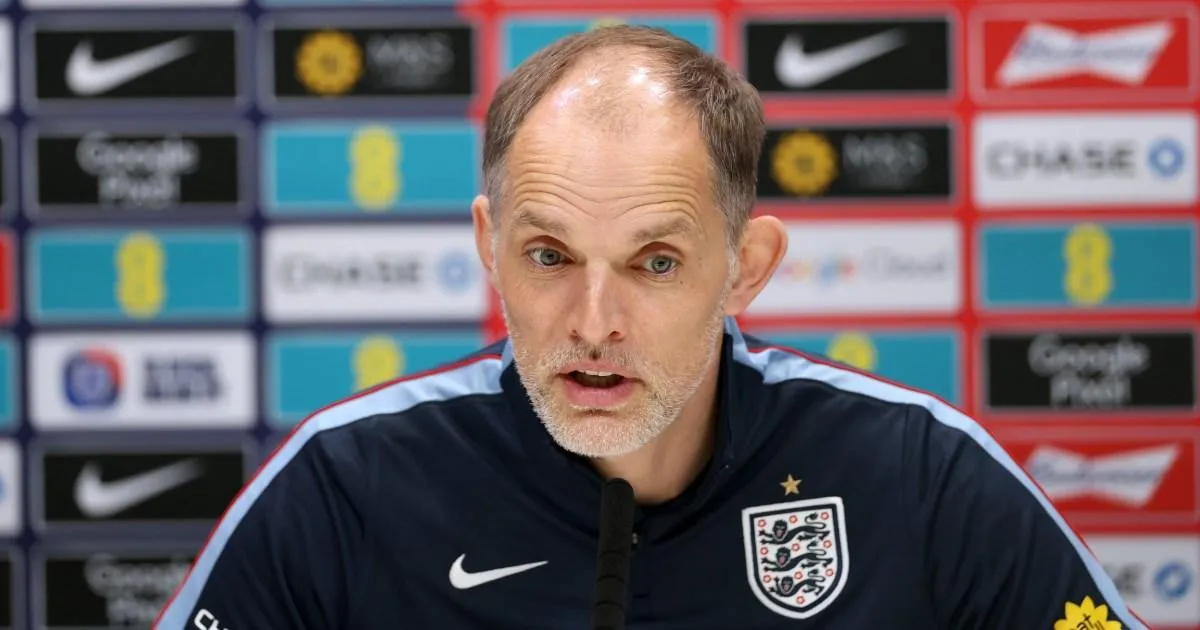
‘They wanted desperately to play to get the narrative straight, but it made no sense to make the risk,’ said Tuchel at his pre-match press conference.

‘If it was the last game of the season we would have kept them, but in this moment of the season it did not make sense. The risk for making it was way too big.

‘They were both clearly in discomfort when we did the medical assessment. It made absolutely no sense that they stayed.’

Your football fix

Metro‘s Head of Sport James Goldman delivers punchy analysis, transfer talk and his take on the week’s biggest stories direct to your inbox every week.

Advertisement

Sign up here, it’s an open goal.

Arsenal v Chelsea - Premier League
Bukayo Saka and Declan Rice have returned to Arsenal (Picture: Getty)

Noni Madueke has also returned to Arsenal after he suffered a knee injury against Uruguay and was seen wearing a cast as he trudged through the mixed zone.

‘It helps them go back to clubs and perform. We want them to perform in their clubs, but it is also our last camp before America, so we want to reconnect to our principles. I’m not upset or angry with the players,’ added Tuchel.

Advertisement

‘I got the feeling that everyone was desperate to come. Some of the injured players even stayed to do their treatment, that shows they want to be around the group.

‘No one left straight away, it’s a good spirit and that’s how it should be.’

England's German head coach Thomas Tuchel (L) consoles England's midfielder Noni Madueke (C) as he leaves the game, injured during the friendly International football match between England and Uruguay at Wembley Stadium, west London, on March 27, 2026. (Photo by Glyn KIRK / AFP via Getty Images) / NOT FOR MARKETING OR ADVERTISING USE / RESTRICTED TO EDITORIAL USE
Noni Madueke was injured playing for England against Urugauy (Source: AFP)

Asked if he was disappointed at the disruption he has encountered as such a crucial point in his tenure, Tuchel said: ‘Not disappointed with the players, disappointed with the fact.

‘It’s the reality of the season, the reality of the end of March, reality of players involved in more than one competition.

‘We have players in camp that have already played more minutes than last season, so there is some concern.

Advertisement

‘The players deserve the mental break from football, and we could see the energy with which they came back to camp in a new environment.’

England Men's Camp
Harry Kane is back in contention to play for England against Japan (Picture: Getty)

Tuchel will at least have his skipper, Harry Kane, to call on again after he missed Friday’s friendly.

‘I have some ideas, but I will not make them public,’ said Tuchel when asked if he was concerned England would again be overly reliant on their record goalscorer this summer.

‘I am happy Harry is back in camp, and he will lead the team tomorrow on the pitch. We have some options.’

Advertisement

Source link

Advertisement
Continue Reading

Trending

Copyright © 2025