Connect with us
DAPA Banner

NewsBeat

Is it safe to eat cold leftovers?

Published

on

Is it safe to eat cold leftovers?

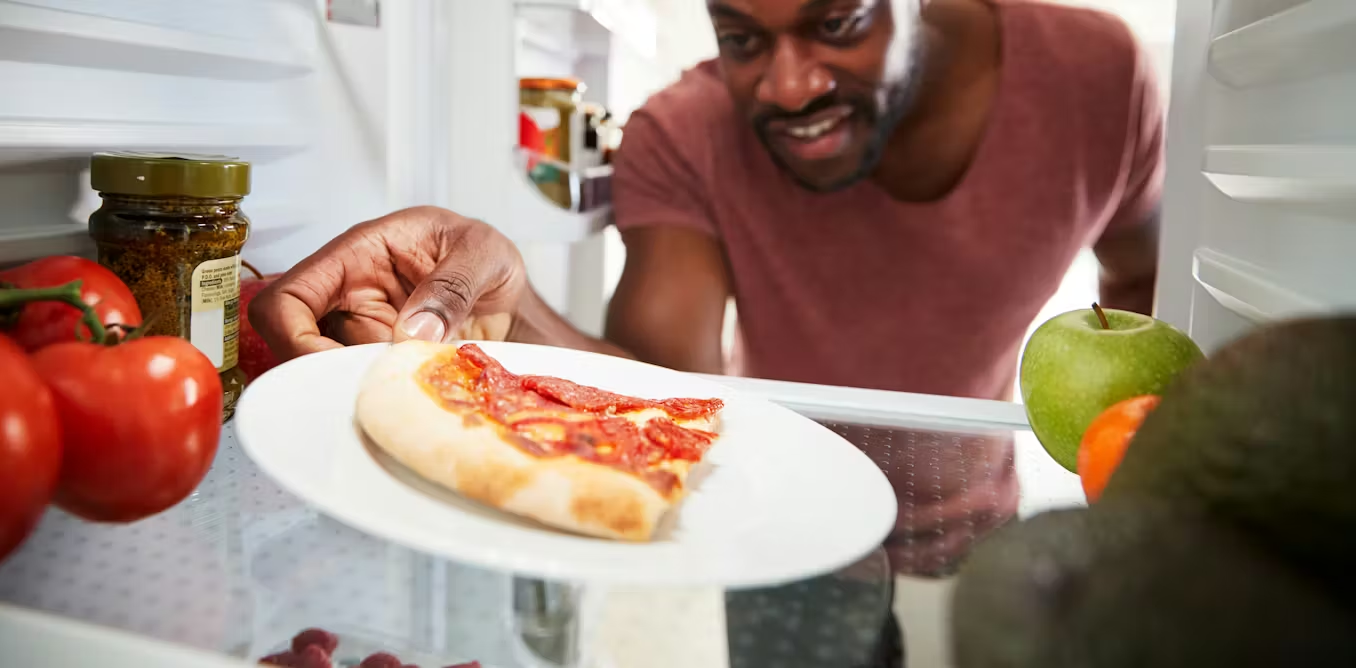
There are few things better than a cold slice of pizza for breakfast. But as delicious as scarfing down cold pizza is, there’s also a risk of food poisoning if you aren’t careful.

Food poisoning is caused by eating food that has become contaminated with pathogenic bacteria, fungi or viruses. Although most people know that food poisoning can be caused by poorly cooked foods or risky food preparation habits, improperly stored leftovers are also a key cause. It’s therefore extremely important you take care when storing leftovers to avoid harming your health.

Here’s my advice as a microbiologist for staying safe when eating your favourite cold leftovers.

Leftover pizza

You can get food poisoning from cooked pizza in a number of ways. Whether that’s because some of the ingredients are raw, undercooked or spoiled, or if the pizza has touched a surface with germs on it (including being handled by someone who hasn’t washed their hands).

Advertisement

Surprisingly, the dried herbs and spices that people often sprinkle on their pizzas (such as basil, pepper and oregano) can also be susceptible to microbial contamination. This contamination can occur during the harvesting and production phases, or due to improper storage by consumers. Some of the foodborne pathogens that can potentially survive on dried herbs include bacteria that can cause food poisoning, including Salmonella, Bacillus cereus and Clostridium perfringens.

Even if these dried herbs have been sterilised by the heat of a freshly baked pizza, if left at room temperature for too long after cooking these or any of the other pizza toppings, can provide the perfect snack for potentially harmful germs.

So if you’re a cold pizza lover, the best way to reduce your risk of food poisoning is to ensure any leftovers are refrigerated within two hours of being delivered or cooked. This should mean the pizza is safe to have cold for breakfast.

Once in the fridge, the leftover pizza needs to be stored covered (to avoid contamination from airborne germs) and eaten within two days. Note that putting leftover food in the fridge only slows bacterial growth, which is why leftovers should be eaten within two days maximum.

Advertisement

If the pizza is left at room temperature for more than a few hours, germs will grow quickly. This can make the pizza unsafe to eat the next day – no matter how tasty it might still look or smell.

Leftover chicken

Cooked chicken is highly perishable once cooled. Its high water and nutrient content and low acidity favours the growth of food poisoning bacteria, especially if it isn’t stored correctly after cooking.

It’s also important you only save chicken for leftovers if it has been cooked properly. If there’s any trace of blood in the cooked chicken’s juices, do not eat it – and certainly don’t save it for later.

This is because raw chicken may be contaminated with the food poisoning germs Campylobacter, Salmonella or Clostridium perfringens, so thoroughly cooking your chicken is essential.

Advertisement

If even a tiny amount of the chicken under-cooked, food poisoning germs still present within the tissues can start growing even when the meat is stored in the fridge. These germs may not be detectable by smell or sight.

Leftovers should be covered and placed in the fridge within a couple of hours of cooking.
TatianaKim/ Shutterstock

To stay safe, once you’ve removed your cooked chicken from the oven or rotisserie packaging, any that you aren’t planning to immediately eat should be covered and refrigerated as soon as possible after cooling. Ideally, it should spend no more than two hours at room temperature.

Cooked chicken can be stored for up to three days in the fridge. But again, if you notice blood in any part of the chicken, you absolutely should not eat it – whether cold or reheated – as this indicates it has been under-cooked and may be contaminated with germs.

Leftover rice dishes

Leftover rice dishes of any kind – whether that’s fried rice, burritos or risotto – have a major food poisoning risk. This is because uncooked rice can contain spores of Bacillus cereus, a common food poisoning bacteria that prefers starchy foods.

Advertisement

Although Bacillus cells are killed by the heat of cooking, their spores are heat resistant and can survive. If a cooked rice dish is then left at room temperature for more than two hours, the Bacillus spores have time to develop into bacteria and multiply. These spores are also able to release toxins into the cooked rice, which can potentially cause severe vomiting and diarrhoea lasting up to 24 hours.

If cooked rice needs to be saved, it should be covered once cooked, cooled quickly, then refrigerated for no more than 24 hours.

Cooked rice can be eaten cold, but only if has been cooled quickly after cooking and stored as quickly as possible in the fridge. It’s also best to consume cold cooked rice within 24 hours as B cereus spores can germinate during longer storage periods.

Left over canned foods

To safely store canned leftovers, it’s essential they’re covered and refrigerated to avoid contamination from airborne germs.

Advertisement

It’s considered safe to store the food in the original can as this has been sterilised in processing. But for flavour reasons, you might want to transfer it to a covered plastic or glass container.

Highly acidic foods, such as canned tomatoes, can be stored refrigerated for five to seven days. Low acidity canned foods, such as meat, fish, fruit, vegetables and pasta, can only be stored for up to three days. Acidic foods last longer because the acid inhibits the growth of food poisoning bacteria.

Leftovers can be safe to eat cold. Just make sure you refrigerate them as quickly as possible after cooking and consume within a day or two.


Advertisement

Source link

Continue Reading
Click to comment

You must be logged in to post a comment Login

Leave a Reply

NewsBeat

West Lothian school’s uniform shop hands over cheques to charities

Published

on

Daily Record

The Pupil Equity Team from Southdale Primary School in Armadale have developed the school’s preloved uniform shop to help with the cost of the school day for families.

Pupils from a West Lothian primary have handed over cheques to two charities after working hard at the school’s uniform shop.

Advertisement

The Pupil Equity Team from Southdale Primary School in Armadale have developed the school’s preloved uniform shop to help with the cost of the school day for families.

The children work in the shop after school and have worked hard selling all of their products.

READ MORE: West Lothian councillor calls for ‘vape law’ after devastating Glasgow fire

A school spokesperson said: “We presented at Dragons Den in 2025 and won money to help us with the shop. The children have chosen two local charities to give back to the community.

Advertisement

“They were Jaks Den and RiverKids and they came to visit the school to receive the money that we have chosen to donate to them.

“The two local charities were really happy to receive the donation.”

READ MORE: POLICE COLUMN: Chief Inspector Dougie Grieve

Don’t miss the latest news from the West Lothian Courier. Sign up to our free newsletter here.

Advertisement

Source link

Continue Reading

NewsBeat

UK government recommends maximum one hour of screen time for younger children: what the evidence says

Published

on

UK government recommends maximum one hour of screen time for younger children: what the evidence says

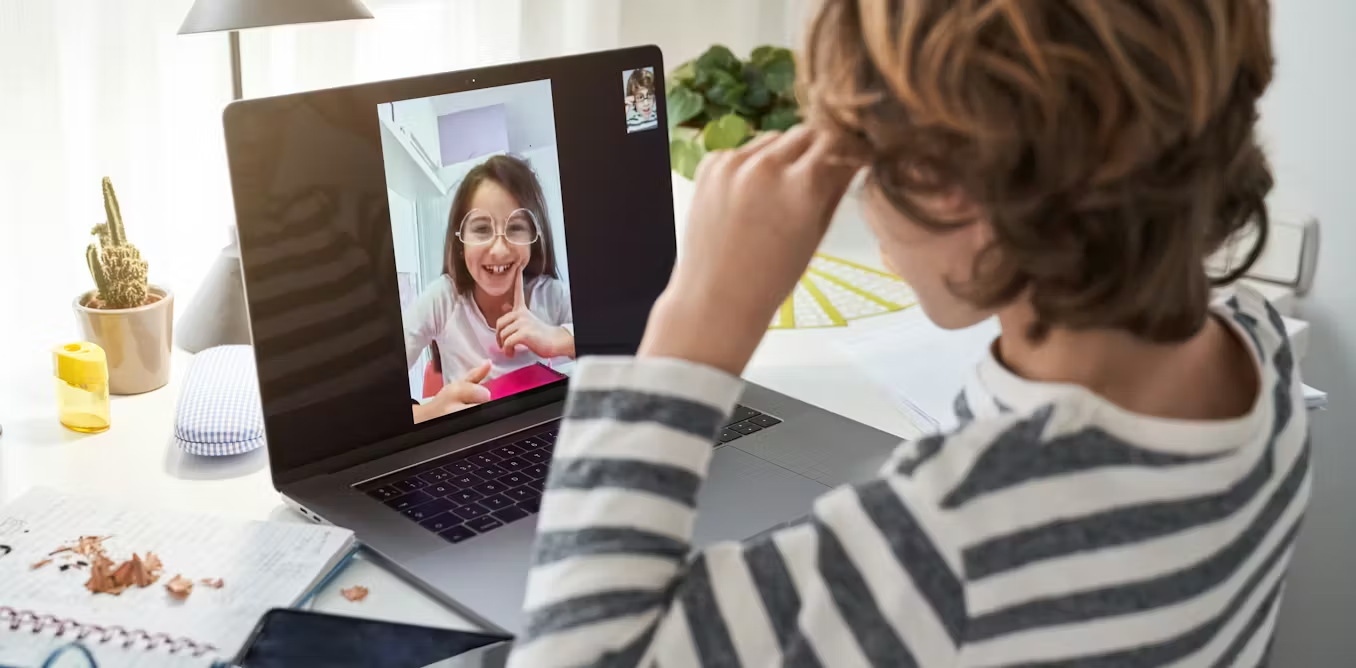
New UK government guidance recommends that screen time for children under two should be avoided, except for shared activities such as video calls. For children aged two to five, a maximum of an hour a day is suggested. The guidance also outlines that watching screens together is better than children viewing alone.

This echoes guidance from the World Health Organization recommending no screen time for infants under two, and no more than one hour per day for older children aged four and under.

The early years, especially from birth to age six, are a critical period for developing social and communication skills. This is when children are learning how to connect with others, communicate their needs and understand the signals people give them. Given the increasing presence of touchscreen technologies in young children’s environments, understanding how these tools influence early developmental trajectories is essential.

Touchscreen technology offers new opportunities for learning and play. But there are also questions about its impact on children’s social development, communication and school readiness. Researchers and health organisations have been working to consider how digital media interacts with children’s development and shapes their early experiences.

Advertisement

Excessive touchscreen use has been associated with delays in expressive language, reduced attention spans, and poorer interactions between parents and children.

Yet the picture is not one-sided. My research with colleagues highlights that early exposure to multi-modal technologies – tools that combine sound, images, touch and movement – can shape children’s social development in both positive and negative ways.

Language skills and collaboration

On the positive side, interactive and engaging uses of technology can foster language development. Studies show that digital platforms encouraging storytelling, role play and collaborative activities can enhance children’s competence in communication.

Touchscreens can also help children to work together on shared tasks. Multi-touch interfaces promote joint problem-solving, turn-taking and dialogue. This can strengthen cooperation and peer relationships.

Advertisement

In classrooms, tablets often become focal points for group activities. Children share knowledge, assist one another and collaborate on projects, which can enhance social interaction skills and confidence.

Touchscreens also create opportunities for social play and communication across distance. Video-communication apps such as Skype and FaceTime allow children to maintain relationships with family and friends, supporting emotional bonds and social connection.

Children can collaborate using screens.
Mkosi Omkhulu/Shutterstock

Creative expression is another area where digital tools can shine. Drawing, animation, and storytelling apps encourage children to share ideas and collaborate. This can promote cooperation and social bonding.

Passive use

However, these benefits coexist with significant challenges. Excessive screen time can reduce opportunities for face-to-face interaction, limiting children’s practice of conversational skills and emotional understanding. When children use screens passively or in isolation, they may become less engaged in socialising with others.

Advertisement

Parents’s use of screens is another concern. When parents are absorbed in their own devices, they talk less with their children. This reduces opportunities for educationally meaningful conversations.

Touchscreen use can also affect communication more directly. Studies show that electronic books may shift parents’ attention toward the device rather than the story, displacing meaningful conversation and reducing the quality of shared reading experiences. Some research suggests that heavy touchscreen use may make it harder for children to pick up social and emotional cues. This may affect their ability to decode social situations.

Importantly, the impact of touchscreen use is shaped by several mediating factors. Children learn more effectively when adults or their classmates model how to use touchscreen devices. As the government guidance states, it’s also better if adults watch screens together with their child, rather than their child watching alone.

Parents’ views and wider culture matter too. In research I carried out with colleagues, we found that cultural perceptions about what makes a good childhood shaped parents’ choices. In Portugal and Norway, strong cultural emphasis on outdoor play, social interaction, and connection with nature led parents to prioritise these activities over touchscreen use.

Advertisement

These cultural expectations influence how parents interpret and regulate young children’s digital practices, showing that attitudes toward technology are closely tied to wider national discourses about childhood. Educational settings further influence this. The way technology is integrated into classrooms can reinforce social behaviour.

These findings have important implications for school readiness. Social communication skills, such as turn-taking, listening, expressing ideas, and understanding others, are foundational for success in early education. Touchscreens can support these skills when used interactively and collaboratively. But when screen use replaces conversation, imaginative play or peer interaction, it may hinder the development of the very abilities children need for school and their social lives.

The evidence suggests that the question is not whether children should use touchscreens, but how. High-quality, interactive, and socially supported digital experiences can enrich development. Passive or excessive use can undermine it.

However, it’s vital to recognise that not all digital content is created equal. The quality and context of technology use can have a significant impact. As digital technologies continue to evolve, ensuring that young children’s screen experiences are balanced, meaningful, and socially engaging will be essential.

Advertisement

Source link

Continue Reading

NewsBeat

Scotland v Japan LIVE: Team news as hosts face tough pre-World Cup friendly at Hampden

Published

on

Scotland v Japan LIVE: Team news as hosts face tough pre-World Cup friendly at Hampden

Scotland v Japan live

Scotland resume their preparations for this summer’s World Cup – and play their first game since qualifying for the tournament – as they host Japan at Hampden in the first of two friendlies this week.

Now Clarke will oversee his final camp before naming his final World Cup squad, with Scotland arranging games against Japan at Hampden and the Ivory Coast at Everton’s Hill Dickinson Stadium on Tuesday.

Advertisement

Scotland have stuck with a settled squad as the countdown to that crucial opening game against Haiti on 14 June begins.

Chris Wilson28 March 2026 14:32

Good afternoon

Hello and welcome to The Independent’s live blog coverage of Scotland’s friendly against Japan this evening.

Advertisement

Steve Clarke’s side play their first game since dramatically sealing World Cup qualification against Denmark in November, and this friendly comes against a talented Japanese side that includes the likes of Take Kubo, Ao Tanaka, Daizen Maeda and Karou Mitoma.

This means it will be a suitable test as Scotland begin to intensify their preparations for the World Cup, and we’ll have all the latest build-up, teams news and updates from Hampden right here.

Chris Wilson28 March 2026 14:28

Source link

Advertisement
Continue Reading

NewsBeat

How to watch Liverpool legends v Dortmund charity match on TV for free?

Published

on

Wales Online
How to watch Liverpool legends v Dortmund charity match on TV for free? | Wales Online