

Connect with us

NewsBeat

Israel plans to charge a man filmed firing a gun during an attack on a Palestinian activist

Published

on

Israel plans to charge a man filmed firing a gun during an attack on a Palestinian activist

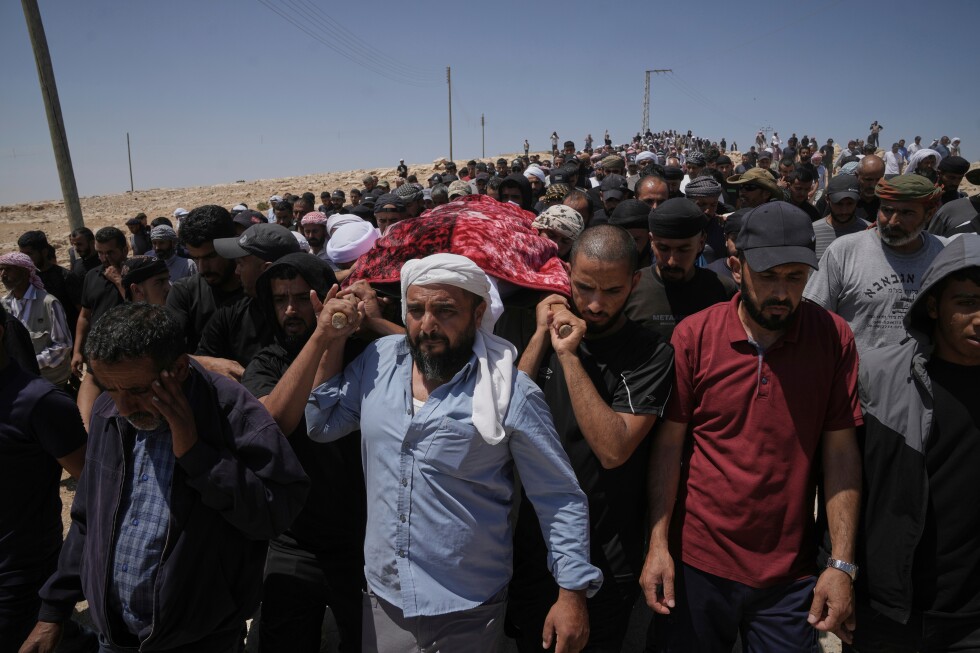
RAMALLAH, West Bank (AP) — Israeli prosecutors said Monday that they plan to charge a settler in the killing of a Palestinian activist during a confrontation that was caught on video, opening a rare prosecution of violence by Jewish settlers in the occupied West Bank.

Attacks from settlers and home demolitions by authorities have spiked dramatically over the past two years, but the death in July of Awdah Hathaleen has drawn particular attention due to his involvement in the 2025 Oscar-winning film “No Other Land,” which chronicled Palestinian villagers’ fight to stay on their land. The case also stands out because the confrontation between Palestinians and Yinon Levi, an internationally sanctioned settler, was captured on video from multiple vantage points.

In a video that family members say was taken by Hathaleen himself, Levi could be seen firing toward the person holding the camera. Another showed Levi firing two shots without showing where the bullets struck.

An Israeli judge released Levi from custody six months ago, citing a lack of evidence that he fired the shots that killed Hathaleen.

Advertisement

Israel’s State Attorney General’s office confirmed in a statement Monday that it had initiated proceedings to indict Levi. It did not specify the charges.

Eitan Peleg, an attorney for Hathaleen’s family, said the office had informed them it planned to indict Levi for reckless homicide, triggering a process that allows Levi to contest charges before they’re formally filed.

“Enforcement of the law in cases like this involving Palestinians in the West Bank is very rare, so this is unique,” Peleg told The Associated Press on Monday.

Israel’s military referred questions on the indictment to police, who have not yet responded. Both bodies enforce laws in the area.

Advertisement

More than 3.4 million Palestinians and 700,000 Israelis live in the occupied West Bank and east Jerusalem, territories captured by Israel in 1967 and sought by Palestinians for a future state. The international community overwhelmingly considers Israeli settlement construction in these areas to be illegal and an obstacle to peace.

Palestinians and rights groups say authorities routinely fail to prosecute settlers or hold them accountable for violence. Under National Security Minister Itamar Ben-Gvir, investigations into settler attacks have plummeted, according to the Israeli rights group Yesh Din.

Khalil Hathaleen, Awdah’s brother, said the family was glad some measure of justice was being pursued but felt the charge of “reckless homicide” was insufficient.

“It was an intentional killing in broad daylight, with prior intent and premeditation,” he said.

Advertisement

Levi’s attorney, Avichai Hajbi, declined Monday to comment on the coming indictment, which he said he hadn’t received. After the shooting, he told The Associated Press that Levi acted in self-defense, without elaborating. Levi did not answer phone calls Monday.

Parts of the confrontation were filmed

Video released last year by B’Tselem, an Israeli human rights group showed Levi firing a gun toward the person filming. At the moment that B’Tselem says Hathaleen collapsed, the visuals are jostled but moans of pain can be heard. The group said it obtained the video from the family of Hathaleen, who said he filmed it.

Additional footage obtained by the AP last year showed Levi waving a pistol during the standoff in Umm al-Khair that was with a group of Palestinians over an excavator that had rolled down from a nearby settlement and damaged Palestinian property earlier in the day.

Alaa Hathaleen, a cousin who filmed the encounter, told AP at the time that he had approached Levi to tell him the group was unarmed and to stop the bulldozing.

Advertisement

In the video, one Palestinian insults Levi and another challenges him to shoot. Levi shoves someone just out of the frame, demands to know who threw stones, and later fires a shot, seemingly away from the crowd. He then fires again and yells toward the crowd to get away from the excavator.

The footage did not show where bullets struck, though other relatives said they saw Awdah Hathaleen fall immediately after shots were fired.

Levi was detained before being released to house arrest. That condition was eventually lifted, too.

Levi was among the Israeli settlers sanctioned by the United States and other Western countries over allegations of violence toward Palestinians in 2024. U.S. President Donald Trump lifted the U.S. sanctions after taking office the following year.

Advertisement

Attacks spike as spotlight grows

Activists and crew members on the film “No Other Land” have said settler attacks have intensified on the village portrayed since the movie won the Oscar.

Hamdan Ballal, one of the film’s directors, said his family home in Umm al-Khair was subject to another attack on Sunday. Four relatives were arrested during the confrontation, he said.

Ballal said a soldier, who came to their home accompanied by another soldier and a settler-herder, grabbed his brother by the neck and tried to choke him. Neither the army nor the police responded to requests for comment on the incident.

“The year after I won the Oscar, the assaults increased significantly. On a daily basis, settlers come and destroy the fields, destroy the trees, destroy the crops around the house,” he said.

Advertisement

Israeli proof-of-ownership rules spark anger

As prosecutors move to indict Levi and violence persists across the West Bank, Israel is moving ahead with measures to deepen its control over land in the occupied territory.

On Sunday, it announced it would resume a land registration process across the West Bank to require anyone with a claim to land to submit documents proving ownership. Rights groups say the process could strip Palestinians of land they’ve lived on and farmed for generations and transfer vast swaths of land to Israeli state control.

Israel’s Foreign Ministry said the steps countered Palestinian Authority land registration efforts in areas where Israel maintains civil and military control.

The measures follow years of accusations by Palestinians that actions by settlers and the military — campaigns of violence, harassment and demolitions — have pushed them from their land.

Advertisement

The decisions have drawn widespread condemnation as violations of international law, including from countries involved in the ceasefire process in the Gaza Strip and Trump’s Board of Peace.

Saudi Arabia’s Foreign Ministry in a statement on Monday said the measures were part of Israel’s effort to impose a “new legal and administrative reality” that undermines prospects for peace and stability. Egypt’s Foreign Ministry called the move a “flagrant violation” of international law, warning it would escalate tensions in the Palestinian territories and across the region.

U.N. Secretary-General António Guterres condemned Israel’s decision, calling it not only destabilizing but unlawful according to the International Court of Justice, the U.N.’s highest tribunal, his spokesman Stéphane Dujarric said.

___ Associated Press writer Melanie Lidman contributed reporting from Tel Aviv.

Advertisement

Source link

Advertisement
Continue Reading
Click to comment

Leave a Reply

Your email address will not be published. Required fields are marked *

NewsBeat

DWP issues Universal Credit update to millions of claimants

Published

on

DWP issues Universal Credit update to millions of claimants

It follows letters being sent out to certain claimants.

Millions of people on older benefits have gradually been moved over to the new Universal Credit benefit.

The process to move people over from these previous payments, known as ‘legacy benefits’, has been going on in stages for several years.

Advertisement

The DWP previously confirmed that some benefits would end at the end of March 2026 as part of the project.

Six legacy benefits changing:

  • Income-based Jobseekers Allowance
  • Income-related Employment and Support Allowance
  • Income Support
  • Housing Benefit
  • Child Tax Credit
  • Working Tax Credit


The DWP was asked for an update on the project and who is left to move over to Universal Credit.

A DWP spokesperson told The Mirror: “The department has been migrating people from legacy benefits to Universal Credit since 2022 and most have now moved.

Advertisement

“Help is at hand for those making the move to Universal Credit, including our dedicated helpline, guidance on gov.uk, and the Citizens Advice’s free and independent Help to Claim service.

“All legacy benefit claimants who have received a migration notice continue to receive their legacy benefit up until the point they move over to Universal Credit, or the deadline passes.”

These migration notices are letters that go out inviting you to apply for Universal Credit.

Millions to see DWP benefits and pensions change in 2026

Millions of households relying on UK benefits are set to see their payments change in the 2026/27 financial year, with increases across pensions, disability support and Universal Credit, but some major limits will remain frozen.

Advertisement

The updated figures reveal how much people could receive each week or month depending on their circumstances, with some of the biggest changes affecting pensioners, carers and people on disability benefits.


Recommended reading:

Millions to see DWP benefits and pensions change in 2026

‘They’re my lifeline’ stroke survivor fears losing dogs as pet surrender crisis hits

Advertisement

Extra 53,000 disabled households to get help with sky-high water bills


The full new State Pension will increase from £230.25 to £241.30 a week in 2026/27.

That’s an increase of more than £11 a week, or roughly £572 a year, for those receiving the full amount.

For those on the basic State Pension, the rate rises from £176.45 to £184.90 a week.

Advertisement

Source link

Continue Reading

NewsBeat

Government ‘standing by British people’ Miliband says amid fuel duty questions

Published

on

Government ‘standing by British people’ Miliband says amid fuel duty questions

Asked whether ministers would consider scrapping the planned tax rise in the wake of the energy price rises, Mr Miliband told the BBC: “Let me answer that by saying this, which is, I’ll be candid with you, we don’t know how long this conflict is going to go on and therefore, with five months to go until September, we will have to see where we are, obviously.”

Source link

Continue Reading

NewsBeat

Why the rise of multi-party politics is good for democracy

Published

on

Why the rise of multi-party politics is good for democracy

If a general election were held today, many British voters would notice something that has been quietly changing for years. They have more choice on the ballot than they used to. The dominance of Labour and the Conservatives is being eroded by multi-party politics. The recent Gorton and Denton byelection clearly showed that the Green Party and Reform UK are emerging as serious forces. Elsewhere, Your Party is preparing to enter the race.

These changes have already fuelled renewed calls for electoral reform, particularly for the introduction of proportional representation. But the significance of a shift towards multiparty politics goes beyond the rules of the electoral system. It also has the potential to change the democratic role of political competition in the UK.

In any healthy democracy, it is essential that diverging opinions and different views about society and public policy can compete openly. Political parties express and organise this democratic competition. Yet in a two-party system, it is limited to a select few. Multiparty competition offers the possibility of a more open and inclusive political arena.

Many people in the UK today feel disconnected from politics. Trust in elected representatives is low, and it is not uncommon to hear that politicians are “all the same” or “only in it for themselves”. These sentiments are often treated as symptoms of the current political moment. But the sense of distance between “ordinary citizens” and professional politics has deeper roots. In fact, it is closely tied to a political system dominated by two parties.

Advertisement

Democratic theorists who prefer two-party systems typically argue that democratic politics works best if professional politicians compete over ideas and policies. Ordinary citizens only participate at the ballot box. In other words, the job of shaping political visions is left to the experts; the rest of us should stick to voting.

For them, democracy does not depend on ordinary citizens actively shaping policy. Instead, it is sufficient for political parties to compete for power. It is this competition that ensures that governments respond to voters’ preferences. After all, parties will only be elected (and governments re-elected) if their policies appeal to voters. In a system dominated by two parties, the theory goes, citizens need only vote, while parties adjust their policies to win elections.

But the widespread dissatisfaction with both Labour and the Conservatives, along with the rise of other political parties, shows that theory does not always match reality. Clearly, two-party competition does not automatically produce the kind of policies voters want.

Options are emerging

The fact that parties beyond Labour and the Conservatives now have a chance of winning power could shake things up. A wider range of parties does not just give voters more choices; it can also create new opportunities for people to get involved in politics themselves. New or growing parties have reason to set themselves apart from established elites. One way to do that is to be, or at least appear to be, more accessible and responsive to ordinary citizens. That might include inviting greater participation from ordinary people.

Advertisement
Candidates for the Gorton and Denton byelection at a hustings.
Alam/SOPA Images Limited

Your Party has clearly understood there is opportunity here and is experimenting with a collective leadership model and a system of random selection to attend its party conference.

Of course, there is no guarantee that new parties will enhance participation and replace old elites. From the start, the democratic experimentation of Your Party has been overshadowed by the tension between its founders, Jeremy Corbyn and Zarah Sultana, who made their political names in the Labour Party. Even more strikingly, recent defections of prominent Conservative politicians to Reform cast doubt on the party’s proclaimed anti-establishment orientation.


À lire aussi :
Survey shows support for electoral reform now at 60% – so could it happen?


Given the UK’s first-past-the-post system, it is also unclear whether today’s multiparty competition will last or whether politics will eventually settle back into a battle between two major parties.

Advertisement

The rise of new parties alone does not guarantee a more democratic Britain. Still, the current political moment holds hope: it points to the possibility of a democratic future in which the competition between different political visions for Britain offers more options to the public.

Source link

Advertisement
Continue Reading

NewsBeat

Women ‘missing out’ on motherhood because of ‘delay’ in men maturing, think tank claims

Published

on

Women ‘missing out’ on motherhood because of ‘delay’ in men maturing, think tank claims

Hundreds of thousands of women are “missing out” on having children, partly because of a “delay” in young men maturing into adulthood, a report has claimed.

The Centre for Social Justice, a think tank founded by Tory MP Sir Iain Duncan Smith, said around three million women aged between 16 and 45 are projected not to have children under current trends. If birth trends were the same as their grandparents’ generation, then around 2.4 million women would not have children. It means around 600,000 fewer women are having children, it said.

The paper, published on Sunday, cited a range of reasons for falling birth rates, including declining marriage rates and the later average age at which women are having children. But the report also suggests “male employment and education trends may play a role in falling birth rates”.

The report said that, “in the past”, a 24-year-old man would have likely been married, had a child and been working for a decade, but now men are only leaving home at the age of 25 on average.

Advertisement

One way to tackle the UK’s falling birth rate is to encourage marriage at a younger age and for men to “enter adulthood” earlier than 25, the report said.

Sir Iain Duncan Smith

Sir Iain Duncan Smith (PA Archive)

The Centre for Social Justice was founded in 2003 by Sir Iain, a former minister for Work and Pensions under the Conservative government. The CSJ’s report is also supported by Miriam Cates, a former Tory MP who has been outspoken in her concern about declining fertility rates in Britain and has called for policies to promote marriage and having children.

Elsewhere, the report recommends that the government explore so-called “pro-natal” policies which incentivise people to start or grow families, such as tax cuts and conditions for benefit changes.

Advertisement

But it said creating financial incentives to have children without addressing low marriage rates is “putting the cart before the horse”, citing an analysis published in the Financial Times.

The FT article included in the report does not specify marriage but does link fertility to falling relationship rates. It said: “From the US, Finland and South Korea to Turkey, Tunisia and Thailand, falling birth rates are increasingly downstream of a relationship recession among adults. Baby bonuses put the cart before the horse when a growing share of people are without a partner. Even in parts of Sub-Saharan Africa, similar trends may be underway.”

The think tank’s suggestion to incentivise marriage through tax cuts comes after Reform UK MP Matt Goodwin was criticised for saying in a blog that people who don’t have children should be taxed extra as punishment.

The think tank said falling fertility rates could also impact the ratio needed between pensioners and working-age people, and said that to maintain the ratio, the state pension age would need to rise to 75 by 2039.

Advertisement

In a report published in January 2025, the UK’s Office for National Statistics said total fertility rates had fallen between 2012 and 2023.

Office for National Statistics projection of fertility rates

Office for National Statistics projection of fertility rates (ONS)

It also said fertility rates for women in all age groups under 30 years are projected to decrease, while age groups over 30 years are projected to increase between 2022 and 2047.

The ONS asked a panel of experts to outline various factors that could impact future fertility rates and found:

Advertisement
  • The cost of living crisis would reduce fertility in the short term
  • Climate change could have either a “negligible impact” or may reduce fertility
  • Change to childcare funding will have a “limited” impact in the short term
  • International immigration patterns may influence future fertility levels
  • Conflicts will either put “downward pressure on fertility or have a negligible effect”

Source link

Continue Reading

NewsBeat

I couldn’t believe my male friend’s reaction after I came out as trans

Published

on

I couldn't believe my male friend's reaction after I came out as trans
I’ve always known I was female (Picture: Sophie Molly)

Staring at the text message I’d composed on my phone, I felt both ecstasy and fear.

It read: ‘I’m a woman, always have been. From this day on, I will live as a woman.’ 

Simple and direct. At the age of 33 in 2019, I was done with wasting time. 

Taking a deep breath, I hit send. Instantly, all my friends and family found out at the same time that I was trans

Advertisement

The responses were very telling. Especially from cisgender male friends. 

Before I came out as trans, l felt trapped in my male body prison.  

I’ve always known I was female. As a child I felt awful wearing boy clothes – it never felt right – and playing games with the boys was awful, too. I didn’t want to rough play – I wanted to brush dolls’ hair with the other girls and play hop scotch.  

In my teens I completely retreated into myself. I felt anxious and had no lust for life.

Advertisement
Sophie Molly: I couldn't believe my male friend's reaction after I came out as trans
I simply could not live as a man a moment longer (Picture: Sophie Molly)

Join Metro’s LGBTQ+ community on WhatsApp

With thousands of members from all over the world, our vibrant LGBTQ+ WhatsApp channel is a hub for all the latest news and important issues that face the LGBTQ+ community.

Simply click on this link, select ‘Join Chat’ and you’re in! Don’t forget to turn on notifications!

As an adult, I struggled to form meaningful relationships. I had a few close friends but I always felt hollow inside.

Advertisement

One day when walking through a park, a group of teens circled me on their bikes. They started throwing stones at me and shouting homophobic slurs.  

Following that incident, I felt like I was drowning, suffocating in my body. I simply could not live as a man a moment longer.

I couldn’t see a way out other than ending my life. The pain was all too much.

But just as I was about to do it, a soft voice cried, ‘Don’t let them win!’

Advertisement

I turned around to see an elderly woman. ‘They’re not worth it. Trust me dear, no matter who they are, they are not worth more than you,’ she continued. 

Sophie Molly: I couldn't believe my male friend's reaction after I came out as trans
I couldn’t see a way out other than ending my life (Picture credit: Beth McKenzie)

I collapsed to the ground and sobbed. It felt strangely good.

The woman helped me up, gave me a hug and asked if I was going to be OK. I nodded and started to walk back home.

If I saw her again, I would give her such a big hug. She saved my life that day. 

I wanted to live. Not as a shell of a person, but as my true uncensored self. That’s when I decided to send the text message to all of my family and friends. 

Advertisement

The response to my coming out ranged from affirming, to lukewarm, to outright hostile. 

A family member even disowned me and said to my mum while I was in earshot: ‘How could it do this to our family?’

Sophie Molly: I couldn't believe my male friend's reaction after I came out as trans
The response to my coming out ranged from affirming, to lukewarm, to outright hostile (Picture: Sophie Molly)

Keep up with the conversations shaping Britain

Hi, I’m Ross McCafferty, Metro’s acting first-person and opinion editor.

Here at Metro, we’re passionate about giving a platform to unheard voices. You can read more real-life stories like this one with our News Updates newsletter.

A photo of Ross McCafferty
I look after Metro’s first-person and opinion pieces

From championing marginalised communities to tackling taboo topics, we help people from all walks of life tell stories that inspire, educate and spark change.

Advertisement

Sign up now and get the top headlines served straight to your inbox, every day.

I was referred to as an ‘it’.

Advertisement

My female friends reacted best. They were eager to help me buy clothes and make-up, which was lovely, even if it did make me feel like a fancy new accessory for them to show off with.  

My male friends, on the other hand, became incredibly uncomfortable around me. 

One close male friend, Kyle*, in particular said some very telling things. 

He didn’t reply to my text. However when we met for a drink a couple of days later Kyle blurted out: ‘I thought you just batted for the other team?’ 

Advertisement

In his estimation, I couldn’t possibly be a woman. I was just a campy gay man. I didn’t even know how to properly explain it myself to him. 

Pride and Joy

Pride and Joy is a series spotlighting the first-person positive, affirming and joyful stories of transgender, non-binary, gender fluid and gender non-conforming people. Do you have a story you’d like to share? Get in touch by emailing Ross.Mccafferty@metro.co.uk

Advertisement

But his offensive remarks didn’t stop there. He also asked when I was ‘getting the op’, meaning when was I having gender-affirming care. I remember just saying, ‘I don’t know but I’m definitely a woman’.

I felt flustered and uncomfortable. It was beginning to upset me.  

He also said, ‘We can’t have the banter with you anymore’; banter, of course, being that not-so-thinly-veiled casual sexist commentary men often have at the pub. I took this to mean ‘We can’t chat about women around you now’. Not that I was bothered – that kind of chat always made me feel uncomfortable. 

And finally: ‘Does this mean you’re no longer one of the lads?’ – which felt like Kyle was throwing me out of the boys club.

Advertisement

I burst into tears. The pain of rejection was overwhelming. I made an excuse that I had to leave to get up early. When I got home I cried myself to sleep.  

Sophie Molly: I couldn't believe my male friend's reaction after I came out as trans
I was walking through a park with an old friend and he got all embarrassed when a woman he knew passed us (Picture credit: Iona)

I stopped talking to him for a couple of weeks. 

Meanwhile, other male friends didn’t invite me out for drinks as often and were more abrupt in conversations with me. They would say hi and then leave a long and very awkward silence – like they didn’t know what to say.

Once, I was walking through a park with an old friend and he got all embarrassed when a woman he knew passed us; he was worried that she thought I was his girlfriend.  

As a result of all this, I spent most of my time hanging out with other women. But gradually, they began to drift away too.

Advertisement

They’d had this idea of me that suddenly shattered. No longer was I the shy, meek, and chronically anxious man. I was quickly becoming a strong, fierce, and courageous woman. 

Sophie Molly: I couldn't believe my male friend's reaction after I came out as trans
I have loads of supportive trans people in my life and I could not be happier (Picture: Sophie Molly)

I never felt truly accepted in their company, which led me to become increasingly uncomfortable.

Then something remarkable happened. I started to meet and become friends with other trans people at support groups, meetups, and gigs. 

Before long, my entire friend circle was trans people. And in many ways, it’s just easier – you don’t have to explain anything to them, they just get it. 

You don’t have to exhaust yourself explaining what trans is to them. There is no weirdness around your transition because you share a similar lived experience.  

Advertisement

My life now is great. I have loads of supportive trans people in my life and I could not be happier.  

I do sometimes miss my cisgender male friends. The silliness and nights out together were a lot of fun.

But I don’t regret sending that mass text message – even if it meant I had some uncomfortable conversations. Now I know who my real friends are.

Name has been changed

Advertisement

Originally published October 12th, 2025

Do you have a story you’d like to share? Get in touch by emailing Ross.Mccafferty@metro.co.uk. 

Share your views in the comments below.

Advertisement

Source link

Advertisement
Continue Reading

NewsBeat

Chinese Grand Prix: ‘Best racing ever’ or ‘a joke’? Lewis Hamilton, Max Verstappen and Fernando Alonso on new rules

Published

on

A composite image of Lewis Hamilton and Max Verstappen

F1’s bosses are caught in the middle of this debate, recognising the superficial appeal of the back-and-forth racing, but concerned about what the new cars are doing to the sport they grew up loving because they were attracted by its essence as the ultimate test of driver and machine.

Andrea Stella, team principal of world champions McLaren, said: “In qualifying, there’s some aspects of driving that could be counterintuitive.

“Like, occasionally there are comments from our drivers that once they make a mistake, actually save some energy, you go faster overall in a sector, because the energy you saved with the delay on the throttle because you had a problem is going to reward you at the end of the straight.”

Mercedes F1 team principal Toto Wolff said: “From an entertainment perspective, I believe that what we’ve seen today between Ferrari and McLaren was good racing. Many overtakes.

Advertisement

“We were all part of Formula 1 where there was no overtake, literally. Sometimes we’re too nostalgic about the good old years.

“But I think the product is good in itself. We saw quite some racing in the midfield also. And that is, I think, the positive.

“Now, from a driver’s standpoint, when it comes to the qualifying lap, that is different. Clearly, lift and coast in the qualifying, I’m sure for someone like Max, who is a full-attack guy, it’s difficult to cope and digest.

“Qualifying flat-out would be nice. But when you look at the fans and the excitement that is there, live, the cheering when there’s overtakes and also on social media, the younger fans, the vast majority, through all the demographics, like the sport at the moment.

Advertisement

“So, yes, we can always look at how we’re improving it. But at the moment, all the indicators and all the data say people love it. And I spoke with Stefano (Domenicali, the F1 president). He says that, too.”

The cancellation of the Bahrain and Saudi Arabia Grands Prix gives the sport a little more breathing space to consider all this.

There is a meeting of team bosses with F1 and governing body the FIA this week, and another race in Japan in two weeks’ time before a five-week break before the next Grand Prix in Miami at the beginning of May.

A number of ideas to reduce the degree to which the purity of the driving experience has been polluted are already in the mix, such as removing a lower limit for energy recovery currently in force in a certain phase of the straights. And others may yet emerge.

Advertisement

Stella says: “Do we want to be faithful to the DNA of racing in a traditional sense? Do we accept that this counterintuitive situation belongs to the business or not? This is a high-level philosophical question.”

Source link

Continue Reading

NewsBeat

Liverpool FC vs Tottenham: Prediction, kick-off time, team news, TV, live stream, h2h results, odds today

Published

on

Liverpool FC vs Tottenham: Prediction, kick-off time, TV, live stream, team news, h2h results, odds

Tottenham visit Liverpool today as Igor Tudor seeks to keep his side from dropping into the relegation zone.

Spurs find themselves level on points with West Ham after the Irons held Manchester City to a draw last night, and if Nottingham Forest get the better of Fulham today, Tudor’s side could fall into the bottom three.

In fact, defeat at Molineux saw the Reds slip a place to sixth by virtue of an inferior goal difference to Chelsea.

Date, kick-off time and venue

Advertisement

Liverpool vs Tottenham is scheduled for a 4.30pm GMT kick-off today, Sunday, March 15, 2026.

The match will take place at Anfield.

Where to watch Liverpool vs Tottenham

TV channel: In the UK, the game will be televised live on Sky Sports. Coverage starts at 4pm GMT on Sky Sports Premier League and Sky Sports Main Event.

Advertisement

Live stream: Sky Sports subscribers can also catch the contest live online via the Sky Go app.

Live blog: You can follow all the action on matchday via Standard Sport’s live blog, with expert analysis from Sam Tabuteau at the ground.

Liverpool vs Tottenham team news

Source link

Advertisement
Continue Reading

NewsBeat

When do the Oscars start? How to watch ceremony in the UK

Published

on

When do the Oscars start? How to watch ceremony in the UK

Among the famous faces hoping to win an Oscar tonight is Jessie Buckley, an Irish actress, who is nominated for her performance as William Shakespeare’s wife Agnes, historically known as Anne, in Hamnet, and she is the only performer considered to be a shoo-in for one of the top prizes.

Buckley said she is “honoured” to be nominated in the best actress category.

The Oscars is set to be one of the most unpredictable ceremonies in recent history.

Advertisement

Actors and actresses with the most Oscars


The best actor, best supporting actress and best supporting actor categories remain unpredictable, after a variety of winners at precursor ceremonies.

Who is nominated for best actor at The Oscars 2026?

The nominees for the best actor in a leading role are:

  • Timothée Chalamet – Marty Supreme
  • Leonardo DiCaprio – One Battle after Another
  • Ethan Hawke – Blue Moon
  • Michael B. Jordan – Sinners
  • Wagner Moura – The Secret Agent

The nominees for the best actor in a supporting role are:

  • Benicio Del Toro – One Battle after Another
  • Jacob Elordi – Frankenstein
  • Delroy Lindo – Sinners
  • Sean Penn – One Battle after Another
  • Stellan Skarsgård – Sentimental Value


Who is nominated for best actress at The Oscars 2026?

The nominees for the best actress in a leading role are:

  • Jessie Buckley – Hamnet
  • Rose Byrne – If I Had Legs I’d Kick You
  • Kate Hudson – Song Sung Blue
  • Renate Reinsve – Sentimental Value
  • Emma Stone – Bugonia

The nominees for the best actress in a supporting role are:

  • Elle Fanning – Sentimental Value
  • Inga Ibsdotter Lilleaas – Sentimental Value
  • Amy Madigan – Weapons
  • Wunmi Mosaku – Sinners
  • Teyana Taylor – One Battle after Another

Recommended reading:


There are also awards for people who work behind the scenes on films, including cinematography, casting, costume design, directing and more.

Advertisement

You can see all the nominees and awards on the Oscars’ website.

Can you watch the 2026 Oscars in the UK?

The Oscars will be broadcast live on ITV1 and ITVX from 10.15pm tonight.

Talk show host and Celebrity Traitors star Jonathan Ross will host the ceremony, which will go on until 2.35am.

Advertisement

Source link

Continue Reading

NewsBeat

Protesters gather for al-Quds day demonstration in London with thousands expected after police ban

Published

on

Protesters gather for al-Quds day demonstration in London with thousands expected after police ban

Three people have been arrested as protesters and counter-protesters have assembled on separate sides of the River Thames for the al-Quds day demonstration in central London, police said.

The Metropolitan Police has confirmed it has arrested three people so far, one for showing support for a proscribed organisation, one for dangerous driving and a third for threatening and abusive behaviour.

Police have been bracing for thousands of people to attend, with hundreds of officers seen in the area.

Scores of people began arriving from 1pm, many holding Palestine flags and banners, some reading “Free Palestine” and “No to Israeli occupation”.

Advertisement

Pictures of Iran’s late leader Ayatollah Ali Khamenei were also held up, some accompanied by the message “Choose the right side of history”.

The annual al-Quds day demonstration in London had drawn criticism over apparent backing for the Iranian regime after its organisers expressed support for the country’s late leader, Ayatollah Ali Khamenei.

A counter-protest has also been planned, co-organised by Stop The Hate and The Lion Guard of Iran group, with police using the River Thames to block the demonstrations from clashing. Iranian dissidents are expected to be among the attendees, Stop The Hate said.

al-Quds Day protestors in support of Palestine

Advertisement
al-Quds Day protestors in support of Palestine (REUTERS)

This week, home secretary Shabana Mahmood granted a police request for a month-long ban on the march organised by the Islamic Human Rights Commission (IHRC), marking the first such protest restriction since 2012.

Despite the ban, participants can still legally assemble for a “static protest,” with the IHRC stating the demonstration will proceed “in defiance of a government ban on the march.”

In a post on X, the Metropolitan Police said: “Protesters have assembled on both sides of the river. The al-Quds day protest on the Albert Embankment and the counter-protest in Millbank.

“Conditions are in place stating the protests must conclude by 1500hrs.”

Advertisement
Protesters take part in the annual protest rally by pro-Palestinian group Al Quds, in central London.

Protesters take part in the annual protest rally by pro-Palestinian group Al Quds, in central London. (Maja Smiejkowska/PA Wire)

Police said those taking part in the al-Quds day protest must on Albert Embankment, on the south side of the River Thames, while the counter-protest must assemble on Millbank, the north side of the River Thames.

In a post on X, the police added that there will be increased officer presence in Westminster later.

It added,” Officers will be deployed to ensure the annual al-Quds Day march and a pro-Israel counter protest take place safely and lawfully, with any offences dealt with.”

Advertisement
Police block off access to protesters (behind) taking part in an annual protest

Police block off access to protesters (behind) taking part in an annual protest (AFP via Getty Images)

According to reports in The Sunday Times, a woman holding a sign in support of Palestine Action was seen being led away by officers. Footage showed the activist holding a placard that read: “I still oppose genocide. I still support Palestine Action.”

Hussain Shafiei from the Workers Party of Britain has spoken at al-Quds Day march, according to The Sunday Times.

He told the crowd: “The al-Quds march has happened 40 years peacefully; this is the first time it has been banned. They are so worried, they are so scared that the whole world has turned on Zionism.”

Advertisement

More to follow…

Source link

Continue Reading

NewsBeat

Pope Leo XIV demands end to war on Iran in appeal to leaders

Published

on

Pope Leo XIV demands end to war on Iran in appeal to leaders

ROME (AP) — Pope Leo XIV demanded a ceasefire in the Middle East on Sunday in his strongest comments to date, directly addressing the leaders who launched the war in Iran.

“On behalf of the Christians of the Middle East and all women and men of good will, I appeal to those responsible for this conflict,” Leo said. “Cease fire so that avenues for dialogue may be reopened. Violence can never lead to the justice, stability, and peace that the people are waiting for.”

Leo didn’t cite the United States or Israel by name in his comments at the end of his Sunday noon blessing. But history’s first U.S. pope mentioned the attacks that targeted a school, an apparent reference to the missile strike on an elementary school in Iran in the opening days of the war that killed over 165 people, many of them children.

U.S. officials have said outdated intelligence likely led to the United States launching the strike, and that an investigation is ongoing.

Advertisement

The Vatican has highlighted the carnage of the Minab strike, running an aerial photo of the mass grave being dug for the young victims on the March 6 front page of its official newspaper, L’Osservatore Romano, under the headline “The Face of War.”

Leo said he was close to the families of those who had been killed in the attacks “which have hit schools, hospitals and residential centers.” He expressed particular concern about the impact of the war in Lebanon, where aid groups are warning of a humanitarian crisis.

The plight of Christian communities in southern Lebanon is of particular concern to the Vatican, since they have long represented a bulwark for Christians throughout the majority Muslim region.

For the two weeks since the start of the U.S.-Israeli war, the pope has limited his comments to muted appeals for diplomacy and dialogue in an apparent attempt to avoid pitting himself as an American political counterweight to President Donald Trump. He hasn’t named the U.S. or Israel publicly, but that is also in keeping with the Vatican’s tradition of diplomatic neutrality.

Advertisement

On Friday, for example, in a speech to priests attending a Vatican class on the sacrament of confession, Leo said the sacrament was a workshop that restores unity and peace.

“One might well ask: do those Christians who bear grave responsibility in armed conflicts have the humility and courage to make a serious examination of conscience and to go to confession?” he said.

But while Leo has sought to keep his messaging indirect and apolitical to avoid inflaming tensions, some of his U.S. cardinals and the Vatican secretary of state have not.

Cardinal Robert McElroy, the archbishop of Washington, said the war was morally unjustifiable. Chicago Cardinal Blase Cupich said it was “sickening” how the White House was splicing video game imagery into its social media messaging about the war.

Advertisement

The Vatican secretary of state, Cardinal Pietro Parolin, rejected Washington’s claim of a “preventive war.” But he said this week that the Holy See was regardless keeping dialogue open.

“The Holy See speaks with everyone, and when necessary we speak also with the Americans, with the Israelis and show them what to us are the solutions,” he said.

___

Associated Press religion coverage receives support through the AP’s collaboration with The Conversation US, with funding from Lilly Endowment Inc. The AP is solely responsible for this content.

Advertisement

Source link

Advertisement
Continue Reading

Trending

Copyright © 2025