TEL AVIV, Israel (AP) — The Israeli combat soldier saw his teammates yelling in celebration, congratulating one another. They had just struck a vehicle of Palestinians driving near the Israeli-controlled part of the Gaza Strip, killing everyone inside.
The reservist said scenes like this had become common after a fragile ceasefire took effect in October. In the weeks he was stationed in Gaza, he said, he saw soldiers relishing the chance to go after those who crossed — or came close to crossing — the so-called yellow line that divides the strip into Israeli-controlled and Palestinian areas.
“It was a jungle,” the soldier, in his 20s, told The Associated Press. “After the ceasefire, the order was: If someone crosses the line, you shoot them.”
Advertisement
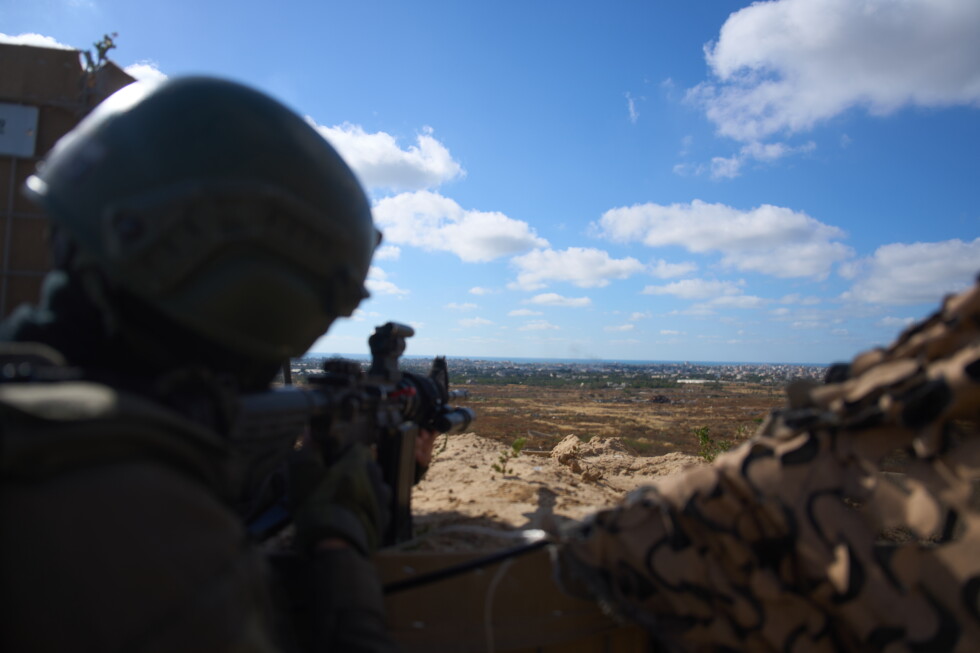
Israeli soldiers occupy a military position overlooking the so-called yellow line in the central Gaza Strip, Tuesday, May 26, 2026. (AP Photo/Ariel Schalit)
Advertisement
Israeli soldiers occupy a military position overlooking the so-called yellow line in the central Gaza Strip, Tuesday, May 26, 2026. (AP Photo/Ariel Schalit)
Advertisement
Advertisement
Advertisement
As diplomatic efforts to strengthen the deal have stalled, three soldiers described to AP a sense of confusion in the embattled territory, with a lack of clarity on rules of engagement around the yellow line. Some commanders paid lip service to the agreement, the soldiers said, while privately voicing desire for the war in Gaza to continue. Sometimes, troops were too far away or acted too quickly to recognize who they were shooting, one soldier said — a concern echoed in comments from a whistleblower group of veterans.
Advertisement
The soldiers’ accounts are a rare glimpse into what’s happened in the Israeli-controlled part of Gaza since the deal went into effect seven months ago. The soldiers — reservists deployed throughout Gaza between October and January who’ve since returned — spoke on condition of anonymity because they feared being ostracized over their comments. They said they were speaking out because they were angered and saddened by what they saw.
AP has documented shootings of Palestinian civilians, including children playing, close to the yellow line. And the soldiers said it felt like the killings never stopped amid the tenuous deal.
“To call it a ceasefire is a joke,” one soldier told AP.
Gaza’s yellow line has been ambiguous, and Israel has taken control of more land
When the ceasefire went into effect, Israel withdrew troops to a buffer zone demarcated by a yellow line, giving it control of just over half the strip. Under the agreement, Israeli forces are meant to complete a fuller withdrawal, though there’s no timeline for that. The U.S.-backed diplomat overseeing the truce says progress is deadlocked over the central sticking point of disarming Hamas, upon which all other issues — including Israeli withdrawals and reconstruction — hinge.
Advertisement
In the meantime, Israel has expanded control over additional territory in Gaza. Both sides have accused the other of violating the ceasefire.
The line’s exact location has been ambiguous and sometimes invisible. In some places, it’s marked with yellow blocks and barrels; in others, it at times hasn’t been indicated at all.
The Israeli military invited AP this week to see a section of the yellow line in central Gaza, near the Maghazi refugee camp. The line there was visible, demarcated by a wide dirt path and small yellow markings. To the east was a desolate stretch of open space leading to a heavily fortified Israeli military post about 500 meters away.
An Israeli military commander said Hamas is active on the other side of the line and frequently sends people — militants and civilians — toward the line and even across it to test the army’s readiness and responses.
Advertisement
“There is no reason for anyone to come near the line,” he said, speaking on condition of anonymity under military rules. “There’s nothing here.”
The army says the entire line, which stretches the length of Gaza, is now clearly marked.
Since the ceasefire went into effect, more than 900 people have been killed in Gaza — dozens of those close to or over the yellow line, according to Gaza’s Health Ministry. The ministry doesn’t say how many are militants, but unarmed men and children have been among the dead.
Israel’s military has said most of the people killed crossing the line posed a threat to troops. But soldiers who spoke to AP and Breaking the Silence — the whistleblower group that has collected troops’ testimonies throughout the war — say that at times soldiers were too far away, acting too quickly and under too much pressure to tell.
Advertisement
Israel’s army told AP that the area adjacent to the yellow line is a “sensitive operational environment” with signs saying approaching is prohibited. It said the army doesn’t target civilians solely for approaching the line and that its rules of engagement require the use of warnings before using force. In situations involving an immediate threat, forces are authorized to act, it said.
One soldier says troops must act fast, with information sometimes based on a hunch
It was the combat soldier’s second tour in Gaza when the ceasefire began. He said he was posted several hundred meters from the yellow line and saw several people trying to cross it killed by soldiers.
Advertisement
An Israeli soldier occupies a military position overlooking the so-called yellow line in the central Gaza Strip, Tuesday, May 26, 2026. (AP Photo/Ariel Schalit)
An Israeli soldier occupies a military position overlooking the so-called yellow line in the central Gaza Strip, Tuesday, May 26, 2026. (AP Photo/Ariel Schalit)
Advertisement
Advertisement
Advertisement
Soldiers shooting or ordering drone strikes don’t always know who’s crossing the line, he said. Although soldiers must provide coordinates and get approval from superiors before striking, it’s hard to give exact information as people are moving, he said. He described soldiers calling in coordinates based on a hunch or the last place they saw someone.
Breaking the Silence says the general rules of engagement are extremely permissive, especially for those crossing the line, with orders in many areas being “shoot to kill.” Executive director Nadav Weiman, a veteran who served in Gaza but not in this war, said distance from the target and some trigger-happy soldiers can be problematic.
He said orders and policies from the military’s high commanders “have created a reality where countless civilians have and are being killed for crossing invisible lines.”
Advertisement
In one account to Breaking the Silence, in interview notes seen by AP, a soldier describes instructions for troops about anyone crossing the yellow line: “eliminate him no matter what.”
A soldier who was stationed in Gaza says human lives weren’t valued
Another soldier stationed in Gaza for weeks after the ceasefire said the message from commanders was to hold the line at all costs.
“There was a general feeling that human lives are not valuable,” he said.
When it came to demarcating the yellow line, the soldier said his superiors told him it was “too much work,” not their job and that Palestinians should know where it was.
Advertisement
Being in Gaza took an emotional toll, he said.
Sometimes snipers fired warning shots at people close to the line, he said, but commanders told troops to do more to protect themselves. The soldier understood that to mean firing more lethal shots.
He and the other soldiers who spoke to AP said troops generally understood, based on leaders and fellow soldiers’ actions, that Israel was in Gaza for the long run, not an eventual withdrawal.
Israel’s strikes are ‘increasingly proactive,’ according to an internal report
An internal report circulated among aid groups last month and seen by AP said that across Gaza, Israel has become “increasingly proactive” with its strikes.
Advertisement
Separate data from the Armed Conflict Location and Event Data Project, a U.S.-based nonprofit, said April was the deadliest month in Gaza this year and that recorded deaths near the yellow line or of people who crossed it increased by more than 25% from January to April, to 73 from 58.
A yellow block stands demarcating the “Yellow Line,” which has separated the Gaza Strip’s Israeli-held and Palestinian zones since the October ceasefire, is visible in central Gaza Strip, Tuesday, May 26, 2026. (AP Photo/Ariel Schalit)
Advertisement
A yellow block stands demarcating the “Yellow Line,” which has separated the Gaza Strip’s Israeli-held and Palestinian zones since the October ceasefire, is visible in central Gaza Strip, Tuesday, May 26, 2026. (AP Photo/Ariel Schalit)
Advertisement
Advertisement
Advertisement
Advertisement
This week, Israeli Prime Minister Benjamin Netanyahu said Israel controls 60% of Gaza and the next step was to move to 70% control.
The soldiers told AP that on the ground, the ceasefire is elusive.
“We need to stop using this term,” one said of the word, ceasefire. “It’s not serving people that want to stop the war.”
___
Advertisement
Josef Federman contributed reporting from the central Gaza Strip.
The Olympic champion was visibly upset at having to pull out in Birmingham
Keely Hodgkinson reportedly pulled out of the 400m final at the UK Athletics Championships as a precaution ahead of what promises to be an important summer.
Advertisement
The 800m Olympic champion was visibly distraught after pulling out of the event on Sunday at the Alexander Stadium in Birmingham, having previously taken up her position in lane nine for the race.
Hodgkinson walked to the side of the track, and was clearly upset as officials gathered round, before walking away from the race.
She was keen on competing over a shorter distance in a bid to improve her first-lap speed, and challenge the 800m record later this summer.
The current 800m world record stands at 1:53.28, and was set by Czech Jarmila Kratochvilova 43 years ago.
Advertisement
The 24-year-old had already broken the indoor world record with a time of 1:54.87 in France earlier this year, and winning the 800m at the European Championships remains her main goal this summer.
After her withdrawal from the weekend’s final, coach Jenny Meadows told the BBC Hodgkinson had “felt a little twinge in her last strides before the race”.
Hodgkinson was reportedly feeling anxious during the warm-up and on the start-line, amid fears that the injury could turn into something more serious, particularly after several hamstring issues last year.
Advertisement
Hodgkinson said: “I wasn’t feeling 100 per cent standing on the start-line, so I made the tough decision to step away and not race.
“I didn’t want to risk anything this summer.”
As for the race itself, Amber Anning recovered from a false start to retain her title, winning in a time of 50.16 seconds.
Shortly before Hodgkinson’s withdrawal, her friend and rival Georgia Hunter Bell retained her 800m title.
Advertisement
Bell led throughout to win by a distance in one minute 55.93 seconds.
That time was good enough to break the championship record set by Kelly Holmes in 1995.
Hodgkinson will now turn her attention to the Diamond League meeting, which will get under way in London on July 18.
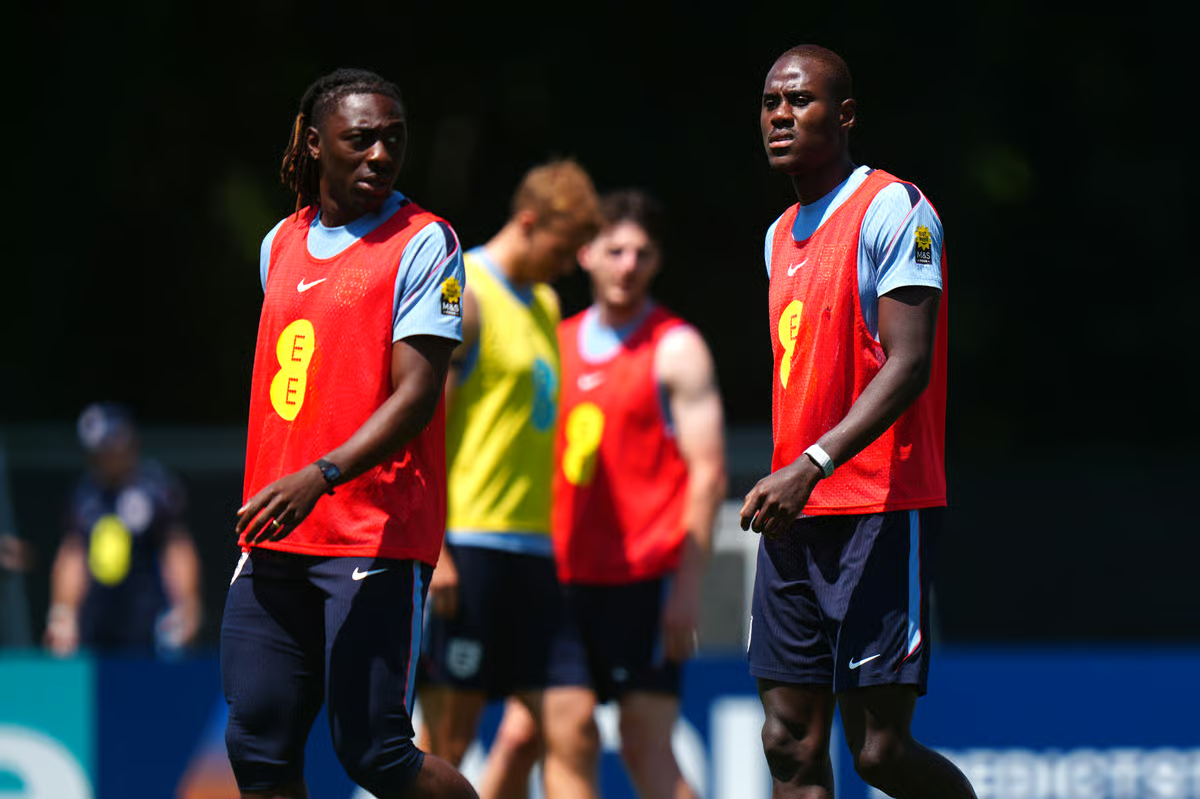
Asked whether Alonso’s stature within the game will help Chelsea’s players buy into his methods, he replied: “Yeah, most definitely. He’s a manager like that, an ex-player as well, coming in and automatically you can just feel the presence, knowing what he is going to demand and we are all excited to work with him.”
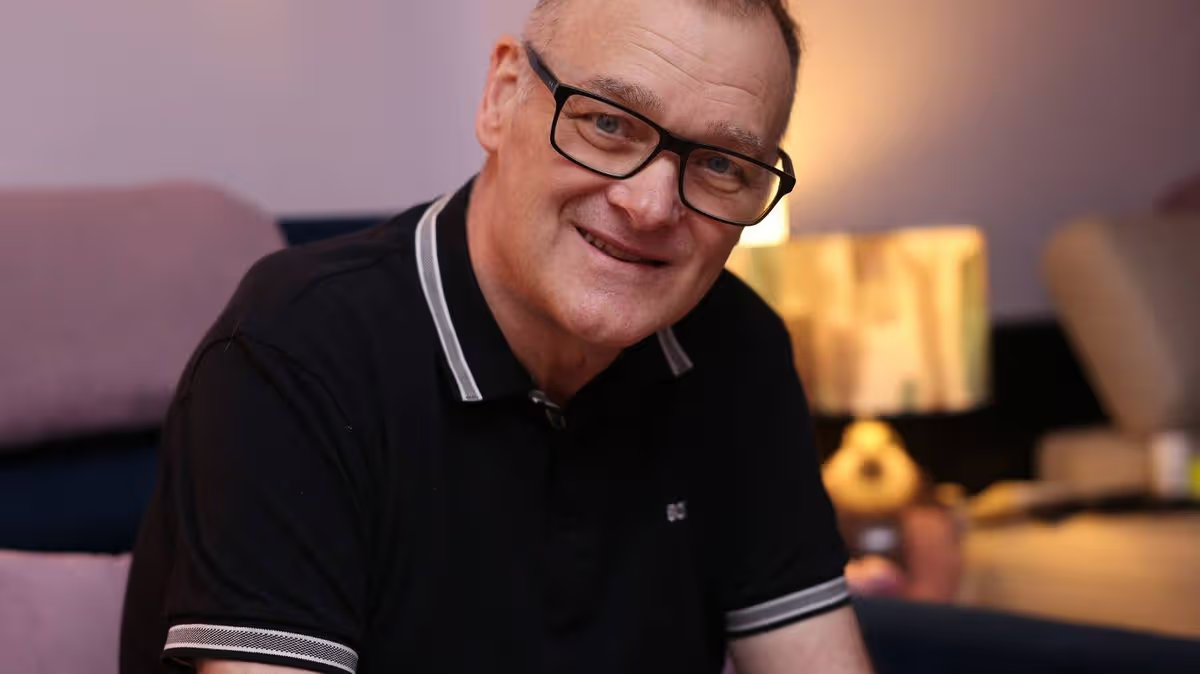
Allan Finnegan has died aged 59, with his family paying an emotional tribue on Father’s Day
A Britain’s Got Talent semi‐finalist who balanced life as a Baptist minister with a successful stand‐up career has died aged 59.
Advertisement
Allan Finnegan, from Bootle, rose to national attention during the 2020 series of the ITV show, winning over millions with his gentle humour and warm stage presence. Praised by judges as a “breath of fresh air”, he continued to serve his congregation at Emmanuel Baptist Church while performing comedy across the country, reports Lancs Live.
Confirming the 59-year-old’s passing on Instagram on Father’s Day, Allan’s family stated: “It is with great sadness that our family share the devastating news that our amazing, caring, funny, Husband, Dad, Grandad, Son, Father-in-law, Church Minister, and Comedian, Allan, went home to be with his Lord and Saviour at 9:10pm on Friday 19th June 2026. He bravely fought so hard to battle cancer for almost 5 years.
“We have the most precious memories as a family and will love and miss him so much. Joyce, Rachael and Beckie were with him in his final moments, playing some of his favourite music and as his favourite song, Pink Floyd’s ‘Wish You Were Here’ started playing, Allan opened his eyes and peacefully took his last breath.
Advertisement
“It was an incredibly heartbreaking moment, but also a very precious and beautiful one for our family. Joyce, Rachael, Beckie, Danny, Josh, Albie and Linda give thanks for Allan’s incredible life and faithful witness.
“We would like to to thank each and everyone of you for your support, love and amazing generosity during Allan’s battle. We are eternally grateful to you all, as this gave Allan precious extra time to spend with his family and new grandson, Albie. Be blessed.”
Allan’s passing follows a five-year struggle with cancer, during which his positive spirit consistently remained evident. In 2022, Allan experienced ‘flashes’ in his vision and was sent to St Paul’s Eye Hospital, where growths were found in both eyes.
Allan received a diagnosis of ocular melanoma, an exceptionally uncommon type of cancer. The malignancy was eliminated, but it later spread to his liver, and in December 2023, Allan learnt that it was incurable.
Advertisement
After his diagnosis, he was informed he had merely 12 months remaining, reports the Liverpool Echo, yet, through a GoFundMe appeal was able to obtain innovative treatments which enabled him to survive longer than medical professionals anticipated. Reflecting on his terminal diagnosis in 2025, Allan told the Liverpool Echo: “You can sit and wallow and don’t get me wrong, there have been days when I’ve done that kind of thing, but I’ve been trying to change that mindset so you don’t just go into a spiral. It’s not always easy, but I try to think that every day is a gift from now on.
“I’m on borrowed time, aren’t I? Or extra time, Fergie time was what they used to call it. We’re always going to do things in the future – you say, when I get to this stage in my life I’ll do this etc. I don’t think that way anymore.”
Ensure our latest news and sport headlines always appear at the top of your Google Search by making us a Preferred Source. Click here to activate or add us as Preferred Source.
Questions remain unanswered about the horrific Bedford train crash that left one person dead and 100 injured, as investigators continue to work to establish the cause of the crash.
Emergency services were called to the railway line between Bedford and Luton on Friday after reports of a collision involving two East Midlands Railway (EMR) services.
One train struck the rear of another on the same line shortly after 5pm.
The scene after two East Midlands Railway trains were involved in a collision
PA Wire
Advertisement
Twenty-eight people remain in hospital, including nine in a critical condition. One person — the driver of one of the trains — sadly died following the crash.
He has since been named as 60-year-old Shaun Burton. His family say they are “devastated” by his loss, as they expressed their sympathies for all those affected by the crash.
Transport Secretary Heidi Alexander has said works are being carried out to understand the circumstances of the crash so that “lessons are learned”.
When asked about the potential cause of the collision, she said: “It is too early to speculate and that’s why it’s so important that the inspectors from the rail accident investigation branch were there very quickly.”
Advertisement
The Standard has put together a list of the questions around the crash that are yet to be answered.
Why did the first train stop?
Investigators are understood to be examining why the first train — the Nottingham to London service — came to a halt on the tracks near Elstow, just minutes after leaving Bedford.
Early reports indicate a possible technical fault, although this has not yet been officially confirmed.
Advertisement
Why did the second train also not stop?
At the same time, investigators are also looking into why the second train was unable to stop after the line became obstructed.
Modern British railways have safety systems in place to prevent incidents of this kind.
As part of the inquiry, officials will examine whether the driver of the second train received the correct information and adequate warning, as well as whether the train’s braking systems operated properly and how effectively the safety mechanisms performed.
Advertisement
Was there a signal failure?
The Rail Accidents Investigations Bureau will also consider whether there was a possible signal failure that caused the crash.
Investigators will probe whether the signals correctly indicated the track ahead was occupied; whether a signalling fault occurred and whether control centres had accurate information about train positions.
Tony Miles, a rail journalist, said on Sky News: “Were the signals showing red and the train went past them?
Advertisement
“Or were the signals showing that the line was clear, and if so, how were they able to know when the train in front was stopped?”
Was there a fault with one of the trains?
One of the trains involved was a relatively new Aurora fleet unit, investigators have confirmed.
Data recorders, often referred to as “black boxes,” will be downloaded and analysed to determine a timeline of events leading up to the collision.
Advertisement
They will focus on braking performance, onboard computer logs, communications systems, and any technical faults in the lead-up to the collision.
Could there have been a human error?
There is currently no evidence to suggest driver error, though investigators will need to rule it out as part of their inquiries.
They will also examine communications between the driver and the signaller, along with whether factors such as fatigue, workload pressures, or inadequate training may have contributed to the incident.
“WE were never meant to be a band that had hits,” muses Andy McCluskey. “When Tony Wilson told us: ‘You’re the future of pop’, we said ‘Pardon?’ Nobody was more surprised than us when we were on Top of the Pops.”
Nearly 50 years after Andy and childhood pal Paul Humphreys started experimenting with old tape recorders and called themselves Orchestral Manoeuvres In The Dark, the synth pop pioneers are on the road with their Summer of Hits tour.
Following last year’s success of the re-mastered Crush album, OMD are celebrating the crowd-pleasers, in captivating shows packed with hits.
Andy McCluskey
Having seen them devote an entire concert to Architecture and Morality, I ask if set lists can be a tricky balance of album tracks, new material and pop bangers. Last year’s release of the re-mastered Crush album was a US success, and in 2023 OMD released a new album, the acclaimed Bauhaus Staircase, “which would’ve been Number 1 if it wasn’t for Taylor Swift,” smiles Andy.
Advertisement
“Every year is a 40th anniversary of something – this year’s it’s The Pacific Age (OMD’s seventh album).” he says. “People love the albums but we have to perform the hits too. This tour is about the hits.”
And what gems they are! Since debut single Electricity in 1979, OMD have led the way in British electronic music, selling 25 million singles and 15 million albums worldwide.
Their hits, including Enola Gay, Souvenir, Messages, Joan Of Arc, Locomotion, She’s Leaving and Tesla Girls, are a dreamy blend of haunting melancholy and upbeat synth pop. Seminal 1981 album Architecture and Morality established them as one of the UK’s most influential electro-pop acts, inspiring the likes of Depeche Mode, The Killers and Moby.
Back in the day, they were on Top of The Pops a whopping 29 times. “Our last appearance was the same day the Spice Girls’ first,” says Andy. “I finally got my 30th Top of the Pops in 2000 – thanks to Atomic Kitten.”
Advertisement
OMD
Creating a girl group might not seem the most likely career move for a musician who started out emulating Kraftwerk, but when Andy founded Atomic Kitten in 1998 it was a vehicle for his pop songwriting. He wrote their biggest hit, Whole Again, in 2001, earning him an Ivor Novello Award nomination. “I love a good pop band and I had a blast with Atomic Kitten,” says Andy. “I’m still in touch with Kerry (Katona), I spoke to her the other week. She’s great fun.”
By the mid-90s, OMD had called it a day. “I was banging my head on the wall,” says Andy. “It was the age of Britpop and grunge, nothing was as unfashionable as an Eighties synth band. In 1996 we released Walking on the Milky Way and Radio 1 wouldn’t play it. Fifty per cent of British single sales were from Woolworths, but they only sold records on radio playlists. We had no chance.”
Read next:
A decade later, in 2006, Andy and Paul reunited, initially to appear on a German TV show. Thanks to the Eighties nostalgia vibe of the last two decades, they’ve enjoyed a resurgence as a hugely popular live act, while continuing to release new material and push boundaries.“Cultural fashion has a timeline,” says Andy. “In the 80s synths were the future. In the 90s it was Oasis, and I was thinking ‘How come the Beatles are the future again?’ I’ve been around long enough now to know that all pop culture eventually eats its own history.”
Advertisement
Andy and Paul were school pals, growing up on the Wirral in the 1970s, when they started carrying out weird musical experiments with old radio sets and tape recorders. It all started when Andy went to see Kraftwerk, in 1975: “I sat in seat Q36, that concert changed my life. I built a stereo from two record players and started raiding obscure German back catalogues.
OMD
“Paul’s widowed mother worked six days a week so we had the house to ourselves. We used to pump everything – war noises off the TV, experimental soundwaves – through tape recorders. Even our mates said: ‘That’s not music’. We gave ourselves this preposterous name and only intended to do one gig. I was going to Leeds to do fine art and Paul was off to London to do an electronics degree.”
But their catchy electro-pop melodies fused with intelligent lyrics caught the ear of Factory Records supremo Tony Wilson, who released Electricity. “We were just trying to blag our way onto Granada Reports. We never planned it to become pop stars,” says Andy.
Late 70s Liverpool had a fertile music scene and young bands cut their teeth at Eric’s – where OMD first played, in October 1978. “Every other person around us was in a band,” says Andy. “Open mic Tuesdays at Eric’s were full of people who went on to be in bands like Teardrop Explodes, Echo and The Bunnymen, China Crisis, Siouxsie and the Banshees. They were all in this mad punk supergroup, Big in Japan.”
Advertisement
For fans like me (OMD was the first band I ever saw live), their beautifully catchy songs – about things pop acts don’t normally sing about, like oil refineries, religious martyrs, technology and the atomic bomb – take us back to wistful hours in bedrooms playing records.
“Songs that were part of your journey remain with you. They’re the pegs on which hang so many memories,” says Andy, who is so delightful I could talk to him all day. “When Paul and I got back together in 2006 we had people from a certain generation coming to see us, but also a new broader demographic: kids discovering us on a deep dive through Spotify.
“When we first started having hits we had imposter syndrome – 48 years later we’re still here, and still doing what we want to do.”
* OMD’s Summer of Hits tour is at York Museum Gardens on Thursday, July 9. Visit yorkmuseumstrust.org.uk
It has not been McIlroy’s week at Shinnecock Hills, with too many mistakes costing him any realistic chance of victory
Rory McIlroy let out an F-bomb as his frustrations boiled over at the US Open on Sunday.
Advertisement
It has not been McIlroy’s week at Shinnecock Hills, with too many mistakes costing him any realistic chance of victory.
He started the final round at three over par and ten shots behind runaway leader Wyndham Clark.
The course continued to frustrate the Masters champion as he failed to birdie the opening hole despite driving the close to the edge of the green.
McIlroy then failed to get up and down at the second, dropping a shot, before his frustrations spilled over on the third.
Advertisement
After finding the middle of the fairway, McIlroy had only a wedge in his hands for his approach, but pushed his second shot into a greenside bunker.
A Sky Sports microphone picked up his angry reaction.
“Oh, just go home, Rory. F****** hell!” he said.
Content cannot be displayed without consent
McIlroy opened the championship with a one-under-par 69 before taking a step backwards with a second-round 71.
Advertisement
The Holywood man briefly played his way back into contention with an opening front nine of 33 on Saturday, but five bogeys on the back nine saw him tumble down the leaderboard.
McIlroy’s final opportunity this season to add to his major tally will come at next month’s Open Championship at Royal Birkdale.
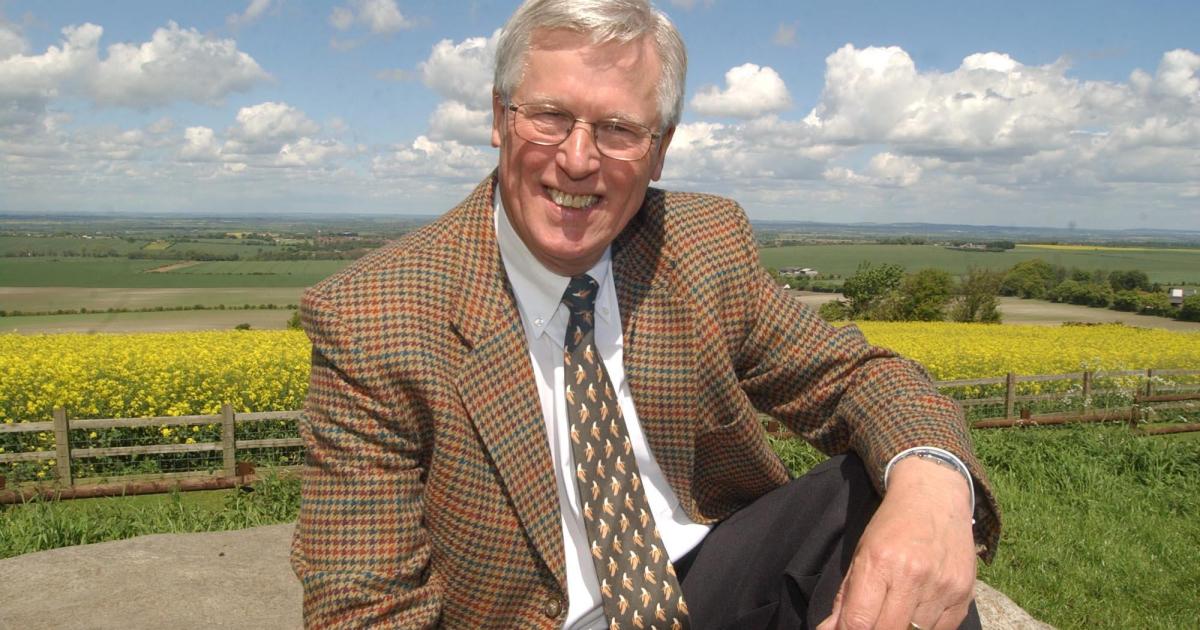
Mr Craven, 85, has presented the popular BBC rural affairs show for 37 years having started in 1989.
Prior to that, he had a 17-year stint on Newsround having launched it on the BBC in 1972.
Away from TV, Mr Craven lives in a village near Banbury with his wife where the couple brought up two daughters.
Advertisement
In a recent interview with Farmers’ Guardian, Mr Craven opens up about the difficulties of filming in the early days of Countryfile.
He said: “In the very early days of Countryfile, it was very difficult to get cameras onto farms and to get farmers to speak to us.
“It took a long time to win farmers over and let them open the gates of the farm and let us in.”
Farmers are now more open and willing to share their experiences, he said, but warned there remains significant questions over balancing food production with environmental goals.
Advertisement
“We need to up the amount of food that is produced in this country,” he said.
“The balance between environmental concern and the need to produce more food, that is the big issue that faces the country today.”
Mr Craven was at the recent Farm Fest in Warwickshire, fronted by Chipping Norton farmer Jeremy Clarkson.
The journalist took to the stage to give a talk on farmers while at the festival.
Today, we look at strong indications the prime minister may be on the verge of resigning.
Cabinet Secretary Peter Kyle’s message this morning was that he is reflecting on the “political realities”. It’s a departure from the not ‘he’ll fight on’ message of 2026 up to now.
Henry Zeffman joins Laura and Paddy in the studio to look at the possible timetable of a resignation and the appointment of a replacement.
Advertisement
You can now listen to Newscast on a smart speaker. If you want to listen, just say “Ask BBC Sounds to play Newscast”. It works on most smart speakers.
You can join our Newscast online community here: https://bbc.in/newscastdiscord
Get in touch with Newscast by emailing newscast@bbc.co.uk or send us a WhatsApp on +44 0330 123 9480.
New episodes released every day. If you’re in the UK, for more News and Current Affairs podcasts from the BBC, listen on BBC Sounds: https://bbc.in/4guXgXd
Advertisement
Newscast brings you daily analysis of the latest political news stories from the BBC. The presenters were Laura Kuenssberg and Paddy O’Connell. It was made by Chris Flynn and Maddie Drury. The social producer was Gabriel Purcell-Davis. The technical producer was Mike Regaard. The assistant editor is Chris Gray. The senior news editor is Sam Bonham.
“Bradley Barcola emerging as a target for Arsenal shouldn’t be a huge surprise for us,” he said. “Of course, if we go back to the start of the Premier League era, or more accurately, the arrival of Arsene Wenger a couple of years after the Premier League started, Arsenal have this huge history with French players.
According to local media reports, under the extradition process, the UK’s formal request will be transmitted through Kenya’s Ministry of Foreign and Diaspora Affairs before being forwarded to the Office of the Attorney General and subsequently presented before the Director of Public Prosecutions (DPP) in court.




































You must be logged in to post a comment Login