NewsBeat
Jeff Bezos’ Washington Post assures everyone talk of AI killing humans is nothing to fret about

A Washington Post editorial invoked the Bible to downplay the potential threat posed by artificial intelligence and instead warned of looming government overreach against Big Tech — while failing to note that billionaire Post owner Jeff Bezos recently co-founded an AI company.
The unsigned editorial, published Wednesday evening under the headline “AI hysteria jumps the shark,” came in response to comments in which current and former Anthropic employees said people working on AI projects “earnestly believe” the technology could kill all humans within 10 years.
“Scripture warns against false prophets,” the Post‘s editors wrote. “The Gospel of Matthew says that no one but God, ‘not even the angels of heaven,’ knows the day or hour of the end times.”
The editorial, posted outside the news outlet’s formidable paywall, also condemned the “chilling sweep” of legislation proposed by independent Sen. Bernie Sanders of Vermont and Democratic Rep. Greg Casar of Texas to pause advanced AI development and ban “artificial superintelligence.”
“Politicians should not seek to regulate a fast-moving technology they don’t understand,” the editors wrote.

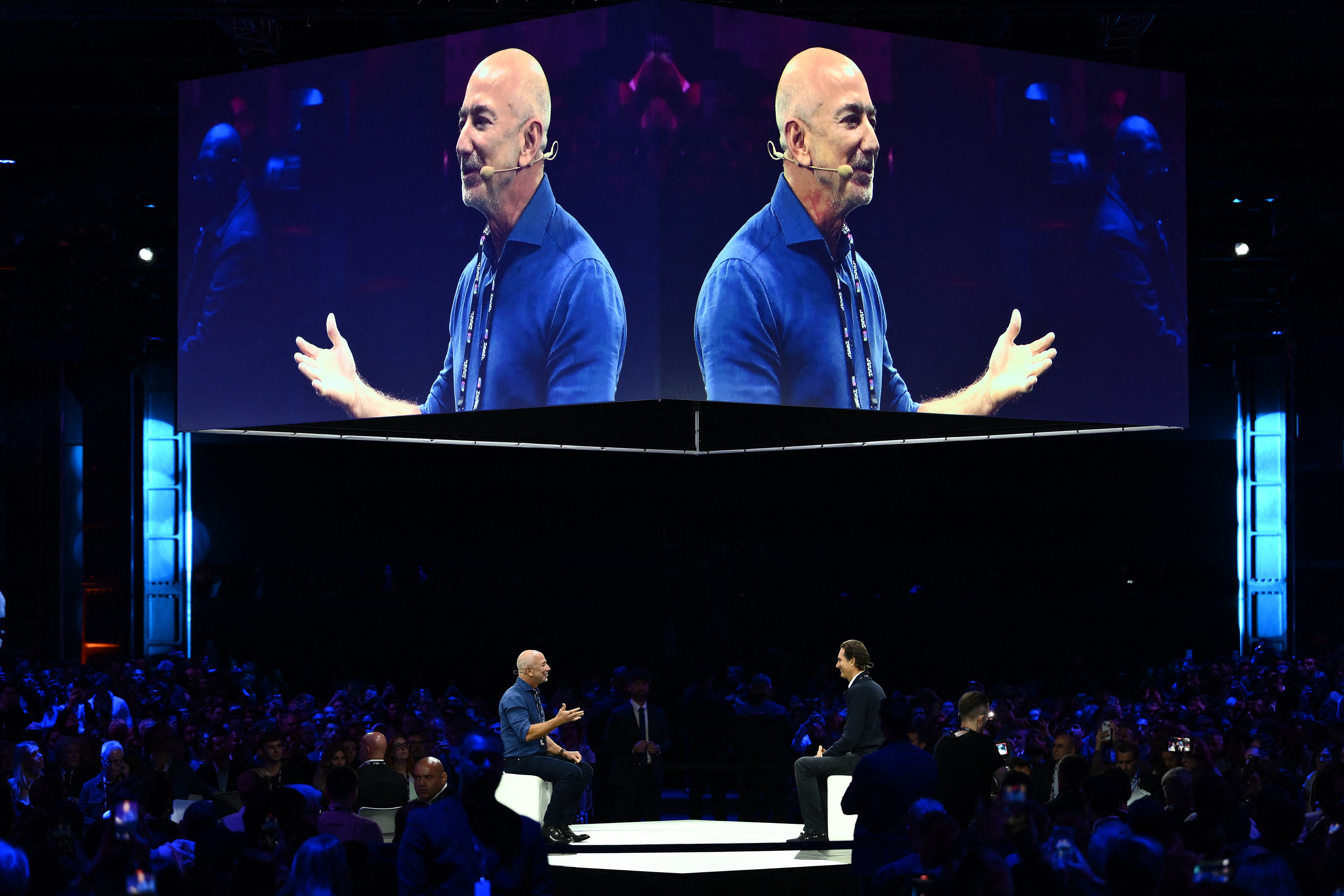
The editorial made no mention of Amazon founder Bezos, who bought the Post for $250 million in 2013 and last month ranked No. 10 on Time‘s list of the most influential people in AI.
The magazine cited his role as co-founder and co-CEO of the AI startup Prometheus, which was launched in November 2025 and valued at $41 billion in June, with Bezos telling CNBC that its work “will make it much easier for engineers to design physical objects.”
A Post spokesperson didn’t immediately respond to an inquiry from The Independent regarding the editorial’s apparent lack of full disclosure.
The editorial came as Bezos — whose Blue Origin space company reportedly holds about $1.1 billion in federal contracts — has significantly softened his stance against President Donald Trump, with whom he feuded during Trump’s first term over the Post‘s coverage of the White House.
Amazon, where Bezos is executive chairman and owns nearly nine percent of the company’s stock, donated $1 million toward Trump’s 2025 inauguration, which he attended with future wife Lauren Sánchez.
The company also gave an undisclosed amount to help fund construction of the president’s controversial $600 million White House ballroom, and spent $40 million on a widely panned documentary about first lady Melania Trump that IMDb says grossed about $16.7 million worldwide.

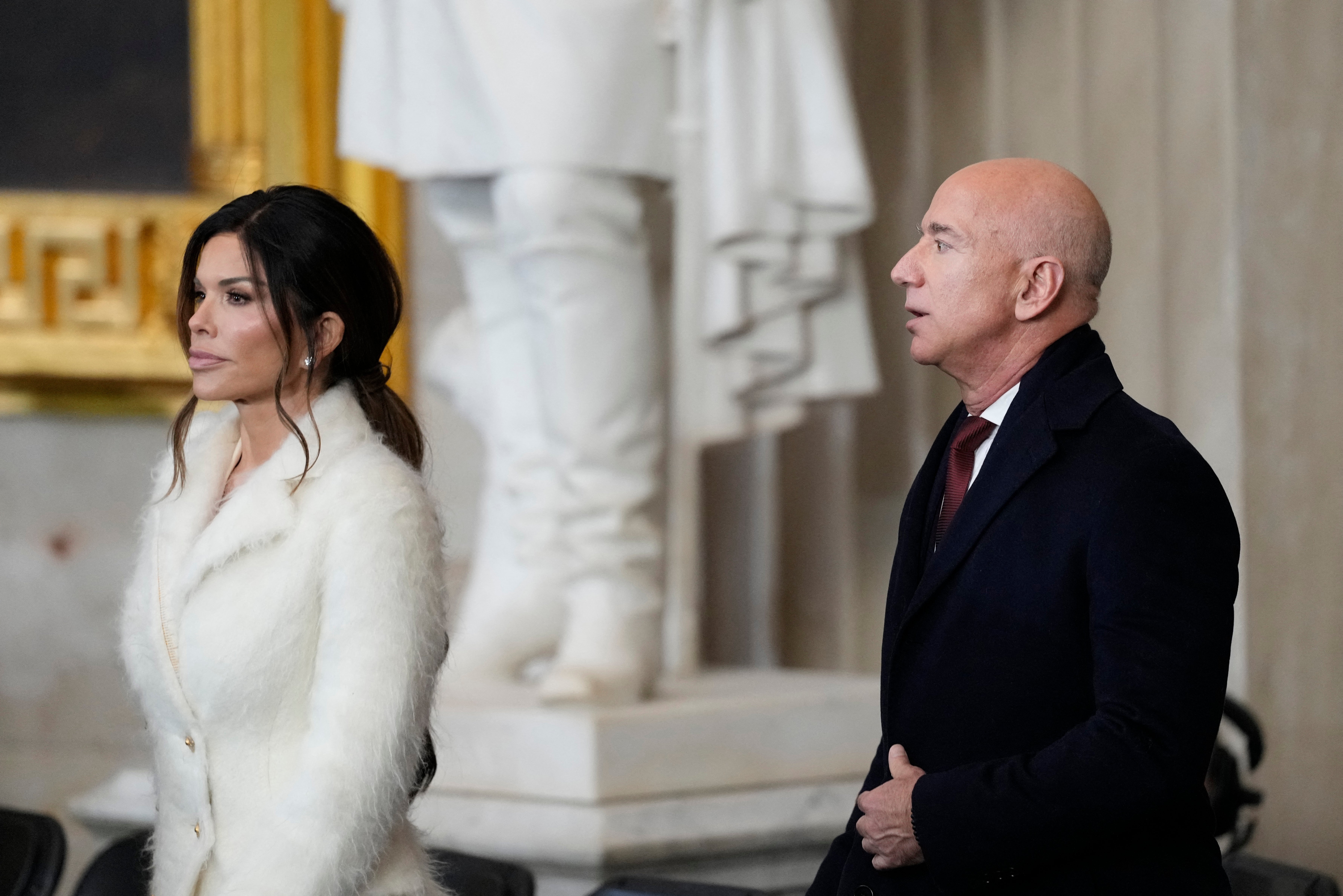
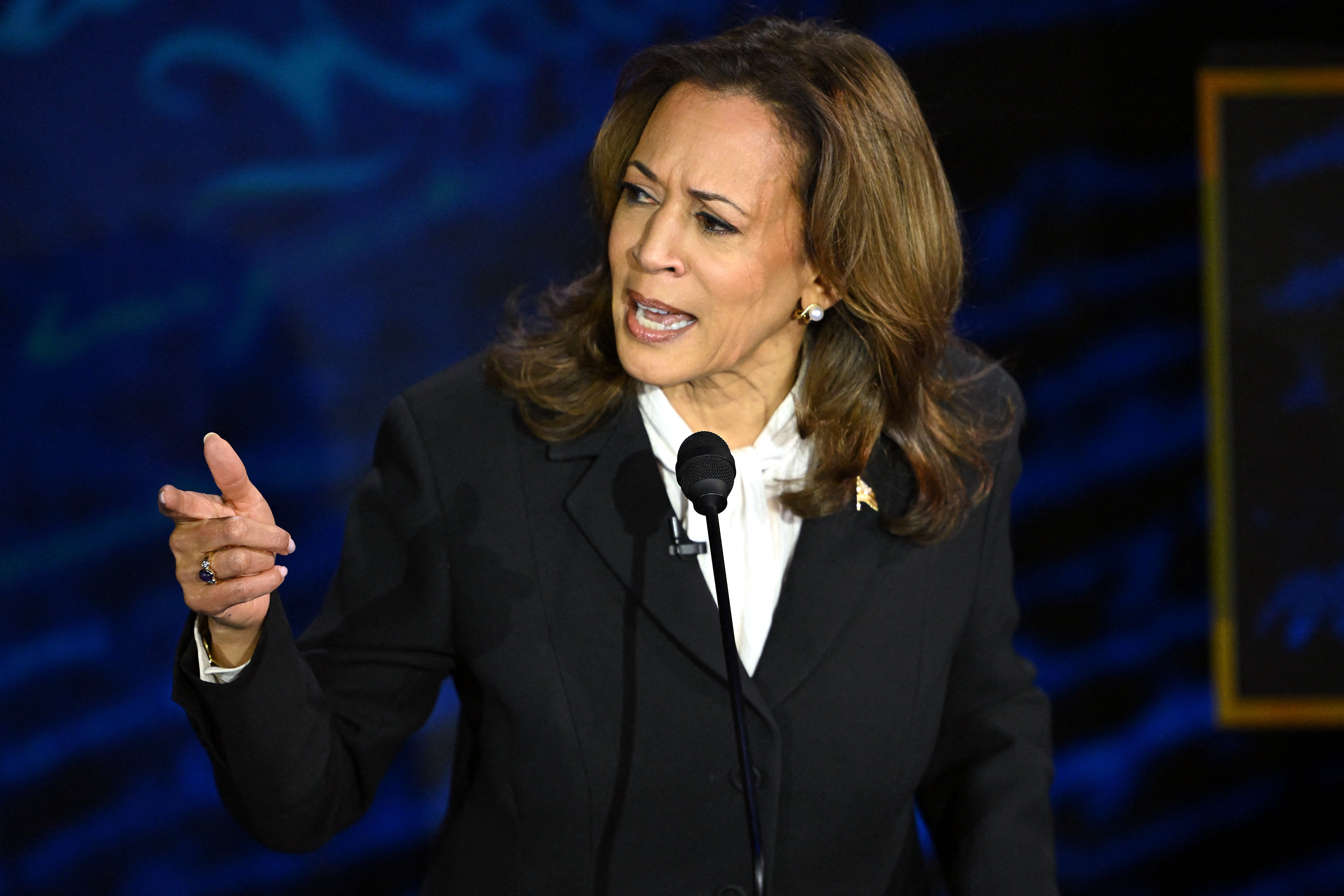
The Post has also been undergoing a period of upheaval under Bezos, including the loss of about 300,000 subscribers and associate editor David Maraniss, a 48-year employee, after the owner vetoed a 2024 endorsement of Vice President Kamala Harris over Trump and ended the paper’s practice of endorsing candidates.
The Post lost another 75,000 subscribers early last year after Bezos said its opinion pages would only promote “personal liberties and free markets,” leading to the resignation of top opinion editor David Shipley.
His right-leaning successor, Adam O’Neal, announced his resignation in July, telling colleagues it was best for him and his family, according to The New York Times.
Several high-profile opinion columnists, including Pulitzer Prize winners Eugene Robinson and Jonathan Capehart, have also resigned or taken buyouts since the libertarian shift in the Post‘s editorial tone.
The spark for Wednesday’s AI editorial was a series of Tuesday social media posts in which Anthropic employee Jacob Coxon said he’d resigned his position after three years “doing pretraining research at both OpenAI and Anthropic.”

“Neither company is acting responsibly. They are racing straight to self-improving superintelligence and gambling with our lives,” he wrote.
Coxon also said, “The people building AI earnestly believe that it could kill us all by the end of the decade.”
In response, Anthropic employee Evan Hubinger, who holds the title of alignment science lead, wrote, “Jacob is correct here — we really do earnestly believe AI could kill all humans!”
“I personally think it is >10% within the next decade. I believe Anthropic is trying its best, but we do not yet have a plan to solve alignment for superintelligence and are not clearly on track to,” he added.
Spokespersons for Anthropic and OpenAI didn’t immediately respond to inquiries from The Independent.
The posts followed similar warnings about the potential impact of AI from major tech figures including Elon Musk, Google co-founder Eric Schmidt and Nobel Prize winner Geoffrey Hinton, a retired computer scientist who’s been called the “godfather of AI.”


A 2024 survey of more than 4,000 AI researchers around the world found that only 3 percent “were most worried about the long-term, speculative scenario in which advanced, out-of-control AI poses a threat to human existence,” according to Responsible Ai UK, a group of British academics.
The most frequently cited concerns about AI were malicious use, misuse, misinformation and the impact on jobs, RAiUK said.
The Post‘s editorial came as polls have consistently shown that about seven in 10 Americans oppose AI-related data centers in their communities.
It acknowledged that predictions of people being killed by AI were “concerning” but said they “merit a certain skepticism.”
“People working at the frontier may know more than most about what today’s models can do. But that does not give them special knowledge of what machines that do not yet exist will someday become — or how society will adapt to the challenge,” it said.
The editorial also held out the promise of “the many potential upsides of AI, such as the developing breakthrough medicines.”
But left unsaid were the results of a May study, published by leading medical journal The Lancet, in which Columbia University researchers found that the rate of fabricated sources in biomedical papers surged 1,200 percent from 2023 to 2025, according to the University of Minnesota’s Center for Infectious Disease Research & Policy.
The authors offered several possible explanations, including intentional misconduct, but noted that previous studies found that up to 69% of AI-generated references in “biomedical contexts” were made up.
You must be logged in to post a comment Login