



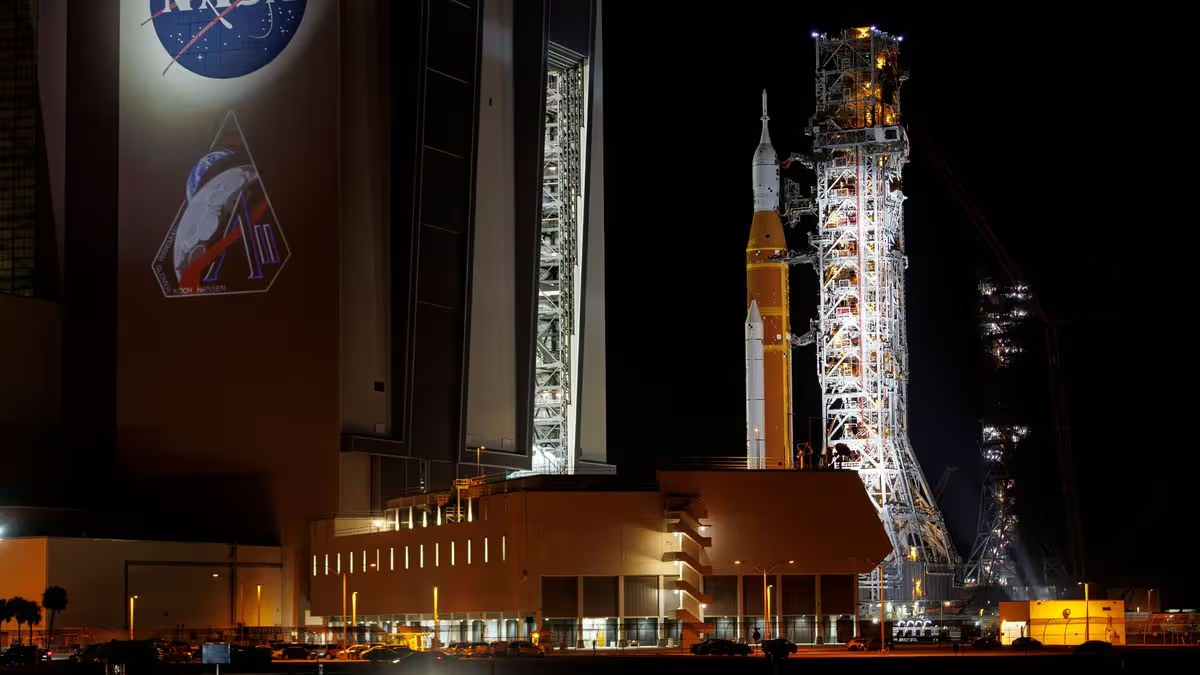
The Artemis 2 mission will soon send four astronauts farther into space than anyone has ever been as humanity returns to the Moon for the first time in decades
The Artemis 2 mission – NASA’s first manned mission to the Moon in 54 years – is about to launch.
The four Artemis astronauts have said their goodbyes and entered the Orion capsule on NASA‘s Space Launch System (SLS) rocket. The launch is scheduled for 11.24pm UK time tonight, weather permitting.
The crew will travel 685,000 miles inside the tiny Orion space capsule, going roughly 4,500 miles beyond the Moon – farther from Earth than anyone has ever been before.
Commander Reid Wiseman, Victor Glover and Christina Koch from NASA, and Jeremy Hansen of the Canadian Space Agency, are the lucky four who get to take part in the mission that will pave the way for Artemis 3. Artemis 3 aims to land a crew on the Moon’s south pole as early as 2028.
READ MORE: WATCH LIVE: Artemis 2 entire Moon mission as NASA plans to launch in hoursREAD MORE: Artemis II launch LIVE: Artemis 2 countdown as Trump addresses Moon astronauts
The rocket will launch from the Kennedy Space Center in Florida. For those who live in and around the US state, they will be able to catch a glimpse of Artemis 2 as it launches through the sky and into space.
Sadly, those of us in the UK will not be able to see it launch with the naked eye. You can however watch the launch live here. The graphic below from NASA shows where it will be visible, Manchester Evening News reports.
READ MORE: Artemis 2 launch: Crew’s life inside ‘shed-sized’ capsule from tortillas to toilet ruleREAD MORE: Artemis 2 launch weather update as NASA lift-off could be postponed at any time
NASA may be forced to delay the launch if weather conditions aren’t favourable, but the space agency said in its latest update that there’s still an 80 per cent chance the weather will be good enough.
The US space agency has been targeting a launch window that starts tonight on April 1. Speaking at a press conference, Ms Blackwell-Thompson added: “Our team has worked extremely hard to get us to this moment and I am so very proud of the work that they have done.”
The mission was originally planned for February but after problems during testing, the launch has been pushed back to a six-day launch window in April. The launch will mark the first time since 1972 that astronauts have flown to the Moon.
Timing is crucial for the mission to work properly, the space agency said. “The trajectory for a given day must ensure Orion is not in darkness for more than 90 minutes at a time so that the solar array wings can receive and convert sunlight to electricity, and the spacecraft can maintain an optimal temperature range.”






















































You must be logged in to post a comment Login