
Connect with us
DAPA Banner
DAPA Coin
DAPA
COIN PAYMENT ASSET
PRIVACY · BLOCKDAG · HOMOMORPHIC ENCRYPTION · RUST
ElGamal Encrypted MINE DAPA
🚫 GENESIS SOLD OUT
DAPAPAY COMING

NewsBeat

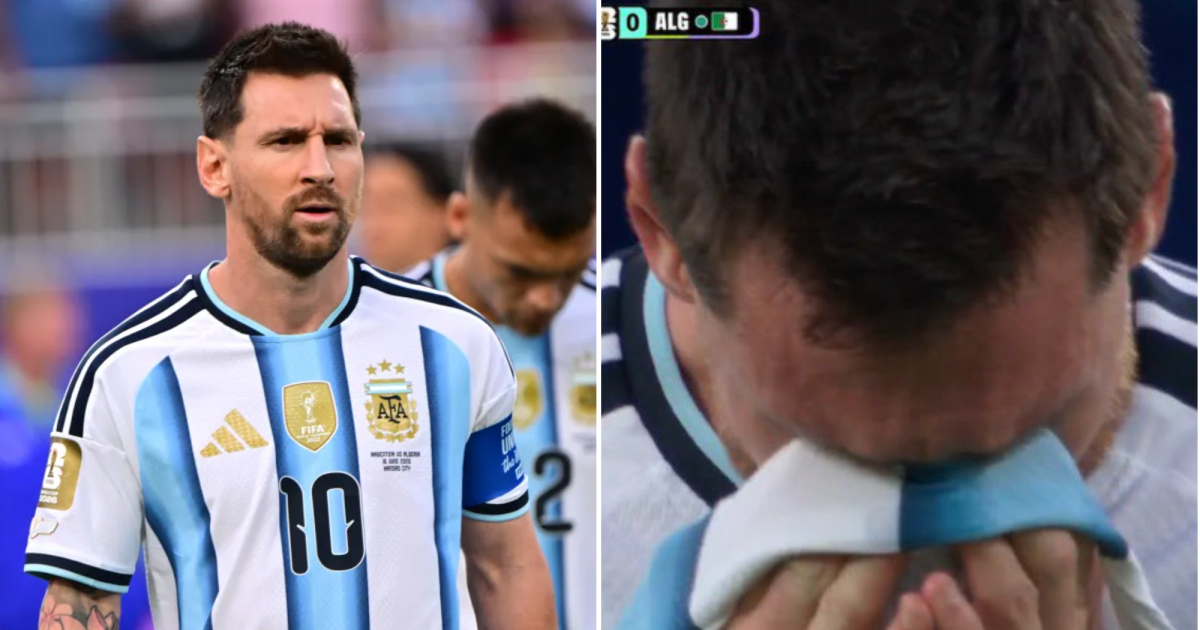
Lionel Messi’s family provide update after Argentina star was pictured in tears at World Cup | Football

Published

on

Lionel Messi's family provide update after Argentina star was pictured in tears at World Cup | Football

Close Overlay

In The Mixer’s World Cup special

Everything you need to know about the World Cup – England updates, the games to watch and stories you missed – in five minutes, at 1pm, every day.

Source link

Advertisement
Continue Reading
Click to comment

You must be logged in to post a comment Login

Leave a Reply

NewsBeat

Why one sports injury can sometimes lead to another

Published

on

Why one sports injury can sometimes lead to another

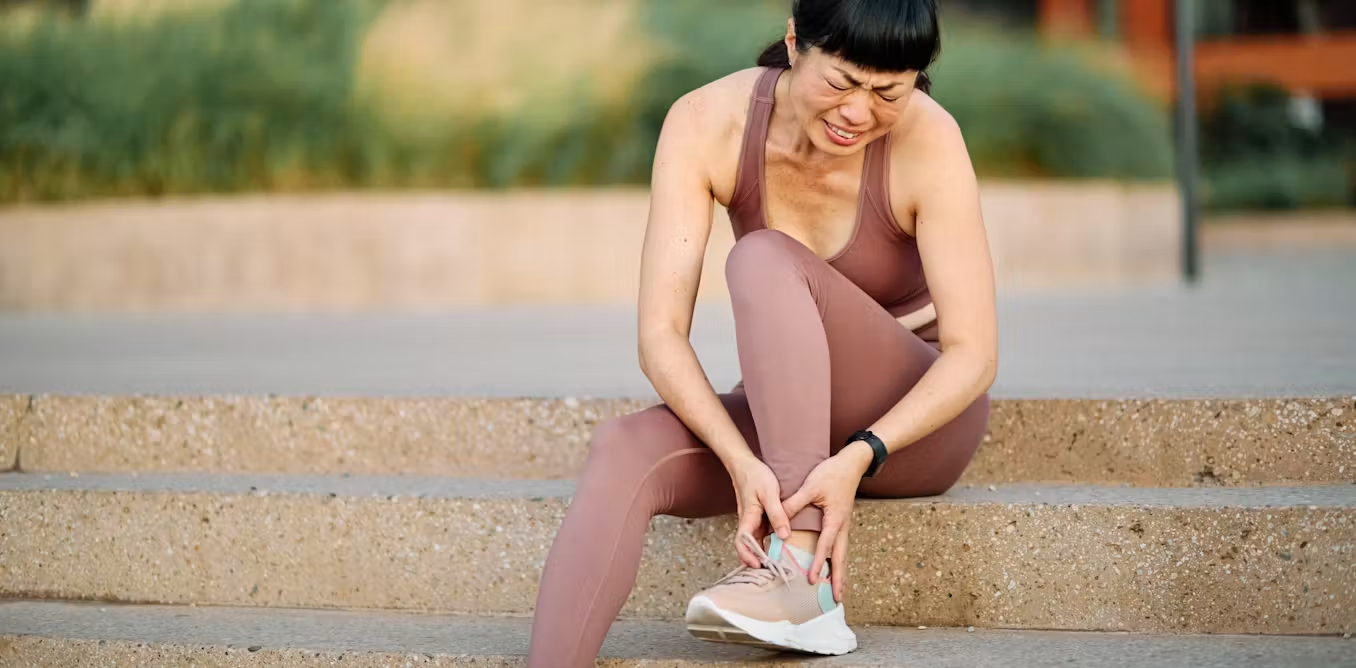
A sports injury can feel like a single setback: a twisted ankle, a strained calf or a sore knee. But for many people, the real problem starts when they try to come back too soon – only to end up with a second injury.

Secondary injuries happen for a simple reason. After an injury, the body often changes the way it moves. This is a normal protective response. If one area hurts, feels weak or isn’t working properly, the body shifts the workload elsewhere.

That strategy can be helpful in the short term. It allows us to keep walking, climbing stairs or doing our normal, everyday tasks. But in sport and exercise, where the body has to run, jump, turn or absorb force, those small changes can place extra stress on muscles and joints that were not meant to do the extra work.

Take an ankle sprain as an example. Someone recovering may limp slightly, shorten their stride or put more weight onto their other leg. They may also rely more heavily on the muscles around the hip and pelvis to compensate. Over time, that can lead to pain or injury somewhere else, such as the knee, hip or lower back.

Advertisement

Another reason secondary injuries happen is because pain and recovery are not the same thing. The pain you experience from your initial injury may improve quite quickly, especially with rest. But that doesn’t mean strength, balance, fitness and confidence have returned.

This is where many people get caught out. They feel better, so they assume they’re ready to go back to training even though the body isn’t yet prepared for the demands being placed on it. As a result, other limbs, tendons or joints have to take on more load to compensate for the weak area, leading to stress and strain.

Some injuries are also more likely than others to lead to a secondary problem. Lower-limb injuries are a common example because they affect how we move through almost every activity. An issue with the foot, ankle, calf, knee or hip can change walking, running and landing patterns in ways that then affect the rest of the body.

Sports that involve repeated impact or frequent changes of direction may also carry a higher risk. Running, football and basketball are obvious examples because small problems in movement can be repeated hundreds of times in a single session.

Advertisement

Age can play a part too. As we get older, muscles, tendons and ligaments tend to become stiffer and slower to adapt to load. Recovery may also take longer. That does not mean older people should avoid exercise – far from it – but it does mean recovery often needs to be managed more carefully.

What you can do

To heal from a secondary injury, the first step is to avoid treating it as a completely separate problem. It’s important to ask not just “what hurts now?” but also “what changed after the first injury?”

Even if you feel okay, you might not be fully recovered from your initial injury.
Prostock-studio/Shutterstock

If someone develops hip pain after an ankle injury, for example, treating the hip alone may not solve the problem. The ankle may still be stiff or weak. The person may still be moving differently without realising it. Unless those issues are addressed, the secondary injury may keep coming back.

Treatment usually starts with reducing unnecessary stress on the injured areas and allowing symptoms to settle. From there, the focus should shift to restoring normal movement, rebuilding strength and gradually returning to activity.

Advertisement

A widely discussed modern framework for soft-tissue injury management is “Peace and Love”, which moves beyond the old “rest and ice” approach. The Peace and Love strategy better supports the body’s natural mechanisms for repair. The old rest and ice approach causes too much restriction in blood, which limits the repair process.

After an injury, you should first focus on Peace – protection, elevation, avoid anti-inflammatories, compression, education (identifying risk factors, a weakness or movement pattern that can be worked on when training resumes).

After that, the emphasis shifts to Love (load, optimism, vascularisation, exercise). This means focusing on gradually increasing load on the injured joint, movement, exercise, blood flow and a positive mindset. The aim is not just to reduce pain, but to restore function and reduce the chance of another injury.

This is where rehabilitation matters. Good rehab is not just about waiting until pain fades. It’s about preparing the body for what comes next.

Advertisement

That might mean rebuilding calf strength after a strain, restoring balance after an ankle sprain or regaining confidence in turning and landing after a knee injury. Recovery should be gradual and, ideally, should match the demands of the sport or exercise a person wants to return to.

The good news is that many secondary injuries can be prevented.

Avoid rushing back. Feeling better is not always the same as being ready. Before returning fully, it helps to ask: has strength returned? Is movement back to normal? Can I do the key tasks my sport requires without pain, weakness or hesitation?

It’s also important to pay attention to new aches and pains during recovery, especially if they appear in a different part of the body. These may be early warning signs that the body is still compensating.

Advertisement

The best way to prevent a secondary injury is to treat the first injury properly. That means allowing enough time to heal, completing rehabilitation and building back up in stages rather than jumping straight back in.

Source link

Advertisement
Continue Reading

NewsBeat

People on Basic State Pension could be due extra DWP monthly payment

Published

on

Cambridgeshire Live

People over 80 with little or no Basic State Pension income could be eligible for a DWP top-up to £110.75 per week through the Over 80 Pension – and may also qualify for Pension Credit worth more than £4,300 a year

The most recent figures from the Department for Work and Pensions (DWP) reveal that the State Pension currently provides a regular financial income for over 13 million older people across the country, including more than one million retirees living in Scotland.

This payment is available for those who have reached the State Pension age – which recently began a phased increase from 66 to 67 for both men and women across Great Britain – and have paid at least 10 years’ worth of National Insurance (NI) contributions. However, people over 80 who have no Basic State Pension income or have a weekly income of less than £110.75 each week, could be entitled to additional funds to assist them with everyday living costs.

Advertisement

The ‘Over 80 Pension’ provides older people with £110.75 each week if they are receiving no Basic State Pension, or makes up the difference to that amount.

People over 80 on a low income may also be eligible for Pension Credit, which could provide more than £4,300 in extra financial support over the 2026/27 financial year. It is worth noting that you cannot get the ‘Over 80 Pension’ if you reached State Pension age on or after April 6, 2016 – if you have, you are eligible for the New State Pension, reports the Daily Record.

The guidance on GOV.uk states you can claim the over 80 pension if all of the following apply: If you reside in or are relocating to a European Economic Area (EEA) country or Switzerland, you can find further information regarding pensions and benefits for UK nationals in the EU, EEA and Switzerland on GOV.UK.

Your eligibility for the over 80 pension is not based on National Insurance contributions.

Advertisement

Source link

Continue Reading

NewsBeat

how young Black women like Naomi Osaka are using fashion in sport

Published

on

how young Black women like Naomi Osaka are using fashion in sport

Naomi Osaka’s appearance at this May’s Met Gala in New York – which she wittily dubbed “the grand slam of fashion” – was a whirlwind business engagement jammed between two of tennis’s major tournaments. With stacked schedules, tennis superstars are usually found taking ice baths between events. Not Osaka, who donned a 9kg Robert Wun couture gown in response to the Met’s “fashion is art” theme.

Her presence at the Met Ball was more than a celebrity detour. Osaka is not just a professional tennis player – she has moved beyond the limiting boundaries of the sport.

For me, as a researcher of Black fashion culture and identity politics, this raises interesting questions: is Osaka first in line to define what tennis looks like in the future? How does a tennis player secure a place on Anna Wintour’s notoriously strict guest list of cultural power brokers, celebrities and creatives?

Well, Osaka is simultaneously an athlete, fashion collaborator, businesswoman, activist, mother and global celebrity. Superhero? Maybe.

Advertisement

The scandalising tennis ring walk

I was lucky enough to watch Osaka at the Madrid Open this spring, striding onto court in a custom Nike dress and baseball visor. From the stands, my son and I bellowed our support during her high-octane contest with Aryna Sabalenka. We love her point of difference and her cause.

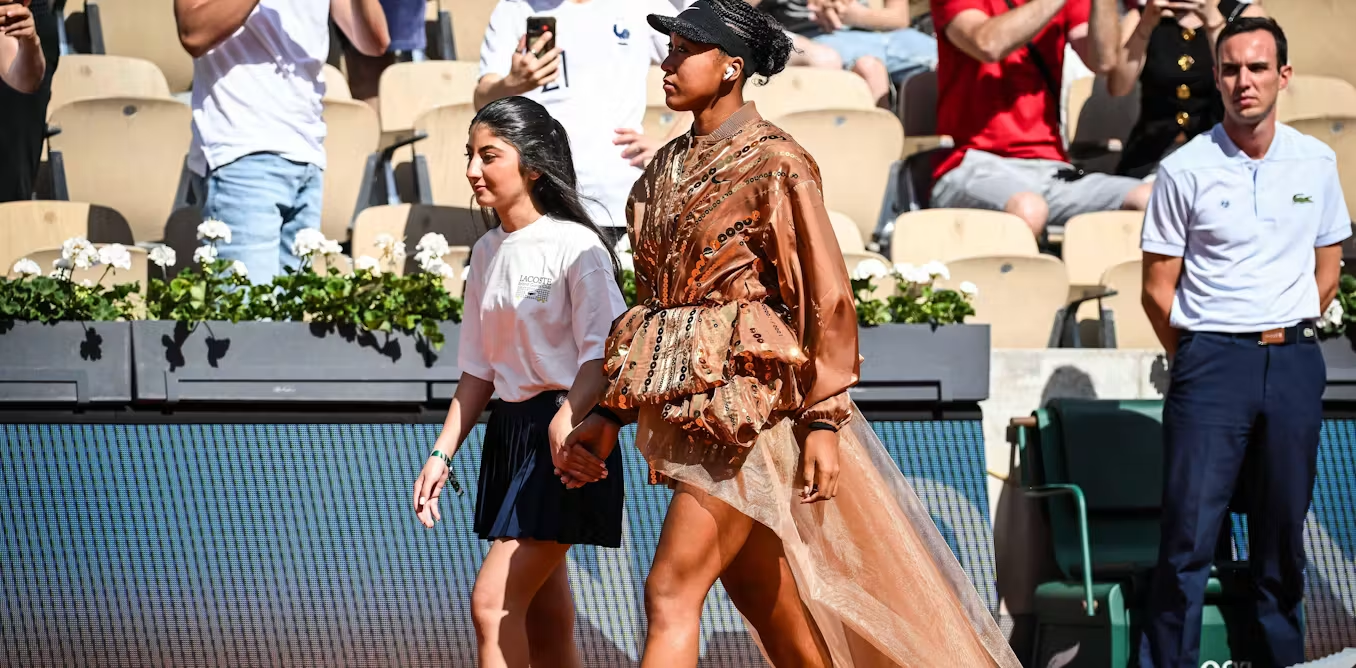
Part of that difference lies in how she occupies and owns the court. Like a boxer making a ring walk, Osaka’s arrival has become part of the spectacle itself – she has turned the walk into a runway. The outfit, the styling and the anticipation all contribute to the performance before a ball is struck.

Yet discussions about Osaka’s clothing often miss the bigger story.

Advertisement

Tennis has always been a performance culture in which clothing communicates status, belonging and authority. French tennis player Suzanne Lenglen scandalised audiences in the 1920s with shorter skirts and sleeveless designs. American tennis champion Billie Jean King used sporting appearance as part of her broader challenge to gender inequality in the 1970s.

In 2026, we would be forgiven for thinking that some of the more traditional values have been relaxed. Wimbledon has allowed women to wear dark undershorts for good reason, so why does Osaka’s sequinned on-court arrival provoke such division, outrage and racist hate?

Unapologetically Black

Historically, Black athletes in women’s sports who used fashion as a form of self-expression often attracted criticism for causing distraction and approaching sport with a lack of seriousness.

Take, for example, record-breaking US track and field athlete Florence Griffith Joyner, Flo-Jo. Her one-legged racing suits, long decorated fingernails, elaborate hairstyles and unapologetically glamorous aesthetic challenged assumptions about what elite athleticism should look like.

Advertisement

But they were not random eccentricities; they drew upon longstanding traditions within Black beauty culture where hair, nails and dress function as forms of creativity, identity and self-definition.

It’s impossible to talk about the burden of legend, flamboyance and legacy in tennis without mentioning one of the greatest athletes, icons and sporting performers of all time: Serena Williams. She transformed the visual politics of tennis, forcing a traditionally white sport to reckon with a Black woman as its defining image.

As a young woman, Williams discovered Flo-Jo’s lace and hooded speed suits – part of her lineage, part of her future legacy.

“I was inspired by Flo-Jo, who was a wonderful track athlete … when I was growing up,” was the response Williams offered when being probed on the one-legged Nike catsuit she wore at the 2021 Australia Open.

Advertisement

The lineage between Flo-Jo, Williams and Osaka – with their striking sportswear, luxury fashion, activism, global celebrity and desire to challenge the status quo – points to a longer tradition of Black women using style not as decoration but as cultural authorship.

Who gets to embody tradition?

If Williams challenged who could belong in tennis, Osaka represents a generation asking who gets to define its future image. This is why companies such as Louis Vuitton and Nike invest in Osaka. Not because she wears clothes well but because she embodies a globally marketable story about race, gender, resistance, femininity, identity and youth culture.

Afterall, Osaka is exceptional. A multiple grand slam champion and the first Asian world number one, she belongs firmly within tennis’s elite.

Advertisement

Paying tribute to her multicultural roots, Osaka said last year: “My heritage is my power.” She has forged a complex public image combining influences from Black diasporic culture, Japanese aesthetics, luxury fashion and contemporary celebrity branding.

Constantly challenging expectations of her Japanese identity – femininity, humility and modest public behaviour, Osaka moves between these worlds with a fluency that reflects the global nature of modern sport itself, negotiating her own cultural identity. Perhaps this is at odds with the traditionally quaint world of tennis.

Misogynoir is the sexism that is experienced particularly by Black women. This could explain why expressions of individuality that are commended as innovative in some athletes, such as Roger Federer’s military suit at Wimbledon in 2009, are more likely to be treated as controversial – as the furore around Williams’s outfits has shown.

Advertisement

A few days after Osaka’s latest couture arrival at the French Open, her opponent Laura Siegemund was asked what she thought about all the fashion. “I come here to play tennis, not to put on a fashion show,” she replied.

Fair enough. But let’s not forget that tennis has always been a fashion show. From Lenglen to Serena Williams, athletes have been using clothing to communicate identity, aspiration and difference for more than a century.

Naomi Osaka’s fashion intervention is not a distraction from tennis. It is part of a much older struggle over who gets to define the sport’s image, its values and ultimately its future.

Advertisement

Source link

Continue Reading

NewsBeat

‘Brilliant’ crime drama with ‘outstanding’ acting is better than DCI Banks

Published

on

Wales Online

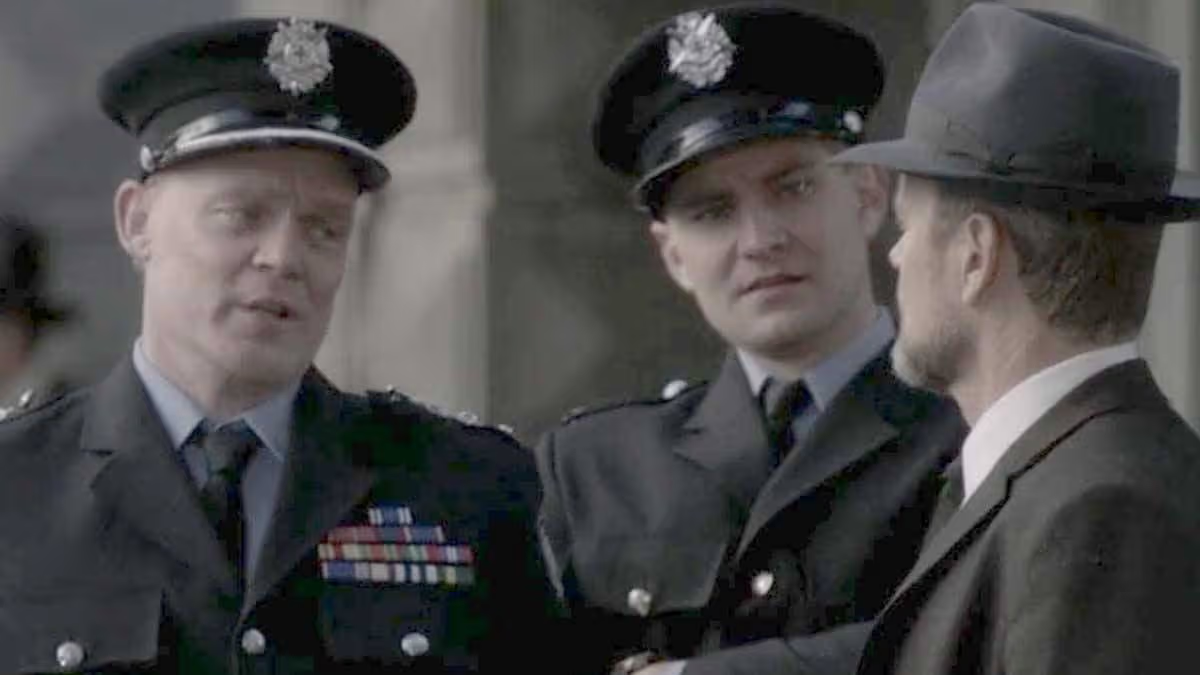
Fans of ITV’s Endeavour and DCI Banks must watch this period crime drama

Crime drama enthusiasts have just discovered their next obsession – and it’s an ideal watch for devotees of ITV series such as Endeavour and DCI Banks.

Advertisement

Australian crime series The Doctor Blake Mysteries is set in the 1950s and centres on Dr Lucien Blake (portrayed by Craig McLachlan) as he solves cases alongside the police, reports the Express.

The programme opens with Dr Blake returning to his hometown of Ballarat after a 30-year absence, having studied medicine in Scotland before serving in the Far East during the Second World War. He takes over his late father’s practice and assumes the position of police surgeon.

In the course of his daily duties, Dr Blake employs his sharp powers of observation to function as an amateur investigator, unravelling complex crimes.

The series ran from 2013 to 2017, concluding with a television film that tied up the storyline.

Advertisement

McLachlan, formerly known for his roles in Neighbours and Home and Away, earned a prestigious Golden Logie for his leading performance in The Doctor Blake Mysteries.

On Reddit, numerous viewers recommended it as essential viewing following ITV’s Inspector Morse prequel Endeavour.

One user wrote: “The Doctor Blake Mysteries (set in 1950’s-1960’s Australia, way darker than Endeavour). I’ll also second Inspector George Gently (amazing series! ) and Unforgotten.”

Advertisement

While another contributed in a separate Reddit thread on the same subject: “Agree with all the foyles war and george gently suggestions, they’re awesome. I would add dr. Blake mysteries, father brown, grantchester… [sic].”

The Doctor Blake Mysteries has garnered significant acclaim on IMDb, with one viewer awarding a 10/10 rating and stating: “Craig McLachlan’s acting is brilliant in this show! I just can’t say enough of his brilliance at portraying the part of Dr. Blake. As I said, outstanding acting on Craig’s part.”

Another highly-rated review described it as a “thought-provoking show”, noting: “Amazing writing and intrigue. Dr. Blake is a marvel. I wish they had shows like this in the US.”

Advertisement

A third enthusiastic reviewer observed in their top-tier assessment: “It is a classic example of the period detective genre like ‘Ripper Street’ or ‘Murdoch Mysteries’ with a little bit of 21st century hindsight.”

The same viewer continued: “I didn’t find Blake at all grumpy – quite the opposite. I get a little fed up with the short tempered detectives of the likes of Frost or DCI Banks.”

The Doctor Blake Mysteries is currently available to stream on U and Channel 4 at no cost.

Source link

Advertisement
Continue Reading

NewsBeat

Zoo owner’s wife ‘jumped into crocodile enclosure’ to save boy

Published

on

Zoo owner’s wife ‘jumped into crocodile enclosure’ to save boy

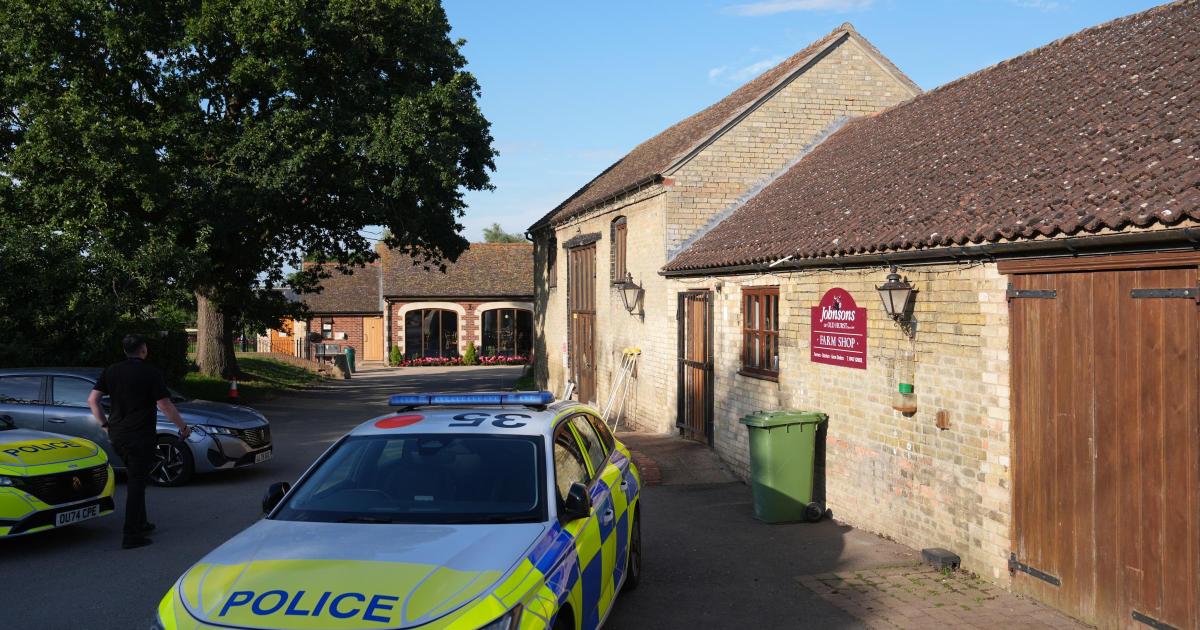
Officers arrested a man on suspicion of attempted murder after being called to Johnson’s of Old Hurst, in Huntingdonshire, at 1.24pm on Thursday to “reports of an incident involving a three-year-old boy, during which he ended up in the crocodile enclosure”, Cambridgeshire Police said.

A villager who did not want to be named told the Press Association that the zoo owner’s wife, Tracey Johnson, jumped in to try to save the child.

And a local told The Sun: “Apparently, the wife of the zoo owner, Tracey Johnson, jumped in to the enclosure to save the child.”

Advertisement

The boy was taken to Addenbrooke’s Hospital in Cambridge with serious injuries and is critical but stable, the force added.

A 30-year-old man from Norfolk has been arrested on suspicion of attempted murder, police said.

Detective Inspector Verity McCann said: “At this stage we are speaking to people who were at the zoo at the time of this distressing incident to understand more about the circumstances.

“We do not believe the man arrested and the child are known to each other.

Advertisement

“Officers are supporting the boy’s family at hospital and our thoughts remain with them.”

In a statement on social media, Johnson’s said that “out of respect to the family” Tropical House will remain closed until further notice.

They added: “Our thoughts and prayers are with the boy and his family following the incident that occurred today.”

An ambulance, a rapid response vehicle, an ambulance officer vehicle and an air ambulance were sent to the scene, the ambulance service said.

Advertisement

A uniformed police officer was at an entrance to the site on Thursday evening, with a marked police car parked in the car park.

The zoo is off a leafy rural lane with residential properties along it in the village of Old Hurst, with a tea room, farm shop and steakhouse also at the site.

The zoo is home to more than 100 animals, including lions, tigers, sloth bears, capybaras, and meerkats.

The crocodiles are kept inside a tropical house building in a converted cattle shed, and there are also other animals in outdoor enclosures.

Advertisement

A blog post on the zoo’s website says the crocodiles were initially kept to help dispose of waste meat from the butchery, but they went on to be the start of a zoo.

The Johnson family has cared for and been involved with crocodiles for the last two decades and Andy Johnson, who is the current owner, has participated in composing a “European published dossier on the farming, welfare and husbandry of crocodilians”, according to the zoo’s website.

Mike Annicelli, 52, who lives close to the zoo, said he had previously visited the attraction and had felt safe.

Describing the crocodile enclosure, he said: “Everything is elevated, you’re far away from the animals.”

Advertisement

He said there was a “raised platform” and estimated the crocodiles were about 15ft below and that there was fencing along walkways which he estimated was around 4ft high.

Local councillor Charlotte Lowe said she “can’t fathom” how the boy ended up in the crocodile enclosure.

Speaking outside the attraction on Thursday evening, the Huntingdonshire District Council councillor for Warboys ward said: “I can’t fathom how it’s happened because they’ve got all the right protection and safety equipment, for want of a better word, in there.”

She continued: “This incident, I think it’s shocked an awful lot of people, especially the locals.”

Advertisement

Ben Obese-Jecty, the MP for Huntingdon, said: “I am aware of the incident at Johnson’s of Old Hurst and have been liaising with senior officers at Gold Command who are treating this as a critical incident.

“This is now a live criminal investigation and I would ask people to refrain from speculation online.

“The police will provide an update with further information in due course.

“My thoughts are with the young victim and his family during a hugely traumatic and difficult time.”

Advertisement

Alastair Torrance, deputy chairman of Old Hurst Parish Council, said: “I do feel enormously for the family of the child.

“It must’ve been absolutely terrible for the child and the family.”

A spokesperson for Huntingdonshire District Council said: “We are aware of the serious incident that has taken place today at Johnson’s of Old Hurst.

“Our thoughts are with the young boy and his family at this very difficult time.

Advertisement

“We are working closely with partners, including Cambridgeshire Police.

“We urge people not to speculate on the circumstances surrounding this incident while inquiries are ongoing.”

Source link

Advertisement
Continue Reading

NewsBeat

We’ve won against Haiti, let’s beat Morocco, Swinney says ahead of Scotland game

Published

on

We’ve won against Haiti, let’s beat Morocco, Swinney says ahead of Scotland game

“When Governor Maura Healy, the Governor of Massachusetts, came to an event I was hosting last Friday night, she started off her contribution by saying, ‘I think the right thing to say is No Scotland, No Party’, and she captured beautifully the sense of welcome for the Scotland fans in Boston, and that’s something that I will cherish forever.”

Source link

Continue Reading

NewsBeat

PSNI traffic warning ahead of Mid and East Antrim Pride parade in Ballymena

Published

on

Belfast Live

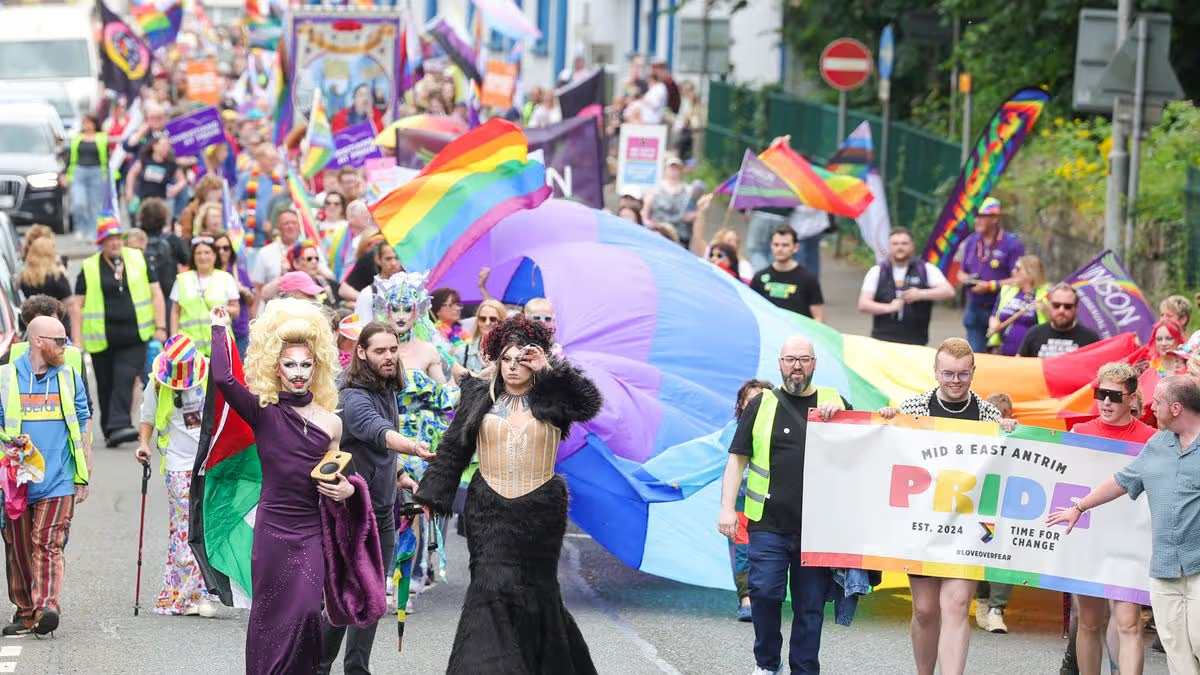
Described by organisers as a vibrant day of visibility, community and celebration, the theme for this year is ‘Louder, Prouder, Stronger.’

Police have issued a traffic warning ahead of a pride parade taking place in Co Antrim this weekend.

Advertisement

The second Mid and East Antrim Pride is set to take place on Saturday, June 20, in Ballymena. Ahead of last year’s event, a man was arrested after slurry was spread in the Granville Drive area on the night before the parade.

Posting on social media, Mid and East Antrim Pride said they are aware of several counter-protests planned for this year, but are urging on all parade participants and spectators to join their initiative to “Block Out The Bigots.” They added: “Use your imagination, get creative, but most importantly keep yourselves and those with you safe and stay classy.”

Described by organisers as a vibrant day of visibility, community and celebration, the theme for this year is ‘Louder, Prouder, Stronger.’

Sharing a traffic warning ahead of the event, a PSNI spokesperson said: “Mid and East Antrim Pride will take place in Ballymena this Saturday 20th June, 2026. As a result, there is likely to be some disruption to traffic in the town centre, with a number of road closures in place.

Advertisement

“The parade is expected to assemble in the Waveney Road area at approximately one pm, and commence at two pm. It will move along Galgorm Road, towards Pentagon, and then via Mill Street, Wellington Street, Broughshane Street, William Street, Ballymoney Street and Greenvale Street, where it will conclude at three pm.

“There will be an increased police presence in Ballymena to ensure everyone’s safety. Police would remind everyone to follow the instructions of officers, respect others and follow our advice on protests and parading available online.”

A spokesperson for the PSNI added: “Pride is an important event for those in our community who identify as LGBT+ and for those who want to show support for our LGBT+ community.

“We want members of our LGBT+ communities in Mid and East Antrim to feel represented by their Police Service and to know that if they come forward to report an incident, they will be met with fairness and respect, particularly if they have been subject to hate crime in any form.

Advertisement

“Members of the public are also advised that protest activity is due to take place in the Harmony Hub and Broughshane Street areas. This activity is expected to remain peaceful.

“For more information on protests and parading please visit: https://www.psni.police.uk/safety-and-support/keeping-safe/processions-and-protests.

“Find out how the Police Service respond to victims of sexual orientation or gender identity hate crime: https://www.psni.police.uk/safety-and-support/advice-and-information/hate-crime.”

For all the latest news, visit the Belfast Live homepage here and sign up to our daily newsletter here.

Advertisement

Source link

Continue Reading

NewsBeat

Women’s T20 World Cup: Scotland agonisingly short of famous win over West Indies

Published

on

Alleyne

T20 World Cup, Group 2, Headingley

West Indies 153-6 (20 overs): Taylor 47* (19); Fraser 2-34

Scotland 146 (20 overs): Carter 59 (62), Lister 33 (25)

West Indies won by seven runs

Advertisement

Scorecard. Tables

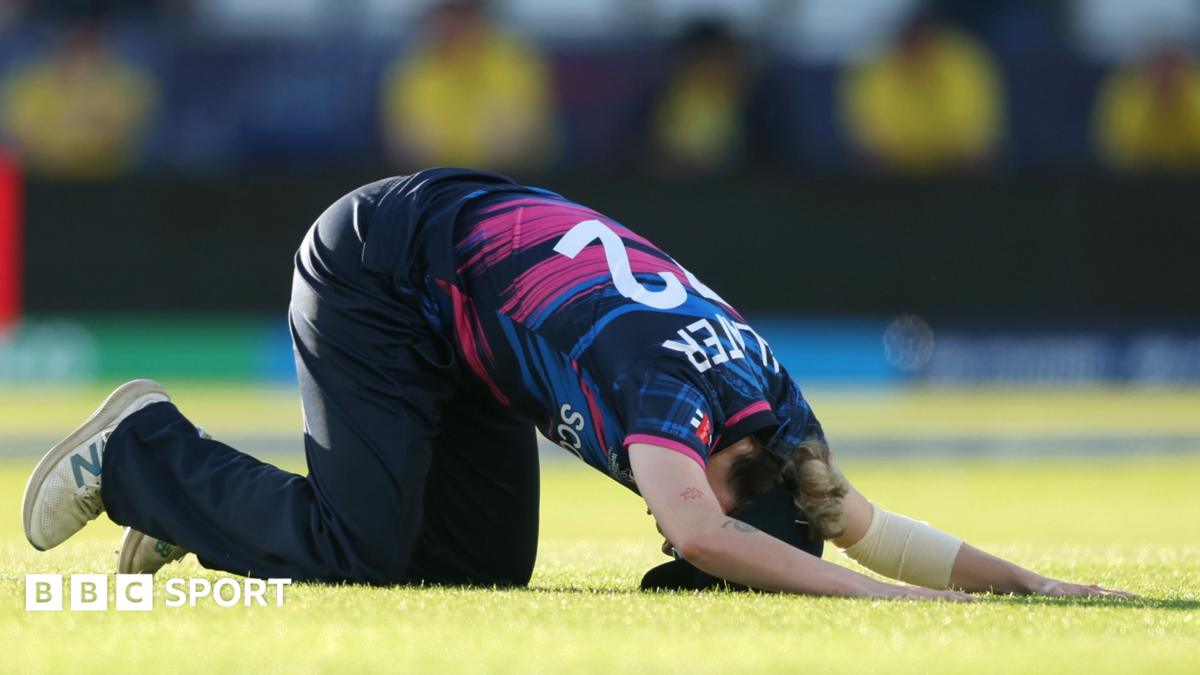
Scotland came agonisingly short of a famous victory at the T20 World Cup as West Indies somehow won a tumultuous game at Headingley.

Put on the back foot by Stafanie Taylor’s 19-ball 47 not out and having lost four wickets for seven runs in their chase of 154, Darcey Carter, who was battling a calf injury, and Ailsa Lister took the Scots to the point of needing 22 from the last two overs.

Deandra Dottin was in tears while conceding 13 from the 18th over but Windies seamer Aaliyah Alleyne held her nerve through the tension to dismiss Carter for 59, Lister for 33 and Kirstie Gordon first ball in the penultimate over.

Advertisement

Still Scotland refused to go quietly. They fought on to the point of needing 13 from the last four balls with two wickets left, only for Qiana Joseph, who had previously dropped catches and bowled two horribly-timed no-balls, to close out a seven-run win – Scotland dismissed for 146.

Scotland were superb for much of the first innings – athletic in the field and clever with the ball – but veteran Taylor, playing her first match of the tournament at 35, hit three sixes in her last five balls to boost an innings that was floundering at 85-5 in the 15th over.

That, ultimately, was decisive.

Having beaten Ireland for their first World Cup win on Saturday, Scotland’s hopes of progressing are not over but, after being denied a major scalp that would have given them a real shot at a semi-final place, they next play England on Saturday.

Advertisement

West Indies are back in action on Sunday against Sri Lanka in Bristol.

Source link

Continue Reading

NewsBeat

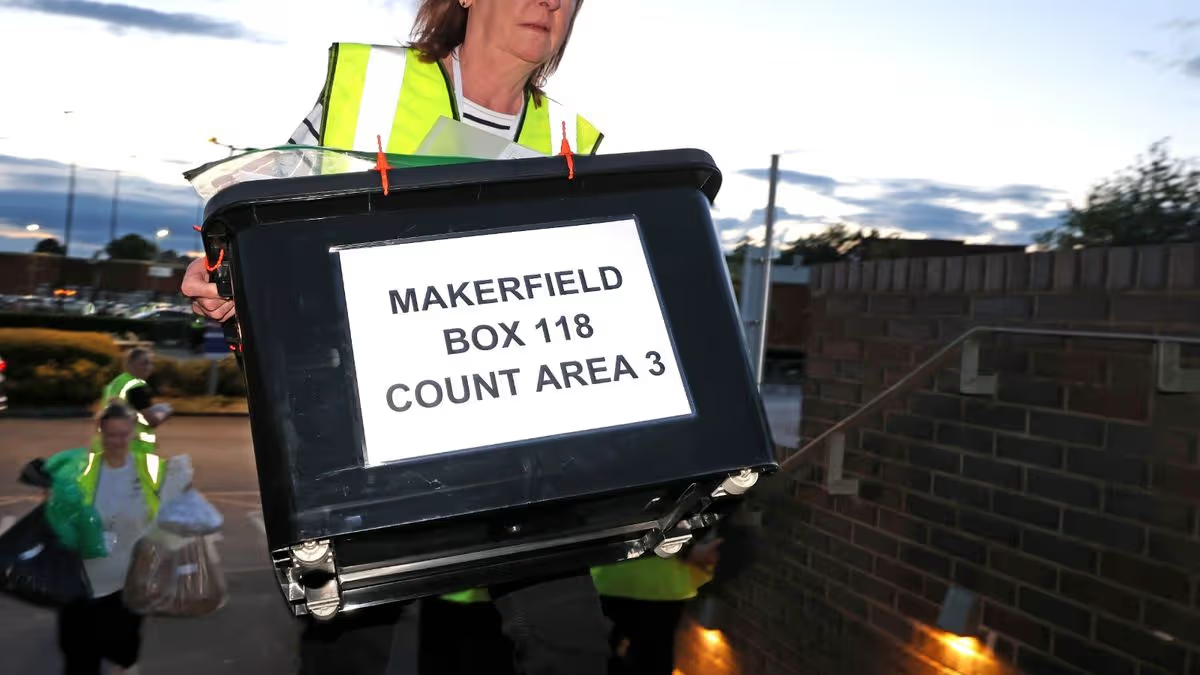
What was the turnout for the Makerfield by-election?

Published

on

Manchester Evening News

Thousands of people in Greater Manchester headed to the polls on Thursday, June 18, to cast their votes in a by-election that could have huge consequences for the Labour government.

Voters in Ashton-in-Makerfield have selected a new MP after former Labour minister Josh Simons resigned to open up a path for Andy Burnham’s return to Westminster. The Greater Manchester mayor, who previously served as MP for Leigh between 2001 and 2017 before stepping down to run for the mayorship, has made his intentions to replace Sir Keir Starmer clear in recent weeks.

Mr Burnham’s return to the House of Commons would give him a launching pad to challenge the current premiership and put himself forward for the top job. Sir Keir has been fighting to stay in Number 10 after a disastrous set of results in the local elections in May, with several Labour members withdrawing their support for the prime minister since.

Advertisement

The turnout for a by-election is usually lower than in a general election, but with the consequences of Thursday’s vote expected to reach far beyond the Greater Manchester constituency, it had been predicted that many more voters would be taking to the polls.

There are around 76,500 registered voters in the Makerfield constituency, according to the latest figures.

Now that the votes have been verified, it can be revealed that the turnout of the 2026 Makerfield by-election was 45,510 from an eligible population of 77,462. That makes it a turnout of 58.75 per cent.

In 2024, Mr Simons won the general election in Makerfield with 45.2 per cent of the vote, and a majority of 5,399 votes. The turnout for that election was 52.5 per cent with a total of 40,263 votes cast.

Advertisement

In the 2019 general election, when Boris Johnson’s Tory government won a landslide victory, the turnout was 59.7 per cent. Labour candidate Yvonne Fovargue won that vote with 45.1 per cent of the vote. She had held the seat since 2010 but decided not to stand in the 2024 general election.

Makerfield has been seen as a safe Labour seat since its creation in 1983, with no other party having won it. However, during the local elections this year, Reform UK won 24 out of 25 seats on Wigan Metropolitan Borough Council that were up for election. Although, Labour suffered heavy losses, the party still managed to keep hold of its majority in the borough.

Makerfield is one of three parliamentary by-elections that took place on Thursday. The other two are in the Scottish seats of Aberdeen South, and Arbroath and Broughty Ferry, where SNP MPs Stephen Gethins and Stephen Flynn had stood down after winning elections to the Scottish Parliament in May.

Source link

Advertisement
Continue Reading

NewsBeat

US lifts naval blockade as Iran’s supreme leader says Trump made deal ‘out of desperation’

Published

on

US lifts naval blockade as Iran's supreme leader says Trump made deal 'out of desperation'

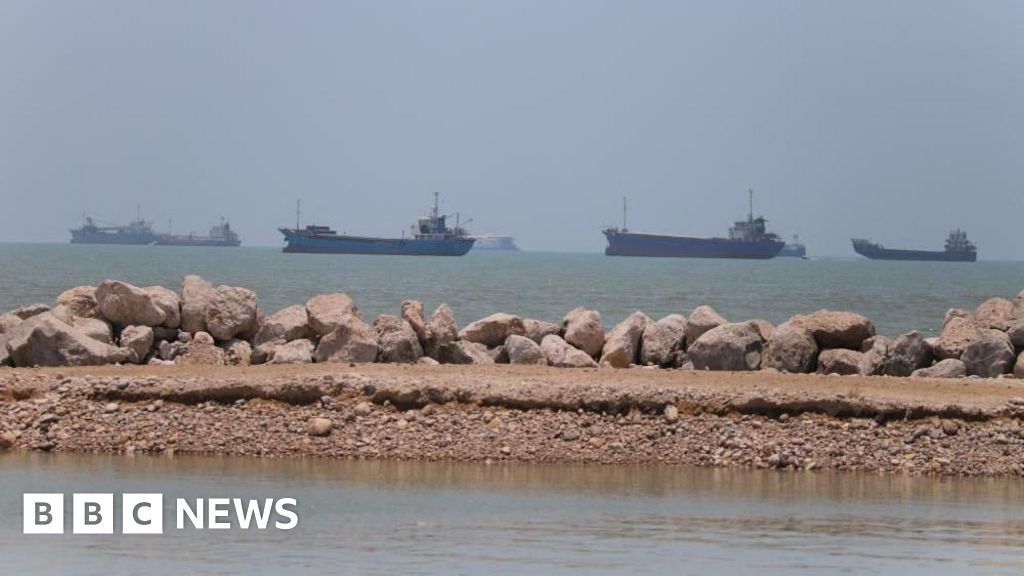
Trump did not directly respond to Khamanei’s statement, but posted on Truth Social that he expects a ceasefire to take effect “on all fronts”, including between Israel and Iran-backed Hezbollah in Lebanon, and that he expects countries in the Middle East to “maintain their commitment to allowing our negotiations” to take place.

Source link

Continue Reading

Trending

Copyright © 2025