Connect with us

NewsBeat

Livingston health club announces plans for new padel courts

Published

on

Daily Record

Padel is easy to learn and suitable for players of all ages and abilities, making it an accessible alternative to tennis while still offering a strong cardiovascular workout and social element.

The Bannatyne Health Club and Spa in Livingston has secured planning approval for new padel courts, bringing one of the world’s fastest-growing sports to the West Lothian club.

Advertisement

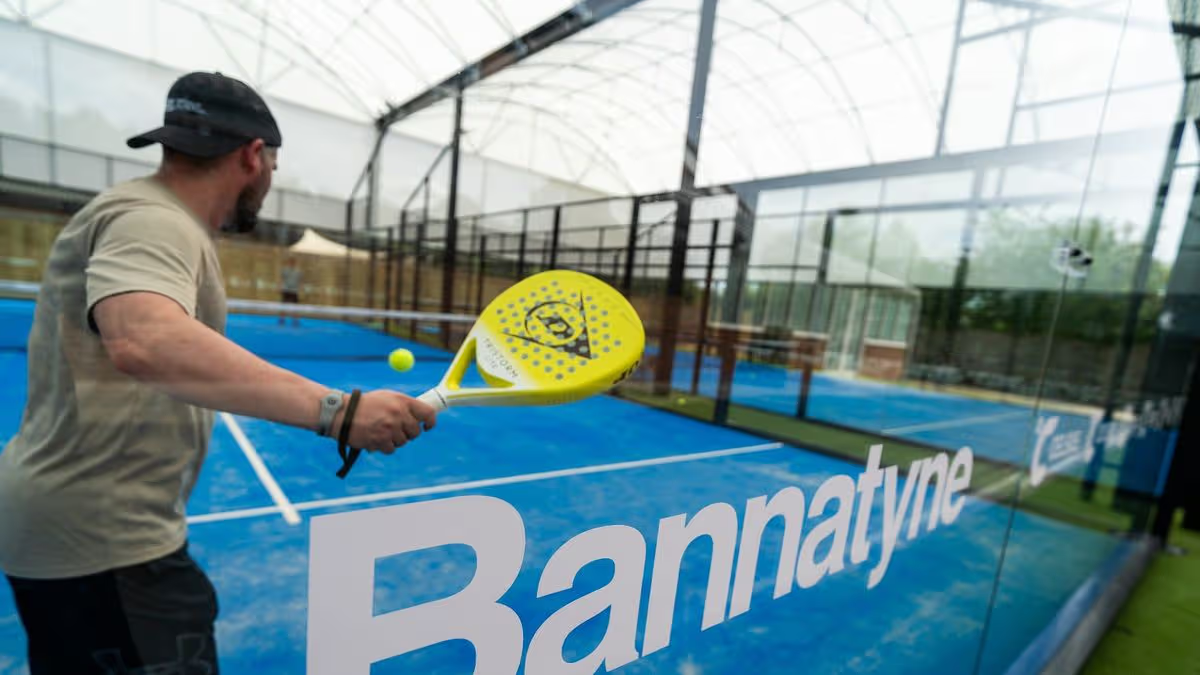
West Lothian Council has granted permission for the development at the club on Charlesfield Road, which will see three full-size doubles courts installed within the grounds of the health club, open to both members and non-members.

The courts will feature artificial turf playing surfaces, glass and mesh surrounds, canopy cover and floodlighting, allowing the facilities to be used throughout the year.

The new courts will be located on an area currently used for football pitches within the club grounds and will form part of Bannatyne’s ongoing investment programme to expand its racquet sports offering across the UK.

READ MORE: Veteran West Lothian councillor hits out at number of kids using e-scooters and electric bikes

Advertisement

Padel is easy to learn and suitable for players of all ages and abilities, making it an accessible alternative to tennis while still offering a strong cardiovascular workout and social element.

Played on an enclosed court where the ball can rebound off surrounding glass walls, the sport combines elements of tennis and squash and is typically played in doubles format.

Originating in South America, padel has grown rapidly across Europe and the UK in recent years as more people look for sociable ways to stay active. Spain now has more than six million regular players and the sport is widely predicted to become an Olympic event within the next decade.

Work on the Livingston courts is expected to begin before the summer, with the new facilities set to be open to both members and non-members once completed.

Advertisement

READ MORE: West Lothian vans and lorry engulfed in flames as police treat blaze as ‘wilful’

Duncan Bannatyne, chairman and chief executive of the Bannatyne Group, said: “Padel is becoming one of the most popular participation sports in the UK and we are continuing to invest in courts across our clubs to meet that growing demand.

“The sport is accessible, sociable and great fun, which makes it a perfect fit for the Bannatyne community. These new courts in Livingston will give both members and local residents another exciting way to stay active and enjoy time together.”

The Livingston club already offers a wide range of facilities including a fully equipped gym, swimming pool, spa and group exercise programme. The addition of padel will further enhance the club’s sports and wellbeing offering for members and the wider community.

Advertisement

READ MORE: West Lothian police hunt driver as car crashes into trolleys at retail park

Don’t miss the latest news from the West Lothian Courier. Sign up to our free newsletter here.

Source link

Advertisement
Continue Reading
Click to comment

Leave a Reply

Your email address will not be published. Required fields are marked *

NewsBeat

Could Putin be the big winner of the Iran war? | World News

Published

on

Could Putin be the big winner of the Iran war? | World News

👉 Listen to This Is Why on your podcast app 👈

After a phone call with Vladimir Putin, Donald Trump announced the US could ease oil sanctions on some countries to combat the rise in prices brought about by the Iran war.

It wasn’t clear whether Russia would be included, but such a move could signal a significant shift for the country, which has been isolated since the start of the war with Ukraine.

Advertisement

Could Russia be finding its way back to the world stage – after years as a global pariah?

Jayne Secker is joined by Sky’s Moscow correspondent, Ivor Bennett.

Have you got a question for us? Email the show – why@sky.uk

Advertisement

Source link

Continue Reading

NewsBeat

The best hot brushes for every hair type, tried and tested

Published

on

The best hot brushes for every hair type, tried and tested

Over two months, I put nine different hot brushes through daily testing to see how each performed beyond the promise of glossy marketing claims. My hair type is wavy, of medium thickness and mid-length, so it can be a challenge to style.

The models varied in both price and purpose: some were designed specifically for use on dry hair, others performed best on damp strands, and a few included multiple attachment heads for added versatility.

Each brush was scored across several metrics, beginning with design. This included how well it felt in hand, the quality of build and how intuitively the buttons and settings could be used. Usability and convenience were judged by timing how long it took to heat up, how easily it glided through sections of hair, and how quickly it created a salon-worthy finish.

Advertisement

Safety on the hair was tested through repeated styling sessions, noting any signs of dryness or damage. I also assessed how straightforward they were to use straight from the box, without relying on manuals, and how much technique was required to achieve a smooth blow-dry or soft curl. For those hoping to maintain results overnight, check out our guide to the best silk pillow cases.

Why you can trust Telegraph Recommended

Our thorough, real-world tests will always help you find the best product. No manufacturer ever sees Telegraph Recommended reviews before publication and we don’t accept payment in exchange for favourable reviews, nor do we allow brands to pay for placement in our articles.

All reviews are based on independent expert opinion and our hands-on testing. Visit our Who We Are page to learn more.


Best hot brushes of 2026


Source link

Advertisement
Continue Reading

NewsBeat

Man wanted in connection with 2024 crash that left man with ‘permanent pain’

Published

on

Cambridgeshire Live

The victim suffered a broken bone in his neck in 2024

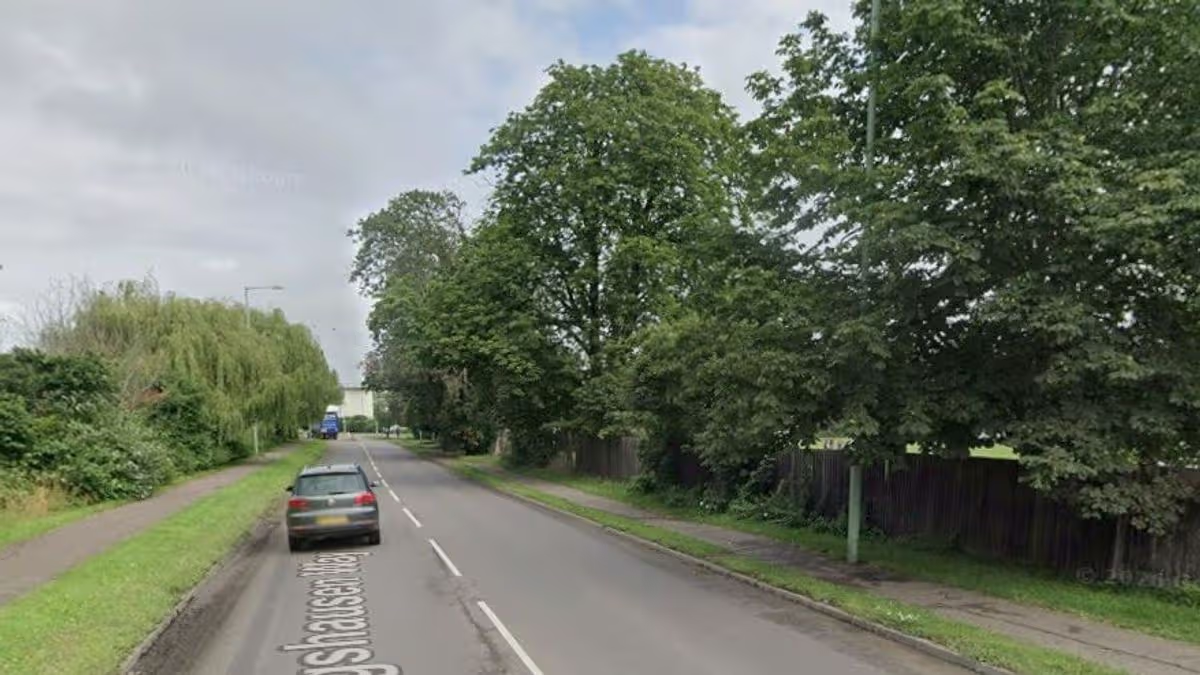
A man is wanted in connection with a crash that left a pedestrian injured in 2024. Suffolk Police were called to a crash between 11.15pm and 11.30pm on August 12, 2025 in Ehringshausen Way, near the Esso filling station, in Haverhill.

Advertisement

The incident involved a red Nissan Micra and a pedestrian. The car failed to stop at the scene.

The pedestrian, a man in his 30s, was taken to Addenbrooke’s Hospital for treatment. It was revealed he sustained a broken bone in his neck.

The man was discharged from hospital three days later. However, the incident has left the man with permanent pain, and has had a significant psychological impact on him.

Suffolk Police are trying to find Dzhemal Dzhemal, 29, who they would like to speak to in connection with the incident. A police spokesperson said: “Dzhemal Dzhemal, aged 29, had been residing in Haverhill but is understood to have moved elsewhere shortly after the collision.

Advertisement

“Officers have made numerous enquiries to locate Mr Dzhemal, both within the UK and abroad. It is now thought that he may be living in London.”

Anyone with information should call police on 101 or report it online and quote reference 37/45772/24.

Do you want more of the latest Cambridgeshire news as it comes in from across the county? Sign up to our dedicated newsletter to make sure you never miss a big story from Cambridge or anywhere else in the county. You can also sign up to our dedicated Peterborough, Traffic and Crime newsletters for the latest updates on the topics you are most interested in.

Source link

Advertisement
Continue Reading

NewsBeat

Police step up patrols as ‘social media posts’ about children raise concerns

Published

on

Cambridgeshire Live

The police said they are aware of social media posts appearing to pit Cambridgeshire schools against each other

Police are stepping up patrols in Cambridgeshire after concerns about social media posts that appear to pit schools against each other. Cambridgeshire Police said that they are working closely with local schools after the social media posts, which discuss gatherings of young people.

Advertisement

CambridgeshireLive has been made aware of social media posts circulating that divide schools into ‘red’ and ‘blue’ categories. They appear to pit schools in different categories against each other.

Cambridgeshire Police are aware of the posts. A spokesperson said that there is nothing to suggest gatherings in Cambridgeshire will take place.

A spokesperson for Cambridgeshire Police said: “We are aware of social media posts circulating online concerning gatherings of young people from local schools.

“There is nothing at this stage to suggest these gatherings are going to take place, but our officers are working closely with schools concerning content and reassurance patrols will be put in place.”

Advertisement

Source link

Continue Reading

NewsBeat

the challenge of spotting inflammatory arthritis and the role of first contact physiotherapists

Published

on

the challenge of spotting inflammatory arthritis and the role of first contact physiotherapists

Joint pain is often dismissed as ageing, overuse or a minor injury. But for some people it is the first sign of inflammatory arthritis, a group of immune-driven conditions that can damage joints and other organs if not treated promptly.

Inflammatory arthritis can take years to diagnose and receive treatment, with some forms taking an average of nine years. During that time, persistent inflammation can lead to irreversible joint damage, fatigue and reduced mobility.

Although there is no cure, advances in medication over the past 15 years mean many people can live full and active lives. Outcomes are best when treatment begins quickly, ideally within the first three months, often described as a critical “window of opportunity”.

Inflammatory arthritis is less common than osteoarthritis and is managed in different ways. It occurs when the immune system mistakenly attacks the body’s own tissues, particularly the lining of joints. The exact cause is often unclear.

Advertisement

It can begin at any age, including in childhood, and often starts in the hands and feet. Some forms affect just the spine and pelvis. Other parts of the body such as the skin, eyes, heart and lungs may also be involved. Joints can become swollen, warm and tender, and many people experience morning stiffness that lasts for hours and improves with movement rather than rest.

Early symptoms can be subtle and easy to overlook. Stiffness may be blamed on sleep, swelling on overuse and fatigue on stress or ageing. This can contribute to delays in referral and specialist assessment.

How inflammatory arthritis differs from osteoarthritis

Osteoarthritis is different. It is strongly associated with age and most often affects people from midlife onwards, particularly in the knees, hands and hips. It usually develops gradually and becomes more common with advancing age.

Inflammatory arthritis, by contrast, is driven by the immune system and often causes prolonged morning stiffness, visible swelling and fatigue that do not improve with rest or simple activity. Although osteoarthritis is far more common globally, affecting more than 600 million people, over 18 million people live with rheumatoid arthritis, the most widely recognised form of inflammatory disease.

Advertisement

Despite these differences, early-stage arthritis can be difficult for healthcare professionals to distinguish. Symptoms often overlap, and no single test confirms the diagnosis. Blood tests and imaging can support assessment, but results are not always definitive. Because treatment varies depending on the type of arthritis, accurate and timely diagnosis is essential.

Medications for inflammatory arthritis aim to control the immune response and reduce inflammation. These include steroids, which are generally not suitable for long-term use, and disease-modifying anti-rheumatic drugs (DMARDs). When introduced promptly under specialist care, these treatments can reduce symptoms and slow disease progression. Some people reach remission: inflammation is well controlled and symptoms are minimal or absent. A small proportion are even able to stop medication under specialist supervision.

Treatment for osteoarthritis focuses on managing pain and improving function. There are currently no medications that reverse the condition or target its underlying cause. Paracetamol, anti-inflammatory drugs such as ibuprofen, and steroid injections may help relieve symptoms. Non-drug approaches are important for both inflammatory arthritis and osteoarthritis. These include exercise, walking aids where needed, heat and cold therapies and some complementary approaches. Lifestyle also plays a key role. Maintaining a healthy weight, stopping smoking and staying physically active can all improve outcomes.

Why early assessment matters – and who to see first

Reaching specialist care quickly can make a significant difference. In the UK, new roles in primary care are helping people be assessed sooner. First contact physiotherapists (FCPs) working in GP surgeries can recognise early symptoms of inflammatory arthritis and refer patients to rheumatology specialists to begin appropriate treatment. They assess people with joint and muscle problems, request tests where appropriate and provide advice on treatment and long-term outlook. If specialist care is needed, they arrange referral directly.

Advertisement

First contact physiotherapists have been part of UK primary care for more than a decade. Evidence suggests the role is safe, cost effective and beneficial to patients, with patients reporting high satisfaction and doctors expressing confidence in physiotherapists’ expertise.

Arthritis is a leading cause of pain, stiffness and disability worldwide. For people with inflammatory forms of the disease, delayed recognition remains one of the biggest barriers to effective treatment. Symptoms can resemble more common joint problems, slowing referral to specialist care at the point when treatment would be most effective.

If you notice persistent joint swelling, warmth or morning stiffness that lasts more than an hour or improves with movement, assessment is important. There are UK-based websites that include symptom checkers to help people understand when to seek advice. Many GP surgeries in the UK offer appointments with first contact physiotherapists, which can usually be requested directly.

Advertisement

Joint pain is common and often harmless. But when symptoms persist, involve visible swelling, or do not behave like typical “wear and tear”, they should not be ignored. Prompt assessment and appropriate referral give people the best chance of protecting their joints, preserving mobility and maintaining quality of life.

Source link

Advertisement
Continue Reading

NewsBeat

France vs England: Steve Borthwick makes one change in bid to avoid worst-ever Six Nations

Published

on

France vs England: Steve Borthwick makes one change in bid to avoid worst-ever Six Nations

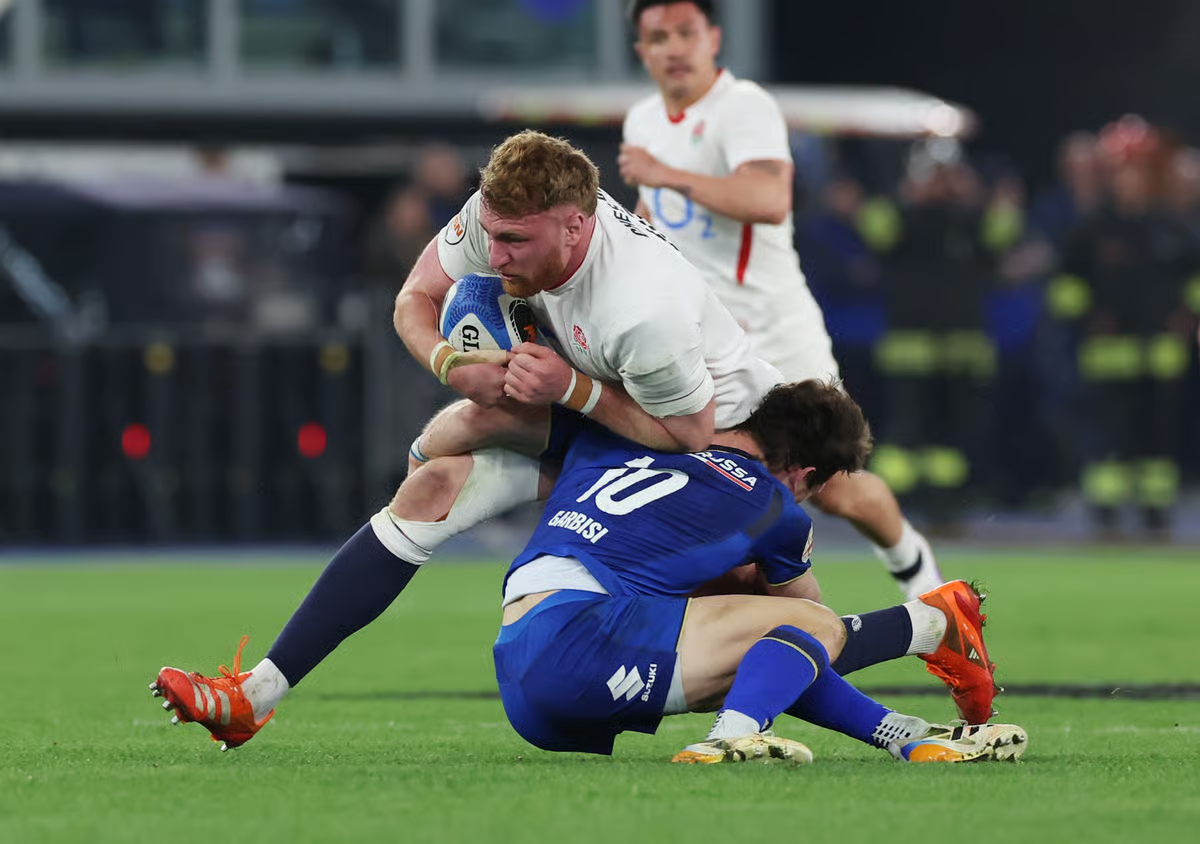
Chessum will start at blindside flanker in the Super Saturday finale in Paris, with Sam Underhill dropping to the bench as Guy Pepper switches to the openside and Ben Earl retains his place at number eight.

That is the only personnel change made by the under-pressure Borthwick following the historic 23-18 loss to Italy in round four that further heightened the scrutiny on his position amid a disastrous campaign so far.

It was already the most changes ever made by an England head coach between two Six Nations matches.

Those sweeping alterations included changing all of his backs apart from Tommy Freeman, who moved back from the wing to outside centre.

Advertisement

Alex Mitchell’s hamstring injury led to Ben Spencer starting at scrum-half, with Fin Smith replacing George Ford at fly-half and Seb Atkinson brought in for his Six Nations debut in midfield alongside Freeman, with Ollie Lawrence sidelined with a knee problem.

Henry Arundell also made way as Cadan Murley and Tom Roebuck started out wide, with Elliot Daly replacing Freddie Steward at full-back.

Steve Borthwick has come under huge pressure amid a disastrous Six Nations campaign for England

Getty Images

Advertisement

Borthwick has named the same backline to face title-contending France in ‘Le Crunch’ this weekend, with Jack van Poortvliet and Marcus Smith remaining the only bench cover in another 6-2 split in favour of forwards.

Source link

Continue Reading

NewsBeat

Donald Trump is not impossible to predict, Beijing now knows that | US News

Published

on

Donald Trump is not impossible to predict, Beijing now knows that | US News

Who says the world is impossible to predict these days?

Two things have just happened that we could have seen a mile off.

Events in the Middle East have followed the exact script for “what happens if you attack Iran”, a scenario analysts have been predicting for decades.

If you take on the ayatollahs and threaten their future, they will take the gloves off and attack just about everybody. Check.

Advertisement

They will also make it effectively impossible to send shipping through the Strait of Hormuz by sinking tankers and forcing up the price of insurance to intolerable levels. Check.

The price of oil will soar. Gulf allies will warn of an apocalyptic collapse in energy supplies. Economists will predict the sky falling on our heads and a global economic calamity. Check, check, check.

visualization

And the pain for an American president facing midterm elections, if he allows them to happen, will just become too great. Check.

Experts have sat in TV studios predicting just that for years with maps and warnings about shutting off the world’s jugular.

The second predictable outcome has become a constant of our time. Trump Always Chickens Out.

Advertisement
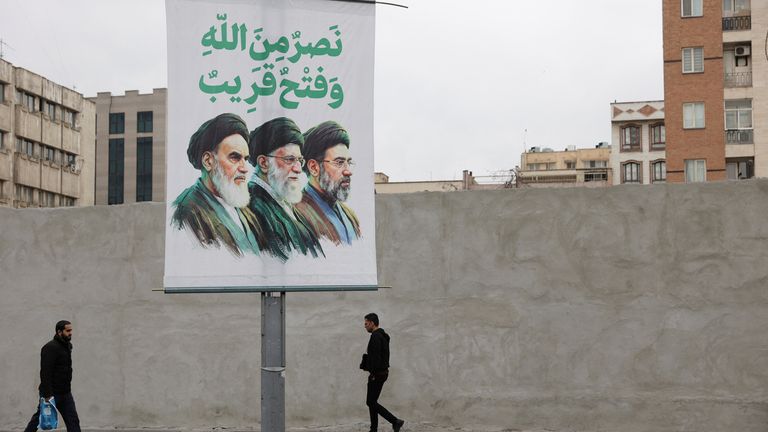
A banner depicts Iran's new supreme leader Mojtaba Khamenei, alongside his predecessors. Pic: Reuters
Image:
A banner depicts Iran’s new supreme leader Mojtaba Khamenei, alongside his predecessors. Pic: Reuters

Robert Armstrong, the man who coined the term the TACO president, wrote in the Financial Times today: “It is, of course, utterly unclear whether the president’s comments have anything to do with a change in balance of the war on the ground.

“What they did communicate clearly, to the delight of markets, was that Trump is looking for an exit.”

Which is all the Iranian leadership needs to hear.

Advertisement

Trump wants out.

Whether it’s this week or next or a bit longer, Iran’s government just needs to hang in there.

America and Israel wanted regime change. If it is not changed, they will have failed and Iran’s leadership will, rightly or wrongly, declare victory.


Ayatollah’s son takes supreme power

Advertisement

They may have lost every warplane and naval ship in their inventory. But they will remain in power, despite the yearning for change among so many of their people who had been promised help was ‘on its way’ by the US president.

Read more:
‘The fighting feels like we’re going to finish it – once and for all’
Energy prices ease amid hopes Trump will soon call halt to war

As for the Iranian nuclear programme, Trump will declare it obliterated. Again.

But as long as Iran has the scientists to rebuild it and the leadership committed to doing so, it can still rise from the ashes like a Persian phoenix.

Advertisement

What do future adversaries learn from all this?

In Beijing, they have been closely watching as they plan to seize Taiwan at some point during Xi Jinping’s presidency.

They have a better gauge now of Donald Trump’s tolerance for economic pain, a crucial factor as they game the invasion of their neighbour.

A president they always feared as unpredictable and mercurial has arguably become a little less so after what he called his recent “short-term excursion” in the Middle East.

Advertisement

Source link

Continue Reading

NewsBeat

Teen who died at Bridlington holiday park with boyfriend sent heartbreaking final text to mum

Published

on

Manchester Evening News

Cherish Bean sent her mum a text message just before she died of suspected carbon monoxide poisoning, an inquest has heard

A teenage girl complained of having a ‘headache’ the night before she died alongside her boyfriend in a holiday cabin, an inquest has heard.

Advertisement

The young couple, Cherish Bean, 15, and her boyfriend, Ethan Slater, both from Sheffield, were on a family holiday last month at the Little Eden Holiday Park in Bridlington when tragedy struck.

Hull Coroner’s Court has heard the pair spent the evening with their family on February 17 and were otherwise “fit and well” before their bodies were discovered in the cabin the next day.

The opening of the inquest into their deaths at Hull Coroner’s Court revealed the teens were both “fit and well” when they spent the evening together with their family on February 17. However, Cherish reportedly complained of feeling unwell.

Senior coroner Professor Paul Marks said Cherish left the family cabin for a smaller one, known as the “Mancave”, where she stayed with Ethan at around 9pm and the pair watched television, reports the Mirror.

About an hour later, the youngster returned to the main cabin, complaining of a headache. She took some Calpol because the family had no paracetamol, the inquest heard.

After going back into the smaller lodge, Cherish sent a final text to her mother after 10pm, saying goodnight and that she loved her, Professor Marks said. He added that Ethan went back to the cabin at a similar time.

Detective Chief Inspector Ben Robinson, of Humberside Police, reported that four individuals “associated with the management and maintenance” of the holiday park have been arrested on suspicion of gross negligence manslaughter. They were subsequently interviewed and released on bail, he added.

Advertisement

When questioned by Professor Marks if there was reason to suspect the couple’s deaths were “associated with carbon monoxide poisoning”, Det Ch Insp Robinson confirmed there was.

He informed the hearing that the official cause of death was still awaiting the forensic pathologist’s examination.

Det Ch Insp Robinson stated that the boiler from the cabin had been retrieved and a forensic assessment had been conducted, aided by specialist gas engineers. He mentioned that both the Health and Safety Executive and the National Crime Agency had been consulted.

Advertisement

Professor Marks postponed the inquest until after the police investigation concludes. He expressed: “I would like, once again, to extend my condolences to both the families of these young people.”

In a statement previously issued by the police, Cherish’s mother said: “My perfect girl, my angel, has left this world and we are broken as a family. I am broken as a mother, and I will never ever be the same again.

“If you know me, I live and breathe my babies, and we were away for a few nights making the best memories ever. We have had the best life together and it has been ripped from under us.”

Source link

Advertisement
Continue Reading

NewsBeat

What early polls show about the war in Iran

Published

on

What early polls show about the war in Iran

WASHINGTON (AP) — Americans are divided along party lines on U.S. military action against Iran, according to polls conducted since the war began, with most polls showing opposition is higher than support.

Polls suggest that many Americans are worried the military action is making the U.S. “less safe,” even as they see Iran as a threat to U.S. security. There are also warning signs for Trump as he confronts the possibility of a prolonged conflict that could come with significant economic turmoil. Trump gave conflicting messages on Monday about the war’s timeline, suggesting it could be near its end while also threatening additional force against Iran if the country disrupted the global flow of oil.

Fluctuating oil prices may already be alarming voters. A poll conducted over the weekend found about 7 in 10 registered voters are “very” or “somewhat” concerned that the war will cause oil and gasoline prices to rise, and the vast majority expect the U.S. action against Iran will last at least “months,” if not longer.

Republicans are largely behind the president, the polls show, but there are indications that they are wary of any response that would lead to U.S. troops on the ground in Iran. And after Trump campaigned on the pledge of putting “America first” and ending U.S. involvement in “forever wars,” the Iran conflict could become a particular point of friction.

Advertisement

More oppose than support the US military action

About half of registered voters — 53% — oppose U.S. military action against Iran, according to a new Quinnipiac Poll conducted over the weekend. Only 4 in 10 support it, and about 1 in 10 are uncertain.

That’s similar to the results of text message snap polls from The Washington Post and CNN, both conducted shortly after the joint U.S.-Israel attacks began, which also indicated that more Americans rejected the military action than embraced it.

A recent Fox News poll found opinions more evenly divided: Half of registered voters approved of the U.S. military action, while half disapproved.

Several of the recent polls show a majority of Americans believe the Trump administration has not provided a clear explanation of the reasons behind the military strikes, and there are some divisions about whether Iran truly posed an “imminent and direct threat” to the United States, as the White House has said.

Advertisement

Most voters in the Quinnipiac poll — 55% — said they did not believe Iran posed an “imminent military threat” to the U.S. before the current military action. On the other hand, about 6 in 10 registered voters in the Fox News poll said Iran poses a “real national security threat,” and a recent AP-NORC poll found about half of U.S. adults were highly concerned that Iran’s nuclear program posed a direct threat to the U.S.

Voters are worried about gas prices

As oil prices oscillate, the vast majority of voters are “very” or “somewhat” concerned about oil and gasoline prices rising in the U.S., according to the Quinnipiac poll. Only about one-quarter of voters are “not so concerned” or “not concerned at all.”

The highest levels of concern are driven by Democrats and independents, but about half of Republicans are also at least somewhat concerned about the war increasing gas prices.

On Monday, Trump said the U.S. would take further action against Iran if they made any attempt to stop the global oil supply.

Advertisement

About half worry about US safety, doubt Trump’s judgment

As the Iran war spreads into the Middle East, many Americans also worry Trump’s military decisions have made the U.S. less safe.

About half of voters in both the Quinnipiac and Fox News polls said the U.S. military action in Iran makes the U.S. “less safe,” while only about 3 in 10 in each poll said it made the country safer. The CNN poll found about half of U.S. adults thought the strikes would make Iran “more of a threat” to the U.S., while only about 3 in 10 thought it would lessen the danger.

About 6 in 10 U.S. adults said they trusted Trump “not much” or “not at all” to make the right decisions about the U.S. use of force in Iran, according to the CNN poll. Republicans expressed more trust than Democrats or independents.

An AP-NORC poll conducted before the strikes similarly found that 56% of U.S. adults trusted Trump “only a little” or “not at all” to make the right decisions about the use of military force abroad.

Advertisement

Concerns about deploying troops

Most voters are concerned about a possible expansion in the war’s scope.

About three-quarters of voters oppose the idea of sending ground troops into Iran, according to the Quinnipiac poll that was conducted after the deaths of six U.S. service members were announced. The death of a seventh service member was reported Wednesday.

The Trump administration has acknowledged the likelihood of American casualties, and has not ruled out sending American soldiers to Iran. Defense Secretary Pete Hegseth said last week that it was “foolishness” to expect U.S. officials to say publicly “here’s exactly how far we’ll go.”

Only about 2 in 10 in the Quinnipiac poll supported sending troops to Iran. Even among Republican voters, the poll found more oppose than support sending ground troops, 52% to 37%.

Advertisement

Source link

Advertisement
Continue Reading

NewsBeat

how treasured buildings influence our sense of belonging and connection

Published

on

how treasured buildings influence our sense of belonging and connection

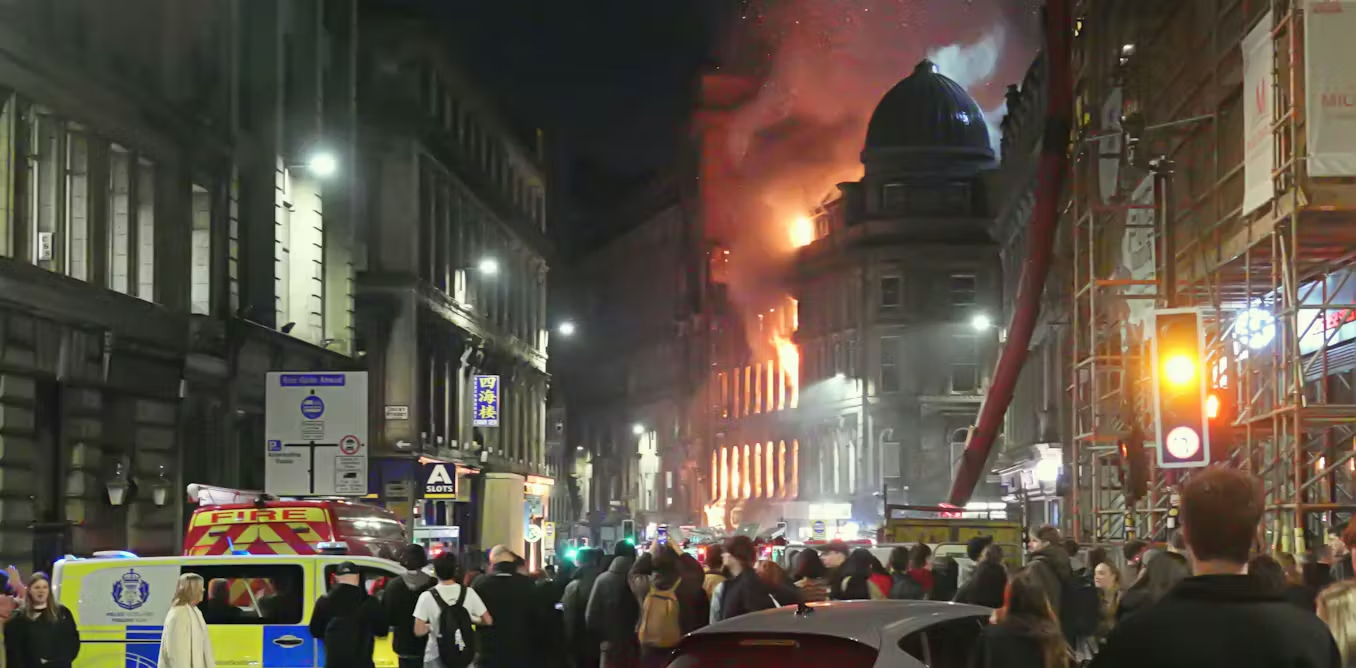
For many Glaswegians, the fire that has destroyed the Union Corner building next to Glasgow Central station is an unsettling reminder of fires that obliterated the city’s famous School of Art, first in 2014 and then again in 2018 while undergoing restoration.

Central Station is the busiest in Scotland with 25 million visitors a year. Even more pass by its grand gated entrance, bordered by a number of Victorian-era buildings like Union Corner. Built in the mid-19th century where Union Street and Gordon Street meet, the building’s famous dome (behind which brightly lit adverts acted as a beacon guiding people to the station beneath) and Victorian façade on Union Street have collapsed.

The fire will have obvious economic consequences for the city, particularly through the loss of businesses caught in and close to the fire. But the emotional effect of the fire will be felt by the city’s residents and visitors, particularly if the building lies in ruins indefinitely.

The value of built heritage and losing a building that is part of the fabric and history of a place extends beyond economic effects to something more emotional. This threat to different communities’ sense of place and cultural identity could be a catalyst for collective action.

Advertisement

A sense of belonging

Our built heritage has a considerable influence upon those who view and experience it. It can generate joy and even improve mental health. It also contributes to our sense of place; that is, our emotional attachment to a landscape such as an urban area. It derives from the character and distinctiveness of a place, which people perceive, in part, through buildings. As the fabric of the city, buildings and their environment act as a stage upon which social and cultural networks are made and reinforced.

Similarly, cultural identity is an implicit feeling emerging from the sense of belonging to a particular culture. It is multi-faceted and dynamic, drawing on the past while remaining permeable to the present. It can be considered a historical reservoir, created from representations of a shared past, amongst numerous other factors.

Continuity of cultural identity may rely on material continuity of the place. These important yet implicit aspects of daily life are affected when changes occur to the built fabric of a landscape, such as the loss of Glasgow’s historic buildings.

Advertisement

Glaswegians have faced this before in recent memory. Directly opposite Union Corner is the ornate C’a d’Oro building, built in 1872 to emulate the grandeur of the original building in Venice. It was destroyed by fire in 1987, rebuilt and reopened just three years later.

Glasgow School of Art, affectionately known as ‘the Mack’, was a much-loved building and source of pride for many citizens.
ArTono / Shutterstock

A strong desire persists among Glasgow’s citizens to see the Art School (known affectionately as “the Mack”) rebuilt again, but renovation is yet to start thanks to a series of ongoing wrangles. The time lag of restoration in Glasgow is further evident at the Egyptian Halls, a category A-listed building, also on Union Street. It faces an uncertain future after lying empty for 30 years.

Public outcry and support

The sense of place created through built heritage often extends beyond the local community. The National Museum of Brazil in Rio de Janeiro went on fire in 2018, destroying not only the early 19th-century building but nearly all of the artefacts and documents it housed. An immeasurable loss that led to global outcry, it was likened to the burning of the library of Alexandria in 48BC. There were immediate calls for the restoration of the building and it is due to reopen in the next year.

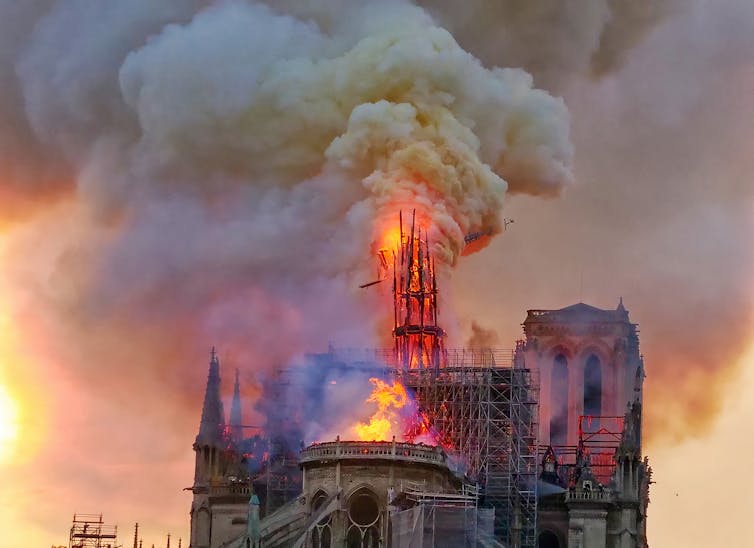
A few months later, in 2019, Notre Dame cathedral in Paris was severely damaged by fire. Just like the Mack in Glasgow, this occurred during restorative works. The emotional connection to the historic building resulted in international outpouring of support, as well as financial aid from donors in 150 countries, which saw €750m (£650m) raised in ten days.

Advertisement
A medieval cathedral on fire against a smoke-filled sky.
Notre Dame cathedral in Paris on fire in 2019; five years later it was full restored and open was more to the public.
Vernerie Yann / Shutterstock

The connection between built heritage and cultural identity was evident in the decision – which was not uncontroversial – to rebuild the cathedral in line with 19th-century ideas of the medieval period. This envisioning dictated the cathedral’s first major restoration in 1844 under architect Eugène Viollet-le-Duc.

Designated a UNESCO (United Nations Educational, Scientific and Cultural Organization) World Heritage Site, it was this version of the 800-year-old building with which most people were familiar and emotionally connected. It was therefore favoured over modern reimaginings or indeed interpretations focusing on other periods of the building’s long existence.


À lire aussi :
Notre-Dame reopens in Paris 5 years after fire – its reconstruction preserves the past and illuminates France’s modern ambitions


The public demand to restore The National Museum of Brazil and Notre Dame was not driven by the economic potential of the heritage assets. Rather, a collective sense of place was profoundly affected, which transformed into action. This is seen on a smaller scale when the climate crisis causes incremental damage to built heritage.

Preservation and conservation are almost constantly called for despite growing acknowledgement that not all built heritage can be saved in the face of the climate crisis. There have been attempts to save structures before they are lost, such as the dismantling and removal of the Cruester Burnt Mound structure, a Bronze-age building on the Shetland island of Bressay, into the local heritage centre.

Advertisement

This collective action can extend from heritage preservation to focus on the cause of the initial problem. Greater awareness about the inevitable loss of late medieval castles in West Cork, Ireland, has instigated climate action among the local community.

This powerful yet unquantifiable sense of place and its connection to cultural identity can be a catalyst for positive action, particularly when supported by those with the power to enact and accelerate change. The full effect of the fire in Glasgow is yet to be realised, but the city’s experience of previous fires has demonstrated that collective action will likely emerge from the ashes.

Source link

Advertisement
Continue Reading

Trending

Copyright © 2025