Love Island fans have hit out at Belle Hassan for being a ‘hypocrite’ after last night’s Heart Rate challenge heated up when Belle took a chance and made a move on Scott
The Heart Rate challenge returned to last night’s episode of Love Island and things quickly heated up.
Advertisement
Last night, viewers watched Belle confess to Whitney and Helena that she fancied Scott van der Sluis, with Whitney saying she was “doing a Lucinda”. It comes after Belle hit out at Lucinda for not being a “girl’s girl” when she stole Sean from her while she was in the US villa.
Millie got a text which read: “Islanders, tonight it’s boys vs girls in a challenge designed to turn up the heat and send pulses racing!” The Islanders all put on a great show but all eyes were on Belle and Scott and their steamy kiss.
The boys went first and Scott brought out a bottle of champagne and had two whispered confessions. One for Belle and one for Leane. When it was the girls’ turn Belle took her chance and snogged Scott van der Sluis in the challenge. Blushing, he said: ”I’m in the hurricane!”
But Love Island fans have hit out at Belle Hassan for being a ‘hypocrite’. Some fans thought Belle was in the wrong for making a move on Scott. One took to social media to say: “Belle made a big deal about Lucinda going for Sean, but she’s doing exactly the same with Leanne.”
Another said: “Belle out here preaching feminine energy while moving like a professional side quest. Girl he ain’t yours!” While some backed their chemistry saying: “Might be an unpopular opinion but I actually really like Belle and Scott together.”
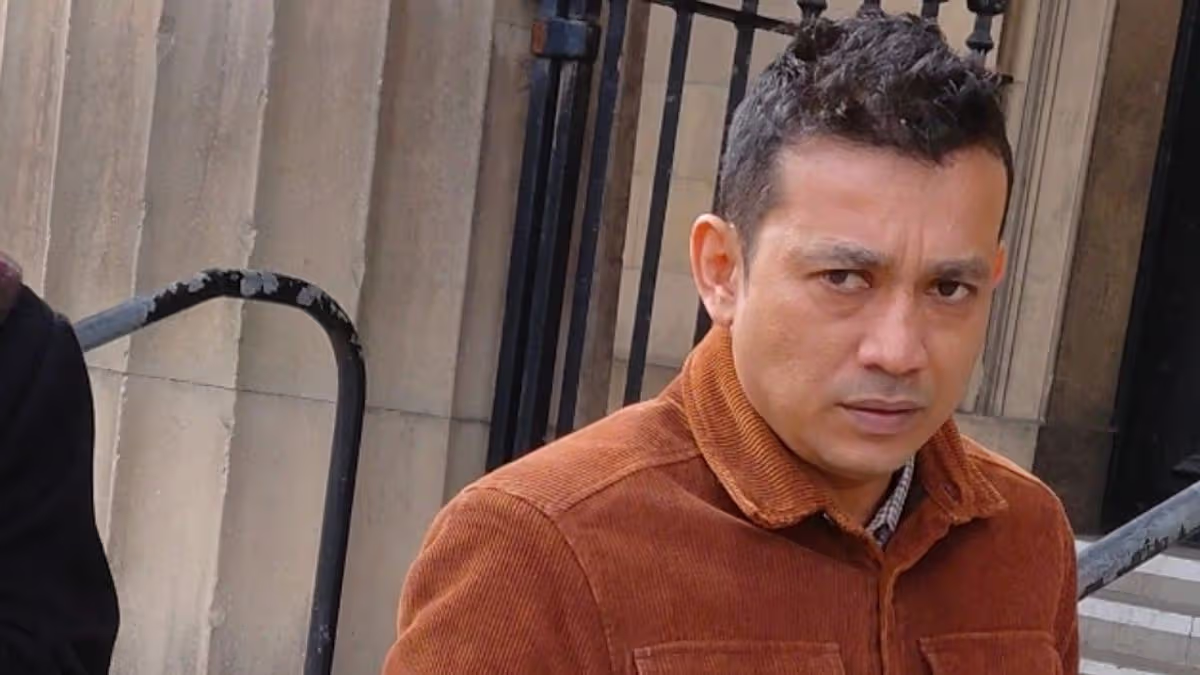
Sacheera Acharige, from Perth, admitted biting his wife, Dinesha Kankanamge, on her face to injury on May 4, 2024.
A husband paid hundreds of pounds for his wife to have cosmetic procedures to hide his teeth marks after he bit her on the face. Dinesha Kankanamge still had clearly visible injuries to her cheek several weeks after being attacked by Sacheera Acharige in their home.
Advertisement
Acharige, 36, took his wife to an aesthetics clinic and paid a total of £400 for work to make the injury he caused less obvious. The jewellery maker had sentence deferred for reports after he admitted carrying out two attacks on his wife in little over a fortnight.
Fiscal depute Jill Drummond told Perth Sheriff Court: “They have been married since 2019. She described it as mostly good, but negatively affected by his abuse of alcohol.
“On 4 May they were in bed. He was under the influence and wanted to leave to continue drinking. She requested him to stay and he became very angry.
“He grabbed her by the hair and pulled her towards him. He bit into her left cheek which resulted in marking to the cheek. She shouted for help to her cousin who was in the living room.
“The next day the cousin saw the bite mark. They appraised the accused of the circumstances, to which he became upset as he did not realise he had done it.
“He stated he would pay for the treatment. She went to the aesthetics clinic and got an injection to reduce the visibility. She attended again three weeks later for further treatment. Overall he paid £400 to cover both treatments.”
Two weeks later, Acharige attacked his wife again when she tried to get him up for work when he slept in after a late night binge drinking session. He demanded a cup of tea, told his wife ‘not to disrespect’ him, and hurled abuse at her as she tried to get their child ready for nursery.
Advertisement
She was slapped and then knocked to the ground during a struggle, before Acharige dragged her by the hair to the bathroom where he leathered her with a shoe. The fiscal depute said the victim called counselling services on her lunch break at work and then contacted the police to report her husband later the same day.
Advertisement
Acharige, from Perth, admitted biting his wife’s face to her injury on May 4, 2024, and injuring her again on May 20, 2024, by slapping and dragging her by the hair as well as hitting her with a leather shoe. The court was told that the complainer did not want a non-harassment order to be imposed as she wanted to continue the marriage and have Acharige home as soon as possible.
Sheriff Paul Brown deferred sentence for reports and said he would consider the issue of a non-harassment order at that stage.
Get more Daily Record exclusives by signing up for free to Google’s preferred sources. Click HERE
The event was organised by Moja CEO Sophie Milliken who said: “There is no shortage of talent in our region, and no shortage of ambition. But put the right people in the room together and everything accelerates.
“A few people messaged me when the invites went out asking if it was real. Which says a lot, because opportunities like this aren’t the norm for founders in our region. Not because the businesses aren’t good enough, but because access doesn’t always flow this far north.
“And that’s the bit we don’t talk about enough.”
Advertisement
Kim McGuinness said: “Businesses led by women are often stronger, but sadly simply don’t often attract the level of investment of those led by men.
“In the North East we are determined to change that, so we met Rachel Reeves and a load of investors and connectors and we plan to bring that money North so these incredible women can use it to grow.”
Advertisement
Sara Davies said the event was ‘a moment of recognition’
She said: “Building a business in the North East of England as a 21-year-old woman 20 years ago was not easy.
“There was talent everywhere — ambition, ideas, work ethic — but what we didn’t always have was access. Access to the same opportunities, networks and recognition that seemed far more readily available elsewhere in the country.
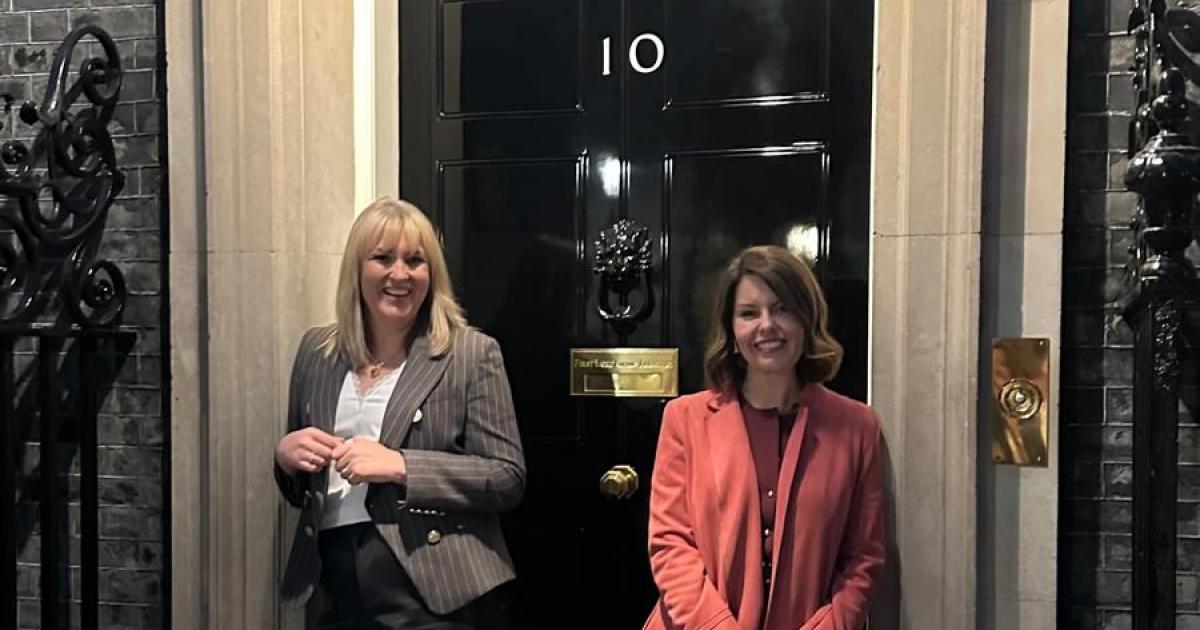
“That’s why being invited to 11 Downing Street this week meant so much more than just stepping inside an iconic building.
Advertisement
“To stand alongside so many brilliant women from across Teesside and the wider North East, all building, leading and growing incredible businesses, was genuinely inspiring. These are women who are driving real impact in our region, creating jobs, innovating, and proving every single day what’s possible.
“And finally, it felt like that was being seen. I left feeling hopeful that this is just the beginning of even greater recognition for our region.”
Sophie Milliken added: “This isn’t a room most North East founders get access to, but we had 50 female founders from across the North East at 11 Downing Street. From Northumberland down to Tees Valley. Different sectors, different stages, different ambitions, but all building something.
“Through City Ladies Networking, we’ve always focused on bringing the right people into the room. Not for the sake of it, but to create conversations that actually lead somewhere. So it was a privilege for Natalie Turner and I to be able to support such an important event – a reminder of what’s possible when you remove a few of the usual barriers.”
Liverpool could not play on the Monday because of the Champions League, so Sky Sports could swap the games.
Everton‘s game is on a Monday, but it was not picked for a Monday. So it may not count as part of the Monday allocation.
Advertisement
Sky Sports says the process involves so many bodies, including clubs and the police, that much of the decision-making is taken out of its hands.
The order of first, second and third-choice picks between Sky and TNT Sports can also have an influence.
It is clear that the five-appearance maximum is a just loose limit.
Supporters will simply see their club has been picked six, seven or eight times.
Advertisement
Manchester United will almost certainly be in Europe next season, so will join the band of clubs largely shielded from the Friday-Monday package.
But with at least eight Premier League clubs set to be in Europe, the issue is not going to go away.
If Tottenham stay in the Premier League they will go to the top of the list for Friday and Monday selection, given they have a large fan base and are viewed as a glamourous club.
Everton fans say the scenario is “damaging supporter accessibility, matchday experience, and long-term engagement”.
The UK has recently seen a resurgence of meningococcal B (MenB) disease, with a cluster of cases in Kent described as “unprecedented” by the health secretary, Wes Streeting. As attention turns from the current MenB outbreak to how to prevent future outbreaks, another challenge is also growing: gonorrhoea is becoming harder to treat as antibiotic resistance rises. These two challenges might seem unrelated, but they are now linked by a single vaccine.
Some sexual health services are using a vaccine originally designed to prevent MenB disease as part of efforts to reduce gonorrhoea. At first glance, that might sound surprising. But the bacteria that cause meningitis and gonorrhoea are closely related, meaning a vaccine targeting one may offer some protection against the other.
This kind of scientific overlap is drawing increasing attention. Developing brand new vaccines from scratch takes years – sometimes decades – and is costly. Repurposing existing ones could offer a faster, more practical route.
The MenB vaccine itself already has a strong public profile in the UK. Campaigns calling for wider access became one of the most signed petitions in UK history. It has helped bring attention to meningococcal disease and shaping public expectations around vaccine availability.
Advertisement
Recommendations about how vaccines are used in the UK are made by the Joint Committee on Vaccination and Immunisation, which operates within a government-defined framework. Their advice takes into account the burden of disease, vaccine safety and effectiveness, as well as the cost-effectiveness of different immunisation strategies.
Repurposing vaccines
The evidence is still evolving when it comes to gonorrhoea. While earlier studies suggested the MenB vaccine might offer some “cross-protection”, a more recent randomised control trial – the gold standard in medical research – indicates that protection may be lower in people who have previously had gonorrhoea.
This raises important questions about who might benefit the most. If protection is stronger, or longer lasting, in people who have never had the infection, vaccination strategies may need to focus on these groups instead.
Our recent research suggests that people are open to this kind of complexity. In a survey of sexual health service users in the UK, more than 98% supported the introduction of a gonorrhoea vaccine. Many were willing to accept that the vaccine might not be perfect, as long as its benefits were explained clearly and transparently.
That willingness matters. Repurposed vaccines are unlikely to offer complete protection, especially in the early stages. But even partial protection could reduce cases and ease pressure on healthcare systems, particularly for infections like gonorrhoea, where treatment options are narrowing.
At the same time, the context in which this vaccine is being used is changing. The UK is seeing renewed concern about MenB disease, including clusters of cases that have spread quickly. This places the MenB vaccine in an unusual position: it is being deployed simultaneously against a rare but severe infection and a common, increasingly drug-resistant one.
These overlapping pressures may shift how we think about its value. Traditionally, decisions about a national MenB programme have been based on the burden of meningococcal disease alone. But if the same vaccine can also contribute – even partially – to controlling gonorrhoea, the calculation becomes more complex.
In that light, the question is no longer just whether the MenB vaccine is cost-effective for one disease, but whether its combined impact across multiple infections changes the equation altogether.
Advertisement
There are also practical considerations. Vaccine supply, delivery capacity and prioritisation all come into play when a single product is expected to address more than one public health challenge. Expanding its use would require careful planning to avoid displacing more effective or cost-effective interventions.
Not just single-purpose tools
At the same time, this approach highlights a broader shift in biomedical thinking. Vaccines are increasingly being understood not just as single-purpose tools, but as tools that may have wider effects than originally anticipated. As our understanding of pathogens and immune responses deepens, opportunities to reuse or adapt existing drugs and vaccines are likely to grow.
With rising levels of antibiotic-resistant gonorrhoea alongside renewed concern about MenB, and strong public support for vaccination, the case for wider use of this vaccine may look different to before.
Whether that ultimately leads to routine immunisation will depend on the evolving evidence. But this moment may mark the beginning of a broader shift in how we evaluate vaccines, not just in terms of single diseases, but in terms of their potential to address multiple threats at once.
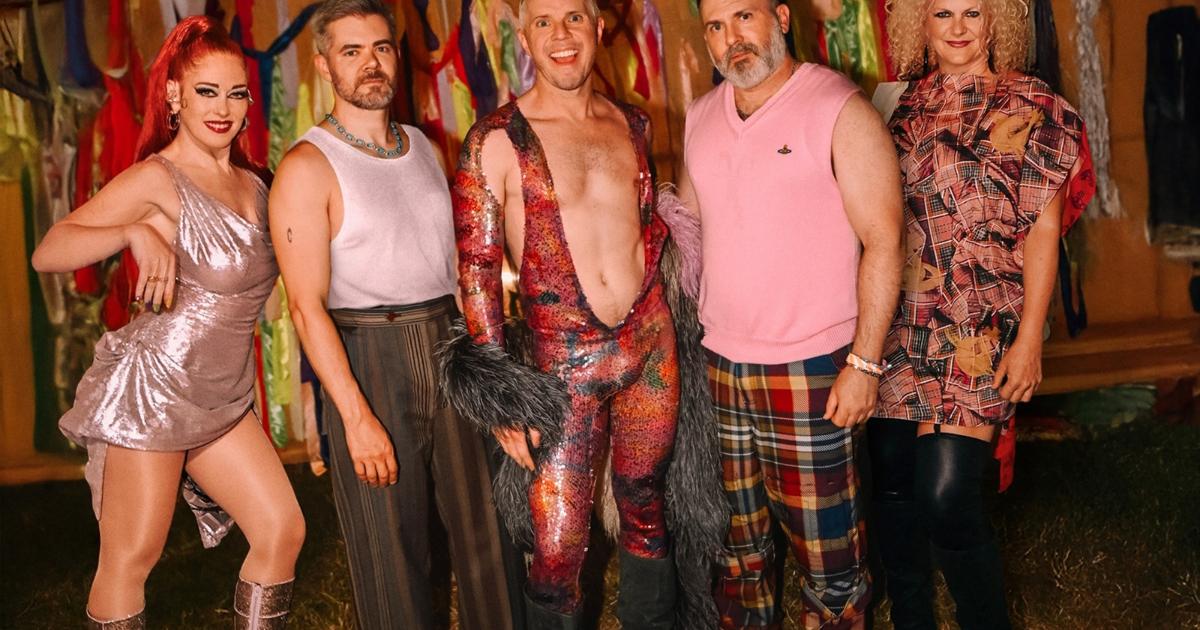
Scissor Sisters will be performing at the Scarborough Open Air Theatre on Saturday (August 8).
The multi award-winning stars will be joined by musician, DJ, activist and drag performer Bimini, who will feature as a special guest.
Recommended reading:
A runner-up in RuPaul’s Drag Race UK in 2021, Bimini now DJs sets featuring house, electro, breaks, drum’n’bass and leftfield club sounds.
Advertisement
Bimini burst onto the music scene after reaching international fame through RuPaul’s Drag Race UK (Image: Frank Fieber)
The artist is currently adding the finishing touches to their debut album, months after opening for Lady Gaga at London’s O2 Arena and Pride.
Headliners the Scissor Sisters burst onto the music scene in 2004.
With their chart-topping, self-titled debut album, they were the first act ever to sweep all three international categories at the BRIT Awards.
They reached international acclaim with the likes of Take Your Mama, Comfortably Numb and Laura – establishing themselves as one of the most influential pop acts of the era.
Advertisement
The band and Bimini will also be joined by second special guest, The Hidden Camera, following the release of their meta dance-pop album BRONTO.
Scissor Sisters have partnered with PLUS1 – a registered non-profit in the US – to support Not A Phase, a charity championing trans and gender-diverse adult in the UK.
For every ticket sold, £1.60 (minus applicable taxes) will go to PLUS1 in support of Not A Phase.
More information can be found here, along with ticket details.
Playfully mocking colleague Vernon Kay in the BBC Radio 2 studio, Jeremy held up a photo of Vernon sporting a slicked-back hairstyle, remarking: “Here he is.”
The camera then pans to Vernon with a more tousled bedhead look, prompting Jeremy to dryly say: “Oh.”
Vernon laughed off the comparison, replying: “What do you mean ‘oh’?
Advertisement
“It’s Monday morning. It’s bedhead.”
The video was captioned: “Publicity photo vs Monday morning reality.”
Vernon, 51, first found fame after being spotted by a modelling agency at the BBC Clothes Show Live in Birmingham in 1996.
He went on to win Model of the Week on Channel 4’s The Big Breakfast, launching a successful television career.
Vernon now hosts the mid-morning show on BBC Radio 2, a role he began in May 2023.
Advertisement
Known for his trademark thick hair, he recently surprised fans by switching to a shorter style and embracing his natural grey tones.
In rural Palestine, where olive trees have long sustained livelihoods and identity, a growing replanting movement is bringing farmers a renewed sense of hope
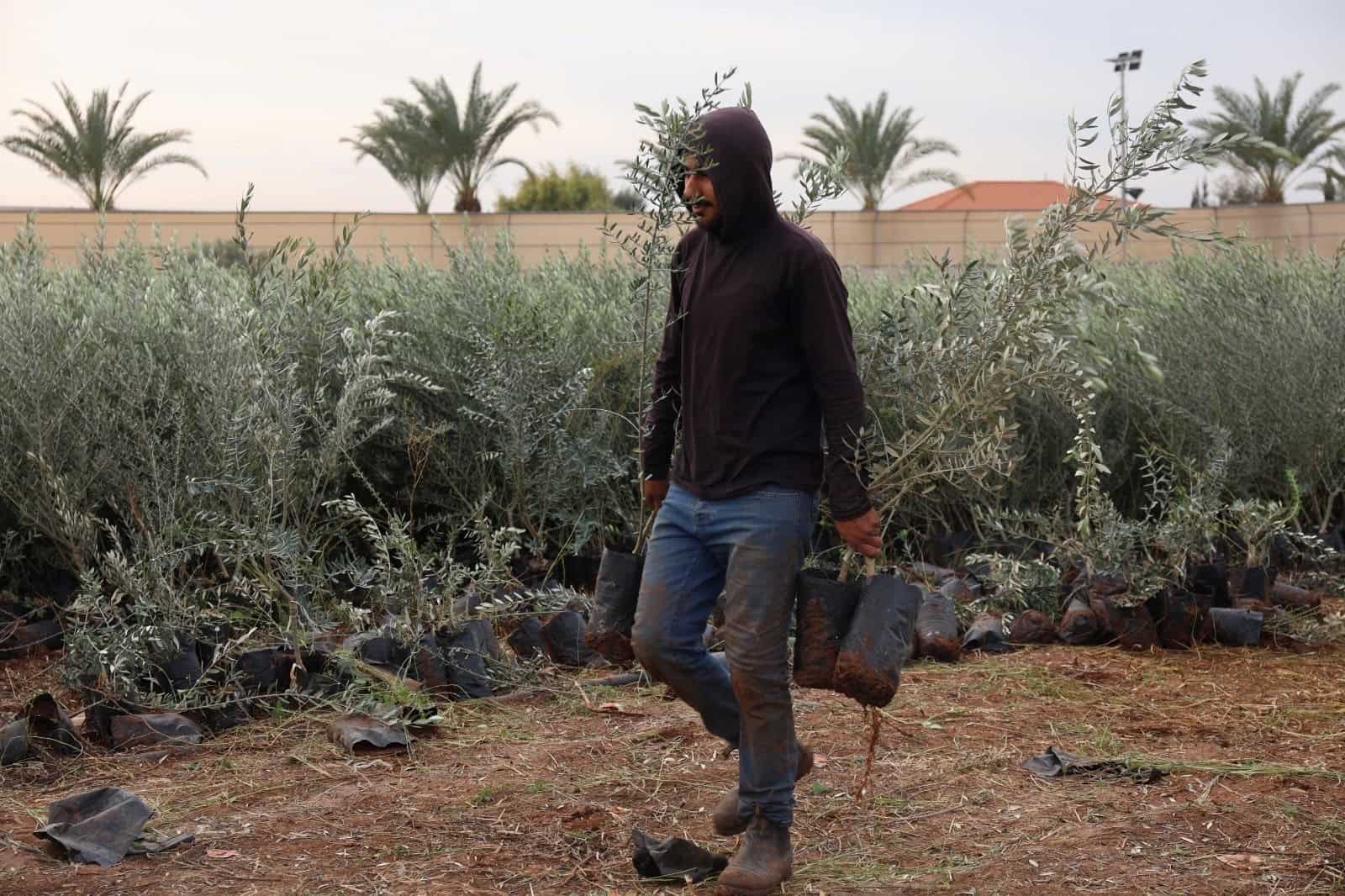
Tens of thousands of olive saplings are taking root in the conflict-scarred West Bank, funded by customers of the UK-based fair trade company, Zaytoun.
Olive trees have been the lifeblood of rural Palestine for millennia, but in recent decades they’ve also become a potent symbol of resistance. Since 1967, settlers and Israeli authorities have uprooted an estimated 1m trees amid the ongoing seizure of West Bank land.
Advertisement
“It’s a systematic act aimed at destroying a way of life and forcing Palestinians from their homes,” explains Zaytoun’s Palestinian director, Taysir Arbasim, who estimates around 25,000 families have been driven out of olive farming as a result.
Solutions every Saturday Uplift your inbox with our weekly newsletter. Positive News editors select the week’s top stories of progress, bringing you the essential briefing about what’s going right. Sign up
The Palestine Fair Trade Association – the country’s largest fair trade union – has been working to revive both livelihoods and landscape since 2006 through its ‘Trees for Life’ programme, which replaces lost olive, carob, fig and almond groves.
The initiative also supplies landrace seeds and promotes intercropping with fava beans, peas and clover – regenerative farming techniques which enrich soil health and boost future olive harvests. Olive saplings are grown in nurseries and distributed to farmers when they reach two or three years old. It can take another five years before they begin bearing fruit and the trees reach maturity at 15.
Advertisement
Zaytoun has sponsored over 300,000 trees since 2011. Donations for the 2025-2026 planting season topped £190,000 – enough to fund 40,000 saplings.
Trees for Life has provided hundreds of thousands of saplings to Palestinian farmers in the conflict-scarred West Bank. Image: Palestine Fair Trade Association
Advertisement
Under local laws, cultivated land is, in theory, protected from confiscation by Israeli authorities. “For Palestinians, agriculture is more than just a means of livelihood, it is deeply intertwined with their history, identity and resistance,” said a PFTA spokesperson.
“Farming holds profound spiritual and cultural significance, serving as a powerful act of defiance against the ongoing Israeli efforts to sever the connection between farmers and their land. Through cultivation, Palestinians assert their right to reclaim their lands, sustain their communities and fight for their freedom.”
Olive trees are considered part of the family, so it’s like getting a new family member
Despite the long wait for the trees to mature, planting brings an instant lift for farmers, as well as a sense of optimism, said Arbasim.
“You can see the happiness in their eyes,” he told Positive News. “Olive trees are considered part of the family, so it’s like getting a new family member.
Advertisement
“We have a famous saying: they planted for us to eat, and we will plant for them to eat. We are planting for the next generation. We are planting for hope.
Main image: Palestine Fair Trade Association
Be part of the solution
At Positive News, we’re not chasing clicks or profits for media moguls – we’re here to serve you and have a positive social impact. We can’t do this unless enough people like you choose to support our journalism.
Advertisement
Give once from just £1, or join 1,800+ others who contribute an average of £3 or more per month. Together, we can build a healthier form of media – one that focuses on solutions, progress and possibilities, and empowers people to create positive change.
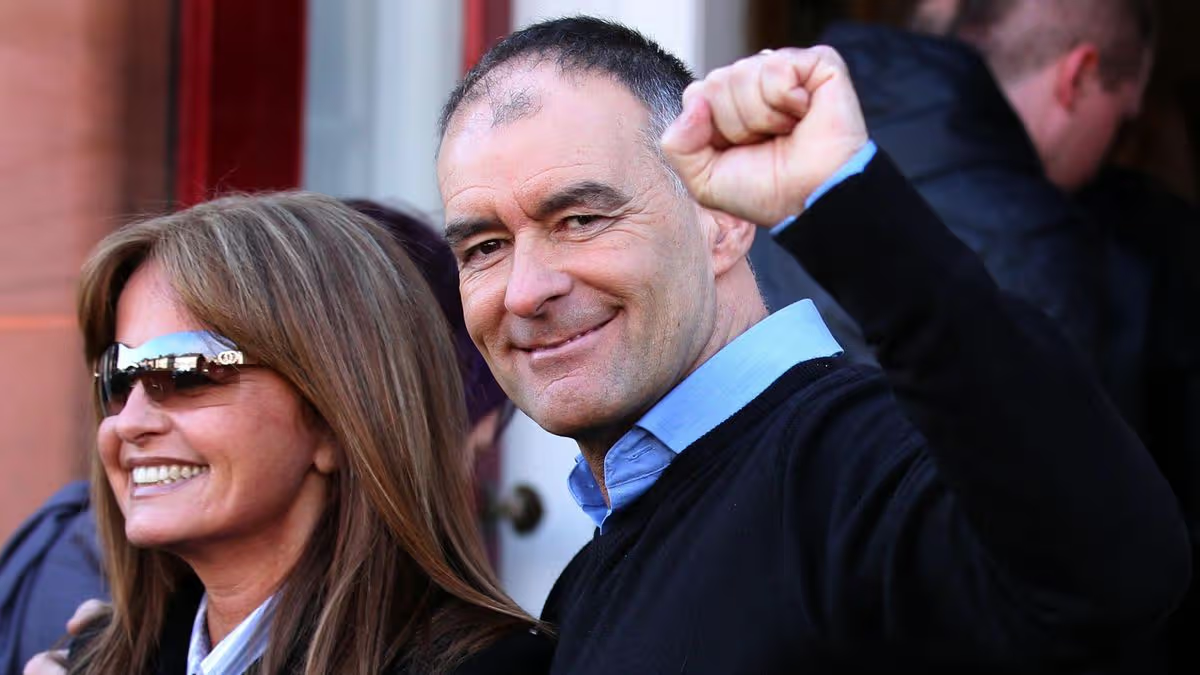
The former socialist leader has been followed by TV cameras for almost a year for a BBC-comissioned show about his controversial career as a left wing politician.
The former socialist leader has been followed by TV cameras for almost a year for a BBC-comissioned show about his controversial career as a left wing politician.
And just days after Sheridan announced he was standing for a new pro-indy alliance, he believes the film crew could be there to capture his return to Holyrood.
The 62-year-old – who was jailed for perjury in 2010 after claims he attended swinging parties – said: “The production company approached me in August last year and have been filming since then.
“I’m 62 and they’re going through my whole life, so it’s taking a while.
Advertisement
“They suggested two one-hour documentaries, which looks at the social political history of Scotland through my eyes.
“I was involved in the miners’ strike and the poll tax. I was elected a councillor from prison in 1992 after being jailed for for defying a court order banning me from a warrant sale.
“They’re looking at all the things I’ve been involved in and what it says about Scotland’s political history.”
Advertisement
Tommy is standing in the Glasgow regional list as number one candidate for the Alliance to Liberate Scotland, which formed in February.
His wife Gail also a candidate on the party’s Glasgow list.
The move came after it was announced the late Alex Salmond’s pro-indy Alba Party is to wind up and deregister after being left financially unviable amid a police probe into alleged financial “irregularities”
.
Advertisement
Sheridan had been part of a group bidding to take over leadership and save Alba.
But he says his future is now firmly with Alliance.
A poll conducted by Find Out Now, a member of the British Polling Council, has predicted eight per cent of voters being ‘definitely’ or ‘very likely’ to consider voting for the party.
Advertisement
List MSPs have been elected in the past on six per cent support in Glasgow, but usually at least seven per cent is required.
People who voted SNP at the last Holyrood election were the most likely to say they’d consider backing the Alliance. In the national poll, 1 in 7 (14%) said they’d be ‘definitely’ or ‘very likely’ to consider it.
Sheridan said: “This opinion poll shows clearly we can win enough support to be elected and the people of Glasgow know I can do the job. I proved that during the eight years I represented the city and championed the abolition of warrant sales and the introduction of free and healthy school meals.
“I’m more equipped now than ever to lead the charge for Scotland’s independence from the parasitical chains of the corrupt Westminster Parliament which robs Scotland blind and then accuses us of being incapable of standing on our own two feet.
“The days of Westminster misrule are numbered. I am determined to wage war on poverty, low pay and the chronic underfunding of our NHS and local council services. The only way to do that is with the economic powers of an independent nation.
Advertisement
“People are realising the voting system has to be understood and giving the SNP a list vote in Glasgow is simply giving a vote to the right wing. It’s giving it to Reform and to the Tories.
“What that poll shows is that my victory will be a defeat for the Tories.
“Unionists aren’t going to vote for me. I know that. But in terms of the vast number of SNP and independence supporters, they are willing to use their vote if they think it’s going to be effective.”
Get more Daily Record exclusives by signing up for free to Google’s preferred sources. Click HERE.
Drivers are now only entitled to 30 minutes of parking before charges kick in
Business owners on a busy Cardiff high street are feeling the repercussions of a huge change to car parking rules. Cardiff council rolled out new parking charges to some of its car parks across the city in December 2025, including some in Canton and Riverside.
Advertisement
Instead of getting two hours of free parking, drivers are now only entitled to 30 minutes before charges kick in. Businesses on Cowbridge Road East have now said that they have noticed fewer shoppers coming in than before, while Cardiff council said the move followed a consultation period.
Yagub Jalloh, 40, manager of Jah Beauty, said: “Thirty minutes is not enough to come and browse and look for what you want.
“I don’t know why they made the changes, but I do know it is not a good change for businesses around here.” Jah beauty is a beauty supply store right in front of two car parks, Severn Road and Grey Street.
“When people can spend more time here, they spend more,” said Mr Jalloh. “Now they will just run away.” Never miss a Cardiff story by signing up to our daily newsletter here
Advertisement
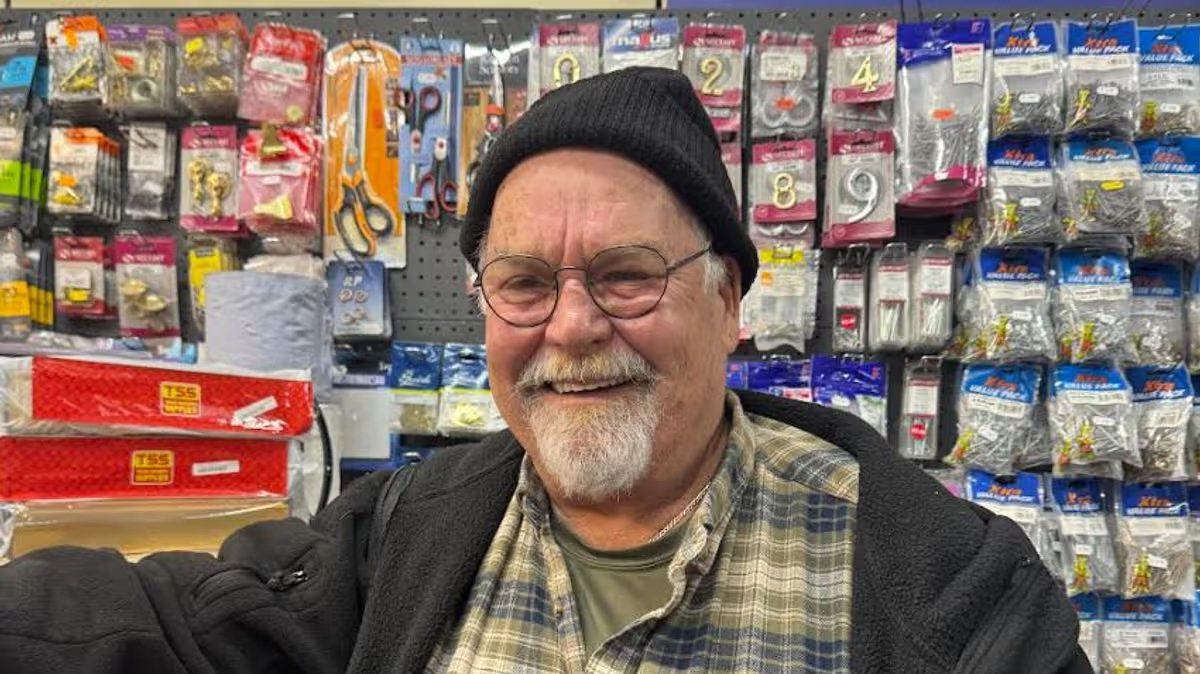
Mike Ashwin, manager at The Toolbox Canton, said: “Customers used to come in for hours to browse, not so much now.
“They could do a coffee while they wait for a key to get cut, they are not able to do that anymore.”
He also explained it is a logistical nightmare for their deliveries. “It takes more than half an hour for our trucks to deliver our stock,” he said. “And now they have to double park or we open the back for them if we can.”
Advertisement
Zohaib Hussain, 39, is the owner of Zero Plus Fish and Chips, and is the chair of the Cowbridge Road East Traders Association. He said: “No one’s going to pay more for parking than the product they are coming for.”
Mr Hussain said the traders association will “carry on the fight” to ask the council to revert their decision. “We are doing everything we can,” he said. “Not one business with us agrees with these changes”.
A spokesperson for Cardiff council said: “As part of setting the Council’s 2024/2025 budget, the council consulted on proposals to remove the free parking period in district car parks – 6,130 responses were received and over half supported the change.
Advertisement
“Following this, a statutory consultation under the Traffic Regulation Order (TRO) process was carried out in early summer 2025. Based on feedback, we revised the proposals and re-consulted in autumn 2025.
“The updated plan retains 30 minutes of free parking in district car parks, allowing drivers time to visit local businesses or amenities while ensuring the council can cover the costs of operating the car parks.
“After the free period, charges apply – starting at 50p for the first hour. These rates remain significantly lower than those in comparable cities and are not considered a barrier to use.”
Get Cardiff news updates on your phone by joining our WhatsApp community here. We occasionally treat members to special offers, promotions, and ads from us and our partners. See our Privacy Notice
Victoria Hamilton leads The Teacher season 3 on Channel 5, joined by soap stars from Coronation Street, EastEnders and Hollyoaks – here’s the full cast list
Channel 5’s school-based anthology, which initially premiered in 2022 with Sheridan Smith in the starring role, arrives two years following the second season featuring Kara Tointon.
Advertisement
Victoria, recognised for Unforgotten, Doctor Foster, Life and The Crown, portrays Helen Simpson, a teacher with three decades of experience, who dismisses what she considers woke ideologies of the younger generation.
Discussing how he’s progressed the narrative, director Dominic Leclerc said: “Each series of the Teacher is a study of character, with thriller elements. We look at complex ideas and constantly evolve the form to adapt to the theme.”
Victoria is joined by The Madame Blanc Mysteries and Benidorm star Steve Edge, Line of Duty’s Rochenda Sandall, Coronation Street’s Peter Ash and EastEnders star Navin Chowdhry. Here’s everything you need to know about the cast, according to The Mirror.
Victoria Hamilton plays Helen Simpson
Viewers will recognise Victoria for her numerous television roles, including portraying Anna Baker in the BBC hit Doctor Foster and Belle in its spin-off Life.
Victoria is also recognised for playing Ruby Pratt in Lark Rise to Candleford and Queen Elizabeth in The Crown.
In recent years she has appeared as Anna Marshall in COBRA, Juliet Cooper in Unforgotten and Dodie Gimball in the Apple TV+ hit Slow Horses.
Steve Edge plays Terry Simpson
Steve portrays Helen’s estranged husband Terry. Audiences will recognise Steve from his role as Billy Dawson in Benidorm and more recently starring as Dom Hayes in the Channel 5 drama The Madame Blanc Mysteries.
Steve is also recognised for The Cup, Star Stories, Phoenix Nights, All at Sea and Starlings, where he portrayed Fergie.
Rochenda Sandall plays Tessa Stewart
Rochenda portrays teacher Tessa Stewart. Rochenda is recognised for playing Vanessa Warren in Criminal: UK, Azure in Doctor Who and Lisa McQueen in Line of Duty.
Advertisement
Audiences might also recognise her for her roles as Anna in Love, Lies and Records, Lucy in Deceit, Kate Miller in Hijack and Cat Braithwaite in The Rig.
More recently she starred as Fi in the popular series Amandaland.
Olly Rhodes plays Sam Simpson
Olly portrays Helen’s son Sam. Soap enthusiasts will recognise Olly for playing Joseph Holmes in Hollyoaks, and Billy in Waterloo Road.
Advertisement
He has also featured in The Last Kingdom as Osbert and All Creatures Great and Small as Private Briggs.
Peter Ash plays Sebastian Blake
Peter portrays faculty member Sebastian Blake, who interviewed for Helen’s position. Peter is best recognised for playing Paul Foreman on Coronation Street, a role he held between 2018 and 2024. Prior to Coronation Street he also portrayed Keith Jowell on Casualty and Ron in Hollyoaks.
Outside of the world of soaps Peter is recognised for playing Darius Fry in the series Footballers’ Wives between 2003 and 2006.
Advertisement
Navin Chowdhry plays Simon Cookson
Navin is perhaps best recognised for his roles as Kurt in Teachers, DC Asap Qureshi in A Touch of Cloth, and Nish Panesar in EastEnders. Audiences will also know him from his appearances in Trying, Our Girl and Next of Kin.
The Teacher also features Alice Grant, who portrays Cressida Bancroft. She is widely known for her role as Susan Villiers in Mary and George, alongside Sex Education star Shak Benjamin, who takes on the role of Leo Dalton.
Malek Alkoni, recognised for G’wed and Vigil, portrays Miles Crawford, while Red Rose and Gentleman Jack actress Natalie Gavin plays DS O’Brien. Ellis Jupiter plays Dee Rainford-Thomas in their debut televised role.
Advertisement
Reflecting on the cast, director Dominic said: “Casting is everything; you have to have the right people in front of the lens. I admire Victoria Hamilton’s work so much, I’ve wanted to work with her for years. She set the bar for the whole series, surrounded by a cast of teenagers who bring life, vitality and very distinct personalities into the mix.
“At the centre of the show is a relationship between Helen and a character called Cressida. We saw lots of people for Cressida, but Alice Grant blew us away with her delivery that was charming, but with a slight unknowingness behind the eyes. Then we have Shaq Benjamin as Leo. I directed him in Sex Education but I didn’t even recognise him in his self-tape for this, he immediately got to the heart of the character, with his unique energy and style. Ollie Rhodes, for me, was a slam dunk. That character’s almost hiding in plain sight and suddenly becomes very, very big as the show goes on.
“There’s a quality in Ollie as an actor that I knew would take us on that journey. Ellis Jupiter was likewise immediately perfect for the role of Dee. Their wit, quiet spark and sensitivity captured Dee’s spirit with flair. Rochenda Sandall, Steve Edge, Peter Ash, Navin Chowdhury, and Natalie Gavin give the show depth and true Northern authenticity.”
The Teacher season 3 starts on Channel 5 at 9pm on Monday, March 30.
















































You must be logged in to post a comment Login